




Qiraat Africa
عربي  |  Fr
Advertisement
  • News
    • All
    • Climate Change
    • Economy
    • Education
    • Energy
    • Health
    • Migration
    • Mining
    • Politics
    • Security
    • Society
    • Sport
    UN-backed court in CAR issued arrest warrant for ex-president François Bozizé

    Former CAR president faces crimes against humanity trial

    Ten in Kenya suffer gunshot wounds at rallies marking anniversary of deadly protests

    Kenya to pay compensation to almost 2,000 victims of violent protests

    South African president seeks to stop impeachment probe over ‘Farmgate’ scandal

    South Africa’s Ramaphosa warns against scapegoating migrants for economic woes

    G7 leaders call for strong, coordinated response to Ebola outbreak

    G7 leaders call for strong, coordinated response to Ebola outbreak

    Nigeria arrests ex-power minister Mamman after 75-year graft sentence

    Nigeria puts hundreds more people on trial in crackdown on militancy

    Middle east fuel crisis keeps Mozambique fishermen ashore

    Middle east fuel crisis keeps Mozambique fishermen ashore

    Somaliland president visits Israel in defiance of Mogadishu

    Somaliland president visits Israel in defiance of Mogadishu

    Xenophobic attacks are hurting South Africa’s image abroad, says minister

    Xenophobic attacks are hurting South Africa’s image abroad, says minister

    Senegal opposition leader, Ousmane Sonko hints at election disruption if he can’t run

    Senegal’s Sonko softens tone on debt restructuring as IMF talks due

  • Analysis
    • All
    • Climate Change
    • Digital & Tech
    • Economy
    • Energy & Power
    • Health
    • Politics
    • Security
    • Society
    The promise and risks of Kenya’s ambitious new strategy to close refugee camps

    The promise and risks of Kenya’s ambitious new strategy to close refugee camps

    Al Qaeda-linked militants curb their brutality in seized Malian territory

    Al Qaeda-linked militants curb their brutality in seized Malian territory

    Five Years After the Coup in Mali: Are Stability and Growth Within Reach?

    The Political Economy of Insecurity in Mali: Armed Groups, Resources, and State Fragility

    Ghana to evacuate 300 citizens from South Africa after xenophobic attacks

    Xenophobic Violence and Human Security in South Africa: Causes and Consequences

    Inside an African lab that helped crack the hantavirus outbreak

    Inside an African lab that helped crack the hantavirus outbreak

    Nigeria’s Agricultural sector: Problems and challenges

    Agriculture in Africa: science and research cannot have an impact without investments and good policies

    Mali’s junta creates a new ministerial-level post to oversee the mining sector

    African Mineral Resources: The Controversial Link to US Health Deals

    Ghana curbs offshore investments to protect cedi, boost stability

    Ghana’s mining law attempts to eradicate speculation, but leaves communities in limbo: insights from a lithium case study

    East African Community’s expansion has triggered financial difficulties: why solutions come with risks

    East African Community’s expansion has triggered financial difficulties: why solutions come with risks

  • Studies
    Schooling is the most severely affected by conflict when children are the target – Study

    Schooling is the most severely affected by conflict when children are the target – Study

    Pensions for Botswana’s elderly are expanding, but care services are lacking—study follows 20 years

    Pensions for Botswana’s elderly are expanding, but care services are lacking—study follows 20 years

    60 new cosmic structures have been discovered by South Africa’s MeerKAT telescope, which is mapping previously unseen gaps between galaxies

    60 new cosmic structures have been discovered by South Africa’s MeerKAT telescope, which is mapping previously unseen gaps between galaxies

    Benin government says armed forces foil coup attempt

    Coup contagion? A rash of African power grabs suggests copycats are taking note of others’ success

    One in three South Africans have never heard of AI: what this means for policy

    One in three South Africans have never heard of AI: what this means for policy

    Social Media as a Catalyst for the Spread of Dangerous Wealth Ritual Myths

    Social Media as a Catalyst for the Spread of Dangerous Wealth Ritual Myths

    Overcoming Education Barriers for Young Mothers in Sub-Saharan Africa

    Overcoming Education Barriers for Young Mothers in Sub-Saharan Africa

    Youth Empowerment Through Vocational Training in Rural Sub-Saharan Africa

    Youth Empowerment Through Vocational Training in Rural Sub-Saharan Africa

    Manufacturers in Ghana and Nigeria claim that although corruption damages businesses, digital technologies provide a chance to combat it

    Manufacturers in Ghana and Nigeria claim that although corruption damages businesses, digital technologies provide a chance to combat it

  • Infographics
  • Figures
    Eduardo Mondlane (1920-1969): Mozambican Revolutionary and Anthropologist

    Eduardo Mondlane (1920-1969): Mozambican Revolutionary and Anthropologist

    William Tubman (1895-1971): Liberian politician and longest-serving president in the country’s history

    William Tubman (1895-1971): Liberian politician and longest-serving president in the country’s history

    Abebe Bikila (1932-1973): Ethiopian marathoner and first black African to win an Olympic medal

    Abebe Bikila (1932-1973): Ethiopian marathoner and first black African to win an Olympic medal

    W. E. B. Du Bois (1868-1963): Sociologist, historian, and Pan-Africanist civil rights activist

    W. E. B. Du Bois (1868-1963): Sociologist, historian, and Pan-Africanist civil rights activist

    Frantz Fanon (1925-1961): Psychiatrist and political philosopher

    Frantz Fanon (1925-1961): Psychiatrist and political philosopher

    Percy Lavon Julian (1899-1975): African American researcher and chemist

    Percy Lavon Julian (1899-1975): African American researcher and chemist

    Harriet Tubman (Araminta Ross, 1822-1913): American abolitionist and social activist

    Harriet Tubman (Araminta Ross, 1822-1913): American abolitionist and social activist

    Dorothy Vaughan (1910-2008): African American mathematician and human computer

    Dorothy Vaughan (1910-2008): African American mathematician and human computer

    George Washington Carver (1864-1943): African American agricultural scientist and inventor

    George Washington Carver (1864-1943): African American agricultural scientist and inventor

  • History
    Laas Geel, Somalia

    Laas Geel, Somalia

    Lakes Of Ounianga, Chad

    Lakes Of Ounianga, Chad

    Nok Caves, Togo

    Nok Caves, Togo

    The Land of Punt (modern Somalia, Eritrea, Ethiopia, or eastern Sudan)

    The Land of Punt (modern Somalia, Eritrea, Ethiopia, or eastern Sudan)

    Avenue of the Baobabs, Madagascar

    Avenue of the Baobabs, Madagascar

    Lopé-Okanda (Gabon)

    Lopé-Okanda (Gabon)

    The Sudd wetland

    The Sudd wetland

    Khami Ruins (Zimbabwe), the capital of the Torwa state

    Khami Ruins (Zimbabwe), the capital of the Torwa state

    Royal Palace, Porto-Novo, Republic of Benin

    Royal Palace, Porto-Novo, Republic of Benin

  • Others
    • Culture / Literature
    • Interview
    • Opinion
  • Countries
    • Country profiles
    • Regions
      • Central Africa
      • East Africa
      • Southern Africa
      • West Africa
No Result
View All Result
  • News
    • All
    • Climate Change
    • Economy
    • Education
    • Energy
    • Health
    • Migration
    • Mining
    • Politics
    • Security
    • Society
    • Sport
    UN-backed court in CAR issued arrest warrant for ex-president François Bozizé

    Former CAR president faces crimes against humanity trial

    Ten in Kenya suffer gunshot wounds at rallies marking anniversary of deadly protests

    Kenya to pay compensation to almost 2,000 victims of violent protests

    South African president seeks to stop impeachment probe over ‘Farmgate’ scandal

    South Africa’s Ramaphosa warns against scapegoating migrants for economic woes

    G7 leaders call for strong, coordinated response to Ebola outbreak

    G7 leaders call for strong, coordinated response to Ebola outbreak

    Nigeria arrests ex-power minister Mamman after 75-year graft sentence

    Nigeria puts hundreds more people on trial in crackdown on militancy

    Middle east fuel crisis keeps Mozambique fishermen ashore

    Middle east fuel crisis keeps Mozambique fishermen ashore

    Somaliland president visits Israel in defiance of Mogadishu

    Somaliland president visits Israel in defiance of Mogadishu

    Xenophobic attacks are hurting South Africa’s image abroad, says minister

    Xenophobic attacks are hurting South Africa’s image abroad, says minister

    Senegal opposition leader, Ousmane Sonko hints at election disruption if he can’t run

    Senegal’s Sonko softens tone on debt restructuring as IMF talks due

  • Analysis
    • All
    • Climate Change
    • Digital & Tech
    • Economy
    • Energy & Power
    • Health
    • Politics
    • Security
    • Society
    The promise and risks of Kenya’s ambitious new strategy to close refugee camps

    The promise and risks of Kenya’s ambitious new strategy to close refugee camps

    Al Qaeda-linked militants curb their brutality in seized Malian territory

    Al Qaeda-linked militants curb their brutality in seized Malian territory

    Five Years After the Coup in Mali: Are Stability and Growth Within Reach?

    The Political Economy of Insecurity in Mali: Armed Groups, Resources, and State Fragility

    Ghana to evacuate 300 citizens from South Africa after xenophobic attacks

    Xenophobic Violence and Human Security in South Africa: Causes and Consequences

    Inside an African lab that helped crack the hantavirus outbreak

    Inside an African lab that helped crack the hantavirus outbreak

    Nigeria’s Agricultural sector: Problems and challenges

    Agriculture in Africa: science and research cannot have an impact without investments and good policies

    Mali’s junta creates a new ministerial-level post to oversee the mining sector

    African Mineral Resources: The Controversial Link to US Health Deals

    Ghana curbs offshore investments to protect cedi, boost stability

    Ghana’s mining law attempts to eradicate speculation, but leaves communities in limbo: insights from a lithium case study

    East African Community’s expansion has triggered financial difficulties: why solutions come with risks

    East African Community’s expansion has triggered financial difficulties: why solutions come with risks

  • Studies
    Schooling is the most severely affected by conflict when children are the target – Study

    Schooling is the most severely affected by conflict when children are the target – Study

    Pensions for Botswana’s elderly are expanding, but care services are lacking—study follows 20 years

    Pensions for Botswana’s elderly are expanding, but care services are lacking—study follows 20 years

    60 new cosmic structures have been discovered by South Africa’s MeerKAT telescope, which is mapping previously unseen gaps between galaxies

    60 new cosmic structures have been discovered by South Africa’s MeerKAT telescope, which is mapping previously unseen gaps between galaxies

    Benin government says armed forces foil coup attempt

    Coup contagion? A rash of African power grabs suggests copycats are taking note of others’ success

    One in three South Africans have never heard of AI: what this means for policy

    One in three South Africans have never heard of AI: what this means for policy

    Social Media as a Catalyst for the Spread of Dangerous Wealth Ritual Myths

    Social Media as a Catalyst for the Spread of Dangerous Wealth Ritual Myths

    Overcoming Education Barriers for Young Mothers in Sub-Saharan Africa

    Overcoming Education Barriers for Young Mothers in Sub-Saharan Africa

    Youth Empowerment Through Vocational Training in Rural Sub-Saharan Africa

    Youth Empowerment Through Vocational Training in Rural Sub-Saharan Africa

    Manufacturers in Ghana and Nigeria claim that although corruption damages businesses, digital technologies provide a chance to combat it

    Manufacturers in Ghana and Nigeria claim that although corruption damages businesses, digital technologies provide a chance to combat it

  • Infographics
  • Figures
    Eduardo Mondlane (1920-1969): Mozambican Revolutionary and Anthropologist

    Eduardo Mondlane (1920-1969): Mozambican Revolutionary and Anthropologist

    William Tubman (1895-1971): Liberian politician and longest-serving president in the country’s history

    William Tubman (1895-1971): Liberian politician and longest-serving president in the country’s history

    Abebe Bikila (1932-1973): Ethiopian marathoner and first black African to win an Olympic medal

    Abebe Bikila (1932-1973): Ethiopian marathoner and first black African to win an Olympic medal

    W. E. B. Du Bois (1868-1963): Sociologist, historian, and Pan-Africanist civil rights activist

    W. E. B. Du Bois (1868-1963): Sociologist, historian, and Pan-Africanist civil rights activist

    Frantz Fanon (1925-1961): Psychiatrist and political philosopher

    Frantz Fanon (1925-1961): Psychiatrist and political philosopher

    Percy Lavon Julian (1899-1975): African American researcher and chemist

    Percy Lavon Julian (1899-1975): African American researcher and chemist

    Harriet Tubman (Araminta Ross, 1822-1913): American abolitionist and social activist

    Harriet Tubman (Araminta Ross, 1822-1913): American abolitionist and social activist

    Dorothy Vaughan (1910-2008): African American mathematician and human computer

    Dorothy Vaughan (1910-2008): African American mathematician and human computer

    George Washington Carver (1864-1943): African American agricultural scientist and inventor

    George Washington Carver (1864-1943): African American agricultural scientist and inventor

  • History
    Laas Geel, Somalia

    Laas Geel, Somalia

    Lakes Of Ounianga, Chad

    Lakes Of Ounianga, Chad

    Nok Caves, Togo

    Nok Caves, Togo

    The Land of Punt (modern Somalia, Eritrea, Ethiopia, or eastern Sudan)

    The Land of Punt (modern Somalia, Eritrea, Ethiopia, or eastern Sudan)

    Avenue of the Baobabs, Madagascar

    Avenue of the Baobabs, Madagascar

    Lopé-Okanda (Gabon)

    Lopé-Okanda (Gabon)

    The Sudd wetland

    The Sudd wetland

    Khami Ruins (Zimbabwe), the capital of the Torwa state

    Khami Ruins (Zimbabwe), the capital of the Torwa state

    Royal Palace, Porto-Novo, Republic of Benin

    Royal Palace, Porto-Novo, Republic of Benin

  • Others
    • Culture / Literature
    • Interview
    • Opinion
  • Countries
    • Country profiles
    • Regions
      • Central Africa
      • East Africa
      • Southern Africa
      • West Africa
No Result
View All Result
Qiraat Africa
عربي  |  Fr
No Result
View All Result
Home Featured

Understanding Trump’s Christian Genocide Claim and Military Threat: What It Means for Nigeria-U.S. Relations

Oyebamiji Usman Adesoji by Oyebamiji Usman Adesoji
November 24, 2025
Understanding Trump’s Christian Genocide Claim and Military Threat: What It Means for Nigeria-U.S. Relations

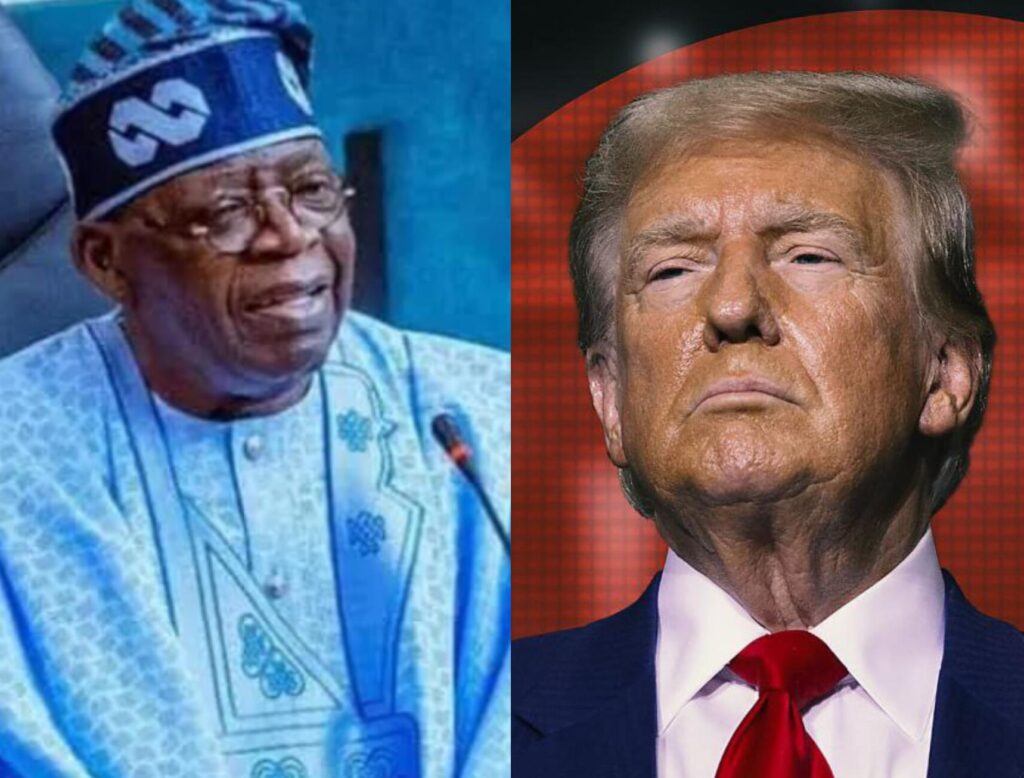
President Bola Tinubu and President Donald Trump.

Share on FacebookShare on Twitter

Nigeria, which has 200 ethnic groups practicing Christianity, Islam, and traditional religions, has a long history of peaceful coexistence. But it has also seen flare-ups of violence among groups, often exacerbated by ethnic divisions or conflict over scarce resources.

The continued bombings, killings, kidnappings, and the destruction of property by the Boko Haram are a great concern to the Nigerian government and the international community. Its activities have severe economic impacts on those states in the northeast of Nigeria. Correspondingly, the militant group has killed tens of thousands of people since it was founded in 2002. In 2014, the group kidnapped more than 250 schoolgirls in Borno State, Nigeria.

While criminal gangs and kidnappers operate in the Northwest. They often target people in rural, underserved communities. In the Middle Belt, including states like Benue, Plateau, Nasarawa, and Southern Kaduna, many lives have been lost in communal and pastoralist violence. However, an analyst says the U.S. has previously faced accusations—including from American lawmakers—that the United States Agency for International Development (USAID) has allegedly financed terrorism in Africa.

Nigeria-U.S. Diplomacy and the Trump’s Military Action Threats

While the US is a world power and has enormous influence on the pace of economic and political trends in the world, Nigeria’s regional influence in Africa, particularly at a time when South Africa was being ravaged by apartheid, situated it for political and economic leadership on the continent. It, therefore, became imperative for the two nations to cooperate even if only for their national interests.

But even where the countries have been known to maintain generally cordial relationships over the years, it has not been a bed of roses either. Many times, the relationship has run into troubled waters on the political, diplomatic, or economic front. The US has been a strong ally of Nigeria in spite of the latter’s checkered political developments dominated by intermittent military interregnums.

In late October–early November 2025, U.S. President Donald Trump openly accused the Nigerian government of allowing mass killings of Christians in the West African nation.  Furthermore, he ordered the Pentagon to make plans to take military action against them. He also threatened to “stop all aid and assistance to Nigeria and may very well go into that now disgraced country, ‘guns-a-blazing,’ to completely wipe out the Islamic terrorists who are committing these horrible atrocities.”

US security aid to Nigeria remains significant. It approved sales of sophisticated precision military weapons worth US$346 million to Nigeria and has offered training support for Nigerian soldiers. The US could end that deal, but that would undermine Nigeria’s ability to address terrorism and general security challenges. It would counter the purpose of the International Religious Freedom Act.

Asked if he envisioned troops on the ground or air strikes in Nigeria, Trump told reporters aboard Air Force One, “Could be. I mean, other things. I envisage a lot of things. They’re killing record numbers of Christians in Nigeria … They’re killing the Christians, and killing them in very large numbers. We’re not going to allow that to happen.”

What do the statements mean?

Meanwhile, the U.S. president’s threat of military action came a day after his administration added Nigeria back to a “Countries of Particular Concern” list of nations that the U.S. says have violated religious freedoms. Other nations on the list include China, Myanmar, North Korea, Russia, and Pakistan. Though the Nigerian Foreign Ministry has said the country would keep fighting violent extremism and that it hoped Washington would remain a close ally, saying it “will continue to defend all citizens, irrespective of race, creed, or religion.”

The “country of particular concern” status is an official classification under the US International Religious Freedom Act of 1998. The act requires the president of the US to declare this status where the government of a country has “engaged in or tolerated particularly severe violations of religious freedom.”

Max Siollun, a historian and the author of ‘The Forgotten Era: Nigeria Before British Rule,’ in his analysis in the Financial Times noted that Nigeria’s sudden appearance in America’s military crosshairs is a jarring shock because Abuja and Washington have been long-time economic and military allies.

Max said, “Nigeria previously wielded economic and military deterrents. Formerly nicknamed “The Giant of Africa,” Nigeria is Africa’s largest crude oil exporter and most populous nation and, for most of the past 60 years, was the continent’s richest and most powerful country. Twenty years ago, the US bought around 400 million barrels of crude oil from Nigeria per year. In the 1990s, Nigeria’s military was so powerful that it simultaneously intervened in Liberia and Sierra Leone to stop civil wars in both countries.’’

Read also

Former CAR president faces crimes against humanity trial

Kenya to pay compensation to almost 2,000 victims of violent protests

South Africa’s Ramaphosa warns against scapegoating migrants for economic woes

‘But Nigeria no longer has the international clout it once did. These days, the US exports more crude oil to Nigeria than it buys, and Nigeria’s military is too overwhelmed with internal security challenges to embark on ambitious extraterritorial missions. Nigeria used to be the US’s biggest African trading partner. That title has shifted to South Africa, while Nigeria’s economic attention has turned east. Its current biggest trading partner is China,’’ he argued.

Diplomatic and Geopolitical Implications for Nigeria–U.S. partnership

Trump’s assertions echo claims that have gained traction among right-wing and Christian evangelical circles in the past months. US Senator Ted Cruz, a Trump ally, blamed Nigerian officials for what he called “Christian massacres” and introduced in September the Nigeria Religious Freedom Accountability Act of 2025, which, he said, aims to hold officials who “facilitate Islamic Jihadist violence and the imposition of blasphemy laws” accountable.

The New York Times report recently noted that the US defense officials said that US Africa Command (AFRICOM) has drawn up three escalatory plans for Nigeria, including light, medium, and heavy options, and submitted them to the Joint Staff at the Pentagon. According to the officials, the light option would involve “partner-enabled” operations, with the US military and State Department supporting Nigerian forces against Boko Haram and other militant groups.

The medium option envisions drone strikes on militant camps and convoys, though US forces no longer have nearby bases in neighboring Niger and would face logistical and diplomatic challenges. The heavy option would deploy an aircraft carrier group and long-range strike assets, but officials said such a move is not currently a US national security priority.

Military officials said the US forces are unlikely to end the West African country’s decades-long insurgency and would have a limited impact without an Iraq- or Afghanistan-style campaign, which they say is not seriously being considered. “It would be a fiasco,” retired Maj. Gen. Paul D. Eaton said, adding that neither the public nor President Trump, beyond social media posts, appears interested in a large-scale ground war in Nigeria, and any US airstrikes would likely cause little more than shock, which he likened to “pounding a pillow.”

Security experts said any U.S. air strikes would most likely seek to target small groups scattered across a very large swathe of territory, a task that could be made more difficult given the U.S. withdrew its forces last year from Niger, which borders Nigeria in the north. The militant groups move between neighboring countries Cameroon, Chad, and Niger, and the experts said the U.S. may require help from the Nigerian military and government, which Trump threatened to cut off from assistance.

Is there any religious genocide in Nigeria?

Nigeria has witnessed cases of violent religious conflicts since its independence from Britain in 1960.  Although successive military and civilian regimes have since struggled to curtail the string of what is called “religious violence”, which is often linked to issues such as ethnicity, resource management, competition for resources, and colonial boundaries.

However, regional, Nigerian, and African Union leaders have disagreed with the assertion of a “Christian genocide”; they also urge local resolutions and caution that an outside military response would be disastrous.

There is no genocide in northern Nigeria, according to the African Union Commission chairperson, Mahmoud Ali Youssouf. Rejecting accusations by U.S. President Donald Trump that “very large numbers” of Christians were being killed in Africa’s most populous country.

“What’s going on in the northern part of Nigeria has nothing to do with the kind of atrocities we see in Sudan or in some part of eastern DRC,” Mahmoud Ali Youssouf told reporters at the United Nations in New York, referring to the Democratic Republic of Congo. “Think twice before… making such statements,” he said. “The first victims of Boko Haram are Muslims, not Christians.”

“The characterization of Nigeria as religiously intolerant does not reflect our national reality, nor does it take into consideration the consistent and sincere efforts of the government to safeguard freedom of religion and beliefs for all Nigerians,” said Nigerian President Bola Tinubu in response to the US claims.

Similarly, this shows that there are targeted attacks against Christians in parts of Nigeria. But they are a fraction of the attacks and killings carried out by non-state armed groups in the country. As one study argued, Christians make up roughly half of Nigeria’s population, but attacks explicitly directed against them account for about 5% of total reported violent incidents. Therefore, framing Nigeria’s insecurity in terms of anti-Christian violence alone oversimplifies the broader dynamics of the country’s national insecurity.

Human rights experts have said most Boko Haram victims have been Muslims. According to available data, most victims of armed groups’ attacks in the northeast (mostly in Yobe, Borno, and Adamawa states) are Muslims. Also, terrorist groups regard anyone who opposes them as an enemy, regardless of their faiths. They continue to launch attacks on mosques and churches and assassinate both Muslims and Christians.

What Nigeria should do

Nigeria has made gains in its counterterrorism efforts, which have included military and non-military approaches. But a lot still needs to be done to avert threats such as those from terror groups. Nigeria must prevent diplomatic rows with the US because they are partners in the fight against terrorism. A discussion about how the US can improve Nigeria’s capacity to address its security challenges would be a good step.

Furthermore, Nigeria’s limited capacity to safeguard lives and property points to deeper structural and governance challenges. The country’s security architecture is too centralized and works top-down. This makes it harder for sub-national and local authorities to provide security and address the drivers of violence at the local level.

Folahanmi Aina, lecturer in Political Economy of Violence, Conflict and Development, SOAS, University of London, noted that a first step would be to strengthen border security and management by using advanced technologies, including facial recognition technology and unmanned aerial vehicles, to complement human intelligence on the ground.

The political scientist indicated that the establishment of temporary military positions across Nigeria’s north-central region for rapid deployment would provide useful offensive bulwarks against the advancement and expansion of armed groups into the north-central region. Aina added that the sub-national states within the region must also get and use tactical early warning mechanisms.

The scope of Nigeria’s foreign policy should no longer be limited to continental affairs. It should be focused worldwide and geared toward the promotion of our cultural heritage and scientific, economic, and technical cooperation with viable partners. Finally, Nigerian foreign policy should aim at creating benefits for the betterment of the people. It should no longer focus on Africa without clearly defined policy objectives.

Such a policy shift would mean a very careful choice of external actors. Experts say Nigeria needs to make a careful choice of our closest allies based not on the wealth or technological advancement of the partner but on Nigeria’s vital national interests in the cultural, economic, political, scientific, and technical areas, as well as in the military field.

What the U.S. should do  

“To assist the country in its fight against terrorism, the US needs to reconsider the classification of Nigeria and revert to the first step identified earlier: diplomacy and direct engagement,” says Olayinka Ajala, an associate professor in politics and international relations at Leeds Beckett University.

Second, the US should support Nigeria’s effort to identify the sponsors of these groups and their sources of finance within and outside the country. Third, there is a need for a regional and international approach to curb the menace of terrorism in Nigeria and the West African and Sahel regions. The US could play a significant role in supporting organizations such as the Multi-National Joint Task Force, which was set up to fight terrorism in the region.

In conclusion, Nigeria should go beyond improving its military response. To enhance security, it also needs to reform its governance and administrative structures.
Source: Qiraat Africa
Tags: Christian Genocide claimDonald TrumpNigeria-U.S. Relations
Oyebamiji Usman Adesoji

Oyebamiji Usman Adesoji

Writer and researcher on business, entrepreneurship and geopolitical affairs.

Related Posts

G7 leaders call for strong, coordinated response to Ebola outbreak
East Africa

G7 leaders call for strong, coordinated response to Ebola outbreak

June 16, 2026
Nigeria arrests ex-power minister Mamman after 75-year graft sentence
Featured

Nigeria puts hundreds more people on trial in crackdown on militancy

June 16, 2026
The promise and risks of Kenya’s ambitious new strategy to close refugee camps
East Africa

The promise and risks of Kenya’s ambitious new strategy to close refugee camps

June 15, 2026
Schooling is the most severely affected by conflict when children are the target – Study
Central Africa

Schooling is the most severely affected by conflict when children are the target – Study

June 15, 2026
Middle east fuel crisis keeps Mozambique fishermen ashore
East Africa

Middle east fuel crisis keeps Mozambique fishermen ashore

June 15, 2026
Somaliland president visits Israel in defiance of Mogadishu
East Africa

Somaliland president visits Israel in defiance of Mogadishu

June 15, 2026

Search Qiraat Africa

No Result
View All Result

Follow on Twitter

Follow @africanqiraat

Trending

António Agostinho Neto (1922-1979), the “Father of Mothern Angola”

António Agostinho Neto (1922-1979), the “Father of Mothern Angola”

April 12, 2025
Kumbi Saleh, the capital of the ancient Ghana Empire

Kumbi Saleh, the capital of the ancient Ghana Empire

October 13, 2025
Infographic: Kidnapping in Nigeria – Facts and Figures

Infographic: Kidnapping in Nigeria – Facts and Figures

May 22, 2024
Eduardo Mondlane (1920-1969): Mozambican Revolutionary and Anthropologist

Eduardo Mondlane (1920-1969): Mozambican Revolutionary and Anthropologist

May 14, 2026
Abubakar Gumi (1924–1992): Nigerian Islamic scholar and Grand Khadi of the Northern Region of Nigeria

Abubakar Gumi (1924–1992): Nigerian Islamic scholar and Grand Khadi of the Northern Region of Nigeria

January 15, 2026
Samori Touré (1830-1900): Military leader and founder of Wassoulou Empire

Samori Touré (1830-1900): Military leader and founder of Wassoulou Empire

January 11, 2026

Facebook

Sections

  • About Us
  • Privacy Policy
  • Opinion
  • Infographics
  • News
  • Analysis
  • Figures
  • Culture & Literature
  • Follow Ups
  • Historical Readings
  • Interview
  • Studies


© Copyright Qiraat Africa. Developed by Bunnaj Media .

No Result
View All Result
  • News
  • Analysis & Report
  • Studies
  • Opinion
  • Interview
  • Culture & Literature
  • Figures
  • Historical Readings
  • Regions

© 2021 Copyright Qiraat Africa.