










Qiraat Africa
عربي  |  Fr
Advertisement
  • News
    • All
    • Climate Change
    • Economy
    • Education
    • Energy
    • Health
    • Migration
    • Mining
    • Politics
    • Security
    • Society
    • Sport
    Almonty and Rwanda form tungsten venture backed by US economic framework

    Almonty and Rwanda form tungsten venture backed by US economic framework

    Nairobi to host 2029 World Athletics Championships in African first

    Nairobi to host 2029 World Athletics Championships in African first

    International financial crime watchdog removes Senegal from ‘grey list,’ adds some others

    Senegal and Eni sign MoU to evaluate five offshore blocks

    Nigeria’s NLNG aims to start up Train 7 LNG project by end-2027

    Nigeria’s NLNG aims to start up Train 7 LNG project by end-2027

    Nigeria’s Dangote aims to end Africa’s fertiliser imports

    Nigerian billionaire Dangote launches oil refinery IPO, Africa’s biggest share sale

    The interpreter giving a voice to the deaf in Abidjan

    The interpreter giving a voice to the deaf in Abidjan

    Senegalese leader Bassirou Diomaye Faye denies rift with PM Ousmane Sonko

    Senegal’s President to meet IMF chief in Washington on September 15

    Ukraine says Niger’s move to cut relations is ‘regrettable’

    Niger appoints new Chief of Staff of Armed Forces after foiled mutiny

    Cameroon’s economic capital Douala wakes up underwater after heavy rains

    Cameroon’s economic capital Douala wakes up underwater after heavy rains

  • Analysis
    • All
    • Climate Change
    • Digital & Tech
    • Economy
    • Energy & Power
    • Health
    • Politics
    • Security
    • Society
    DRC on a mission to financing the world’s largest hydropower dam

    DR Congo: The INGA Dam Paradox

    Cameroon uncovers more than 200 illegal gold mines, mostly foreign-owned

    Mineral Beneficiation: A Pipedream of Prosperity in an Unequal Financial Architecture

    Zambia signs $1.1 Billion deal to build major oil refinery in Copperbelt

    Is Zambia’s Economy Rebounding Under President Hakainde Hichilema?

    Nigeria considers crude supply reforms to aid Dangote, other refiners

    Refinery rivalry: billion‑dollar oil projects expose East Africa’s long‑running regional tensions

    Zambia’s chaotic but decisive election: government demonstrates strength, democracy shows weakness

    Zambia’s chaotic but decisive election: government demonstrates strength, democracy shows weakness

    African Finance Corp says Gabon political situation a ‘good coup’

    Why African countries must rethink how they grow their economies

    DR Congo says it will receive third-country deportees under new deal with US

    Beyond the Outbreak: How Ebola Reshaped East & Central Africa’s Economies

    What Happens After Dandora? Kenya’s Green Transition Faces Its Hardest Test

    What Happens After Dandora? Kenya’s Green Transition Faces Its Hardest Test

    African entrepreneurs work in challenging environments, and others may benefit from the skills they have developed

    African entrepreneurs work in challenging environments, and others may benefit from the skills they have developed

  • Studies
    China could drive Africa’s renewable energy revolution, report says

    A study shows wind and solar projects in Kenya and South Africa don’t always benefit the communities that host them

    Angola’s lengthy war shaped the way farmers utilised fire—why it matters

    Angola’s lengthy war shaped the way farmers utilised fire—why it matters

    Schooling is the most severely affected by conflict when children are the target – Study

    Schooling is the most severely affected by conflict when children are the target – Study

    Pensions for Botswana’s elderly are expanding, but care services are lacking—study follows 20 years

    Pensions for Botswana’s elderly are expanding, but care services are lacking—study follows 20 years

    60 new cosmic structures have been discovered by South Africa’s MeerKAT telescope, which is mapping previously unseen gaps between galaxies

    60 new cosmic structures have been discovered by South Africa’s MeerKAT telescope, which is mapping previously unseen gaps between galaxies

    Benin government says armed forces foil coup attempt

    Coup contagion? A rash of African power grabs suggests copycats are taking note of others’ success

    One in three South Africans have never heard of AI: what this means for policy

    One in three South Africans have never heard of AI: what this means for policy

    Social Media as a Catalyst for the Spread of Dangerous Wealth Ritual Myths

    Social Media as a Catalyst for the Spread of Dangerous Wealth Ritual Myths

    Overcoming Education Barriers for Young Mothers in Sub-Saharan Africa

    Overcoming Education Barriers for Young Mothers in Sub-Saharan Africa

  • Infographics
  • Figures
    Zumbi dos Palmares (1655-1695): Afro-Brazilian leader of the great Palmares Quilombo

    Zumbi dos Palmares (1655-1695): Afro-Brazilian leader of the great Palmares Quilombo

    Léon M’ba (1902-1967): First president of independent Gabon

    Léon M’ba (1902-1967): First president of independent Gabon

    Namibia to vote in toughest election yet for ruling party

    Netumbo Nandi-Ndaitwah: President of Namibia

    Ahmadu Bello (1910-1966): Nigerian statesman

    Ahmadu Bello (1910-1966): Nigerian statesman

    Cameroon President Paul Biya marks 41 years in power

    Paul Biya: President of Cameroon

    Al-Hajj Salim Suwari (fl. c. 13th–15th century): West African Soninke Islamic scholar

    Al-Hajj Salim Suwari (fl. c. 13th–15th century): West African Soninke Islamic scholar

    Strive Masiyiwa: Zimbabwean businessman and philanthropist

    Strive Masiyiwa: Zimbabwean businessman and philanthropist

    Diébédo Francis Kéré: Burkinabé-German architect

    Diébédo Francis Kéré: Burkinabé-German architect

    Herbert Wigwe (1966-2024): Nigerian banker and businessman

    Herbert Wigwe (1966-2024): Nigerian banker and businessman

  • History
    Lower Valley of the Omo, Ethiopia

    Lower Valley of the Omo, Ethiopia

    Sudano-Sahelian style mosques, northern Côte d’Ivoire

    Sudano-Sahelian style mosques, northern Côte d’Ivoire

    Taï National Park, Côte d’Ivoire

    Taï National Park, Côte d’Ivoire

    Medinas, the Historic Sultanates of the Comoros

    Medinas, the Historic Sultanates of the Comoros

    Aldabra Atoll, Seychelles

    Aldabra Atoll, Seychelles

    Le Morne Cultural Landscape, Mauritius

    Le Morne Cultural Landscape, Mauritius

    Mount Nimba Strict Nature Reserve, Guinea and Côte d’Ivoire

    Mount Nimba Strict Nature Reserve, Guinea and Côte d’Ivoire

    Sangha Trinational, north-western Congo Basin

    Sangha Trinational, north-western Congo Basin

    Kasubi Tombs, Kampala, Uganda

    Kasubi Tombs, Kampala, Uganda

  • Others
    • Culture / Literature
    • Interview
    • Opinion
  • Countries
    • Country profiles
    • Regions
      • Central Africa
      • East Africa
      • Southern Africa
      • West Africa
No Result
View All Result
  • News
    • All
    • Climate Change
    • Economy
    • Education
    • Energy
    • Health
    • Migration
    • Mining
    • Politics
    • Security
    • Society
    • Sport
    Almonty and Rwanda form tungsten venture backed by US economic framework

    Almonty and Rwanda form tungsten venture backed by US economic framework

    Nairobi to host 2029 World Athletics Championships in African first

    Nairobi to host 2029 World Athletics Championships in African first

    International financial crime watchdog removes Senegal from ‘grey list,’ adds some others

    Senegal and Eni sign MoU to evaluate five offshore blocks

    Nigeria’s NLNG aims to start up Train 7 LNG project by end-2027

    Nigeria’s NLNG aims to start up Train 7 LNG project by end-2027

    Nigeria’s Dangote aims to end Africa’s fertiliser imports

    Nigerian billionaire Dangote launches oil refinery IPO, Africa’s biggest share sale

    The interpreter giving a voice to the deaf in Abidjan

    The interpreter giving a voice to the deaf in Abidjan

    Senegalese leader Bassirou Diomaye Faye denies rift with PM Ousmane Sonko

    Senegal’s President to meet IMF chief in Washington on September 15

    Ukraine says Niger’s move to cut relations is ‘regrettable’

    Niger appoints new Chief of Staff of Armed Forces after foiled mutiny

    Cameroon’s economic capital Douala wakes up underwater after heavy rains

    Cameroon’s economic capital Douala wakes up underwater after heavy rains

  • Analysis
    • All
    • Climate Change
    • Digital & Tech
    • Economy
    • Energy & Power
    • Health
    • Politics
    • Security
    • Society
    DRC on a mission to financing the world’s largest hydropower dam

    DR Congo: The INGA Dam Paradox

    Cameroon uncovers more than 200 illegal gold mines, mostly foreign-owned

    Mineral Beneficiation: A Pipedream of Prosperity in an Unequal Financial Architecture

    Zambia signs $1.1 Billion deal to build major oil refinery in Copperbelt

    Is Zambia’s Economy Rebounding Under President Hakainde Hichilema?

    Nigeria considers crude supply reforms to aid Dangote, other refiners

    Refinery rivalry: billion‑dollar oil projects expose East Africa’s long‑running regional tensions

    Zambia’s chaotic but decisive election: government demonstrates strength, democracy shows weakness

    Zambia’s chaotic but decisive election: government demonstrates strength, democracy shows weakness

    African Finance Corp says Gabon political situation a ‘good coup’

    Why African countries must rethink how they grow their economies

    DR Congo says it will receive third-country deportees under new deal with US

    Beyond the Outbreak: How Ebola Reshaped East & Central Africa’s Economies

    What Happens After Dandora? Kenya’s Green Transition Faces Its Hardest Test

    What Happens After Dandora? Kenya’s Green Transition Faces Its Hardest Test

    African entrepreneurs work in challenging environments, and others may benefit from the skills they have developed

    African entrepreneurs work in challenging environments, and others may benefit from the skills they have developed

  • Studies
    China could drive Africa’s renewable energy revolution, report says

    A study shows wind and solar projects in Kenya and South Africa don’t always benefit the communities that host them

    Angola’s lengthy war shaped the way farmers utilised fire—why it matters

    Angola’s lengthy war shaped the way farmers utilised fire—why it matters

    Schooling is the most severely affected by conflict when children are the target – Study

    Schooling is the most severely affected by conflict when children are the target – Study

    Pensions for Botswana’s elderly are expanding, but care services are lacking—study follows 20 years

    Pensions for Botswana’s elderly are expanding, but care services are lacking—study follows 20 years

    60 new cosmic structures have been discovered by South Africa’s MeerKAT telescope, which is mapping previously unseen gaps between galaxies

    60 new cosmic structures have been discovered by South Africa’s MeerKAT telescope, which is mapping previously unseen gaps between galaxies

    Benin government says armed forces foil coup attempt

    Coup contagion? A rash of African power grabs suggests copycats are taking note of others’ success

    One in three South Africans have never heard of AI: what this means for policy

    One in three South Africans have never heard of AI: what this means for policy

    Social Media as a Catalyst for the Spread of Dangerous Wealth Ritual Myths

    Social Media as a Catalyst for the Spread of Dangerous Wealth Ritual Myths

    Overcoming Education Barriers for Young Mothers in Sub-Saharan Africa

    Overcoming Education Barriers for Young Mothers in Sub-Saharan Africa

  • Infographics
  • Figures
    Zumbi dos Palmares (1655-1695): Afro-Brazilian leader of the great Palmares Quilombo

    Zumbi dos Palmares (1655-1695): Afro-Brazilian leader of the great Palmares Quilombo

    Léon M’ba (1902-1967): First president of independent Gabon

    Léon M’ba (1902-1967): First president of independent Gabon

    Namibia to vote in toughest election yet for ruling party

    Netumbo Nandi-Ndaitwah: President of Namibia

    Ahmadu Bello (1910-1966): Nigerian statesman

    Ahmadu Bello (1910-1966): Nigerian statesman

    Cameroon President Paul Biya marks 41 years in power

    Paul Biya: President of Cameroon

    Al-Hajj Salim Suwari (fl. c. 13th–15th century): West African Soninke Islamic scholar

    Al-Hajj Salim Suwari (fl. c. 13th–15th century): West African Soninke Islamic scholar

    Strive Masiyiwa: Zimbabwean businessman and philanthropist

    Strive Masiyiwa: Zimbabwean businessman and philanthropist

    Diébédo Francis Kéré: Burkinabé-German architect

    Diébédo Francis Kéré: Burkinabé-German architect

    Herbert Wigwe (1966-2024): Nigerian banker and businessman

    Herbert Wigwe (1966-2024): Nigerian banker and businessman

  • History
    Lower Valley of the Omo, Ethiopia

    Lower Valley of the Omo, Ethiopia

    Sudano-Sahelian style mosques, northern Côte d’Ivoire

    Sudano-Sahelian style mosques, northern Côte d’Ivoire

    Taï National Park, Côte d’Ivoire

    Taï National Park, Côte d’Ivoire

    Medinas, the Historic Sultanates of the Comoros

    Medinas, the Historic Sultanates of the Comoros

    Aldabra Atoll, Seychelles

    Aldabra Atoll, Seychelles

    Le Morne Cultural Landscape, Mauritius

    Le Morne Cultural Landscape, Mauritius

    Mount Nimba Strict Nature Reserve, Guinea and Côte d’Ivoire

    Mount Nimba Strict Nature Reserve, Guinea and Côte d’Ivoire

    Sangha Trinational, north-western Congo Basin

    Sangha Trinational, north-western Congo Basin

    Kasubi Tombs, Kampala, Uganda

    Kasubi Tombs, Kampala, Uganda

  • Others
    • Culture / Literature
    • Interview
    • Opinion
  • Countries
    • Country profiles
    • Regions
      • Central Africa
      • East Africa
      • Southern Africa
      • West Africa
No Result
View All Result
Qiraat Africa
عربي  |  Fr
No Result
View All Result
Home Regions East Africa

The Critical Role of Gold in Tanzania’s Economic Growth

Oyebamiji Usman Adesoji by Oyebamiji Usman Adesoji
October 26, 2025
The Critical Role of Gold in Tanzania’s Economic Growth
Share on FacebookShare on Twitter

Tanzania is a country enriched with prospective geological environments; it is endowed with diverse mineral resources ranging from metallic/nonmetallic minerals, including critical minerals (graphite, nickel, cobalt, lithium, REE, niobium, manganese, iron, phosphate, potash, etc.), gemstones, industrial minerals, and energy minerals (coal and uranium), to available records of both explored and unexplored mineral grounds. In addition, the sector provides millions of direct and indirect jobs along the value chain. Besides, Tanzania has a huge deposit of industrial minerals that are potential drivers of high-technology industrialization.

Experience from the Four Tigers (South Korea, Singapore, Taiwan, and Hong Kong) have shown how specialization in mineral-based industrialization via semiconductor electronic industrial economic zones resulted in the growth of a modern industrial base that managed 30 to 40 percent GDP contribution of manufacturing. Rare earth minerals, along with other types of industrial minerals, are found in nearly all regions of Tanzania, as per the mineralogic map. Hence, there is a potential to strategically exploit the mining sector as an innovative backup, as an economic backbone, and as a source of industrial growth.

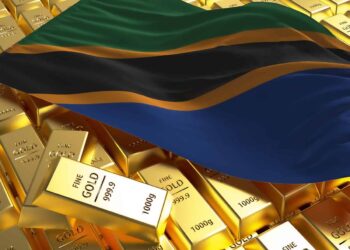
Account reliant on a narrow export base, Tanzania is now showing progress in diversifying its sources of foreign exchange. With tourism now neck-and-neck with gold in export value, the economy is becoming more balanced—less vulnerable to commodity price shocks and more resilient in the face of global economic uncertainty. The value of gold exports from Tanzania in the year to August was up 36% from a year ago, according to the country’s central bank, as the precious metal surged to record highs. In Tanzania, recently, the price of gold topped $4,000 per ounce for the first time—50% higher than last year, an increase that helped gold become the country’s top export earner.

Recent Tanzania mining law reforms (royalties, supervision) have led to substantial revenue increases in Geita District. A study found that revenue collected rose from ~ TZS 196 billion to TZS 664 billion over a four-year span after reforms. Mining contributes to local employment and has some knock-on investments in infrastructure, education, etc. For example, community studies around Geita show contributions of the mining sector to local education, though with gaps. In small-scale/artisanal mining in places like Mugusu (in Geita), mining is a major livelihood activity. It provides income, though often informal.

Artisanal and small-scale gold mining is considered to be the most appropriate means of improving local communities’ livelihoods. As articulated in a study titled Situational Analysis of Gold Processing Practices at Artisanal and Small-Scale Gold Mining in Tanzania, it indicates that the ASGM subsector in Tanzania continues growing, with people involved directly in ASGM ranging between 1 and 1.5 million. Further, the study indicates that ASGM in Tanzania contributes about 90% of the total employment in the mining sector and contributed 30% of total gold production (42 tonnes) in the year 2020/2021.

While the average monthly revenue collection from mineral commodities in Tanzania has increased from TZS 1.7 billion to TZS 7.06 billion after the establishment of mineral markets. Moreover, the study indicates ASGM still employs inefficient processing methods such as manual crushing, sluicing with manually regulated water flow rate and environmentally polluted gold recovery methods such as amalgamation.

Tanzanian Mining Policies: A New Epoch for Investors

The last two decades witnessed growth in Foreign Direct Investment (FDI) in Tanzania’s mining sector, resulting from the government’s opening up the doors for foreign capital. Apparently, gold remains a cornerstone of Tanzania’s mining industry and the country’s economy, accounting for ~90% of total mineral exports. The government has actively sought to facilitate and encourage further investment in this space, while also looking to ensure that gold mining activities contribute to Tanzanian national prosperity.

Moreover, the government has introduced the Mining (State Participation) Regulations, 2022, which include a template Framework Agreement (FWA) to govern the relationship between the government and a mining investor. The FWA covers various aspects, including fiscal and legal provisions, to increase contractual stability for large-scale mining projects. Also, a new online portal launched in 2023 allows companies to track license applications, reducing bureaucracy and enhancing transparency.

To boot, the policies governing artisanal and small-scale gold mining (ASGM) in Tanzania present several opportunities for enhancing the sector’s economic contribution. Mining policies were implemented in the country beginning in 1997 and 1998 to manage the mining sector, followed by the Mining Act of 2010. After significant regulatory change and uncertainty from 2017 to around 2021, the government has taken a more practical approach to reforming and implementing the mining regulatory regime. The Mining Act, 2010, most recently amended by the Finance Act, 2024, has introduced significant reforms to modernize the industry and ensure that Tanzania and the Tanzanian people are beneficiaries of the country’s rich mineral wealth. Among other things:

  • The Natural Wealth and Resources Contracts (Review and Re-negotiation of Unconscionable Terms) Act, 2017 (‘Unconscionable Terms Act’), mandates the government to renegotiate or remove terms from investor-state agreements that Parliament considers ‘unconscionable.’
  • The Natural Wealth and Resources (Permanent Sovereignty) Act, 2017 (‘Permanent Sovereignty Act’) requires Parliamentary approval for future investors-state agreements, which must ‘fully secure’ the interest of Tanzanian citizens, and restrict investors from exporting raw minerals, repatriating funds and accessing international dispute resolution
  • The Written Laws (Miscellaneous Amendments) Act, 2017 (‘Miscellaneous Amendments Act’) amends the Mining Act, 2010 by establishing a Mining Commission to regulate the industry, overhauling the requirements for the storage, transformation, and beneficiation of raw minerals, and increasing royalty rates and government shareholding in mineral right holders.
  • The Mining Act [CAP.123 R.E. 2019], it is emphasising the regulation of the laws relating to prospecting for minerals, mining, processing, and dealing in minerals with minimal concerns of environmental and community health issues.
  • Tanzania’s Mining (Local Content) Regulations, 2018, seek to promote and enhance the local mining economy and facilitate greater participation of Tanzanian citizens and companies in the mining industry by ensuring that natural resources are not simply extracted by foreign-owned companies and exported in raw form for beneficiation and value addition offshore.
  • Mining State Participation Regulations, 2022 (which have provided much-needed clarity in relation to previously uncertain requirements in this respect), the government is entitled to a 16% free carried interest in mining projects in respect of which mining licenses and special mining licenses have been granted. To implement these arrangements, an FWA and a shareholders’/joint venture agreement will typically be negotiated, where all key terms will be agreed.

In January 2025 the Ministry of Minerals held a stakeholder engagement forum focused on the draft Tanzania Critical and Strategic Minerals Strategy. This strategy identifies several critical minerals as being of core importance to the sector’s development and outlines plans to support developments in several key areas (including renewable energy). Besides, constructive discussions in relation to the draft strategy took place between various government stakeholders and the private sector, and the government team was receptive to understanding and discussing key private sector concerns and considerations.

Furthermore, the study indicates that empirical evidence collected through document review, interviews, observation, informal consultation, pairwise ranking, and Focus Group Discussions (FGDs) suggests that large-scale mining has short- and long-term harmful impacts on the right to a clean and healthy environment. Therefore, the challenges and negative impacts of mining in Tanzania are:

  • Environmental risks: There have been incidents of water contamination. After heavy rainfall, water from a storage pond at North Mara leaked and caused the Tigithe River to have a very low pH (~4.8), which is harmful to aquatic life; locals also reported livestock deaths, crop damage, and health issues from using water. Similarly, tailings storage facility microseepage in Geita has raised concerns. Water quality parameters downstream are affected (pH, nitrates, etc.).
  • Social welfare trade-offs: While mining brings income, it also causes environmental damage, health risks, reductions in agricultural yields, etc. The institutional strategies to mitigate these are present but often under capacity or poorly enforced. Local communities allege that large-scale mining operations have compromised the right to a clean, safe, healthy environment.
  • Monitoring and evaluation/community participation issues: There are governance and accountability concerns: community complaints about impact and sometimes weak enforcement or slow remediation. Local communities often feel excluded from decisions, even though they’re affected. For example, studies in Nyakabale Village (Geita) found that project sustainability suffers when community M&E systems are weak or absent.

The Golden Path: Tanzania’s Rising Export Trends Analysis

Since the 1990s the mining sector in Tanzania has largely been dominated by some precious minerals, mostly gold, diamonds, and gemstones such as tanzanite, ruby, sapphire, and spinel. Government income lost through smuggling could significantly improve essential services like infrastructure projects and socio-economic initiatives.

All the same, with a more pragmatic approach to regulation, a focus on critical minerals, and strategic government initiatives—particularly in relation to local value addition and beneficiation—the country is positioning itself as a leader in Africa’s mining industry at a time when several other traditional mining jurisdictions are struggling to attract investment.

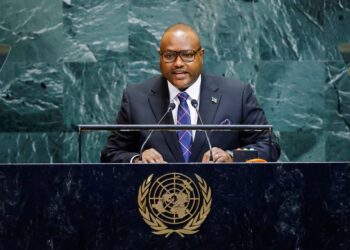
In addition, “Tanzania’s mining sector contributed 9.1 percent to GDP in 2023, fueled by foreign direct investment, exploration, and diversification. As Africa’s fourth-largest gold producer, the country is expanding its nickel and graphite sectors, which are critical to the renewable energy and electric vehicle industries,” said Edgar Mwasha, Stanbic Bank Tanzania (SBT)’s Vice President, in February 2025, at the African Mining Indaba, a South African yearly mining event in Cape Town.

According to the media report, he also unveiled that Tanzania has invested over $6.7 billion in infrastructure, including the Standard Gauge Railway (SGR), which is expected to reduce mineral transport costs by up to 30 percent.

“This will link mining sites to export hubs in Burundi, DRC, and Rwanda. Ports in Dar es Salaam, Mtwara, and Tanga are also undergoing expansions to improve export efficiency,” he said. Furthermore, Mwasha emphasized how these projects are enhancing Tanzania’s mining appeal.  “Infrastructure is key to successful mining operations. The Nyerere Hydroelectric Power Project (JNHP) will provide stable, cost-effective power, reducing operational costs and boosting global competitiveness.”

Overall, the endowment of minerals of various types and uses gives Tanzania a competitive edge and comparative as well as competitive advantage to diversify the economy. Recent trends have confirmed how the mining sector’s contribution to total export has grown spontaneously from just US $26 million in 1997, which by then constituted about 1 percent of total exports, to US $2.9 billion by 2023, which is over 50 percent of total merchandise exports. The precious minerals, led by gold, have been a major contributor, with gold making over 80 percent of this value.

Read also

Almonty and Rwanda form tungsten venture backed by US economic framework

Nairobi to host 2029 World Athletics Championships in African first

Senegal and Eni sign MoU to evaluate five offshore blocks

For instance, the value of exports of commodity group 7108 “Gold (including gold plated with platinum) unwrought or in semi-manufactured forms, or in powder form” from Tanzania totalled $3.05 billion in 2023. Sales of commodity group 7108 from Tanzania went up by 7.89% compared to 2022: exports of commodity group 7108, “Gold (including gold plated with platinum) unwrought or in semi-manufactured forms, or in powder form,” went up by $223 million (cumulative exports of commodity group 7108 from Tanzania amounted to $2.83 billion in 2022).

According to available data, exports of commodity group 7108 “Gold (including gold plated with platinum) unwrought or in semi-manufactured forms, or in powder form” amounted to 42% of total exports from Tanzania (cumulative merchandise exports from Tanzania totalled $7.27 billion in 2023). The share of commodity group 7108 in total exports from Tanzania increased by 0.509 p.p. compared to 2022 (it was 41% in 2022, and cumulative exports from Tanzania were equal to $6.82 billion).

Furthermore, exports of commodity group 7108 amounted to 97% of total sales of the group “”from Tanzania in 2023 (the value of exports of the commodity group from Tanzania amounted to $3.13 billion in 2023). The share of exports of commodity group 7108 in sales of commodity groups from Tanzania increased by 3.07 p.p. compared to 2022 (it was 94% in 2022, and exports of commodity groups from Tanzania were $3 billion).

In its latest figures on the state of the national economy, the Bank of Tanzania (BoT) [August 2025 Monthly Economic Review (MER)] shows that gold exports increased to US$3,977.6 million from US$3,148 million, supported by favorable global market prices and central bank purchases. Analysts say the expansion of the gold sector is stimulating local procurement, with mining companies sourcing more goods and services—such as logistics, engineering, and catering—from Tanzanian suppliers.

However, analysts warned that a reliance on foreign investors and joint ventures means a large part of gold export revenues leaves Tanzania’s economy. “The long-term goal should be building local capacity,” Gorah Abdallah, a lecturer at the Tanzania Institute of Accountancy, told The Citizen. The price of gold, a safe haven asset in times of global uncertainty, has been driven up by factors including expectations of a US Federal Reserve rate cut and the US government shutdown, observers added.

Looking Ahead

Development strategists say the surge in gold exports and tourism receipts is far more than a short-term boom—it’s a strategic inflection point. With stronger foreign exchange inflows, macroeconomic stability, rising government revenue, and expanded business opportunities, Tanzania is well-positioned to fast-track its national development agenda.

Gold export revenue has a positive and significant impact on economic growth in Tanzania; therefore, gold production and exportation must be increased to increase the share of economic growth in Tanzania. For the big results of GDP, the government must empower citizens with skills and technology. This will help to increase the quality and value of gold exported to the world market, which will increase more revenue to the country.

Meanwhile, giant firms and governments in the world involved in the exploitation of gold in Tanzania and Africa must increase responsibility, accountability, and transparency on tax deals; incentives must be avoided, and their capital flight must be controlled so that more money gained from sales of gold exports and other natural resources, to a large extent, must be ploughed back into the domestic economy before its depletion point and bring about development in the country.

Similarly, a clear strategy is required on how to use gold for development. Gold export value can be used to supply the nation with technological needs. It can also protect the country during an economic crisis and help stabilize the economy through stable currency, unlike where there is no link to gold export and economic growth.

In sum, experts as well suggest that mining sector transformation will have the largest linkage and multiplier effect on the economy through benefiting all regions and covering numerous aspects of value chains, with the majority of youth, women, and other job seekers benefiting from the available opportunities. The industrial minerals and energy minerals, combined with other precious stones, will be key in attracting international investors to come and settle in Tanzania for value-added maximization. Trade policies are adopted to discourage the export of primary products and encourage the export of manufactured mineral products.
Source: Qiraat Africa
Tags: Tanzania
Oyebamiji Usman Adesoji

Oyebamiji Usman Adesoji

Writer and researcher on business, entrepreneurship and geopolitical affairs.

Related Posts

Nigeria’s NLNG aims to start up Train 7 LNG project by end-2027
Energy

Nigeria’s NLNG aims to start up Train 7 LNG project by end-2027

September 15, 2026
Nigeria’s Dangote aims to end Africa’s fertiliser imports
Energy

Nigerian billionaire Dangote launches oil refinery IPO, Africa’s biggest share sale

September 14, 2026
The interpreter giving a voice to the deaf in Abidjan
Featured

The interpreter giving a voice to the deaf in Abidjan

September 14, 2026
Senegalese leader Bassirou Diomaye Faye denies rift with PM Ousmane Sonko
Economy

Senegal’s President to meet IMF chief in Washington on September 15

September 14, 2026
Ukraine says Niger’s move to cut relations is ‘regrettable’
Featured

Niger appoints new Chief of Staff of Armed Forces after foiled mutiny

September 13, 2026
Cameroon’s economic capital Douala wakes up underwater after heavy rains
Central Africa

Cameroon’s economic capital Douala wakes up underwater after heavy rains

September 13, 2026

Search Qiraat Africa

No Result
View All Result

Follow on Twitter

Follow @africanqiraat

Trending

Tunka Manin (c. 1010–1078), the last ruler of the Ghana Empire

Tunka Manin (c. 1010–1078), the last ruler of the Ghana Empire

December 12, 2025
Africa’s 10 Strongest Currencies in June 2026

Africa’s 10 Strongest Currencies in June 2026

July 8, 2026
Kumbi Saleh, the capital of the ancient Ghana Empire

Kumbi Saleh, the capital of the ancient Ghana Empire

October 13, 2025
Zaghawa people of northeastern Chad and western Sudan

Zaghawa people of northeastern Chad and western Sudan

March 3, 2026
Samori Touré (1830-1900): Military leader and founder of Wassoulou Empire

Samori Touré (1830-1900): Military leader and founder of Wassoulou Empire

January 11, 2026
Mansa Musa of Mali Empire

Mansa Musa of Mali Empire

April 14, 2025

Facebook

Sections

  • About Us
  • Privacy Policy
  • Opinion
  • Infographics
  • News
  • Analysis
  • Figures
  • Culture & Literature
  • Follow Ups
  • Historical Readings
  • Interview
  • Studies


© Copyright Qiraat Africa. Developed by Bunnaj Media .

No Result
View All Result
  • News
  • Analysis & Report
  • Studies
  • Opinion
  • Interview
  • Culture & Literature
  • Figures
  • Historical Readings
  • Regions

© 2021 Copyright Qiraat Africa.