





Qiraat Africa
عربي  |  Fr
Advertisement
  • News
    • All
    • Climate Change
    • Economy
    • Education
    • Energy
    • Health
    • Migration
    • Mining
    • Politics
    • Security
    • Society
    • Sport
    Senegal’s top opposition leader Sonko vows to help win March 24 election

    Senegal president sacks PM Sonko, dissolves government after months of friction

    Morocco’s King pardons Senegal fans convicted on hooliganism charges

    Benin’s President Talon thanks army leaders for “remaining loyal” in face of attempted coup

    Benin’s Talon bids farewell ahead of Wadagni inauguration, Sunday

    Nigeria busts meth cartel in largest seizure, arrests kingpin

    Nigeria busts meth cartel in largest seizure, arrests kingpin

    Sierra Leone receives first group of West African deportees from US

    Sierra Leone receives first group of West African deportees from US

    WHO declares Ebola outbreak in Congo, Uganda an emergency of international concern

    India, Africa Union postpone New Delhi summit amid Ebola outbreak

    Rwanda says DR Congo shelling injured its citizens

    Rwanda tightens border controls over deadly Ebola outbreak in DR Congo

    Nigeria arrests ex-power minister Mamman after 75-year graft sentence

    Nigeria arrests ex-power minister Mamman after 75-year graft sentence

    Ethiopia says Ghebreyesus, WHO chief has links to rebellious Tigrayan forces

    WHO says 139 suspected Ebola deaths in Congo outbreak, numbers expected to rise

  • Analysis
    • All
    • Climate Change
    • Digital & Tech
    • Economy
    • Energy & Power
    • Health
    • Politics
    • Security
    • Society
    Five Years After the Coup in Mali: Are Stability and Growth Within Reach?

    The Political Economy of Insecurity in Mali: Armed Groups, Resources, and State Fragility

    Ghana to evacuate 300 citizens from South Africa after xenophobic attacks

    Xenophobic Violence and Human Security in South Africa: Causes and Consequences

    Inside an African lab that helped crack the hantavirus outbreak

    Inside an African lab that helped crack the hantavirus outbreak

    Nigeria’s Agricultural sector: Problems and challenges

    Agriculture in Africa: science and research cannot have an impact without investments and good policies

    Mali’s junta creates a new ministerial-level post to oversee the mining sector

    African Mineral Resources: The Controversial Link to US Health Deals

    Ghana curbs offshore investments to protect cedi, boost stability

    Ghana’s mining law attempts to eradicate speculation, but leaves communities in limbo: insights from a lithium case study

    East African Community’s expansion has triggered financial difficulties: why solutions come with risks

    East African Community’s expansion has triggered financial difficulties: why solutions come with risks

    Nigeria’s new election laws leaves gaps: Here are 5 reforms for free, fair, and credible elections

    Nigeria’s new election laws leaves gaps: Here are 5 reforms for free, fair, and credible elections

    Impact of Kenya’s long-overdue new infrastructure fund may be limited by design problems

    Impact of Kenya’s long-overdue new infrastructure fund may be limited by design problems

  • Studies
    Pensions for Botswana’s elderly are expanding, but care services are lacking—study follows 20 years

    Pensions for Botswana’s elderly are expanding, but care services are lacking—study follows 20 years

    60 new cosmic structures have been discovered by South Africa’s MeerKAT telescope, which is mapping previously unseen gaps between galaxies

    60 new cosmic structures have been discovered by South Africa’s MeerKAT telescope, which is mapping previously unseen gaps between galaxies

    Benin government says armed forces foil coup attempt

    Coup contagion? A rash of African power grabs suggests copycats are taking note of others’ success

    One in three South Africans have never heard of AI: what this means for policy

    One in three South Africans have never heard of AI: what this means for policy

    Social Media as a Catalyst for the Spread of Dangerous Wealth Ritual Myths

    Social Media as a Catalyst for the Spread of Dangerous Wealth Ritual Myths

    Overcoming Education Barriers for Young Mothers in Sub-Saharan Africa

    Overcoming Education Barriers for Young Mothers in Sub-Saharan Africa

    Youth Empowerment Through Vocational Training in Rural Sub-Saharan Africa

    Youth Empowerment Through Vocational Training in Rural Sub-Saharan Africa

    Manufacturers in Ghana and Nigeria claim that although corruption damages businesses, digital technologies provide a chance to combat it

    Manufacturers in Ghana and Nigeria claim that although corruption damages businesses, digital technologies provide a chance to combat it

    Environmental Threats and Conservation Efforts in Namibia

    Environmental Threats and Conservation Efforts in Namibia

  • Infographics
  • Figures
    Eduardo Mondlane (1920-1969): Mozambican Revolutionary and Anthropologist

    Eduardo Mondlane (1920-1969): Mozambican Revolutionary and Anthropologist

    William Tubman (1895-1971): Liberian politician and longest-serving president in the country’s history

    William Tubman (1895-1971): Liberian politician and longest-serving president in the country’s history

    Abebe Bikila (1932-1973): Ethiopian marathoner and first black African to win an Olympic medal

    Abebe Bikila (1932-1973): Ethiopian marathoner and first black African to win an Olympic medal

    W. E. B. Du Bois (1868-1963): Sociologist, historian, and Pan-Africanist civil rights activist

    W. E. B. Du Bois (1868-1963): Sociologist, historian, and Pan-Africanist civil rights activist

    Frantz Fanon (1925-1961): Psychiatrist and political philosopher

    Frantz Fanon (1925-1961): Psychiatrist and political philosopher

    Percy Lavon Julian (1899-1975): African American researcher and chemist

    Percy Lavon Julian (1899-1975): African American researcher and chemist

    Harriet Tubman (Araminta Ross, 1822-1913): American abolitionist and social activist

    Harriet Tubman (Araminta Ross, 1822-1913): American abolitionist and social activist

    Dorothy Vaughan (1910-2008): African American mathematician and human computer

    Dorothy Vaughan (1910-2008): African American mathematician and human computer

    George Washington Carver (1864-1943): African American agricultural scientist and inventor

    George Washington Carver (1864-1943): African American agricultural scientist and inventor

  • History
    Laas Geel, Somalia

    Laas Geel, Somalia

    Lakes Of Ounianga, Chad

    Lakes Of Ounianga, Chad

    Nok Caves, Togo

    Nok Caves, Togo

    The Land of Punt (modern Somalia, Eritrea, Ethiopia, or eastern Sudan)

    The Land of Punt (modern Somalia, Eritrea, Ethiopia, or eastern Sudan)

    Avenue of the Baobabs, Madagascar

    Avenue of the Baobabs, Madagascar

    Lopé-Okanda (Gabon)

    Lopé-Okanda (Gabon)

    The Sudd wetland

    The Sudd wetland

    Khami Ruins (Zimbabwe), the capital of the Torwa state

    Khami Ruins (Zimbabwe), the capital of the Torwa state

    Royal Palace, Porto-Novo, Republic of Benin

    Royal Palace, Porto-Novo, Republic of Benin

  • Others
    • Culture / Literature
    • Interview
    • Opinion
  • Countries
    • Country profiles
    • Regions
      • Central Africa
      • East Africa
      • Southern Africa
      • West Africa
No Result
View All Result
  • News
    • All
    • Climate Change
    • Economy
    • Education
    • Energy
    • Health
    • Migration
    • Mining
    • Politics
    • Security
    • Society
    • Sport
    Senegal’s top opposition leader Sonko vows to help win March 24 election

    Senegal president sacks PM Sonko, dissolves government after months of friction

    Morocco’s King pardons Senegal fans convicted on hooliganism charges

    Benin’s President Talon thanks army leaders for “remaining loyal” in face of attempted coup

    Benin’s Talon bids farewell ahead of Wadagni inauguration, Sunday

    Nigeria busts meth cartel in largest seizure, arrests kingpin

    Nigeria busts meth cartel in largest seizure, arrests kingpin

    Sierra Leone receives first group of West African deportees from US

    Sierra Leone receives first group of West African deportees from US

    WHO declares Ebola outbreak in Congo, Uganda an emergency of international concern

    India, Africa Union postpone New Delhi summit amid Ebola outbreak

    Rwanda says DR Congo shelling injured its citizens

    Rwanda tightens border controls over deadly Ebola outbreak in DR Congo

    Nigeria arrests ex-power minister Mamman after 75-year graft sentence

    Nigeria arrests ex-power minister Mamman after 75-year graft sentence

    Ethiopia says Ghebreyesus, WHO chief has links to rebellious Tigrayan forces

    WHO says 139 suspected Ebola deaths in Congo outbreak, numbers expected to rise

  • Analysis
    • All
    • Climate Change
    • Digital & Tech
    • Economy
    • Energy & Power
    • Health
    • Politics
    • Security
    • Society
    Five Years After the Coup in Mali: Are Stability and Growth Within Reach?

    The Political Economy of Insecurity in Mali: Armed Groups, Resources, and State Fragility

    Ghana to evacuate 300 citizens from South Africa after xenophobic attacks

    Xenophobic Violence and Human Security in South Africa: Causes and Consequences

    Inside an African lab that helped crack the hantavirus outbreak

    Inside an African lab that helped crack the hantavirus outbreak

    Nigeria’s Agricultural sector: Problems and challenges

    Agriculture in Africa: science and research cannot have an impact without investments and good policies

    Mali’s junta creates a new ministerial-level post to oversee the mining sector

    African Mineral Resources: The Controversial Link to US Health Deals

    Ghana curbs offshore investments to protect cedi, boost stability

    Ghana’s mining law attempts to eradicate speculation, but leaves communities in limbo: insights from a lithium case study

    East African Community’s expansion has triggered financial difficulties: why solutions come with risks

    East African Community’s expansion has triggered financial difficulties: why solutions come with risks

    Nigeria’s new election laws leaves gaps: Here are 5 reforms for free, fair, and credible elections

    Nigeria’s new election laws leaves gaps: Here are 5 reforms for free, fair, and credible elections

    Impact of Kenya’s long-overdue new infrastructure fund may be limited by design problems

    Impact of Kenya’s long-overdue new infrastructure fund may be limited by design problems

  • Studies
    Pensions for Botswana’s elderly are expanding, but care services are lacking—study follows 20 years

    Pensions for Botswana’s elderly are expanding, but care services are lacking—study follows 20 years

    60 new cosmic structures have been discovered by South Africa’s MeerKAT telescope, which is mapping previously unseen gaps between galaxies

    60 new cosmic structures have been discovered by South Africa’s MeerKAT telescope, which is mapping previously unseen gaps between galaxies

    Benin government says armed forces foil coup attempt

    Coup contagion? A rash of African power grabs suggests copycats are taking note of others’ success

    One in three South Africans have never heard of AI: what this means for policy

    One in three South Africans have never heard of AI: what this means for policy

    Social Media as a Catalyst for the Spread of Dangerous Wealth Ritual Myths

    Social Media as a Catalyst for the Spread of Dangerous Wealth Ritual Myths

    Overcoming Education Barriers for Young Mothers in Sub-Saharan Africa

    Overcoming Education Barriers for Young Mothers in Sub-Saharan Africa

    Youth Empowerment Through Vocational Training in Rural Sub-Saharan Africa

    Youth Empowerment Through Vocational Training in Rural Sub-Saharan Africa

    Manufacturers in Ghana and Nigeria claim that although corruption damages businesses, digital technologies provide a chance to combat it

    Manufacturers in Ghana and Nigeria claim that although corruption damages businesses, digital technologies provide a chance to combat it

    Environmental Threats and Conservation Efforts in Namibia

    Environmental Threats and Conservation Efforts in Namibia

  • Infographics
  • Figures
    Eduardo Mondlane (1920-1969): Mozambican Revolutionary and Anthropologist

    Eduardo Mondlane (1920-1969): Mozambican Revolutionary and Anthropologist

    William Tubman (1895-1971): Liberian politician and longest-serving president in the country’s history

    William Tubman (1895-1971): Liberian politician and longest-serving president in the country’s history

    Abebe Bikila (1932-1973): Ethiopian marathoner and first black African to win an Olympic medal

    Abebe Bikila (1932-1973): Ethiopian marathoner and first black African to win an Olympic medal

    W. E. B. Du Bois (1868-1963): Sociologist, historian, and Pan-Africanist civil rights activist

    W. E. B. Du Bois (1868-1963): Sociologist, historian, and Pan-Africanist civil rights activist

    Frantz Fanon (1925-1961): Psychiatrist and political philosopher

    Frantz Fanon (1925-1961): Psychiatrist and political philosopher

    Percy Lavon Julian (1899-1975): African American researcher and chemist

    Percy Lavon Julian (1899-1975): African American researcher and chemist

    Harriet Tubman (Araminta Ross, 1822-1913): American abolitionist and social activist

    Harriet Tubman (Araminta Ross, 1822-1913): American abolitionist and social activist

    Dorothy Vaughan (1910-2008): African American mathematician and human computer

    Dorothy Vaughan (1910-2008): African American mathematician and human computer

    George Washington Carver (1864-1943): African American agricultural scientist and inventor

    George Washington Carver (1864-1943): African American agricultural scientist and inventor

  • History
    Laas Geel, Somalia

    Laas Geel, Somalia

    Lakes Of Ounianga, Chad

    Lakes Of Ounianga, Chad

    Nok Caves, Togo

    Nok Caves, Togo

    The Land of Punt (modern Somalia, Eritrea, Ethiopia, or eastern Sudan)

    The Land of Punt (modern Somalia, Eritrea, Ethiopia, or eastern Sudan)

    Avenue of the Baobabs, Madagascar

    Avenue of the Baobabs, Madagascar

    Lopé-Okanda (Gabon)

    Lopé-Okanda (Gabon)

    The Sudd wetland

    The Sudd wetland

    Khami Ruins (Zimbabwe), the capital of the Torwa state

    Khami Ruins (Zimbabwe), the capital of the Torwa state

    Royal Palace, Porto-Novo, Republic of Benin

    Royal Palace, Porto-Novo, Republic of Benin

  • Others
    • Culture / Literature
    • Interview
    • Opinion
  • Countries
    • Country profiles
    • Regions
      • Central Africa
      • East Africa
      • Southern Africa
      • West Africa
No Result
View All Result
Qiraat Africa
عربي  |  Fr
No Result
View All Result
Home Analysis & Report

From History’s Shadows: Addressing Apartheid-Era Crimes in South Africa

Oyebamiji Usman Adesoji by Oyebamiji Usman Adesoji
May 12, 2025
From History’s Shadows: Addressing Apartheid-Era Crimes in South Africa

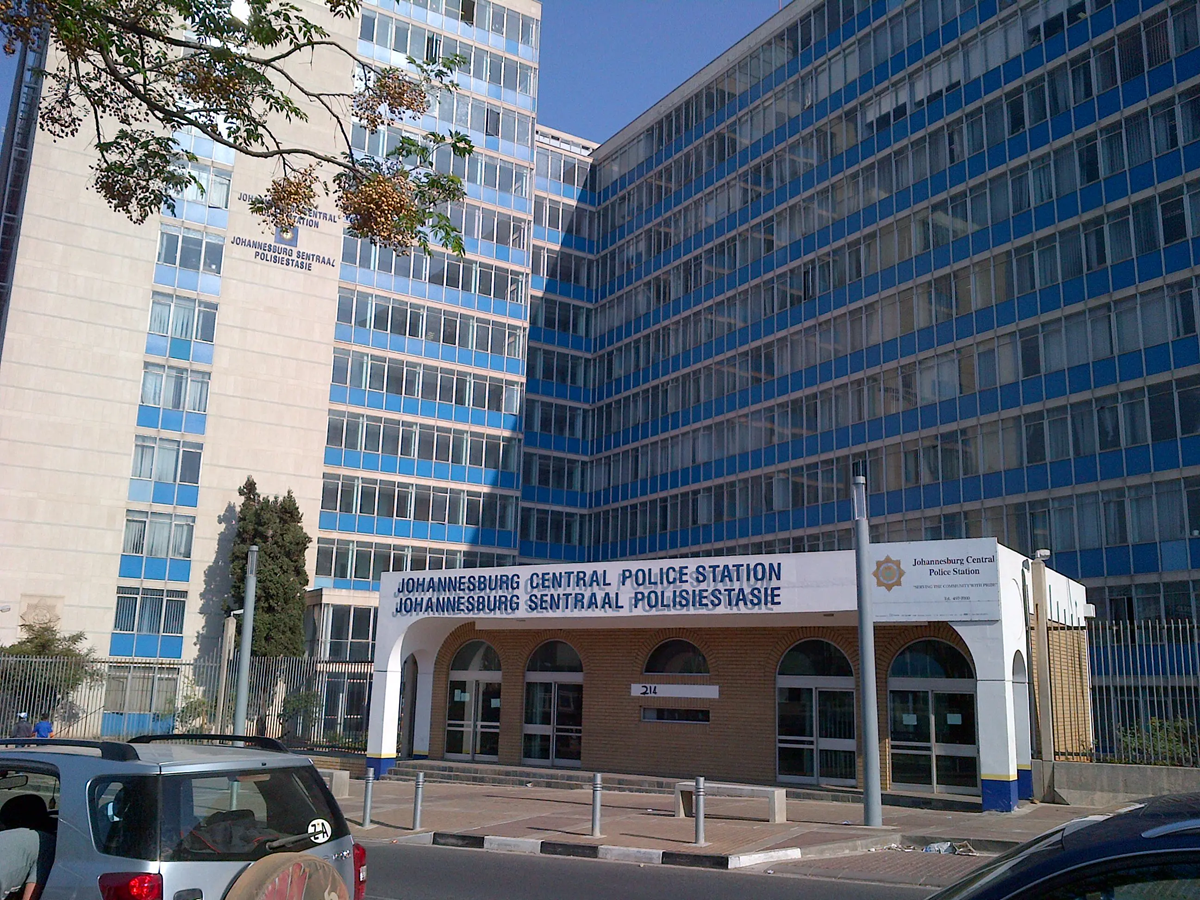
Johannesburg Central police station. Source: Opiniojuris.org

Share on FacebookShare on Twitter

In 1948, the National Party (NP), under the leadership of DF Malan, was voted into power on the election ticket of apartheid. Apartheid was a deliberate policy to deprive Black South Africans of their freedoms. Apartheid was not a wholly new initiative. Since the mineral discoveries in the late 19th century, Africans had been increasingly deprived of their rights, and segregationist policies had been applied. However, with the implementation of apartheid, Black people faced a more determined and systematic onslaught on their freedoms. The Black majority tried to resist the increasingly discriminatory treatment, but without success. The organisation that would later be called the African National Congress (ANC) was established in 1912, led by the small Black intelligentsia whose members protested as proper Englishmen should, through letters, petitions and public meetings. They were ignored. Their effort to organise a popular “defiance campaign” in the 1950s was equally unsuccessful and ended in the ANC being banned. The rival Pan-Africanist Congress’s effort to protest apartheid “pass laws” was answered by the 1960 Sharpeville Massacre, in which police killed 69 unarmed protestors. The ANC now established its armed wing, Umkhonto we Sizwe, led by Nelson Mandela (who was quickly jailed), and embraced tactics of “armed struggle”. In response to a government initiative to impose Afrikaans as the language of instruction in Black schools, schoolchildren launched a mass protest in 1976; when police fired on the crowd, they provoked the Soweto Uprising, during which some 700 Black protestors were killed.

Apartheid was an institutionalised regime of racial segregation and systematic oppression implemented in South Africa for the purpose of depriving the majority Black population of basic rights and securing the white minority’s power over the country’s government, economy, and resources. The international community universally condemned the apartheid system and the systematic discrimination, brutality, and violence against Black South Africans that characterised the apartheid state. Hence, the struggle against apartheid was one of unity and resistance, a unique expression of fortitude and resolve from much of the country, and the use of violence was heavily debated, only becoming a designated tool for resistance in the 1960s and not majorly involved in the resistance until the 1980s and ‘90s. From both sides, violence was used as a tool of repression and resistance until the first free election in 1994. Violence between the resistance movement and the National Party’s (NP) white supremacist institutions was commonplace and accepted as a necessary force to effect change.

However, as the NP began to realise they had lost the fight and restrictions began to lift and the prospect of a free election looked more like a reality than a dream, a new violence began, one between warring political parties, often fought by their supporters as opposed to leadership, a war which was, in some part, fomented by the actions of the NP in order to destabilise the resistance movement and buy themselves more time in power. This violence marred the transition and yet was not unexpected for a country coming out of such a divisive period and made up of a vast number of ethnic groups that have long had disagreements. Far from accepted, but understandable given the tenuous political situation that the country found itself in, this violence represented a change in South Africa, a fight for the right to oversee crafting a new country. The 1994 election would come, and the African National Congress (ANC), the party of Nelson Mandela and the most widely supported party in South Africa, would win, and South Africa would enter a new era filled with hope and joy for what the future would hold.

The period between 1989 and 1994 marked a transitional phase in South Africa from the brutal apartheid era to a democratic state. This transitional period was founded on four pillars – namely, disarmament, a new constitutional dispensation, the recognition and protection of human rights, and amnesty. All four pillars constitute transitional justice from the South African perspective, and it is important to now examine each of them. The non-prosecution of apartheid criminals (especially at the leadership level) still lingers as the unfinished business of South Africa’s transition from repression to democracy. But this is not a parochial South African matter; it has legal and moral significance for international human rights and international criminal justice projects. The Truth and Reconciliation Commission (TRC) emerged as part of a deal reached at the CODESA negotiations. This deal involved granting amnesty for politically motivated human rights abuses, provided the perpetrators confessed to their crimes. The TRC’s role was to discover the truth about South Africa’s tortured past by giving voice to apartheid’s victims. Past injustices were to be addressed “on the basis that there is a need for further understanding but not for vengeance, a need for reparation but not for retaliation”.

When the TRC was set up in South Africa, it had a very clear mandate that sought to offer both the perpetrators and the victims of the apartheid regime a fair hearing. The major committees of the TRC dealt with the victims of human rights violations, rehabilitation, and granting amnesty to those who sincerely sought it. The TRC in its 1998 report made recommendations that information it collected in the course of its investigations should be used as the basis for the further investigation and prosecution of individuals responsible for gross human rights violations who had not been granted amnesty. In particular, the TRC urged the justice system to “pay rigorous attention to the prosecution of members of the South African Police Service (SAPS) who are found to have assaulted, tortured and/or killed persons in their care.” The persistence of incidents of torture, assault with intent to inflict grievous bodily harm and execution-style killings of arrested suspects in police investigations highlights the urgency of this recommendation by the TRC. Yet, in many ways, the TRC was quite victim-orientated: it played an important role in answering victims’ questions, providing an opportunity for substantial victim participation, and financially compensating victims for their suffering. On the other hand, not all of their questions were answered, not all of their stories were told, and the payment of financial reparation was grudging and inadequate.

Read also

The Political Economy of Insecurity in Mali: Armed Groups, Resources, and State Fragility

Xenophobic Violence and Human Security in South Africa: Causes and Consequences

Senegal president sacks PM Sonko, dissolves government after months of friction

Politics Behind Apartheid’s Crime Wave

The human suffering caused by the political ideology of apartheid in South Africa during the apartheid era (1948-1994) prompted worldwide condemnation and a variety of diplomatic and legal responses. Amongst these responses was the attempt to have apartheid recognised both as a crime against humanity in the 1973 Apartheid Convention and as a war crime in Article 85(4)(c) of Additional Protocol I. Violence in South Africa is and has been a consistent point of contention for the country, both at the social and political level, with the history of violence in South Africa intertwined with politics and apartheid. Violence has, unfortunately, become endemic in South Africa, but this epidemic is not the result of one moment or failure; rather, the situation seen in the post-Apartheid era and modern times is the result of a combination of factors, including poverty, repression, revolution, despair, anger, and opportunity. These factors have been a part of South Africa’s history before apartheid and have led to the current situation. Following the unbanning of political parties and their armed wings in 1990 by the then-president of South Africa, Frederik Willem de Klerk, voluntary disarmament was effected with the assistance of the ANC, Pan Africanist Congress (PAC), Azanian People’s Organisation (AZAPO) and the Inkatha Freedom Party (IFP). All these political parties had military wings that had been involved in attacks against the former apartheid government interests, both people and infrastructure, inside South Africa and abroad.

When the brutal apartheid system ended in 1994, much of the world celebrated a remarkable and hope-filled transition. While many South Africans felt this hope as well, many still retained scars from the period’s brutal history. Some eschewed formal venues; others utilised the 1996-1998 Truth and Reconciliation Commission (TRC) to seek humanity in their loved ones’ killers or to critique a perceived lack of humanity. A small, yet steadily increasing, number turned to contemporary courts to seek civil damages against their loved ones’ killers. Recently, President Cyril Ramaphosa has ordered an inquiry to establish whether previous governments led by the ANC intentionally blocked investigations and prosecutions of apartheid-era crimes. Ramaphosa’s office said in a statement that the landmark move, which survivors and families of those who were killed have demanded for more than 20 years, will address allegations of “improper influence in delaying or hindering” investigations that have been levelled against post-apartheid governments led by the African National Congress party.

Six former police officers appeared before the commission in 1999 over the murders of Fort Calata, Matthew Goniwe, Sicelo Mhlauli, and Sparrow Mkonto, but none of them were granted amnesty. However, no one has been prosecuted for the killings, and the circumstances of the deaths have never been fully revealed. They are among the thousands of crimes during apartheid where victims and families still haven’t seen justice. On June 27, 1985, Calata and his comrades Matthew Goniwe, Sparrow Mkonto and Sicelo Mhlauli drove to Port Elizabeth for a United Democratic Front meeting. But they never returned. Their desecrated corpses were found burnt, with signs of torture. They would become known as the Cradock Four. Another count alleges that the act of killing was done ‘as part of an institutionalised regime of systematic oppression and domination by one racial group over other racial groups and with the intention of maintaining that domination’. These allegations are based on summary facts, which include the state’s assertion that the planning and execution of the acts (including the killings) occurred as part of a systematic attack against political opponents of the apartheid regime ‘and which the international community condemned as the crime of apartheid’. Of course, this claim regarding the international community’s condemnation of apartheid as a crime must be linked to the temporal element; the crystallisation of the customary prohibition, even though no such date is mentioned in the indictment. But it is a crucial aspect, given the importance of the legality principle (including ius acceptum) protected in the Constitution.

Examining the ANC: Barrier or Catalyst for Justice?

For years, critics have alleged that the post-apartheid leadership of the African National Congress (ANC) formed a secret deal with the former white-minority government in order to prevent prosecutions. The ANC has denied this. Meanwhile, Lukhanyo Calata, whose father Fort was one of the Cradock Four, is part of the group that took the current South African government to court in January. He said at the start of that court case that successive South African governments since the administration of President Thabo Mbeki from 1999 to 2008 had failed to act on the commission’s recommendations and had denied victims and their families justice. “The TRC cases were deliberately suppressed following a plan or arrangement hatched at the highest levels of government,” Calata alleged in court papers. Also, the left-wing opposition Economic Freedom Fighters (EFF) party sided with the families and survivors and accused the ANC government of freeing convicted perpetrators, including former assassin Colonel Eugene de Kock, who was initially sentenced to life but was granted parole in 2015 under the Ramaphosa government. However, the presidency said allegations of improper influence in delaying or hindering the investigation and prosecution of apartheid-era crimes have persisted from previous administrations.

In 2002, then-South African President Thabo Mbeki pardoned 33 individuals, stating that they had been imprisoned for political activities. The majority had been denied amnesty by the TRC. In 2007, Mbeki initiated a “special dispensation on political pardons” process that allowed individuals who had not approached the TRC but were imprisoned for politically motivated crimes committed before 1999 to apply for pardon. This de facto amnesty was challenged by the South African Coalition for Transitional Justice on grounds of lack of transparency and violating victims’ right to participate in the process, which claim the Constitutional Court upheld in 2010. In 2015, President Jacob Zuma announced that he would resuscitate the “special dispensation” process. The Foundation for Human Rights in Johannesburg is helping the victims with their application for constitutional damages. Executive Director Zaid Kimmie said the Cradock Four case was “ground zero” for South Africa’s transition to democracy and that judicial inaction had created a culture of “impunity”. The TRC recommended about 300 suspects be investigated and prosecuted, but the vast majority were not, which has become a major source of criticism of the South African government. Dr Kimmie said this has had a lasting effect. Once the decision was made to not prosecute apartheid-era crimes, South Africa developed a culture where powerful people “reasonably believe they won’t get prosecuted”.

It is historically widely known that South Africa was characterised by violence and institutionalised racial discrimination. White South Africans generally enjoyed a disproportionate share of resources under a system, which was enforced with brutal violence, shame and humiliation. After nearly five decades of this cruel system, South Africa made a peaceful transition to a more democratically elected government in 1994. The negotiated constitution of South Africa received broad support, with its provisions widely accepted by political parties and citizens. A central feature of the negotiations for liberation parties and the government was amnesty for past human rights abuses. Violence, one of the motivating factors behind the end of apartheid, carried out by youth during the revolt against the National Party, stands out as a turning point for the country because of the way it was treated by the leadership of the ANC. Gang formation in the 1940s and ‘50s was never encouraged by national or local authorities, yet, when their presence became a tool for larger political change in the 1980s and ‘90s, they were emboldened to make the country ungovernable. Treated as heroes, young men who for decades had been abandoned, emasculated, and mistreated felt as though they were part of a movement, as well as having a sense of control and belonging. Their abandonment, once again, by the national government exhibits the deep-rooted legacy of crime and violence in South Africa.

The crime against humanity of apartheid is a crime of intent. The perpetrator must therefore have intended to maintain such a regime of oppression by his or her conduct. And the conduct must have been committed as part of a widespread or systematic attack directed against a civilian population. It must be shown that the perpetrator knew that the conduct was part of or intended the conduct to be part of a widespread or systematic attack directed against a civilian population. This legacy affects both Whites and Blacks, but in different ways. The privileges of the apartheid state are deeply embedded. Those who enjoyed them during the apartheid years continue to enjoy most of those privileges today. The return to the unresolved TRC cases is significant not only for how South Africa deals with impunity relating to human rights violations committed under apartheid but also for addressing impunity in the police and justice system today. Finally, holding individuals accountable will hopefully reduce the rampant cynicism about democracy and governance in South Africa. Both are debilitating for any democracy.

ــــــــــــــ

This article expresses the views and opinions of the author and does not necessarily reflect the views of Qiraat Africa and its editors.
Source: Qiraat Africa
Tags: Apartheid-Era CrimesNational Party (NP)South Africa
Oyebamiji Usman Adesoji

Oyebamiji Usman Adesoji

Writer and researcher on business, entrepreneurship and geopolitical affairs.

Related Posts

Featured

Morocco’s King pardons Senegal fans convicted on hooliganism charges

May 24, 2026
Inside an African lab that helped crack the hantavirus outbreak
Featured

Inside an African lab that helped crack the hantavirus outbreak

May 24, 2026
Infographic: Top 10 African Nations With The Lowest Diesel Prices In March 2026
Central Africa

Infographic: Top 10 African Nations With The Lowest Diesel Prices In March 2026

May 23, 2026
Benin’s President Talon thanks army leaders for “remaining loyal” in face of attempted coup
Featured

Benin’s Talon bids farewell ahead of Wadagni inauguration, Sunday

May 21, 2026
Sierra Leone receives first group of West African deportees from US
Featured

Sierra Leone receives first group of West African deportees from US

May 21, 2026
WHO declares Ebola outbreak in Congo, Uganda an emergency of international concern
African Union

India, Africa Union postpone New Delhi summit amid Ebola outbreak

May 21, 2026

Search Qiraat Africa

No Result
View All Result

Follow on Twitter

Follow @africanqiraat

Trending

Zimbabwe’s banking sector faces 75% job decrease Since 2000

China writes off unspecified amount of Zimbabwe interest-free loan

April 18, 2024
Kumbi Saleh, the capital of the ancient Ghana Empire

Kumbi Saleh, the capital of the ancient Ghana Empire

October 13, 2025
Africa’s Richest Billionaires, Mid-2025

Africa’s Richest Billionaires, Mid-2025

July 17, 2025
The Balanta of Guinea-Bissau, Senegal and The Gambia

The Balanta of Guinea-Bissau, Senegal and The Gambia

January 20, 2026
Joseph Ki-Zerbo (1922-2006): Burkinabé historian and politician

Joseph Ki-Zerbo (1922-2006): Burkinabé historian and politician

June 18, 2025
The Bamiléké of western Cameroon

The Bamiléké of western Cameroon

September 18, 2024

Facebook

Sections

  • About Us
  • Privacy Policy
  • Opinion
  • Infographics
  • News
  • Analysis
  • Figures
  • Culture & Literature
  • Follow Ups
  • Historical Readings
  • Interview
  • Studies


© Copyright Qiraat Africa. Developed by Bunnaj Media .

No Result
View All Result
  • News
  • Analysis & Report
  • Studies
  • Opinion
  • Interview
  • Culture & Literature
  • Figures
  • Historical Readings
  • Regions

© 2021 Copyright Qiraat Africa.