





Qiraat Africa
عربي  |  Fr
Advertisement
  • News
    • All
    • Climate Change
    • Economy
    • Education
    • Energy
    • Health
    • Migration
    • Mining
    • Politics
    • Security
    • Society
    • Sport
    Around 700,000 displaced by volatile conflict in southern Ethiopia

    Around 700,000 displaced by volatile conflict in southern Ethiopia

    Uganda discharges last Ebola patient, starts countdown to be virus-free

    Scientists are learning more about the rare Ebola virus in Congo outbreak

    South African minister and MPs cleared of corruption

    South Africa’s first female deputy president and UN official dies

    Somalia launches Centennial Vision 2060 roadmap for ‘peace, prospertity and progress’

    Somalia orders UAE ambassador to leave, citing ‘invasion’

    Nigeria’s president Tinubu says economy is recovering, calls for end to protests against hardship

    Nigeria’s Tinubu asks parliament to decriminalise attempted suicide

    South Africans vote as anger over failing services threatens ANC

    South Africa’s ANC and partners near coalition deal to sideline poll-topping DA in Johannesburg

    Mozambique: Opposition leader Mondlane announces break in election protests

    Mozambique’s main opposition leader goes on trial over post-election unrest

    Eritrea wary of ‘war-mongering’ Ethiopia

    Ethiopia and Eritrea amass forces along border, heightening war fears, sources say

    Nigeria’s state-owned NNPC records $4.2 billion after-tax profit in 2025

    Nigeria’s central bank, NNPC sign deal to support forex inflows, energy funding

  • Analysis
    • All
    • Climate Change
    • Digital & Tech
    • Economy
    • Energy & Power
    • Health
    • Politics
    • Security
    • Society
    Free trade across Africa? Why policy must catch up with small-scale cross-border traders

    Free trade across Africa? Why policy must catch up with small-scale cross-border traders

    Hormuz block affected Africa in four places: what the continent must do to avoid future shocks

    Hormuz block affected Africa in four places: what the continent must do to avoid future shocks

    What is standing in the way of science’s ability to eradicate malaria? 3 areas where action can have an influence

    What is standing in the way of science’s ability to eradicate malaria? 3 areas where action can have an influence

    African Union summit clouded by Saudi-UAE rivalry in Horn of Africa

    Opportunities and Challenges of the AU’s Education in Emergencies Initiative

    Abiy Ahmed Tested: How the Tigray Alliance Is Reshaping Ethiopia’s Security—And What Comes Next

    Abiy Ahmed Tested: How the Tigray Alliance Is Reshaping Ethiopia’s Security—And What Comes Next

    UN report says Africa’s share of global trade stands at 3 percent

    AfCFTA: The Trade Rules Poised to Weave Africa’s Fragmented Textile Markets into One

    The global panel on inequality needs African evidence: here’s how it could work

    The global panel on inequality needs African evidence: here’s how it could work

    Why Africa needs a new credit agency

    Why Africa needs a new credit agency

    Japan signs deal with Namibia to explore for rare earth minerals

    Africa’s mineral strength is wasted if countries don’t work together – new report

  • Studies
    China could drive Africa’s renewable energy revolution, report says

    A study shows wind and solar projects in Kenya and South Africa don’t always benefit the communities that host them

    Angola’s lengthy war shaped the way farmers utilised fire—why it matters

    Angola’s lengthy war shaped the way farmers utilised fire—why it matters

    Schooling is the most severely affected by conflict when children are the target – Study

    Schooling is the most severely affected by conflict when children are the target – Study

    Pensions for Botswana’s elderly are expanding, but care services are lacking—study follows 20 years

    Pensions for Botswana’s elderly are expanding, but care services are lacking—study follows 20 years

    60 new cosmic structures have been discovered by South Africa’s MeerKAT telescope, which is mapping previously unseen gaps between galaxies

    60 new cosmic structures have been discovered by South Africa’s MeerKAT telescope, which is mapping previously unseen gaps between galaxies

    Benin government says armed forces foil coup attempt

    Coup contagion? A rash of African power grabs suggests copycats are taking note of others’ success

    One in three South Africans have never heard of AI: what this means for policy

    One in three South Africans have never heard of AI: what this means for policy

    Social Media as a Catalyst for the Spread of Dangerous Wealth Ritual Myths

    Social Media as a Catalyst for the Spread of Dangerous Wealth Ritual Myths

    Overcoming Education Barriers for Young Mothers in Sub-Saharan Africa

    Overcoming Education Barriers for Young Mothers in Sub-Saharan Africa

  • Infographics
  • Figures
    Sedick Isaacs (1940-2012): From a Robben Island prison cell to pioneering medical informatics

    Sedick Isaacs (1940-2012): From a Robben Island prison cell to pioneering medical informatics

    Prince Louis Rwagasore (1932-1961) and the Dream of Independence in Burundi

    Prince Louis Rwagasore (1932-1961) and the Dream of Independence in Burundi

    Josina Muthemba Machel (1945–1971): Reshaping of Women’s Role in the Mozambican Revolution

    Josina Muthemba Machel (1945–1971): Reshaping of Women’s Role in the Mozambican Revolution

    Yaa Asantewaa (1840-1921): Defending the Golden Stool and Asante Sovereignty in the Face of Colonialism

    Yaa Asantewaa (1840-1921): Defending the Golden Stool and Asante Sovereignty in the Face of Colonialism

    Usman Dan Fodio (1754-1817): Teacher, philosopher, and revolutionary reformer

    Usman Dan Fodio (1754-1817): Teacher, philosopher, and revolutionary reformer

    Sokhna Magat Diop (1917–2003): Senegalese cleric

    Sokhna Magat Diop (1917–2003): Senegalese cleric

    Ahmad Baba al-Timbukti (1556-1627): Writer and scholar

    Ahmad Baba al-Timbukti (1556-1627): Writer and scholar

    Namibia: Anger over Dubai COP28 trip by president Geingob’s children

    Hage Geingob (1941–2024): Former President of Namibia

    Cape Verde president says governments must discuss colonial reparations

    José Maria Neves: President of Cape Verde

  • History
    Second Ivorian Civil War (2010-2011): How struggle over legitimacy and identity lead to brink of abyss

    Second Ivorian Civil War (2010-2011): How struggle over legitimacy and identity lead to brink of abyss

    Malê Rebellion in Brazil (1835): Memory of Resistance and Identity

    Malê Rebellion in Brazil (1835): Memory of Resistance and Identity

    The Anglo-Zanzibar War (1896): A story of the shortest war in history

    The Anglo-Zanzibar War (1896): A story of the shortest war in history

    Kwanza Corridor-Cultural Landscape, Angola

    Kwanza Corridor-Cultural Landscape, Angola

    Gasumo, the southernmost source of the Nile, Burundi

    Gasumo, the southernmost source of the Nile, Burundi

    Loango ancient slavery harbour, the Republic of the Congo

    Loango ancient slavery harbour, the Republic of the Congo

    Archaeological site of Tchitundu-Hulu, Angola

    Archaeological site of Tchitundu-Hulu, Angola

    Manovo-Gounda St. Floris National Park, Central African Republic

    Manovo-Gounda St. Floris National Park, Central African Republic

    Lake Malawi (Lake Nyasa) National Park, Malawi

    Lake Malawi (Lake Nyasa) National Park, Malawi

  • Others
    • Culture / Literature
    • Interview
    • Opinion
  • Countries
    • Country profiles
    • Regions
      • Central Africa
      • East Africa
      • Southern Africa
      • West Africa
No Result
View All Result
Qiraat Africa
عربي  |  Fr
No Result
View All Result
Home Regions Diaspora

Malê Rebellion in Brazil (1835): Memory of Resistance and Identity

November 13, 2026
Malê Rebellion in Brazil (1835): Memory of Resistance and Identity
Share on FacebookShare on Twitter

By Ahmadulbadawy Abdul Raheem


In late January 1835, the city of Salvador—the capital of the Brazilian province of Bahia—was shaken by brief yet highly significant armed clashes. These were led by enslaved and manumitted Africans who were Muslims, known locally as “Malês”—a term historians often trace back to the Yoruba word “Imale”, which denotes a Muslim.

This uprising represented an intense convergence of Atlantic geography and religious memory, the Arabic language and social organisation, and controlled, wage-earning labour alongside the aspiration for both individual and collective liberation.

Socioeconomic Roots of Slavery in Bahia

To understand the Malê revolt, one must deconstruct the complex structure of slavery in Bahia during the first half of the nineteenth century. Enslaved people were not confined solely to the sugarcane plantations of the “Recôncavo” region; many also worked in the streets of Salvador, engaged in various trades, domestic service, and commercial activities. The “wage-earning slave” (“escravos de ganho”) system allowed for a degree of daily mobility and interaction within the public sphere, in exchange for the enslaved person handing over a fixed portion of their earnings to their owner. This created a daily paradox: while this margin of freedom enabled the formation of communication networks and working relationships among the enslaved and the manumitted, their lives remained precariously tethered to the harshness of the law, police surveillance, and the imperial order.

The influx of waves of captives and enslaved people from West Africa—notably from the Yoruba regions (known in Bahia as “Nagô”), as well as the Hausa and Nupe peoples—helped fuel a tense urban society, one characterised by a blend of prior combat experience, diverse ethnic affiliations, and a shared yearning for liberation.

At the heart of this landscape emerged leaders and figures who embodied the varied roles within this enslaved community. One such individual was Luís Sanim, a tobacco roller who managed a mutual-aid fund; members would contribute a portion of their earnings to this fund to cover the costs of religious attire, compensate masters for the Fridays when Muslim enslaved people refrained from working, and assist in the purchase of manumission papers. Also prominent was Elesbão do Corma—known as “Dandará”—a freedman of Hausa origin who owned a tobacco shop that served as a meeting place for the Malê people and a connecting point with enslaved individuals on surrounding plantations.

Other key figures included Pacífico Licutan, who was held in prison just before the uprising—his liberation becoming an urgent objective for the rebels—as well as Ahuna and Manoel Calafate, both of whom played vital roles in coordination and mobilisation. These individual biographies demonstrate that the rebellion took shape within a coherent socioeconomic network, woven by its participants using the very tools of their daily survival.

Islam and Literacy as Instruments of Cultural Resistance

The Islamic faith and its associated cultural practices formed the backbone of the Malê identity in Salvador. In a colonial society where illiteracy was widespread—even among certain segments of the free population and landowners—a significant number of enslaved and freed Muslims possessed the ability to read and write using the Arabic script.

Secret religious study circles, led by teachers known as “alufás”—a term of Yoruba origin denoting a scholar or religious instructor—served a dual purpose: they preserved the theological and linguistic heritage of the believers within a hostile environment, while simultaneously fostering an ethical and collective consciousness that linked obedience to God with an internal rejection of enslavement. Documents and manuscripts written in Arabic—along with the amulets or talismans carried by some of the insurgents—served as tangible evidence of the role that religious texts and symbols played in the lives of these Africans. This discovery astonished the judicial and police authorities, who confiscated the documents following the uprising but found themselves unable to decipher them without translation.

Read also

Nigeria’s Tinubu asks parliament to decriminalise attempted suicide

Nigeria’s central bank, NNPC sign deal to support forex inflows, energy funding

Free trade across Africa? Why policy must catch up with small-scale cross-border traders

This religious unity was shaped by the complexities of the Brazilian reality. The Malê (Muslim Africans) had to constantly navigate the diverse landscape of the Black and mixed-race population in Bahia—a group that included both African-born individuals and “Creoles” (those born in Brazil), as well as people who practiced other spiritual traditions, such as Candomblé.

The Timing of the Uprising and the Course of Confrontation in the Streets of Salvador

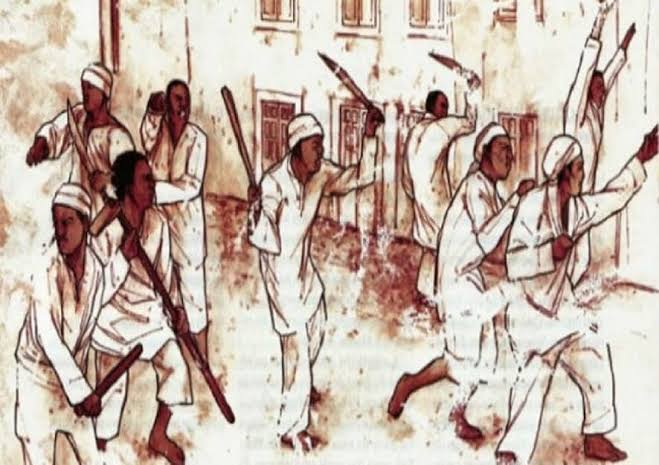
The planners chose a highly precise moment in late January 1835—a time that coincided with the month of Ramadan, as well as major Catholic religious celebrations at the Church of Bonfim and the Feast of Our Lady of Guidance. This led to a large-scale movement of both the general population and the authorities toward Bonfim, resulting in a relative easing of security focus in the heart of Salvador. The uprising was intended to break out on the morning of Sunday, January 25th; however, news of the plot reached the authorities—leaked by a woman just hours before the scheduled time—which upended the plans and forced an abrupt, nighttime confrontation on the evening of January 24th. When military and police forces raided the assembly points, the insurgents returned fire. According to historical estimates of the uprising, approximately six hundred fighters surged into the city streets, attempting to liberate their detained comrades, attack military barracks, and strike at centres of authority.

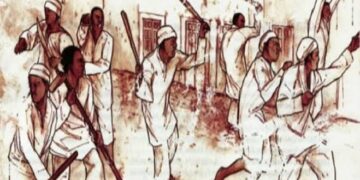
Fierce clashes erupted throughout the alleys and squares of Salvador—including the Palace Square—where the rebels, armed with a limited number of firearms, swords, and daggers, faced off against regular troops, militias, and armed guards mobilised to suppress the insurrection. Despite the intensity of the fighting and the valour of the participants—many of whom wore distinctive white garments and carried amulets inscribed with Arabic—the government forces’ superiority in numbers, weaponry, and control over strategic locations ultimately decided the battle in favour of the authorities by the end of the night and the following morning.

Historical records indicate that approximately seventy or more insurgents were killed during the fighting, while the number of casualties among government forces and civilians was lower. The uprising was brought to a swift military conclusion; however, the elite and the authorities in Bahia remained gripped by panic for many weeks, fearing a resurgence of the rebellion.

Judicial Repression, Deportation, and the Aftermath of 1835

The Brazilian authorities’ confrontation with the “Malês” transitioned into extensive judicial investigations and the imposition of harsh penalties, aimed at uprooting the Islamic and African organisation within the region. Hundreds of suspects were subjected to interrogation and torture; several leaders and accused individuals were sentenced to death, while others received terms of imprisonment, hard labour, or public flogging.

Furthermore, hundreds of Africans—including freed individuals and suspects against whom no conclusive evidence could be found—were forcibly deported to Africa. This forced deportation served a dual political and security purpose: it rid the authorities of elements they perceived as a threat to public order while simultaneously returning individuals to the West African coast who carried with them bitter experiences and an intimate knowledge of the transformations occurring across the Atlantic.

The revolt also led to the tightening of police and social restrictions on enslaved people and Africans in general throughout Bahia, further suppressing the gatherings and cultural or religious practices that were viewed with deep suspicion by the security apparatus.

Nevertheless, the Malê revolt remains a landmark in the history of Black resistance in the Americas, standing out as an organised urban uprising rooted in a cohesive religious, educational, and economic network. Notably, recent historical scholarship—most notably the work of historian João José Reis—has brought renewed attention to this event, framing it as a significant human and political testament that reveals the depth of consciousness and organisational capacity among those whom the system of slavery sought to strip of their humanity.

ـــــــــــــــــــــــــــــــــ

References

  • Encyclopedia.com. (n.d.). Malê Rebellion. https://www.encyclopedia.com/history/encyclopedias-almanacs-transcripts-and-maps/male-rebellion

  • Momodu, S. (2022, March 30). The Malê Rebellion in Brazil (1835). BlackPast.org. https://blackpast.org/global-african-history/the-male-rebellion-in-brazil-1835/

  • NOLAM. (2026, October 9). The Malê Revolt: Brazil’s forgotten Muslim history in Bahia. https://nolam.org/en/blog/the-male-revolt-of-1835-the-forgotten-story-of-brazils-muslim-scholars

  • Reis, J. J. (1993). Slave rebellion in Brazil: The Muslim uprising of 1835 in Bahia (A. Brakel, Trans.). Johns Hopkins University Press.

  • Smithsonian Folklife Festival. (2020, May 18). The Malê Rebellion in Bahia: Brazil’s African Muslim uprising. Smithsonian Institution. https://festival.si.edu/blog/male-rebellion-african-muslim-brazilian-uprising

Related Posts

Hormuz block affected Africa in four places: what the continent must do to avoid future shocks
Central Africa

Hormuz block affected Africa in four places: what the continent must do to avoid future shocks

November 17, 2026
Guinea plans regional gold refining hub as West African race intensifies
Featured

Guinea’s miners stockpile gold after refinery rules halted exports, sources say

November 17, 2026
Nigerian lawmakers mediate rift with Africa’s richest man
Energy

Dangote Refinery to expand IPO by up to 30% to $2.1 billion, sources say

November 17, 2026
Guinea says $1.9 billion deep-water port plan draws US, Chinese interest
Economy

Guinea says $1.9 billion deep-water port plan draws US, Chinese interest

November 16, 2026
Gambia’s president Barrow faces backlash over ‘death wish’ on archrival
Featured

Gambia clears Barrow to run for third presidential term, approves eight other candidates

November 16, 2026
Burkina Faso issues arrest warrants for around 20 people, including journalists
Featured

Burkina Faso issues arrest warrants for around 20 people, including journalists

November 15, 2026

Search Qiraat Africa

No Result
View All Result

Follow on Twitter

Follow @africanqiraat

Trending

Africa’s 10 Strongest Currencies in June 2026

Africa’s 10 Strongest Currencies in June 2026

July 8, 2026
Kumbi Saleh, the capital of the ancient Ghana Empire

Kumbi Saleh, the capital of the ancient Ghana Empire

October 13, 2025
DR Congo’s President Tshisekedi calls for sanctions against Rwanda

DR Congo president orders probe into copper and cobalt export revenues, document shows

April 28, 2026
Zaghawa people of northeastern Chad and western Sudan

Zaghawa people of northeastern Chad and western Sudan

March 3, 2026
The Bamiléké of western Cameroon

The Bamiléké of western Cameroon

September 18, 2024
The Kabye People of West Africa

The Kabye People of West Africa

May 24, 2025

Facebook

Sections

  • About Us
  • Privacy Policy
  • Opinion
  • Infographics
  • News
  • Analysis
  • Figures
  • Culture & Literature
  • Follow Ups
  • Historical Readings
  • Interview
  • Studies


© Copyright Qiraat Africa. Developed by Bunnaj Media .

No Result
View All Result
  • News
  • Analysis & Report
  • Studies
  • Opinion
  • Interview
  • Culture & Literature
  • Figures
  • Historical Readings
  • Regions

© 2021 Copyright Qiraat Africa.