










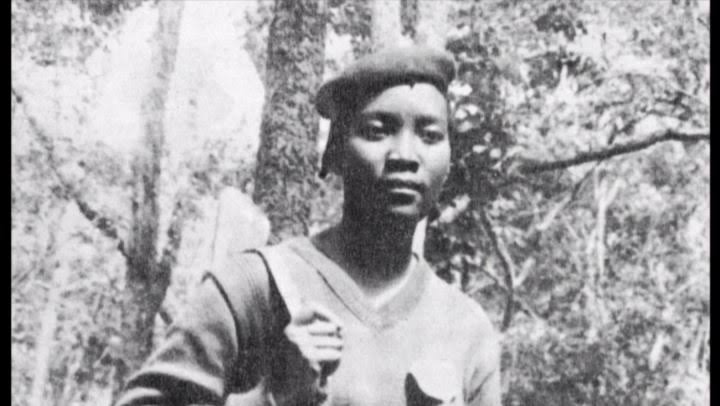
By Adam Abdurraheem*
Josina Abiathar Muthemba was born on August 10, 1945, in the town of Vilanculos, in the Inhambane province of southern Mozambique. She was the fifth of eight children. Her father worked as a nurse in government hospitals, which required the family to move frequently between different towns and regions. Josina grew up in an evangelical family that placed a high value on education—a significant commitment given that Mozambique was then under Portuguese colonial rule.
The colonial regime enforced the “assimilado” (assimilated) system, which restricted access to quality education and employment opportunities to a tiny minority of the African population who adopted Portuguese culture and language.
She began her primary education at a Swiss mission school in Inhambane. At the age of twelve, she moved to the capital, Lourenço Marques (now Maputo), to live with her grandmother and continue her secondary education at the Dr Azevedo e Silva Commercial School. During this period, she joined the Nucleus of African Secondary Students of Mozambique (Núcleo dos Estudantes Africanos Secundários de Moçambique, or NESAM)—a cultural and social organisation founded by Eduardo Mondlane in 1949 to foster national consciousness and cultural identity among educated Mozambican youth. This student environment provided Josina with her first organised exposure to anti-colonial ideas, all within a setting that was under the strict surveillance of the Portuguese secret police.
The First Escape and Imprisonment in Rhodesia and Mozambique
Following the founding of the Mozambique Liberation Front (FRELIMO) in 1962 in Dar es Salaam, Tanzania, Josina and her companions became increasingly eager to join the armed liberation movement. In March 1964, at the age of eighteen, she secretly left Lourenço Marques alongside seven other students—including Armando Guebuza, who would later become president of Mozambique—heading toward Tanzania through Southern Rhodesia (present-day Zimbabwe) and Zambia. Their journey, however, was cut short at Victoria Falls, where British colonial authorities in Rhodesia apprehended them and handed them over to the Portuguese secret police.
Josina was returned to Lourenço Marques and imprisoned for five months, during which time she was subjected to interrogation, as well as psychological and physical pressure, in an attempt to extract information about student recruitment networks. She was released in August 1964, following an international solidarity campaign and pressure from human rights organisations, only to be placed under house arrest and constant surveillance.
However, just four months after her release, she managed to escape once again. She undertook an arduous journey through Swaziland, South Africa, Botswana, and Zambia, finally reaching Tanzania in early 1965, where she began a new phase of political and organisational work within the ranks of FRELIMO.
Establishing the Women’s Detachment and Redefining the Role of Women in the Revolution
Upon reaching the age of twenty in Dar es Salaam, Josina became involved in the political and military training programmes of the liberation movement, taking on responsibilities related to social mobilisation and the organisation of youth and women.
At the time, the participation of women in the armed struggle was a subject of debate within the FRELIMO leadership; initially, their roles were limited to providing logistical support, transporting supplies, and serving as medics in the liberated zones. Josina and several of her female comrades argued that the liberation of the country from Portuguese colonialism could not be separated from the liberation of Mozambican women from social and traditional marginalisation.
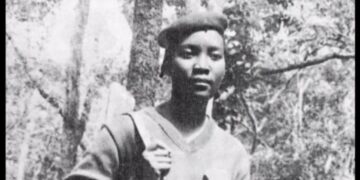
This perspective led, in 1967, to the establishment of the “Women’s Detachment” (“Destacamento Feminino”) within FRELIMO, with Josina taking charge of its political unit. Members of this detachment underwent full military training—just as the men did—and took on combat duties, defended liberated villages, mobilised popular support, and educated the local population about the movement’s objectives. The impact of this organisation catalysed a tangible social transformation in the liberated rural areas of northern Mozambique, where women began to participate in local administrative committees and decision-making processes.
Social Work and the Care of War Orphans
Josina Machel’s activities extended beyond direct military engagement, focusing on the humanitarian and social dimensions of the armed conflict. In 1968, she was appointed head of the Social Affairs Department within FRELIMO. She served as part of the movement’s delegation to the Pan-African Women’s Organization conference in Algiers, where she presented the movement’s vision for integrating women into development and reconstruction projects. She also held the position of Deputy Head of the Department of External Relations, a role that enabled her to connect with liberation movements across the African continent and mobilise humanitarian support for displaced Mozambicans and refugees in Tanzania.
She paid particular attention to children who had lost their parents due to Portuguese bombardment and the ongoing fighting in northern provinces such as Cabo Delgado and Niassa. She worked to establish and develop centres for the care and rehabilitation of war orphans, providing them with basic education and healthcare—both in Tanzania and in the liberated zones within Mozambique. She believed that protecting children and raising an educated generation was the true guarantee for the survival of society and the foundation for building a future state following independence. Also, she dedicated a significant portion of her time to collecting donations, books, and medical supplies, as well as organising the educational staff tasked with overseeing these centres.
Marriage to Samora Machel
Amidst her field and organisational work within FRELIMO camps, Josina developed a close relationship with the movement’s commander-in-chief, Samora Machel—who would later become the first president of an independent Mozambique in 1975. The two were married in May 1969 at a FRELIMO education centre in Tunduru, southern Tanzania. Their marriage took place during a critical period for the movement, following the assassination of its founding president, Eduardo Mondlane, in February of that same year—an event that placed an even greater leadership and organisational burden upon them both.
In November 1969, Josina gave birth to their only child, Samora Machel Jr. (known as Samito). Despite the responsibilities of motherhood, she continued to travel between Tanzania and the liberated zones of Mozambique to oversee social welfare centres and inspect units of the women’s detachment. Living conditions in the camps and forests were harsh, lacking even basic preventive medical care; over time, this took a toll on her physical health, as she frequently suffered from exhaustion and malnutrition.
Illness and Death in Dar es Salaam
In early 1971, while on a field tour in the Cabo Delgado province of northern Mozambique, Josina’s health deteriorated suddenly. She insisted on completing her visits to the social centres and field schools before returning to seek medical treatment. She travelled long distances on foot to reach the Tanzanian border, from where she was rushed to Muhimbili Hospital in Dar es Salaam.
She was diagnosed with liver disease and acute jaundice; her medical complications worsened rapidly, exacerbated by the limited treatment options available at the time. On April 7, 1971, Josina Muthemba Machel passed away at the hospital in Dar es Salaam at the age of just twenty-five. She was laid to rest at the Kinondoni Cemetery in the Tanzanian capital. Although she did not live to see Mozambique’s independence—achieved four years later, in June 1975—her death left a profound impact on the national liberation movement.
Following Mozambique’s independence, the government designated April 7—the date of her passing—as National Mozambican Women’s Day. This serves to commemorate her role in linking the cause of national liberation with social justice and the participation of women in public life. Her name has been given to numerous educational and healthcare institutions, as well as major streets in Maputo and across various Mozambican provinces, ensuring that her life story remains an integral part of the nation’s official and collective memory.
ـــــــــــــــــــــــــــــــــــــــــــــــــ
* Nigerian writer with interests in history, culture and African affairs.
References
- Arnfred, S. (1988). Women in Mozambique: Gender struggle and gender politics. Review of African Political Economy, 15(41), 5–16. https://doi.org/10.1080/03056248808703759
- Biney, A. (2011). The political and social thought of Kwame Nkrumah [Includes comparative profiles on African liberation figures including Josina Machel]. Palgrave Macmillan.
- Christie, I. (1989). Samora Machel: A biography. Zed Books.
- Sheldon, K. E. (2002). Pounders of grain: A history of women, work, and politics in Mozambique. Heinemann.
- South African History Online. (2025). Uncovering Josina Machel from obscurity: African women hidden in his-story by Ama Biney, 3 April 2014. https://sahistory.org.za/archive/uncovering-josina-machel-obscurity-african-women-hidden-his-story-ama-biney-3-april-2014
- LSM Information Center (1974). Mozambican Women in the REVOLUTION. https://www.marxists.org/subject/africa/lsm/women-in-revolution.pdf
- FRELIMO. ANNIVERSARY OF THE DEATH OF JOSINA MACHEL. https://freedomarchives.org/Documents/Finder/DOC50_scans/50.mozambique.JosinaMachel.pdf