








Qiraat Africa
عربي  |  Fr
Advertisement
  • News
    • All
    • Climate Change
    • Economy
    • Education
    • Energy
    • Health
    • Migration
    • Mining
    • Politics
    • Security
    • Society
    • Sport
    Somalia launches Centennial Vision 2060 roadmap for ‘peace, prospertity and progress’

    Somalia orders UAE ambassador to leave, citing ‘invasion’

    Nigeria’s president Tinubu says economy is recovering, calls for end to protests against hardship

    Nigeria’s Tinubu asks parliament to decriminalise attempted suicide

    South Africans vote as anger over failing services threatens ANC

    South Africa’s ANC and partners near coalition deal to sideline poll-topping DA in Johannesburg

    Mozambique: Opposition leader Mondlane announces break in election protests

    Mozambique’s main opposition leader goes on trial over post-election unrest

    Eritrea wary of ‘war-mongering’ Ethiopia

    Ethiopia and Eritrea amass forces along border, heightening war fears, sources say

    Nigeria’s state-owned NNPC records $4.2 billion after-tax profit in 2025

    Nigeria’s central bank, NNPC sign deal to support forex inflows, energy funding

    South Africa arrests four men suspected of planning to fight for Russia

    South Africa police searches for motive behind deadly shootings

    Guinea plans regional gold refining hub as West African race intensifies

    Guinea’s miners stockpile gold after refinery rules halted exports, sources say

    Nigerian lawmakers mediate rift with Africa’s richest man

    Dangote Refinery to expand IPO by up to 30% to $2.1 billion, sources say

  • Analysis
    • All
    • Climate Change
    • Digital & Tech
    • Economy
    • Energy & Power
    • Health
    • Politics
    • Security
    • Society
    Free trade across Africa? Why policy must catch up with small-scale cross-border traders

    Free trade across Africa? Why policy must catch up with small-scale cross-border traders

    Hormuz block affected Africa in four places: what the continent must do to avoid future shocks

    Hormuz block affected Africa in four places: what the continent must do to avoid future shocks

    What is standing in the way of science’s ability to eradicate malaria? 3 areas where action can have an influence

    What is standing in the way of science’s ability to eradicate malaria? 3 areas where action can have an influence

    African Union summit clouded by Saudi-UAE rivalry in Horn of Africa

    Opportunities and Challenges of the AU’s Education in Emergencies Initiative

    Abiy Ahmed Tested: How the Tigray Alliance Is Reshaping Ethiopia’s Security—And What Comes Next

    Abiy Ahmed Tested: How the Tigray Alliance Is Reshaping Ethiopia’s Security—And What Comes Next

    UN report says Africa’s share of global trade stands at 3 percent

    AfCFTA: The Trade Rules Poised to Weave Africa’s Fragmented Textile Markets into One

    The global panel on inequality needs African evidence: here’s how it could work

    The global panel on inequality needs African evidence: here’s how it could work

    Why Africa needs a new credit agency

    Why Africa needs a new credit agency

    Japan signs deal with Namibia to explore for rare earth minerals

    Africa’s mineral strength is wasted if countries don’t work together – new report

  • Studies
    China could drive Africa’s renewable energy revolution, report says

    A study shows wind and solar projects in Kenya and South Africa don’t always benefit the communities that host them

    Angola’s lengthy war shaped the way farmers utilised fire—why it matters

    Angola’s lengthy war shaped the way farmers utilised fire—why it matters

    Schooling is the most severely affected by conflict when children are the target – Study

    Schooling is the most severely affected by conflict when children are the target – Study

    Pensions for Botswana’s elderly are expanding, but care services are lacking—study follows 20 years

    Pensions for Botswana’s elderly are expanding, but care services are lacking—study follows 20 years

    60 new cosmic structures have been discovered by South Africa’s MeerKAT telescope, which is mapping previously unseen gaps between galaxies

    60 new cosmic structures have been discovered by South Africa’s MeerKAT telescope, which is mapping previously unseen gaps between galaxies

    Benin government says armed forces foil coup attempt

    Coup contagion? A rash of African power grabs suggests copycats are taking note of others’ success

    One in three South Africans have never heard of AI: what this means for policy

    One in three South Africans have never heard of AI: what this means for policy

    Social Media as a Catalyst for the Spread of Dangerous Wealth Ritual Myths

    Social Media as a Catalyst for the Spread of Dangerous Wealth Ritual Myths

    Overcoming Education Barriers for Young Mothers in Sub-Saharan Africa

    Overcoming Education Barriers for Young Mothers in Sub-Saharan Africa

  • Infographics
  • Figures
    South Sudan’s presidency announces postponement of long-delayed election by two years

    South Sudan vote: UN warns political transition must hold beyond polling day

    Usman Dan Fodio (1754-1817): Teacher, philosopher, and revolutionary reformer

    Usman Dan Fodio (1754-1817): Teacher, philosopher, and revolutionary reformer

    Sokhna Magat Diop (1917–2003): Senegalese cleric

    Sokhna Magat Diop (1917–2003): Senegalese cleric

    Ahmad Baba al-Timbukti (1556-1627): Writer and scholar

    Ahmad Baba al-Timbukti (1556-1627): Writer and scholar

    Namibia: Anger over Dubai COP28 trip by president Geingob’s children

    Hage Geingob (1941–2024): Former President of Namibia

    Cape Verde president says governments must discuss colonial reparations

    José Maria Neves: President of Cape Verde

    Jorge Bom Jesus: Linguist and former Prime Minister of São Tomé and Príncipe

    Jorge Bom Jesus: Linguist and former Prime Minister of São Tomé and Príncipe

    Joseph Leabua Jonathan (1914-1987): Former Prime Minister of Lesotho

    Joseph Leabua Jonathan (1914-1987): Former Prime Minister of Lesotho

    Gambia’s president Barrow faces backlash over ‘death wish’ on archrival

    Adama Barrow: President of the Republic of The Gambia

  • History
    Kwanza Corridor-Cultural Landscape, Angola

    Kwanza Corridor-Cultural Landscape, Angola

    Gasumo, the southernmost source of the Nile, Burundi

    Gasumo, the southernmost source of the Nile, Burundi

    Loango ancient slavery harbour, the Republic of the Congo

    Loango ancient slavery harbour, the Republic of the Congo

    Archaeological site of Tchitundu-Hulu, Angola

    Archaeological site of Tchitundu-Hulu, Angola

    Manovo-Gounda St. Floris National Park, Central African Republic

    Manovo-Gounda St. Floris National Park, Central African Republic

    Lake Malawi (Lake Nyasa) National Park, Malawi

    Lake Malawi (Lake Nyasa) National Park, Malawi

    Fasil Ghebbi, Gondar Region, Ethiopia

    Fasil Ghebbi, Gondar Region, Ethiopia

    Bwindi Impenetrable National Park, Uganda

    Bwindi Impenetrable National Park, Uganda

    Fort Jesus, Mombasa, Kenya

    Fort Jesus, Mombasa, Kenya

  • Others
    • Culture / Literature
    • Interview
    • Opinion
  • Countries
    • Country profiles
    • Regions
      • Central Africa
      • East Africa
      • Southern Africa
      • West Africa
No Result
View All Result
Qiraat Africa
عربي  |  Fr
No Result
View All Result
Home Culture & Literature

Vadoma in Zimbabwe: Social structure and environmental adaptation

November 19, 2026
Vadoma in Zimbabwe: Social structure and environmental adaptation
Share on FacebookShare on Twitter

By Adam Abdurraheem & Ahmadulbadawy Abdul Raheem


The Vadoma people—sometimes spelt “Wadoma” or “Doma”—constitute one of the smallest and most geographically isolated ethnic groups in northern Zimbabwe. Their traditional homeland is concentrated in the lower Zambezi Valley, specifically within the Mbire and Kanyemba districts of the Mashonaland Central province. They have inhabited the dry savannas and woodlands near the confluence of the Zambezi and Luangwa rivers, along the borders with Zambia and Mozambique—an environment characterised by high temperatures and limited land suitable for intensive agriculture.

Anthropological and demographic estimates suggest that the total population of the group remains relatively small compared to neighbouring majorities, such as the Shona and the Korekore, numbering only a few thousand individuals scattered across dispersed settlements.

Linguistically and historically, the Vadoma are linked to the Bantu-speaking groups of the middle Zambezi basin. They speak a dialect closely related to the northern Shona varieties—most notably “Korekore”—while retaining a local vocabulary that reflects their deep connection to the riverine and forest environment. Despite this linguistic affinity with their Korekore and Chikunda neighbours, the Vadoma have maintained a distinct social identity rooted in kinship solidarity, endogamy, and the avoidance of forced integration into external administrative or agricultural structures. The topographical isolation of the Zambezi Valley, combined with a long-standing lack of road infrastructure and modern services, has kept this group insulated from the rapid urban transformations occurring elsewhere in Zimbabwe.

Historical Roots and Foundational Myths

The historical narratives concerning the origins of the Vadoma weave together local oral accounts with colonial and ethnographic records that document the history of the Mutapa Kingdom and the Zambezi Basin. Vadoma oral traditions recount that their earliest ancestors descended from the sky or emerged from a sacred baobab tree before settling in the lowlands of the Zambezi Valley—a foundational narrative that serves a symbolic function by legitimising their connection to the land and reinforcing their rejection of subordination to neighbouring agrarian kingdoms. Conversely, historians specialising in the history of south-central Africa suggest that the Vadoma may be the remnants of ancient groups that inhabited the Zambezi Basin prior to the major expansion of the Shona clans.

Read also

South Africa’s ANC and partners near coalition deal to sideline poll-topping DA in Johannesburg

Free trade across Africa? Why policy must catch up with small-scale cross-border traders

Hormuz block affected Africa in four places: what the continent must do to avoid future shocks

Alternatively, they may have emerged as an independent group that chose to retreat into rugged, inaccessible terrain to escape taxation, forced labour, and political conflicts during the era of the Mutapa State and the Portuguese incursions of the seventeenth and eighteenth centuries.

During the British colonial period in Southern Rhodesia, the Vadoma faced repeated attempts to subject them to annual taxation and formal administrative registration. However, their lifestyle—characterised by seasonal movement through the bush—made it difficult for the colonial administration to establish permanent control over them.
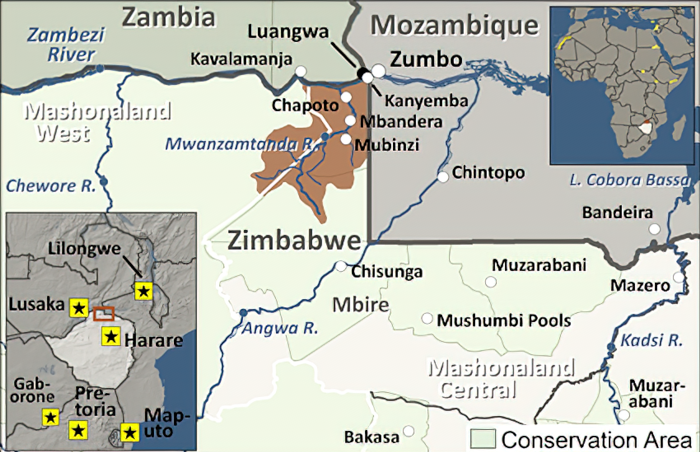
Copyright: joshuaproject.net

Following Zimbabwe’s independence in 1980, their territories were incorporated into resettlement, rural development, and community-based natural resource management initiatives—such as the CAMPFIRE programme—which led to increased interaction between the Vadoma, state institutions, and non-governmental organisations. Nevertheless, the Vadoma have remained wary of government policies that restrict traditional hunting or impose sedentary agricultural practices—approaches that conflict with their historical memory and inherited ecological knowledge.

Traditional Lifestyle and Economy

The Vadoma relied on a subsistence economy centred on hunting, gathering wild fruits, and fishing in the tributaries of the Zambezi River. In anthropological literature, they are classified as one of the last groups in Southern Africa to practise a semi-nomadic hunter-gatherer lifestyle. Their traditional diet includes wild tubers, baobab fruit, wild honey, and the meat of small-to-medium-sized game, as well as fish caught using traditional traps and hand-held nets during the dry season when water levels recede. The community has developed a precise understanding of seasonal cycles, the migratory patterns of wild animals, and the properties of medicinal plants—knowledge that has enabled them to adapt to scarce rainfall and the fluctuation of resources within a semi-arid environment.

This economic pattern has undergone radical shifts due to wildlife conservation laws and the establishment of nature reserves and regulated hunting zones within the Zambezi Basin. Traditional, unlicensed hunting practices were criminalised and reclassified as illegal poaching. Consequently, an increasing number of Vadoma have been compelled to gradually transition toward small-scale, rain-fed agriculture—such as cultivating sorghum and millet on seasonal floodplains—or to work as seasonal labourers in the fields of their neighbours, the Korekore and Chikunda peoples. However, soil fragility, recurring droughts, and the destruction of crops by elephants and other wild animals often render agricultural production insufficient to ensure food security. This traps the community in a cycle of economic vulnerability and an increasing reliance on food aid.

A Distinctive Genetic Phenomenon

The Vadoma people have gained significant scientific and media attention due to the high prevalence of a rare genetic condition known medically as “ectrodactyly”—or “split-hand/split-foot malformation”—which is colloquially referred to as the “ostrich-footed” condition. This congenital condition manifests as the absence of the three middle digits on the feet—and sometimes the hands—with the two outer digits (the thumb/big toe and the little finger/little toe) curving inward to resemble a claw or a pair of tongs. Notably, this condition is not associated with any intellectual impairment or decline in the individual’s general health.

Medical studies conducted in the 1980s documented that the prevalence of this condition among the Vadoma is far higher than the rates recorded in the general human population. Genetically, this phenomenon is understood as an autosomal dominant trait with variable expressivity. It is transmitted from a parent to their offspring with a 50% probability per pregnancy. It may be linked to mutations in specific chromosomal regions responsible for foetal limb development—such as the 7q21.2–q21.3 locus—or to the “TP63” gene, which is associated with both syndromic and non-syndromic conditions.

The high prevalence of this mutation within the Vadoma community is attributed to the “founder effect” and genetic drift resulting from the group’s small population size. Also, strict social norms—which encourage endogamy (marriage within the group) and prohibit marriage outside the tribe—have kept the dominant allele contained and concentrated across generations.

In terms of daily function and social life, individuals with “split foot” (ectrodactyly) lead normal lives. From childhood, they adapt to walking, running, and climbing trees—to gather honey and fruit—without significant difficulty, though they do face a practical challenge when it comes to wearing conventional, closed-toe footwear. The Vadoma do not view this trait as a stigma or a disability warranting social exclusion; rather, they incorporate it into their collective identity as a mark of belonging and a shared heritage that distinguishes them from surrounding groups (Cutler, 1986).

Social Structure

The social structure of the Vadoma is based on extended kinship units led by clan elders and village headmen, whose authority derives from their relative seniority and their knowledge of inherited rituals and customs. A patrilineal descent system governs clan affiliation and symbolic land ownership, while horizontal family ties play a crucial role in sharing food, caring for children, and organising collective labour. Rules favouring endogamy (marriage within the group) serve as a cornerstone for maintaining group cohesion; unions with outsiders are often perceived as a threat to the Vadoma’s autonomy and cultural identity—though such intermarriage has become more frequent in recent decades due to increased interaction in local schools and marketplaces.

Spiritual intermediaries and traditional healers play a pivotal role in diagnosing physical and social ailments through the use of wild herbs and communal rituals, while the spread of Christianity has remained limited compared to other urban and rural areas in Zimbabwe.

Contemporary Challenges

In the twenty-first century, the Vadoma people face a complex set of developmental and social challenges that threaten the sustainability of their culture and their standard of living. Regarding education, their regions—Mbire and Kanyemba—were previously reported to suffer from a lack of secondary schools. Students are often forced to travel long distances on foot through environments inhabited by dangerous wild animals; this leads to high dropout rates and limits the opportunities for young people to pursue higher education or secure formal employment. Furthermore, extreme poverty and the inability to afford school fees and uniforms exacerbate the educational gap between the Vadoma and neighbouring populations.

In the health sector, the Lower Zambezi Valley is reported to lack specialised medical facilities, leaving the population vulnerable to endemic diseases such as malaria, bilharzia, and seasonal malnutrition, while also making access to maternal and child healthcare difficult. Beyond the marginalisation in terms of public services, the Vadoma also encounter stereotypes and social discrimination when interacting with the broader society.

ــــــــــــــــــــــــــــــ

References

  • 101 Last Tribes (n.d). Vadoma. https://www.101lasttribes.com/tribes/vadoma.html
  • Beach, D. N. (1980). The Shona and Zimbabwe 900–1850: An outline of Shona history. Heinemann.
  • Dzingirai, V. (2003). The new scramble for the African countryside. Development and Change, 34(2), 243–264. https://doi.org/10.1111/1467-7660.00304
  • Elliott, A. M., & Evans, J. A. (2006). Genotype-phenotype correlations in mapped split hand foot malformation (SHFM) patients. American Journal of Medical Genetics Part A, 140A(13), 1419–1427. https://doi.org/10.1002/ajmg.a.31244
  • Farrell, H. B. (1984). The two-toed Wadoma—familial ectrodactyly in Zimbabwe. South African Medical Journal, 65(13), 531–533.
  • Isaacman, A. F. (1972). Mozambique: The Africanization of a European institution; the Zambesi prazos, 1750–1902. University of Wisconsin Press.
  • Lan, D. (1985). Guns and rain: Guerrillas and spirit mediums in Zimbabwe. James Currey.
  • Murphree, M. W., & Cumming, D. H. M. (1993). Savanna land use: Policy and practice in Zimbabwe. In M. D. Young & O. T. Solbrig (Eds.), The world’s savannas: Economic driving forces, ecological constraints and policy options for sustainable land use (pp. 139–178). UNESCO & Parthenon Publishing Group.
  • Viljoen, D. L., & Beighton, P. (1984). The split-hand and split-foot anomaly in a central African Negro population. American Journal of Medical Genetics, 19(3), 545–552. https://doi.org/10.1002/ajmg.1320190317

Tags: VadomaZimbabwe

Related Posts

South Africa arrests four men suspected of planning to fight for Russia
Featured

South Africa police searches for motive behind deadly shootings

November 17, 2026
Bahima / Hima / Bahema / Hema of Central-Lakes: Designations and Geographical Distribution
Central Africa

Bahima / Hima / Bahema / Hema of Central-Lakes: Designations and Geographical Distribution

November 12, 2026
What is standing in the way of science’s ability to eradicate malaria? 3 areas where action can have an influence
Featured

What is standing in the way of science’s ability to eradicate malaria? 3 areas where action can have an influence

November 10, 2026
Adio / Iddio of Central Africa
Central Africa

Adio / Iddio of Central Africa

November 9, 2026
South Africans vote as anger over failing services threatens ANC
Featured

South African voters rebuff ANC, accelerating shift to coalition politics

November 9, 2026
South Africans vote as anger over failing services threatens ANC
Featured

South Africa’s ANC faces ‘worst nightmare’ as vote share tumbles

November 5, 2026

Search Qiraat Africa

No Result
View All Result

Follow on Twitter

Follow @africanqiraat

Trending

Africa’s 10 Strongest Currencies in June 2026

Africa’s 10 Strongest Currencies in June 2026

July 8, 2026
Kumbi Saleh, the capital of the ancient Ghana Empire

Kumbi Saleh, the capital of the ancient Ghana Empire

October 13, 2025
DR Congo’s President Tshisekedi calls for sanctions against Rwanda

DR Congo president orders probe into copper and cobalt export revenues, document shows

April 28, 2026
Zaghawa people of northeastern Chad and western Sudan

Zaghawa people of northeastern Chad and western Sudan

March 3, 2026
The Bamiléké of western Cameroon

The Bamiléké of western Cameroon

September 18, 2024
Tunka Manin (c. 1010–1078), the last ruler of the Ghana Empire

Tunka Manin (c. 1010–1078), the last ruler of the Ghana Empire

December 12, 2025

Facebook

Sections

  • About Us
  • Privacy Policy
  • Opinion
  • Infographics
  • News
  • Analysis
  • Figures
  • Culture & Literature
  • Follow Ups
  • Historical Readings
  • Interview
  • Studies


© Copyright Qiraat Africa. Developed by Bunnaj Media .

No Result
View All Result
  • News
  • Analysis & Report
  • Studies
  • Opinion
  • Interview
  • Culture & Literature
  • Figures
  • Historical Readings
  • Regions

© 2021 Copyright Qiraat Africa.