








Qiraat Africa
عربي  |  Fr
Advertisement
  • News
    • All
    • Climate Change
    • Economy
    • Education
    • Energy
    • Health
    • Migration
    • Mining
    • Politics
    • Security
    • Society
    • Sport
    Burkina Faso: Rights groups urge release of disappeared journalist

    Burkina Faso: Rights groups urge release of disappeared journalist

    Senegal

    Senegal finance ministry rejects trade minister’s comments on restructuring

    Many flee their homes after attacks kill over 100 in central Nigeria

    Attack kills 20 in Nigeria’s central Plateau attack

    US equipment, experts arrive at Kenya Ebola facility despite court order, protests

    Construction of US-backed Ebola facility in Kenya halted, minister says

    DR Congo says confirmed Ebola cases rise to 1003, including 254 deaths

    DR Congo says confirmed Ebola cases rise to 1003, including 254 deaths

    Ethiopia passes law to open banking to foreign competition

    Ethiopian prime minister’s party gets another big parliamentary majority

    International financial crime watchdog removes Senegal from ‘grey list,’ adds some others

    Senegal trade minister says government ready to restructure if necessary

    Namibia’s communication regulator dismisses Starlink appeal over license rejection

    Namibia’s communication regulator dismisses Starlink appeal over license rejection

    Namibia’s central bank governor to leave post after five years

    Namibia says it is being removed from financial crime watchdog’s ‘grey list’

  • Analysis
    • All
    • Climate Change
    • Digital & Tech
    • Economy
    • Energy & Power
    • Health
    • Politics
    • Security
    • Society
    The promise and risks of Kenya’s ambitious new strategy to close refugee camps

    The promise and risks of Kenya’s ambitious new strategy to close refugee camps

    Al Qaeda-linked militants curb their brutality in seized Malian territory

    Al Qaeda-linked militants curb their brutality in seized Malian territory

    Five Years After the Coup in Mali: Are Stability and Growth Within Reach?

    The Political Economy of Insecurity in Mali: Armed Groups, Resources, and State Fragility

    Ghana to evacuate 300 citizens from South Africa after xenophobic attacks

    Xenophobic Violence and Human Security in South Africa: Causes and Consequences

    Inside an African lab that helped crack the hantavirus outbreak

    Inside an African lab that helped crack the hantavirus outbreak

    Nigeria’s Agricultural sector: Problems and challenges

    Agriculture in Africa: science and research cannot have an impact without investments and good policies

    Mali’s junta creates a new ministerial-level post to oversee the mining sector

    African Mineral Resources: The Controversial Link to US Health Deals

    Ghana curbs offshore investments to protect cedi, boost stability

    Ghana’s mining law attempts to eradicate speculation, but leaves communities in limbo: insights from a lithium case study

    East African Community’s expansion has triggered financial difficulties: why solutions come with risks

    East African Community’s expansion has triggered financial difficulties: why solutions come with risks

  • Studies
    Schooling is the most severely affected by conflict when children are the target – Study

    Schooling is the most severely affected by conflict when children are the target – Study

    Pensions for Botswana’s elderly are expanding, but care services are lacking—study follows 20 years

    Pensions for Botswana’s elderly are expanding, but care services are lacking—study follows 20 years

    60 new cosmic structures have been discovered by South Africa’s MeerKAT telescope, which is mapping previously unseen gaps between galaxies

    60 new cosmic structures have been discovered by South Africa’s MeerKAT telescope, which is mapping previously unseen gaps between galaxies

    Benin government says armed forces foil coup attempt

    Coup contagion? A rash of African power grabs suggests copycats are taking note of others’ success

    One in three South Africans have never heard of AI: what this means for policy

    One in three South Africans have never heard of AI: what this means for policy

    Social Media as a Catalyst for the Spread of Dangerous Wealth Ritual Myths

    Social Media as a Catalyst for the Spread of Dangerous Wealth Ritual Myths

    Overcoming Education Barriers for Young Mothers in Sub-Saharan Africa

    Overcoming Education Barriers for Young Mothers in Sub-Saharan Africa

    Youth Empowerment Through Vocational Training in Rural Sub-Saharan Africa

    Youth Empowerment Through Vocational Training in Rural Sub-Saharan Africa

    Manufacturers in Ghana and Nigeria claim that although corruption damages businesses, digital technologies provide a chance to combat it

    Manufacturers in Ghana and Nigeria claim that although corruption damages businesses, digital technologies provide a chance to combat it

  • Infographics
  • Figures
    Eduardo Mondlane (1920-1969): Mozambican Revolutionary and Anthropologist

    Eduardo Mondlane (1920-1969): Mozambican Revolutionary and Anthropologist

    William Tubman (1895-1971): Liberian politician and longest-serving president in the country’s history

    William Tubman (1895-1971): Liberian politician and longest-serving president in the country’s history

    Abebe Bikila (1932-1973): Ethiopian marathoner and first black African to win an Olympic medal

    Abebe Bikila (1932-1973): Ethiopian marathoner and first black African to win an Olympic medal

    W. E. B. Du Bois (1868-1963): Sociologist, historian, and Pan-Africanist civil rights activist

    W. E. B. Du Bois (1868-1963): Sociologist, historian, and Pan-Africanist civil rights activist

    Frantz Fanon (1925-1961): Psychiatrist and political philosopher

    Frantz Fanon (1925-1961): Psychiatrist and political philosopher

    Percy Lavon Julian (1899-1975): African American researcher and chemist

    Percy Lavon Julian (1899-1975): African American researcher and chemist

    Harriet Tubman (Araminta Ross, 1822-1913): American abolitionist and social activist

    Harriet Tubman (Araminta Ross, 1822-1913): American abolitionist and social activist

    Dorothy Vaughan (1910-2008): African American mathematician and human computer

    Dorothy Vaughan (1910-2008): African American mathematician and human computer

    George Washington Carver (1864-1943): African American agricultural scientist and inventor

    George Washington Carver (1864-1943): African American agricultural scientist and inventor

  • History
    Laas Geel, Somalia

    Laas Geel, Somalia

    Lakes Of Ounianga, Chad

    Lakes Of Ounianga, Chad

    Nok Caves, Togo

    Nok Caves, Togo

    The Land of Punt (modern Somalia, Eritrea, Ethiopia, or eastern Sudan)

    The Land of Punt (modern Somalia, Eritrea, Ethiopia, or eastern Sudan)

    Avenue of the Baobabs, Madagascar

    Avenue of the Baobabs, Madagascar

    Lopé-Okanda (Gabon)

    Lopé-Okanda (Gabon)

    The Sudd wetland

    The Sudd wetland

    Khami Ruins (Zimbabwe), the capital of the Torwa state

    Khami Ruins (Zimbabwe), the capital of the Torwa state

    Royal Palace, Porto-Novo, Republic of Benin

    Royal Palace, Porto-Novo, Republic of Benin

  • Others
    • Culture / Literature
    • Interview
    • Opinion
  • Countries
    • Country profiles
    • Regions
      • Central Africa
      • East Africa
      • Southern Africa
      • West Africa
No Result
View All Result
  • News
    • All
    • Climate Change
    • Economy
    • Education
    • Energy
    • Health
    • Migration
    • Mining
    • Politics
    • Security
    • Society
    • Sport
    Burkina Faso: Rights groups urge release of disappeared journalist

    Burkina Faso: Rights groups urge release of disappeared journalist

    Senegal

    Senegal finance ministry rejects trade minister’s comments on restructuring

    Many flee their homes after attacks kill over 100 in central Nigeria

    Attack kills 20 in Nigeria’s central Plateau attack

    US equipment, experts arrive at Kenya Ebola facility despite court order, protests

    Construction of US-backed Ebola facility in Kenya halted, minister says

    DR Congo says confirmed Ebola cases rise to 1003, including 254 deaths

    DR Congo says confirmed Ebola cases rise to 1003, including 254 deaths

    Ethiopia passes law to open banking to foreign competition

    Ethiopian prime minister’s party gets another big parliamentary majority

    International financial crime watchdog removes Senegal from ‘grey list,’ adds some others

    Senegal trade minister says government ready to restructure if necessary

    Namibia’s communication regulator dismisses Starlink appeal over license rejection

    Namibia’s communication regulator dismisses Starlink appeal over license rejection

    Namibia’s central bank governor to leave post after five years

    Namibia says it is being removed from financial crime watchdog’s ‘grey list’

  • Analysis
    • All
    • Climate Change
    • Digital & Tech
    • Economy
    • Energy & Power
    • Health
    • Politics
    • Security
    • Society
    The promise and risks of Kenya’s ambitious new strategy to close refugee camps

    The promise and risks of Kenya’s ambitious new strategy to close refugee camps

    Al Qaeda-linked militants curb their brutality in seized Malian territory

    Al Qaeda-linked militants curb their brutality in seized Malian territory

    Five Years After the Coup in Mali: Are Stability and Growth Within Reach?

    The Political Economy of Insecurity in Mali: Armed Groups, Resources, and State Fragility

    Ghana to evacuate 300 citizens from South Africa after xenophobic attacks

    Xenophobic Violence and Human Security in South Africa: Causes and Consequences

    Inside an African lab that helped crack the hantavirus outbreak

    Inside an African lab that helped crack the hantavirus outbreak

    Nigeria’s Agricultural sector: Problems and challenges

    Agriculture in Africa: science and research cannot have an impact without investments and good policies

    Mali’s junta creates a new ministerial-level post to oversee the mining sector

    African Mineral Resources: The Controversial Link to US Health Deals

    Ghana curbs offshore investments to protect cedi, boost stability

    Ghana’s mining law attempts to eradicate speculation, but leaves communities in limbo: insights from a lithium case study

    East African Community’s expansion has triggered financial difficulties: why solutions come with risks

    East African Community’s expansion has triggered financial difficulties: why solutions come with risks

  • Studies
    Schooling is the most severely affected by conflict when children are the target – Study

    Schooling is the most severely affected by conflict when children are the target – Study

    Pensions for Botswana’s elderly are expanding, but care services are lacking—study follows 20 years

    Pensions for Botswana’s elderly are expanding, but care services are lacking—study follows 20 years

    60 new cosmic structures have been discovered by South Africa’s MeerKAT telescope, which is mapping previously unseen gaps between galaxies

    60 new cosmic structures have been discovered by South Africa’s MeerKAT telescope, which is mapping previously unseen gaps between galaxies

    Benin government says armed forces foil coup attempt

    Coup contagion? A rash of African power grabs suggests copycats are taking note of others’ success

    One in three South Africans have never heard of AI: what this means for policy

    One in three South Africans have never heard of AI: what this means for policy

    Social Media as a Catalyst for the Spread of Dangerous Wealth Ritual Myths

    Social Media as a Catalyst for the Spread of Dangerous Wealth Ritual Myths

    Overcoming Education Barriers for Young Mothers in Sub-Saharan Africa

    Overcoming Education Barriers for Young Mothers in Sub-Saharan Africa

    Youth Empowerment Through Vocational Training in Rural Sub-Saharan Africa

    Youth Empowerment Through Vocational Training in Rural Sub-Saharan Africa

    Manufacturers in Ghana and Nigeria claim that although corruption damages businesses, digital technologies provide a chance to combat it

    Manufacturers in Ghana and Nigeria claim that although corruption damages businesses, digital technologies provide a chance to combat it

  • Infographics
  • Figures
    Eduardo Mondlane (1920-1969): Mozambican Revolutionary and Anthropologist

    Eduardo Mondlane (1920-1969): Mozambican Revolutionary and Anthropologist

    William Tubman (1895-1971): Liberian politician and longest-serving president in the country’s history

    William Tubman (1895-1971): Liberian politician and longest-serving president in the country’s history

    Abebe Bikila (1932-1973): Ethiopian marathoner and first black African to win an Olympic medal

    Abebe Bikila (1932-1973): Ethiopian marathoner and first black African to win an Olympic medal

    W. E. B. Du Bois (1868-1963): Sociologist, historian, and Pan-Africanist civil rights activist

    W. E. B. Du Bois (1868-1963): Sociologist, historian, and Pan-Africanist civil rights activist

    Frantz Fanon (1925-1961): Psychiatrist and political philosopher

    Frantz Fanon (1925-1961): Psychiatrist and political philosopher

    Percy Lavon Julian (1899-1975): African American researcher and chemist

    Percy Lavon Julian (1899-1975): African American researcher and chemist

    Harriet Tubman (Araminta Ross, 1822-1913): American abolitionist and social activist

    Harriet Tubman (Araminta Ross, 1822-1913): American abolitionist and social activist

    Dorothy Vaughan (1910-2008): African American mathematician and human computer

    Dorothy Vaughan (1910-2008): African American mathematician and human computer

    George Washington Carver (1864-1943): African American agricultural scientist and inventor

    George Washington Carver (1864-1943): African American agricultural scientist and inventor

  • History
    Laas Geel, Somalia

    Laas Geel, Somalia

    Lakes Of Ounianga, Chad

    Lakes Of Ounianga, Chad

    Nok Caves, Togo

    Nok Caves, Togo

    The Land of Punt (modern Somalia, Eritrea, Ethiopia, or eastern Sudan)

    The Land of Punt (modern Somalia, Eritrea, Ethiopia, or eastern Sudan)

    Avenue of the Baobabs, Madagascar

    Avenue of the Baobabs, Madagascar

    Lopé-Okanda (Gabon)

    Lopé-Okanda (Gabon)

    The Sudd wetland

    The Sudd wetland

    Khami Ruins (Zimbabwe), the capital of the Torwa state

    Khami Ruins (Zimbabwe), the capital of the Torwa state

    Royal Palace, Porto-Novo, Republic of Benin

    Royal Palace, Porto-Novo, Republic of Benin

  • Others
    • Culture / Literature
    • Interview
    • Opinion
  • Countries
    • Country profiles
    • Regions
      • Central Africa
      • East Africa
      • Southern Africa
      • West Africa
No Result
View All Result
Qiraat Africa
عربي  |  Fr
No Result
View All Result
Home Analysis & Report

Unpacking the South African Land Law That Angers Trump

June 2, 2025
Unpacking the South African Land Law That Angers Trump
Share on FacebookShare on Twitter

By Farouk Chothia


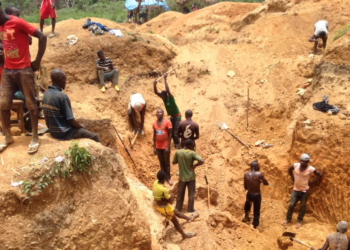
South Africa’s President Cyril Ramaphosa is at the centre of a political firestorm after he approved a law that gives the state the power to expropriate some privately owned land without compensation for owners.

Read also

Burkina Faso: Rights groups urge release of disappeared journalist

Senegal finance ministry rejects trade minister’s comments on restructuring

Attack kills 20 in Nigeria’s central Plateau attack

The law, which is yet to be implemented, has drawn the ire of US President Donald Trump, who sees it as discriminating against white farmers.

Centre-right political parties and lobby groups in South Africa have also opposed it, saying they will challenge the Expropriation Act – as the law is named – in court on the grounds that it threatens property rights.

Ramaphosa’s government says the law provides for compensation to be paid in the vast majority of cases – and the changes are needed to increase black ownership of land.

Most private farmland is still owned by white people.

When Nelson Mandela came to power more than 30 years ago, ending the racist system of apartheid, it was promised that this would be rectified through a willing-buyer, willing-seller land reform programme – but critics say this has proved too slow and too costly.

So what exactly can be expropriated without compensation?

In rare circumstances it would be land that was needed for the “public interest”, legal experts told the BBC.

According to South African law firm Werksmans Attorneys, this suggested it would mainly, or perhaps only, happen in relation to the land reform programme.

Although it could also be used to access natural resources such as minerals and water, the firm added, in an opinion written by its experts in the field, Bulelwa Mabasa and Thomas Karberg.

Mabasa and Karberg told the BBC that in their view, productive agricultural land could not be expropriated without compensation.

They said any expropriation without compensation – known as EWC – could take place only in a few circumstances:

  • For example, when an owner was not using the land and was holding it for “speculative purposes”
  • Or when an owner “abandoned the land by failing to exercise control over it despite being reasonably capable of doing so”.

Owners would probably still get compensation for the buildings on the land and for the natural resources, the lawyers said.

Mabasa and Karberg added that EWC was “not aimed at rural land or farmland specifically, and could include land in urban areas”.

However, in cases where compensation is paid, the rules are set to change, with owners likely to get less money.

Why will less money be paid in compensation?

The plan is for owners to receive “just-and-equitable” compensation – a departure from the higher “market value” they have been getting up to now, Mabasa and Karberg said.

The government had been paying market-value compensation despite the fact that this was “at odds” with the constitution, adopted after white-minority rule ended in 1994, they added.

The lawyers said that all expropriations had “extensive procedural fairness requirements”, including the owner’s right to go to court if they were not happy.

The move away from market-value compensation will also apply to land expropriated for a “public purpose” – like building state schools or railways.

This has not been a major point of controversy, possibly because it is “hardly a novel concept” – a point made by JURISTnews, a legal website run by law students from around the world.

“The US Constitution, for instance, provides that the government can seize private property for public use so long as ‘just compensation’ is provided,” it added.

Will it make it easier for the government to acquire land?

The government hopes so.

University of Western Cape land expert Prof Ruth Hall told the BBC that more than 80,000 land claims remain unsettled.

In the eastern regions of South Africa, many black people work on farms for free – in exchange they are allowed to live there and keep their livestock on a portion of the owners’ land, she said.

The government wants to transfer ownership of this land to the workers, and it was “unfair” to expect it to pay the market value, Prof Hall added.

Over the last three decades, the government has used existing powers to expropriate property–- with less than market-value compensation – in fewer than 20 cases, she said.

The new law was aimed at making it easier and cheaper to restore land to black people who were “dispossessed” of it during white-minority rule or were forced to be “long-term tenants” as they could not own land, Prof Hall added.

“It’s a bargaining chip,” she said.

But she doubts that the government will press ahead with implementing the law in the foreseeable future as the “political cost” has become too high.

The academic was referring to the fact that Trump has opposed the law, saying it discriminates against white farmers and their land was being “seized” – a charge the government denies.

In February, Trump cut aid to South Africa, and in April he announced a 30% tariff on South African goods and agricultural products, although this was later paused for 90 days.

This was followed by last month’s infamous Oval Office showdown when Trump ambushed Ramaphosa with a video and printouts of stories alleging white people were being persecuted – much of his dossier has been discredited.

What has been the reaction in South Africa?

Like Trump, the second-biggest party in Ramaphosa’s coalition government, the Democratic Alliance (DA), is opposed to the legislation.

In a statement on 26 May, the party said that its top leadership body had rejected the notion of “nil compensation”.

However, it has agreed with the concept of just-and-equitable compensation rather than market-value compensation, adding it should be “adjudicated by a court of law”.

Surprisingly, Jaco Kleynhans of the Solidarity Movement, an influential Afrikaner lobby group, said that while the new law could “destroy” some businesses and he was opposed to it, he did not believe it would lead to the “large-scale expropriation of farmland”.

“I don’t see within the wording of this text that that will happen,” he said in a recent panel discussion at an agricultural exhibition held in South Africa’s Free State province – where a large number of conservative Afrikaner farmers live.

The South African Property Owners Association said it was “irrational” to give “nil compensation” to an owner who held land for speculative purposes.

“There are many landowners whose sole purpose of business is to speculate in land. They do not get the land for free and they have significant holding costs,” the association said, adding it had no doubt the law would be “abundantly tested” in the courts.

Mabasa and Karberg said one view was that the concept of EWC was a “legal absurdity” because “intrinsic in the legal definition of expropriation, is a requirement for compensation to be paid”.

However, the lawyers pointed out the alternative view was that South Africa’s constitution “implicitly recognises that it would in some circumstances be just and equitable for compensation to be nil”.

What does the government say?

South Africa’s Public Works Minister Dean Macpherson has defended the legislation, breaking ranks with his party, the DA.

In fact he is in charge of the new legalisation and, on a discussion panel, he explained that while he had some concerns about the law, it was a “dramatic improvement” on the previous Expropriation Act, with greater safeguards for owners.

He said the law could also help end extortionist demands on the state, and in some cases “nil compensation” – which he argued was different from EWC – could be justified.

He gave as an example the problems being faced by the state-owned power utility Eskom.

It plans to roll out a transmission network over about 4,500km (28,000 miles) of land to boost electricity supplies to end the power crisis in the country.

Ahead of the roll-out, some individuals colluded with Eskom officials to buy land for 1m rand ($56,000; £41,000), and then demanded R20m for it, he said.

“Is it just and equitable to give them what they want? I don’t think that’s in the interest of the broader community or the state,” Macpherson said.

Giving another example, Macpherson said that some of South Africa’s inner cities were in a “disastrous” condition. After owners left, buildings were “over-run” and “hijacked” for illegal occupation. The cost to the state to rebuild them could exceed their value, and in such cases the courts could rule that an owner qualified for “nil compensation”, he said.

“Nil is a form of compensation,” Macpherson added, while ruling it out for farms.

Johannesburg mayor Dada Morero told South Africa’s Mail & Guardian newspaper that he wanted to use the buildings for the “public good”, like accommodating around 300,000 people on the housing waiting list.

He added the owners of nearly 100 buildings could not be located.

“They have abandoned the buildings,” he said, adding some of the owners were from the UK and Germany.

But Mabasa and Karberg told the BBC that in such cases compensation would probably still have to be paid for the buildings, though not the land.

If the state could not locate the owners, it “must deposit the compensation with the Master of the High Court” in case they returned or could be traced later, they said.

What next?

The law is in limbo, as Ramaphosa – about four months after giving his assent to it – has still not set a date for its implementation.

Nor is he likely to do so anytime soon, as he would not want to further antagonise Trump while South Africa was trying to negotiate a trade deal with the US.

And on the domestic front, the DA is spearheading opposition to the legislation. It said it wanted a “judicial review” of it, while at the same time it was pressing ahead with court action to challenge the law’s constitutionality.

The DA’s tough line is in contrast with that of Macpherson, who, a few weeks ago, warned that if the law was struck down in its entirety: “I don’t know what’s going to come after that.

“In politics, sometimes you must be careful what you wish for because often you can get it,” he said.

His comments highlight the deep fissures in South African politics, with some parties, such as Julius Malema’s Economic Freedom Fighters (EFF), believing that the legislation did not go far enough to tackle racial inequality in land ownership.

With land such an emotive issue, there is no easy solution to the dispute – and it is likely to continue to cause tensions within South Africa, as well as with the US president.
Source: BBC
Tags: Donald TrumpSouth AfricaSouth African land law

Related Posts

US equipment, experts arrive at Kenya Ebola facility despite court order, protests
East Africa

Construction of US-backed Ebola facility in Kenya halted, minister says

June 23, 2026
DR Congo says confirmed Ebola cases rise to 1003, including 254 deaths
Central Africa

DR Congo says confirmed Ebola cases rise to 1003, including 254 deaths

June 22, 2026
Ethiopia passes law to open banking to foreign competition
East Africa

Ethiopian prime minister’s party gets another big parliamentary majority

June 22, 2026
International financial crime watchdog removes Senegal from ‘grey list,’ adds some others
Economy

Senegal trade minister says government ready to restructure if necessary

June 22, 2026
Namibia’s communication regulator dismisses Starlink appeal over license rejection
Featured

Namibia’s communication regulator dismisses Starlink appeal over license rejection

June 22, 2026
Namibia’s central bank governor to leave post after five years
Economy

Namibia says it is being removed from financial crime watchdog’s ‘grey list’

June 21, 2026

Search Qiraat Africa

No Result
View All Result

Follow on Twitter

Follow @africanqiraat

Trending

Africa’s I0 Most Socially Progressive Nations in 2026

Africa’s I0 Most Socially Progressive Nations in 2026

March 25, 2026
Kumbi Saleh, the capital of the ancient Ghana Empire

Kumbi Saleh, the capital of the ancient Ghana Empire

October 13, 2025
Côte d’Ivoire (Ivory Coast)

Côte d’Ivoire (Ivory Coast)

January 30, 2025
Ghana to evacuate 300 citizens from South Africa after xenophobic attacks

Xenophobic Violence and Human Security in South Africa: Causes and Consequences

May 25, 2026
Mansa Musa of Mali Empire

Mansa Musa of Mali Empire

April 14, 2025
Brief History and Culture of the City of Lagos, Nigeria

Brief History and Culture of the City of Lagos, Nigeria

July 24, 2024

Facebook

Sections

  • About Us
  • Privacy Policy
  • Opinion
  • Infographics
  • News
  • Analysis
  • Figures
  • Culture & Literature
  • Follow Ups
  • Historical Readings
  • Interview
  • Studies


© Copyright Qiraat Africa. Developed by Bunnaj Media .

No Result
View All Result
  • News
  • Analysis & Report
  • Studies
  • Opinion
  • Interview
  • Culture & Literature
  • Figures
  • Historical Readings
  • Regions

© 2021 Copyright Qiraat Africa.