








Qiraat Africa
عربي  |  Fr
Advertisement
  • News
    • All
    • Climate Change
    • Economy
    • Education
    • Energy
    • Health
    • Migration
    • Mining
    • Politics
    • Security
    • Society
    • Sport
    Is Ethiopia’s Tigray barreling towards another war?

    Ethiopian Airlines cancels flights to Tigray region after clashes

    African governments look to Islamic finance after Benin sukuk success

    African governments look to Islamic finance after Benin sukuk success

    Ukraine says Niger’s move to cut relations is ‘regrettable’

    Gunfire, blasts rock Niger airport overnight before calm restored

    DR Congo Military Court Issues Arrest Warrant for Corneille Nangaa

    Rebel leader denounces US-DRC minerals deal one year after Goma’s fall

    Zambia groups say freedom of expression under threat

    Zambia is hopeful of agreement on debt restructuring terms with Afreximbank

    Rwanda’s presidential election set for July 15, 2024

    Rwanda says UK owes $130 million over scrapped asylum scheme

    Giant Dangote oil refinery to begin production in third quarter

    Shipping data shows Indian diesel exports to West Africa at record high

    Ex-Nigerian minister, Alison-Madueke faces bribery charges in London court

    Nigeria lowers entry barriers to attract investors for latest oil round

    Uganda’s constitutional court to hear challenges against anti-homosexuality law

    Uganda court releases prominent rights activist on bail

  • Analysis
    • All
    • Climate Change
    • Digital & Tech
    • Economy
    • Energy & Power
    • Health
    • Politics
    • Security
    • Society
    BRICS Plus and the Shifting Global Power Balance: Implications of South Africa’s Role

    BRICS Plus and the Shifting Global Power Balance: Implications of South Africa’s Role

    African Union suspends Niger over coup, prepares sanctions; France denies report it asked Algeria to use airspace for a Niger operation

    Leaders in Africa’s human rights institutions are being elected. Why it matters

    Sahel Alliance leaders meet in Bamako to deepen break with ECOWAS

    The AES and the Reconfiguration of Regional Security Architecture: A Look at the 2025 Bamako Summit

    US airstrikes in northern Nigeria: potential windfalls and dangers

    US airstrikes in northern Nigeria: potential windfalls and dangers

    Why France’s Focus is Shifting to Anglophone Africa

    Why France’s Focus is Shifting to Anglophone Africa

    UN believes hundreds were killed in Tanzania election protests

    Cameroon and Tanzania’s rulers clung to power in 2025—but look more vulnerable than ever

    General sworn in as Guinea-Bissau leader in swift coup after disputed vote

    Military and Politics in Guinea-Bissau

    Global power shifts are playing out in the Red Sea region: why this is where the rules are changing

    Global power shifts are playing out in the Red Sea region: why this is where the rules are changing

    Understanding Trump’s Christian Genocide Claim and Military Threat: What It Means for Nigeria-U.S. Relations

    Understanding Trump’s Christian Genocide Claim and Military Threat: What It Means for Nigeria-U.S. Relations

  • Studies
    Benin government says armed forces foil coup attempt

    Coup contagion? A rash of African power grabs suggests copycats are taking note of others’ success

    One in three South Africans have never heard of AI: what this means for policy

    One in three South Africans have never heard of AI: what this means for policy

    Social Media as a Catalyst for the Spread of Dangerous Wealth Ritual Myths

    Social Media as a Catalyst for the Spread of Dangerous Wealth Ritual Myths

    Overcoming Education Barriers for Young Mothers in Sub-Saharan Africa

    Overcoming Education Barriers for Young Mothers in Sub-Saharan Africa

    Youth Empowerment Through Vocational Training in Rural Sub-Saharan Africa

    Youth Empowerment Through Vocational Training in Rural Sub-Saharan Africa

    Manufacturers in Ghana and Nigeria claim that although corruption damages businesses, digital technologies provide a chance to combat it

    Manufacturers in Ghana and Nigeria claim that although corruption damages businesses, digital technologies provide a chance to combat it

    Environmental Threats and Conservation Efforts in Namibia

    Environmental Threats and Conservation Efforts in Namibia

    Your teachers’ level of knowledge affects how well you perform in class: perspectives from 14 French-speaking African nations

    Your teachers’ level of knowledge affects how well you perform in class: perspectives from 14 French-speaking African nations

    Islamic Finance in Nigeria: Between Islamization and Shariah Non-Compliance Polemics

    Islamic Finance in Nigeria: Between Islamization and Shariah Non-Compliance Polemics

  • Infographics
  • Figures
    What does a diary entry reveal about the West African origins of Apongo, a rebel leader in Jamaica?

    What does a diary entry reveal about the West African origins of Apongo, a rebel leader in Jamaica?

    Obafemi Awolowo (1909 – 1987): Nigerian statesman and influential advocate of independence

    Obafemi Awolowo (1909 – 1987): Nigerian statesman and influential advocate of independence

    Tunka Manin (c. 1010–1078), the last ruler of the Ghana Empire

    Tunka Manin (c. 1010–1078), the last ruler of the Ghana Empire

    Samuel Ajayi Crowther (1809-1891): First African Anglican Bishop

    Samuel Ajayi Crowther (1809-1891): First African Anglican Bishop

    Osei Tutu (c. 1660—c. 1717) , founder of the Asante nation

    Osei Tutu (c. 1660—c. 1717) , founder of the Asante nation

    Walter Sisulu (1912 – 2003): South African activist

    Walter Sisulu (1912 – 2003): South African activist

    Modibo Keïta (1915-1977): First President of Mali

    Modibo Keïta (1915-1977): First President of Mali

    Robert Mugabe (1924 – 2019): Revolutionary and former President of Zimbabwe

    Robert Mugabe (1924 – 2019): Revolutionary and former President of Zimbabwe

    Idi Amin Dada (1928 – 2003): Military officer and former President of Uganda

    Idi Amin Dada (1928 – 2003): Military officer and former President of Uganda

  • History
    The battles of Isandlwana and Rorke’s Drift

    The battles of Isandlwana and Rorke’s Drift

    Kimberley’s Big Hole, Northern Cape, South Africa

    Kimberley’s Big Hole, Northern Cape, South Africa

    Ogbunike Caves, Southeastern Nigeria

    Ogbunike Caves, Southeastern Nigeria

    Historic Town of Grand-Bassam

    Historic Town of Grand-Bassam

    Mandara Mountains, Northern Cameroon and Nigeria

    Mandara Mountains, Northern Cameroon and Nigeria

    Zong Massacre

    Zong Massacre

    Abomey, southern Benin

    Abomey, southern Benin

    Ifẹ̀, an ancient city in south-western Nigeria

    Ifẹ̀, an ancient city in south-western Nigeria

    Robben Island, South Africa

    Robben Island, South Africa

  • Others
    • Culture / Literature
    • Follow-ups
    • Interview
    • Opinion
  • Countries
    • Country profiles
    • Regions
      • Central Africa
      • East Africa
      • Southern Africa
      • West Africa
No Result
View All Result
  • News
    • All
    • Climate Change
    • Economy
    • Education
    • Energy
    • Health
    • Migration
    • Mining
    • Politics
    • Security
    • Society
    • Sport
    Is Ethiopia’s Tigray barreling towards another war?

    Ethiopian Airlines cancels flights to Tigray region after clashes

    African governments look to Islamic finance after Benin sukuk success

    African governments look to Islamic finance after Benin sukuk success

    Ukraine says Niger’s move to cut relations is ‘regrettable’

    Gunfire, blasts rock Niger airport overnight before calm restored

    DR Congo Military Court Issues Arrest Warrant for Corneille Nangaa

    Rebel leader denounces US-DRC minerals deal one year after Goma’s fall

    Zambia groups say freedom of expression under threat

    Zambia is hopeful of agreement on debt restructuring terms with Afreximbank

    Rwanda’s presidential election set for July 15, 2024

    Rwanda says UK owes $130 million over scrapped asylum scheme

    Giant Dangote oil refinery to begin production in third quarter

    Shipping data shows Indian diesel exports to West Africa at record high

    Ex-Nigerian minister, Alison-Madueke faces bribery charges in London court

    Nigeria lowers entry barriers to attract investors for latest oil round

    Uganda’s constitutional court to hear challenges against anti-homosexuality law

    Uganda court releases prominent rights activist on bail

  • Analysis
    • All
    • Climate Change
    • Digital & Tech
    • Economy
    • Energy & Power
    • Health
    • Politics
    • Security
    • Society
    BRICS Plus and the Shifting Global Power Balance: Implications of South Africa’s Role

    BRICS Plus and the Shifting Global Power Balance: Implications of South Africa’s Role

    African Union suspends Niger over coup, prepares sanctions; France denies report it asked Algeria to use airspace for a Niger operation

    Leaders in Africa’s human rights institutions are being elected. Why it matters

    Sahel Alliance leaders meet in Bamako to deepen break with ECOWAS

    The AES and the Reconfiguration of Regional Security Architecture: A Look at the 2025 Bamako Summit

    US airstrikes in northern Nigeria: potential windfalls and dangers

    US airstrikes in northern Nigeria: potential windfalls and dangers

    Why France’s Focus is Shifting to Anglophone Africa

    Why France’s Focus is Shifting to Anglophone Africa

    UN believes hundreds were killed in Tanzania election protests

    Cameroon and Tanzania’s rulers clung to power in 2025—but look more vulnerable than ever

    General sworn in as Guinea-Bissau leader in swift coup after disputed vote

    Military and Politics in Guinea-Bissau

    Global power shifts are playing out in the Red Sea region: why this is where the rules are changing

    Global power shifts are playing out in the Red Sea region: why this is where the rules are changing

    Understanding Trump’s Christian Genocide Claim and Military Threat: What It Means for Nigeria-U.S. Relations

    Understanding Trump’s Christian Genocide Claim and Military Threat: What It Means for Nigeria-U.S. Relations

  • Studies
    Benin government says armed forces foil coup attempt

    Coup contagion? A rash of African power grabs suggests copycats are taking note of others’ success

    One in three South Africans have never heard of AI: what this means for policy

    One in three South Africans have never heard of AI: what this means for policy

    Social Media as a Catalyst for the Spread of Dangerous Wealth Ritual Myths

    Social Media as a Catalyst for the Spread of Dangerous Wealth Ritual Myths

    Overcoming Education Barriers for Young Mothers in Sub-Saharan Africa

    Overcoming Education Barriers for Young Mothers in Sub-Saharan Africa

    Youth Empowerment Through Vocational Training in Rural Sub-Saharan Africa

    Youth Empowerment Through Vocational Training in Rural Sub-Saharan Africa

    Manufacturers in Ghana and Nigeria claim that although corruption damages businesses, digital technologies provide a chance to combat it

    Manufacturers in Ghana and Nigeria claim that although corruption damages businesses, digital technologies provide a chance to combat it

    Environmental Threats and Conservation Efforts in Namibia

    Environmental Threats and Conservation Efforts in Namibia

    Your teachers’ level of knowledge affects how well you perform in class: perspectives from 14 French-speaking African nations

    Your teachers’ level of knowledge affects how well you perform in class: perspectives from 14 French-speaking African nations

    Islamic Finance in Nigeria: Between Islamization and Shariah Non-Compliance Polemics

    Islamic Finance in Nigeria: Between Islamization and Shariah Non-Compliance Polemics

  • Infographics
  • Figures
    What does a diary entry reveal about the West African origins of Apongo, a rebel leader in Jamaica?

    What does a diary entry reveal about the West African origins of Apongo, a rebel leader in Jamaica?

    Obafemi Awolowo (1909 – 1987): Nigerian statesman and influential advocate of independence

    Obafemi Awolowo (1909 – 1987): Nigerian statesman and influential advocate of independence

    Tunka Manin (c. 1010–1078), the last ruler of the Ghana Empire

    Tunka Manin (c. 1010–1078), the last ruler of the Ghana Empire

    Samuel Ajayi Crowther (1809-1891): First African Anglican Bishop

    Samuel Ajayi Crowther (1809-1891): First African Anglican Bishop

    Osei Tutu (c. 1660—c. 1717) , founder of the Asante nation

    Osei Tutu (c. 1660—c. 1717) , founder of the Asante nation

    Walter Sisulu (1912 – 2003): South African activist

    Walter Sisulu (1912 – 2003): South African activist

    Modibo Keïta (1915-1977): First President of Mali

    Modibo Keïta (1915-1977): First President of Mali

    Robert Mugabe (1924 – 2019): Revolutionary and former President of Zimbabwe

    Robert Mugabe (1924 – 2019): Revolutionary and former President of Zimbabwe

    Idi Amin Dada (1928 – 2003): Military officer and former President of Uganda

    Idi Amin Dada (1928 – 2003): Military officer and former President of Uganda

  • History
    The battles of Isandlwana and Rorke’s Drift

    The battles of Isandlwana and Rorke’s Drift

    Kimberley’s Big Hole, Northern Cape, South Africa

    Kimberley’s Big Hole, Northern Cape, South Africa

    Ogbunike Caves, Southeastern Nigeria

    Ogbunike Caves, Southeastern Nigeria

    Historic Town of Grand-Bassam

    Historic Town of Grand-Bassam

    Mandara Mountains, Northern Cameroon and Nigeria

    Mandara Mountains, Northern Cameroon and Nigeria

    Zong Massacre

    Zong Massacre

    Abomey, southern Benin

    Abomey, southern Benin

    Ifẹ̀, an ancient city in south-western Nigeria

    Ifẹ̀, an ancient city in south-western Nigeria

    Robben Island, South Africa

    Robben Island, South Africa

  • Others
    • Culture / Literature
    • Follow-ups
    • Interview
    • Opinion
  • Countries
    • Country profiles
    • Regions
      • Central Africa
      • East Africa
      • Southern Africa
      • West Africa
No Result
View All Result
Qiraat Africa
عربي  |  Fr
No Result
View All Result
Home Regions Central Africa

The Politics of Instability between Rwanda and the DR Congo

Oyebamiji Usman Adesoji by Oyebamiji Usman Adesoji
March 10, 2024
The Politics of Instability between Rwanda and the DR Congo
Share on FacebookShare on Twitter

The Democratic Republic of Congo (DRC) is rich in natural resources. The crisis in the DRC is one of the most severe, complex, prolonged, protracted, and neglected in the world. Eastern DR Congo has been volatile for nearly 30 years. The provinces of South Kivu, North Kivu, and Ituri are home to more than 130 armed groups that are accused of atrocities and human rights violations. The peace process in eastern Congo continues to be fragile, with multiple armed groups operating throughout the region, terrorizing civilians, and blocking the path to long-term peace. The DRC and Rwanda have had a tumultuous relationship since the mass arrival of Rwandan Hutus accused of slaughtering Tutsis during the 1994 Rwanda genocide. Contrary to this historic milieu, both countries have lived in a suffocating and pernicious relationship.

Throughout the Rwandan extermination, some of those accused of the killings have since set up militias in the eastern DRC. In 2019, relations had improved after Felix Tshisekedi became the president of the DRC, but the resurgence of the M23 has reignited tensions. The history of Rwanda and the DRC is such that past and present conflicts on either side have left each country hosting refugees from the other. UNHCR estimates that around 81,000 Congolese have found refuge in Rwanda, while 209,000 Rwandans are refugees in the DRC. The UN High Commissioner for Refugees estimates that only 7% of these refugees were perpetrators of the genocide, often referred to as Interhamwe, or Democratic Forces for the Liberation of Rwanda, or Forces démocratiques de libération du Rwanda (FDLR). Today, the DRC is home to nearly 7 million people who have been internally displaced due to the threat of violence and atrocities, extreme poverty, and mining expansion. The displaced population urgently needs security support, medical aid, and other humanitarian aid. Approximately one million Congolese nationals are seeking refuge beyond the Congo’s borders.

The Historical Trajectories

The DRC crisis originally began as a result of a series of post-colonial battles for power after independence from Belgium in 1960, which culminated in the assassination of popular leader Patrice Lumumba and the three-decade military rule under dictator Mobutu Sese Seko. Before the Rwandan genocide in 1994, violent conflicts in North and South Kivu between different groups remained limited mainly to the local level. It was only with the arrival of Rwandan Hutu refugees in the Congo that local conflicts took on regional dimensions. On the other hand, in late October 1996, Rwandan troops invaded the Congo and attacked the refugee camps. Their stated targets were the Interahamwe militia and politicians responsible for the planning and execution of the genocide, who had started to launch attacks on Rwanda from the camps in the Congo. The FDLR is part of a Congolese government coalition fighting the M23 rebels.

Thoughtlessly, some FDLR leaders participated in the 1994 genocide in neighboring Rwanda, in which Hutu extremists set out to destroy the Tutsi minority. Since then, Rwandan Hutu militias based in eastern Congo have reorganized politically and militarily, going through various name and leadership changes. The rebel group’s current configuration, the FDLR, was established in 2000. It received extensive backing and cooperation from the government of Congolese President Laurent-Désiré Kabila, who used the FDLR as a proxy force against the foreign Rwandan armies operating in the country, in particular the Rwandan Patriotic Army (RPF military wing) and the Rwanda-backed Rally for Congolese Democracy. Sylvestre Mudacumura was the overall commander of the military wing of the FDLR, which is also known as the Forces Combattants Abacunguzi (FOCA). Mudacumura was the deputy commander of the Presidential Guard of the Rwandan Armed Forces during the 1994 genocide. Though he was killed by the Congolese military in September 2019,.

In history, the Kivu region of the eastern Congo has been home for centuries to dozens of groups defined as ‘ethnic’. Some of these speak Kinyarwanda (the language spoken in Rwanda); hence, they are referred to as ‘Rwandophones’ or ‘Kinyarwanda speakers’. They share variants of a common broader language unit with Rwandophones elsewhere in the region. Today, this language group includes members who identify as (or are identified as) Hutu, Tutsi, or Twa. The existence of a group across the current border also speaking Kinyarwanda is one of the reasons why this group is often labeled as ‘non-autochthonous’ by other Congolese. In a move to stress their autochthony and to emphasize the difference with ‘Rwanda’, Congolese Kinyarwanda-speaking communities use toponyms to refer to their community, such as Banyabwisha, Banyamasisi, Banyamulenge, etc. Hutu are thus sometimes included and, at other times, excluded as part of the ‘autochthonous’ population of Kivu and the DRC in general. Moreover, Kinyarwanda speakers themselves are also internally divided. Many Hutu in Goma, for example, consider themselves more autonomous’ than Tutsi.

In the same way, the March 23 Movement (M23) is fighting government forces in eastern DR Congo. The M23 rebel group is an armed group operating in Nord Kivu province of the DRC, with alleged backing from the Rwandan government. The roots of the M23 go back to the disrupted integration process of Rwandophone militants following the Congo Wars, splitting those willing to return to Rwanda and others desiring to stay in the DRC. In contrast, the M23 group accuses the Congolese authorities of failing to combat the Rwandan Hutu rebels who settled in eastern Congo after the Rwandan genocide in 1994, as well as other armed groups that pose a threat to Congolese Tutsis.

A regional tension

By area, Rwanda is one of the smallest countries in sub-Saharan Africa, and the DRC is the largest. The DRC’s population is currently above 100 million, while Rwanda’s slightly exceeds 13 million. The Congolese armed forces are several times bigger than the Rwanda Defense Force. However, Rwanda is a much more functional state and has significant international sway. Rwanda, Uganda, and Burundi consider the Eastern Congo an extension of their own territories. Through rebel groups or state-sponsored military presence, these countries have been trying to increase their regional leverage and pursue political goals. The Rwandan regime believes it is responsible for the protection of all Tutsis, including those living in the DRC and other countries. Uganda has a security motivation for its presence in the DRC. The rebel group Allied Democratic Forces (ADF), which most recently carried out bomb attacks in Kampala in November 2021, has operational bases in North Kivu and Ituri. Ugandan President Yoweri Museveni has negotiated the deployment of Ugandan forces in Congolese territory, which has triggered anxiety in Rwanda. Burundi is another neighbor with security interests in the DRC. President Felix Tshisekedi has recently allowed Burundian forces into Congolese territory to neutralize RED-Tabara, the most active rebel group opposed to the Burundian government and responsible for attacks in Burundi.

Nevertheless, the role of regional and international actors in mitigating regional conflagration will also be vital, given the record of crises spilling over borders in the region. The UN peacekeeping mission MONUSCO is one of the most expensive and extensive UN missions in history, comprising 12,379 troops and about 5,000 additional civilian personnel. Its 2022 budget was about $1.1 billion. But MONUSCO is deeply unpopular in the DRC, seen as having little to no impact. In 2022, violent protests erupted, calling for its exit following renewed M23 attacks. At least 32 civilians and four peacekeepers were killed in the riots. Government officials, too, repeatedly called for their exit. In December 2023, the UN Security Council voted to pull out MONUSCO a year earlier than planned, despite fears the troops’ absence would create security vacuums and more instability. Though a multinational force from South Africa’s regional bloc (SADC) is stepping in, observers say this could bring them into direct conflict with Rwanda. SADC’s leverage in the DRC comes from several decades of security engagement and regional diplomacy.

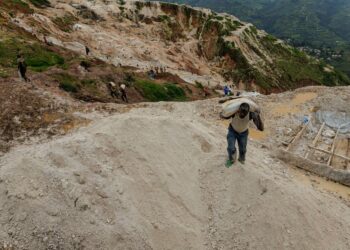
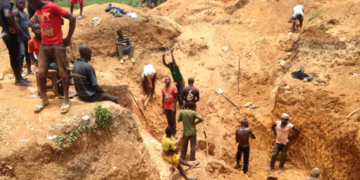
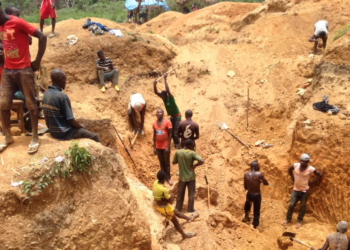
Without a doubt, the crisis in the DRC is also fueled by the abundant resources the country possesses. That’s little comfort to the authorities in the Democratic Republic of Congo, a vast central African country that’s struggling to rebuild after more than two decades of conflict. It has some of the world’s richest reserves, including Kibali in the northeast of the country—Africa’s biggest gold mine—yet, perversely, the DRC is one of the biggest losers in the illicit gold trade. An army of small-scale miners operates below the government’s radar, but data show the informal industry generated just $2.4 million in official gold exports last year. Statistics from the UN and the IMF suggest the fruits of their labor slipped across the border instead: Uganda and Rwanda shipped bullion worth $1.8 billion and $648 million, respectively, in 2020, despite having little gold of their own.

As well, in 2022, Uganda exported $1.92 billion in gold, making it the 39th largest exporter of gold in the world. In the same year, gold was the 1st most exported product in Uganda. While the main destinations of gold exports from Uganda are the United Arab Emirates ($1.19 billion), India ($417 million), Hong Kong ($305 million), the United States ($116 million), and South Korea ($107 million), In 2021, Rwanda exported $368 million in gold, and the main destinations of Rwanda’s exports were the United Arab Emirates and Canada. Various reports have indicated that this gold was smuggled from the DRC, as experts found that much of the illegal gold trade in Congo is overseen by armed groups or soldiers who traffic it across the borders or fly it directly to Dubai using forged documents to obscure its origin.

Whereas U.S. companies once owned vast cobalt mines in the Congo, most were sold to Chinese companies during the Barack Obama and Donald Trump administrations. Chinese companies connected to Beijing now control the majority of foreign-owned cobalt, uranium, and copper mines in the DRC, and the Congolese army has been repeatedly deployed to mining sites in the eastern DRC to protect Chinese assets. Likewise, the DRC’s chronic instability has consequences for US national interests and the interests of the nine other countries that border the DRC. These interests range from multination efforts to dismantle the Lord’s Resistance Army, to climate change and the protection of one of the world’s most important ecosystems, to advancing global energy security, and to the economic benefits that derive from open and secure borders.

A Chance for Peace

Emerging from this crisis required participatory approaches and an ethical approach on the part of various actors and stakeholders in the peacebuilding process. It is essential that all states respect each other’s sovereignty and territorial integrity and hold all actors accountable for human rights abuses in the conflict in the eastern DRC. Although the DRC has tried to secure short-lived ceasefires with M23, continued combat with M23 alone cannot solve the issue in the DRC. Experts say the Congolese government should pressure the FDLR to refrain from setting political conditions for a return to Rwanda and to follow through on its Rome Declaration commitments, including the repatriation timetable, and make plans to begin using force to compel the FDLR to demobilize if diplomatic efforts fail. Authorities in the Congo should redouble efforts to balance the competing interests of their neighbors, clearly delineate what Uganda’s operations will do, and convince Rwanda to commit to regional diplomacy rather than renewed warfare.

Besides, the challenges of resolving conflicts in the DRC and establishing a strong basis for sustainable economic and social development are daunting. But the DRC also has enormous potential for becoming an engine of growth and integration in the region by capitalizing on its massive resource endowment and its strategic position. To the extent that strong political will can be sustained and adequate financial commitments can be mobilized, the agenda for the resolution of the DRC conflicts offers an opportunity to leverage the country’s potential for a substantial peace dividend not only for the Congolese people but also the entire Great Lakes region. If the DRC were more stable and had an economy that benefited all Congolese, it could become a leading exporter of natural resources, agricultural products, and scientific research that could attract substantial US and other foreign investment. The DRC possesses the second-largest rainforest in the world, and it must be a critical partner in any global effort to combat climate change and conserve and protect our biodiversity.

Read also

Ethiopian Airlines cancels flights to Tigray region after clashes

Rebel leader denounces US-DRC minerals deal one year after Goma’s fall

Rwanda says UK owes $130 million over scrapped asylum scheme

In conclusion, Congolese women face significant barriers to economic opportunities and empowerment, including high rates of gender-based violence (GBV) and discrimination. An analyst says it’s very important that the global community empower vulnerable and minority groups through community stabilization, transition, and recovery initiatives to be self-sufficient. Women and girls often eat last and the least, even though they play a critical role in food systems. Correspondingly, they should be front and center of our efforts to fight food insecurity and build lasting peace.

ــــــــــــــــــــــــــــــــــ

This article expresses the views and opinions of the author and does not necessarily reflect the views of Qiraat Africa and its editors.
Source: Qiraat Africa
Tags: 1994 Rwandan genocideCongo-Rwanda tensionsDemocratic Republic of Congoeastern Democratic Republic of CongoM23South Africa's regional bloc (SADC)
Oyebamiji Usman Adesoji

Oyebamiji Usman Adesoji

Writer and researcher on business, entrepreneurship and geopolitical affairs.

Related Posts

Uganda’s constitutional court to hear challenges against anti-homosexuality law
East Africa

Uganda court releases prominent rights activist on bail

January 28, 2026
Uganda’s president appoints son as military chief
East Africa

Uganda army chief denies allegation of assault on opposition leader’s wife

January 27, 2026
At least six killed in border clashes between South Sudan and Uganda
Central Africa

South Sudan government says rebel advance poses ‘serious threat to peace’

January 27, 2026
Can the recent bilateral relationship between China and Angola lead to genuine economic and social progress this time?
Central Africa

African nations now send more money to China than they receive in new loans

January 27, 2026
South Sudan orders UN personnel, civilians to leave parts of Jonglei State
Central Africa

South Sudan orders UN personnel, civilians to leave parts of Jonglei State

January 26, 2026
Rwanda launches trial for Marburg virus as death toll climbs to 12
East Africa

Ethiopia declares end of Marburg outbreak that killed nine

January 26, 2026

Search Qiraat Africa

No Result
View All Result

Follow on Twitter

Follow @africanqiraat

Trending

Brief History and Culture of the City of Lagos, Nigeria

Brief History and Culture of the City of Lagos, Nigeria

July 24, 2024
Republic of Congo to pass new gas code soon as it seeks to lure investment

Norway police file charges over suspected oil bribery in Congo Republic

January 26, 2026
More than 640,000 people affected by catastrophic Mozambique floods

More than 640,000 people affected by catastrophic Mozambique floods

January 25, 2026
Osei Tutu (c. 1660—c. 1717) , founder of the Asante nation

Osei Tutu (c. 1660—c. 1717) , founder of the Asante nation

December 6, 2025
The NYSC SCHEME in Nigeria: Impacts, Challenges, and the Path Forward

The NYSC SCHEME in Nigeria: Impacts, Challenges, and the Path Forward

June 19, 2025
Sir Abubakar Tafawa Balewa (1912 – 1966)

Sir Abubakar Tafawa Balewa (1912 – 1966)

July 16, 2024

Facebook

Sections

  • About Us
  • Privacy Policy
  • Opinion
  • Infographics
  • News
  • Analysis
  • Figures
  • Culture & Literature
  • Follow Ups
  • Historical Readings
  • Interview
  • Studies


© Copyright Qiraat Africa. Developed by Bunnaj Media .

No Result
View All Result
  • News
  • Analysis & Report
  • Studies
  • Opinion
  • Interview
  • Culture & Literature
  • Figures
  • Follow-ups
  • Historical Readings
  • Regions

© 2021 Copyright Qiraat Africa.