























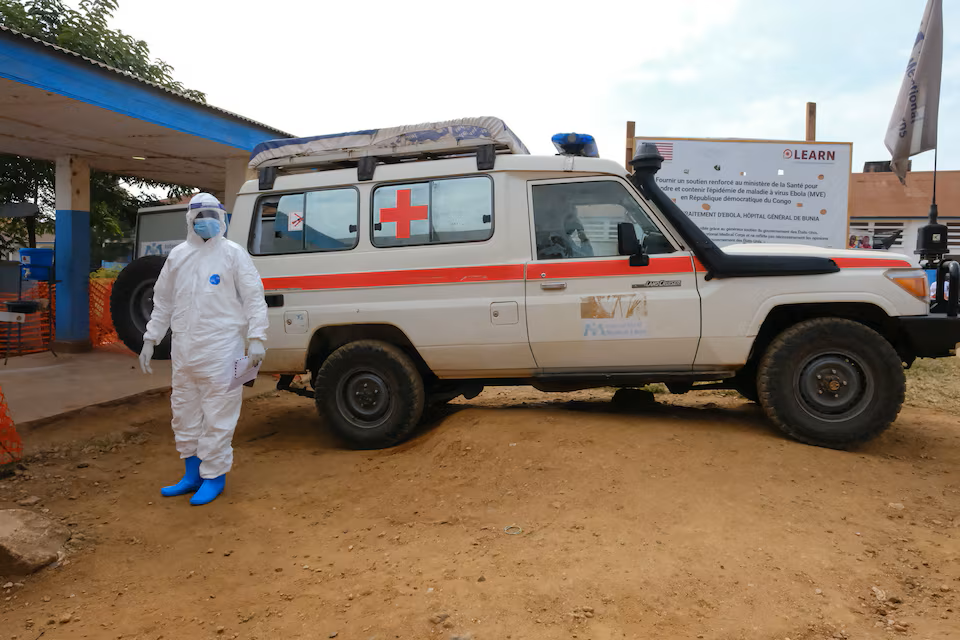
On a good day, there are only four cars available to ferry surveillance teams round the city of Bunia, the epicentre of an Ebola outbreak surging through the Democratic Republic of Congo.
They were all out when Dr Moubarack Kano came in to work. So he set off in his own white Subaru Forester, with a colleague alongside him, piles of emergency alert forms stuffed into seat pockets and a rosary swinging from the rear-view mirror.
Reuters joined them on the round earlier this month, as they raced to track down infections and limit their spread across a patch with 1 million people in 23 health districts.
TEAMS ARE ‘JUST CHASING’ EBOLA
The vehicle shortage was far from Kano’s biggest challenge.
In clinic after clinic, an inspection of the records showed staff had failed to report some suspected cases to central authorities.
Frontline workers spoke of results coming in late and patients refusing to be tested — each incident a setback for the surveillance teams trying to plot chains of people who passed on the deadly infection and identify those who might catch it next.
“We discover the disease only after it has already spread,” Kano said. “We’re just chasing it.”
Early on the round, Kano and his colleague stopped at a small clinic called “Jesus is saviour” down an unpaved road, its faded blue facade peeling.
They scanned handwritten entries in the consultation register. Several recent patients had been diagnosed with typhoid fever, which has symptoms that resemble Ebola in its early stages.
The rare species of the disease spreading in Congo — Bundibugyo — has no known vaccine or treatment and can be difficult to detect as the early signs appear milder than with other more common forms.
“Normally, the nurses should call to report these cases, so we can start investigating and see if we need to test them,” Kano said.
He asked the nurse on duty whether she knew the Ebola alert system. She said she knew it existed but did not know the telephone number.
SOME CLINICS RELUCTANT TO ISSUE ALERTS
The outbreak has so far infected 3,200 people and killed 1,405, according to government figures released on Sunday. The true scale of the outbreak could be two to four times larger than reported data, the World Health Organization has said.
The team’s next stop was another health facility in Bunia’s Nyakasanja neighbourhood.
In the register, Kano paused at the case of a teenage patient whose older brother had tested positive for Ebola and died. Had an alert been raised? The head nurse said it had not.
The young man’s whereabouts were unknown and there was no mention of his address or phone number.
“We’ll have to wait until he comes back,” Kano said.
By his assessment, 12 other cases should have triggered alerts.
“Health facilities don’t always want to alert,” he said. “When they do so, they risk losing a patient because the patient may be transferred elsewhere. For them, it is a loss of money.”
Sometimes the cost of the calls is also a problem. “If people don’t have phone credit, they don’t call,” said Dr Rachel Ulingisayi, who oversees Bunia’s surveillance teams.
Even when they do call, there aren’t always enough staff to respond in time. “A few days ago, a father called to say his two children were sick,” Ulingisayi said. “Two days later, he called again to say they had died.”
MOTHER REFUSES TESTING FOR CHILDREN
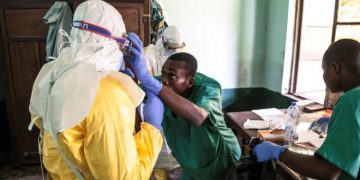
At the same centre in Nyakasanja, two children lay head to foot on a bed, suffering from fever and pain, with intravenous lines running into their arms.
“Normally, we should send them directly to a treatment centre to be tested, isolated and taken care of,” Kano said.
But their mother refused, saying she did not believe they had Ebola. The surveillance team sent a psychologist to speak with the family.
Kano — one of 27 field investigators covering Bunia — is a veteran of Congo’s last major Ebola epidemic that killed more than 2,000 people from 2018 to 2020.
Back then, he said, he had the space to investigate cases and train surveillance teams. This time, he said, poor planning, logistical bottlenecks and the recruitment of inexperienced staff had hampered the response from the outset.
Like many other health workers, he also says he had not been paid since the latest outbreak was declared on May 15.
Congo’s Ministry of Public Health and the National Public Health Institute did not immediately respond to emailed requests for comment.
Authorities have acknowledged operational difficulties. Congolese Health Minister Samuel-Roger Kamba this month said the government was working to address payment problems.
Kano’s Subaru made its final stop at a home where a 67-year-old man had died the previous afternoon.
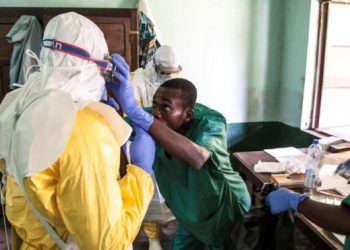
Officials in protective suits were already there, disinfecting the site and preparing a safe burial as neighbours watched from a distance.
Kano began approaching them and compiling a list of people who had come into contact with the man. But he knew the disease had almost certainly already moved on.