

Qiraat Africa
عربي  |  Fr
Advertisement
  • News
    • All
    • Climate Change
    • Economy
    • Education
    • Energy
    • Health
    • Migration
    • Mining
    • Politics
    • Security
    • Society
    • Sport
    DR Congo President Tshisekedi seeks re-election in the forthcoming polls

    DR Congo court approves referendum law, fueling third-term debate

    Equatorial Guinea and Gabon resolve 50-year border dispute

    Equatorial Guinea and Gabon resolve 50-year border dispute

    Kenya probes potential toxin after 15 elephants die in Amboseli ecosystem

    Kenya probes potential toxin after 15 elephants die in Amboseli ecosystem

    WHO declares Ebola outbreak in Congo, Uganda an emergency of international concern

    Uganda declares end to latest Ebola outbreak

    South Africa says over 900 arrested during nationwide anti-migrant protests

    Nigeria and South Africa seek to ease tensions over xenophobic attacks

    US to block citizens in Congo from immediate travel home, citing Ebola

    A day in the life of Congo’s overstretched Ebola surveillance teams

    Senegal has sovereign right to decide how to tackle debt, IMF says

    IMF completes final review of Ghana lending program, unlocks $371 million

    South Africa promises crackdown on xenophobic attacks after Ghana protests

    Ghana repatriating another 1,000 nationals from South Africa

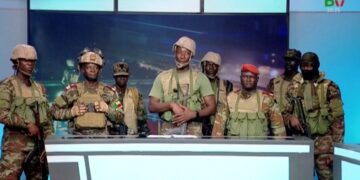
    Burkina Faso declares UN coordinator persona non grata

    Ugandan diplomat Otunnu joins race to become next UN head

  • Analysis
    • All
    • Climate Change
    • Digital & Tech
    • Economy
    • Energy & Power
    • Health
    • Politics
    • Security
    • Society
    What Happens After Dandora? Kenya’s Green Transition Faces Its Hardest Test

    What Happens After Dandora? Kenya’s Green Transition Faces Its Hardest Test

    African entrepreneurs work in challenging environments, and others may benefit from the skills they have developed

    African entrepreneurs work in challenging environments, and others may benefit from the skills they have developed

    Ethiopia’s 2026 General Election: Progress, Challenges, and Implications

    Ethiopia’s 2026 General Election: Progress, Challenges, and Implications

    Israeli recognition of Somaliland is a ‘calculated distraction,’ Somali diplomat says

    Sixty-Six Years On, the Promise of Somali Independence Remains Unfulfilled.

    Senegal’s top opposition leader Sonko vows to help win March 24 election

    Senegal at a Political Crossroads: The Faye–Sonko Rivalry and the Future of Democratic Governance

    Ulysses in isiZulu: Why an African translation of the classic Irish novel is important in today’s world

    Ulysses in isiZulu: Why an African translation of the classic Irish novel is important in today’s world

    The promise and risks of Kenya’s ambitious new strategy to close refugee camps

    The promise and risks of Kenya’s ambitious new strategy to close refugee camps

    Al Qaeda-linked militants curb their brutality in seized Malian territory

    Al Qaeda-linked militants curb their brutality in seized Malian territory

    Five Years After the Coup in Mali: Are Stability and Growth Within Reach?

    The Political Economy of Insecurity in Mali: Armed Groups, Resources, and State Fragility

  • Studies
    Angola’s lengthy war shaped the way farmers utilised fire—why it matters

    Angola’s lengthy war shaped the way farmers utilised fire—why it matters

    Schooling is the most severely affected by conflict when children are the target – Study

    Schooling is the most severely affected by conflict when children are the target – Study

    Pensions for Botswana’s elderly are expanding, but care services are lacking—study follows 20 years

    Pensions for Botswana’s elderly are expanding, but care services are lacking—study follows 20 years

    60 new cosmic structures have been discovered by South Africa’s MeerKAT telescope, which is mapping previously unseen gaps between galaxies

    60 new cosmic structures have been discovered by South Africa’s MeerKAT telescope, which is mapping previously unseen gaps between galaxies

    Benin government says armed forces foil coup attempt

    Coup contagion? A rash of African power grabs suggests copycats are taking note of others’ success

    One in three South Africans have never heard of AI: what this means for policy

    One in three South Africans have never heard of AI: what this means for policy

    Social Media as a Catalyst for the Spread of Dangerous Wealth Ritual Myths

    Social Media as a Catalyst for the Spread of Dangerous Wealth Ritual Myths

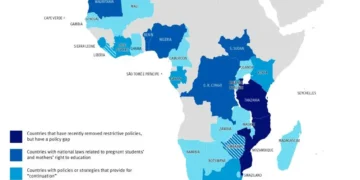
    Overcoming Education Barriers for Young Mothers in Sub-Saharan Africa

    Overcoming Education Barriers for Young Mothers in Sub-Saharan Africa

    Youth Empowerment Through Vocational Training in Rural Sub-Saharan Africa

    Youth Empowerment Through Vocational Training in Rural Sub-Saharan Africa

  • Infographics
  • Figures
    Al-Hajj Salim Suwari (fl. c. 13th–15th century): West African Soninke Islamic scholar

    Al-Hajj Salim Suwari (fl. c. 13th–15th century): West African Soninke Islamic scholar

    Strive Masiyiwa: Zimbabwean businessman and philanthropist

    Strive Masiyiwa: Zimbabwean businessman and philanthropist

    Diébédo Francis Kéré: Burkinabé-German architect

    Diébédo Francis Kéré: Burkinabé-German architect

    Herbert Wigwe (1966-2024): Nigerian banker and businessman

    Herbert Wigwe (1966-2024): Nigerian banker and businessman

    Senegal president names new finance, energy ministers in reshuffle

    Macky Sall: Former President of Senegal

    Marcus Garvey (1887-1940): Activist, Black nationalist, and Pan-Africanist

    Marcus Garvey (1887-1940): Activist, Black nationalist, and Pan-Africanist

    John B. Russwurm (1799–1851): Jamaican-born American abolitionist, publisher, and colonial governor

    John B. Russwurm (1799–1851): Jamaican-born American abolitionist, publisher, and colonial governor

    Winnie Mandela (1936-2018): South African politician and anti-apartheid activist

    Winnie Mandela (1936-2018): South African politician and anti-apartheid activist

    Abdias do Nascimento (1914-2011): Prominent African Brazilian scholar, artist, and politician

    Abdias do Nascimento (1914-2011): Prominent African Brazilian scholar, artist, and politician

  • History
    Aldabra Atoll, Seychelles

    Aldabra Atoll, Seychelles

    Le Morne Cultural Landscape, Mauritius

    Le Morne Cultural Landscape, Mauritius

    Mount Nimba Strict Nature Reserve, Guinea and Côte d’Ivoire

    Mount Nimba Strict Nature Reserve, Guinea and Côte d’Ivoire

    Sangha Trinational, north-western Congo Basin

    Sangha Trinational, north-western Congo Basin

    Kasubi Tombs, Kampala, Uganda

    Kasubi Tombs, Kampala, Uganda

    Dja Faunal Reserve, Cameroon

    Dja Faunal Reserve, Cameroon

    Laas Geel, Somalia

    Laas Geel, Somalia

    Lakes Of Ounianga, Chad

    Lakes Of Ounianga, Chad

    Nok Caves, Togo

    Nok Caves, Togo

  • Others
    • Culture / Literature
    • Interview
    • Opinion
  • Countries
    • Country profiles
    • Regions
      • Central Africa
      • East Africa
      • Southern Africa
      • West Africa
No Result
View All Result
  • News
    • All
    • Climate Change
    • Economy
    • Education
    • Energy
    • Health
    • Migration
    • Mining
    • Politics
    • Security
    • Society
    • Sport
    DR Congo President Tshisekedi seeks re-election in the forthcoming polls

    DR Congo court approves referendum law, fueling third-term debate

    Equatorial Guinea and Gabon resolve 50-year border dispute

    Equatorial Guinea and Gabon resolve 50-year border dispute

    Kenya probes potential toxin after 15 elephants die in Amboseli ecosystem

    Kenya probes potential toxin after 15 elephants die in Amboseli ecosystem

    WHO declares Ebola outbreak in Congo, Uganda an emergency of international concern

    Uganda declares end to latest Ebola outbreak

    South Africa says over 900 arrested during nationwide anti-migrant protests

    Nigeria and South Africa seek to ease tensions over xenophobic attacks

    US to block citizens in Congo from immediate travel home, citing Ebola

    A day in the life of Congo’s overstretched Ebola surveillance teams

    Senegal has sovereign right to decide how to tackle debt, IMF says

    IMF completes final review of Ghana lending program, unlocks $371 million

    South Africa promises crackdown on xenophobic attacks after Ghana protests

    Ghana repatriating another 1,000 nationals from South Africa

    Burkina Faso declares UN coordinator persona non grata

    Ugandan diplomat Otunnu joins race to become next UN head

  • Analysis
    • All
    • Climate Change
    • Digital & Tech
    • Economy
    • Energy & Power
    • Health
    • Politics
    • Security
    • Society
    What Happens After Dandora? Kenya’s Green Transition Faces Its Hardest Test

    What Happens After Dandora? Kenya’s Green Transition Faces Its Hardest Test

    African entrepreneurs work in challenging environments, and others may benefit from the skills they have developed

    African entrepreneurs work in challenging environments, and others may benefit from the skills they have developed

    Ethiopia’s 2026 General Election: Progress, Challenges, and Implications

    Ethiopia’s 2026 General Election: Progress, Challenges, and Implications

    Israeli recognition of Somaliland is a ‘calculated distraction,’ Somali diplomat says

    Sixty-Six Years On, the Promise of Somali Independence Remains Unfulfilled.

    Senegal’s top opposition leader Sonko vows to help win March 24 election

    Senegal at a Political Crossroads: The Faye–Sonko Rivalry and the Future of Democratic Governance

    Ulysses in isiZulu: Why an African translation of the classic Irish novel is important in today’s world

    Ulysses in isiZulu: Why an African translation of the classic Irish novel is important in today’s world

    The promise and risks of Kenya’s ambitious new strategy to close refugee camps

    The promise and risks of Kenya’s ambitious new strategy to close refugee camps

    Al Qaeda-linked militants curb their brutality in seized Malian territory

    Al Qaeda-linked militants curb their brutality in seized Malian territory

    Five Years After the Coup in Mali: Are Stability and Growth Within Reach?

    The Political Economy of Insecurity in Mali: Armed Groups, Resources, and State Fragility

  • Studies
    Angola’s lengthy war shaped the way farmers utilised fire—why it matters

    Angola’s lengthy war shaped the way farmers utilised fire—why it matters

    Schooling is the most severely affected by conflict when children are the target – Study

    Schooling is the most severely affected by conflict when children are the target – Study

    Pensions for Botswana’s elderly are expanding, but care services are lacking—study follows 20 years

    Pensions for Botswana’s elderly are expanding, but care services are lacking—study follows 20 years

    60 new cosmic structures have been discovered by South Africa’s MeerKAT telescope, which is mapping previously unseen gaps between galaxies

    60 new cosmic structures have been discovered by South Africa’s MeerKAT telescope, which is mapping previously unseen gaps between galaxies

    Benin government says armed forces foil coup attempt

    Coup contagion? A rash of African power grabs suggests copycats are taking note of others’ success

    One in three South Africans have never heard of AI: what this means for policy

    One in three South Africans have never heard of AI: what this means for policy

    Social Media as a Catalyst for the Spread of Dangerous Wealth Ritual Myths

    Social Media as a Catalyst for the Spread of Dangerous Wealth Ritual Myths

    Overcoming Education Barriers for Young Mothers in Sub-Saharan Africa

    Overcoming Education Barriers for Young Mothers in Sub-Saharan Africa

    Youth Empowerment Through Vocational Training in Rural Sub-Saharan Africa

    Youth Empowerment Through Vocational Training in Rural Sub-Saharan Africa

  • Infographics
  • Figures
    Al-Hajj Salim Suwari (fl. c. 13th–15th century): West African Soninke Islamic scholar

    Al-Hajj Salim Suwari (fl. c. 13th–15th century): West African Soninke Islamic scholar

    Strive Masiyiwa: Zimbabwean businessman and philanthropist

    Strive Masiyiwa: Zimbabwean businessman and philanthropist

    Diébédo Francis Kéré: Burkinabé-German architect

    Diébédo Francis Kéré: Burkinabé-German architect

    Herbert Wigwe (1966-2024): Nigerian banker and businessman

    Herbert Wigwe (1966-2024): Nigerian banker and businessman

    Senegal president names new finance, energy ministers in reshuffle

    Macky Sall: Former President of Senegal

    Marcus Garvey (1887-1940): Activist, Black nationalist, and Pan-Africanist

    Marcus Garvey (1887-1940): Activist, Black nationalist, and Pan-Africanist

    John B. Russwurm (1799–1851): Jamaican-born American abolitionist, publisher, and colonial governor

    John B. Russwurm (1799–1851): Jamaican-born American abolitionist, publisher, and colonial governor

    Winnie Mandela (1936-2018): South African politician and anti-apartheid activist

    Winnie Mandela (1936-2018): South African politician and anti-apartheid activist

    Abdias do Nascimento (1914-2011): Prominent African Brazilian scholar, artist, and politician

    Abdias do Nascimento (1914-2011): Prominent African Brazilian scholar, artist, and politician

  • History
    Aldabra Atoll, Seychelles

    Aldabra Atoll, Seychelles

    Le Morne Cultural Landscape, Mauritius

    Le Morne Cultural Landscape, Mauritius

    Mount Nimba Strict Nature Reserve, Guinea and Côte d’Ivoire

    Mount Nimba Strict Nature Reserve, Guinea and Côte d’Ivoire

    Sangha Trinational, north-western Congo Basin

    Sangha Trinational, north-western Congo Basin

    Kasubi Tombs, Kampala, Uganda

    Kasubi Tombs, Kampala, Uganda

    Dja Faunal Reserve, Cameroon

    Dja Faunal Reserve, Cameroon

    Laas Geel, Somalia

    Laas Geel, Somalia

    Lakes Of Ounianga, Chad

    Lakes Of Ounianga, Chad

    Nok Caves, Togo

    Nok Caves, Togo

  • Others
    • Culture / Literature
    • Interview
    • Opinion
  • Countries
    • Country profiles
    • Regions
      • Central Africa
      • East Africa
      • Southern Africa
      • West Africa
No Result
View All Result
Qiraat Africa
عربي  |  Fr
No Result
View All Result
Home Figures

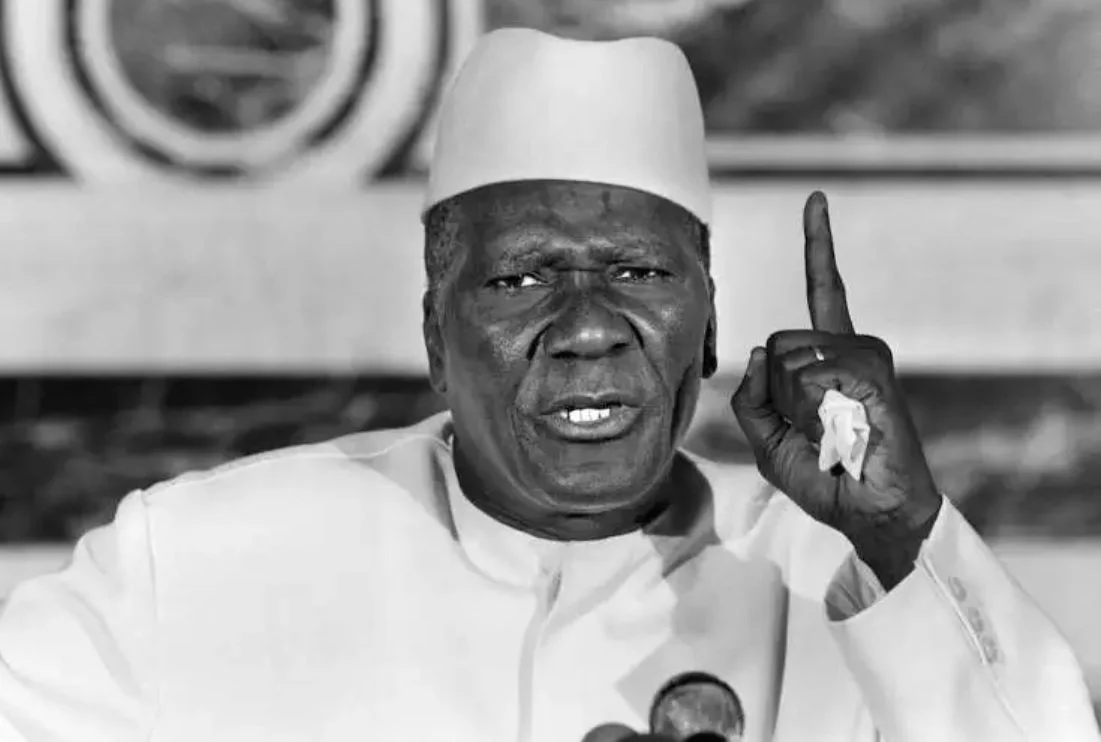
Ahmed Sékou Touré (1922–1984): Revolutionary and First President of Guinea

March 6, 2026
Ahmed Sékou Touré (1922–1984): Revolutionary and First President of Guinea
Share on FacebookShare on Twitter

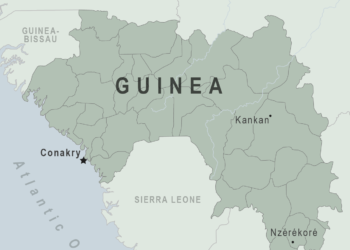
Ahmed Sékou Touré is considered the central figure in modern Guinean history, as the architect of its independence from French colonialism and its first president from 1958 until his death in 1984. His career was marked by profound ideological shifts, beginning with labour union activism, progressing to the adoption of pan-African socialism, and culminating in centralised power and internal and international political tensions.

Ahmed Sékou Touré was born on January 9, 1922, in Faranah, then part of French Guinea. He belonged to the Mandinka ethnic group and is credited with being the grandson of Samori Touré, who led an armed resistance against French colonialism in the late 19th century.

He received his early education in Quranic and then French schools, but his formal education was interrupted early in 1937 after he was expelled from the technical school in Conakry for his protest activities against the colonial school administration. He worked in the postal and telegraph sectors, where his political awareness began to take shape through direct contact with colonial labour laws and wage discrimination among French and African employees.

Trade union activism served as the platform from which Sékou Touré rose to national leadership. In 1945, he helped found the first postal and telegraph workers’ union in Guinea. In 1948, he became the general secretary of the union federation affiliated with the French General Confederation of Labour (CGT) in Guinea.

He co-founded the African Democratic Rally (RDA) with other African leaders such as Félix Houphouët-Boigny. In 1952, he became general secretary of the PDG, the local branch of the RDA in Guinea, where he worked to transform it from an elitist party into a mass organisation based on the working class and peasantry.

He was elected as a member of the French National Assembly in 1956 and served as mayor of Conakry in 1955, which gave him domestic and international political legitimacy.

A pivotal moment in Sékou Touré’s life was his opposition to the “French University” project proposed by French President Charles de Gaulle in 1958.

During de Gaulle’s visit to Conakry in August 1958, Touré delivered a famous speech that included his historic phrase: “We prefer poverty in freedom to prosperity in slavery.”

Read also

Equatorial Guinea and Gabon resolve 50-year border dispute

IMF completes final review of Ghana lending program, unlocks $371 million

Ghana repatriating another 1,000 nationals from South Africa

Guinea was the only country in French Africa to vote “no” in the referendum of September 28, 1958. As a result, Guinea declared its independence on October 2, 1958, and the French colonial administration immediately and retaliated by withdrawing all its personnel, equipment, and records from the country.

After independence, Sékou Touré assumed the presidency and implemented a political and economic system based on socialist principles with an African nationalist character. Guinea transformed into a one-party state (the Guinean Democratic Party) under his leadership, integrating state institutions with party structures. Touré believed that multi-party systems in Africa led to ethnic divisions.

The state nationalised foreign trade and many vital sectors and established its own national currency (the Guinean franc; later, the syli) to break free from the French-linked CFA franc zone. The regime focused on eradicating illiteracy, empowering women’s political participation, and attempting to forge a unified national identity among the diverse ethnic groups under the banner of “revolution.”

Sékou Touré was a leading advocate of Pan-Africanism and one of the founders of the Organization of African Unity (OAU) in 1963. Due to the French and Western embargo, Touré turned to the Soviet Union and China for economic and military support, but he maintained a policy of “non-alignment” at certain times.

Guinea served as a rear base for liberation movements in Africa, particularly the African Party for the Independence of Guinea and Cape Verde (PAIGC), led by Amílcar Cabral against Portuguese colonialism. Important leaders like Kwame Nkrumah (after his overthrow in Ghana), Stokely Carmichael, and Miriam Makeba found a home in Guinea.

Beginning in the mid-1960s, the regime adopted strict security policies to counter what Sékou Touré described as “permanent conspiracies” by colonial powers and their collaborators within the country. Sékou Touré’s regime imprisoned thousands of politicians, military personnel, and intellectuals in Boiro prison in Conakry, which became a symbol of his rule.

Purging of the elite also occurred. The purges targeted prominent ministers, ambassadors, and even the first secretary-general of the Organisation of African Unity, Diallo Telli. Failing economic policies and political repression led to the emigration of nearly a quarter of Guinea’s population to neighbouring countries (such as Senegal and the Ivory Coast) and France.

Sékou Touré’s regime faced a direct military attack in November 1970 when Portuguese forces (aided by Guinean dissidents) launched an amphibious operation against Conakry with the aim of overthrowing Touré and destroying PAIGC bases. Although the operation did not succeed in overthrowing Touré, it resulted in an increase in internal repression, as the regime viewed all opposition as a “fifth column” collaborating with foreign powers.

In the late 1970s, Sékou Touré recognised the failures of some of his economic policies and began to undertake political revisions. He paid an official visit to France in 1982 and improved relations with the United States (which invested in Guinea’s bauxite mines) and neighbouring countries. The protests by the “market vendors” in 1977 were the main impetus for the beginning of a loosening of the security grip and the partial liberalisation of trade.

Ahmed Sékou Touré died on March 26, 1984, in Cleveland, Ohio, USA, while undergoing heart surgery. A few days after his death, and before a successor had been chosen, the army, led by Colonel Lansana Conté, staged a military coup on April 3, 1984. The coup leaders declared the end of the one-party state, released political prisoners, and denounced the human rights abuses that had occurred under Touré’s rule.

The legacy of Sékou Touré remains a subject of sharp division in historical interpretations: the liberationist perspective viewed him as an African national hero who stood up to French colonial arrogance and contributed to strengthening African dignity and continental unity. However, the authoritarian perspective heavily criticised him for his “human rights abuses” and excessive centralisation, which affected the national economy.
Tags: Ahmed Sékou TouréGuinea

Related Posts

Senegalese leader Bassirou Diomaye Faye denies rift with PM Ousmane Sonko
Featured

Senegal’s President Faye launches new party, cementing ruling camp split

July 26, 2026
Africa facing $10-$20 billion economic hit from ‘super’ El Niño, AfDB climate chief warns
East Africa

Africa facing $10-$20 billion economic hit from ‘super’ El Niño, AfDB climate chief warns

July 26, 2026
Germany vows support for Nigeria on security, seeks expanded economic ties
Featured

Germany vows support for Nigeria on security, seeks expanded economic ties

July 23, 2026
Understanding Trump’s Christian Genocide Claim and Military Threat: What It Means for Nigeria-U.S. Relations
Featured

Trump praises Nigeria’s efforts against violence towards Christians

July 23, 2026
Nigerian President says ECOWAS Standby Force should be operationalise now
Economy

ECOWAS reaffirms plans to launch single currency in 2027

July 22, 2026
Guinea-Bissau junta releases opposition leader, vows inclusive government
Featured

West African bloc calls for Guinea-Bissau opposition leader’s release

July 21, 2026

Search Qiraat Africa

No Result
View All Result

Follow on Twitter

Follow @africanqiraat

Trending

Brief History and Culture of the City of Lagos, Nigeria

Brief History and Culture of the City of Lagos, Nigeria

July 24, 2024
Zaghawa people of northeastern Chad and western Sudan

Zaghawa people of northeastern Chad and western Sudan

March 3, 2026
Samori Touré (1830-1900): Military leader and founder of Wassoulou Empire

Samori Touré (1830-1900): Military leader and founder of Wassoulou Empire

January 11, 2026
Al-Hajj Salim Suwari (fl. c. 13th–15th century): West African Soninke Islamic scholar

Al-Hajj Salim Suwari (fl. c. 13th–15th century): West African Soninke Islamic scholar

July 17, 2026
Bakiga / Abakiga of northern Rwanda and southern Uganda

Bakiga / Abakiga of northern Rwanda and southern Uganda

July 15, 2026
Top 10 African Nations in Governance For 2026

Top 10 African Nations in Governance For 2026

March 11, 2026

Facebook

Sections

  • About Us
  • Privacy Policy
  • Opinion
  • Infographics
  • News
  • Analysis
  • Figures
  • Culture & Literature
  • Follow Ups
  • Historical Readings
  • Interview
  • Studies


© Copyright Qiraat Africa. Developed by Bunnaj Media .

No Result
View All Result
  • News
  • Analysis & Report
  • Studies
  • Opinion
  • Interview
  • Culture & Literature
  • Figures
  • Historical Readings
  • Regions

© 2021 Copyright Qiraat Africa.