
Qiraat Africa
عربي  |  Fr
Advertisement
  • News
    • All
    • Climate Change
    • Economy
    • Education
    • Energy
    • Health
    • Migration
    • Mining
    • Politics
    • Security
    • Society
    • Sport
    South Africa pushes for local production of HIV prevention drug lenacapavir

    South Africa pushes for local production of HIV prevention drug lenacapavir

    Ghana offers levy cut as sweetener for higher gold royalty regime, lobby says

    China, US pressure Ghana to halt gold royalty hike, document, sources say

    Somalia launches Centennial Vision 2060 roadmap for ‘peace, prospertity and progress’

    Somali parliament approves constitution change to extend president’s term, delay election

    Central African Republic seeks Russian support on energy

    Central African Republic seeks Russian support on energy

    West Africa bloc announces formal exit of three junta-led states

    West African states to create new force to fight terrorists in region

    US and EU warn Sudan military against naming own PM

    Sudan accuses Ethiopia for the first time of involvement in its civil war

    Ghana tops African countries with highest debt with IMF

    IMF Kenya visit not expected to yield lending deal, finance minister says

    South Africa President Ramaphosa says money spent on war is ‘indictment’ of world

    South Africa offers to mediate in Middle East conflict if asked

    Belgian museum, US mining company at odds over colonial-era Congo archive

    Belgian museum, US mining company at odds over colonial-era Congo archive

  • Analysis
    • All
    • Climate Change
    • Digital & Tech
    • Economy
    • Energy & Power
    • Health
    • Politics
    • Security
    • Society
    Rohingya Genocide: Why The Gambia Demands Justice at the International Court

    Rohingya Genocide: Why The Gambia Demands Justice at the International Court

    Security expert explains why the US can destroy terrorist bases in Nigeria but not terrorism

    Security expert explains why the US can destroy terrorist bases in Nigeria but not terrorism

    Africa’s informal economy taxation: the potential and drawbacks of technology

    Africa’s informal economy taxation: the potential and drawbacks of technology

    Ethiopia expects preliminary deal on IMF review within days, finance minister says

    Key events in Ethiopia’s journey towards debt restructuring

    BRICS Plus and the Shifting Global Power Balance: Implications of South Africa’s Role

    BRICS Plus and the Shifting Global Power Balance: Implications of South Africa’s Role

    African Union suspends Niger over coup, prepares sanctions; France denies report it asked Algeria to use airspace for a Niger operation

    Leaders in Africa’s human rights institutions are being elected. Why it matters

    Sahel Alliance leaders meet in Bamako to deepen break with ECOWAS

    The AES and the Reconfiguration of Regional Security Architecture: A Look at the 2025 Bamako Summit

    Somaliland rejects visas issued by Somalia and tightens control over its airpsace

    Why is Somaliland strategically important?

    US airstrikes in northern Nigeria: potential windfalls and dangers

    US airstrikes in northern Nigeria: potential windfalls and dangers

  • Studies
    Benin government says armed forces foil coup attempt

    Coup contagion? A rash of African power grabs suggests copycats are taking note of others’ success

    One in three South Africans have never heard of AI: what this means for policy

    One in three South Africans have never heard of AI: what this means for policy

    Social Media as a Catalyst for the Spread of Dangerous Wealth Ritual Myths

    Social Media as a Catalyst for the Spread of Dangerous Wealth Ritual Myths

    Overcoming Education Barriers for Young Mothers in Sub-Saharan Africa

    Overcoming Education Barriers for Young Mothers in Sub-Saharan Africa

    Youth Empowerment Through Vocational Training in Rural Sub-Saharan Africa

    Youth Empowerment Through Vocational Training in Rural Sub-Saharan Africa

    Manufacturers in Ghana and Nigeria claim that although corruption damages businesses, digital technologies provide a chance to combat it

    Manufacturers in Ghana and Nigeria claim that although corruption damages businesses, digital technologies provide a chance to combat it

    Environmental Threats and Conservation Efforts in Namibia

    Environmental Threats and Conservation Efforts in Namibia

    Your teachers’ level of knowledge affects how well you perform in class: perspectives from 14 French-speaking African nations

    Your teachers’ level of knowledge affects how well you perform in class: perspectives from 14 French-speaking African nations

    Islamic Finance in Nigeria: Between Islamization and Shariah Non-Compliance Polemics

    Islamic Finance in Nigeria: Between Islamization and Shariah Non-Compliance Polemics

  • Infographics
  • Figures
    Alpha Oumar Konare: historian, archaeologist, and former President of Mali

    Alpha Oumar Konare: historian, archaeologist, and former President of Mali

    Felix Konotey-Ahulu (1930-2025): Ghanaian physician and scientist

    Felix Konotey-Ahulu (1930-2025): Ghanaian physician and scientist

    Joaquim Chissano, Former President of Mozambique

    Joaquim Chissano, Former President of Mozambique

    Abubakar Gumi (1924–1992): Nigerian Islamic scholar and Grand Khadi of the Northern Region of Nigeria

    Abubakar Gumi (1924–1992): Nigerian Islamic scholar and Grand Khadi of the Northern Region of Nigeria

    Haile Selassie (1892-1975): Former Emperor of Ethiopia

    Haile Selassie (1892-1975): Former Emperor of Ethiopia

    Bennet Omalu: Nigerian-American physician and forensic pathologist

    Bennet Omalu: Nigerian-American physician and forensic pathologist

    Samori Touré (1830-1900): Military leader and founder of Wassoulou Empire

    Samori Touré (1830-1900): Military leader and founder of Wassoulou Empire

    Mohammed Abdulle Hassan (1856-1920): Somali religious and nationalist leader

    Mohammed Abdulle Hassan (1856-1920): Somali religious and nationalist leader

    Imam Abdullah Haron (1924-1969): South African Muslim cleric and anti-apartheid activist

    Imam Abdullah Haron (1924-1969): South African Muslim cleric and anti-apartheid activist

  • History
    Lopé-Okanda (Gabon)

    Lopé-Okanda (Gabon)

    The Sudd wetland

    The Sudd wetland

    Khami Ruins (Zimbabwe), the capital of the Torwa state

    Khami Ruins (Zimbabwe), the capital of the Torwa state

    Royal Palace, Porto-Novo, Republic of Benin

    Royal Palace, Porto-Novo, Republic of Benin

    W-Arly-Pendjari Complex, the West African wildlife sanctuary

    W-Arly-Pendjari Complex, the West African wildlife sanctuary

    Royal Court of Tiébélé, Burkina Faso

    Royal Court of Tiébélé, Burkina Faso

    Lake Tanganyika, the world’s longest freshwater lake

    Lake Tanganyika, the world’s longest freshwater lake

    The Bafut Chiefdom, Cameroon

    The Bafut Chiefdom, Cameroon

    The battles of Isandlwana and Rorke’s Drift

    The battles of Isandlwana and Rorke’s Drift

  • Others
    • Culture / Literature
    • Interview
    • Opinion
  • Countries
    • Country profiles
    • Regions
      • Central Africa
      • East Africa
      • Southern Africa
      • West Africa
No Result
View All Result
  • News
    • All
    • Climate Change
    • Economy
    • Education
    • Energy
    • Health
    • Migration
    • Mining
    • Politics
    • Security
    • Society
    • Sport
    South Africa pushes for local production of HIV prevention drug lenacapavir

    South Africa pushes for local production of HIV prevention drug lenacapavir

    Ghana offers levy cut as sweetener for higher gold royalty regime, lobby says

    China, US pressure Ghana to halt gold royalty hike, document, sources say

    Somalia launches Centennial Vision 2060 roadmap for ‘peace, prospertity and progress’

    Somali parliament approves constitution change to extend president’s term, delay election

    Central African Republic seeks Russian support on energy

    Central African Republic seeks Russian support on energy

    West Africa bloc announces formal exit of three junta-led states

    West African states to create new force to fight terrorists in region

    US and EU warn Sudan military against naming own PM

    Sudan accuses Ethiopia for the first time of involvement in its civil war

    Ghana tops African countries with highest debt with IMF

    IMF Kenya visit not expected to yield lending deal, finance minister says

    South Africa President Ramaphosa says money spent on war is ‘indictment’ of world

    South Africa offers to mediate in Middle East conflict if asked

    Belgian museum, US mining company at odds over colonial-era Congo archive

    Belgian museum, US mining company at odds over colonial-era Congo archive

  • Analysis
    • All
    • Climate Change
    • Digital & Tech
    • Economy
    • Energy & Power
    • Health
    • Politics
    • Security
    • Society
    Rohingya Genocide: Why The Gambia Demands Justice at the International Court

    Rohingya Genocide: Why The Gambia Demands Justice at the International Court

    Security expert explains why the US can destroy terrorist bases in Nigeria but not terrorism

    Security expert explains why the US can destroy terrorist bases in Nigeria but not terrorism

    Africa’s informal economy taxation: the potential and drawbacks of technology

    Africa’s informal economy taxation: the potential and drawbacks of technology

    Ethiopia expects preliminary deal on IMF review within days, finance minister says

    Key events in Ethiopia’s journey towards debt restructuring

    BRICS Plus and the Shifting Global Power Balance: Implications of South Africa’s Role

    BRICS Plus and the Shifting Global Power Balance: Implications of South Africa’s Role

    African Union suspends Niger over coup, prepares sanctions; France denies report it asked Algeria to use airspace for a Niger operation

    Leaders in Africa’s human rights institutions are being elected. Why it matters

    Sahel Alliance leaders meet in Bamako to deepen break with ECOWAS

    The AES and the Reconfiguration of Regional Security Architecture: A Look at the 2025 Bamako Summit

    Somaliland rejects visas issued by Somalia and tightens control over its airpsace

    Why is Somaliland strategically important?

    US airstrikes in northern Nigeria: potential windfalls and dangers

    US airstrikes in northern Nigeria: potential windfalls and dangers

  • Studies
    Benin government says armed forces foil coup attempt

    Coup contagion? A rash of African power grabs suggests copycats are taking note of others’ success

    One in three South Africans have never heard of AI: what this means for policy

    One in three South Africans have never heard of AI: what this means for policy

    Social Media as a Catalyst for the Spread of Dangerous Wealth Ritual Myths

    Social Media as a Catalyst for the Spread of Dangerous Wealth Ritual Myths

    Overcoming Education Barriers for Young Mothers in Sub-Saharan Africa

    Overcoming Education Barriers for Young Mothers in Sub-Saharan Africa

    Youth Empowerment Through Vocational Training in Rural Sub-Saharan Africa

    Youth Empowerment Through Vocational Training in Rural Sub-Saharan Africa

    Manufacturers in Ghana and Nigeria claim that although corruption damages businesses, digital technologies provide a chance to combat it

    Manufacturers in Ghana and Nigeria claim that although corruption damages businesses, digital technologies provide a chance to combat it

    Environmental Threats and Conservation Efforts in Namibia

    Environmental Threats and Conservation Efforts in Namibia

    Your teachers’ level of knowledge affects how well you perform in class: perspectives from 14 French-speaking African nations

    Your teachers’ level of knowledge affects how well you perform in class: perspectives from 14 French-speaking African nations

    Islamic Finance in Nigeria: Between Islamization and Shariah Non-Compliance Polemics

    Islamic Finance in Nigeria: Between Islamization and Shariah Non-Compliance Polemics

  • Infographics
  • Figures
    Alpha Oumar Konare: historian, archaeologist, and former President of Mali

    Alpha Oumar Konare: historian, archaeologist, and former President of Mali

    Felix Konotey-Ahulu (1930-2025): Ghanaian physician and scientist

    Felix Konotey-Ahulu (1930-2025): Ghanaian physician and scientist

    Joaquim Chissano, Former President of Mozambique

    Joaquim Chissano, Former President of Mozambique

    Abubakar Gumi (1924–1992): Nigerian Islamic scholar and Grand Khadi of the Northern Region of Nigeria

    Abubakar Gumi (1924–1992): Nigerian Islamic scholar and Grand Khadi of the Northern Region of Nigeria

    Haile Selassie (1892-1975): Former Emperor of Ethiopia

    Haile Selassie (1892-1975): Former Emperor of Ethiopia

    Bennet Omalu: Nigerian-American physician and forensic pathologist

    Bennet Omalu: Nigerian-American physician and forensic pathologist

    Samori Touré (1830-1900): Military leader and founder of Wassoulou Empire

    Samori Touré (1830-1900): Military leader and founder of Wassoulou Empire

    Mohammed Abdulle Hassan (1856-1920): Somali religious and nationalist leader

    Mohammed Abdulle Hassan (1856-1920): Somali religious and nationalist leader

    Imam Abdullah Haron (1924-1969): South African Muslim cleric and anti-apartheid activist

    Imam Abdullah Haron (1924-1969): South African Muslim cleric and anti-apartheid activist

  • History
    Lopé-Okanda (Gabon)

    Lopé-Okanda (Gabon)

    The Sudd wetland

    The Sudd wetland

    Khami Ruins (Zimbabwe), the capital of the Torwa state

    Khami Ruins (Zimbabwe), the capital of the Torwa state

    Royal Palace, Porto-Novo, Republic of Benin

    Royal Palace, Porto-Novo, Republic of Benin

    W-Arly-Pendjari Complex, the West African wildlife sanctuary

    W-Arly-Pendjari Complex, the West African wildlife sanctuary

    Royal Court of Tiébélé, Burkina Faso

    Royal Court of Tiébélé, Burkina Faso

    Lake Tanganyika, the world’s longest freshwater lake

    Lake Tanganyika, the world’s longest freshwater lake

    The Bafut Chiefdom, Cameroon

    The Bafut Chiefdom, Cameroon

    The battles of Isandlwana and Rorke’s Drift

    The battles of Isandlwana and Rorke’s Drift

  • Others
    • Culture / Literature
    • Interview
    • Opinion
  • Countries
    • Country profiles
    • Regions
      • Central Africa
      • East Africa
      • Southern Africa
      • West Africa
No Result
View All Result
Qiraat Africa
عربي  |  Fr
No Result
View All Result
Home Featured

Security expert explains why the US can destroy terrorist bases in Nigeria but not terrorism

February 12, 2026
Security expert explains why the US can destroy terrorist bases in Nigeria but not terrorism
Share on FacebookShare on Twitter

By Obasesam Okoi*


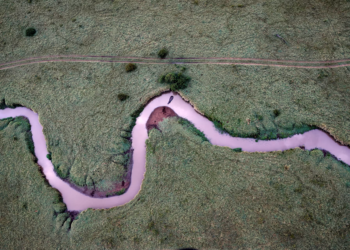
US military airstrikes on Islamic State-linked militants in north-western Nigeria on Christmas Day 2025 attracted global attention. The focus was on the international legal implications and whether the Nigerian government had consented to the strikes.

I’m a scholar of peace and security and have carried out research on Boko Haram’s protracted campaign of violence. The research shows that the group’s activities have produced extensive loss of life and material destruction, as well as large-scale internal displacement. This calls for integrated security, humanitarian and governance responses.

In my view, focusing on the airstrikes risks obscuring the real question: why does terrorism continue in Nigeria?

My argument is that it’s not the absence of military force. My research shows that the problem of continuing violence is rooted in the failure of governance at every level of society. Airstrikes don’t address the political, economic and social conditions that allow armed groups to survive, adapt and recruit.

Read also

South Africa pushes for local production of HIV prevention drug lenacapavir

China, US pressure Ghana to halt gold royalty hike, document, sources say

Somali parliament approves constitution change to extend president’s term, delay election

Armed violence has expanded where state authority is exercised in predatory, selective or unaccountable ways. Terrorism in Nigeria has thrived because the state has too often failed to govern justly, consistently and credibly.

In north-east Nigeria, for example, counterterrorism efforts have been undermined where displaced civilians remain unable to return safely, and land disputes go unresolved. What’s needed is investment in civilian protection, and local reconciliation processes that rebuild trust between communities and the state.

Similar lessons can be seen in parts of the Lake Chad Basin, where humanitarian support and local governance reforms have proven more effective at stabilising communities than military operations alone.

Military force can play a role in containing armed groups. But it must be embedded in a broader project of political reconstruction, institutional accountability and social trust building. This means restoring the state’s presence not only through soldiers, but through reliable public services in communities most affected by violence and displacement.

Narratives, legitimacy and insecurity

Following the strike, President Donald Trump announced the operation in a social media post in moral and religious terms. He described the attack as retaliation against militants who had been killing Christians. He portrayed the strike as both morally necessary and strategically decisive.

That framing, reported widely by Reuters, and amplified through US media and social platforms, resonated strongly in Washington political discourse. Major US outlets, including CNN, noted that the reality of violence in Nigeria was more complex than a simple religious binary.

For their part, Nigerian officials emphasised sovereignty, coordination and the non-sectarian nature of insecurity in the country. In a statement reported by Reuters, the Ministry of Foreign Affairs emphasised that terrorism in Nigeria affected citizens regardless of religion or ethnicity. It warned against narratives that could inflame sectarian divisions. According to the Nigerian Ministry of Foreign Affairs

terrorist violence in any form, whether directed at Christians, Muslims or other communities, remains an affront to Nigeria’s values and to international peace and security.

Where governance is fragile, externally imposed moral framing can deepen mistrust, sharpen social divisions and offer armed groups new narratives to exploit.

Framing insecurity as a religious war is analytically inaccurate. It is also strategically dangerous. Armed groups frequently rely on ideas like that to recruit, radicalise and justify violence.

External validation of these ideas, even unintentionally, can become a propaganda asset for militants operating in contexts of weak state legitimacy like Nigeria.

Military success is not security success

US military statements described the strike as having destroyed militant infrastructure and disrupted operations. Reports by Premium Times and Reuters indicated that camps and facilities had been hit. Yet public information about leadership casualties, command and control disruption, or financial networks remains limited.

Without clarity about what happened, claims of success offer little to Nigerians who continue to live with insecurity.

Tactical disruption can interrupt planning and movement, but it does not dismantle networks embedded in local economies of coercion, taxation and protection.

Getting to the heart of the problem

Militant violence in Nigeria is embedded in a wider landscape of state retreat, informal authority and survival economies. Large areas of rural territory in the north-east remain effectively ungoverned.

Security and justice are provided by armed actors and criminal networks, not the state. In such environments, terrorism is less an external invasion than a symptom of systemic institutional collapse.

Military interventions can disrupt these systems temporarily. But without restoring governance, they leave intact the structures that reproduce violence.

Government can restore governance by doing the following.

Political reconstruction: Rebuilding local institutions in ways that involve displaced populations, traditional leaders, women and youth, rather than relying solely on centralised state authority. Unemployment, land disputes and political exclusion have created conditions in which violence thrives. What’s needed is to reinvest in livelihoods, education and fair land governance.

Institutional accountability: This means restoring trust in the Nigerian state, particularly in conflict-affected communities where security forces are perceived as abusive or corrupt. Accountability mechanisms for investigating abuses and compensating victims are necessary. This requires transparent systems for managing humanitarian activities and reconstruction funds. Citizens can be more confident in state authority when they see corruption confronted and justice applied.

Social trust building: Community-based peacebuilding and inclusive reconstruction processes are essential for repairing social fractures. When people experience safety and dignity in their everyday lives, confidence in security institutions can return.

Counterterrorism success in Nigeria should not be measured solely by the number of insurgents neutralised, but by whether state authority emerges more legitimate than before. Durable peace will depend less on tactical military gains than on the restoration of public trust. That will happen through accountable governance, civilian protection and inclusive economic recovery.

ـــــــــــــــــــــــــــــــــ

* Associate professor, University of St. Thomas
Source: The Conversation
Tags: Boko HaramNigeriaNorthwestern Nigeria

Related Posts

Central African Republic seeks Russian support on energy
Central Africa

Central African Republic seeks Russian support on energy

March 5, 2026
West Africa bloc announces formal exit of three junta-led states
Featured

West African states to create new force to fight terrorists in region

March 4, 2026
Ghana tops African countries with highest debt with IMF
East Africa

IMF Kenya visit not expected to yield lending deal, finance minister says

March 4, 2026
South Africa President Ramaphosa says money spent on war is ‘indictment’ of world
Featured

South Africa offers to mediate in Middle East conflict if asked

March 4, 2026
South Africa’s Lekota, who led breakaway from ANC, dies at 77
Featured

South Africa’s Lekota, who led breakaway from ANC, dies at 77

March 4, 2026
Ethiopia prime minister says Africa is becoming economic, political and social powerhouse
East Africa

Abiy Ahmed insists Ethiopia will not go to war over sea access

March 4, 2026

Search Qiraat Africa

No Result
View All Result

Follow on Twitter

Follow @africanqiraat

Trending

Tunka Manin (c. 1010–1078), the last ruler of the Ghana Empire

Tunka Manin (c. 1010–1078), the last ruler of the Ghana Empire

December 12, 2025
Samori Touré (1830-1900): Military leader and founder of Wassoulou Empire

Samori Touré (1830-1900): Military leader and founder of Wassoulou Empire

January 11, 2026
Kumbi Saleh, the capital of the ancient Ghana Empire

Kumbi Saleh, the capital of the ancient Ghana Empire

October 13, 2025
Iran-Israel conflict: What are the implications for Africa?

Iran-Israel conflict: What are the implications for Africa?

October 9, 2024
Mansa Musa of Mali Empire

Mansa Musa of Mali Empire

April 14, 2025
The Great Mosque of Djenne, Mali

The Great Mosque of Djenne, Mali

March 25, 2025

Facebook

Sections

  • About Us
  • Privacy Policy
  • Opinion
  • Infographics
  • News
  • Analysis
  • Figures
  • Culture & Literature
  • Follow Ups
  • Historical Readings
  • Interview
  • Studies


© Copyright Qiraat Africa. Developed by Bunnaj Media .

No Result
View All Result
  • News
  • Analysis & Report
  • Studies
  • Opinion
  • Interview
  • Culture & Literature
  • Figures
  • Historical Readings
  • Regions

© 2021 Copyright Qiraat Africa.