

Qiraat Africa
عربي  |  Fr
Advertisement
  • News
    • All
    • Climate Change
    • Economy
    • Education
    • Energy
    • Health
    • Migration
    • Mining
    • Politics
    • Security
    • Society
    • Sport
    Senegal’s top opposition leader Sonko vows to help win March 24 election

    Senegal president sacks PM Sonko, dissolves government after months of friction

    Morocco’s King pardons Senegal fans convicted on hooliganism charges

    Benin’s President Talon thanks army leaders for “remaining loyal” in face of attempted coup

    Benin’s Talon bids farewell ahead of Wadagni inauguration, Sunday

    Nigeria busts meth cartel in largest seizure, arrests kingpin

    Nigeria busts meth cartel in largest seizure, arrests kingpin

    Sierra Leone receives first group of West African deportees from US

    Sierra Leone receives first group of West African deportees from US

    WHO declares Ebola outbreak in Congo, Uganda an emergency of international concern

    India, Africa Union postpone New Delhi summit amid Ebola outbreak

    Rwanda says DR Congo shelling injured its citizens

    Rwanda tightens border controls over deadly Ebola outbreak in DR Congo

    Nigeria arrests ex-power minister Mamman after 75-year graft sentence

    Nigeria arrests ex-power minister Mamman after 75-year graft sentence

    Ethiopia says Ghebreyesus, WHO chief has links to rebellious Tigrayan forces

    WHO says 139 suspected Ebola deaths in Congo outbreak, numbers expected to rise

  • Analysis
    • All
    • Climate Change
    • Digital & Tech
    • Economy
    • Energy & Power
    • Health
    • Politics
    • Security
    • Society
    Five Years After the Coup in Mali: Are Stability and Growth Within Reach?

    The Political Economy of Insecurity in Mali: Armed Groups, Resources, and State Fragility

    Ghana to evacuate 300 citizens from South Africa after xenophobic attacks

    Xenophobic Violence and Human Security in South Africa: Causes and Consequences

    Inside an African lab that helped crack the hantavirus outbreak

    Inside an African lab that helped crack the hantavirus outbreak

    Nigeria’s Agricultural sector: Problems and challenges

    Agriculture in Africa: science and research cannot have an impact without investments and good policies

    Mali’s junta creates a new ministerial-level post to oversee the mining sector

    African Mineral Resources: The Controversial Link to US Health Deals

    Ghana curbs offshore investments to protect cedi, boost stability

    Ghana’s mining law attempts to eradicate speculation, but leaves communities in limbo: insights from a lithium case study

    East African Community’s expansion has triggered financial difficulties: why solutions come with risks

    East African Community’s expansion has triggered financial difficulties: why solutions come with risks

    Nigeria’s new election laws leaves gaps: Here are 5 reforms for free, fair, and credible elections

    Nigeria’s new election laws leaves gaps: Here are 5 reforms for free, fair, and credible elections

    Impact of Kenya’s long-overdue new infrastructure fund may be limited by design problems

    Impact of Kenya’s long-overdue new infrastructure fund may be limited by design problems

  • Studies
    Pensions for Botswana’s elderly are expanding, but care services are lacking—study follows 20 years

    Pensions for Botswana’s elderly are expanding, but care services are lacking—study follows 20 years

    60 new cosmic structures have been discovered by South Africa’s MeerKAT telescope, which is mapping previously unseen gaps between galaxies

    60 new cosmic structures have been discovered by South Africa’s MeerKAT telescope, which is mapping previously unseen gaps between galaxies

    Benin government says armed forces foil coup attempt

    Coup contagion? A rash of African power grabs suggests copycats are taking note of others’ success

    One in three South Africans have never heard of AI: what this means for policy

    One in three South Africans have never heard of AI: what this means for policy

    Social Media as a Catalyst for the Spread of Dangerous Wealth Ritual Myths

    Social Media as a Catalyst for the Spread of Dangerous Wealth Ritual Myths

    Overcoming Education Barriers for Young Mothers in Sub-Saharan Africa

    Overcoming Education Barriers for Young Mothers in Sub-Saharan Africa

    Youth Empowerment Through Vocational Training in Rural Sub-Saharan Africa

    Youth Empowerment Through Vocational Training in Rural Sub-Saharan Africa

    Manufacturers in Ghana and Nigeria claim that although corruption damages businesses, digital technologies provide a chance to combat it

    Manufacturers in Ghana and Nigeria claim that although corruption damages businesses, digital technologies provide a chance to combat it

    Environmental Threats and Conservation Efforts in Namibia

    Environmental Threats and Conservation Efforts in Namibia

  • Infographics
  • Figures
    Eduardo Mondlane (1920-1969): Mozambican Revolutionary and Anthropologist

    Eduardo Mondlane (1920-1969): Mozambican Revolutionary and Anthropologist

    William Tubman (1895-1971): Liberian politician and longest-serving president in the country’s history

    William Tubman (1895-1971): Liberian politician and longest-serving president in the country’s history

    Abebe Bikila (1932-1973): Ethiopian marathoner and first black African to win an Olympic medal

    Abebe Bikila (1932-1973): Ethiopian marathoner and first black African to win an Olympic medal

    W. E. B. Du Bois (1868-1963): Sociologist, historian, and Pan-Africanist civil rights activist

    W. E. B. Du Bois (1868-1963): Sociologist, historian, and Pan-Africanist civil rights activist

    Frantz Fanon (1925-1961): Psychiatrist and political philosopher

    Frantz Fanon (1925-1961): Psychiatrist and political philosopher

    Percy Lavon Julian (1899-1975): African American researcher and chemist

    Percy Lavon Julian (1899-1975): African American researcher and chemist

    Harriet Tubman (Araminta Ross, 1822-1913): American abolitionist and social activist

    Harriet Tubman (Araminta Ross, 1822-1913): American abolitionist and social activist

    Dorothy Vaughan (1910-2008): African American mathematician and human computer

    Dorothy Vaughan (1910-2008): African American mathematician and human computer

    George Washington Carver (1864-1943): African American agricultural scientist and inventor

    George Washington Carver (1864-1943): African American agricultural scientist and inventor

  • History
    Laas Geel, Somalia

    Laas Geel, Somalia

    Lakes Of Ounianga, Chad

    Lakes Of Ounianga, Chad

    Nok Caves, Togo

    Nok Caves, Togo

    The Land of Punt (modern Somalia, Eritrea, Ethiopia, or eastern Sudan)

    The Land of Punt (modern Somalia, Eritrea, Ethiopia, or eastern Sudan)

    Avenue of the Baobabs, Madagascar

    Avenue of the Baobabs, Madagascar

    Lopé-Okanda (Gabon)

    Lopé-Okanda (Gabon)

    The Sudd wetland

    The Sudd wetland

    Khami Ruins (Zimbabwe), the capital of the Torwa state

    Khami Ruins (Zimbabwe), the capital of the Torwa state

    Royal Palace, Porto-Novo, Republic of Benin

    Royal Palace, Porto-Novo, Republic of Benin

  • Others
    • Culture / Literature
    • Interview
    • Opinion
  • Countries
    • Country profiles
    • Regions
      • Central Africa
      • East Africa
      • Southern Africa
      • West Africa
No Result
View All Result
  • News
    • All
    • Climate Change
    • Economy
    • Education
    • Energy
    • Health
    • Migration
    • Mining
    • Politics
    • Security
    • Society
    • Sport
    Senegal’s top opposition leader Sonko vows to help win March 24 election

    Senegal president sacks PM Sonko, dissolves government after months of friction

    Morocco’s King pardons Senegal fans convicted on hooliganism charges

    Benin’s President Talon thanks army leaders for “remaining loyal” in face of attempted coup

    Benin’s Talon bids farewell ahead of Wadagni inauguration, Sunday

    Nigeria busts meth cartel in largest seizure, arrests kingpin

    Nigeria busts meth cartel in largest seizure, arrests kingpin

    Sierra Leone receives first group of West African deportees from US

    Sierra Leone receives first group of West African deportees from US

    WHO declares Ebola outbreak in Congo, Uganda an emergency of international concern

    India, Africa Union postpone New Delhi summit amid Ebola outbreak

    Rwanda says DR Congo shelling injured its citizens

    Rwanda tightens border controls over deadly Ebola outbreak in DR Congo

    Nigeria arrests ex-power minister Mamman after 75-year graft sentence

    Nigeria arrests ex-power minister Mamman after 75-year graft sentence

    Ethiopia says Ghebreyesus, WHO chief has links to rebellious Tigrayan forces

    WHO says 139 suspected Ebola deaths in Congo outbreak, numbers expected to rise

  • Analysis
    • All
    • Climate Change
    • Digital & Tech
    • Economy
    • Energy & Power
    • Health
    • Politics
    • Security
    • Society
    Five Years After the Coup in Mali: Are Stability and Growth Within Reach?

    The Political Economy of Insecurity in Mali: Armed Groups, Resources, and State Fragility

    Ghana to evacuate 300 citizens from South Africa after xenophobic attacks

    Xenophobic Violence and Human Security in South Africa: Causes and Consequences

    Inside an African lab that helped crack the hantavirus outbreak

    Inside an African lab that helped crack the hantavirus outbreak

    Nigeria’s Agricultural sector: Problems and challenges

    Agriculture in Africa: science and research cannot have an impact without investments and good policies

    Mali’s junta creates a new ministerial-level post to oversee the mining sector

    African Mineral Resources: The Controversial Link to US Health Deals

    Ghana curbs offshore investments to protect cedi, boost stability

    Ghana’s mining law attempts to eradicate speculation, but leaves communities in limbo: insights from a lithium case study

    East African Community’s expansion has triggered financial difficulties: why solutions come with risks

    East African Community’s expansion has triggered financial difficulties: why solutions come with risks

    Nigeria’s new election laws leaves gaps: Here are 5 reforms for free, fair, and credible elections

    Nigeria’s new election laws leaves gaps: Here are 5 reforms for free, fair, and credible elections

    Impact of Kenya’s long-overdue new infrastructure fund may be limited by design problems

    Impact of Kenya’s long-overdue new infrastructure fund may be limited by design problems

  • Studies
    Pensions for Botswana’s elderly are expanding, but care services are lacking—study follows 20 years

    Pensions for Botswana’s elderly are expanding, but care services are lacking—study follows 20 years

    60 new cosmic structures have been discovered by South Africa’s MeerKAT telescope, which is mapping previously unseen gaps between galaxies

    60 new cosmic structures have been discovered by South Africa’s MeerKAT telescope, which is mapping previously unseen gaps between galaxies

    Benin government says armed forces foil coup attempt

    Coup contagion? A rash of African power grabs suggests copycats are taking note of others’ success

    One in three South Africans have never heard of AI: what this means for policy

    One in three South Africans have never heard of AI: what this means for policy

    Social Media as a Catalyst for the Spread of Dangerous Wealth Ritual Myths

    Social Media as a Catalyst for the Spread of Dangerous Wealth Ritual Myths

    Overcoming Education Barriers for Young Mothers in Sub-Saharan Africa

    Overcoming Education Barriers for Young Mothers in Sub-Saharan Africa

    Youth Empowerment Through Vocational Training in Rural Sub-Saharan Africa

    Youth Empowerment Through Vocational Training in Rural Sub-Saharan Africa

    Manufacturers in Ghana and Nigeria claim that although corruption damages businesses, digital technologies provide a chance to combat it

    Manufacturers in Ghana and Nigeria claim that although corruption damages businesses, digital technologies provide a chance to combat it

    Environmental Threats and Conservation Efforts in Namibia

    Environmental Threats and Conservation Efforts in Namibia

  • Infographics
  • Figures
    Eduardo Mondlane (1920-1969): Mozambican Revolutionary and Anthropologist

    Eduardo Mondlane (1920-1969): Mozambican Revolutionary and Anthropologist

    William Tubman (1895-1971): Liberian politician and longest-serving president in the country’s history

    William Tubman (1895-1971): Liberian politician and longest-serving president in the country’s history

    Abebe Bikila (1932-1973): Ethiopian marathoner and first black African to win an Olympic medal

    Abebe Bikila (1932-1973): Ethiopian marathoner and first black African to win an Olympic medal

    W. E. B. Du Bois (1868-1963): Sociologist, historian, and Pan-Africanist civil rights activist

    W. E. B. Du Bois (1868-1963): Sociologist, historian, and Pan-Africanist civil rights activist

    Frantz Fanon (1925-1961): Psychiatrist and political philosopher

    Frantz Fanon (1925-1961): Psychiatrist and political philosopher

    Percy Lavon Julian (1899-1975): African American researcher and chemist

    Percy Lavon Julian (1899-1975): African American researcher and chemist

    Harriet Tubman (Araminta Ross, 1822-1913): American abolitionist and social activist

    Harriet Tubman (Araminta Ross, 1822-1913): American abolitionist and social activist

    Dorothy Vaughan (1910-2008): African American mathematician and human computer

    Dorothy Vaughan (1910-2008): African American mathematician and human computer

    George Washington Carver (1864-1943): African American agricultural scientist and inventor

    George Washington Carver (1864-1943): African American agricultural scientist and inventor

  • History
    Laas Geel, Somalia

    Laas Geel, Somalia

    Lakes Of Ounianga, Chad

    Lakes Of Ounianga, Chad

    Nok Caves, Togo

    Nok Caves, Togo

    The Land of Punt (modern Somalia, Eritrea, Ethiopia, or eastern Sudan)

    The Land of Punt (modern Somalia, Eritrea, Ethiopia, or eastern Sudan)

    Avenue of the Baobabs, Madagascar

    Avenue of the Baobabs, Madagascar

    Lopé-Okanda (Gabon)

    Lopé-Okanda (Gabon)

    The Sudd wetland

    The Sudd wetland

    Khami Ruins (Zimbabwe), the capital of the Torwa state

    Khami Ruins (Zimbabwe), the capital of the Torwa state

    Royal Palace, Porto-Novo, Republic of Benin

    Royal Palace, Porto-Novo, Republic of Benin

  • Others
    • Culture / Literature
    • Interview
    • Opinion
  • Countries
    • Country profiles
    • Regions
      • Central Africa
      • East Africa
      • Southern Africa
      • West Africa
No Result
View All Result
Qiraat Africa
عربي  |  Fr
No Result
View All Result
Home Featured

The AES and the Reconfiguration of Regional Security Architecture: A Look at the 2025 Bamako Summit

Oyebamiji Usman Adesoji by Oyebamiji Usman Adesoji
January 12, 2026
Sahel Alliance leaders meet in Bamako to deepen break with ECOWAS

Burkina Faso's President Ibrahim Traoré walks alongside Mali's President Assimi Goïta during the Alliance of Sahel States summit in Bamako, Mali, 23 December 2025 - Copyright: Mali Government Information Center via AP

Share on FacebookShare on Twitter

Regional integration in Africa has been a major goal of African states since they began to attain independence in the 1950s. In addition to the African Union (AU), which serves as the main continental integration organisation, several sub-regional bodies have emerged across the continent. Mali, Burkina Faso, and Niger launched the Alliance of Sahel States (AES) in September 2023 and formally withdrew from the Economic Community of West African States (ECOWAS) in January 2025 following a yearlong process.

The alliance has since expanded its ambitions to include political and economic integration. According to the organisation, the Confederation of Sahel States (AES) was not created against anyone. It is the result of a historical journey dating back to the creation of the Liptako-Gourma Authority (LGA) in 1970.

The AES stated that it is a response to the exacerbation of insecurity, the failure of international military interventions against terrorism in the region, poor governance including security, clumsy management of the political crisis in the three countries by the AU and ECOWAS and their lack of solidarity, the imposition of inhumane, illegal sanctions and threats of armed aggression. Adding that, it aims at a deeper integration of the three countries in the areas of defence and security, diplomacy, and development.

The three countries have announced the launch of a joint military battalion aimed at fighting armed groups across the Sahel, one of Africa’s poorest and most volatile regions. Media reports said the initiative was announced at the end of the two-day Alliance of Sahel States (AES) summit in the Malian capital, Bamako, as the three countries struggle to improve the security situation amid rising attacks from separatist groups as well as armed groups linked to al-Qaeda and ISIL (ISIS).

2025 Bamako Summit: Key Decisions and Institutional Developments

The AES, encompassing some 78 million people, continues to deepen integration in security, economy and information, signalling a push for greater regional autonomy in the Sahel. Under the leadership of Gen. Assimi Goita, the Malian president, the second AES summit, held in Bamako, Mali, in December 2025, marked a symbolic and operational turning point in regional security cooperation. General Assimi Goita said that the confederation would continue to diversify its international partnerships, “particularly with emerging powers, in full respect of our sovereignty.” Meanwhile, the Burkina Faso leader Captain Ibrahim Traoré has been named the new head of the Alliance of Sahel States.

1. Security Architecture: A Unified Force

The military leaders of the three nations have kicked out long-time security partners France and the United States, turning instead to Russia as an ally in their bid to advance regional sovereignty, with the recent launch of the 5,000-strong AES Unified Force (FU-AES) seen as a key milestone for the bloc.

With an integrated command structure and headquarters in Niamey, the force is framed as a homegrown security apparatus capable of conducting coordinated military responses against Islamist extremist groups and cross-border insecurity, a core threat in the Sahel.

2. Media and Narrative Control

The AES launched AES Television, a new regional broadcaster based in the Malian capital, Bamako. The AES Television is considered a key step toward shared media sovereignty for the West African group and has been described in official communications as an instrument to counter disinformation and promote the region’s narrative. Goita also highlighted the launch of AES Television, describing it as a strategic tool “to break disinformation campaigns and hostile narratives targeting our states.”

3. Economic and Institutional Foundations

Read also

The Political Economy of Insecurity in Mali: Armed Groups, Resources, and State Fragility

Xenophobic Violence and Human Security in South Africa: Causes and Consequences

Senegal president sacks PM Sonko, dissolves government after months of friction

The Summit discussions also advanced key institutions, as the group has also established the Confederal Bank for Investment and Development (BCID-AES), with an initial capital of 500 billion CFA francs (nearly $900 million), that aims to reduce reliance on external donors in financing infrastructure, energy and agriculture projects. Addressing economic issues, the Malian president rejected narratives portraying the Sahel as structurally poor. “The AES space has immense mining and agricultural potential capable of feeding our populations and supporting development,” he said.

4. Reconfiguration of Regional Security Architecture

The Bamako Summit represents a reorientation of security governance in West Africa in several interlinked ways:

  • A Break with Traditional Regional Bodies

Burkina Faso, Mali, and Niger, all under military rule, had earlier declared their exit from ECOWAS in protest against the sanctions imposed on them following unconstitutional changes in government. ECOWAS has indicated that it remains open to allowing Mali, Niger, and Burkina Faso to continue benefiting from certain bloc privileges, including trade, despite their withdrawal. But the three junta-led countries have taken steps to assert autonomy by introducing their own travel documents for citizens.

The three countries are still members of the West African Economic and Monetary Union, which guarantees continued trade and free movement of goods among its eight members, including Senegal, Ivory Coast, Guinea-Bissau, Togo, and Benin. However, the Bamako meeting now sets the tone for what is expected to be a complex negotiation process with far-reaching implications for regional diplomacy, trade, and security cooperation in West Africa.

  • Shift from Western Military Partnerships

AES member states have expelled long-time Western security partners France and the United States, turning instead to Russia as an ally in their bid to advance regional sovereignty.  However, strategic divergences persist. Western members remain alarmed by Russia’s expanding influence across military-led governments in the Sahel. Russia, by contrast, attributes regional instability to past Western interventions and supports the AES governments, including through bilateral defence agreements and deployments by the Africa Corps—the successor to the Wagner Group.

Furthermore, the United States appears to be recalibrating its approach to Sahelian juntas, seeking to re-establish security cooperation while maintaining strategic access to critical minerals.

  • New Security Paradigms

The military framework for the Unified Force relies on a multi-domain approach. According to details provided by the Nigerien Minister of National Defence, General Salifou Modi, the force integrates air, land, and intelligence assets. This modular capability allows for rapid deployment to volatile regions such as the “triple-border” area, where the Islamic State in the Greater Sahara (ISGS) and Jama’at Nusrat al-Islam wal-Muslimin (JNIM) remain active. The inclusion of dedicated aviation assets is a notable technical shift, as it provides the ground force with organic close air support and aerial reconnaissance without relying on external partners who previously dominated the Sahelian airspace.

The Sahel’s complex security crisis remains “very difficult to defeat” no matter who’s engaged with the alliance, said Rida Lyammouri, a Sahel specialist with the Policy Center for the New South think tank in Morocco. The second annual summit shows growing collaboration among the three countries despite fractured relations and coup-related sanctions from global partners, said Ulf Laessing, head of the Sahel programme at the Konrad Adenauer Foundation. The alliance “enjoys popularity among citizens of the three countries” and is trying to keep momentum going by deepening cooperation beyond cross-border military operations, Laessing said.

 Critical Issues and Risks

While the summit signals strategic ambitions, criticism and structural challenges remain:

  • Fragmented Regional Security Cooperation

Burkina Faso, northern Mali, and western Niger—now functioning collectively as the AES following their withdrawal from ECOWAS—have experienced a surge in attacks by armed groups, intercommunal clashes, and reprisals. UN field reporting indicates that entire communities have been emptied as civilians flee violence and predatory taxation by extremist networks.

  • Legitimacy and Governance Concerns

Mali, Niger and Burkina Faso are all currently led by military juntas, following a series of coups across Africa’s Sahel region since 2020. This wave of military takeovers has earned the region its reputation as the “coup belt” and has drawn widespread international condemnation about the erosion of democratic governance. Yet the coups and their military leaders are supported by many citizens within these countries who see them as liberating forces.

  • Resource Constraints

Widespread poverty and weak economies in the region may limit the resources available to support a confederation and create disagreements over the distribution of resources. Generally, the challenges to be met by these states to succeed in the confederation are enormous, such as the security challenge, which includes terrorism, threats of destabilisation, and trafficking; also, financing the fight against insecurity; financing of structuring projects such as energy, agriculture, water, and transport; and finally, the currency challenge. Meanwhile, sustaining a unified force and ambitious development projects demands significant financing at a time when the AES faces sanctions, reduced external investment, and economic pressure.

  • Security Threats Remain Deep

The political instability and armed conflict in these countries can compromise efforts to establish a confederation. Terrorism, which these countries are striving to combat, and organised crime, which is rampant in the region, can make cooperation between member states difficult. Meanwhile, the security situation in the Sahel has deteriorated sharply. Terrorist groups continue to expand territorial influence, displace populations, and deepen instability across several states.

Broader Implications for West Africa

The Bamako Summit exemplifies a renegotiation of regional security norms: African states are asserting more autonomous frameworks but risk creating parallel security ecosystems that lack interoperability.

Regional Dynamics

  • Regional and continental interference: External influences, such as rivalries between regional and continental powers, can complicate efforts to create a confederation by exerting pressure on certain member states or fuelling local conflicts. It is therefore legitimate to wonder about ECOWAS’s reactions to the future confederation.
  • Environmental challenges: Environmental challenges, including desertification and the scarcity of natural resources, can aggravate tensions between alliance states and make cooperation on the creation of a confederation more difficult.

International Realignment

AES’s expansion of ties beyond Western powers stresses a multipolar shift in Sahel geopolitics, influencing broader global competition on the continent.

  • Foreign interference: Foreign interference, particularly by international players seeking to pursue their own strategic interests, can disrupt regional consolidation processes and create divisions among alliance states. It is easier for foreign powers to negotiate with weak, isolated states than with a confederation that provides its members with greater consistency. On the apparent contradiction of allowing Russian mercenaries to operate on their soil while claiming independence from foreign influence, analyst Ulf Laessing says it is a message from the military-run nations to the West, with whom they would like to “work less”.

“They don’t mind working with Russia, and all three countries have bought drones from Turkey,” Laessing, Sahel analyst at Konrad-Adenauer Stiftung, noted. “China also delivers weapons to some countries, so that’s a message against the West.” Meanwhile, Rida Lyammouri, senior fellow at the Policy Center for the New South, says Russia is less likely to interfere in their “domestic politics”. “On the other hand, Western partners often condition interventions with what they see as democratic practices aligning with the Western world,” he said.

  • Economic pressures: Economic pressures exerted by external powers, such as the conditions imposed by international financial institutions, can influence the economic policies of member states and hinder the establishment of a confederation based on common regional interests. Several Western nations, including the United States, France and the United Kingdom, as well as the European Union, imposed targeted sanctions, aid suspensions, and visa restrictions on the three Sahel nations in response to their respective military coups.

Security and Governance

But the reliance on Russian forces has not helped improve the security situation, analyst Laessing says. “Since the Russians arrived in Mali, the security situation has worsened because they don’t distinguish between fighters and civilians,” he said, pointing to human rights reports which have accused Russian forces of grave abuses.

Analyst Lyammouri says while Russian mercenaries might have helped the military recapture the city of Kidal and parts of northern Mali from Tuareg rebels, they have struggled to make any improvements when it comes to fighting against “violent extremist groups”. “They don’t only continue to pose a real threat and carry [out] almost daily attacks but also expanded into new geographical areas in the southern and western parts of Mali.”

According to analyst Lyammouri, all three countries face “major security challenges”. He said, “The dynamics of the overall conflict might differ from one country to another.” Moreover, the conflict has led to economic challenges for the landlocked nations, Lyammouri added, noting, for example, that JNIM has put up blockades around the main roads since September.

JNIM has been targeting fuel tankers, particularly those coming from Senegal and the Ivory Coast, through which the majority of Mali’s imported goods transit. “This demonstrates the vulnerabilities of Mali’s economy relying solely on traffic from coastal states without any other alternatives,” he said, adding that it remains diplomatically isolated from the West and the regional bloc Economic Community of West African States (ECOWAS). “Tensions with these countries have isolated AES states further and put them under social pressure as the prices of goods increase and access to basic goods becomes a struggle for the local population,” he added.

At the same time, the AES is challenging the traditional role of ECOWAS in West Africa. But the alliance faces rising security threats and criticism over its tactics. How countries in both regional blocs navigate their security strategies and relationships will shape the future of governance, stability, and cooperation in the Sahel and maybe beyond.

Conclusion

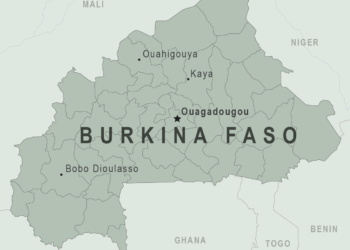
The AES, created on September 16, 2023, brings together Mali, Niger, and Burkina Faso under a mutual defence agreement. The 2025 Bamako Summit of AES shows growing collaboration among the three countries, representing a critical moment in the rearrangement of West Africa’s regional security planning by boosting security and economic ties. However, the Alliance of Sahel States is now at a crossroads, facing important choices about its future, including addressing the challenges of being landlocked and capitalising on international trade opportunities. Also, there are challenges such as regional security, governance legitimacy concerns, and resource constraints. While the result of this reconfiguration will deeply impact Sahelian stability and the broader path of African regional security cooperation.
Source: QIraat Africa
Tags: African Union (AU)Alliance of Sahel States (AES)Burkina FasoEconomic Community of West African States (ECOWAS)Liptako-Gourma Authority (LGA)MaliNiger
Oyebamiji Usman Adesoji

Oyebamiji Usman Adesoji

Writer and researcher on business, entrepreneurship and geopolitical affairs.

Related Posts

Featured

Morocco’s King pardons Senegal fans convicted on hooliganism charges

May 24, 2026
Inside an African lab that helped crack the hantavirus outbreak
Featured

Inside an African lab that helped crack the hantavirus outbreak

May 24, 2026
Infographic: Top 10 African Nations With The Lowest Diesel Prices In March 2026
Central Africa

Infographic: Top 10 African Nations With The Lowest Diesel Prices In March 2026

May 23, 2026
Benin’s President Talon thanks army leaders for “remaining loyal” in face of attempted coup
Featured

Benin’s Talon bids farewell ahead of Wadagni inauguration, Sunday

May 21, 2026
Nigeria busts meth cartel in largest seizure, arrests kingpin
Security

Nigeria busts meth cartel in largest seizure, arrests kingpin

May 21, 2026
Sierra Leone receives first group of West African deportees from US
Featured

Sierra Leone receives first group of West African deportees from US

May 21, 2026

Search Qiraat Africa

No Result
View All Result

Follow on Twitter

Follow @africanqiraat

Trending

Zimbabwe’s banking sector faces 75% job decrease Since 2000

China writes off unspecified amount of Zimbabwe interest-free loan

April 18, 2024
Kumbi Saleh, the capital of the ancient Ghana Empire

Kumbi Saleh, the capital of the ancient Ghana Empire

October 13, 2025
Africa’s Richest Billionaires, Mid-2025

Africa’s Richest Billionaires, Mid-2025

July 17, 2025
Kagame and the Rwandan Economic Miracle: Autocracy at its finest?

Kagame and the Rwandan Economic Miracle: Autocracy at its finest?

May 19, 2022
The Balanta of Guinea-Bissau, Senegal and The Gambia

The Balanta of Guinea-Bissau, Senegal and The Gambia

January 20, 2026
Kalenjin people of East Africa

Kalenjin people of East Africa

August 15, 2025

Facebook

Sections

  • About Us
  • Privacy Policy
  • Opinion
  • Infographics
  • News
  • Analysis
  • Figures
  • Culture & Literature
  • Follow Ups
  • Historical Readings
  • Interview
  • Studies


© Copyright Qiraat Africa. Developed by Bunnaj Media .

No Result
View All Result
  • News
  • Analysis & Report
  • Studies
  • Opinion
  • Interview
  • Culture & Literature
  • Figures
  • Historical Readings
  • Regions

© 2021 Copyright Qiraat Africa.