
Qiraat Africa
عربي  |  Fr
Advertisement
  • News
    • All
    • Climate Change
    • Economy
    • Education
    • Energy
    • Health
    • Migration
    • Mining
    • Politics
    • Security
    • Society
    • Sport
    Senegal’s top opposition leader Sonko vows to help win March 24 election

    Senegal president sacks PM Sonko, dissolves government after months of friction

    Morocco’s King pardons Senegal fans convicted on hooliganism charges

    Benin’s President Talon thanks army leaders for “remaining loyal” in face of attempted coup

    Benin’s Talon bids farewell ahead of Wadagni inauguration, Sunday

    Nigeria busts meth cartel in largest seizure, arrests kingpin

    Nigeria busts meth cartel in largest seizure, arrests kingpin

    Sierra Leone receives first group of West African deportees from US

    Sierra Leone receives first group of West African deportees from US

    WHO declares Ebola outbreak in Congo, Uganda an emergency of international concern

    India, Africa Union postpone New Delhi summit amid Ebola outbreak

    Rwanda says DR Congo shelling injured its citizens

    Rwanda tightens border controls over deadly Ebola outbreak in DR Congo

    Nigeria arrests ex-power minister Mamman after 75-year graft sentence

    Nigeria arrests ex-power minister Mamman after 75-year graft sentence

    Ethiopia says Ghebreyesus, WHO chief has links to rebellious Tigrayan forces

    WHO says 139 suspected Ebola deaths in Congo outbreak, numbers expected to rise

  • Analysis
    • All
    • Climate Change
    • Digital & Tech
    • Economy
    • Energy & Power
    • Health
    • Politics
    • Security
    • Society
    Five Years After the Coup in Mali: Are Stability and Growth Within Reach?

    The Political Economy of Insecurity in Mali: Armed Groups, Resources, and State Fragility

    Ghana to evacuate 300 citizens from South Africa after xenophobic attacks

    Xenophobic Violence and Human Security in South Africa: Causes and Consequences

    Inside an African lab that helped crack the hantavirus outbreak

    Inside an African lab that helped crack the hantavirus outbreak

    Nigeria’s Agricultural sector: Problems and challenges

    Agriculture in Africa: science and research cannot have an impact without investments and good policies

    Mali’s junta creates a new ministerial-level post to oversee the mining sector

    African Mineral Resources: The Controversial Link to US Health Deals

    Ghana curbs offshore investments to protect cedi, boost stability

    Ghana’s mining law attempts to eradicate speculation, but leaves communities in limbo: insights from a lithium case study

    East African Community’s expansion has triggered financial difficulties: why solutions come with risks

    East African Community’s expansion has triggered financial difficulties: why solutions come with risks

    Nigeria’s new election laws leaves gaps: Here are 5 reforms for free, fair, and credible elections

    Nigeria’s new election laws leaves gaps: Here are 5 reforms for free, fair, and credible elections

    Impact of Kenya’s long-overdue new infrastructure fund may be limited by design problems

    Impact of Kenya’s long-overdue new infrastructure fund may be limited by design problems

  • Studies
    Pensions for Botswana’s elderly are expanding, but care services are lacking—study follows 20 years

    Pensions for Botswana’s elderly are expanding, but care services are lacking—study follows 20 years

    60 new cosmic structures have been discovered by South Africa’s MeerKAT telescope, which is mapping previously unseen gaps between galaxies

    60 new cosmic structures have been discovered by South Africa’s MeerKAT telescope, which is mapping previously unseen gaps between galaxies

    Benin government says armed forces foil coup attempt

    Coup contagion? A rash of African power grabs suggests copycats are taking note of others’ success

    One in three South Africans have never heard of AI: what this means for policy

    One in three South Africans have never heard of AI: what this means for policy

    Social Media as a Catalyst for the Spread of Dangerous Wealth Ritual Myths

    Social Media as a Catalyst for the Spread of Dangerous Wealth Ritual Myths

    Overcoming Education Barriers for Young Mothers in Sub-Saharan Africa

    Overcoming Education Barriers for Young Mothers in Sub-Saharan Africa

    Youth Empowerment Through Vocational Training in Rural Sub-Saharan Africa

    Youth Empowerment Through Vocational Training in Rural Sub-Saharan Africa

    Manufacturers in Ghana and Nigeria claim that although corruption damages businesses, digital technologies provide a chance to combat it

    Manufacturers in Ghana and Nigeria claim that although corruption damages businesses, digital technologies provide a chance to combat it

    Environmental Threats and Conservation Efforts in Namibia

    Environmental Threats and Conservation Efforts in Namibia

  • Infographics
  • Figures
    Eduardo Mondlane (1920-1969): Mozambican Revolutionary and Anthropologist

    Eduardo Mondlane (1920-1969): Mozambican Revolutionary and Anthropologist

    William Tubman (1895-1971): Liberian politician and longest-serving president in the country’s history

    William Tubman (1895-1971): Liberian politician and longest-serving president in the country’s history

    Abebe Bikila (1932-1973): Ethiopian marathoner and first black African to win an Olympic medal

    Abebe Bikila (1932-1973): Ethiopian marathoner and first black African to win an Olympic medal

    W. E. B. Du Bois (1868-1963): Sociologist, historian, and Pan-Africanist civil rights activist

    W. E. B. Du Bois (1868-1963): Sociologist, historian, and Pan-Africanist civil rights activist

    Frantz Fanon (1925-1961): Psychiatrist and political philosopher

    Frantz Fanon (1925-1961): Psychiatrist and political philosopher

    Percy Lavon Julian (1899-1975): African American researcher and chemist

    Percy Lavon Julian (1899-1975): African American researcher and chemist

    Harriet Tubman (Araminta Ross, 1822-1913): American abolitionist and social activist

    Harriet Tubman (Araminta Ross, 1822-1913): American abolitionist and social activist

    Dorothy Vaughan (1910-2008): African American mathematician and human computer

    Dorothy Vaughan (1910-2008): African American mathematician and human computer

    George Washington Carver (1864-1943): African American agricultural scientist and inventor

    George Washington Carver (1864-1943): African American agricultural scientist and inventor

  • History
    Laas Geel, Somalia

    Laas Geel, Somalia

    Lakes Of Ounianga, Chad

    Lakes Of Ounianga, Chad

    Nok Caves, Togo

    Nok Caves, Togo

    The Land of Punt (modern Somalia, Eritrea, Ethiopia, or eastern Sudan)

    The Land of Punt (modern Somalia, Eritrea, Ethiopia, or eastern Sudan)

    Avenue of the Baobabs, Madagascar

    Avenue of the Baobabs, Madagascar

    Lopé-Okanda (Gabon)

    Lopé-Okanda (Gabon)

    The Sudd wetland

    The Sudd wetland

    Khami Ruins (Zimbabwe), the capital of the Torwa state

    Khami Ruins (Zimbabwe), the capital of the Torwa state

    Royal Palace, Porto-Novo, Republic of Benin

    Royal Palace, Porto-Novo, Republic of Benin

  • Others
    • Culture / Literature
    • Interview
    • Opinion
  • Countries
    • Country profiles
    • Regions
      • Central Africa
      • East Africa
      • Southern Africa
      • West Africa
No Result
View All Result
  • News
    • All
    • Climate Change
    • Economy
    • Education
    • Energy
    • Health
    • Migration
    • Mining
    • Politics
    • Security
    • Society
    • Sport
    Senegal’s top opposition leader Sonko vows to help win March 24 election

    Senegal president sacks PM Sonko, dissolves government after months of friction

    Morocco’s King pardons Senegal fans convicted on hooliganism charges

    Benin’s President Talon thanks army leaders for “remaining loyal” in face of attempted coup

    Benin’s Talon bids farewell ahead of Wadagni inauguration, Sunday

    Nigeria busts meth cartel in largest seizure, arrests kingpin

    Nigeria busts meth cartel in largest seizure, arrests kingpin

    Sierra Leone receives first group of West African deportees from US

    Sierra Leone receives first group of West African deportees from US

    WHO declares Ebola outbreak in Congo, Uganda an emergency of international concern

    India, Africa Union postpone New Delhi summit amid Ebola outbreak

    Rwanda says DR Congo shelling injured its citizens

    Rwanda tightens border controls over deadly Ebola outbreak in DR Congo

    Nigeria arrests ex-power minister Mamman after 75-year graft sentence

    Nigeria arrests ex-power minister Mamman after 75-year graft sentence

    Ethiopia says Ghebreyesus, WHO chief has links to rebellious Tigrayan forces

    WHO says 139 suspected Ebola deaths in Congo outbreak, numbers expected to rise

  • Analysis
    • All
    • Climate Change
    • Digital & Tech
    • Economy
    • Energy & Power
    • Health
    • Politics
    • Security
    • Society
    Five Years After the Coup in Mali: Are Stability and Growth Within Reach?

    The Political Economy of Insecurity in Mali: Armed Groups, Resources, and State Fragility

    Ghana to evacuate 300 citizens from South Africa after xenophobic attacks

    Xenophobic Violence and Human Security in South Africa: Causes and Consequences

    Inside an African lab that helped crack the hantavirus outbreak

    Inside an African lab that helped crack the hantavirus outbreak

    Nigeria’s Agricultural sector: Problems and challenges

    Agriculture in Africa: science and research cannot have an impact without investments and good policies

    Mali’s junta creates a new ministerial-level post to oversee the mining sector

    African Mineral Resources: The Controversial Link to US Health Deals

    Ghana curbs offshore investments to protect cedi, boost stability

    Ghana’s mining law attempts to eradicate speculation, but leaves communities in limbo: insights from a lithium case study

    East African Community’s expansion has triggered financial difficulties: why solutions come with risks

    East African Community’s expansion has triggered financial difficulties: why solutions come with risks

    Nigeria’s new election laws leaves gaps: Here are 5 reforms for free, fair, and credible elections

    Nigeria’s new election laws leaves gaps: Here are 5 reforms for free, fair, and credible elections

    Impact of Kenya’s long-overdue new infrastructure fund may be limited by design problems

    Impact of Kenya’s long-overdue new infrastructure fund may be limited by design problems

  • Studies
    Pensions for Botswana’s elderly are expanding, but care services are lacking—study follows 20 years

    Pensions for Botswana’s elderly are expanding, but care services are lacking—study follows 20 years

    60 new cosmic structures have been discovered by South Africa’s MeerKAT telescope, which is mapping previously unseen gaps between galaxies

    60 new cosmic structures have been discovered by South Africa’s MeerKAT telescope, which is mapping previously unseen gaps between galaxies

    Benin government says armed forces foil coup attempt

    Coup contagion? A rash of African power grabs suggests copycats are taking note of others’ success

    One in three South Africans have never heard of AI: what this means for policy

    One in three South Africans have never heard of AI: what this means for policy

    Social Media as a Catalyst for the Spread of Dangerous Wealth Ritual Myths

    Social Media as a Catalyst for the Spread of Dangerous Wealth Ritual Myths

    Overcoming Education Barriers for Young Mothers in Sub-Saharan Africa

    Overcoming Education Barriers for Young Mothers in Sub-Saharan Africa

    Youth Empowerment Through Vocational Training in Rural Sub-Saharan Africa

    Youth Empowerment Through Vocational Training in Rural Sub-Saharan Africa

    Manufacturers in Ghana and Nigeria claim that although corruption damages businesses, digital technologies provide a chance to combat it

    Manufacturers in Ghana and Nigeria claim that although corruption damages businesses, digital technologies provide a chance to combat it

    Environmental Threats and Conservation Efforts in Namibia

    Environmental Threats and Conservation Efforts in Namibia

  • Infographics
  • Figures
    Eduardo Mondlane (1920-1969): Mozambican Revolutionary and Anthropologist

    Eduardo Mondlane (1920-1969): Mozambican Revolutionary and Anthropologist

    William Tubman (1895-1971): Liberian politician and longest-serving president in the country’s history

    William Tubman (1895-1971): Liberian politician and longest-serving president in the country’s history

    Abebe Bikila (1932-1973): Ethiopian marathoner and first black African to win an Olympic medal

    Abebe Bikila (1932-1973): Ethiopian marathoner and first black African to win an Olympic medal

    W. E. B. Du Bois (1868-1963): Sociologist, historian, and Pan-Africanist civil rights activist

    W. E. B. Du Bois (1868-1963): Sociologist, historian, and Pan-Africanist civil rights activist

    Frantz Fanon (1925-1961): Psychiatrist and political philosopher

    Frantz Fanon (1925-1961): Psychiatrist and political philosopher

    Percy Lavon Julian (1899-1975): African American researcher and chemist

    Percy Lavon Julian (1899-1975): African American researcher and chemist

    Harriet Tubman (Araminta Ross, 1822-1913): American abolitionist and social activist

    Harriet Tubman (Araminta Ross, 1822-1913): American abolitionist and social activist

    Dorothy Vaughan (1910-2008): African American mathematician and human computer

    Dorothy Vaughan (1910-2008): African American mathematician and human computer

    George Washington Carver (1864-1943): African American agricultural scientist and inventor

    George Washington Carver (1864-1943): African American agricultural scientist and inventor

  • History
    Laas Geel, Somalia

    Laas Geel, Somalia

    Lakes Of Ounianga, Chad

    Lakes Of Ounianga, Chad

    Nok Caves, Togo

    Nok Caves, Togo

    The Land of Punt (modern Somalia, Eritrea, Ethiopia, or eastern Sudan)

    The Land of Punt (modern Somalia, Eritrea, Ethiopia, or eastern Sudan)

    Avenue of the Baobabs, Madagascar

    Avenue of the Baobabs, Madagascar

    Lopé-Okanda (Gabon)

    Lopé-Okanda (Gabon)

    The Sudd wetland

    The Sudd wetland

    Khami Ruins (Zimbabwe), the capital of the Torwa state

    Khami Ruins (Zimbabwe), the capital of the Torwa state

    Royal Palace, Porto-Novo, Republic of Benin

    Royal Palace, Porto-Novo, Republic of Benin

  • Others
    • Culture / Literature
    • Interview
    • Opinion
  • Countries
    • Country profiles
    • Regions
      • Central Africa
      • East Africa
      • Southern Africa
      • West Africa
No Result
View All Result
Qiraat Africa
عربي  |  Fr
No Result
View All Result
Home Regions Central Africa

What do the recent 2025 elections in Cameroon and Ivory Coast reveal about their state of democracy?

Oyebamiji Usman Adesoji by Oyebamiji Usman Adesoji
November 12, 2025
Cameroon’s Biya declared vote winner, opposition reports gunfire

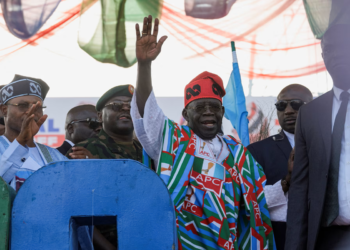
Paul Barthélemy Biya, who has been serving as the second president of Cameroon since 1982.

Share on FacebookShare on Twitter

Democracy indices compiled by respected organizations have suggested that around the world, there’s an increase in authoritarianism or democratic backsliding. Against this most unpromising of backdrops, it was the catastrophic failure of the continent’s new political systems to manage competition over power and resources that put the final nail in the coffin of representative government. However, in a continent where the median age is under 20 (according to World Barometer), two leaders in their 80s and 90s, Alassane Ouattara of Ivory Coast and Paul Biya of Cameroon, have just extended their presidential mandates following their electoral victories in October this year.

These recent elections in Cameroon and Ivory Coast also reveal the state of democracy in Africa in general, and in the two countries in particular.

Cameroon

Cameroon: Democracy in Permanent Transition

Paul Biya is a politician who has served as president of Cameroon since 1982. Prior to that post, he served as prime minister (1975–82). Long respected and active on the diplomatic scene, his leadership has earned him criticism from the United Nations and Western capitals in recent years. Despite frequent absences and consistent rumors about fragile health, he has succeeded in holding onto power through social upheaval, economic disparity, and separatist violence. “All you have to do is lose your head for a second and you’re done with,” Biya once told a journalist.

Biya’s Rassemblement démocratique du Peuple Camerounais (RDPC) party has held power in this country of 29 million people since independence in 1960, reflecting the dominant party system in place despite the introduction of multiparty elections in 1992. Biya and the RDPC have maintained their stranglehold over Cameroonian politics via their control over all government institutions, including the electoral commission and judiciary.

Elections Cameroon (ELECAM) is the body charged with the responsibilities of organizing, managing, and supervising elections in Cameroon to ensure that there is transparency and fair play and thus impacts the Cameroonian democracy.  According to the 2006 law as amended, members of the EB (Electoral Board) shall be appointed from ‘independent personalities of Cameroon’ ‘reputed for their stature, moral uprightness, intellectual honesty, patriotism, neutrality, and impartiality.’ They are appointed by presidential decree ‘upon consultation with political parties represented in the National Assembly and civil society.’

In the October 2025 presidential election, the 92-year-old Biya was reelected with more than 53 percent of the vote. Determined by a simple majority, the election meant that Biya—sometimes described as the absent landlord due to his prolonged stay outside Cameroon—only needed a sliver of support to triumph for a life-term presidency. His new seven-year term of office ends in 2032, by which time he will be close to 100 years old.

Opposition supporters claim the results of the election have been rigged by Biya and his supporters in power. In the lead-up to the announcement of the result, the current government rejected these accusations and urged people to wait for the result. Still, the United Nations, African Union, and European Union have all called for restraint, warning that the post-election violence could push Cameroon deeper into political instability.

The Anglophone Crisis and the Ballot’s Legitimacy

Cameroon’s war is commonly known as its ‘Anglophone Crisis,’ one that has been building since the official end of colonization in 1961, when territory controlled by Britain was merged with that colonized by France to form the modern Cameroonian state. On paper, Cameroon is a bilingual nation whose resources and opportunities are equally accessible to its Francophone and Anglophone populations. In practice, however, the Anglophone regions of Cameroon and its English-speaking citizens have faced widespread marginalization, discrimination, and violent oppression in public and political life.

The Anglophone crisis resulted from the repressive response to largely peaceful protests in 2016-2017, which demanded an end to the marginalization of the Anglophone minority. It has since escalated into a situation of armed violence in the Northwest and Southwest regions, leaving the population caught up in the fighting of various actors. There is now extreme suffering and loss of life.

Cameroon’s longtime leader Paul Biya was declared the winner of the country’s October 7 presidential poll on October 22, 2018. Opposition parties rejected the results, but the Constitutional Council had already thrown out petitions to nullify the election. Angry protesters came out singing that Biya had stolen Maurica Kamto’s victory but were quickly dispersed by heavily armed troops. According to the results, incumbent President Paul Biya won a landslide victory with 71 percent of the vote.

His strongest challenger, Maurice Kamto, was a distant second with 14 percent. Seven other candidates scored vote percentages in the single digits. In addition, violence connected to a separatist movement in the western Anglophone regions forced tens of thousands to flee in the lead-up to the vote and kept the vast majority there from casting their ballot. The above pattern, therefore, suggests that for many Cameroonians, voting no longer represents authority but submission.

Ivory Coast

Between Civil War and Controlled Democracy

Ivory Coast has historically experienced deadly pre- and post-electoral violence. Disputes over the result of the presidential election in 2000 were instrumental in sparking a five-year civil war in the West African country of 31 million people. Likewise, election violence escalated into the second Ivorian civil war in 2011, when more than 3,000 people were killed after then-President Laurent Gbagbo refused to concede defeat to Ouattara. This time around, sporadic protests have already erupted in the weeks leading up to the election in response to a ban on key contenders from the polls, particularly Tidjane Thiam, the popular former head of Credit Suisse bank.

Ouattara has overseen the country’s economic reconstruction since the civil war, achieving an annual growth rate of 6% backed by a boom in cocoa. However, 37.5% of the country’s 30 million people still live in poverty, and jobs are scarce for young people. According to the World Bank, Ivory Coast “has sustained one of the fastest growth rates in sub-Saharan Africa for more than a decade.” The World Bank adds that “between 2012 and 2019, real GDP expanded at an average of 8.2%,” with growth persisting even through the COVID-19 pandemic. He announced his candidacy for a fourth five-year term in office in August 2025. The political opposition has condemned the announcement, and the international community has remained silent.

Read also

The Political Economy of Insecurity in Mali: Armed Groups, Resources, and State Fragility

Xenophobic Violence and Human Security in South Africa: Causes and Consequences

Senegal president sacks PM Sonko, dissolves government after months of friction

The 83-year-old former international banker won 89.77% of the vote, his third consecutive decisive victory after the much closer election that brought him to power in 2011. The turnout of around 50% was comparable to the presidential elections in 2020 and 2015 but far below the 80% who voted in the first round in 2010. Laurent Gbagbo and Tidjane Thiam, former CEO of Credit Suisse, were not legally permitted to run this year, and the remaining opposition candidates lacked the backing of a major political party, making Ouattara the clear favorite.

The Structural Roots of Electoral Illusion

The West African CFA franc (XOF) is a vital part of Côte d’Ivoire’s economy. Likewise, Cameroon is linked together with several other countries in Central and Western Africa in a monetary union with a common currency, the CFA franc, which was pegged to the euro in 2002. For the most part, the Central and West African states have been faulted for their underdevelopment, viewed through sluggish economic growth and political instability, attributed to poor governance by their leaders.

However, the challenges with implementing effective monetary policies for growth and stability in Francophone Africa have led to debates over the CFA franc. Slow development in these zones has been reduced to the use of the CFA franc currency, seen as an enabler and barrier to development. The debates over the impact of the CFA franc often start with questions about exchange rates and rumors about planned devaluation, which inevitably harms the population’s buying power. A state reliant on Paris for fiscal stabilization often aligns politically with French interests, prioritizing regime survival over democratic validity.

Several factors, according to the media report, help explain why leaders like Biya and Ouattara remain in power: Both presidents’ parties have strong influence over electoral commissions, security forces, and state media. Aside from this, legal frameworks, constitutional changes, and legal interpretations have allowed both to extend terms beyond what was previously possible. However, supporters of both presidents have argued that continuity provides stability, particularly in countries with histories of civil unrest. While the disqualification of major rivals and weak political alternatives create a lopsided electoral landscape. Although this combination of political machinery, legal adjustments, and controlled opposition helps leaders navigate electoral challenges successfully, even as youth populations grow frustrated.

For instance, before the 2025 Presidential election, Tidjane Thiam, leader of the main opposition Democratic Party of Ivory Coast (PDCI), said in a statement, “My elimination from the electoral list by the Independent Electoral Commission [CEI] is a sad but eloquent example of Ivory Coast’s drift towards a total absence of democracy.” Thiam’s statement came two days after CEI head Ibrahime Kuibiert Coulibaly announced that no revision of the electoral register would take place before the vote.

Under Biya, opposition politicians have frequently accused electoral authorities of colluding with the president to rig elections. In 2008, parliament voted to remove the limit on the number of terms a president may serve. Upon the announcement of the election date, all potential candidates had the opportunity to make public their intentions to run in the presidential race. By the close of the 10-day deadline for the submission of candidacy files (21 July 2025), the elections management body Elections Cameroon (ELECAM) had received a total of eighty-four applications and rejected all but thirteen.

This included the main opposition leader, Maurice Kamto, who was largely seen as the principal challenger to incumbent president Paul Biya. It is important to note that since the change of leadership in 1982, during which former president Ahmadou Ahidjo resigned and handed over power to his constitutional successor Paul Biya, there had not been any fundamental alteration in the system of governance in Cameroon since independence in the 1960s. In fact, the current head of state and a significant portion of the ruling elite have been shuttling around the state apparatus since independence.

Although Cameroon has one of the most diverse media landscapes in Africa, it is one of the continent’s most dangerous countries for journalists, says Reporters without Borders (RSF). Thus, the government exercises substantial control over the media. In Ivory Coast, although freedom of the press is guaranteed under the constitution, in reality it is restricted.

Rethinking Democracy Beyond the Ballot

The consolidation of a democracy requires ‘broad and deep legitimation, such that all significant political actors, at both the elite and mass levels, believe that the democratic regime is the most right and appropriate for their society, better than any other realistic alternative they can imagine.’ If democracy consists of “rule by the people,” then the values, attitudes, and behaviors of ordinary folk are central to considerations of the fate of democracy. If it turns out that democratic stability in the medium to long term depends on the economic well-being of citizens, then democracies can be expected to be especially fragile in world regions where many people live in poverty.

The announcement of Mr. Ouattara’s landslide victory came the same day that the world’s oldest president, Paul Biya, 92, was declared the winner of presidential elections in Cameroon. Both outcomes show that the grip on power by leaders of advanced age in the continent with the world’s youngest population is not waning.  Cameroon’s median population age is just 18, while Ivory Coast’s is 19, according to research by World Barometer. Meanwhile, both presidents are in their 80s and 90s and have been in power for decades, Biya since 1982 and Ouattara since 2011. This generational gap fuels youth frustration online and on the streets: the leaders who make decisions for their countries are often more than four decades older than the majority of citizens.

Political scientists argue that above all things African societies need time to learn democratic habits for democratic consolidation and to build democratic institutions that are appropriate to their specific political and cultural situations. Therefore, in this case, the process of democratic consolidation has to be gradual. In fact, democratic consolidation is not only gradual but also uneven. Holding an election is a milestone, but it is not the key to Africa’s democratic legitimacy. Many elections in the African region have failed to meet the internationally accepted standards for free and fair elections. Though Africa’s record on free and fair elections is mixed, at present, most Africans have embraced elections as an indispensable mechanism for determining their future course.

The past and present experiences of Cameroon and Ivory Coast point out that genuine democratization in Francophone Africa must not rely solely on periodic elections. Reform needs to deal with true independence for electoral commissions and constitutional courts; constitutional hindrance needs to be immune to personal reinterpretation; investing in civic education and protection for independent media; and extenuating reliance on the CFA franc arrangement to strengthen political sovereignty.

 _______________

This article expresses the views and opinions of the author, and does not necessarily reflect the views of Qiraat Africa and its editors.
Source: Qiraat Africa
Tags: 2025 Cameroon elections2025 Ivorian presidential electionFrancophone Africa
Oyebamiji Usman Adesoji

Oyebamiji Usman Adesoji

Writer and researcher on business, entrepreneurship and geopolitical affairs.

Related Posts

Featured

Morocco’s King pardons Senegal fans convicted on hooliganism charges

May 24, 2026
Inside an African lab that helped crack the hantavirus outbreak
Featured

Inside an African lab that helped crack the hantavirus outbreak

May 24, 2026
Infographic: Top 10 African Nations With The Lowest Diesel Prices In March 2026
Central Africa

Infographic: Top 10 African Nations With The Lowest Diesel Prices In March 2026

May 23, 2026
Benin’s President Talon thanks army leaders for “remaining loyal” in face of attempted coup
Featured

Benin’s Talon bids farewell ahead of Wadagni inauguration, Sunday

May 21, 2026
Nigeria busts meth cartel in largest seizure, arrests kingpin
Security

Nigeria busts meth cartel in largest seizure, arrests kingpin

May 21, 2026
Sierra Leone receives first group of West African deportees from US
Featured

Sierra Leone receives first group of West African deportees from US

May 21, 2026

Search Qiraat Africa

No Result
View All Result

Follow on Twitter

Follow @africanqiraat

Trending

Zimbabwe’s banking sector faces 75% job decrease Since 2000

China writes off unspecified amount of Zimbabwe interest-free loan

April 18, 2024
Kumbi Saleh, the capital of the ancient Ghana Empire

Kumbi Saleh, the capital of the ancient Ghana Empire

October 13, 2025
Africa’s Richest Billionaires, Mid-2025

Africa’s Richest Billionaires, Mid-2025

July 17, 2025
Kagame and the Rwandan Economic Miracle: Autocracy at its finest?

Kagame and the Rwandan Economic Miracle: Autocracy at its finest?

May 19, 2022
The Balanta of Guinea-Bissau, Senegal and The Gambia

The Balanta of Guinea-Bissau, Senegal and The Gambia

January 20, 2026
Kalenjin people of East Africa

Kalenjin people of East Africa

August 15, 2025

Facebook

Sections

  • About Us
  • Privacy Policy
  • Opinion
  • Infographics
  • News
  • Analysis
  • Figures
  • Culture & Literature
  • Follow Ups
  • Historical Readings
  • Interview
  • Studies


© Copyright Qiraat Africa. Developed by Bunnaj Media .

No Result
View All Result
  • News
  • Analysis & Report
  • Studies
  • Opinion
  • Interview
  • Culture & Literature
  • Figures
  • Historical Readings
  • Regions

© 2021 Copyright Qiraat Africa.