
Qiraat Africa
عربي  |  Fr
Advertisement
  • News
    • All
    • Climate Change
    • Economy
    • Education
    • Energy
    • Health
    • Migration
    • Mining
    • Politics
    • Security
    • Society
    • Sport
    DR Congo President Tshisekedi seeks re-election in the forthcoming polls

    DR Congo court approves referendum law, fueling third-term debate

    Equatorial Guinea and Gabon resolve 50-year border dispute

    Equatorial Guinea and Gabon resolve 50-year border dispute

    Kenya probes potential toxin after 15 elephants die in Amboseli ecosystem

    Kenya probes potential toxin after 15 elephants die in Amboseli ecosystem

    WHO declares Ebola outbreak in Congo, Uganda an emergency of international concern

    Uganda declares end to latest Ebola outbreak

    South Africa says over 900 arrested during nationwide anti-migrant protests

    Nigeria and South Africa seek to ease tensions over xenophobic attacks

    US to block citizens in Congo from immediate travel home, citing Ebola

    A day in the life of Congo’s overstretched Ebola surveillance teams

    Senegal has sovereign right to decide how to tackle debt, IMF says

    IMF completes final review of Ghana lending program, unlocks $371 million

    South Africa promises crackdown on xenophobic attacks after Ghana protests

    Ghana repatriating another 1,000 nationals from South Africa

    Burkina Faso declares UN coordinator persona non grata

    Ugandan diplomat Otunnu joins race to become next UN head

  • Analysis
    • All
    • Climate Change
    • Digital & Tech
    • Economy
    • Energy & Power
    • Health
    • Politics
    • Security
    • Society
    What Happens After Dandora? Kenya’s Green Transition Faces Its Hardest Test

    What Happens After Dandora? Kenya’s Green Transition Faces Its Hardest Test

    African entrepreneurs work in challenging environments, and others may benefit from the skills they have developed

    African entrepreneurs work in challenging environments, and others may benefit from the skills they have developed

    Ethiopia’s 2026 General Election: Progress, Challenges, and Implications

    Ethiopia’s 2026 General Election: Progress, Challenges, and Implications

    Israeli recognition of Somaliland is a ‘calculated distraction,’ Somali diplomat says

    Sixty-Six Years On, the Promise of Somali Independence Remains Unfulfilled.

    Senegal’s top opposition leader Sonko vows to help win March 24 election

    Senegal at a Political Crossroads: The Faye–Sonko Rivalry and the Future of Democratic Governance

    Ulysses in isiZulu: Why an African translation of the classic Irish novel is important in today’s world

    Ulysses in isiZulu: Why an African translation of the classic Irish novel is important in today’s world

    The promise and risks of Kenya’s ambitious new strategy to close refugee camps

    The promise and risks of Kenya’s ambitious new strategy to close refugee camps

    Al Qaeda-linked militants curb their brutality in seized Malian territory

    Al Qaeda-linked militants curb their brutality in seized Malian territory

    Five Years After the Coup in Mali: Are Stability and Growth Within Reach?

    The Political Economy of Insecurity in Mali: Armed Groups, Resources, and State Fragility

  • Studies
    Angola’s lengthy war shaped the way farmers utilised fire—why it matters

    Angola’s lengthy war shaped the way farmers utilised fire—why it matters

    Schooling is the most severely affected by conflict when children are the target – Study

    Schooling is the most severely affected by conflict when children are the target – Study

    Pensions for Botswana’s elderly are expanding, but care services are lacking—study follows 20 years

    Pensions for Botswana’s elderly are expanding, but care services are lacking—study follows 20 years

    60 new cosmic structures have been discovered by South Africa’s MeerKAT telescope, which is mapping previously unseen gaps between galaxies

    60 new cosmic structures have been discovered by South Africa’s MeerKAT telescope, which is mapping previously unseen gaps between galaxies

    Benin government says armed forces foil coup attempt

    Coup contagion? A rash of African power grabs suggests copycats are taking note of others’ success

    One in three South Africans have never heard of AI: what this means for policy

    One in three South Africans have never heard of AI: what this means for policy

    Social Media as a Catalyst for the Spread of Dangerous Wealth Ritual Myths

    Social Media as a Catalyst for the Spread of Dangerous Wealth Ritual Myths

    Overcoming Education Barriers for Young Mothers in Sub-Saharan Africa

    Overcoming Education Barriers for Young Mothers in Sub-Saharan Africa

    Youth Empowerment Through Vocational Training in Rural Sub-Saharan Africa

    Youth Empowerment Through Vocational Training in Rural Sub-Saharan Africa

  • Infographics
  • Figures
    Al-Hajj Salim Suwari (fl. c. 13th–15th century): West African Soninke Islamic scholar

    Al-Hajj Salim Suwari (fl. c. 13th–15th century): West African Soninke Islamic scholar

    Strive Masiyiwa: Zimbabwean businessman and philanthropist

    Strive Masiyiwa: Zimbabwean businessman and philanthropist

    Diébédo Francis Kéré: Burkinabé-German architect

    Diébédo Francis Kéré: Burkinabé-German architect

    Herbert Wigwe (1966-2024): Nigerian banker and businessman

    Herbert Wigwe (1966-2024): Nigerian banker and businessman

    Senegal president names new finance, energy ministers in reshuffle

    Macky Sall: Former President of Senegal

    Marcus Garvey (1887-1940): Activist, Black nationalist, and Pan-Africanist

    Marcus Garvey (1887-1940): Activist, Black nationalist, and Pan-Africanist

    John B. Russwurm (1799–1851): Jamaican-born American abolitionist, publisher, and colonial governor

    John B. Russwurm (1799–1851): Jamaican-born American abolitionist, publisher, and colonial governor

    Winnie Mandela (1936-2018): South African politician and anti-apartheid activist

    Winnie Mandela (1936-2018): South African politician and anti-apartheid activist

    Abdias do Nascimento (1914-2011): Prominent African Brazilian scholar, artist, and politician

    Abdias do Nascimento (1914-2011): Prominent African Brazilian scholar, artist, and politician

  • History
    Aldabra Atoll, Seychelles

    Aldabra Atoll, Seychelles

    Le Morne Cultural Landscape, Mauritius

    Le Morne Cultural Landscape, Mauritius

    Mount Nimba Strict Nature Reserve, Guinea and Côte d’Ivoire

    Mount Nimba Strict Nature Reserve, Guinea and Côte d’Ivoire

    Sangha Trinational, north-western Congo Basin

    Sangha Trinational, north-western Congo Basin

    Kasubi Tombs, Kampala, Uganda

    Kasubi Tombs, Kampala, Uganda

    Dja Faunal Reserve, Cameroon

    Dja Faunal Reserve, Cameroon

    Laas Geel, Somalia

    Laas Geel, Somalia

    Lakes Of Ounianga, Chad

    Lakes Of Ounianga, Chad

    Nok Caves, Togo

    Nok Caves, Togo

  • Others
    • Culture / Literature
    • Interview
    • Opinion
  • Countries
    • Country profiles
    • Regions
      • Central Africa
      • East Africa
      • Southern Africa
      • West Africa
No Result
View All Result
  • News
    • All
    • Climate Change
    • Economy
    • Education
    • Energy
    • Health
    • Migration
    • Mining
    • Politics
    • Security
    • Society
    • Sport
    DR Congo President Tshisekedi seeks re-election in the forthcoming polls

    DR Congo court approves referendum law, fueling third-term debate

    Equatorial Guinea and Gabon resolve 50-year border dispute

    Equatorial Guinea and Gabon resolve 50-year border dispute

    Kenya probes potential toxin after 15 elephants die in Amboseli ecosystem

    Kenya probes potential toxin after 15 elephants die in Amboseli ecosystem

    WHO declares Ebola outbreak in Congo, Uganda an emergency of international concern

    Uganda declares end to latest Ebola outbreak

    South Africa says over 900 arrested during nationwide anti-migrant protests

    Nigeria and South Africa seek to ease tensions over xenophobic attacks

    US to block citizens in Congo from immediate travel home, citing Ebola

    A day in the life of Congo’s overstretched Ebola surveillance teams

    Senegal has sovereign right to decide how to tackle debt, IMF says

    IMF completes final review of Ghana lending program, unlocks $371 million

    South Africa promises crackdown on xenophobic attacks after Ghana protests

    Ghana repatriating another 1,000 nationals from South Africa

    Burkina Faso declares UN coordinator persona non grata

    Ugandan diplomat Otunnu joins race to become next UN head

  • Analysis
    • All
    • Climate Change
    • Digital & Tech
    • Economy
    • Energy & Power
    • Health
    • Politics
    • Security
    • Society
    What Happens After Dandora? Kenya’s Green Transition Faces Its Hardest Test

    What Happens After Dandora? Kenya’s Green Transition Faces Its Hardest Test

    African entrepreneurs work in challenging environments, and others may benefit from the skills they have developed

    African entrepreneurs work in challenging environments, and others may benefit from the skills they have developed

    Ethiopia’s 2026 General Election: Progress, Challenges, and Implications

    Ethiopia’s 2026 General Election: Progress, Challenges, and Implications

    Israeli recognition of Somaliland is a ‘calculated distraction,’ Somali diplomat says

    Sixty-Six Years On, the Promise of Somali Independence Remains Unfulfilled.

    Senegal’s top opposition leader Sonko vows to help win March 24 election

    Senegal at a Political Crossroads: The Faye–Sonko Rivalry and the Future of Democratic Governance

    Ulysses in isiZulu: Why an African translation of the classic Irish novel is important in today’s world

    Ulysses in isiZulu: Why an African translation of the classic Irish novel is important in today’s world

    The promise and risks of Kenya’s ambitious new strategy to close refugee camps

    The promise and risks of Kenya’s ambitious new strategy to close refugee camps

    Al Qaeda-linked militants curb their brutality in seized Malian territory

    Al Qaeda-linked militants curb their brutality in seized Malian territory

    Five Years After the Coup in Mali: Are Stability and Growth Within Reach?

    The Political Economy of Insecurity in Mali: Armed Groups, Resources, and State Fragility

  • Studies
    Angola’s lengthy war shaped the way farmers utilised fire—why it matters

    Angola’s lengthy war shaped the way farmers utilised fire—why it matters

    Schooling is the most severely affected by conflict when children are the target – Study

    Schooling is the most severely affected by conflict when children are the target – Study

    Pensions for Botswana’s elderly are expanding, but care services are lacking—study follows 20 years

    Pensions for Botswana’s elderly are expanding, but care services are lacking—study follows 20 years

    60 new cosmic structures have been discovered by South Africa’s MeerKAT telescope, which is mapping previously unseen gaps between galaxies

    60 new cosmic structures have been discovered by South Africa’s MeerKAT telescope, which is mapping previously unseen gaps between galaxies

    Benin government says armed forces foil coup attempt

    Coup contagion? A rash of African power grabs suggests copycats are taking note of others’ success

    One in three South Africans have never heard of AI: what this means for policy

    One in three South Africans have never heard of AI: what this means for policy

    Social Media as a Catalyst for the Spread of Dangerous Wealth Ritual Myths

    Social Media as a Catalyst for the Spread of Dangerous Wealth Ritual Myths

    Overcoming Education Barriers for Young Mothers in Sub-Saharan Africa

    Overcoming Education Barriers for Young Mothers in Sub-Saharan Africa

    Youth Empowerment Through Vocational Training in Rural Sub-Saharan Africa

    Youth Empowerment Through Vocational Training in Rural Sub-Saharan Africa

  • Infographics
  • Figures
    Al-Hajj Salim Suwari (fl. c. 13th–15th century): West African Soninke Islamic scholar

    Al-Hajj Salim Suwari (fl. c. 13th–15th century): West African Soninke Islamic scholar

    Strive Masiyiwa: Zimbabwean businessman and philanthropist

    Strive Masiyiwa: Zimbabwean businessman and philanthropist

    Diébédo Francis Kéré: Burkinabé-German architect

    Diébédo Francis Kéré: Burkinabé-German architect

    Herbert Wigwe (1966-2024): Nigerian banker and businessman

    Herbert Wigwe (1966-2024): Nigerian banker and businessman

    Senegal president names new finance, energy ministers in reshuffle

    Macky Sall: Former President of Senegal

    Marcus Garvey (1887-1940): Activist, Black nationalist, and Pan-Africanist

    Marcus Garvey (1887-1940): Activist, Black nationalist, and Pan-Africanist

    John B. Russwurm (1799–1851): Jamaican-born American abolitionist, publisher, and colonial governor

    John B. Russwurm (1799–1851): Jamaican-born American abolitionist, publisher, and colonial governor

    Winnie Mandela (1936-2018): South African politician and anti-apartheid activist

    Winnie Mandela (1936-2018): South African politician and anti-apartheid activist

    Abdias do Nascimento (1914-2011): Prominent African Brazilian scholar, artist, and politician

    Abdias do Nascimento (1914-2011): Prominent African Brazilian scholar, artist, and politician

  • History
    Aldabra Atoll, Seychelles

    Aldabra Atoll, Seychelles

    Le Morne Cultural Landscape, Mauritius

    Le Morne Cultural Landscape, Mauritius

    Mount Nimba Strict Nature Reserve, Guinea and Côte d’Ivoire

    Mount Nimba Strict Nature Reserve, Guinea and Côte d’Ivoire

    Sangha Trinational, north-western Congo Basin

    Sangha Trinational, north-western Congo Basin

    Kasubi Tombs, Kampala, Uganda

    Kasubi Tombs, Kampala, Uganda

    Dja Faunal Reserve, Cameroon

    Dja Faunal Reserve, Cameroon

    Laas Geel, Somalia

    Laas Geel, Somalia

    Lakes Of Ounianga, Chad

    Lakes Of Ounianga, Chad

    Nok Caves, Togo

    Nok Caves, Togo

  • Others
    • Culture / Literature
    • Interview
    • Opinion
  • Countries
    • Country profiles
    • Regions
      • Central Africa
      • East Africa
      • Southern Africa
      • West Africa
No Result
View All Result
Qiraat Africa
عربي  |  Fr
No Result
View All Result
Home Featured

The New Wave of Terror in West Africa: Challenges in the Sahel Post-Regime Change Era

Oyebamiji Usman Adesoji by Oyebamiji Usman Adesoji
November 25, 2024
HRW accuses an extremist group and ethnic militias of atrocities in Mali

Copyright: SOFREP

Share on FacebookShare on Twitter

The Sahel, an area that stretches across Mauritania, Mali, Niger, Chad, and Burkina Faso, is vast—nearly three million sq km [1.16m sq miles]—with jihadist attacks spilling over into neighboring Nigeria. It is sparsely populated, largely impoverished, and poorly policed, with porous borders exploited by drug runners, people smugglers, and transnational terrorist groups. The United Nations agency working to promote health, keep the world safe, and serve the vulnerable, the World Health Organization (WHO), indicates that the Sahel region of Africa is facing unprecedented humanitarian needs as a result of armed conflict, poverty, climate change, food insecurity, and political instability. Nearly 33 million vulnerable women, children, and men in Burkina Faso, Cameroon’s Far North, Mali, Niger, northeastern Nigeria, and Chad need humanitarian assistance and protection services. Among other things, the people in the Sahel suffer from significant food insecurity and concerning nutrition levels due to violence, climate shocks including severe flooding, and increasing prices of local and imported basic products. As of 30 September 2024, 5.7 million people in the region were internally displaced, and 2.0 million were refugees, according to the United Nations Office for the Coordination of Humanitarian Affairs (OCHA).

The growing illicit trade in firearms is fueling conflicts and contributing to a dramatic increase in criminal activity in many parts of the world. Take the case of illicit trafficking across the Sahel, which involves goods ranging from cigarettes and stolen cars to drugs, weapons, and persons. This has evolved into a broad and interconnected “economy of insecurity.”NATO’s intervention in Libya in 2011 is considered one of the high points in the expansion of trafficking in the Sahel. Fighters from West and Central Africa, serving in Colonel Muammar Gaddafi’s various legions, started looting stocks of weapons of various calibers. Thus, they strengthened rebel movements, particularly in Mali. They have thus facilitated the acquisition of weapons by Al-Qaeda in the Islamic Maghreb (AQIM), the Movement for Oneness and Justice in West Africa (MUJAO), the Islamic State in the Greater Sahara (EIGS), the Support Group for Islam and Muslims (GSIM), Boko Haram, etc. In just a matter of years, Africa has become the “global epicenter of terrorism, with groups such as Da’esh, Al-Qaida, and their affiliates exploiting local conflicts and fragilities to serve their own ends, the UN Secretary-General, António Guterres, said early this year, calling for violent extremism to be rooted out.

Overshadowed by wars in Ukraine, the Middle East, and Sudan, conflict in the Sahel rarely garners global headlines, yet it is contributing to a sharp rise in migration from the region towards Europe at a time when anti-immigrant far-right parties are on the rise and some EU states are tightening their borders. Existing figures for 2020 indicated that between January and October 2020, the West Africa region recorded 570 terrorist incidents, which directly resulted in the death of 2,201 persons. The report also indicated that the civilian population of the sub-region suffered more casualties than both the military and terrorists put together in the ongoing war against insecurity. These security challenges range from politically inflicted conflicts, such as the cases with Côte d’Ivoire, Liberia, Sierra Leone, etc., to religious and terrorist attacks in Nigeria, Niger, Chad, and Mali. Insecurity has become the bane of a formerly peaceful region like West Africa.

Instability in Coastal West Africa and the Expanding Threats

Violent extremists have exploited the resulting security vacuum with heightened attacks across the Sahel. The first six months of 2022 saw a dramatic increase in attacks, particularly in the Liptako-Gourma area and spilling into coastal West Africa. More than two thousand civilians were killed during this period, an over 50 percent increase from 2021. According to the Armed Conflict Location and Event Data Project, there were 361 conflict-related deaths in Niger during the first three months of 2024, a significant increase from 250 over the same period last year. In July 2024, Leonardo Simão, the U.N. special representative for the Sahel and West Africa, said the focus on combating terrorism has had limited effect in stopping rampant illegal trafficking in the Sahel, and the effort needs more police. “It’s drugs, it’s weapons, it’s human beings, it’s mineral resources, and even food,” Simão said after briefing the U.N. Security Council. The UN Secretary-General Antonio Guterres’ new report on the Sahel and West Africa stated that hundreds of people have been killed in the first half of 2024 alone in terrorist attacks, many of them civilians.

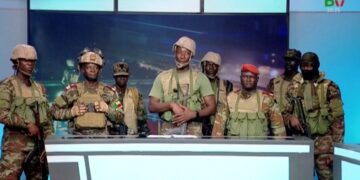
Furthermore, the security situation remains dire in parts of the Sahel, particularly the Liptako-Gourma tri-border region of Burkina Faso, Mali, and Niger. The three countries, led by military juntas that came to power through coups d’état, created the Alliance of Sahel States, or l’Alliance des États du Sahel (AES), in September 2023. In November 2023, Burkina Faso and Niger quit the Group of Five for the Sahel Joint Force (FC-G5S), which they had formed in 2017 with Chad, Mali, and Mauritania to combat terrorism and organized crime; Mali withdrew from the G5 Sahel in June 2022. The three ASEAN countries later announced on 7 March that they were creating a new joint force to fight terrorist groups. AES countries announced on 28 January that they were withdrawing from the Economic Community of West African States (ECOWAS); the decision reflected the deteriorating relations between the three countries and ECOWAS in recent years as the regional bloc sought to pressure military authorities to restore constitutional order.

At a 24 February ECOWAS summit, West African leaders lifted economic sanctions that the regional bloc had imposed on Niger after its July 2023 coup d’état and eased sanctions on Mali, saying that it would seek to convince the three countries to remain in the organization. At the same time, Russia has continued to increase its military cooperation with AES states. About 100 personnel of Africa Corps—the successor entity to the private Russian security firm the Wagner Group—deployed to Burkina Faso on 24 January. After Niger requested that US forces leave the country on 16 March, Russian forces arrived in Niamey on 10 April. Historically, the Heads of State and Government of fifteen West African countries established the Economic Community of West African States (ECOWAS) when they signed the ECOWAS Treaty on the 28th of May 1975 in Lagos, Nigeria. ECOWAS is made up of fifteen member countries that are located in the Western African region. They include Benin, Burkina Faso, Cabo Verde, Côte d’Ivoire, The Gambia, Ghana, Guinea, Guinea-Bissau, Liberia, Mali, Niger, Nigeria, Senegal, Sierra Leone, and Togo.

Read also

DR Congo court approves referendum law, fueling third-term debate

Equatorial Guinea and Gabon resolve 50-year border dispute

Kenya probes potential toxin after 15 elephants die in Amboseli ecosystem

Western powers that previously invested in trying to beat back the jihadists have very little capacity left on the ground, especially since the junta in Niger last year ordered the U.S. to leave a sprawling desert drone base in Agadez. U.S. troops and the Central Intelligence Agency (CIA) used drones to track jihadists and shared intelligence with allies such as the French, who launched air strikes against the militants, and West African armies. But the Americans were booted out after they angered Niger’s coup leaders by refusing to share intelligence and warning them against working with the Russians. The U.S. is still looking for a place to reposition its assets. Recent violence in Mali has spilled over into neighboring Burkina Faso and Niger. On September 5, seventeen soldiers and thirty-six volunteer fighters were killed in clashes with Islamist militants in northern Burkina Faso. Less than a month later, twenty-nine soldiers were killed in an attack by ISGS in western Niger. Worsening instability has led to increasing democratic backsliding as the military governments in Mali, Burkina Faso, and Niger are struggling to regain control in the wake of dissolving international support.

  • Islamic State-Sahel Province (IS Sahel) in Mali: Using a Bait

The Islamic State in the Greater Sahara (ISGS), now the Islamic State in the Sahel Province (ISS-P), is a spinoff from al-Mourabitoun, an al-Qaeda-affiliated organization headed by Mokhtar Belmokhtar. ISS-P has been responsible for a series of deadly attacks against both local and foreign military forces, such as the Tongo-Tongo incident in October 2017, which resulted in the deaths of four American special forces. ISGS was created in May 2015 when its leader, Adnan Abu Walid Al Sahrawi, pledged allegiance (Bay’a) to the Islamic State in Iraq and Syria (ISIS) along with several other defectors. Mokhtar Belmokhtar renounced this allegiance, leading to the emergence of a new jihadist organization in the Sahel.

Today, the Islamic State-Sahel Province (IS Sahel) is gaining territory amid a security situation that has worsened since military juntas took power in Burkina Faso, Mali, and Niger, reports said. Since last year, the violent extremist organization has tried to build support among local populations, according to a report by the Global Initiative Against Transnational Organized Crime (GITOC). It is especially active in the Malian region of Ménaka, which it almost completely controls, except for the town of Ménaka. However, the group now controls all roads leading to and from the town, allowing it to regulate the movement of people and goods and profit from taxes collected through legal and illegal activities. In early 2023, IS Sahel began engaging in conventional economic activity in the region, as it needed to revive supply chains and the local economy, which it had previously damaged through attacks, according to the GITOC.

  • Lukarawa: The New Terror in Nigeria’s North

Nigeria is currently inflated in a security crisis that has turned into an unending challenge, not only by defying security procedures but also making scorn of the efforts of the law enforcement agents and the millions of naira annually budgeted by the government as security votes. The Defence Headquarters has confirmed the emergence of a new terrorist group known as ‘Lukarawas’ in the northwestern part of the country. The Director of Defence Media Operations, Maj. Gen. Edward Buba, who briefed journalists on the development in Abuja recently, explained that the new terror group emerged from the Republic of Niger after the military coup in that country had led to the breakdown of military cooperation between the Nigerian government and the new military leaders in that country.

A study conducted in 2021 indicated that the Lukarawa group was initially invited from Mali by local leaders in Gudu and Tangaza local governments of Sokoto State in 2017 to address the growing banditry incursions from Zamfara State. The Nigerian military has resumed joint patrols with Niger and promised to take the offensive to Lakurawa. The threat by the group was important enough for Nigeria’s acting Chief of Army Staff, Lieutenant General Olufemi Oluyede, to visit Sokoto to rally his troops. Oluyede also appealed for support from residents to fight the insurgents.

Insecurity: Is West Africa on Alert for Opportunities for Change?

The return of coups to the Sahel region and to more parts of Africa—after everyone thought that they were a thing of the past—is evidence of the centrality of Africa to the raging international conflict between an old western camp (France) that presents itself as better than all others and a new camp (China-Russia) that presents itself as a viable alternative, with all that it promises in terms of partnerships, development, and prosperity. Before now, responses to insecurity in the region have been diverse, experts said, citing bilateral, plurilateral, and multilateral arrangements, such as Barkhane, Takuba, G5 Sahel, the Accra Initiative, the Multinational Joint Task Force, the United Nations Multidimensional Integrated Stabilization Mission in Mali (MINUSMA), and ECOWAS’ own Plan of Action for the Eradication of Terrorism and Extremism. The multiplicity of these initiatives, however, presents a challenge in coordination, ownership, and inclusion, he pointed out, presenting an ECOWAS proposal to integrate them into the regional Plan of Action. All the same, violence has rapidly accelerated in the wake of military coups in Mali, Burkina Faso, and Niger, destabilizing the Sahelian subregion. Meanwhile, regional security cooperation has been strained by the military juntas’ dissolution of regional security initiatives such as the G5 Sahel and the United Nations Multidimensional Integrated Stabilization Mission in Mali (MINUSMA). Regional cooperation has been further aggravated by the juntas’ stated intentions to withdraw from the Economic Community of West African States (ECOWAS) and create their own tripartite security framework, known as the Alliance des États du Sahel. The tremendous progress made across West Africa in recent decades, in terms of both the institutionalization of conflict resolution frameworks and the continuing consolidation of democracy, has led to speculation among scholars that the subregion will eventually develop into a stand-alone security community—that is, a group of countries that subscribe to particular norms and values that together constitute a framework by which disputes can be resolved peacefully. The Economic Community of West African States (ECOWAS) has similarly undertaken a wide range of initiatives in order to manage. cross-border cooperation in border management

On the whole, during the last two decades, the Sahel has illustrated some of the main political trends characterizing the evolution of counter-terrorism in highly unstable and conflict-prone areas. The new international competition surrounding the Sahel, or the sudden reconfiguration of decades-long security architectures and bilateral agreements, could offer some insights about how multi-level systems of security governance could evolve in other parts of the globe. Far from being a technical issue based on efficiency and efficacy, the Sahel is reminding us that counter-terrorism is a sensitive and essentially political field of action. Although European governments are divided on how to respond to the conflict. Southern European nations that receive most migrants favor keeping communication with the juntas open, while others object because of human rights and democracy concerns, nine diplomats in the region told Reuters. One African diplomat said the EU needed to remain engaged as the issue of migration was not going to go away. Even if Europe were to agree on a shared approach, it lacks the military capacity and political relationships to help because the Sahelian countries don’t want Western input, the diplomats said. In short, there is a continued and urgent need for research and action around organized crime to promote new thinking and responses to understand criminal markets, actors, and the ecosystems that enable them and to strengthen community resilience and trans-border cooperation. This is not a fringe issue; it goes to the heart of enhancing international peace and security, promoting sustainable development, improving governance of the global commons, reducing the impact of environmental degradation, and enhancing multilateral cooperation.

In addition, strengthening regional cooperation and creating policy frameworks to enhance governance and integrated border management will also be essential for maintaining border stability. Also, studies suggest that national, regional, and international actors need to continue to be vigilant in mitigating and preventing the spread of extremism and violence throughout West Africa and keep the channels of economic exposure (e.g., trade, investment, and financial transactions) among the Sahel countries open, safe, and facilitated (especially in less stable areas). Dr. Daniel Eizenga, Research Fellow at the Africa Center for Strategic Studies, and Dr. Amandine Gnanguênon, Senior Fellow and Head of the Geopolitics Program at the Africa Policy Research Institute, noted that, should the security situation deteriorate further and warrant a full-fledged intervention, ECOWAS’s experience from other regional security initiatives would provide the basis for the deployment of the ECOWAS Standby Force. ECOWAS engagement can also facilitate policy coordination with a fifth layer of support, the African Union. In addition to the valuable political validation of these efforts, the coastal West African countries can tap established African Union guidelines on civilian protection and harm mitigation.
Source: Qiraat Africa
Tags: Insecurity in West AfricaInstability in Coastal West AfricaIslamic State-Sahel Province (IS Sahel)LukarawaMali
Oyebamiji Usman Adesoji

Oyebamiji Usman Adesoji

Writer and researcher on business, entrepreneurship and geopolitical affairs.

Related Posts

South Africa says over 900 arrested during nationwide anti-migrant protests
Featured

Nigeria and South Africa seek to ease tensions over xenophobic attacks

July 28, 2026
US to block citizens in Congo from immediate travel home, citing Ebola
Central Africa

A day in the life of Congo’s overstretched Ebola surveillance teams

July 28, 2026
Senegal has sovereign right to decide how to tackle debt, IMF says
Economy

IMF completes final review of Ghana lending program, unlocks $371 million

July 28, 2026
South Africa promises crackdown on xenophobic attacks after Ghana protests
Featured

Ghana repatriating another 1,000 nationals from South Africa

July 27, 2026
Burkina Faso declares UN coordinator persona non grata
East Africa

Ugandan diplomat Otunnu joins race to become next UN head

July 27, 2026
Pollution linked to French-British oil firm’s Congo operations poses health risks, report says
Central Africa

Pollution linked to French-British oil firm’s Congo operations poses health risks, report says

July 27, 2026

Search Qiraat Africa

No Result
View All Result

Follow on Twitter

Follow @africanqiraat

Trending

Brief History and Culture of the City of Lagos, Nigeria

Brief History and Culture of the City of Lagos, Nigeria

July 24, 2024
Zaghawa people of northeastern Chad and western Sudan

Zaghawa people of northeastern Chad and western Sudan

March 3, 2026
Samori Touré (1830-1900): Military leader and founder of Wassoulou Empire

Samori Touré (1830-1900): Military leader and founder of Wassoulou Empire

January 11, 2026
Al-Hajj Salim Suwari (fl. c. 13th–15th century): West African Soninke Islamic scholar

Al-Hajj Salim Suwari (fl. c. 13th–15th century): West African Soninke Islamic scholar

July 17, 2026
Bakiga / Abakiga of northern Rwanda and southern Uganda

Bakiga / Abakiga of northern Rwanda and southern Uganda

July 15, 2026
Top 10 African Nations in Governance For 2026

Top 10 African Nations in Governance For 2026

March 11, 2026

Facebook

Sections

  • About Us
  • Privacy Policy
  • Opinion
  • Infographics
  • News
  • Analysis
  • Figures
  • Culture & Literature
  • Follow Ups
  • Historical Readings
  • Interview
  • Studies


© Copyright Qiraat Africa. Developed by Bunnaj Media .

No Result
View All Result
  • News
  • Analysis & Report
  • Studies
  • Opinion
  • Interview
  • Culture & Literature
  • Figures
  • Historical Readings
  • Regions

© 2021 Copyright Qiraat Africa.