


Qiraat Africa
عربي  |  Fr
Advertisement
  • News
    • All
    • Climate Change
    • Economy
    • Education
    • Energy
    • Health
    • Migration
    • Mining
    • Politics
    • Security
    • Society
    • Sport
    Discontent runs high as Ghana readies to vote on Saturday

    Ghana’s economy expands 6% in second quarter, driven by communications sector

    Gambian soldier jailed for failed coup against President Barrow

    Gambian leader vows power boost after violent blackout protests

    Zimbabwe to introduce lithium export quotas, sets conditions for resumption of shipments

    India’s Lohum ships first lithium ore from Zimbabwe, starts overseas mining

    Kenya offers temporary amnesty to undocumented East Africans amid fears of crackdown

    Kenya offers temporary amnesty to undocumented East Africans amid fears of crackdown

    International financial crime watchdog removes Senegal from ‘grey list,’ adds some others

    Senegal will reprofile debt instead of restructuring, prime minister says

    DR Congo eyes US minerals deal by end of June, FT reports

    DRC tightens state control over mining data in bid to boost influence over its vast mineral wealth

    DRC: Displaced Pygmy community struggles far from the forest

    DRC: Displaced Pygmy community struggles far from the forest

    Cape Verde

    Cape Verde declares two days of mourning for 25 victims of bus crash

    Husband of Tanzania’s president dies while undergoing treatment

    Husband of Tanzania’s president dies while undergoing treatment

  • Analysis
    • All
    • Climate Change
    • Digital & Tech
    • Economy
    • Energy & Power
    • Health
    • Politics
    • Security
    • Society
    DRC on a mission to financing the world’s largest hydropower dam

    DR Congo: The INGA Dam Paradox

    Cameroon uncovers more than 200 illegal gold mines, mostly foreign-owned

    Mineral Beneficiation: A Pipedream of Prosperity in an Unequal Financial Architecture

    Zambia signs $1.1 Billion deal to build major oil refinery in Copperbelt

    Is Zambia’s Economy Rebounding Under President Hakainde Hichilema?

    Nigeria considers crude supply reforms to aid Dangote, other refiners

    Refinery rivalry: billion‑dollar oil projects expose East Africa’s long‑running regional tensions

    Zambia’s chaotic but decisive election: government demonstrates strength, democracy shows weakness

    Zambia’s chaotic but decisive election: government demonstrates strength, democracy shows weakness

    African Finance Corp says Gabon political situation a ‘good coup’

    Why African countries must rethink how they grow their economies

    DR Congo says it will receive third-country deportees under new deal with US

    Beyond the Outbreak: How Ebola Reshaped East & Central Africa’s Economies

    What Happens After Dandora? Kenya’s Green Transition Faces Its Hardest Test

    What Happens After Dandora? Kenya’s Green Transition Faces Its Hardest Test

    African entrepreneurs work in challenging environments, and others may benefit from the skills they have developed

    African entrepreneurs work in challenging environments, and others may benefit from the skills they have developed

  • Studies
    China could drive Africa’s renewable energy revolution, report says

    A study shows wind and solar projects in Kenya and South Africa don’t always benefit the communities that host them

    Angola’s lengthy war shaped the way farmers utilised fire—why it matters

    Angola’s lengthy war shaped the way farmers utilised fire—why it matters

    Schooling is the most severely affected by conflict when children are the target – Study

    Schooling is the most severely affected by conflict when children are the target – Study

    Pensions for Botswana’s elderly are expanding, but care services are lacking—study follows 20 years

    Pensions for Botswana’s elderly are expanding, but care services are lacking—study follows 20 years

    60 new cosmic structures have been discovered by South Africa’s MeerKAT telescope, which is mapping previously unseen gaps between galaxies

    60 new cosmic structures have been discovered by South Africa’s MeerKAT telescope, which is mapping previously unseen gaps between galaxies

    Benin government says armed forces foil coup attempt

    Coup contagion? A rash of African power grabs suggests copycats are taking note of others’ success

    One in three South Africans have never heard of AI: what this means for policy

    One in three South Africans have never heard of AI: what this means for policy

    Social Media as a Catalyst for the Spread of Dangerous Wealth Ritual Myths

    Social Media as a Catalyst for the Spread of Dangerous Wealth Ritual Myths

    Overcoming Education Barriers for Young Mothers in Sub-Saharan Africa

    Overcoming Education Barriers for Young Mothers in Sub-Saharan Africa

  • Infographics
  • Figures
    Zumbi dos Palmares (1655-1695): Afro-Brazilian leader of the great Palmares Quilombo

    Zumbi dos Palmares (1655-1695): Afro-Brazilian leader of the great Palmares Quilombo

    Léon M’ba (1902-1967): First president of independent Gabon

    Léon M’ba (1902-1967): First president of independent Gabon

    Namibia to vote in toughest election yet for ruling party

    Netumbo Nandi-Ndaitwah: President of Namibia

    Ahmadu Bello (1910-1966): Nigerian statesman

    Ahmadu Bello (1910-1966): Nigerian statesman

    Cameroon President Paul Biya marks 41 years in power

    Paul Biya: President of Cameroon

    Al-Hajj Salim Suwari (fl. c. 13th–15th century): West African Soninke Islamic scholar

    Al-Hajj Salim Suwari (fl. c. 13th–15th century): West African Soninke Islamic scholar

    Strive Masiyiwa: Zimbabwean businessman and philanthropist

    Strive Masiyiwa: Zimbabwean businessman and philanthropist

    Diébédo Francis Kéré: Burkinabé-German architect

    Diébédo Francis Kéré: Burkinabé-German architect

    Herbert Wigwe (1966-2024): Nigerian banker and businessman

    Herbert Wigwe (1966-2024): Nigerian banker and businessman

  • History
    Lower Valley of the Omo, Ethiopia

    Lower Valley of the Omo, Ethiopia

    Sudano-Sahelian style mosques, northern Côte d’Ivoire

    Sudano-Sahelian style mosques, northern Côte d’Ivoire

    Taï National Park, Côte d’Ivoire

    Taï National Park, Côte d’Ivoire

    Medinas, the Historic Sultanates of the Comoros

    Medinas, the Historic Sultanates of the Comoros

    Aldabra Atoll, Seychelles

    Aldabra Atoll, Seychelles

    Le Morne Cultural Landscape, Mauritius

    Le Morne Cultural Landscape, Mauritius

    Mount Nimba Strict Nature Reserve, Guinea and Côte d’Ivoire

    Mount Nimba Strict Nature Reserve, Guinea and Côte d’Ivoire

    Sangha Trinational, north-western Congo Basin

    Sangha Trinational, north-western Congo Basin

    Kasubi Tombs, Kampala, Uganda

    Kasubi Tombs, Kampala, Uganda

  • Others
    • Culture / Literature
    • Interview
    • Opinion
  • Countries
    • Country profiles
    • Regions
      • Central Africa
      • East Africa
      • Southern Africa
      • West Africa
No Result
View All Result
  • News
    • All
    • Climate Change
    • Economy
    • Education
    • Energy
    • Health
    • Migration
    • Mining
    • Politics
    • Security
    • Society
    • Sport
    Discontent runs high as Ghana readies to vote on Saturday

    Ghana’s economy expands 6% in second quarter, driven by communications sector

    Gambian soldier jailed for failed coup against President Barrow

    Gambian leader vows power boost after violent blackout protests

    Zimbabwe to introduce lithium export quotas, sets conditions for resumption of shipments

    India’s Lohum ships first lithium ore from Zimbabwe, starts overseas mining

    Kenya offers temporary amnesty to undocumented East Africans amid fears of crackdown

    Kenya offers temporary amnesty to undocumented East Africans amid fears of crackdown

    International financial crime watchdog removes Senegal from ‘grey list,’ adds some others

    Senegal will reprofile debt instead of restructuring, prime minister says

    DR Congo eyes US minerals deal by end of June, FT reports

    DRC tightens state control over mining data in bid to boost influence over its vast mineral wealth

    DRC: Displaced Pygmy community struggles far from the forest

    DRC: Displaced Pygmy community struggles far from the forest

    Cape Verde

    Cape Verde declares two days of mourning for 25 victims of bus crash

    Husband of Tanzania’s president dies while undergoing treatment

    Husband of Tanzania’s president dies while undergoing treatment

  • Analysis
    • All
    • Climate Change
    • Digital & Tech
    • Economy
    • Energy & Power
    • Health
    • Politics
    • Security
    • Society
    DRC on a mission to financing the world’s largest hydropower dam

    DR Congo: The INGA Dam Paradox

    Cameroon uncovers more than 200 illegal gold mines, mostly foreign-owned

    Mineral Beneficiation: A Pipedream of Prosperity in an Unequal Financial Architecture

    Zambia signs $1.1 Billion deal to build major oil refinery in Copperbelt

    Is Zambia’s Economy Rebounding Under President Hakainde Hichilema?

    Nigeria considers crude supply reforms to aid Dangote, other refiners

    Refinery rivalry: billion‑dollar oil projects expose East Africa’s long‑running regional tensions

    Zambia’s chaotic but decisive election: government demonstrates strength, democracy shows weakness

    Zambia’s chaotic but decisive election: government demonstrates strength, democracy shows weakness

    African Finance Corp says Gabon political situation a ‘good coup’

    Why African countries must rethink how they grow their economies

    DR Congo says it will receive third-country deportees under new deal with US

    Beyond the Outbreak: How Ebola Reshaped East & Central Africa’s Economies

    What Happens After Dandora? Kenya’s Green Transition Faces Its Hardest Test

    What Happens After Dandora? Kenya’s Green Transition Faces Its Hardest Test

    African entrepreneurs work in challenging environments, and others may benefit from the skills they have developed

    African entrepreneurs work in challenging environments, and others may benefit from the skills they have developed

  • Studies
    China could drive Africa’s renewable energy revolution, report says

    A study shows wind and solar projects in Kenya and South Africa don’t always benefit the communities that host them

    Angola’s lengthy war shaped the way farmers utilised fire—why it matters

    Angola’s lengthy war shaped the way farmers utilised fire—why it matters

    Schooling is the most severely affected by conflict when children are the target – Study

    Schooling is the most severely affected by conflict when children are the target – Study

    Pensions for Botswana’s elderly are expanding, but care services are lacking—study follows 20 years

    Pensions for Botswana’s elderly are expanding, but care services are lacking—study follows 20 years

    60 new cosmic structures have been discovered by South Africa’s MeerKAT telescope, which is mapping previously unseen gaps between galaxies

    60 new cosmic structures have been discovered by South Africa’s MeerKAT telescope, which is mapping previously unseen gaps between galaxies

    Benin government says armed forces foil coup attempt

    Coup contagion? A rash of African power grabs suggests copycats are taking note of others’ success

    One in three South Africans have never heard of AI: what this means for policy

    One in three South Africans have never heard of AI: what this means for policy

    Social Media as a Catalyst for the Spread of Dangerous Wealth Ritual Myths

    Social Media as a Catalyst for the Spread of Dangerous Wealth Ritual Myths

    Overcoming Education Barriers for Young Mothers in Sub-Saharan Africa

    Overcoming Education Barriers for Young Mothers in Sub-Saharan Africa

  • Infographics
  • Figures
    Zumbi dos Palmares (1655-1695): Afro-Brazilian leader of the great Palmares Quilombo

    Zumbi dos Palmares (1655-1695): Afro-Brazilian leader of the great Palmares Quilombo

    Léon M’ba (1902-1967): First president of independent Gabon

    Léon M’ba (1902-1967): First president of independent Gabon

    Namibia to vote in toughest election yet for ruling party

    Netumbo Nandi-Ndaitwah: President of Namibia

    Ahmadu Bello (1910-1966): Nigerian statesman

    Ahmadu Bello (1910-1966): Nigerian statesman

    Cameroon President Paul Biya marks 41 years in power

    Paul Biya: President of Cameroon

    Al-Hajj Salim Suwari (fl. c. 13th–15th century): West African Soninke Islamic scholar

    Al-Hajj Salim Suwari (fl. c. 13th–15th century): West African Soninke Islamic scholar

    Strive Masiyiwa: Zimbabwean businessman and philanthropist

    Strive Masiyiwa: Zimbabwean businessman and philanthropist

    Diébédo Francis Kéré: Burkinabé-German architect

    Diébédo Francis Kéré: Burkinabé-German architect

    Herbert Wigwe (1966-2024): Nigerian banker and businessman

    Herbert Wigwe (1966-2024): Nigerian banker and businessman

  • History
    Lower Valley of the Omo, Ethiopia

    Lower Valley of the Omo, Ethiopia

    Sudano-Sahelian style mosques, northern Côte d’Ivoire

    Sudano-Sahelian style mosques, northern Côte d’Ivoire

    Taï National Park, Côte d’Ivoire

    Taï National Park, Côte d’Ivoire

    Medinas, the Historic Sultanates of the Comoros

    Medinas, the Historic Sultanates of the Comoros

    Aldabra Atoll, Seychelles

    Aldabra Atoll, Seychelles

    Le Morne Cultural Landscape, Mauritius

    Le Morne Cultural Landscape, Mauritius

    Mount Nimba Strict Nature Reserve, Guinea and Côte d’Ivoire

    Mount Nimba Strict Nature Reserve, Guinea and Côte d’Ivoire

    Sangha Trinational, north-western Congo Basin

    Sangha Trinational, north-western Congo Basin

    Kasubi Tombs, Kampala, Uganda

    Kasubi Tombs, Kampala, Uganda

  • Others
    • Culture / Literature
    • Interview
    • Opinion
  • Countries
    • Country profiles
    • Regions
      • Central Africa
      • East Africa
      • Southern Africa
      • West Africa
No Result
View All Result
Qiraat Africa
عربي  |  Fr
No Result
View All Result
Home Analysis & Report Economy

Nigeria’s Economy in 2024: Challenges and Prospects

Mustapha Abiodun Yaqub by Mustapha Abiodun Yaqub
January 22, 2024
Nigeria’s President approves new infrastructure fund to boost competitiveness
Share on FacebookShare on Twitter

The largest African economy, Nigeria, is characterised by its dependence on oil exports, which significantly influences government revenue. The country has a diverse economic landscape, including agriculture, services, and telecommunications.

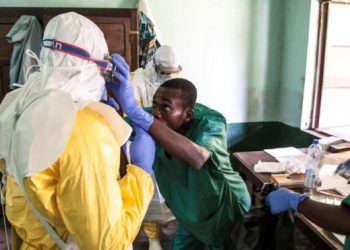
Nigeria, through the years, has been making efforts to address economic challenges and promote sustainable development. Initiatives include economic diversification away from oil, improvements in infrastructure, investment in agriculture, and measures to enhance the business environment. Policymakers continue to work towards reducing unemployment, fostering innovation, and attracting foreign investment to support long-term economic stability.

However, there are persistent challenges, such as corruption, which historically included issues such as bribery, embezzlement, and nepotism in both the public and private sectors; inadequate infrastructure affecting sectors such as health, transportation, energy, and telecommunications; high levels of poverty; and unemployment. Economic diversification efforts are underway to reduce reliance on oil and promote a more sustainable and inclusive growth trajectory.

Nigerian economy in the past 2 years

Nigeria has achieved significant economic milestones, including being one of Africa’s largest economies and a key player in the continent’s economic landscape. The country has made efforts to diversify its economy, enhance infrastructure, and attract foreign investment. However, challenges like oil dependency amongst other natural resources in the country, predictable inflation, rising insecurity, and unemployment persist, requiring ongoing efforts for sustained economic growth.

Since the COVID-19 pandemic, the country’s economic growth has decreased, as has the GDP per capita, due to “monetary and exchange rate policy aberrations, increasing fiscal deficits due to lower oil production and a costly fuel subsidy programme, increased trade protectionism, and external shocks. Weakened economic fundamentals led the country’s persistent inflation to reach a 17-year high of 25.8% in August 2023, which, in combination with sluggish growth, is leaving millions of Nigerians in poverty,” says a World Bank report.

Nigeria faced economic challenges, most especially in 2022, comprising fluctuating oil prices, inflation, and unemployment. Economic performance in 2024 could change if many policies are fully signed and executed.

In recent years, there have been reports of companies leaving the country and establishing just distribution centres or warehouses in Nigeria. Although many of the companies to be mentioned in this article are said to have announced their exits before May 2023,.

Since the announcement of the exit by these companies, many could predict that it would take virtually a year for some to start packing, but to the surprise of many, four months later, after the most notable Unilever announced its exit, GlaxoSmithKline plc, popularly known as GSK, a company responsible for manufacturing that researches and develops a broad range of innovative products in three primary areas of pharmaceuticals, vaccines, and consumer healthcare, announced its production process in Nigeria.

Other multinational companies that have left the country include Sanofi, a French pharmaceutical multinational that subtly announced on November 8, 2023, its exit from Nigerian operations. The company said it has appointed a third-party distributor to handle its commercial portfolio of medicines starting in February 2024.

Read also

Mineral Beneficiation: A Pipedream of Prosperity in an Unequal Financial Architecture

Ghana’s economy expands 6% in second quarter, driven by communications sector

Gambian leader vows power boost after violent blackout protests

Equinor, which left the country after over 30 years in Nigeria, announced that it had reached an agreement to sell its Nigerian business to Chappal Energies. The closing of the transaction, which is subject to the satisfaction of certain conditions, including all regulatory and contractual approvals, led to Equinor effectively exiting the country. Also, Procter & Gamble( P&G), a multinational consumer goods corporation, has announced its exit. It is one of the world’s largest and most diversified consumer goods companies, with a wide range of products in categories such as beauty, grooming, health care, fabric care, and home care.

These mentioned companies are among the few that have operated in Nigeria for decades and were top contributors to Nigeria’s fast-moving consumer goods (FMCG) market. Some of the companies listed their reasons to leave the country, while others withheld theirs.

Some of the challenges faced by local and multinational manufacturers in Nigeria before 2023 had been power crises, constant devaluation of the naira, and forex availability coupled with other stringent policies of the government.

According to the Nigerian Tribune, “following President Bola Ahmed Tinubu’s inauguration on May 29, 2023, many things changed, including inflation on all fronts. In his inaugural speech, the President announced fuel subsidy removal, which has now affected Nigerians of all social strata, and directed the Central Bank of Nigeria (CBN) to begin monetary policy reforms.” The Nigerian Tribune also reports that the business-based Investors and Exporters (I&E) window replaced the central bank’s formerly various exchange rate windows. However, the lack of forex continues despite the CBN’s devaluation and unification of foreign currencies. All of these arguably affected multinationals whose businesses largely depended on forex availability, and the purchasing power of Nigerians was greatly eroded by rising inflation.

Challenges

Nigeria continues to face many social and economic challenges, such as:

  • High unemployment rates, which contribute to social and economic instability. Unemployment is a significant concern in Nigeria. The country has faced challenges in providing employment opportunities or alternatives for its growing population.
  • Insecurity, which affects economic growth as it discourages investment, raises unemployment, and reduces government income,.
  • Inadequate infrastructure, such as power supply and transportation, poor road networks, and inadequate public transportation, which hinder the movement of goods and people, and insufficient water supply and sanitation infrastructure, can affect public health and quality of life.
  • Persistent inflation deteriorates purchasing power and affects the cost of living. Inflation in Nigeria has been a trouble, impacting price stability and purchasing power. Factors such as fluctuations in global oil prices, high food prices, and structural issues contribute to inflationary uncertainties in the country. The government employs monetary and fiscal measures to manage inflation, but it remains a challenge that requires ongoing attention for economic stability.
  • Heavy reliance on oil revenue makes the economy vulnerable to fluctuations in oil prices; variations in oil prices impact government revenue, foreign exchange earnings, and overall economic stability. Overemphasis on oil revenue underscores the need for economic diversification to promote a more sustainable and resilient economy. Corruption at various levels hampers economic growth and deters foreign investment in the sector.

Addressing these challenges in 2024 requires comprehensive and sustained efforts from both the government and private sectors to identify the challenges, formulate a policy to tackle them, monitor them, and deliver accountability to move the country forward.

Prospects for 2024

Many financial and economic experts have projected that Nigeria’s economy will rise to 3.3 percent from 2.9 percent in 2023. The World Bank projected that Nigeria’s per capita income amongst other sub-Saharan African regions will return to its pre-pandemic level by 2024–2025. The nation’s economy is predicted to gradually improve in the upcoming years, according to the bank’s Global Economic Prospects report for January 2024 projection. This is because of the government’s implemented macro-fiscal reforms.

According to the report, “The Sub-Saharan African region, including Nigeria, experienced a slowdown in economic growth to an estimated 2.9 percent in 2023, primarily due to country-specific challenges such as higher input prices for businesses in Nigeria.”

The country’s President, Bola Ahmed Tinubu, who was sworn into office on May 29, 2023, having won the February 2023 presidential election, has vowed to turn the economy around. He recently signed the N28.7 trillion 2024 appropriation bill into law at the Presidential Villa Abuja, which can be a great opportunity to move the already flattened economy towards an increased GDP per income but still needs implementation by the stakeholders.

For many years, Nigeria has been underperforming compared to how it has been projected to be by economic experts. For economic growth to be restored to how it has been projected, public goods should be handled by the officeholders. Implementing an effective economic policy requires proper execution and monitoring. Key steps include robust communication with stakeholders, efficient resource allocation, regular assessment of policy outcomes, and flexibility to adapt based on economic shifts. Fostering collaboration between government, businesses, and the public is crucial for sustained economic growth. There are also hopes that various projects underway or completed, such as the Dangote oil refinery, will contribute to the country’s economic recovery.

Addressing a troubled economy like Nigeria’s often involves a combination of fiscal and monetary policies. It needs to tackle unemployment, provide initiatives to stimulate economic growth, promote entrepreneurship, and enhance vocational training programmes to ensure inclusive economic development. There are also needs to enforce strategies to diversify the economy, reduce dependency on specific sectors, promote a more balanced and robust economic structure, and allocate resources for infrastructure development, education, and likewise innovation to stimulate economic growth and resilience.

Finally, implementing sound economic policies, investing in infrastructure, promoting innovation, fostering a business-friendly environment, and addressing social inequalities can contribute to economic recovery. Additionally, collaborating with international partners and organisations may provide support and resources that would create more jobs for its citizens, which would also reduce the rates of unemployment in the country.

ـــــــــــــــــــــــــــــــــــ

This article expresses the views and opinions of the author and does not necessarily reflect the views of Qiraat Africa and its editors.
Source: Qiraat Africa
Tags: Bola Ahmed TinubuEconomic ChallengesNigerian economyWorld Bank
Mustapha Abiodun Yaqub

Mustapha Abiodun Yaqub

Nigerian economic analyst and postgraduate student based in Ontario, Canada.

Related Posts

International financial crime watchdog removes Senegal from ‘grey list,’ adds some others
Economy

Senegal will reprofile debt instead of restructuring, prime minister says

September 8, 2026
Cape Verde
Featured

Cape Verde declares two days of mourning for 25 victims of bus crash

September 7, 2026
Nigeria considers crude supply reforms to aid Dangote, other refiners
Energy

Nigeria’s Dangote oil refinery signs IPO documents before landmark share sale

September 7, 2026
Niger says it regains control of airbase after soldiers mutiny
Featured

Niger blames France for inciting soldiers’ mutiny

September 6, 2026
Queiroz re-appointed Ghana coach two months after stepping down
Featured

Queiroz re-appointed Ghana coach two months after stepping down

September 3, 2026
Uber exits Nigeria and Uganda as competition and costs rise
East Africa

Uber exits Nigeria and Uganda as competition and costs rise

September 3, 2026

Search Qiraat Africa

No Result
View All Result

Follow on Twitter

Follow @africanqiraat

Trending

Angola approves sale of 34% stake in Standard Bank unit seized from tycoon

Angola approves sale of 34% stake in Standard Bank unit seized from tycoon

September 6, 2026
Tunka Manin (c. 1010–1078), the last ruler of the Ghana Empire

Tunka Manin (c. 1010–1078), the last ruler of the Ghana Empire

December 12, 2025
Kumbi Saleh, the capital of the ancient Ghana Empire

Kumbi Saleh, the capital of the ancient Ghana Empire

October 13, 2025
Africa’s 10 Strongest Currencies in June 2026

Africa’s 10 Strongest Currencies in June 2026

July 8, 2026
Brief History and Culture of the City of Lagos, Nigeria

Brief History and Culture of the City of Lagos, Nigeria

July 24, 2024
Samori Touré (1830-1900): Military leader and founder of Wassoulou Empire

Samori Touré (1830-1900): Military leader and founder of Wassoulou Empire

January 11, 2026

Facebook

Sections

  • About Us
  • Privacy Policy
  • Opinion
  • Infographics
  • News
  • Analysis
  • Figures
  • Culture & Literature
  • Follow Ups
  • Historical Readings
  • Interview
  • Studies


© Copyright Qiraat Africa. Developed by Bunnaj Media .

No Result
View All Result
  • News
  • Analysis & Report
  • Studies
  • Opinion
  • Interview
  • Culture & Literature
  • Figures
  • Historical Readings
  • Regions

© 2021 Copyright Qiraat Africa.