



Qiraat Africa
عربي  |  Fr
Advertisement
  • News
    • All
    • Climate Change
    • Economy
    • Education
    • Energy
    • Health
    • Migration
    • Mining
    • Politics
    • Security
    • Society
    • Sport
    AfDB approves $8.6 million grant to boost non-oil revenue mobilisation in South Sudan

    South Sudan and UN failed to heed massacre warnings-Amnesty International

    DRC opposition vows to resist constitutional changes under Tshisekedi

    DRC opposition vows to resist constitutional changes under Tshisekedi

    Ghana unveils new cedi banknotes celebrating national heritage

    Ghana unveils new cedi banknotes celebrating national heritage

    South Sudan’s presidency announces postponement of long-delayed election by two years

    South Sudan vote: UN warns political transition must hold beyond polling day

    Ethiopian coffee exports earn more than $500 million in just two months

    Ethiopia’s coffee exports fetch more than $870 million

    Ghana discovers hydrocarbons in new type of offshore reservoir

    Ghana discovers hydrocarbons in new type of offshore reservoir

    Nigeria’s state-owned NNPC records $4.2 billion after-tax profit in 2025

    Nigeria approves 145 new oil wells so far this year, regulator says

    Uganda to impose 21-day quarantine on returning citizens with Congo travel history

    Congo’s Ebola cases surpass 11,000, government data show

    Senegal vows action on smugglers after latest migrant boat tragedy

    Senegal vows action on smugglers after latest migrant boat tragedy

  • Analysis
    • All
    • Climate Change
    • Digital & Tech
    • Economy
    • Energy & Power
    • Health
    • Politics
    • Security
    • Society
    What is standing in the way of science’s ability to eradicate malaria? 3 areas where action can have an influence

    What is standing in the way of science’s ability to eradicate malaria? 3 areas where action can have an influence

    African Union summit clouded by Saudi-UAE rivalry in Horn of Africa

    Opportunities and Challenges of the AU’s Education in Emergencies Initiative

    Abiy Ahmed Tested: How the Tigray Alliance Is Reshaping Ethiopia’s Security—And What Comes Next

    Abiy Ahmed Tested: How the Tigray Alliance Is Reshaping Ethiopia’s Security—And What Comes Next

    UN report says Africa’s share of global trade stands at 3 percent

    AfCFTA: The Trade Rules Poised to Weave Africa’s Fragmented Textile Markets into One

    The global panel on inequality needs African evidence: here’s how it could work

    The global panel on inequality needs African evidence: here’s how it could work

    Why Africa needs a new credit agency

    Why Africa needs a new credit agency

    Japan signs deal with Namibia to explore for rare earth minerals

    Africa’s mineral strength is wasted if countries don’t work together – new report

    Ethiopia: at least 40 army allies killed in drone strike

    Ethiopia’s peace deal is unravelling – what went wrong with the Tigray agreement

    DRC on a mission to financing the world’s largest hydropower dam

    DR Congo: The INGA Dam Paradox

  • Studies
    China could drive Africa’s renewable energy revolution, report says

    A study shows wind and solar projects in Kenya and South Africa don’t always benefit the communities that host them

    Angola’s lengthy war shaped the way farmers utilised fire—why it matters

    Angola’s lengthy war shaped the way farmers utilised fire—why it matters

    Schooling is the most severely affected by conflict when children are the target – Study

    Schooling is the most severely affected by conflict when children are the target – Study

    Pensions for Botswana’s elderly are expanding, but care services are lacking—study follows 20 years

    Pensions for Botswana’s elderly are expanding, but care services are lacking—study follows 20 years

    60 new cosmic structures have been discovered by South Africa’s MeerKAT telescope, which is mapping previously unseen gaps between galaxies

    60 new cosmic structures have been discovered by South Africa’s MeerKAT telescope, which is mapping previously unseen gaps between galaxies

    Benin government says armed forces foil coup attempt

    Coup contagion? A rash of African power grabs suggests copycats are taking note of others’ success

    One in three South Africans have never heard of AI: what this means for policy

    One in three South Africans have never heard of AI: what this means for policy

    Social Media as a Catalyst for the Spread of Dangerous Wealth Ritual Myths

    Social Media as a Catalyst for the Spread of Dangerous Wealth Ritual Myths

    Overcoming Education Barriers for Young Mothers in Sub-Saharan Africa

    Overcoming Education Barriers for Young Mothers in Sub-Saharan Africa

  • Infographics
  • Figures
    South Sudan’s presidency announces postponement of long-delayed election by two years

    South Sudan vote: UN warns political transition must hold beyond polling day

    Usman Dan Fodio (1754-1817): Teacher, philosopher, and revolutionary reformer

    Usman Dan Fodio (1754-1817): Teacher, philosopher, and revolutionary reformer

    Sokhna Magat Diop (1917–2003): Senegalese cleric

    Sokhna Magat Diop (1917–2003): Senegalese cleric

    Ahmad Baba al-Timbukti (1556-1627): Writer and scholar

    Ahmad Baba al-Timbukti (1556-1627): Writer and scholar

    Namibia: Anger over Dubai COP28 trip by president Geingob’s children

    Hage Geingob (1941–2024): Former President of Namibia

    Cape Verde president says governments must discuss colonial reparations

    José Maria Neves: President of Cape Verde

    Jorge Bom Jesus: Linguist and former Prime Minister of São Tomé and Príncipe

    Jorge Bom Jesus: Linguist and former Prime Minister of São Tomé and Príncipe

    Joseph Leabua Jonathan (1914-1987): Former Prime Minister of Lesotho

    Joseph Leabua Jonathan (1914-1987): Former Prime Minister of Lesotho

    Gambia’s president Barrow faces backlash over ‘death wish’ on archrival

    Adama Barrow: President of the Republic of The Gambia

  • History
    Kwanza Corridor-Cultural Landscape, Angola

    Kwanza Corridor-Cultural Landscape, Angola

    Gasumo, the southernmost source of the Nile, Burundi

    Gasumo, the southernmost source of the Nile, Burundi

    Loango ancient slavery harbour, the Republic of the Congo

    Loango ancient slavery harbour, the Republic of the Congo

    Archaeological site of Tchitundu-Hulu, Angola

    Archaeological site of Tchitundu-Hulu, Angola

    Manovo-Gounda St. Floris National Park, Central African Republic

    Manovo-Gounda St. Floris National Park, Central African Republic

    Lake Malawi (Lake Nyasa) National Park, Malawi

    Lake Malawi (Lake Nyasa) National Park, Malawi

    Fasil Ghebbi, Gondar Region, Ethiopia

    Fasil Ghebbi, Gondar Region, Ethiopia

    Bwindi Impenetrable National Park, Uganda

    Bwindi Impenetrable National Park, Uganda

    Fort Jesus, Mombasa, Kenya

    Fort Jesus, Mombasa, Kenya

  • Others
    • Culture / Literature
    • Interview
    • Opinion
  • Countries
    • Country profiles
    • Regions
      • Central Africa
      • East Africa
      • Southern Africa
      • West Africa
No Result
View All Result
Qiraat Africa
عربي  |  Fr
No Result
View All Result
Home Regions East Africa

Eduardo Mondlane (1920-1969): Mozambican Revolutionary and Anthropologist

May 14, 2026
Eduardo Mondlane (1920-1969): Mozambican Revolutionary and Anthropologist

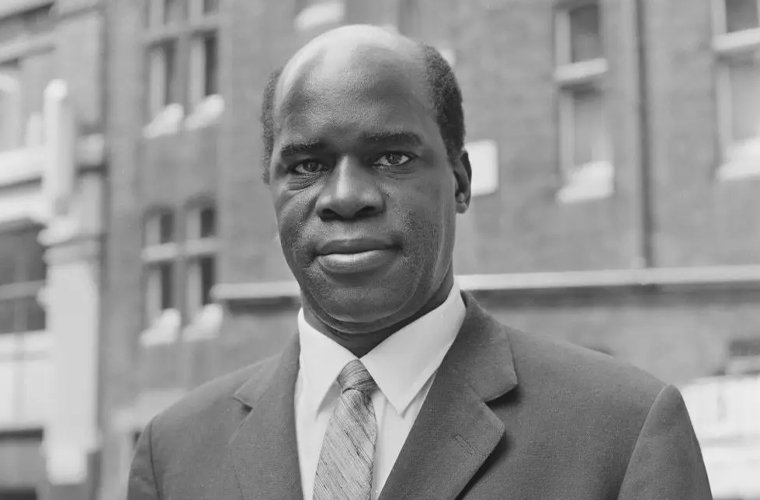
Eduardo Mondlane.

Share on FacebookShare on Twitter

Eduardo Chivambo Mondlane was born on June 20, 1920, in the Manjacaze town of Gaza Province in southern Mozambique, then under Portuguese colonial rule. He grew up in a traditional rural environment, the fourth of six children of a Tsonga tribal chief. His education began in local missionary schools run by the Swiss Presbyterian Church, where his academic excellence allowed him to move to the capital, Lourenço Marques (now Maputo), for secondary school. This was a rare and severely restricted opportunity for indigenous people under colonial laws that classified Africans as “natives” and barred them from access to higher education.

In 1948, Mondlane secured a Presbyterian scholarship to study social sciences at the University of the Witwatersrand in Johannesburg, South Africa. However, his stay there was short-lived. He was expelled from the country in 1949 following the National Party’s rise to power and the official implementation of apartheid, which resulted in the revocation of his residency permit as a Black foreign student. This expulsion forced him to return to Mozambique, where he was briefly detained and interrogated by the Portuguese political police (PIDE) about his student political activities.

Realising that continuing his education in Africa had become too risky, Mondlane went to Portugal in 1950 and enrolled at the University of Lisbon. There, he met a select group of African students who would later lead liberation movements in the Portuguese colonies, such as Amílcar Cabral and Agostinho Neto. Due to close surveillance by the Portuguese intelligence services, Mondlane decided to leave Europe and travel to the United States after receiving a full scholarship from the Institute of International Education.

He attended Oberlin College in Ohio, where he earned a bachelor’s degree in anthropology and sociology in 1953. He then pursued graduate studies at Northwestern University in Evanston, Illinois, where he received his master’s and doctoral degrees in sociology and anthropology by 1960. His academic research focused on African social structures and the effects of cultural conflict resulting from colonial penetration.

This academic excellence opened doors for him at the United Nations, where he served as a research officer in the Secretariat of the Trusteeship Council for Non-Self-Governing Territories from 1957 to 1961. This international position provided him with extensive experience in the mechanisms of international politics and an understanding of the dynamics of liberation movements in other African colonies before he moved in 1961 to teach anthropology at Syracuse University in New York.

The year 1961 marked a turning point in Mondlane’s professional and personal life. He undertook an official visit to Mozambique under the auspices of the United Nations, during which he witnessed firsthand the deteriorating economic and social conditions and the rising tide of popular discontent against the Portuguese administration. These observations led him to resign from his UN post and leave his stable academic career in the United States, heading to newly independent Tanzania under the leadership of Julius Nyerere, which had become a hub for Mozambican opposition political forces.

In June 1962, Mondlane successfully united three independent political organisations operating in exile: the African National Union of Mozambique (MANU), the National Democratic Union of Mozambique (UDENAMO), and the African Union for an Independent Mozambique (UNAMI). This merger resulted in the formation of the Front for the Liberation of Mozambique, commonly known as FRELIMO. During FRELIMO’s first congress, held in Dar es Salaam in September of that year, Mondlane was elected president of the movement thanks to his strong academic background, diplomatic skills, and ability to formulate political programmes that transcended the ethnic and tribal divisions that had hindered unified national action.

He began laying the foundations for FRELIMO’s rigorous organisational structure, drawing on his anthropological knowledge to understand the demographic and social makeup of the Mozambican people. After diplomatic efforts to persuade the regime of Portuguese Prime Minister António de Oliveira Salazar to enter into negotiations for self-determination failed, FRELIMO decided to resort to direct military action. On September 25, 1964, FRELIMO officially declared the start of its armed struggle against colonialism through coordinated attacks targeting Portuguese military positions in the north of the country.

Mondlane adopted a strategy of protracted guerrilla warfare, rejecting the unrealistic notion of a swift military victory given the significant disparity in weaponry and training favouring the Portuguese army, which was supported by NATO. His strategy comprised two main pillars: persuading peasants in remote areas of the revolution’s goals and organising them to ensure logistical support and safe haven for the fighters; and establishing schools, health centres, and local administrative offices in the “liberated areas” under the Front’s control to demonstrate the movement’s ability to manage the population’s affairs and provide a developmental alternative to the colonial system.

Mondlane distinguished himself by combining two complementary qualities: strategic thinking and practical action. He employed anthropological research tools to decipher the complexities of tribalism within Mozambican society, offering a new concept of national identity that transcended narrow affiliations. He believed that Portuguese colonialism deliberately used a “divide and rule” policy to fuel ethnic conflicts between the north and south, and that confronting this challenge required forging a unified national culture forged in the crucible of the shared liberation struggle.

Ideologically, Mondlane adopted a pragmatic, social-democratic approach, distancing himself from blindly aligning with either of the Cold War blocs. Despite FRELIMO receiving military and financial support from the Soviet Union and the People’s Republic of China, Mondlane maintained close diplomatic relations with Western countries, particularly Scandinavian nations, as well as liberal organisations and churches in the United States, to secure financial and humanitarian support for educational and medical projects in the liberated areas. He formulated his comprehensive vision of the Portuguese colonial structure and the future of Mozambique in his only book, “The Struggle for Mozambique”, published in 1969 shortly before his death.

Managing FRELIMO was no easy task. Throughout his leadership, Mondlanie faced major internal challenges that threatened the movement’s unity and cohesion. The leadership was divided between a faction advocating for concentrated attacks in urban centres to achieve a swift victory and the faction, led by Mondlani, which insisted on a protracted rural war of attrition. Sharp disagreements arose between the radical wing, which adhered to strict Marxism-Leninism, and the more moderate, nationalist wing, represented by Mondlane, which sought to maintain a policy of non-alignment and political pluralism. Accusations arose from some leaders in the northern provinces (such as Cabo Delgado) that the leadership of the Front was monopolised by educated elites from the south. This led to a wave of defections and internal assassinations within the movement in the late 1960s.

Read also

South Sudan vote: UN warns political transition must hold beyond polling day

Ethiopia’s coffee exports fetch more than $870 million

Regional conflicts raise fears of renewed piracy in the Gulf of Aden

These crises intensified during the Front’s second congress, held in 1968 in the liberated Mozambican territory of Niassa province. Although Mondlane succeeded in being re-elected president and consolidating his military strategy, underlying tensions continued to threaten the organisation’s stability.

On February 3, 1969, Eduardo Mondlane was assassinated in Dar es Salaam, Tanzania, by a bomb hidden inside a book sent to his regional office. The assassination sparked widespread controversy and complex investigations into who was responsible. Suspicion fell primarily on the Portuguese political police (PIDE) as part of their strategy to eliminate leaders of African liberation movements to weaken the morale of the fighters and dismantle the movements from within. Although subsequent analyses did not rule out the possibility of coordination or exploitation of deep-seated conflicts and rival factions within FRELIMO itself to facilitate the operation.

Mondlane’s death left a significant leadership vacuum in the Mozambican liberation movement. A temporary tripartite council assumed leadership of the FRELIMO before Samora Machel took over. Machel led the movement toward adopting a clear Marxist-Leninist line and continuing the struggle until the collapse of the Portuguese regime following the Carnation Revolution in 1974 and Mozambique’s formal independence in 1975.
Tags: Eduardo MondlaneGazaLiberation Front of Mozambique (FRELIMO)Mozambique

Related Posts

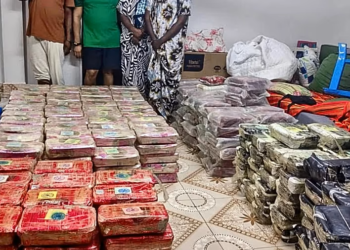
Kenya seizes $27m worth of methamphetamine in coastal drug raid
East Africa

Kenya seizes $27m worth of methamphetamine in coastal drug raid

November 9, 2026
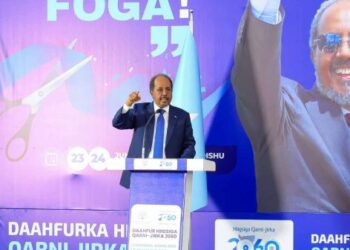
Somalia launches Centennial Vision 2060 roadmap for ‘peace, prospertity and progress’
East Africa

Political chaos in Somalia after court ruling against president’s term extension

November 8, 2026
Tanzania’s top opposition party disqualified from polls, election commission says
East Africa

Tanzanian opposition celebrates ‘victorious’ day after leader avoids death penalty

November 8, 2026
Ethiopia and Sudan close each other’s consulates after allegations of meddling in civil war
East Africa

Ethiopia and Sudan close each other’s consulates after allegations of meddling in civil war

November 5, 2026
Equatorial Guinea and Gabon resolve 50-year border dispute
East Africa

Kenya’s Phoebe Okowa elected to International Court of Justice

November 4, 2026
Ethiopia’s Premier Abiy Ahmed visits Sudan’s army chief on Red Sea coast
East Africa

Ethiopia expels Sudanese diplomats after fresh allegations of support for RSF

November 4, 2026

Search Qiraat Africa

No Result
View All Result

Follow on Twitter

Follow @africanqiraat

Trending

Africa’s 10 Strongest Currencies in June 2026

Africa’s 10 Strongest Currencies in June 2026

July 8, 2026
Tunka Manin (c. 1010–1078), the last ruler of the Ghana Empire

Tunka Manin (c. 1010–1078), the last ruler of the Ghana Empire

December 12, 2025
Kumbi Saleh, the capital of the ancient Ghana Empire

Kumbi Saleh, the capital of the ancient Ghana Empire

October 13, 2025
Brief History and Culture of the City of Lagos, Nigeria

Brief History and Culture of the City of Lagos, Nigeria

July 24, 2024
The Great Mosque of Djenne, Mali

The Great Mosque of Djenne, Mali

March 25, 2025
Garre/Garee/Gurrehb, Somali pastoralist clan

Garre/Garee/Gurrehb, Somali pastoralist clan

August 17, 2026

Facebook

Sections

  • About Us
  • Privacy Policy
  • Opinion
  • Infographics
  • News
  • Analysis
  • Figures
  • Culture & Literature
  • Follow Ups
  • Historical Readings
  • Interview
  • Studies


© Copyright Qiraat Africa. Developed by Bunnaj Media .

No Result
View All Result
  • News
  • Analysis & Report
  • Studies
  • Opinion
  • Interview
  • Culture & Literature
  • Figures
  • Historical Readings
  • Regions

© 2021 Copyright Qiraat Africa.