





















The Mundang people are one of the main ethnic groups inhabiting the border regions between Cameroon, Chad, and Nigeria. Historically, their population and political influence have been concentrated in the Mayo-Kebbi region of southwestern Chad and the northern region of Cameroon, with a smaller presence in Adamawa State, Nigeria. Linguistically, they belong to the Adamawa language family, which is part of the Niger-Congo language family. Despite the colonial political divisions that dispersed them across these three countries, they form a cohesive cultural unit.
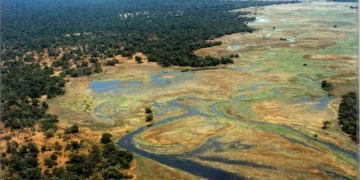
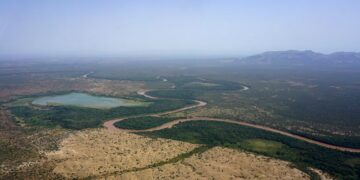
The Mundang are spread across a savanna-like geographical area, with their presence concentrated in the following locations:
- Chad: The town of Léré is their most important spiritual and political centre, along with areas such as Binder and Gounou Gaya.
- Cameroon: They are concentrated in the Mayo-Louti region, particularly in the town of Guidder (or Gidar) and the surrounding villages.
- Nigeria: They are distributed in border areas within Adamawa State, often overlapping with other groups such as the Fali people (also known as Bana in Nigeria) and Guidder.
Some statistical estimates indicate their total population exceeds one million, distributed in varying proportions, with Chad hosting the largest group, followed by Cameroon, and then Nigeria. While they are concentrated in Chad today, historical accounts suggest the Mundang originated in Cameroon and migrated into Chad. Some accounts also point to the formation of a unified Mundang political entity beginning in the 18th century.
The Kingdom of Mundang (often referred to as the Moundang kingdom or chiefdom) was able to maintain its independence for extended periods thanks to its military organisation and its geographically protected location surrounded by hills. During the 19th century, the Mundang faced significant military pressure from the expansion of the Sokoto Caliphate and the Fulani (Peul) wars under Modibbo Adama. Although some areas fell under the influence of the Adamawa Emirate, Léré maintained a semi-autonomous status and remained a symbol of Mundang national identity.
Mundang society is based on a complex clan system, where the group is divided into dozens of clans that follow a patrilineal lineage. Each clan has its own totem (an animal or plant that is forbidden to hunt or eat) and specific responsibilities within the community.
The traditional king or leader is not only a political leader but also a sacred figure with religious and ritual authority. The king is surrounded by a council of elders who are responsible for resolving disputes, distributing agricultural land, and organising seasonal rituals. This system still exists in an officially consultative capacity in Chad and Cameroon, where central governments recognise traditional authorities as intermediaries between the state and the people.
The religious landscape of the Mundang is diverse, with traditional beliefs intertwined with Islam, Christianity and traditional beliefs.
The Mundang economy is primarily based on agriculture and livestock herding and is closely tied to the seasonal rainy season. They cultivate sorghum (millet) as a staple food, along with peanuts, cowpeas, and sweet potatoes. Cotton is the primary cash crop, especially in Chad and Cameroon, where vast areas are dedicated to its cultivation and supply to national companies.
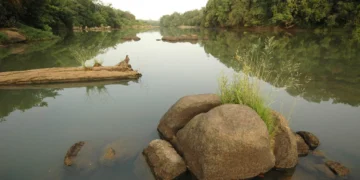
The Mundang people raise cattle, goats, and sheep. Livestock is used not only as a food source but also as a symbol of wealth and an essential part of the dowry in marriage contracts. They fish in Lake Lere, and women are known for their distinctive pottery with geometric designs, while men are active in traditional blacksmithing and the making of agricultural tools.
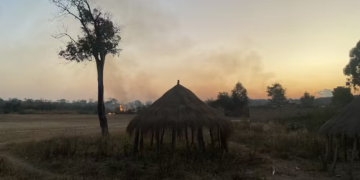
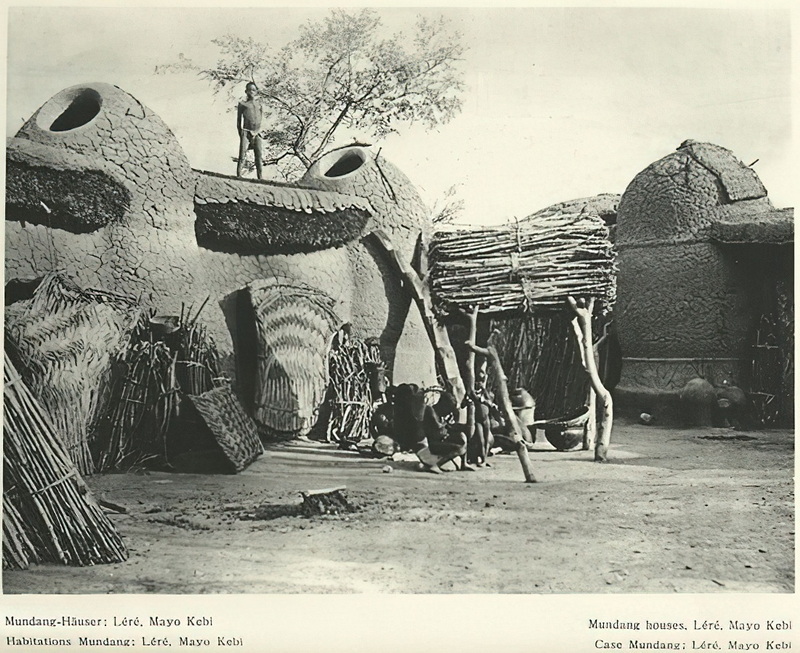
The Mundang language is a tonal language with slight dialectal variations between Léré and Guidder. It is written using the Latin alphabet and is used in local radio broadcasts and religious texts. The villages are characterised by a unique architectural style. A typical dwelling consists of a cluster of circular huts with conical thatched roofs, surrounding a central courtyard and enclosed by mud or grass walls. Separate huts are designated for sleeping, for storing grain (silos), and for housing livestock.
Traditional music is characterised by the use of wooden flutes and large drums. Group dances are performed on major occasions such as the annual festival celebrating the sorghum harvest and the beginning of the new year in the traditional calendar, where dancers wear costumes adorned with feathers and leather.
Marriage in Mundang society is a contractual process between two families, not just two individuals. The society follows an exogamy system, where marriage within the same clan is prohibited. The dowry includes the payment of a number of cattle to the bride’s family, a practice that ensures the legitimacy of the children and their lineage to the father. In the event of divorce, portions of the dowry are returned according to specific customary conditions.
The Mundang people in the three countries face common challenges resulting from modern transformations. Their regions suffer from desertification and fluctuating rainfall, which affects their food security. Despite their demographic weight, the Mundang sometimes feel marginalised in the distribution of major development projects compared to those in distant urban centres.
Competition for water and grazing resources between Mundang farmers and nomadic herders (such as the Fulani) has led to periodic conflicts requiring the intervention of traditional and governmental authorities. Also, villages are experiencing a large-scale migration of young people to cities like N’Djamena, Garoua, and Yola in search of employment opportunities, which is eroding some oral traditions and handicrafts.