







Qiraat Africa
عربي  |  Fr
Advertisement
  • News
    • All
    • Climate Change
    • Economy
    • Education
    • Energy
    • Health
    • Migration
    • Mining
    • Politics
    • Security
    • Society
    • Sport
    Former Zambian minister killed in post-election security raid

    Former Zambian minister killed in post-election security raid

    Central African Republic artisanal gold mine collapses, killing more than 100

    Central African Republic artisanal gold mine collapses, killing more than 100

    Rebels in Congo see Ebola as chance to show governing credentials

    Congo’s M23 rebels introduce new movement restrictions over Ebola concerns

    Liberia agrees to accept up to 1,200 third-country deportees from US

    Liberia agrees to accept up to 1,200 third-country deportees from US

    Kenya Airways says its fuel cost up 72% due to Middle East conflict

    Kenya Airways says its fuel cost up 72% due to Middle East conflict

    Nigeria declares state of emergency in Rivers State over pipeline vandalism

    As campaigns begin in Nigeria, Tinubu’s re-election bid puts his party on trial

    Senegal’s legislative elections: Prime minister calls for retaliation against “attacks” on supporter

    Senegal tightens asset disclosure rules amid Faye-Sonko rift

    Is Ethiopia’s Tigray barreling towards another war?

    Ethiopia: Authorities in Tigray accuse Addis Ababa of drone strike near Mekelle

    Nigeria considers crude supply reforms to aid Dangote, other refiners

    Nigeria’s Dangote Refinery secures $1 billion underwriting ahead of IPO

  • Analysis
    • All
    • Climate Change
    • Digital & Tech
    • Economy
    • Energy & Power
    • Health
    • Politics
    • Security
    • Society
    African Finance Corp says Gabon political situation a ‘good coup’

    Why African countries must rethink how they grow their economies

    DR Congo says it will receive third-country deportees under new deal with US

    Beyond the Outbreak: How Ebola Reshaped East & Central Africa’s Economies

    What Happens After Dandora? Kenya’s Green Transition Faces Its Hardest Test

    What Happens After Dandora? Kenya’s Green Transition Faces Its Hardest Test

    African entrepreneurs work in challenging environments, and others may benefit from the skills they have developed

    African entrepreneurs work in challenging environments, and others may benefit from the skills they have developed

    Ethiopia’s 2026 General Election: Progress, Challenges, and Implications

    Ethiopia’s 2026 General Election: Progress, Challenges, and Implications

    Israeli recognition of Somaliland is a ‘calculated distraction,’ Somali diplomat says

    Sixty-Six Years On, the Promise of Somali Independence Remains Unfulfilled.

    Senegal’s top opposition leader Sonko vows to help win March 24 election

    Senegal at a Political Crossroads: The Faye–Sonko Rivalry and the Future of Democratic Governance

    Ulysses in isiZulu: Why an African translation of the classic Irish novel is important in today’s world

    Ulysses in isiZulu: Why an African translation of the classic Irish novel is important in today’s world

    The promise and risks of Kenya’s ambitious new strategy to close refugee camps

    The promise and risks of Kenya’s ambitious new strategy to close refugee camps

  • Studies
    China could drive Africa’s renewable energy revolution, report says

    A study shows wind and solar projects in Kenya and South Africa don’t always benefit the communities that host them

    Angola’s lengthy war shaped the way farmers utilised fire—why it matters

    Angola’s lengthy war shaped the way farmers utilised fire—why it matters

    Schooling is the most severely affected by conflict when children are the target – Study

    Schooling is the most severely affected by conflict when children are the target – Study

    Pensions for Botswana’s elderly are expanding, but care services are lacking—study follows 20 years

    Pensions for Botswana’s elderly are expanding, but care services are lacking—study follows 20 years

    60 new cosmic structures have been discovered by South Africa’s MeerKAT telescope, which is mapping previously unseen gaps between galaxies

    60 new cosmic structures have been discovered by South Africa’s MeerKAT telescope, which is mapping previously unseen gaps between galaxies

    Benin government says armed forces foil coup attempt

    Coup contagion? A rash of African power grabs suggests copycats are taking note of others’ success

    One in three South Africans have never heard of AI: what this means for policy

    One in three South Africans have never heard of AI: what this means for policy

    Social Media as a Catalyst for the Spread of Dangerous Wealth Ritual Myths

    Social Media as a Catalyst for the Spread of Dangerous Wealth Ritual Myths

    Overcoming Education Barriers for Young Mothers in Sub-Saharan Africa

    Overcoming Education Barriers for Young Mothers in Sub-Saharan Africa

  • Infographics
  • Figures
    Al-Hajj Salim Suwari (fl. c. 13th–15th century): West African Soninke Islamic scholar

    Al-Hajj Salim Suwari (fl. c. 13th–15th century): West African Soninke Islamic scholar

    Strive Masiyiwa: Zimbabwean businessman and philanthropist

    Strive Masiyiwa: Zimbabwean businessman and philanthropist

    Diébédo Francis Kéré: Burkinabé-German architect

    Diébédo Francis Kéré: Burkinabé-German architect

    Herbert Wigwe (1966-2024): Nigerian banker and businessman

    Herbert Wigwe (1966-2024): Nigerian banker and businessman

    Senegal president names new finance, energy ministers in reshuffle

    Macky Sall: Former President of Senegal

    Marcus Garvey (1887-1940): Activist, Black nationalist, and Pan-Africanist

    Marcus Garvey (1887-1940): Activist, Black nationalist, and Pan-Africanist

    John B. Russwurm (1799–1851): Jamaican-born American abolitionist, publisher, and colonial governor

    John B. Russwurm (1799–1851): Jamaican-born American abolitionist, publisher, and colonial governor

    Winnie Mandela (1936-2018): South African politician and anti-apartheid activist

    Winnie Mandela (1936-2018): South African politician and anti-apartheid activist

    Abdias do Nascimento (1914-2011): Prominent African Brazilian scholar, artist, and politician

    Abdias do Nascimento (1914-2011): Prominent African Brazilian scholar, artist, and politician

  • History
    Aldabra Atoll, Seychelles

    Aldabra Atoll, Seychelles

    Le Morne Cultural Landscape, Mauritius

    Le Morne Cultural Landscape, Mauritius

    Mount Nimba Strict Nature Reserve, Guinea and Côte d’Ivoire

    Mount Nimba Strict Nature Reserve, Guinea and Côte d’Ivoire

    Sangha Trinational, north-western Congo Basin

    Sangha Trinational, north-western Congo Basin

    Kasubi Tombs, Kampala, Uganda

    Kasubi Tombs, Kampala, Uganda

    Dja Faunal Reserve, Cameroon

    Dja Faunal Reserve, Cameroon

    Laas Geel, Somalia

    Laas Geel, Somalia

    Lakes Of Ounianga, Chad

    Lakes Of Ounianga, Chad

    Nok Caves, Togo

    Nok Caves, Togo

  • Others
    • Culture / Literature
    • Interview
    • Opinion
  • Countries
    • Country profiles
    • Regions
      • Central Africa
      • East Africa
      • Southern Africa
      • West Africa
No Result
View All Result
  • News
    • All
    • Climate Change
    • Economy
    • Education
    • Energy
    • Health
    • Migration
    • Mining
    • Politics
    • Security
    • Society
    • Sport
    Former Zambian minister killed in post-election security raid

    Former Zambian minister killed in post-election security raid

    Central African Republic artisanal gold mine collapses, killing more than 100

    Central African Republic artisanal gold mine collapses, killing more than 100

    Rebels in Congo see Ebola as chance to show governing credentials

    Congo’s M23 rebels introduce new movement restrictions over Ebola concerns

    Liberia agrees to accept up to 1,200 third-country deportees from US

    Liberia agrees to accept up to 1,200 third-country deportees from US

    Kenya Airways says its fuel cost up 72% due to Middle East conflict

    Kenya Airways says its fuel cost up 72% due to Middle East conflict

    Nigeria declares state of emergency in Rivers State over pipeline vandalism

    As campaigns begin in Nigeria, Tinubu’s re-election bid puts his party on trial

    Senegal’s legislative elections: Prime minister calls for retaliation against “attacks” on supporter

    Senegal tightens asset disclosure rules amid Faye-Sonko rift

    Is Ethiopia’s Tigray barreling towards another war?

    Ethiopia: Authorities in Tigray accuse Addis Ababa of drone strike near Mekelle

    Nigeria considers crude supply reforms to aid Dangote, other refiners

    Nigeria’s Dangote Refinery secures $1 billion underwriting ahead of IPO

  • Analysis
    • All
    • Climate Change
    • Digital & Tech
    • Economy
    • Energy & Power
    • Health
    • Politics
    • Security
    • Society
    African Finance Corp says Gabon political situation a ‘good coup’

    Why African countries must rethink how they grow their economies

    DR Congo says it will receive third-country deportees under new deal with US

    Beyond the Outbreak: How Ebola Reshaped East & Central Africa’s Economies

    What Happens After Dandora? Kenya’s Green Transition Faces Its Hardest Test

    What Happens After Dandora? Kenya’s Green Transition Faces Its Hardest Test

    African entrepreneurs work in challenging environments, and others may benefit from the skills they have developed

    African entrepreneurs work in challenging environments, and others may benefit from the skills they have developed

    Ethiopia’s 2026 General Election: Progress, Challenges, and Implications

    Ethiopia’s 2026 General Election: Progress, Challenges, and Implications

    Israeli recognition of Somaliland is a ‘calculated distraction,’ Somali diplomat says

    Sixty-Six Years On, the Promise of Somali Independence Remains Unfulfilled.

    Senegal’s top opposition leader Sonko vows to help win March 24 election

    Senegal at a Political Crossroads: The Faye–Sonko Rivalry and the Future of Democratic Governance

    Ulysses in isiZulu: Why an African translation of the classic Irish novel is important in today’s world

    Ulysses in isiZulu: Why an African translation of the classic Irish novel is important in today’s world

    The promise and risks of Kenya’s ambitious new strategy to close refugee camps

    The promise and risks of Kenya’s ambitious new strategy to close refugee camps

  • Studies
    China could drive Africa’s renewable energy revolution, report says

    A study shows wind and solar projects in Kenya and South Africa don’t always benefit the communities that host them

    Angola’s lengthy war shaped the way farmers utilised fire—why it matters

    Angola’s lengthy war shaped the way farmers utilised fire—why it matters

    Schooling is the most severely affected by conflict when children are the target – Study

    Schooling is the most severely affected by conflict when children are the target – Study

    Pensions for Botswana’s elderly are expanding, but care services are lacking—study follows 20 years

    Pensions for Botswana’s elderly are expanding, but care services are lacking—study follows 20 years

    60 new cosmic structures have been discovered by South Africa’s MeerKAT telescope, which is mapping previously unseen gaps between galaxies

    60 new cosmic structures have been discovered by South Africa’s MeerKAT telescope, which is mapping previously unseen gaps between galaxies

    Benin government says armed forces foil coup attempt

    Coup contagion? A rash of African power grabs suggests copycats are taking note of others’ success

    One in three South Africans have never heard of AI: what this means for policy

    One in three South Africans have never heard of AI: what this means for policy

    Social Media as a Catalyst for the Spread of Dangerous Wealth Ritual Myths

    Social Media as a Catalyst for the Spread of Dangerous Wealth Ritual Myths

    Overcoming Education Barriers for Young Mothers in Sub-Saharan Africa

    Overcoming Education Barriers for Young Mothers in Sub-Saharan Africa

  • Infographics
  • Figures
    Al-Hajj Salim Suwari (fl. c. 13th–15th century): West African Soninke Islamic scholar

    Al-Hajj Salim Suwari (fl. c. 13th–15th century): West African Soninke Islamic scholar

    Strive Masiyiwa: Zimbabwean businessman and philanthropist

    Strive Masiyiwa: Zimbabwean businessman and philanthropist

    Diébédo Francis Kéré: Burkinabé-German architect

    Diébédo Francis Kéré: Burkinabé-German architect

    Herbert Wigwe (1966-2024): Nigerian banker and businessman

    Herbert Wigwe (1966-2024): Nigerian banker and businessman

    Senegal president names new finance, energy ministers in reshuffle

    Macky Sall: Former President of Senegal

    Marcus Garvey (1887-1940): Activist, Black nationalist, and Pan-Africanist

    Marcus Garvey (1887-1940): Activist, Black nationalist, and Pan-Africanist

    John B. Russwurm (1799–1851): Jamaican-born American abolitionist, publisher, and colonial governor

    John B. Russwurm (1799–1851): Jamaican-born American abolitionist, publisher, and colonial governor

    Winnie Mandela (1936-2018): South African politician and anti-apartheid activist

    Winnie Mandela (1936-2018): South African politician and anti-apartheid activist

    Abdias do Nascimento (1914-2011): Prominent African Brazilian scholar, artist, and politician

    Abdias do Nascimento (1914-2011): Prominent African Brazilian scholar, artist, and politician

  • History
    Aldabra Atoll, Seychelles

    Aldabra Atoll, Seychelles

    Le Morne Cultural Landscape, Mauritius

    Le Morne Cultural Landscape, Mauritius

    Mount Nimba Strict Nature Reserve, Guinea and Côte d’Ivoire

    Mount Nimba Strict Nature Reserve, Guinea and Côte d’Ivoire

    Sangha Trinational, north-western Congo Basin

    Sangha Trinational, north-western Congo Basin

    Kasubi Tombs, Kampala, Uganda

    Kasubi Tombs, Kampala, Uganda

    Dja Faunal Reserve, Cameroon

    Dja Faunal Reserve, Cameroon

    Laas Geel, Somalia

    Laas Geel, Somalia

    Lakes Of Ounianga, Chad

    Lakes Of Ounianga, Chad

    Nok Caves, Togo

    Nok Caves, Togo

  • Others
    • Culture / Literature
    • Interview
    • Opinion
  • Countries
    • Country profiles
    • Regions
      • Central Africa
      • East Africa
      • Southern Africa
      • West Africa
No Result
View All Result
Qiraat Africa
عربي  |  Fr
No Result
View All Result
Home Figures

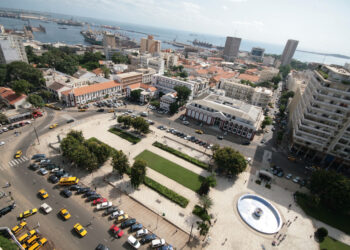
Murtala Ramat Mohammed (1938–1976): Military officer and former President of Nigeria

March 7, 2026
Murtala Ramat Mohammed (1938–1976): Military officer and former President of Nigeria
Share on FacebookShare on Twitter

General Murtala Ramat Muhammad was the fourth person to assume the presidency of Nigeria, serving as head of the Federal Military Government. Although his rule lasted only 200 days (from July 1975 to February 1976), it represented a pivotal transitional period in Nigeria’s post-independence political and administrative history.

Murtala Muhammad was born into a Fulani family in Kano, northern Nigeria, on November 8, 1938. He went to school in Kano for his primary education and then went to Barewa College Zaria, which was the school that trained most of the military and political leaders in northern Nigeria at the time.

In 1958, he joined the Nigerian Army and started his military training at the Royal Military Academy Sandhurst in the UK. This was the normal way for Commonwealth officers to do it back then. After specialising in the Signal Corps, he went back to Nigeria in 1962 as a Second Lieutenant. His first job in the field was with the United Nations peacekeeping operations in the Democratic Republic of Congo (Leopoldville), where he learned how to deal with military problems in unstable situations.

Nigeria’s first democratic system fell apart in 1966, and Murtala Mohammed was involved in the military coups that followed. A group of young army officers, including Major Chukwuma Kaduna Nzeogwu, an Igbo officer, led the coup in January 1966. This coup led to the deaths of important northern leaders, such as Prime Minister Abubakar Tafawa Balewa. Murtala Mohammed was against this coup because he saw it as an attack on the interests of the north.

Read also

Liberia agrees to accept up to 1,200 third-country deportees from US

As campaigns begin in Nigeria, Tinubu’s re-election bid puts his party on trial

Senegal tightens asset disclosure rules amid Faye-Sonko rift

Murtala Mohammed was one of the main people behind the coup in July 1966 that overthrew General Johnson Aguiyi-Ironsi. Some writers think that he first wanted the north to leave Nigeria (Araba), but pressure from within and from other countries made him agree to keep the federal union going with Yakubu Gowon in charge.

Murtala Mohammed was in charge of the 2nd Infantry Division during the Nigerian Civil War (Biafra War). His leadership during this time was marked by military decisiveness and mixed results. He tried to cross the Niger River to take the important city of Onitsha. His first two tries failed, costing his troops a lot of people and things, but he was able to do it on the third try by taking a different route overland.

One of the most controversial parts of his military career was when he was in charge of the 2nd Division. Some historical accounts and survivor testimonies say that he was in charge of the killings of civilians in Asaba after it was taken back from Biafra forces.

Once the war was over in 1970, he went back to work in the Signal Corps and quickly rose to the rank of Brigadier General. In 1974, he was named Commissioner (Minister) of Communications, a job he did while still serving in the military.

On July 29, 1975, a group of officers staged a bloodless coup that overthrew President Yakubu Gowon while he was in Kampala for the Organisation of African Unity (OAU) summit. The Supreme Military Council agreed to make Murtala Mohammed the head of state.

Mohammed restructured the government to be more collective, sharing power with his Chief of Staff, Olusegun Obasanjo, and the Chief of the Defence Staff, Theophilus Danjuma. His administration adopted a swift and decisive approach to decision-making, known locally as the “with immediate effect” style. He launched a widespread campaign against corruption and bureaucracy. More than 10,000 civil servants were dismissed or forced into early retirement on the grounds of corruption, incompetence, or age.

To reduce separatist tendencies and distribute development more equitably, Mohammed increased the number of Nigerian states from 12 to 19 in February 1976. This decision was a response to the demands of smaller ethnic groups who felt marginalised within the larger states.

Mohammed made the historic decision to move the federal capital from Lagos (which suffered from overpopulation, traffic congestion, and a peripheral geographical location) to a central, neutral location. The committee that recommended Abuja chose it because of its central location and its lack of affiliation with any of the three major ethnic groups (Hausa, Igbo, and Yoruba).

Mohammed’s rule represented a radical shift in Nigerian foreign policy, from traditional Western orientation to Afrocentrism. The most significant challenge was the civil war in Angola. While the United States and Britain supported UNITA and FNLA, Mohammed decided to recognise the Soviet-backed MPLA, considering it the only movement resisting South African intervention (the apartheid regime).

At the Organisation of African Unity summit in January 1976, he delivered a famous speech, “Africa Has Come of Age”, in which he asserted that Africa no longer needed the tutelage of the great powers and that Nigeria would use its oil wealth to support national liberation movements on the continent.

On the morning of February 13, 1976, Murtala Mohammed was assassinated in his car while travelling to his office in Ikoyi, Lagos. His motorcade lacked heavy security, in keeping with his policy of maintaining a low profile.

The coup attempt was led by Lieutenant Colonel Bukar Suka Dimka, who accused Mohammed’s administration of leftist leanings and deviating from the traditional military line. The coup failed to seize power, and those involved were later executed. Mohammed’s deputy, Olusegun Obasanjo, assumed power, pledging to complete the return to civilian rule.

Opinions on Mohammed’s rule fall into two main schools of thought:

  1. The Reformist Perspective: This view sees him as a decisive leader who, in a short period, instilled administrative discipline, laid out a roadmap for the return to democracy (achieved in 1979), and gave Nigeria diplomatic weight as a regional power.
  2. The Critical Perspective: This perspective suggests that his approach of “instant purges” weakened government institutions and created a culture of fear and improvisation in administration. Also, the abuses committed during the civil war under his leadership remain a dark stain on his record for large segments of eastern Nigeria.

Mohammed’s image remains present in the Nigerian collective memory through several landmarks. The main airport in Lagos, Murtala Mohammed International Airport, is named after him. His image was featured on the 20 Naira note, the first Nigerian currency to bear the image of a national figure. Many main roads and educational institutions across Nigeria bear his name.

Tags: Biafra WarJohnson Aguiyi-IronsiMurtala Ramat MohammedNigerian Civil WarNigerian coups

Related Posts

Nigeria considers crude supply reforms to aid Dangote, other refiners
Energy

Nigeria’s Dangote Refinery secures $1 billion underwriting ahead of IPO

August 18, 2026
Why is Senegal’s billions in hidden debt an IMF concern
Economy

Senegal hikes fuel prices amid surge in global oil markets

August 16, 2026
Mali army bases hit in large-scale attacks claimed by al Qaeda-linked militants
Featured

A $50 million hostage ransom funded al Qaeda’s Mali offensive, UN says

August 16, 2026
Ghana delayed delivery of 370,000 tons of cocoa in the 2023/24 season, official says
Economy

Ghana’s cocoa farmers push back against new law on land use

August 13, 2026
Nigeria faith leaders sign peace accord months after Trump remarks
Featured

Nigeria faith leaders sign peace accord months after Trump remarks

August 13, 2026
US to end participation of Gabon, Niger, Uganda and Central African Republic in trade program
Central Africa

US Senate votes to extend AGOA trade programme for 32 African nations

August 12, 2026

Search Qiraat Africa

No Result
View All Result

Follow on Twitter

Follow @africanqiraat

Trending

South Sudan steps up Ebola preparedness along porous DRC border

South Sudan steps up Ebola preparedness along porous DRC border

August 18, 2026
Walter Sisulu (1912 – 2003): South African activist

Walter Sisulu (1912 – 2003): South African activist

December 5, 2025
Samori Touré (1830-1900): Military leader and founder of Wassoulou Empire

Samori Touré (1830-1900): Military leader and founder of Wassoulou Empire

January 11, 2026
Alemseged Tesfai – Eritrean writer and historian

Alemseged Tesfai – Eritrean writer and historian

July 17, 2025
Equatorial Guinea

Equatorial Guinea orders crackdown on sex in government offices after videos leaked

November 6, 2024
Is Ethiopia’s Tigray barreling towards another war?

Ethiopia: Authorities in Tigray accuse Addis Ababa of drone strike near Mekelle

August 18, 2026

Facebook

Sections

  • About Us
  • Privacy Policy
  • Opinion
  • Infographics
  • News
  • Analysis
  • Figures
  • Culture & Literature
  • Follow Ups
  • Historical Readings
  • Interview
  • Studies


© Copyright Qiraat Africa. Developed by Bunnaj Media .

No Result
View All Result
  • News
  • Analysis & Report
  • Studies
  • Opinion
  • Interview
  • Culture & Literature
  • Figures
  • Historical Readings
  • Regions

© 2021 Copyright Qiraat Africa.