



Qiraat Africa
عربي  |  Fr
Advertisement
  • News
    • All
    • Climate Change
    • Economy
    • Education
    • Energy
    • Health
    • Migration
    • Mining
    • Politics
    • Security
    • Society
    • Sport
    DR Congo President Tshisekedi seeks re-election in the forthcoming polls

    DR Congo court approves referendum law, fueling third-term debate

    Equatorial Guinea and Gabon resolve 50-year border dispute

    Equatorial Guinea and Gabon resolve 50-year border dispute

    Kenya probes potential toxin after 15 elephants die in Amboseli ecosystem

    Kenya probes potential toxin after 15 elephants die in Amboseli ecosystem

    WHO declares Ebola outbreak in Congo, Uganda an emergency of international concern

    Uganda declares end to latest Ebola outbreak

    South Africa says over 900 arrested during nationwide anti-migrant protests

    Nigeria and South Africa seek to ease tensions over xenophobic attacks

    US to block citizens in Congo from immediate travel home, citing Ebola

    A day in the life of Congo’s overstretched Ebola surveillance teams

    Senegal has sovereign right to decide how to tackle debt, IMF says

    IMF completes final review of Ghana lending program, unlocks $371 million

    South Africa promises crackdown on xenophobic attacks after Ghana protests

    Ghana repatriating another 1,000 nationals from South Africa

    Burkina Faso declares UN coordinator persona non grata

    Ugandan diplomat Otunnu joins race to become next UN head

  • Analysis
    • All
    • Climate Change
    • Digital & Tech
    • Economy
    • Energy & Power
    • Health
    • Politics
    • Security
    • Society
    What Happens After Dandora? Kenya’s Green Transition Faces Its Hardest Test

    What Happens After Dandora? Kenya’s Green Transition Faces Its Hardest Test

    African entrepreneurs work in challenging environments, and others may benefit from the skills they have developed

    African entrepreneurs work in challenging environments, and others may benefit from the skills they have developed

    Ethiopia’s 2026 General Election: Progress, Challenges, and Implications

    Ethiopia’s 2026 General Election: Progress, Challenges, and Implications

    Israeli recognition of Somaliland is a ‘calculated distraction,’ Somali diplomat says

    Sixty-Six Years On, the Promise of Somali Independence Remains Unfulfilled.

    Senegal’s top opposition leader Sonko vows to help win March 24 election

    Senegal at a Political Crossroads: The Faye–Sonko Rivalry and the Future of Democratic Governance

    Ulysses in isiZulu: Why an African translation of the classic Irish novel is important in today’s world

    Ulysses in isiZulu: Why an African translation of the classic Irish novel is important in today’s world

    The promise and risks of Kenya’s ambitious new strategy to close refugee camps

    The promise and risks of Kenya’s ambitious new strategy to close refugee camps

    Al Qaeda-linked militants curb their brutality in seized Malian territory

    Al Qaeda-linked militants curb their brutality in seized Malian territory

    Five Years After the Coup in Mali: Are Stability and Growth Within Reach?

    The Political Economy of Insecurity in Mali: Armed Groups, Resources, and State Fragility

  • Studies
    Angola’s lengthy war shaped the way farmers utilised fire—why it matters

    Angola’s lengthy war shaped the way farmers utilised fire—why it matters

    Schooling is the most severely affected by conflict when children are the target – Study

    Schooling is the most severely affected by conflict when children are the target – Study

    Pensions for Botswana’s elderly are expanding, but care services are lacking—study follows 20 years

    Pensions for Botswana’s elderly are expanding, but care services are lacking—study follows 20 years

    60 new cosmic structures have been discovered by South Africa’s MeerKAT telescope, which is mapping previously unseen gaps between galaxies

    60 new cosmic structures have been discovered by South Africa’s MeerKAT telescope, which is mapping previously unseen gaps between galaxies

    Benin government says armed forces foil coup attempt

    Coup contagion? A rash of African power grabs suggests copycats are taking note of others’ success

    One in three South Africans have never heard of AI: what this means for policy

    One in three South Africans have never heard of AI: what this means for policy

    Social Media as a Catalyst for the Spread of Dangerous Wealth Ritual Myths

    Social Media as a Catalyst for the Spread of Dangerous Wealth Ritual Myths

    Overcoming Education Barriers for Young Mothers in Sub-Saharan Africa

    Overcoming Education Barriers for Young Mothers in Sub-Saharan Africa

    Youth Empowerment Through Vocational Training in Rural Sub-Saharan Africa

    Youth Empowerment Through Vocational Training in Rural Sub-Saharan Africa

  • Infographics
  • Figures
    Al-Hajj Salim Suwari (fl. c. 13th–15th century): West African Soninke Islamic scholar

    Al-Hajj Salim Suwari (fl. c. 13th–15th century): West African Soninke Islamic scholar

    Strive Masiyiwa: Zimbabwean businessman and philanthropist

    Strive Masiyiwa: Zimbabwean businessman and philanthropist

    Diébédo Francis Kéré: Burkinabé-German architect

    Diébédo Francis Kéré: Burkinabé-German architect

    Herbert Wigwe (1966-2024): Nigerian banker and businessman

    Herbert Wigwe (1966-2024): Nigerian banker and businessman

    Senegal president names new finance, energy ministers in reshuffle

    Macky Sall: Former President of Senegal

    Marcus Garvey (1887-1940): Activist, Black nationalist, and Pan-Africanist

    Marcus Garvey (1887-1940): Activist, Black nationalist, and Pan-Africanist

    John B. Russwurm (1799–1851): Jamaican-born American abolitionist, publisher, and colonial governor

    John B. Russwurm (1799–1851): Jamaican-born American abolitionist, publisher, and colonial governor

    Winnie Mandela (1936-2018): South African politician and anti-apartheid activist

    Winnie Mandela (1936-2018): South African politician and anti-apartheid activist

    Abdias do Nascimento (1914-2011): Prominent African Brazilian scholar, artist, and politician

    Abdias do Nascimento (1914-2011): Prominent African Brazilian scholar, artist, and politician

  • History
    Aldabra Atoll, Seychelles

    Aldabra Atoll, Seychelles

    Le Morne Cultural Landscape, Mauritius

    Le Morne Cultural Landscape, Mauritius

    Mount Nimba Strict Nature Reserve, Guinea and Côte d’Ivoire

    Mount Nimba Strict Nature Reserve, Guinea and Côte d’Ivoire

    Sangha Trinational, north-western Congo Basin

    Sangha Trinational, north-western Congo Basin

    Kasubi Tombs, Kampala, Uganda

    Kasubi Tombs, Kampala, Uganda

    Dja Faunal Reserve, Cameroon

    Dja Faunal Reserve, Cameroon

    Laas Geel, Somalia

    Laas Geel, Somalia

    Lakes Of Ounianga, Chad

    Lakes Of Ounianga, Chad

    Nok Caves, Togo

    Nok Caves, Togo

  • Others
    • Culture / Literature
    • Interview
    • Opinion
  • Countries
    • Country profiles
    • Regions
      • Central Africa
      • East Africa
      • Southern Africa
      • West Africa
No Result
View All Result
  • News
    • All
    • Climate Change
    • Economy
    • Education
    • Energy
    • Health
    • Migration
    • Mining
    • Politics
    • Security
    • Society
    • Sport
    DR Congo President Tshisekedi seeks re-election in the forthcoming polls

    DR Congo court approves referendum law, fueling third-term debate

    Equatorial Guinea and Gabon resolve 50-year border dispute

    Equatorial Guinea and Gabon resolve 50-year border dispute

    Kenya probes potential toxin after 15 elephants die in Amboseli ecosystem

    Kenya probes potential toxin after 15 elephants die in Amboseli ecosystem

    WHO declares Ebola outbreak in Congo, Uganda an emergency of international concern

    Uganda declares end to latest Ebola outbreak

    South Africa says over 900 arrested during nationwide anti-migrant protests

    Nigeria and South Africa seek to ease tensions over xenophobic attacks

    US to block citizens in Congo from immediate travel home, citing Ebola

    A day in the life of Congo’s overstretched Ebola surveillance teams

    Senegal has sovereign right to decide how to tackle debt, IMF says

    IMF completes final review of Ghana lending program, unlocks $371 million

    South Africa promises crackdown on xenophobic attacks after Ghana protests

    Ghana repatriating another 1,000 nationals from South Africa

    Burkina Faso declares UN coordinator persona non grata

    Ugandan diplomat Otunnu joins race to become next UN head

  • Analysis
    • All
    • Climate Change
    • Digital & Tech
    • Economy
    • Energy & Power
    • Health
    • Politics
    • Security
    • Society
    What Happens After Dandora? Kenya’s Green Transition Faces Its Hardest Test

    What Happens After Dandora? Kenya’s Green Transition Faces Its Hardest Test

    African entrepreneurs work in challenging environments, and others may benefit from the skills they have developed

    African entrepreneurs work in challenging environments, and others may benefit from the skills they have developed

    Ethiopia’s 2026 General Election: Progress, Challenges, and Implications

    Ethiopia’s 2026 General Election: Progress, Challenges, and Implications

    Israeli recognition of Somaliland is a ‘calculated distraction,’ Somali diplomat says

    Sixty-Six Years On, the Promise of Somali Independence Remains Unfulfilled.

    Senegal’s top opposition leader Sonko vows to help win March 24 election

    Senegal at a Political Crossroads: The Faye–Sonko Rivalry and the Future of Democratic Governance

    Ulysses in isiZulu: Why an African translation of the classic Irish novel is important in today’s world

    Ulysses in isiZulu: Why an African translation of the classic Irish novel is important in today’s world

    The promise and risks of Kenya’s ambitious new strategy to close refugee camps

    The promise and risks of Kenya’s ambitious new strategy to close refugee camps

    Al Qaeda-linked militants curb their brutality in seized Malian territory

    Al Qaeda-linked militants curb their brutality in seized Malian territory

    Five Years After the Coup in Mali: Are Stability and Growth Within Reach?

    The Political Economy of Insecurity in Mali: Armed Groups, Resources, and State Fragility

  • Studies
    Angola’s lengthy war shaped the way farmers utilised fire—why it matters

    Angola’s lengthy war shaped the way farmers utilised fire—why it matters

    Schooling is the most severely affected by conflict when children are the target – Study

    Schooling is the most severely affected by conflict when children are the target – Study

    Pensions for Botswana’s elderly are expanding, but care services are lacking—study follows 20 years

    Pensions for Botswana’s elderly are expanding, but care services are lacking—study follows 20 years

    60 new cosmic structures have been discovered by South Africa’s MeerKAT telescope, which is mapping previously unseen gaps between galaxies

    60 new cosmic structures have been discovered by South Africa’s MeerKAT telescope, which is mapping previously unseen gaps between galaxies

    Benin government says armed forces foil coup attempt

    Coup contagion? A rash of African power grabs suggests copycats are taking note of others’ success

    One in three South Africans have never heard of AI: what this means for policy

    One in three South Africans have never heard of AI: what this means for policy

    Social Media as a Catalyst for the Spread of Dangerous Wealth Ritual Myths

    Social Media as a Catalyst for the Spread of Dangerous Wealth Ritual Myths

    Overcoming Education Barriers for Young Mothers in Sub-Saharan Africa

    Overcoming Education Barriers for Young Mothers in Sub-Saharan Africa

    Youth Empowerment Through Vocational Training in Rural Sub-Saharan Africa

    Youth Empowerment Through Vocational Training in Rural Sub-Saharan Africa

  • Infographics
  • Figures
    Al-Hajj Salim Suwari (fl. c. 13th–15th century): West African Soninke Islamic scholar

    Al-Hajj Salim Suwari (fl. c. 13th–15th century): West African Soninke Islamic scholar

    Strive Masiyiwa: Zimbabwean businessman and philanthropist

    Strive Masiyiwa: Zimbabwean businessman and philanthropist

    Diébédo Francis Kéré: Burkinabé-German architect

    Diébédo Francis Kéré: Burkinabé-German architect

    Herbert Wigwe (1966-2024): Nigerian banker and businessman

    Herbert Wigwe (1966-2024): Nigerian banker and businessman

    Senegal president names new finance, energy ministers in reshuffle

    Macky Sall: Former President of Senegal

    Marcus Garvey (1887-1940): Activist, Black nationalist, and Pan-Africanist

    Marcus Garvey (1887-1940): Activist, Black nationalist, and Pan-Africanist

    John B. Russwurm (1799–1851): Jamaican-born American abolitionist, publisher, and colonial governor

    John B. Russwurm (1799–1851): Jamaican-born American abolitionist, publisher, and colonial governor

    Winnie Mandela (1936-2018): South African politician and anti-apartheid activist

    Winnie Mandela (1936-2018): South African politician and anti-apartheid activist

    Abdias do Nascimento (1914-2011): Prominent African Brazilian scholar, artist, and politician

    Abdias do Nascimento (1914-2011): Prominent African Brazilian scholar, artist, and politician

  • History
    Aldabra Atoll, Seychelles

    Aldabra Atoll, Seychelles

    Le Morne Cultural Landscape, Mauritius

    Le Morne Cultural Landscape, Mauritius

    Mount Nimba Strict Nature Reserve, Guinea and Côte d’Ivoire

    Mount Nimba Strict Nature Reserve, Guinea and Côte d’Ivoire

    Sangha Trinational, north-western Congo Basin

    Sangha Trinational, north-western Congo Basin

    Kasubi Tombs, Kampala, Uganda

    Kasubi Tombs, Kampala, Uganda

    Dja Faunal Reserve, Cameroon

    Dja Faunal Reserve, Cameroon

    Laas Geel, Somalia

    Laas Geel, Somalia

    Lakes Of Ounianga, Chad

    Lakes Of Ounianga, Chad

    Nok Caves, Togo

    Nok Caves, Togo

  • Others
    • Culture / Literature
    • Interview
    • Opinion
  • Countries
    • Country profiles
    • Regions
      • Central Africa
      • East Africa
      • Southern Africa
      • West Africa
No Result
View All Result
Qiraat Africa
عربي  |  Fr
No Result
View All Result
Home Regions Central Africa

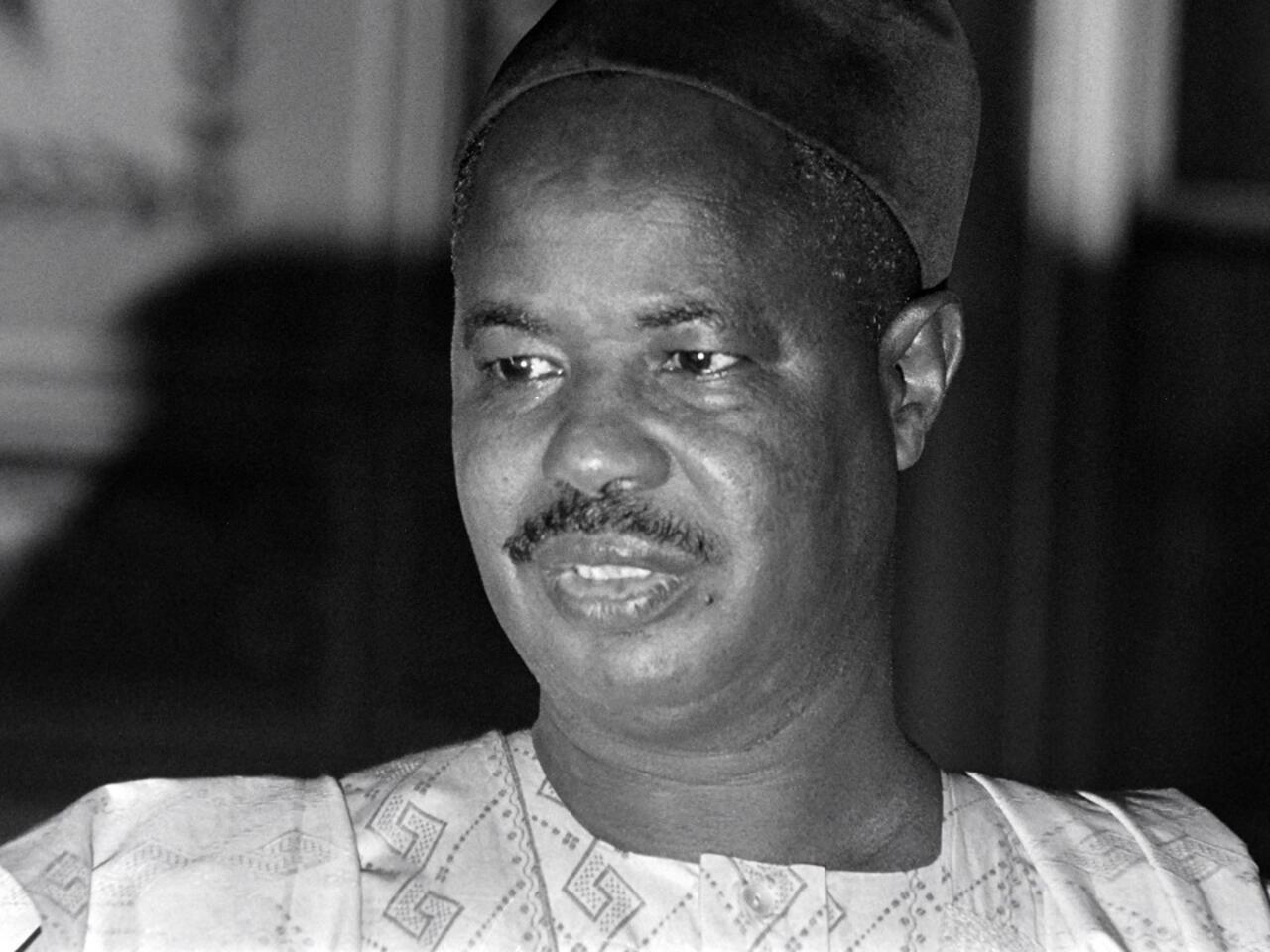
Ahmadou Ahidjo (1924-1989): First president of Cameroon

July 28, 2025
Ahmadou Ahidjo (1924-1989): First president of Cameroon
Share on FacebookShare on Twitter

Ahmadou Baba Ahidjo was born on August 24, 1924, in the town of Garoua, in northern Cameroon. He came from a modest family, with his father being a village chief. Ahidjo belongs to the Fulani, a Muslim ethnic group prevalent in West Africa. He received his primary education in a Quranic school, then attended a regional French school, before completing his secondary education in Yaoundé, the country’s capital. From an early age, Ahidjo displayed a keen intellect and a strong ability to communicate, which qualified him for a position with the French postal administration in 1942.

Working as a postal clerk was a turning point in his life. It gave him the opportunity to travel and explore the various regions of Cameroon, discovering the depth of the country’s ethnic and cultural diversity. This work also gave him a solid understanding of how the French colonial administration operated, which he would later leverage in his political career.

In 1947, Ahidjo began his political career by being elected to the Regional Assembly of Northern Cameroon. In 1953, he was elected as a Cameroonian representative to the French National Assembly, giving him a broader political platform. During this period, he began to network with French and Cameroonian politicians and gained experience in legislative work.

Cameroon at that time was going through a difficult transition. It was divided into two parts: French Cameroon and British Cameroon, both under UN mandate. Independence movements were growing, the most notable of which was the Union of the Peoples of Cameroon (UPC), led by Reuben Oum Nyobé, who embraced a revolutionary and radical approach aimed at complete independence and unity.

Ahidjo did not belong to this movement, but preferred a more moderate and cooperative approach with the French. He believed that independence should come gradually and through understanding with the colonial power, not through armed conflict.

In 1957, the French appointed Ahmadou Ahidjo as Prime Minister of Cameroon, a move seen as a reward for his moderate approach. In this position, Ahidjo was responsible for managing the country’s affairs and negotiating the terms of independence with the French. The period between 1957 and 1960 was a crucial one in Cameroon’s history. Ahidjo faced significant internal challenges, most notably the armed rebellion led by the Union of Cameroonian Peoples (UPC), which viewed Ahidjo as a French tool.

Read also

DR Congo court approves referendum law, fueling third-term debate

Equatorial Guinea and Gabon resolve 50-year border dispute

A day in the life of Congo’s overstretched Ebola surveillance teams

Ahidjo pursued a repressive policy toward the rebels, cooperating with French forces in their pursuit. This policy resulted in the deaths of thousands of people, including the movement’s leaders. Some historians believe that the suppression of this rebellion was necessary to achieve stability, while others view it as a brutal act aimed at weakening the radical opposition.

On January 1, 1960, French Cameroon gained its independence. On this historic day, Ahidjo delivered a speech in which he emphasized the importance of national unity and the need to build a strong and stable state. After independence, Ahidjo was elected as the first president of the republic.

The next task was to unify French Cameroon with British Cameroon. The British part was divided into two regions: British Northern Cameroon and British Southern Cameroons. In 1961, a popular referendum was held, in which British Northern Cameroon chose to join Nigeria, while British Southern Cameroons chose to join Cameroon. On October 1, 1961, the Federal Republic of Cameroon was proclaimed.

Unifying the country was a historic event, but it also created significant challenges. The two regions differed in language (French and English), legal, administrative, and cultural systems. Ahidjo had to find a way to manage this enormous diversity.

In 1966, Ahidjo took a decisive step to consolidate his power. He merged all the country’s political parties into a single party, the Cameroon National Union (CNU). This was the only legal party in the country, effectively transforming Cameroon into a one-party system.

Ahidjo justified this move as necessary to achieve national unity and prevent the ethnic and political divisions that plagued many newly independent African states. He also believed that multipartyism caused chaos and hindered economic development.

In 1972, Ahidjo went further. He abolished the federal system and declared the United Republic of Cameroon. This decision aimed to increase political centralization and grant the central government in Yaoundé greater powers over the regions. Some considered this decision necessary to streamline administration and improve efficiency, while others saw it as a move to weaken the power of the English-speaking regions, which is considered the root of the secessionist conflict in the south of the country to this day.

Ahidjo’s reign was characterized by calm and security stability. He relied on a powerful security apparatus and brutally suppressed any opposition or protests. The press was restricted, and political freedoms were limited. Ahidjo focused on achieving economic development and was seen as a wise and pragmatic leader.

In the economic field, Ahidjo adopted a policy of central planning, with an emphasis on the agricultural sector. Under his rule, Cameroon was known as Africa’s “Green Island” due to its abundant production of agricultural crops such as cocoa, coffee, and cotton. Cameroon benefited from the high commodity prices of the 1970s, which allowed the government to invest in infrastructure projects such as roads, schools, and hospitals.

However, this policy was not without flaws. It relied heavily on foreign aid and international financing and failed to adequately diversify the economy. Administrative and financial corruption within the state apparatus was also criticized.

In foreign policy, Ahidjo followed a pragmatic approach. He maintained good relations with France, which remained the country’s main trading partner and largest donor. He also established diplomatic relations with both Western and Eastern countries and pursued a policy of non-alignment. Ahidjo played an important role in regional organizations such as the Organization of African Unity and was considered a moderate and influential African leader.
Tags: Ahmadou AhidjoCameroonGaroua

Related Posts

Pollution linked to French-British oil firm’s Congo operations poses health risks, report says
Central Africa

Pollution linked to French-British oil firm’s Congo operations poses health risks, report says

July 27, 2026
Gabon opposition leader jailed for political reasons, his lawyers say
Central Africa

Gabon opposition leader jailed for political reasons, his lawyers say

July 26, 2026
US to block citizens in Congo from immediate travel home, citing Ebola
Central Africa

What Bundibugyo Ebola vaccines and treatments are under development

July 22, 2026
Cameroon President Paul Biya marks 41 years in power
Central Africa

Cameroon’s ruling party meets as Biya’s long absence draws criticism

July 22, 2026
Towards the revitalization of Nigeria’s power sector
Central Africa

AI could lift Sub-Saharan Africa economy 4% if power, internet improve, IMF says

July 21, 2026
African entrepreneurs work in challenging environments, and others may benefit from the skills they have developed
Central Africa

African entrepreneurs work in challenging environments, and others may benefit from the skills they have developed

July 20, 2026

Search Qiraat Africa

No Result
View All Result

Follow on Twitter

Follow @africanqiraat

Trending

Brief History and Culture of the City of Lagos, Nigeria

Brief History and Culture of the City of Lagos, Nigeria

July 24, 2024
Samori Touré (1830-1900): Military leader and founder of Wassoulou Empire

Samori Touré (1830-1900): Military leader and founder of Wassoulou Empire

January 11, 2026
Al-Hajj Salim Suwari (fl. c. 13th–15th century): West African Soninke Islamic scholar

Al-Hajj Salim Suwari (fl. c. 13th–15th century): West African Soninke Islamic scholar

July 17, 2026
Zaghawa people of northeastern Chad and western Sudan

Zaghawa people of northeastern Chad and western Sudan

March 3, 2026
Bakiga / Abakiga of northern Rwanda and southern Uganda

Bakiga / Abakiga of northern Rwanda and southern Uganda

July 15, 2026
Top 10 African Nations in Governance For 2026

Top 10 African Nations in Governance For 2026

March 11, 2026

Facebook

Sections

  • About Us
  • Privacy Policy
  • Opinion
  • Infographics
  • News
  • Analysis
  • Figures
  • Culture & Literature
  • Follow Ups
  • Historical Readings
  • Interview
  • Studies


© Copyright Qiraat Africa. Developed by Bunnaj Media .

No Result
View All Result
  • News
  • Analysis & Report
  • Studies
  • Opinion
  • Interview
  • Culture & Literature
  • Figures
  • Historical Readings
  • Regions

© 2021 Copyright Qiraat Africa.