






Qiraat Africa
عربي  |  Fr
Advertisement
  • News
    • All
    • Climate Change
    • Economy
    • Education
    • Energy
    • Health
    • Migration
    • Mining
    • Politics
    • Security
    • Society
    • Sport
    Nigeria champions African-Arab Trade to boost agribusiness, industrial growth

    Nigeria champions African-Arab Trade to boost agribusiness, industrial growth

    South Africa, Mozambique sign energy cooperation deal

    South Africa, Mozambique sign energy cooperation deal

    Ghana sanitation minister resigns over alleged stashed cash

    Ghana’s inflation slows for 11th straight month in November

    Security chief detained in South Sudan

    Security chief detained in South Sudan

    Nigeria’s overnight lending rate falls 100 bps on excess liquidity, policy shift

    Nigeria tightens cash withdrawal limits to curb money-laundering risk

    Kenyan lawmakers identify ‘disturbing trend’ of misconduct by British troops

    Kenyan lawmakers identify ‘disturbing trend’ of misconduct by British troops

    Mali adopts new mining code to boost sector’s contribution to GDP

    Mali recovers $1.2 billion in arrears from miners, eyes annual windfall under new code

    Nigeria’s defence minister quits as government faces rising violence

    Nigeria’s defence minister quits as government faces rising violence

    Guinea-Bissau: Nigeria offers protection to opposition candidate Dias; Election commission says cannot conclude presidential election process

    Guinea-Bissau: Nigeria offers protection to opposition candidate Dias; Election commission says cannot conclude presidential election process

  • Analysis
    • All
    • Climate Change
    • Digital & Tech
    • Economy
    • Energy & Power
    • Health
    • Politics
    • Security
    • Society
    Global power shifts are playing out in the Red Sea region: why this is where the rules are changing

    Global power shifts are playing out in the Red Sea region: why this is where the rules are changing

    Understanding Trump’s Christian Genocide Claim and Military Threat: What It Means for Nigeria-U.S. Relations

    Understanding Trump’s Christian Genocide Claim and Military Threat: What It Means for Nigeria-U.S. Relations

    South Africa needs to rethink its community media policy – 4 ways to close the gaps

    South Africa needs to rethink its community media policy – 4 ways to close the gaps

    Cameroon’s Biya declared vote winner, opposition reports gunfire

    What do the recent 2025 elections in Cameroon and Ivory Coast reveal about their state of democracy?

    Ivory Coast president Ouattara’s party pushes him to run again

    Ivory Coast elections: Ouattara’s final rule or forever rule?

    Charting New Waters: Maritime Advancements and West Africa’s Development

    Charting New Waters: Maritime Advancements and West Africa’s Development

    The Critical Role of Gold in Tanzania’s Economic Growth

    The Critical Role of Gold in Tanzania’s Economic Growth

    Five Years After the Coup in Mali: Are Stability and Growth Within Reach?

    Five Years After the Coup in Mali: Are Stability and Growth Within Reach?

    Cameroon President Paul Biya marks 41 years in power

    Paul Biya at 92: will defections weaken his grip on absolute power in Cameroon?

  • Studies
    One in three South Africans have never heard of AI: what this means for policy

    One in three South Africans have never heard of AI: what this means for policy

    Social Media as a Catalyst for the Spread of Dangerous Wealth Ritual Myths

    Social Media as a Catalyst for the Spread of Dangerous Wealth Ritual Myths

    Overcoming Education Barriers for Young Mothers in Sub-Saharan Africa

    Overcoming Education Barriers for Young Mothers in Sub-Saharan Africa

    Youth Empowerment Through Vocational Training in Rural Sub-Saharan Africa

    Youth Empowerment Through Vocational Training in Rural Sub-Saharan Africa

    Manufacturers in Ghana and Nigeria claim that although corruption damages businesses, digital technologies provide a chance to combat it

    Manufacturers in Ghana and Nigeria claim that although corruption damages businesses, digital technologies provide a chance to combat it

    Environmental Threats and Conservation Efforts in Namibia

    Environmental Threats and Conservation Efforts in Namibia

    Your teachers’ level of knowledge affects how well you perform in class: perspectives from 14 French-speaking African nations

    Your teachers’ level of knowledge affects how well you perform in class: perspectives from 14 French-speaking African nations

    Islamic Finance in Nigeria: Between Islamization and Shariah Non-Compliance Polemics

    Islamic Finance in Nigeria: Between Islamization and Shariah Non-Compliance Polemics

    What determines a return to civilian rule after military coups in Africa?

    What determines a return to civilian rule after military coups in Africa?

  • Infographics
  • Figures
    Robert Mugabe (1924 – 2019): Revolutionary and former President of Zimbabwe

    Robert Mugabe (1924 – 2019): Revolutionary and former President of Zimbabwe

    Idi Amin Dada (1928 – 2003): Military officer and former President of Uganda

    Idi Amin Dada (1928 – 2003): Military officer and former President of Uganda

    Albert John Luthuli (1898–1967): South African politician and first African Nobel Laureate

    Albert John Luthuli (1898–1967): South African politician and first African Nobel Laureate

    Shaka Zulu (1787-1828), founder of the Zulu empire in Southern Africa

    Shaka Zulu (1787-1828), founder of the Zulu empire in Southern Africa

    Chimamanda Ngozi Adichie, Nigerian writer

    Chimamanda Ngozi Adichie, Nigerian writer

    Olaudah Equiano (1745-1797), writer and abolitionist

    Olaudah Equiano (1745-1797), writer and abolitionist

    Ex-Credit Suisse chief executive Tidjane Thiam eyeing Ivory Coast 2025 presidential contest

    Tidjane Thiam, Ivorian businessman and politician

    François (Ngarta) Tombalbaye (1918-1975): First President of Chad

    François (Ngarta) Tombalbaye (1918-1975): First President of Chad

    Apollo Milton Obote (1925-2005): Former President of Uganda

    Apollo Milton Obote (1925-2005): Former President of Uganda

  • History
    Zong Massacre

    Zong Massacre

    Abomey, southern Benin

    Abomey, southern Benin

    Ifẹ̀, an ancient city in south-western Nigeria

    Ifẹ̀, an ancient city in south-western Nigeria

    Robben Island, South Africa

    Robben Island, South Africa

    Mount Kilimanjaro, Tanzania

    Mount Kilimanjaro, Tanzania

    Kumbi Saleh, the capital of the ancient Ghana Empire

    Kumbi Saleh, the capital of the ancient Ghana Empire

    Kano, an ancient city in northern Nigeria

    Kano, an ancient city in northern Nigeria

    Agadez, historic city in Niger

    Agadez, historic city in Niger

    Olduvai Gorge, a significant paleoanthropological site in Tanzania

    Olduvai Gorge, a significant paleoanthropological site in Tanzania

  • Others
    • Culture / Literature
    • Follow-ups
    • Interview
    • Opinion
  • Countries
    • Country profiles
    • Regions
      • Central Africa
      • East Africa
      • Southern Africa
      • West Africa
No Result
View All Result
  • News
    • All
    • Climate Change
    • Economy
    • Education
    • Energy
    • Health
    • Migration
    • Mining
    • Politics
    • Security
    • Society
    • Sport
    Nigeria champions African-Arab Trade to boost agribusiness, industrial growth

    Nigeria champions African-Arab Trade to boost agribusiness, industrial growth

    South Africa, Mozambique sign energy cooperation deal

    South Africa, Mozambique sign energy cooperation deal

    Ghana sanitation minister resigns over alleged stashed cash

    Ghana’s inflation slows for 11th straight month in November

    Security chief detained in South Sudan

    Security chief detained in South Sudan

    Nigeria’s overnight lending rate falls 100 bps on excess liquidity, policy shift

    Nigeria tightens cash withdrawal limits to curb money-laundering risk

    Kenyan lawmakers identify ‘disturbing trend’ of misconduct by British troops

    Kenyan lawmakers identify ‘disturbing trend’ of misconduct by British troops

    Mali adopts new mining code to boost sector’s contribution to GDP

    Mali recovers $1.2 billion in arrears from miners, eyes annual windfall under new code

    Nigeria’s defence minister quits as government faces rising violence

    Nigeria’s defence minister quits as government faces rising violence

    Guinea-Bissau: Nigeria offers protection to opposition candidate Dias; Election commission says cannot conclude presidential election process

    Guinea-Bissau: Nigeria offers protection to opposition candidate Dias; Election commission says cannot conclude presidential election process

  • Analysis
    • All
    • Climate Change
    • Digital & Tech
    • Economy
    • Energy & Power
    • Health
    • Politics
    • Security
    • Society
    Global power shifts are playing out in the Red Sea region: why this is where the rules are changing

    Global power shifts are playing out in the Red Sea region: why this is where the rules are changing

    Understanding Trump’s Christian Genocide Claim and Military Threat: What It Means for Nigeria-U.S. Relations

    Understanding Trump’s Christian Genocide Claim and Military Threat: What It Means for Nigeria-U.S. Relations

    South Africa needs to rethink its community media policy – 4 ways to close the gaps

    South Africa needs to rethink its community media policy – 4 ways to close the gaps

    Cameroon’s Biya declared vote winner, opposition reports gunfire

    What do the recent 2025 elections in Cameroon and Ivory Coast reveal about their state of democracy?

    Ivory Coast president Ouattara’s party pushes him to run again

    Ivory Coast elections: Ouattara’s final rule or forever rule?

    Charting New Waters: Maritime Advancements and West Africa’s Development

    Charting New Waters: Maritime Advancements and West Africa’s Development

    The Critical Role of Gold in Tanzania’s Economic Growth

    The Critical Role of Gold in Tanzania’s Economic Growth

    Five Years After the Coup in Mali: Are Stability and Growth Within Reach?

    Five Years After the Coup in Mali: Are Stability and Growth Within Reach?

    Cameroon President Paul Biya marks 41 years in power

    Paul Biya at 92: will defections weaken his grip on absolute power in Cameroon?

  • Studies
    One in three South Africans have never heard of AI: what this means for policy

    One in three South Africans have never heard of AI: what this means for policy

    Social Media as a Catalyst for the Spread of Dangerous Wealth Ritual Myths

    Social Media as a Catalyst for the Spread of Dangerous Wealth Ritual Myths

    Overcoming Education Barriers for Young Mothers in Sub-Saharan Africa

    Overcoming Education Barriers for Young Mothers in Sub-Saharan Africa

    Youth Empowerment Through Vocational Training in Rural Sub-Saharan Africa

    Youth Empowerment Through Vocational Training in Rural Sub-Saharan Africa

    Manufacturers in Ghana and Nigeria claim that although corruption damages businesses, digital technologies provide a chance to combat it

    Manufacturers in Ghana and Nigeria claim that although corruption damages businesses, digital technologies provide a chance to combat it

    Environmental Threats and Conservation Efforts in Namibia

    Environmental Threats and Conservation Efforts in Namibia

    Your teachers’ level of knowledge affects how well you perform in class: perspectives from 14 French-speaking African nations

    Your teachers’ level of knowledge affects how well you perform in class: perspectives from 14 French-speaking African nations

    Islamic Finance in Nigeria: Between Islamization and Shariah Non-Compliance Polemics

    Islamic Finance in Nigeria: Between Islamization and Shariah Non-Compliance Polemics

    What determines a return to civilian rule after military coups in Africa?

    What determines a return to civilian rule after military coups in Africa?

  • Infographics
  • Figures
    Robert Mugabe (1924 – 2019): Revolutionary and former President of Zimbabwe

    Robert Mugabe (1924 – 2019): Revolutionary and former President of Zimbabwe

    Idi Amin Dada (1928 – 2003): Military officer and former President of Uganda

    Idi Amin Dada (1928 – 2003): Military officer and former President of Uganda

    Albert John Luthuli (1898–1967): South African politician and first African Nobel Laureate

    Albert John Luthuli (1898–1967): South African politician and first African Nobel Laureate

    Shaka Zulu (1787-1828), founder of the Zulu empire in Southern Africa

    Shaka Zulu (1787-1828), founder of the Zulu empire in Southern Africa

    Chimamanda Ngozi Adichie, Nigerian writer

    Chimamanda Ngozi Adichie, Nigerian writer

    Olaudah Equiano (1745-1797), writer and abolitionist

    Olaudah Equiano (1745-1797), writer and abolitionist

    Ex-Credit Suisse chief executive Tidjane Thiam eyeing Ivory Coast 2025 presidential contest

    Tidjane Thiam, Ivorian businessman and politician

    François (Ngarta) Tombalbaye (1918-1975): First President of Chad

    François (Ngarta) Tombalbaye (1918-1975): First President of Chad

    Apollo Milton Obote (1925-2005): Former President of Uganda

    Apollo Milton Obote (1925-2005): Former President of Uganda

  • History
    Zong Massacre

    Zong Massacre

    Abomey, southern Benin

    Abomey, southern Benin

    Ifẹ̀, an ancient city in south-western Nigeria

    Ifẹ̀, an ancient city in south-western Nigeria

    Robben Island, South Africa

    Robben Island, South Africa

    Mount Kilimanjaro, Tanzania

    Mount Kilimanjaro, Tanzania

    Kumbi Saleh, the capital of the ancient Ghana Empire

    Kumbi Saleh, the capital of the ancient Ghana Empire

    Kano, an ancient city in northern Nigeria

    Kano, an ancient city in northern Nigeria

    Agadez, historic city in Niger

    Agadez, historic city in Niger

    Olduvai Gorge, a significant paleoanthropological site in Tanzania

    Olduvai Gorge, a significant paleoanthropological site in Tanzania

  • Others
    • Culture / Literature
    • Follow-ups
    • Interview
    • Opinion
  • Countries
    • Country profiles
    • Regions
      • Central Africa
      • East Africa
      • Southern Africa
      • West Africa
No Result
View All Result
Qiraat Africa
عربي  |  Fr
No Result
View All Result
Home Historical Readings

Stone Circles of Senegambia: Silent testimony to an ancient past

August 17, 2025
Stone Circles of Senegambia: Silent testimony to an ancient past
Share on FacebookShare on Twitter

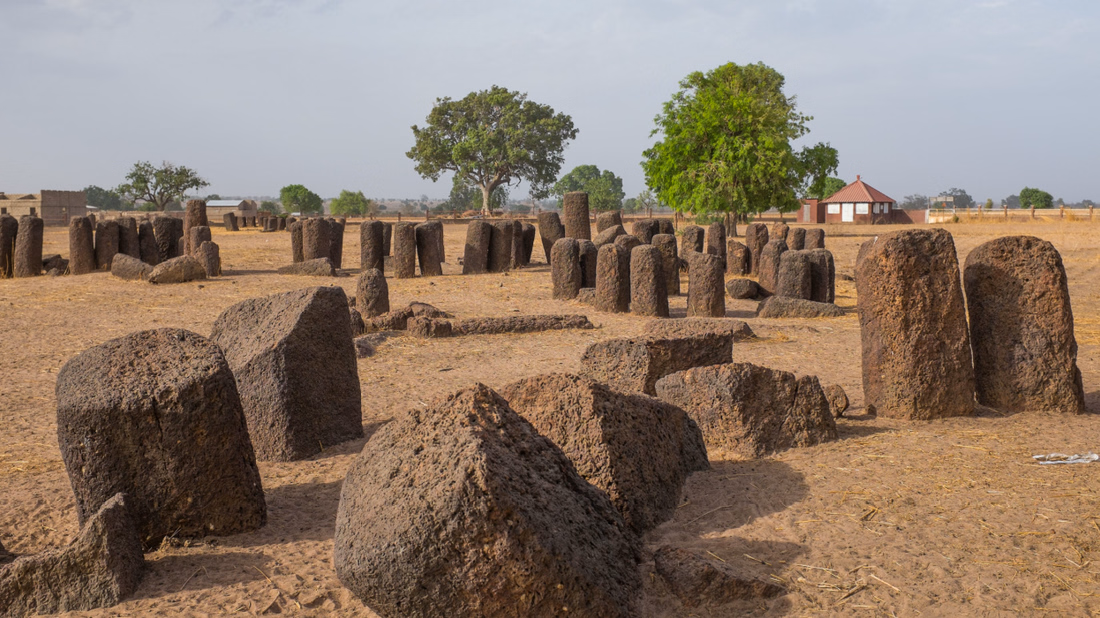
Spread across a vast area spanning parts of modern-day Senegal and The Gambia are thousands of megalithic monuments. Collectively known as the Stone Circles of Senegambia, these formations represent one of the oldest and most extensive megalithic complexes in the world. Designated a UNESCO World Heritage Site in 2006, these monuments represent an architectural and religious tradition spanning over 1,500 years, offering rare glimpses into the prehistoric cultures of West Africa. Despite decades of archaeological research, the precise purpose of these circles, the people who built them, and the beliefs that motivated them remain the subject of scholarly speculation and debate.

This vast archaeological complex, comprising more than 1,000 individual circles and some 29,000 stones, stands as a testament to the social organization and technical prowess of ancient societies that left behind no written records, forcing researchers to piece together their history from stone, bone, and pottery. Geographical Context and Physical Description

The stone circles in Senegambia are located in a specific geographical area, a belt approximately 100 kilometers wide and extending 350 kilometers from north to south, primarily along the banks of the Gambia River. This distribution covers four main areas: Wasso and Seny Saloum in Senegal, and Ouanare and Kerbache in Gambia. These monuments consist of upright stone columns (standing stones) arranged in circles or other configurations, including double rows and isolated stones.

The primary material used in the construction of these monuments is laterite, an iron-rich sedimentary rock common in the region. Laterite forms when groundwater seeps through porous rock, leaving behind high concentrations of iron and aluminum oxides. This process creates a relatively durable rock, yet soft enough to be shaped with simple tools. Archaeological evidence, including the discovery of ancient laterite quarries, shows that builders used hammers and iron picks to extract large blocks of rock. These blocks were then carefully shaped into columns, often cylindrical or polygonal, with tapered or flat tops.

The size and weight of the stones vary greatly. Their height typically ranges from 1 to 2.5 meters above the ground, with the average stone weighing around seven tons. However, exceptional examples have been found, such as a stone at the site of Kerbach that reached nearly 3 meters in height and weighed an estimated 10 tons. The extraction, transport, and erection of these massive stones required significant collective effort and elaborate planning, suggesting an organized social structure capable of mobilizing and managing a large workforce.

Each circle typically consists of 10 to 24 standing stones. The circles range in diameter from 4 to 6 meters. These circles are often associated with burials, leading most researchers to conclude that the sites were primarily cemeteries or funerary sites. Some circles have been found with a “headstone” or double stone on the eastern side of the perimeter, which is often different in shape or size from the other stones in the circle. The function of these headstones is unclear, but they may have served a ritual or directional role.

In addition to circles, other formations exist, such as parallel rows of stones (rows) and complex groups of upright stones that do not form a clear circle. The site of Wassou in The Gambia is famous for its well-defined circles, while the site of Seyni Saloum in Senegal features large earthen burial mounds (tuffs) accompanying stone circles. These regional variations in style and design suggest the presence of diverse cultural traditions within the wider region, which may have evolved over time.

Determining the age of the stone circles has been a significant challenge for researchers. The inorganic nature of the stones themselves makes direct dating using techniques such as radiocarbon dating impossible. Therefore, archaeologists have relied on dating organic materials found in associated contexts, particularly within burials located beneath or near the circles.

Excavations at various sites have uncovered a large number of human burials. The earliest of these have been dated to between the 3rd century BC and the 4th century AD. However, the construction of the stone circles themselves appears to have occurred later. Most radiocarbon dates taken from materials found in the original stone construction pits indicate that the majority of the circles were erected between the 8th and 16th centuries AD. This broad timeframe of more than 1,500 years suggests that the construction of these monuments was not a single event, but rather a long-standing cultural tradition that spanned many generations.

The contents of the burials provide important insights into the society that built these circles. The burials were often deep pits, and in some cases, they were communal burials containing the remains of several individuals. Some burials appear to have been reserved for elite individuals, as evidenced by the presence of elaborate grave goods. These artifacts included iron weapons (spearheads and swords), tools, and personal ornaments such as copper beads and bracelets. The presence of these materials indicates a stratified society with access to trade networks that brought copper and other materials from distant regions.

Excavations also revealed evidence of complex funerary rituals. In some burials, skeletons were found in an articulated state, indicating that they were fully buried. In other cases, the bones were disarticulated, suggesting the practice of secondary burial, where the body was first buried elsewhere and then later moved to the final burial site within the circle. This suggests a sophisticated belief system regarding death and the afterlife.

The discovery of pottery has also been crucial in understanding the chronology and culture of the sites. Pottery patterns allow archaeologists to connect different sites and establish a relative chronology. Some pottery styles found at stone circle sites are associated with later ethnic and linguistic groups in the region, but determining the precise identity of the circle builders remains difficult.

Read also

Nigeria champions African-Arab Trade to boost agribusiness, industrial growth

Ghana’s inflation slows for 11th straight month in November

Nigeria tightens cash withdrawal limits to curb money-laundering risk

The most widely purpoted function of the stone circles in Senegambia is that they were funerary and burial sites. This theory is strongly supported by the almost universal presence of human burials within or near the circles. The circles likely served as permanent grave markers for important individuals—perhaps kings, chiefs, or clan leaders—and their families. The construction of such monumental monuments may have served to establish the status and authority of the deceased, as well as to assert territorial claims by their descendants.

The sites may also have served as venues for religious rituals and ceremonies. The circular space may have defined a sacred area where ancestors were honored or community rituals were performed. The eastern front stone, found in many of the circles, may have had astronomical significance, marking the rising sun on the solstice or equinox, similar to other stone monuments in other parts of the world. However, evidence for precise astronomical alignment in the Senegambian circles is not conclusive and requires further research.

Another theory posits that the sites were not simply burial grounds, but also social and political centers. The construction and maintenance of the circles may have served as a communal activity, strengthening social bonds and collective identity. Gatherings at these sites may have included conflict resolution, alliance formation, and trade regulation, as well as ritual activities. In this sense, the circles served as focal points for the surrounding communities, places where both spiritual and temporal authority was asserted.

Local oral traditions, passed down through generations, include various interpretations of the circles. Local legends often associate the stones with ancient kings or giants, and in some cases, they are attributed with supernatural powers. While these stories do not offer an archaeological explanation, they highlight the continued cultural significance of these sites for local people, who often considered them sacred.

Ultimately, the function of the circles was likely multifaceted and complex, changing over time. They may have begun as simple burial grounds and evolved into more elaborate ritual and social centers. Without written records, archaeologists must rely on silent physical evidence, leaving much room for interpretation and debate.

Preserving the stone circles of Senegambia is a significant challenge. The monuments are subject to several natural and human threats. Wind and rain erosion is a natural process that slowly degrades laterite surfaces. Vegetation growth, particularly tree roots, can destabilize and dislodge the stones. Periodic forest fires, often started by farmers to clear land, can also cause the stones to crack and crumble due to thermal shock.

Human threats include agricultural encroachment. As the population grows, more land is being converted to agriculture, and in some cases, fields have been plowed up to the edge of the circles, endangering the structures and destroying the surrounding archaeological contexts. Looting and unauthorized treasure hunting, although relatively rare, have also damaged some sites in the past.

The recognition of the Senegambia Stone Circles as a UNESCO World Heritage Site in 2006 has increased awareness and protection of these monuments. The classification covers four major sites considered the best-preserved examples of this tradition: Wasso and Kerbache in The Gambia, and Ouarre and Seyni Saloum in Senegal. The governments of Senegal and The Gambia, in collaboration with international organizations and local communities, are implementing management plans to conserve these sites.

Conservation efforts include regular monitoring of the condition of the stones, clearing invasive vegetation, and implementing measures to prevent forest fires. There is also an increasing focus on engaging local communities in the preservation of their heritage. By promoting sustainable tourism and educating local people about the significance of the sites, it is hoped that they will become active stewards of these ancient monuments.

Archaeological research continues to play a crucial role. Recent projects use non-invasive techniques, such as geophysical surveying, to map what lies beneath the surface without the need for excavation. These techniques help identify burials and other undiscovered features, providing valuable new data on the construction and use of sites while minimizing damage to the archaeological fabric.

In conclusion, Kolmanskop embodies a complete cycle of discovery, prosperity, decay, and abandonment. It serves as a tangible reminder of the immense wealth generated by Namibia’s diamond rush, but also of the ephemeral nature of resource-based prosperity. The city’s story is one of human ambition that creates an oasis of well-being in an inhospitable environment, only to be abandoned when its riches shift elsewhere. Its lasting legacy is this poignant and stunning scene of a city swallowed by sand, a silent but powerful testament to the inexorable power of nature and the passage of time.
Tags: GambiaSenegalSenegambian Stone CirclesThe Gambia

Related Posts

Mali adopts new mining code to boost sector’s contribution to GDP
Economy

Mali recovers $1.2 billion in arrears from miners, eyes annual windfall under new code

December 2, 2025
Nigeria’s defence minister quits as government faces rising violence
Featured

Nigeria’s defence minister quits as government faces rising violence

December 2, 2025
Guinea-Bissau: Nigeria offers protection to opposition candidate Dias; Election commission says cannot conclude presidential election process
Featured

Guinea-Bissau: Nigeria offers protection to opposition candidate Dias; Election commission says cannot conclude presidential election process

December 2, 2025
Ex-Nigerian minister, Alison-Madueke faces bribery charges in London court
Energy

Nigeria launches 2025 oil licensing round, offers 50 blocks

December 1, 2025
General sworn in as Guinea-Bissau leader in swift coup after disputed vote
Featured

Guinea-Bissau military rulers ban protests ahead of ECOWAS visit

December 1, 2025
Guinea-Bissau president to run for second term, backtracking on vow to step down
Featured

Guinea-Bissau opposition accuses president of faking coup to retain power

November 27, 2025

Search Qiraat Africa

No Result
View All Result

Follow on Twitter

Follow @africanqiraat

Trending

Idi Amin Dada (1928 – 2003): Military officer and former President of Uganda

Idi Amin Dada (1928 – 2003): Military officer and former President of Uganda

November 8, 2025
Infographic: Kidnapping in Nigeria – Facts and Figures

Infographic: Kidnapping in Nigeria – Facts and Figures

May 22, 2024
Larabanga Mosque, an architectural and historical masterpiece in Ghana

Larabanga Mosque, an architectural and historical masterpiece in Ghana

May 15, 2025
Security chief detained in South Sudan

Security chief detained in South Sudan

December 3, 2025
Global power shifts are playing out in the Red Sea region: why this is where the rules are changing

Global power shifts are playing out in the Red Sea region: why this is where the rules are changing

November 26, 2025
The Great Mosque of Djenne, Mali

The Great Mosque of Djenne, Mali

March 25, 2025

Facebook

Sections

  • About Us
  • Privacy Policy
  • Opinion
  • Infographics
  • News
  • Analysis
  • Figures
  • Culture & Literature
  • Follow Ups
  • Historical Readings
  • Interview
  • Studies


© Copyright Qiraat Africa. Developed by Bunnaj Media .

No Result
View All Result
  • News
  • Analysis & Report
  • Studies
  • Opinion
  • Interview
  • Culture & Literature
  • Figures
  • Follow-ups
  • Historical Readings
  • Regions

© 2021 Copyright Qiraat Africa.