
















The Balengue group—also known as the Lengue—is an indigenous ethnic group residing in the coastal region of Equatorial Guinea, with a limited geographical and ethnological extension into the northwestern areas of the Republic of Gabon.
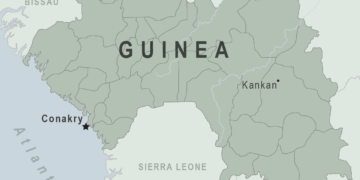
Geographically, the Balengue people are concentrated primarily in the southern coastal region of Equatorial Guinea—specifically in Litoral Province, around the Punta Mbendji peninsula and south of Punta Mbonda, extending to the banks of the Benito (Río Benito) and Muni (Río Muni) rivers. On the Gabonese side, individuals belonging to this ethnic group, or linked to it through kinship and culture, are found in coastal areas near the northern border shared with Equatorial Guinea.
The group is characterised by its small population size; contemporary ethnographic and demographic estimates suggest that the number of native speakers—or those closely identified with the group’s ethnic identity—ranges from a few hundred to, at most, a few thousand. This small population size has resulted in persistent demographic and social strain—affecting the group both during the late Spanish and French colonial periods and following their independence—thereby subjecting the Balengue to mounting pressure to assimilate into larger ethnic groups.
Historically, some believe the Balengue fall under the umbrella of the “Ndowe” ethnic groups—also known as the “Playeros“ (Beach People)—a collective broader Spanish colonial umbrella term encompassing various coastal populations in Equatorial Guinea and Gabon, such as the Bapuku, Kombe, Benga, and Bokué. These peoples are historically characterised by a lifestyle tied to the sea and waterways, in contrast to neighbouring inland groups that rely primarily on agriculture and terrestrial hunting.
Oral traditions and historical studies indicate that, in recent centuries, the Balengue migrated along the coast in response to population expansion by the Fang people—who were moving in from the continental interior—as well as the impact of coastal trade, including the exchange of slaves and goods with Europeans starting in the 16th century. Driven by these pressures, the Balengue settled in specific coastal enclaves, adopting strategies of kinship and commercial alliances with other coastal groups to ensure their survival and maintain control over maritime and riverine trade routes.
The Balengue language (known as “Molengue* or “Lengue”) constitutes the core of the group’s ethnic identity. It is classified within the Bantu language family—specifically under the “Bantu B.30” subgroup, which comprises the coastal linguistic groups of southern Cameroon, Equatorial Guinea, and Gabon. The language is characterised by several features. It relies on the noun class system typical of Bantu languages, where the meaning of a noun changes based on the added prefix. Comparative linguistic analyses indicate that the Balingi language has been significantly influenced by neighbouring languages, particularly Fang and other Ndowu languages such as Kombi and Mbeni.
Balengue is currently classified as highly endangered, as the majority of fluent speakers are elderly. A widespread linguistic shift is observed among the youth and younger generations toward using Spanish (the official language of Equatorial Guinea) or French (in Gabon), alongside Fang, which serves as the region’s most widespread lingua franca.
The Balengue relied on a socio-economic system adapted to the coastal and riverine environments where they settled. Society consists of extended clans that trace lineage through specific family lines. Leadership skills and individual wisdom play a central role in selecting village elders or clan chiefs, who are responsible for resolving disputes and managing communal affairs.
According to 101 Last Tribes:
Like the Fang people, the Molengue obtained the steel for the manufacture of their metallic elements, through the liquefaction of special flakes, using a kind of bellows that he called momba, to increase and enliven the temperature. ..they manufactured items for the entire community, items consisting of:
• Spears: Djiengo
• Axes: Sapaté
• Bracelets: Mieni
• Rings: Mieni iva dibungu
Fishing and aquatic activities form the backbone of the traditional Balengue economy. The community developed various techniques for fishing in river estuaries and shallow coastal waters, utilising traditional wooden boats (hewn from tree trunks) as well as nets and traps made from local fibres. Agriculture and Gathering: The Balengue practise small-scale subsistence farming in the forested areas surrounding their villages. Crops focus on plantains, cassava (manioc), yams, and maize; additionally, they gather wild produce and extract palm oil for both household use and local trade. They served as trade intermediaries between inland forest peoples and coastal European trading vessels, exchanging marine and European goods for agricultural produce and bushmeat.
The traditional beliefs of the Balengue people intertwine with religious practices introduced to the region during the colonial era; following the encroachment of Catholic and Protestant missions in the 19th and 20th centuries, the majority of the Balengue embraced Christianity (particularly Catholicism).
Today, the Balengue people in both Equatorial Guinea and Gabon face challenges that affect the continuity of their distinct cultural and ethnic identity. Due to their small absolute numbers compared to the Fang ethnic group—which constitutes the overwhelming majority in Equatorial Guinea and wields significant political and economic influence—Balengue representation in state institutions and public policy remains extremely limited.
The migration of younger generations from traditional coastal villages to major urban centres (such as Bata and Malabo in Equatorial Guinea, or Libreville and Port-Gentil in Gabon) in search of education and employment opportunities has weakened social cohesion in their ancestral villages and led to a decline in the daily practice of their language and cultural customs.