

























Gabon and Equatorial Guinea signed an agreement on Tuesday ending a decades-long dispute over three tiny islands in potentially oil-rich waters after the top UN court backed Malabo.
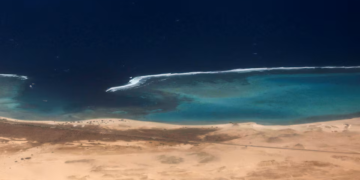
The two west African nations had been squabbling over the 30-hectare island of Mbanie and two smaller low-lying islets, Cocotiers and Conga, since the early 1970s.
In May last year, the International Court of Justice (ICJ) in The Hague, which rules in disputes between states, found in favour of Equatorial Guinea.
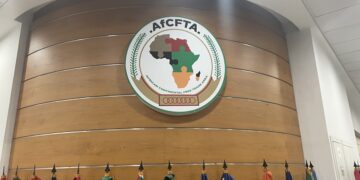
At a ceremony at the African Union’s headquarters in Addis Ababa, Equatorial Guinean Foreign Minister Simeon Oyono Esono Angue and Gabon’s head of the Constitutional Council Dieudonne Aba’a Owono signed the accord committing both countries to respect the ICJ’s decision.
“This matter has been settled once and for all,” the Equatorial Guinean minister said, adding the two countries must now “move forward.”
Aba’a Owono said the agreement opened “a new era of cooperation with Equatorial Guinea.”
AU Commission chairperson Mahmoud Ali Youssouf, who also signed the agreement, welcomed the resolution of a border dispute that he said had gone on for too long.
Historic dispute
The spat dated back to 1900, when then colonial powers France and Spain signed a treaty in Paris setting out the borders between the two countries.
Gabon argued that a later treaty, the 1974 Bata Convention, then fixed the islands’ sovereignty in its favour.
The two countries asked the ICJ to decide which legal texts were valid — the Paris Treaty of 1900 or the Bata Convention of 1974.
The court ruled that the Bata Convention did not constitute a legal title to the islands, which was held by Spain and had passed to Equatorial Guinea upon independence in 1968.
The islands themselves are tiny and virtually uninhabited but lie in an area potentially rich in oil and gas.