



























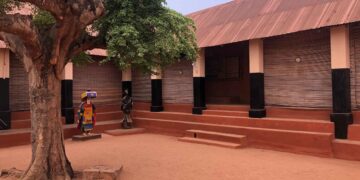

The Mandara Mountains, straddling the international border between Nigeria and Cameroon, are one of the most ethnically and anthropologically diverse regions in West Africa. Among the populations inhabiting this rugged area, the Hide, sometimes called the Tur, stand out as one of the groups that has maintained its distinct cultural and social identity.
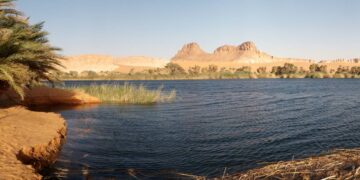
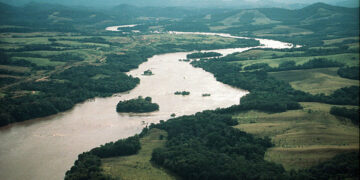
The Hide people primarily inhabit a rugged, mountainous region in the far north of Cameroon (Mayo-Tsanaga Province) and adjacent areas within Adamawa State in Nigeria. The terrain here has dictated a particular way of life; it is characterized by rocky peaks and difficult-to-access volcanic soil, which has kept these groups in near-isolation for centuries.
The language and the group are called “Hedi,” while “Tur” is commonly used to refer to the geographical location or the main villages they inhabit. Linguistically, the Hedi language belongs to the Chadic language family, a branch of the Afro-Asiatic languages, historically linking them to ancient migrations in the Chad Basin region.
According to 101 Last Tribes:
“Barreteau (1984:167) classifies ‘xdi’, together with gvoko and mabas, under wandala-west of Central Chadic. SIL classifies ‘Hedi’ as Lamang dialect of Biu-Mandara (Central Chadic). According to SIL the intelligibility of Mabas is 51%, of Lamang 48%, and of Gvoko 35%. The history of linking ‘Turu/Hde’ with Lamang goes back to Wolff who groups Turu with his so-called Lamang group, which he sees as an independent sub-group of Biu-Mandara (1974:9).”
“Muller-Kosack (fieldnotes 1996) informs us that the ‘Hide-Ngra’ consider them- selves closely related to the Gvoko (Gvoko-Ngra). The Hide-Ngra came originally from ‘Ghwa Gula’ (mountain of Gulak), from where they moved to ‘Ghwa Gawa’. The name ‘Ngra’ (or ‘Gra’ or even ‘Mbra’) is not the name of an ancestor, but only refers to their mythological descent from a first Man (Hide-Ngra or Gvoko-Ngra, or Dughwede-Ngra, etc). Like the Dughwede or Govko, the Hide consider themselves as an independent ethnic group of montagnards, but at the same time they feel themselves ethnically much closer related to the Gvoko, than e.g. to the Mafa. Muller-Kosack (fieldnotes 1987) informs us further that ‘Matsak’, the oldest known ancestor of Hide, had a son of the name Gulo, who had, among many other sons, also a son of the name ‘Margi’. According to this tradition ‘Matsak’ lived a long time ago in the western plains, but due to ethnic conflict he moved to the mountain of ‘Gulo’ (Margi-Gulak, see page Margi). From the mountain ‘Gulo’ he moved to Hide of today.”
The society of the Hides is based on a patrilineal kinship system, where power and status are concentrated in the male line. The group is divided into several clans, each with its own chief or priest who manages religious affairs and minor disputes.
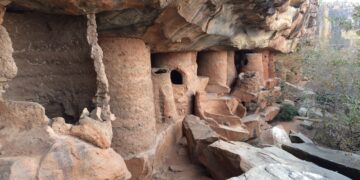
The Hides build their houses from stone and mud with conical thatched roofs. These houses are often surrounded by stone walls to protect crops and livestock from erosion or theft. Marriage is a means of strengthening ties between different clans, and the dowry (traditionally paid in the form of cattle or iron tools) plays a central role in finalizing these contracts. Also, status is based not only on material wealth but also on wisdom and the ability to administer traditional rituals believed to ensure the fertility of the land and abundant rainfall.

Due to the rugged terrain, the Haidhi people have developed advanced agricultural techniques suited to the mountainous environment, most notably terracing.
The economy is almost entirely dependent on agriculture. The main crops are millet and sorghum, which constitute the daily sustenance of the population. They also cultivate peanuts and some legumes. The stone terraces they construct not only prevent soil erosion but also help retain the meager seasonal rainfall.
Raising cattle, goats, and sheep is a complementary activity, but it holds great symbolic value; owning livestock is a measure of wealth and the ability to weather economic crises or fulfill social obligations.
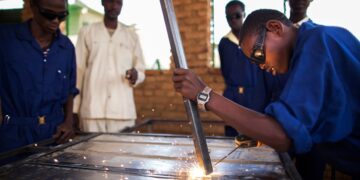
The region was historically renowned for iron smelting and blacksmithing. Blacksmiths in Haidhi society formed a distinct (and sometimes isolated) social class, producing agricultural tools and weapons. Despite the introduction of imported tools, some locally made items still retain ritual and practical value.
The religious landscape of the Hide people is characterized by diversity and change. Historically, traditional religion (Animism) was dominant, with a belief in a supreme creator and ancestral spirits inhabiting the mountains and trees.
Over time, Christianity (in its various denominations) and Islam have penetrated the region. However, a clear cultural fusion remains; many practice modern religious rituals alongside respect for inherited traditions, especially those related to harvest seasons and rainmaking.
The Hide/Tur situation exemplifies the problematic nature of colonial borders in Africa. The border between Nigeria (formerly under British rule) and Cameroon (formerly under French rule) was drawn without regard for ethnic distribution.
The border has divided single clans between two countries and two different administrative systems. For the Tore people, borders are merely imaginary lines; they move daily for trade, to visit relatives, or for grazing, creating security and administrative challenges for both countries. Many Hide people have a sense of “transnational” belonging, identifying first and foremost as Haidhi before their Nigerian or Cameroonian national identities.
In modern times, the Hide people face multiple pressures that threaten their traditional way of life. Fluctuating rainfall and soil degradation in the Mandara Mountains are leading to a decline in agricultural production, prompting young people to migrate to larger cities such as Maroua in Cameroon or Yola in Nigeria.
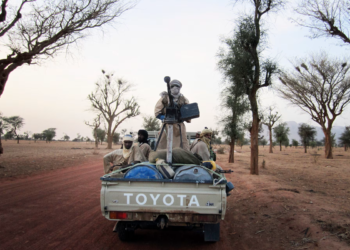
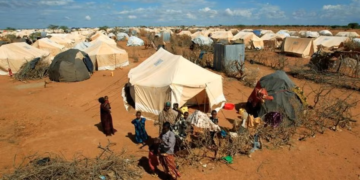
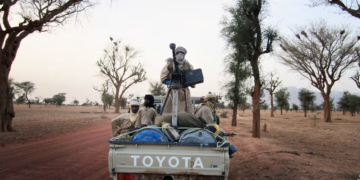
The area surrounding the Mandara Mountains has been affected by the armed activities of extremist groups (such as Boko Haram) in recent years, resulting in the displacement of some families and the disruption of the weekly markets, which are a vital economic lifeline.
Due to their geographical location far from the decision-making centers in Yaoundé or Abuja, their regions lack basic infrastructure such as paved roads and adequate health and educational facilities.