















Qiraat Africa
عربي  |  Fr
Advertisement
  • News
    • All
    • Climate Change
    • Economy
    • Education
    • Energy
    • Health
    • Migration
    • Mining
    • Politics
    • Security
    • Society
    • Sport
    Cameroon President Paul Biya marks 41 years in power

    Cameroon: President Biya changes communication strategy during Geneva stay

    Nigerian forces rescue 308 kidnap victims, presidency says

    Nigerian forces rescue 308 kidnap victims, presidency says

    US open to minerals partnerships with Democratic Republic of Congo

    Congo bans copper and cobalt concentrates exports, official order says

    Nigeria’s Dangote refinery starts production after years of delays

    Nigeria’s Dangote refinery aims to raise $5 billion with October listing, source says

    Chadian leader General Mahamat Deby pardons 110 people held over October protests

    Chadian presidency denies interfering in court case

    Thousands attend funeral for Zimbabwe family murdered in Britain

    Thousands attend funeral for Zimbabwe family murdered in Britain

    Nigerian troops free 62 hostages, kill two militants in northwest operations

    Nigeria’s Tinubu approves military pay rise as security challenges persist

    Nigeria’s state-owned NNPC records $4.2 billion after-tax profit in 2025

    Nigeria approves $4.5 billion refinancing of NNPC oil-backed facility

    Cameroon President Paul Biya marks 41 years in power

    Cameroon’s Biya, unseen for 58 days, reshuffles military leadership

  • Analysis
    • All
    • Climate Change
    • Digital & Tech
    • Economy
    • Energy & Power
    • Health
    • Politics
    • Security
    • Society
    What Happens After Dandora? Kenya’s Green Transition Faces Its Hardest Test

    What Happens After Dandora? Kenya’s Green Transition Faces Its Hardest Test

    African entrepreneurs work in challenging environments, and others may benefit from the skills they have developed

    African entrepreneurs work in challenging environments, and others may benefit from the skills they have developed

    Ethiopia’s 2026 General Election: Progress, Challenges, and Implications

    Ethiopia’s 2026 General Election: Progress, Challenges, and Implications

    Israeli recognition of Somaliland is a ‘calculated distraction,’ Somali diplomat says

    Sixty-Six Years On, the Promise of Somali Independence Remains Unfulfilled.

    Senegal’s top opposition leader Sonko vows to help win March 24 election

    Senegal at a Political Crossroads: The Faye–Sonko Rivalry and the Future of Democratic Governance

    Ulysses in isiZulu: Why an African translation of the classic Irish novel is important in today’s world

    Ulysses in isiZulu: Why an African translation of the classic Irish novel is important in today’s world

    The promise and risks of Kenya’s ambitious new strategy to close refugee camps

    The promise and risks of Kenya’s ambitious new strategy to close refugee camps

    Al Qaeda-linked militants curb their brutality in seized Malian territory

    Al Qaeda-linked militants curb their brutality in seized Malian territory

    Five Years After the Coup in Mali: Are Stability and Growth Within Reach?

    The Political Economy of Insecurity in Mali: Armed Groups, Resources, and State Fragility

  • Studies
    Angola’s lengthy war shaped the way farmers utilised fire—why it matters

    Angola’s lengthy war shaped the way farmers utilised fire—why it matters

    Schooling is the most severely affected by conflict when children are the target – Study

    Schooling is the most severely affected by conflict when children are the target – Study

    Pensions for Botswana’s elderly are expanding, but care services are lacking—study follows 20 years

    Pensions for Botswana’s elderly are expanding, but care services are lacking—study follows 20 years

    60 new cosmic structures have been discovered by South Africa’s MeerKAT telescope, which is mapping previously unseen gaps between galaxies

    60 new cosmic structures have been discovered by South Africa’s MeerKAT telescope, which is mapping previously unseen gaps between galaxies

    Benin government says armed forces foil coup attempt

    Coup contagion? A rash of African power grabs suggests copycats are taking note of others’ success

    One in three South Africans have never heard of AI: what this means for policy

    One in three South Africans have never heard of AI: what this means for policy

    Social Media as a Catalyst for the Spread of Dangerous Wealth Ritual Myths

    Social Media as a Catalyst for the Spread of Dangerous Wealth Ritual Myths

    Overcoming Education Barriers for Young Mothers in Sub-Saharan Africa

    Overcoming Education Barriers for Young Mothers in Sub-Saharan Africa

    Youth Empowerment Through Vocational Training in Rural Sub-Saharan Africa

    Youth Empowerment Through Vocational Training in Rural Sub-Saharan Africa

  • Infographics
  • Figures
    Al-Hajj Salim Suwari (fl. c. 13th–15th century): West African Soninke Islamic scholar

    Al-Hajj Salim Suwari (fl. c. 13th–15th century): West African Soninke Islamic scholar

    Strive Masiyiwa: Zimbabwean businessman and philanthropist

    Strive Masiyiwa: Zimbabwean businessman and philanthropist

    Diébédo Francis Kéré: Burkinabé-German architect

    Diébédo Francis Kéré: Burkinabé-German architect

    Herbert Wigwe (1966-2024): Nigerian banker and businessman

    Herbert Wigwe (1966-2024): Nigerian banker and businessman

    Senegal president names new finance, energy ministers in reshuffle

    Macky Sall: Former President of Senegal

    Marcus Garvey (1887-1940): Activist, Black nationalist, and Pan-Africanist

    Marcus Garvey (1887-1940): Activist, Black nationalist, and Pan-Africanist

    John B. Russwurm (1799–1851): Jamaican-born American abolitionist, publisher, and colonial governor

    John B. Russwurm (1799–1851): Jamaican-born American abolitionist, publisher, and colonial governor

    Winnie Mandela (1936-2018): South African politician and anti-apartheid activist

    Winnie Mandela (1936-2018): South African politician and anti-apartheid activist

    Abdias do Nascimento (1914-2011): Prominent African Brazilian scholar, artist, and politician

    Abdias do Nascimento (1914-2011): Prominent African Brazilian scholar, artist, and politician

  • History
    Aldabra Atoll, Seychelles

    Aldabra Atoll, Seychelles

    Le Morne Cultural Landscape, Mauritius

    Le Morne Cultural Landscape, Mauritius

    Mount Nimba Strict Nature Reserve, Guinea and Côte d’Ivoire

    Mount Nimba Strict Nature Reserve, Guinea and Côte d’Ivoire

    Sangha Trinational, north-western Congo Basin

    Sangha Trinational, north-western Congo Basin

    Kasubi Tombs, Kampala, Uganda

    Kasubi Tombs, Kampala, Uganda

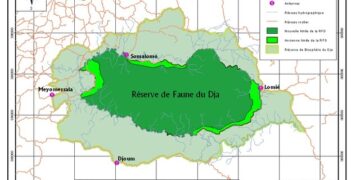
    Dja Faunal Reserve, Cameroon

    Dja Faunal Reserve, Cameroon

    Laas Geel, Somalia

    Laas Geel, Somalia

    Lakes Of Ounianga, Chad

    Lakes Of Ounianga, Chad

    Nok Caves, Togo

    Nok Caves, Togo

  • Others
    • Culture / Literature
    • Interview
    • Opinion
  • Countries
    • Country profiles
    • Regions
      • Central Africa
      • East Africa
      • Southern Africa
      • West Africa
No Result
View All Result
  • News
    • All
    • Climate Change
    • Economy
    • Education
    • Energy
    • Health
    • Migration
    • Mining
    • Politics
    • Security
    • Society
    • Sport
    Cameroon President Paul Biya marks 41 years in power

    Cameroon: President Biya changes communication strategy during Geneva stay

    Nigerian forces rescue 308 kidnap victims, presidency says

    Nigerian forces rescue 308 kidnap victims, presidency says

    US open to minerals partnerships with Democratic Republic of Congo

    Congo bans copper and cobalt concentrates exports, official order says

    Nigeria’s Dangote refinery starts production after years of delays

    Nigeria’s Dangote refinery aims to raise $5 billion with October listing, source says

    Chadian leader General Mahamat Deby pardons 110 people held over October protests

    Chadian presidency denies interfering in court case

    Thousands attend funeral for Zimbabwe family murdered in Britain

    Thousands attend funeral for Zimbabwe family murdered in Britain

    Nigerian troops free 62 hostages, kill two militants in northwest operations

    Nigeria’s Tinubu approves military pay rise as security challenges persist

    Nigeria’s state-owned NNPC records $4.2 billion after-tax profit in 2025

    Nigeria approves $4.5 billion refinancing of NNPC oil-backed facility

    Cameroon President Paul Biya marks 41 years in power

    Cameroon’s Biya, unseen for 58 days, reshuffles military leadership

  • Analysis
    • All
    • Climate Change
    • Digital & Tech
    • Economy
    • Energy & Power
    • Health
    • Politics
    • Security
    • Society
    What Happens After Dandora? Kenya’s Green Transition Faces Its Hardest Test

    What Happens After Dandora? Kenya’s Green Transition Faces Its Hardest Test

    African entrepreneurs work in challenging environments, and others may benefit from the skills they have developed

    African entrepreneurs work in challenging environments, and others may benefit from the skills they have developed

    Ethiopia’s 2026 General Election: Progress, Challenges, and Implications

    Ethiopia’s 2026 General Election: Progress, Challenges, and Implications

    Israeli recognition of Somaliland is a ‘calculated distraction,’ Somali diplomat says

    Sixty-Six Years On, the Promise of Somali Independence Remains Unfulfilled.

    Senegal’s top opposition leader Sonko vows to help win March 24 election

    Senegal at a Political Crossroads: The Faye–Sonko Rivalry and the Future of Democratic Governance

    Ulysses in isiZulu: Why an African translation of the classic Irish novel is important in today’s world

    Ulysses in isiZulu: Why an African translation of the classic Irish novel is important in today’s world

    The promise and risks of Kenya’s ambitious new strategy to close refugee camps

    The promise and risks of Kenya’s ambitious new strategy to close refugee camps

    Al Qaeda-linked militants curb their brutality in seized Malian territory

    Al Qaeda-linked militants curb their brutality in seized Malian territory

    Five Years After the Coup in Mali: Are Stability and Growth Within Reach?

    The Political Economy of Insecurity in Mali: Armed Groups, Resources, and State Fragility

  • Studies
    Angola’s lengthy war shaped the way farmers utilised fire—why it matters

    Angola’s lengthy war shaped the way farmers utilised fire—why it matters

    Schooling is the most severely affected by conflict when children are the target – Study

    Schooling is the most severely affected by conflict when children are the target – Study

    Pensions for Botswana’s elderly are expanding, but care services are lacking—study follows 20 years

    Pensions for Botswana’s elderly are expanding, but care services are lacking—study follows 20 years

    60 new cosmic structures have been discovered by South Africa’s MeerKAT telescope, which is mapping previously unseen gaps between galaxies

    60 new cosmic structures have been discovered by South Africa’s MeerKAT telescope, which is mapping previously unseen gaps between galaxies

    Benin government says armed forces foil coup attempt

    Coup contagion? A rash of African power grabs suggests copycats are taking note of others’ success

    One in three South Africans have never heard of AI: what this means for policy

    One in three South Africans have never heard of AI: what this means for policy

    Social Media as a Catalyst for the Spread of Dangerous Wealth Ritual Myths

    Social Media as a Catalyst for the Spread of Dangerous Wealth Ritual Myths

    Overcoming Education Barriers for Young Mothers in Sub-Saharan Africa

    Overcoming Education Barriers for Young Mothers in Sub-Saharan Africa

    Youth Empowerment Through Vocational Training in Rural Sub-Saharan Africa

    Youth Empowerment Through Vocational Training in Rural Sub-Saharan Africa

  • Infographics
  • Figures
    Al-Hajj Salim Suwari (fl. c. 13th–15th century): West African Soninke Islamic scholar

    Al-Hajj Salim Suwari (fl. c. 13th–15th century): West African Soninke Islamic scholar

    Strive Masiyiwa: Zimbabwean businessman and philanthropist

    Strive Masiyiwa: Zimbabwean businessman and philanthropist

    Diébédo Francis Kéré: Burkinabé-German architect

    Diébédo Francis Kéré: Burkinabé-German architect

    Herbert Wigwe (1966-2024): Nigerian banker and businessman

    Herbert Wigwe (1966-2024): Nigerian banker and businessman

    Senegal president names new finance, energy ministers in reshuffle

    Macky Sall: Former President of Senegal

    Marcus Garvey (1887-1940): Activist, Black nationalist, and Pan-Africanist

    Marcus Garvey (1887-1940): Activist, Black nationalist, and Pan-Africanist

    John B. Russwurm (1799–1851): Jamaican-born American abolitionist, publisher, and colonial governor

    John B. Russwurm (1799–1851): Jamaican-born American abolitionist, publisher, and colonial governor

    Winnie Mandela (1936-2018): South African politician and anti-apartheid activist

    Winnie Mandela (1936-2018): South African politician and anti-apartheid activist

    Abdias do Nascimento (1914-2011): Prominent African Brazilian scholar, artist, and politician

    Abdias do Nascimento (1914-2011): Prominent African Brazilian scholar, artist, and politician

  • History
    Aldabra Atoll, Seychelles

    Aldabra Atoll, Seychelles

    Le Morne Cultural Landscape, Mauritius

    Le Morne Cultural Landscape, Mauritius

    Mount Nimba Strict Nature Reserve, Guinea and Côte d’Ivoire

    Mount Nimba Strict Nature Reserve, Guinea and Côte d’Ivoire

    Sangha Trinational, north-western Congo Basin

    Sangha Trinational, north-western Congo Basin

    Kasubi Tombs, Kampala, Uganda

    Kasubi Tombs, Kampala, Uganda

    Dja Faunal Reserve, Cameroon

    Dja Faunal Reserve, Cameroon

    Laas Geel, Somalia

    Laas Geel, Somalia

    Lakes Of Ounianga, Chad

    Lakes Of Ounianga, Chad

    Nok Caves, Togo

    Nok Caves, Togo

  • Others
    • Culture / Literature
    • Interview
    • Opinion
  • Countries
    • Country profiles
    • Regions
      • Central Africa
      • East Africa
      • Southern Africa
      • West Africa
No Result
View All Result
Qiraat Africa
عربي  |  Fr
No Result
View All Result
Home Historical Readings

Isimila Stone Age site, Tanzania

September 10, 2025
Isimila Stone Age site, Tanzania

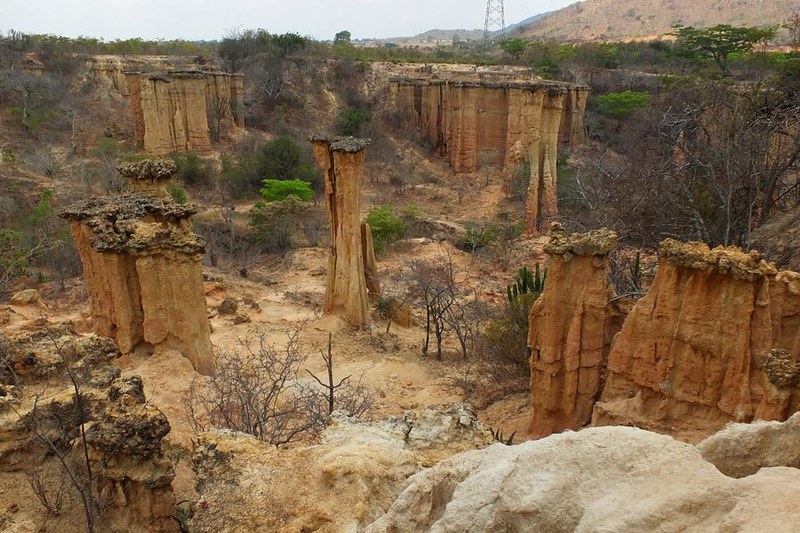
Isimila stone age site and natural pillars in Iringa, Tanzania.

Share on FacebookShare on Twitter

The Isimila Stone Age site, located in the Southern Highlands of Tanzania, about 20 kilometers southwest of the town of Iringa, is one of the most important Paleolithic archaeological sites in East Africa. The site is famous for its dense concentration of Acheulean-period stone tools and for its unique geological formations consisting of eroded sandstone columns, which have preserved the archaeological remains in their original context.

The Isimila Stone Age site was first discovered in 1951 by D. A. Maclennan. The density of stone tools scattered across the surface attracted the attention of professional researchers, leading to systematic excavations at the site that began in the late 1950s. These early excavations were led by archaeologists whose work revealed archaeological layers rich in stone tools and fossilized animal bones preserved within ancient lake sediments.

Research at the site continued intermittently over the following decades, with recent studies focusing on understanding site formation processes (taphonomy), reconstructing ancient environments (paleoecology), and applying more accurate dating techniques to determine the age of archaeological layers. This research has contributed to establishing Isimila as a reference site for the study of the Late Acheulean period in Africa.

The Isimila Stone Age site lies within a sedimentary basin formed as a result of tectonic activity associated with the Great Rift Valley System. In the distant past, this basin contained a shallow lake whose size varied depending on climatic fluctuations. Over thousands of years, layers of sand, silt, and clay were deposited on the bottom of this lake, carrying with them stone tools left by hominin groups along its banks, as well as animal remains.

The most prominent geological feature of Isimila today is the presence of a large number of towering sandstone columns, some of which reach heights of 30 meters. These columns are not human-built structures but rather the product of natural erosion. They are composed of hardened sandstone, and their tops are capped with “caps” of ferricrete, which is more resistant to erosion. Over the ages, wind and rain have eroded the softer sand deposits surrounding these columns, while the hard caps have protected the sediments directly below, resulting in the columns forming natural monuments to ancient landscapes.

The archaeological significance of these columns lies in the fact that they are part of the original sedimentary layers that contained the stone tools. This geological process preserved the tools in situ, allowing archaeologists to study them in their precise stratigraphic context, which is vital for understanding the behavior of their makers.

The archaeological complex at Isimila belongs primarily to the Acheulean culture, a stone tool industry that lasted for a very long period (from approximately 1.7 million to 250,000 years ago) and was characterized by the production of large tools in two main forms: hand axes and cleavers.

The Isimila site contains one of the largest assemblages of Acheulean tools discovered in the world. The tools are made from various types of locally available rock, including quartzite, gneiss, and granite. The site is characterized by the presence of a large number of these tools in a good state of preservation, providing rich data for analyzing the techniques used by their makers.

The hand axes at the Isimila site exhibit a wide variety of sizes and shapes, ranging from large, heavy pieces to smaller, more finely crafted tools. These tools were likely multi-purpose, used for tasks such as butchering animal meat, breaking bones to access marrow, and processing plant material. The cleavers, characterized by their straight cutting edge, are believed to have been particularly effective for butchering and chopping tasks.
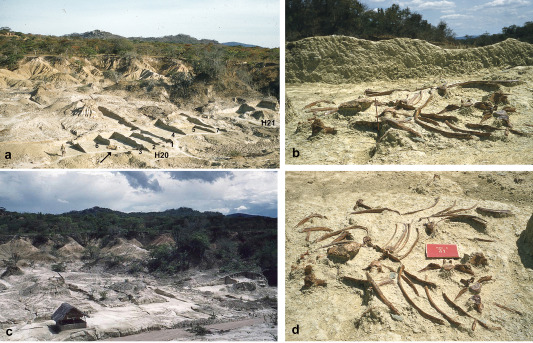
Faunal remains at the Isimila Prehistoric Site, Tanzania.
Source: Kleindienst, M. R., Blackwell, B. A., & Skinner, A. R. (2024). Isimila Prehistoric Site, Tanzania: Comparative Faunal Datings and ESR, with a Reassessment. Journal of African Earth Sciences, 211, 105156.

In addition to the axes and cleavers, the site also contains other tools such as spheroids, scrapers, and sharp stone chips resulting from the manufacturing process. The presence of such a wide variety of tools in a single location suggests that the site was the scene of multiple activities. Isimila is believed to have served as a “workshop site” or “butchering site,” where hominin groups congregated on the shores of the lake, taking advantage of the availability of water, raw materials, and animal resources.

Determining the precise age of the Isimila site has been a challenge for researchers. Early studies broadly estimated its age based on comparisons of tool types with other dated sites. However, recent studies using radiometric dating techniques, such as uranium-series dating on bones and argon-argon dating on volcanic deposits, have provided more accurate estimates. These estimates indicate that the main archaeological layers at Issemilla are between 260,000 and 500,000 years old, placing it in the late Lower Paleolithic.

The study of fossilized pollen grains and plant and animal remains has helped reconstruct the ancient environment at Issemilla. Evidence suggests the area was characterized by a mosaic environment consisting of grasslands (savannas) interspersed with forests and wooded areas along waterways and lake shores. This ecological diversity would have supported a wide range of animals, including extinct elephant species, hippopotamuses, giraffes, wild boars, and antelopes, whose fossilized remains have been found at the site. This resource-rich landscape made Isimila an attractive location for early human settlement.

Read also

Thousands attend funeral for Zimbabwe family murdered in Britain

30 African countries included in permanent visa bond scheme

South African coalition party goes to court over law that angered Trump

Despite the discovery of thousands of stone tools, no fossilized remains of hominins have yet been discovered at the Isimila site itself. However, based on the age of the site and the type of stone industry, the manufacture of these tools is generally attributed to Homo erectus or a closely related species such as Homo heidelbergensis. These hominins were known to have spread widely across Africa, Asia, and Europe during this period and are globally associated with the Acheulean industry.

The stone tools at the Isimila Stone Age site exhibit a high degree of standardization in design, suggesting a technological tradition passed down through generations. The ability to produce these symmetrical and complex tools from large blocks of rock required advanced cognitive abilities, including advance planning, a deep understanding of the properties of raw materials, and fine manual dexterity.

The significance of the Isimila site lies in several aspects. First, it offers one of the richest and best-preserved Acheulean toolkits in their geological context, making it a natural laboratory for the study of Paleolithic technology and behavior. Second, the unique geological formations help us understand the natural processes that influence the formation and preservation of archaeological sites. Third, the site contributes to our understanding of how early hominins adapted to diverse environments and exploited the resources available to them.

Today, the Isimila site is managed as part of Tanzania’s National Heritage and is open to visitors. A small museum has been established on-site to display some of the finds and provide information about its geological and archaeological history. Isimila represents a unique window into the prehistoric world, where silent stone tools and majestic sandstone columns reveal the story of ancient human activity on the shores of a forgotten lake in the heart of Africa.
Tags: Isimila Stone Age siteTanzania

Related Posts

South African, Namibian fortunes diverge in shared Orange Basin oil province
Economy

South African, Namibian fortunes diverge in shared Orange Basin oil province

August 2, 2026
Ghana to evacuate 300 citizens from South Africa after xenophobic attacks
Featured

South Africa says African Union backs broad migration debate

July 30, 2026
South Africa says over 900 arrested during nationwide anti-migrant protests
Featured

Nigeria and South Africa seek to ease tensions over xenophobic attacks

July 28, 2026
South Africa promises crackdown on xenophobic attacks after Ghana protests
Featured

Ghana repatriating another 1,000 nationals from South Africa

July 27, 2026
Africa facing $10-$20 billion economic hit from ‘super’ El Niño, AfDB climate chief warns
East Africa

Africa facing $10-$20 billion economic hit from ‘super’ El Niño, AfDB climate chief warns

July 26, 2026
Mali, Burkina Faso and Niger announce exit from International Criminal Court
Featured

Ghanaian nationals ask ICC to probe xenophobic violence in South Africa

July 23, 2026

Search Qiraat Africa

No Result
View All Result

Follow on Twitter

Follow @africanqiraat

Trending

Kumbi Saleh, the capital of the ancient Ghana Empire

Kumbi Saleh, the capital of the ancient Ghana Empire

October 13, 2025
Authorities in Tigray accuse Addis Ababa of ‘launching open war’

Authorities in Tigray accuse Addis Ababa of ‘launching open war’

August 2, 2026
Mansa Musa of Mali Empire

Mansa Musa of Mali Empire

April 14, 2025
The Sudd wetland

The Sudd wetland

February 13, 2026
Zaghawa people of northeastern Chad and western Sudan

Zaghawa people of northeastern Chad and western Sudan

March 3, 2026
Samori Touré (1830-1900): Military leader and founder of Wassoulou Empire

Samori Touré (1830-1900): Military leader and founder of Wassoulou Empire

January 11, 2026

Facebook

Sections

  • About Us
  • Privacy Policy
  • Opinion
  • Infographics
  • News
  • Analysis
  • Figures
  • Culture & Literature
  • Follow Ups
  • Historical Readings
  • Interview
  • Studies


© Copyright Qiraat Africa. Developed by Bunnaj Media .

No Result
View All Result
  • News
  • Analysis & Report
  • Studies
  • Opinion
  • Interview
  • Culture & Literature
  • Figures
  • Historical Readings
  • Regions

© 2021 Copyright Qiraat Africa.