

Qiraat Africa
عربي  |  Fr
Advertisement
  • News
    • All
    • Climate Change
    • Economy
    • Education
    • Energy
    • Health
    • Migration
    • Mining
    • Politics
    • Security
    • Society
    • Sport
    Benin’s President Talon thanks army leaders for “remaining loyal” in face of attempted coup

    Benin’s Talon bids farewell ahead of Wadagni inauguration, Sunday

    Nigeria busts meth cartel in largest seizure, arrests kingpin

    Nigeria busts meth cartel in largest seizure, arrests kingpin

    Sierra Leone receives first group of West African deportees from US

    Sierra Leone receives first group of West African deportees from US

    WHO declares Ebola outbreak in Congo, Uganda an emergency of international concern

    India, Africa Union postpone New Delhi summit amid Ebola outbreak

    Rwanda says DR Congo shelling injured its citizens

    Rwanda tightens border controls over deadly Ebola outbreak in DR Congo

    Nigeria arrests ex-power minister Mamman after 75-year graft sentence

    Nigeria arrests ex-power minister Mamman after 75-year graft sentence

    Ethiopia says Ghebreyesus, WHO chief has links to rebellious Tigrayan forces

    WHO says 139 suspected Ebola deaths in Congo outbreak, numbers expected to rise

    South Africa may get $1 bln loan from World Bank to tackle power crisis

    South Africa’s biggest city could have power supply throttled over unpaid debts

    Ugandan government sets up border controls amid DRC Ebola outbreak

    Ugandan government sets up border controls amid DRC Ebola outbreak

  • Analysis
    • All
    • Climate Change
    • Digital & Tech
    • Economy
    • Energy & Power
    • Health
    • Politics
    • Security
    • Society
    Nigeria’s Agricultural sector: Problems and challenges

    Agriculture in Africa: science and research cannot have an impact without investments and good policies

    Mali’s junta creates a new ministerial-level post to oversee the mining sector

    African Mineral Resources: The Controversial Link to US Health Deals

    Ghana curbs offshore investments to protect cedi, boost stability

    Ghana’s mining law attempts to eradicate speculation, but leaves communities in limbo: insights from a lithium case study

    East African Community’s expansion has triggered financial difficulties: why solutions come with risks

    East African Community’s expansion has triggered financial difficulties: why solutions come with risks

    Nigeria’s new election laws leaves gaps: Here are 5 reforms for free, fair, and credible elections

    Nigeria’s new election laws leaves gaps: Here are 5 reforms for free, fair, and credible elections

    Impact of Kenya’s long-overdue new infrastructure fund may be limited by design problems

    Impact of Kenya’s long-overdue new infrastructure fund may be limited by design problems

    Why Africans Are Targeted by Recruitment Networks in the Ukraine-Russia War?

    Why Africans Are Targeted by Recruitment Networks in the Ukraine-Russia War?

    From Water Security to Geopolitical Realignment: Key Takeaways and Outcomes of the 39th African Union Summit 2026

    From Water Security to Geopolitical Realignment: Key Takeaways and Outcomes of the 39th African Union Summit 2026

    Rohingya Genocide: Why The Gambia Demands Justice at the International Court

    Rohingya Genocide: Why The Gambia Demands Justice at the International Court

  • Studies
    Pensions for Botswana’s elderly are expanding, but care services are lacking—study follows 20 years

    Pensions for Botswana’s elderly are expanding, but care services are lacking—study follows 20 years

    60 new cosmic structures have been discovered by South Africa’s MeerKAT telescope, which is mapping previously unseen gaps between galaxies

    60 new cosmic structures have been discovered by South Africa’s MeerKAT telescope, which is mapping previously unseen gaps between galaxies

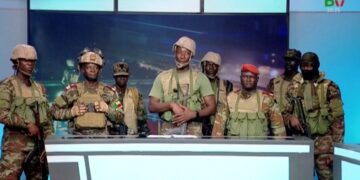
    Benin government says armed forces foil coup attempt

    Coup contagion? A rash of African power grabs suggests copycats are taking note of others’ success

    One in three South Africans have never heard of AI: what this means for policy

    One in three South Africans have never heard of AI: what this means for policy

    Social Media as a Catalyst for the Spread of Dangerous Wealth Ritual Myths

    Social Media as a Catalyst for the Spread of Dangerous Wealth Ritual Myths

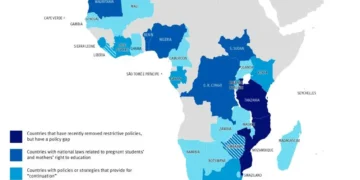
    Overcoming Education Barriers for Young Mothers in Sub-Saharan Africa

    Overcoming Education Barriers for Young Mothers in Sub-Saharan Africa

    Youth Empowerment Through Vocational Training in Rural Sub-Saharan Africa

    Youth Empowerment Through Vocational Training in Rural Sub-Saharan Africa

    Manufacturers in Ghana and Nigeria claim that although corruption damages businesses, digital technologies provide a chance to combat it

    Manufacturers in Ghana and Nigeria claim that although corruption damages businesses, digital technologies provide a chance to combat it

    Environmental Threats and Conservation Efforts in Namibia

    Environmental Threats and Conservation Efforts in Namibia

  • Infographics
  • Figures
    Abebe Bikila (1932-1973): Ethiopian marathoner and first black African to win an Olympic medal

    Abebe Bikila (1932-1973): Ethiopian marathoner and first black African to win an Olympic medal

    W. E. B. Du Bois (1868-1963): Sociologist, historian, and Pan-Africanist civil rights activist

    W. E. B. Du Bois (1868-1963): Sociologist, historian, and Pan-Africanist civil rights activist

    Frantz Fanon (1925-1961): Psychiatrist and political philosopher

    Frantz Fanon (1925-1961): Psychiatrist and political philosopher

    Percy Lavon Julian (1899-1975): African American researcher and chemist

    Percy Lavon Julian (1899-1975): African American researcher and chemist

    Harriet Tubman (Araminta Ross, 1822-1913): American abolitionist and social activist

    Harriet Tubman (Araminta Ross, 1822-1913): American abolitionist and social activist

    Dorothy Vaughan (1910-2008): African American mathematician and human computer

    Dorothy Vaughan (1910-2008): African American mathematician and human computer

    George Washington Carver (1864-1943): African American agricultural scientist and inventor

    George Washington Carver (1864-1943): African American agricultural scientist and inventor

    Ellen Johnson Sirleaf, former President of Liberia

    Ellen Johnson Sirleaf, former President of Liberia

    Samora Machel (1933–1986): Mozambican politician and revolutionary

    Samora Machel (1933–1986): Mozambican politician and revolutionary

  • History
    The Land of Punt (modern Somalia, Eritrea, Ethiopia, or eastern Sudan)

    The Land of Punt (modern Somalia, Eritrea, Ethiopia, or eastern Sudan)

    Avenue of the Baobabs, Madagascar

    Avenue of the Baobabs, Madagascar

    Lopé-Okanda (Gabon)

    Lopé-Okanda (Gabon)

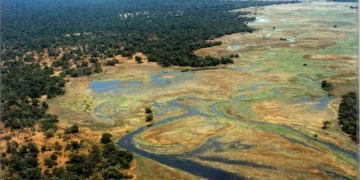
    The Sudd wetland

    The Sudd wetland

    Khami Ruins (Zimbabwe), the capital of the Torwa state

    Khami Ruins (Zimbabwe), the capital of the Torwa state

    Royal Palace, Porto-Novo, Republic of Benin

    Royal Palace, Porto-Novo, Republic of Benin

    W-Arly-Pendjari Complex, the West African wildlife sanctuary

    W-Arly-Pendjari Complex, the West African wildlife sanctuary

    Royal Court of Tiébélé, Burkina Faso

    Royal Court of Tiébélé, Burkina Faso

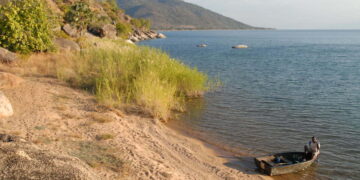
    Lake Tanganyika, the world’s longest freshwater lake

    Lake Tanganyika, the world’s longest freshwater lake

  • Others
    • Culture / Literature
    • Interview
    • Opinion
  • Countries
    • Country profiles
    • Regions
      • Central Africa
      • East Africa
      • Southern Africa
      • West Africa
No Result
View All Result
  • News
    • All
    • Climate Change
    • Economy
    • Education
    • Energy
    • Health
    • Migration
    • Mining
    • Politics
    • Security
    • Society
    • Sport
    Benin’s President Talon thanks army leaders for “remaining loyal” in face of attempted coup

    Benin’s Talon bids farewell ahead of Wadagni inauguration, Sunday

    Nigeria busts meth cartel in largest seizure, arrests kingpin

    Nigeria busts meth cartel in largest seizure, arrests kingpin

    Sierra Leone receives first group of West African deportees from US

    Sierra Leone receives first group of West African deportees from US

    WHO declares Ebola outbreak in Congo, Uganda an emergency of international concern

    India, Africa Union postpone New Delhi summit amid Ebola outbreak

    Rwanda says DR Congo shelling injured its citizens

    Rwanda tightens border controls over deadly Ebola outbreak in DR Congo

    Nigeria arrests ex-power minister Mamman after 75-year graft sentence

    Nigeria arrests ex-power minister Mamman after 75-year graft sentence

    Ethiopia says Ghebreyesus, WHO chief has links to rebellious Tigrayan forces

    WHO says 139 suspected Ebola deaths in Congo outbreak, numbers expected to rise

    South Africa may get $1 bln loan from World Bank to tackle power crisis

    South Africa’s biggest city could have power supply throttled over unpaid debts

    Ugandan government sets up border controls amid DRC Ebola outbreak

    Ugandan government sets up border controls amid DRC Ebola outbreak

  • Analysis
    • All
    • Climate Change
    • Digital & Tech
    • Economy
    • Energy & Power
    • Health
    • Politics
    • Security
    • Society
    Nigeria’s Agricultural sector: Problems and challenges

    Agriculture in Africa: science and research cannot have an impact without investments and good policies

    Mali’s junta creates a new ministerial-level post to oversee the mining sector

    African Mineral Resources: The Controversial Link to US Health Deals

    Ghana curbs offshore investments to protect cedi, boost stability

    Ghana’s mining law attempts to eradicate speculation, but leaves communities in limbo: insights from a lithium case study

    East African Community’s expansion has triggered financial difficulties: why solutions come with risks

    East African Community’s expansion has triggered financial difficulties: why solutions come with risks

    Nigeria’s new election laws leaves gaps: Here are 5 reforms for free, fair, and credible elections

    Nigeria’s new election laws leaves gaps: Here are 5 reforms for free, fair, and credible elections

    Impact of Kenya’s long-overdue new infrastructure fund may be limited by design problems

    Impact of Kenya’s long-overdue new infrastructure fund may be limited by design problems

    Why Africans Are Targeted by Recruitment Networks in the Ukraine-Russia War?

    Why Africans Are Targeted by Recruitment Networks in the Ukraine-Russia War?

    From Water Security to Geopolitical Realignment: Key Takeaways and Outcomes of the 39th African Union Summit 2026

    From Water Security to Geopolitical Realignment: Key Takeaways and Outcomes of the 39th African Union Summit 2026

    Rohingya Genocide: Why The Gambia Demands Justice at the International Court

    Rohingya Genocide: Why The Gambia Demands Justice at the International Court

  • Studies
    Pensions for Botswana’s elderly are expanding, but care services are lacking—study follows 20 years

    Pensions for Botswana’s elderly are expanding, but care services are lacking—study follows 20 years

    60 new cosmic structures have been discovered by South Africa’s MeerKAT telescope, which is mapping previously unseen gaps between galaxies

    60 new cosmic structures have been discovered by South Africa’s MeerKAT telescope, which is mapping previously unseen gaps between galaxies

    Benin government says armed forces foil coup attempt

    Coup contagion? A rash of African power grabs suggests copycats are taking note of others’ success

    One in three South Africans have never heard of AI: what this means for policy

    One in three South Africans have never heard of AI: what this means for policy

    Social Media as a Catalyst for the Spread of Dangerous Wealth Ritual Myths

    Social Media as a Catalyst for the Spread of Dangerous Wealth Ritual Myths

    Overcoming Education Barriers for Young Mothers in Sub-Saharan Africa

    Overcoming Education Barriers for Young Mothers in Sub-Saharan Africa

    Youth Empowerment Through Vocational Training in Rural Sub-Saharan Africa

    Youth Empowerment Through Vocational Training in Rural Sub-Saharan Africa

    Manufacturers in Ghana and Nigeria claim that although corruption damages businesses, digital technologies provide a chance to combat it

    Manufacturers in Ghana and Nigeria claim that although corruption damages businesses, digital technologies provide a chance to combat it

    Environmental Threats and Conservation Efforts in Namibia

    Environmental Threats and Conservation Efforts in Namibia

  • Infographics
  • Figures
    Abebe Bikila (1932-1973): Ethiopian marathoner and first black African to win an Olympic medal

    Abebe Bikila (1932-1973): Ethiopian marathoner and first black African to win an Olympic medal

    W. E. B. Du Bois (1868-1963): Sociologist, historian, and Pan-Africanist civil rights activist

    W. E. B. Du Bois (1868-1963): Sociologist, historian, and Pan-Africanist civil rights activist

    Frantz Fanon (1925-1961): Psychiatrist and political philosopher

    Frantz Fanon (1925-1961): Psychiatrist and political philosopher

    Percy Lavon Julian (1899-1975): African American researcher and chemist

    Percy Lavon Julian (1899-1975): African American researcher and chemist

    Harriet Tubman (Araminta Ross, 1822-1913): American abolitionist and social activist

    Harriet Tubman (Araminta Ross, 1822-1913): American abolitionist and social activist

    Dorothy Vaughan (1910-2008): African American mathematician and human computer

    Dorothy Vaughan (1910-2008): African American mathematician and human computer

    George Washington Carver (1864-1943): African American agricultural scientist and inventor

    George Washington Carver (1864-1943): African American agricultural scientist and inventor

    Ellen Johnson Sirleaf, former President of Liberia

    Ellen Johnson Sirleaf, former President of Liberia

    Samora Machel (1933–1986): Mozambican politician and revolutionary

    Samora Machel (1933–1986): Mozambican politician and revolutionary

  • History
    The Land of Punt (modern Somalia, Eritrea, Ethiopia, or eastern Sudan)

    The Land of Punt (modern Somalia, Eritrea, Ethiopia, or eastern Sudan)

    Avenue of the Baobabs, Madagascar

    Avenue of the Baobabs, Madagascar

    Lopé-Okanda (Gabon)

    Lopé-Okanda (Gabon)

    The Sudd wetland

    The Sudd wetland

    Khami Ruins (Zimbabwe), the capital of the Torwa state

    Khami Ruins (Zimbabwe), the capital of the Torwa state

    Royal Palace, Porto-Novo, Republic of Benin

    Royal Palace, Porto-Novo, Republic of Benin

    W-Arly-Pendjari Complex, the West African wildlife sanctuary

    W-Arly-Pendjari Complex, the West African wildlife sanctuary

    Royal Court of Tiébélé, Burkina Faso

    Royal Court of Tiébélé, Burkina Faso

    Lake Tanganyika, the world’s longest freshwater lake

    Lake Tanganyika, the world’s longest freshwater lake

  • Others
    • Culture / Literature
    • Interview
    • Opinion
  • Countries
    • Country profiles
    • Regions
      • Central Africa
      • East Africa
      • Southern Africa
      • West Africa
No Result
View All Result
Qiraat Africa
عربي  |  Fr
No Result
View All Result
Home Regions Central Africa

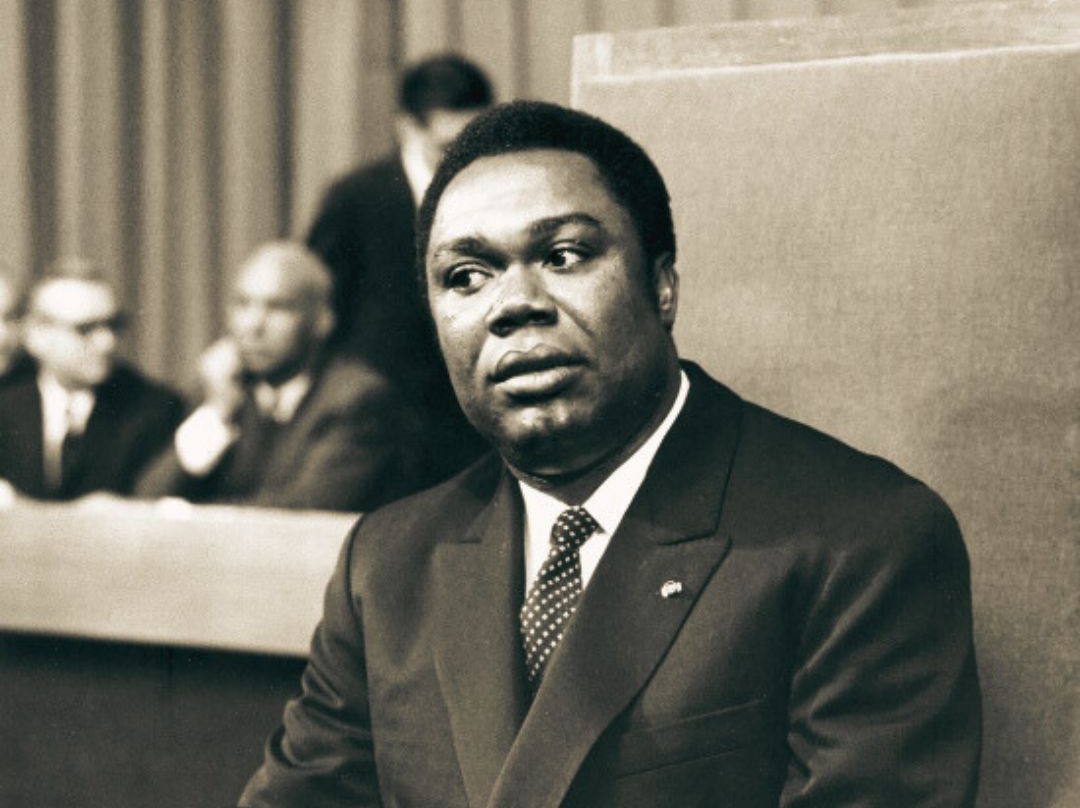
David Dacko (1930-2003): The first President of the Central African Republic

September 9, 2025
David Dacko (1930-2003): The first President of the Central African Republic
Share on FacebookShare on Twitter

David Dacko occupies a complex position in the political history of the Central African Republic. As the country’s first president after independence, and then his return to power a decade and a half after his overthrow, his political trajectory largely reflects the instability and foreign intervention that characterized the nascent state’s history. An analysis of his reign offers insight into the challenges his nation faced during its formative stages, from building state institutions to managing internal and external political balances.

David Dacko was born on March 24, 1930, in the village of Botchanga, located in the Ubangi-Shari Prefecture, then part of French Equatorial Africa. He belonged to the Mbaka ethnic group. He received his primary education in Bangui, then moved to the teacher training school in Mobaye, graduating and working as a school principal in Bangui.

Dacko began his political career under the auspices of his cousin, Barthélemy Boganda, a charismatic figure and leader of the Ubangi-Shari independence movement. Boganda was the founder of the Movement for the Social Evolution of Black Africa (MESAN), the country’s dominant political party. Dacko joined the party and quickly became close to Boganda, leveraging this relationship to advance his political career. After winning a seat in the regional legislative assembly in 1957, he held several ministerial positions in Boganda’s government, including the Ministry of Agriculture and the Ministry of the Interior.

Boganda’s sudden death in a plane crash in March 1959 marked a crucial turning point. Amid the struggle for succession, Dacko, with the support of French troops and local businessmen who viewed him as a more moderate and approachable figure than other contenders, was able to assume the presidency of the government. When the country gained independence from France on August 13, 1960, David Dacko became the first president of the Central African Republic.

From the outset, Dacko faced significant challenges. The country lacked the infrastructure, strong government institutions, and educated cadres to govern the country. Economically, the republic was almost entirely dependent on France and on limited exports of diamonds, cotton, and coffee.

Politically, Dacko quickly moved to consolidate his power and marginalize the opposition. In 1962, he made his party (MESAN) the sole legal party in the country, establishing a one-party system. Opposition leaders, such as Abel Nguéndé Goumba, were arrested, and any form of independent political expression was suppressed. Dacko justified these measures by the need to maintain national unity in the face of ethnic and political divisions, a common justification for many post-independence leaders in Africa.

Economically, Dacko attempted to diversify sources of income, but his efforts were not met with great success. His first term in office witnessed marked economic decline, with widespread administrative corruption, mounting debt, and the failure of development plans to achieve their objectives. His government relied heavily on financial and military support from France to maintain its stability.

One of his most notable foreign policy decisions was the establishment of diplomatic relations with the People’s Republic of China in 1964, which angered some conservative circles at home and in France. However, the relationship with Paris remained a cornerstone of his foreign policy.

By the end of 1965, the country was on the verge of bankruptcy. Salaries for civil servants and the army were continually delayed, leading to public discontent. In this tense context, the army chief of staff, Colonel Jean-Bédel Bokassa, also a relative of Dacko, began plotting a seizure of power.

On the night of December 31, 1965, to January 1, 1966, Colonel Bokassa (Emperor Bokassa I) carried out a bloodless military coup, known as the “Saint-Sylvestre coup d’état.” The army seized vital sites in the capital, Bangui, and Dacko was placed under house arrest. Initially, Dacko was forced to formally resign and then imprisoned for several years before Bokassa released him and appointed him as his personal advisor in 1976, a move apparently intended to legitimize his regime, which later became an empire. Dacko remained in this ceremonial position until Bokassa’s fall.

After thirteen years of mismanaged rule, Emperor Bokassa I was removed from power in September 1979. His overthrow was the result of a direct French military intervention known as “Operation Barracuda.” This operation restored David Dacko to the presidency; he was flown from Paris to Bangui by French troops.

Dacko’s return to power was controversial from the outset. Many in the Central African Republic viewed him not as a savior, but rather as a figure imposed by France to ensure the continuation of its interests. His new government faced strong opposition from political figures who had fought against Bokassa’s regime, such as Abel Gomba and Ange-Félix Patassé, who saw Dacko’s return as undermining the people’s aspirations for genuine democratic change.

Dacko attempted to establish a multi-party system under popular and French pressure. In March 1981, presidential elections were held, with Dacko winning 51.1% of the vote amid widespread allegations of fraud. The election results sparked protests and riots in the capital, exposing the depth of political divisions and the fragility of Dacko’s legitimacy.

During his short second term, the economy continued to deteriorate, and instability deepened. Dacko failed to unify the country or address the structural problems he inherited from Bokassa’s regime. He remained heavily dependent on the French military presence to maintain his regime, weakening his sovereignty and ability to make independent decisions.

The Second Coup and the Later Years
Less than two years after his return, and amid growing political unrest and economic instability, David Dacko was ousted again in a bloodless military coup on September 1, 1981. This time, the coup was led by Army Chief of Staff General André Kolingba, who suspended the constitution and banned political parties.

Read also

WHO says 139 suspected Ebola deaths in Congo outbreak, numbers expected to rise

Health experts meet in search of Ebola Bundibugyo vaccine options

Ebola deaths in eastern Congo rise to 131 as outbreak spreads

After his second ouster, Dacko was allowed to remain in the country but was placed under house arrest for a period. With the return of multiparty politics in the early 1990s, he attempted a political comeback. He founded his own party and participated in the annulled 1992 presidential elections and then in the 1993 elections, won by Ange-Félix Patassé, with Dacko coming in third. He also ran unsuccessfully in the 1999 elections.

In his later years, Dacko became a minor political figure, although his voice remained heard on occasion. He participated in the 2003 National Dialogue following the ouster of President Ange-Félix Patassé.

David Dacko died on November 20, 2003, in Yaoundé, Cameroon, after a long illness, at the age of 73.
Tags: Central African RepublicDavid Dacko

Related Posts

MSF accuses all South Sudan forces of exploiting aid for military objectives
Central Africa

MSF accuses all South Sudan forces of exploiting aid for military objectives

May 19, 2026
South Sudan marks SPLA Day for first time since 2013 civil war
Central Africa

South Sudan marks SPLA Day for first time since 2013 civil war

May 17, 2026
Cameroon uncovers more than 200 illegal gold mines, mostly foreign-owned
Central Africa

Cameroon uncovers more than 200 illegal gold mines, mostly foreign-owned

May 14, 2026
Land quarrels in rebel-occupied Congo threaten Trump peace deal
Central Africa

Rights group says M23, Rwandan army committed killings, rapes in Congo’s Uvira

May 14, 2026
Nigeria’s Agricultural sector: Problems and challenges
Central Africa

Agriculture in Africa: science and research cannot have an impact without investments and good policies

May 13, 2026
DR Congo opposition leader Fayulu confirms presidential candidacy
Central Africa

DR Congo’s Fayulu says Tshisekedi wants to cling to power ‘at any cost’

May 10, 2026

Search Qiraat Africa

No Result
View All Result

Follow on Twitter

Follow @africanqiraat

Trending

Zimbabwe’s banking sector faces 75% job decrease Since 2000

China writes off unspecified amount of Zimbabwe interest-free loan

April 18, 2024
Brief History and Culture of the City of Lagos, Nigeria

Brief History and Culture of the City of Lagos, Nigeria

July 24, 2024
Kumbi Saleh, the capital of the ancient Ghana Empire

Kumbi Saleh, the capital of the ancient Ghana Empire

October 13, 2025
Tuareg: The Blue People of the Sahara

Tuareg: The Blue People of the Sahara

May 23, 2025
Equatorial Guinea

Equatorial Guinea orders crackdown on sex in government offices after videos leaked

November 6, 2024
Tunka Manin (c. 1010–1078), the last ruler of the Ghana Empire

Tunka Manin (c. 1010–1078), the last ruler of the Ghana Empire

December 12, 2025

Facebook

Sections

  • About Us
  • Privacy Policy
  • Opinion
  • Infographics
  • News
  • Analysis
  • Figures
  • Culture & Literature
  • Follow Ups
  • Historical Readings
  • Interview
  • Studies


© Copyright Qiraat Africa. Developed by Bunnaj Media .

No Result
View All Result
  • News
  • Analysis & Report
  • Studies
  • Opinion
  • Interview
  • Culture & Literature
  • Figures
  • Historical Readings
  • Regions

© 2021 Copyright Qiraat Africa.