



Qiraat Africa
عربي  |  Fr
Advertisement
  • News
    • All
    • Climate Change
    • Economy
    • Education
    • Energy
    • Health
    • Migration
    • Mining
    • Politics
    • Security
    • Society
    • Sport
    Guinea-Bissau to hold referendum on expanding presidential power

    Guinea-Bissau to hold referendum on expanding presidential power

    Nigerian First Lady tells critics her husband is not a magician

    Nigeria to investigate tech firms over news content use

    Senegal’s President Faye says ruling party, led by PM Sonko, risks ‘collapse’

    Senegal’s Faye plans to form his own political party

    In Democratic Republic of Congo, Ebola At Its Brim

    Second Ebola treatment centre opens in North Kivu

    Tanzania’s president dismisses foreign, information ministers

    Tanzania on edge ahead of planned protests

    Cape Verde’s World Cup team returns home to a hero’s welcome

    Cape Verde’s World Cup team returns home to a hero’s welcome

    Production starts at Senegal’s first offshore oil project

    Senegal’s Sangomar oil project has produced about 18 million barrels so far this year, document says

    Nigeria says two nationals killed in anti-migrant violence in South Africa

    Nigeria says two nationals killed in anti-migrant violence in South Africa

    What the AU’s new mission means for Somalia?

    Somalia peacekeeping mission at risk as US blocks UN support, sources say

  • Analysis
    • All
    • Climate Change
    • Digital & Tech
    • Economy
    • Energy & Power
    • Health
    • Politics
    • Security
    • Society
    Senegal’s top opposition leader Sonko vows to help win March 24 election

    Senegal at a Political Crossroads: The Faye–Sonko Rivalry and the Future of Democratic Governance

    Ulysses in isiZulu: Why an African translation of the classic Irish novel is important in today’s world

    Ulysses in isiZulu: Why an African translation of the classic Irish novel is important in today’s world

    The promise and risks of Kenya’s ambitious new strategy to close refugee camps

    The promise and risks of Kenya’s ambitious new strategy to close refugee camps

    Al Qaeda-linked militants curb their brutality in seized Malian territory

    Al Qaeda-linked militants curb their brutality in seized Malian territory

    Five Years After the Coup in Mali: Are Stability and Growth Within Reach?

    The Political Economy of Insecurity in Mali: Armed Groups, Resources, and State Fragility

    Ghana to evacuate 300 citizens from South Africa after xenophobic attacks

    Xenophobic Violence and Human Security in South Africa: Causes and Consequences

    Inside an African lab that helped crack the hantavirus outbreak

    Inside an African lab that helped crack the hantavirus outbreak

    Nigeria’s Agricultural sector: Problems and challenges

    Agriculture in Africa: science and research cannot have an impact without investments and good policies

    Mali’s junta creates a new ministerial-level post to oversee the mining sector

    African Mineral Resources: The Controversial Link to US Health Deals

  • Studies
    Angola’s lengthy war shaped the way farmers utilised fire—why it matters

    Angola’s lengthy war shaped the way farmers utilised fire—why it matters

    Schooling is the most severely affected by conflict when children are the target – Study

    Schooling is the most severely affected by conflict when children are the target – Study

    Pensions for Botswana’s elderly are expanding, but care services are lacking—study follows 20 years

    Pensions for Botswana’s elderly are expanding, but care services are lacking—study follows 20 years

    60 new cosmic structures have been discovered by South Africa’s MeerKAT telescope, which is mapping previously unseen gaps between galaxies

    60 new cosmic structures have been discovered by South Africa’s MeerKAT telescope, which is mapping previously unseen gaps between galaxies

    Benin government says armed forces foil coup attempt

    Coup contagion? A rash of African power grabs suggests copycats are taking note of others’ success

    One in three South Africans have never heard of AI: what this means for policy

    One in three South Africans have never heard of AI: what this means for policy

    Social Media as a Catalyst for the Spread of Dangerous Wealth Ritual Myths

    Social Media as a Catalyst for the Spread of Dangerous Wealth Ritual Myths

    Overcoming Education Barriers for Young Mothers in Sub-Saharan Africa

    Overcoming Education Barriers for Young Mothers in Sub-Saharan Africa

    Youth Empowerment Through Vocational Training in Rural Sub-Saharan Africa

    Youth Empowerment Through Vocational Training in Rural Sub-Saharan Africa

  • Infographics
  • Figures
    Marcus Garvey (1887-1940): Activist, Black nationalist, and Pan-Africanist

    Marcus Garvey (1887-1940): Activist, Black nationalist, and Pan-Africanist

    John B. Russwurm (1799–1851): Jamaican-born American abolitionist, publisher, and colonial governor

    John B. Russwurm (1799–1851): Jamaican-born American abolitionist, publisher, and colonial governor

    Winnie Mandela (1936-2018): South African politician and anti-apartheid activist

    Winnie Mandela (1936-2018): South African politician and anti-apartheid activist

    Abdias do Nascimento (1914-2011): Prominent African Brazilian scholar, artist, and politician

    Abdias do Nascimento (1914-2011): Prominent African Brazilian scholar, artist, and politician

    Edward Wilmot Blyden (1832-1912): Educator and former Secretary of State of Liberia

    Edward Wilmot Blyden (1832-1912): Educator and former Secretary of State of Liberia

    Eduardo Mondlane (1920-1969): Mozambican Revolutionary and Anthropologist

    Eduardo Mondlane (1920-1969): Mozambican Revolutionary and Anthropologist

    William Tubman (1895-1971): Liberian politician and longest-serving president in the country’s history

    William Tubman (1895-1971): Liberian politician and longest-serving president in the country’s history

    Abebe Bikila (1932-1973): Ethiopian marathoner and first black African to win an Olympic medal

    Abebe Bikila (1932-1973): Ethiopian marathoner and first black African to win an Olympic medal

    W. E. B. Du Bois (1868-1963): Sociologist, historian, and Pan-Africanist civil rights activist

    W. E. B. Du Bois (1868-1963): Sociologist, historian, and Pan-Africanist civil rights activist

  • History
    Laas Geel, Somalia

    Laas Geel, Somalia

    Lakes Of Ounianga, Chad

    Lakes Of Ounianga, Chad

    Nok Caves, Togo

    Nok Caves, Togo

    The Land of Punt (modern Somalia, Eritrea, Ethiopia, or eastern Sudan)

    The Land of Punt (modern Somalia, Eritrea, Ethiopia, or eastern Sudan)

    Avenue of the Baobabs, Madagascar

    Avenue of the Baobabs, Madagascar

    Lopé-Okanda (Gabon)

    Lopé-Okanda (Gabon)

    The Sudd wetland

    The Sudd wetland

    Khami Ruins (Zimbabwe), the capital of the Torwa state

    Khami Ruins (Zimbabwe), the capital of the Torwa state

    Royal Palace, Porto-Novo, Republic of Benin

    Royal Palace, Porto-Novo, Republic of Benin

  • Others
    • Culture / Literature
    • Interview
    • Opinion
  • Countries
    • Country profiles
    • Regions
      • Central Africa
      • East Africa
      • Southern Africa
      • West Africa
No Result
View All Result
  • News
    • All
    • Climate Change
    • Economy
    • Education
    • Energy
    • Health
    • Migration
    • Mining
    • Politics
    • Security
    • Society
    • Sport
    Guinea-Bissau to hold referendum on expanding presidential power

    Guinea-Bissau to hold referendum on expanding presidential power

    Nigerian First Lady tells critics her husband is not a magician

    Nigeria to investigate tech firms over news content use

    Senegal’s President Faye says ruling party, led by PM Sonko, risks ‘collapse’

    Senegal’s Faye plans to form his own political party

    In Democratic Republic of Congo, Ebola At Its Brim

    Second Ebola treatment centre opens in North Kivu

    Tanzania’s president dismisses foreign, information ministers

    Tanzania on edge ahead of planned protests

    Cape Verde’s World Cup team returns home to a hero’s welcome

    Cape Verde’s World Cup team returns home to a hero’s welcome

    Production starts at Senegal’s first offshore oil project

    Senegal’s Sangomar oil project has produced about 18 million barrels so far this year, document says

    Nigeria says two nationals killed in anti-migrant violence in South Africa

    Nigeria says two nationals killed in anti-migrant violence in South Africa

    What the AU’s new mission means for Somalia?

    Somalia peacekeeping mission at risk as US blocks UN support, sources say

  • Analysis
    • All
    • Climate Change
    • Digital & Tech
    • Economy
    • Energy & Power
    • Health
    • Politics
    • Security
    • Society
    Senegal’s top opposition leader Sonko vows to help win March 24 election

    Senegal at a Political Crossroads: The Faye–Sonko Rivalry and the Future of Democratic Governance

    Ulysses in isiZulu: Why an African translation of the classic Irish novel is important in today’s world

    Ulysses in isiZulu: Why an African translation of the classic Irish novel is important in today’s world

    The promise and risks of Kenya’s ambitious new strategy to close refugee camps

    The promise and risks of Kenya’s ambitious new strategy to close refugee camps

    Al Qaeda-linked militants curb their brutality in seized Malian territory

    Al Qaeda-linked militants curb their brutality in seized Malian territory

    Five Years After the Coup in Mali: Are Stability and Growth Within Reach?

    The Political Economy of Insecurity in Mali: Armed Groups, Resources, and State Fragility

    Ghana to evacuate 300 citizens from South Africa after xenophobic attacks

    Xenophobic Violence and Human Security in South Africa: Causes and Consequences

    Inside an African lab that helped crack the hantavirus outbreak

    Inside an African lab that helped crack the hantavirus outbreak

    Nigeria’s Agricultural sector: Problems and challenges

    Agriculture in Africa: science and research cannot have an impact without investments and good policies

    Mali’s junta creates a new ministerial-level post to oversee the mining sector

    African Mineral Resources: The Controversial Link to US Health Deals

  • Studies
    Angola’s lengthy war shaped the way farmers utilised fire—why it matters

    Angola’s lengthy war shaped the way farmers utilised fire—why it matters

    Schooling is the most severely affected by conflict when children are the target – Study

    Schooling is the most severely affected by conflict when children are the target – Study

    Pensions for Botswana’s elderly are expanding, but care services are lacking—study follows 20 years

    Pensions for Botswana’s elderly are expanding, but care services are lacking—study follows 20 years

    60 new cosmic structures have been discovered by South Africa’s MeerKAT telescope, which is mapping previously unseen gaps between galaxies

    60 new cosmic structures have been discovered by South Africa’s MeerKAT telescope, which is mapping previously unseen gaps between galaxies

    Benin government says armed forces foil coup attempt

    Coup contagion? A rash of African power grabs suggests copycats are taking note of others’ success

    One in three South Africans have never heard of AI: what this means for policy

    One in three South Africans have never heard of AI: what this means for policy

    Social Media as a Catalyst for the Spread of Dangerous Wealth Ritual Myths

    Social Media as a Catalyst for the Spread of Dangerous Wealth Ritual Myths

    Overcoming Education Barriers for Young Mothers in Sub-Saharan Africa

    Overcoming Education Barriers for Young Mothers in Sub-Saharan Africa

    Youth Empowerment Through Vocational Training in Rural Sub-Saharan Africa

    Youth Empowerment Through Vocational Training in Rural Sub-Saharan Africa

  • Infographics
  • Figures
    Marcus Garvey (1887-1940): Activist, Black nationalist, and Pan-Africanist

    Marcus Garvey (1887-1940): Activist, Black nationalist, and Pan-Africanist

    John B. Russwurm (1799–1851): Jamaican-born American abolitionist, publisher, and colonial governor

    John B. Russwurm (1799–1851): Jamaican-born American abolitionist, publisher, and colonial governor

    Winnie Mandela (1936-2018): South African politician and anti-apartheid activist

    Winnie Mandela (1936-2018): South African politician and anti-apartheid activist

    Abdias do Nascimento (1914-2011): Prominent African Brazilian scholar, artist, and politician

    Abdias do Nascimento (1914-2011): Prominent African Brazilian scholar, artist, and politician

    Edward Wilmot Blyden (1832-1912): Educator and former Secretary of State of Liberia

    Edward Wilmot Blyden (1832-1912): Educator and former Secretary of State of Liberia

    Eduardo Mondlane (1920-1969): Mozambican Revolutionary and Anthropologist

    Eduardo Mondlane (1920-1969): Mozambican Revolutionary and Anthropologist

    William Tubman (1895-1971): Liberian politician and longest-serving president in the country’s history

    William Tubman (1895-1971): Liberian politician and longest-serving president in the country’s history

    Abebe Bikila (1932-1973): Ethiopian marathoner and first black African to win an Olympic medal

    Abebe Bikila (1932-1973): Ethiopian marathoner and first black African to win an Olympic medal

    W. E. B. Du Bois (1868-1963): Sociologist, historian, and Pan-Africanist civil rights activist

    W. E. B. Du Bois (1868-1963): Sociologist, historian, and Pan-Africanist civil rights activist

  • History
    Laas Geel, Somalia

    Laas Geel, Somalia

    Lakes Of Ounianga, Chad

    Lakes Of Ounianga, Chad

    Nok Caves, Togo

    Nok Caves, Togo

    The Land of Punt (modern Somalia, Eritrea, Ethiopia, or eastern Sudan)

    The Land of Punt (modern Somalia, Eritrea, Ethiopia, or eastern Sudan)

    Avenue of the Baobabs, Madagascar

    Avenue of the Baobabs, Madagascar

    Lopé-Okanda (Gabon)

    Lopé-Okanda (Gabon)

    The Sudd wetland

    The Sudd wetland

    Khami Ruins (Zimbabwe), the capital of the Torwa state

    Khami Ruins (Zimbabwe), the capital of the Torwa state

    Royal Palace, Porto-Novo, Republic of Benin

    Royal Palace, Porto-Novo, Republic of Benin

  • Others
    • Culture / Literature
    • Interview
    • Opinion
  • Countries
    • Country profiles
    • Regions
      • Central Africa
      • East Africa
      • Southern Africa
      • West Africa
No Result
View All Result
Qiraat Africa
عربي  |  Fr
No Result
View All Result
Home Regions Central Africa

François (Ngarta) Tombalbaye (1918-1975): First President of Chad

September 13, 2025
François (Ngarta) Tombalbaye (1918-1975): First President of Chad

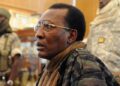
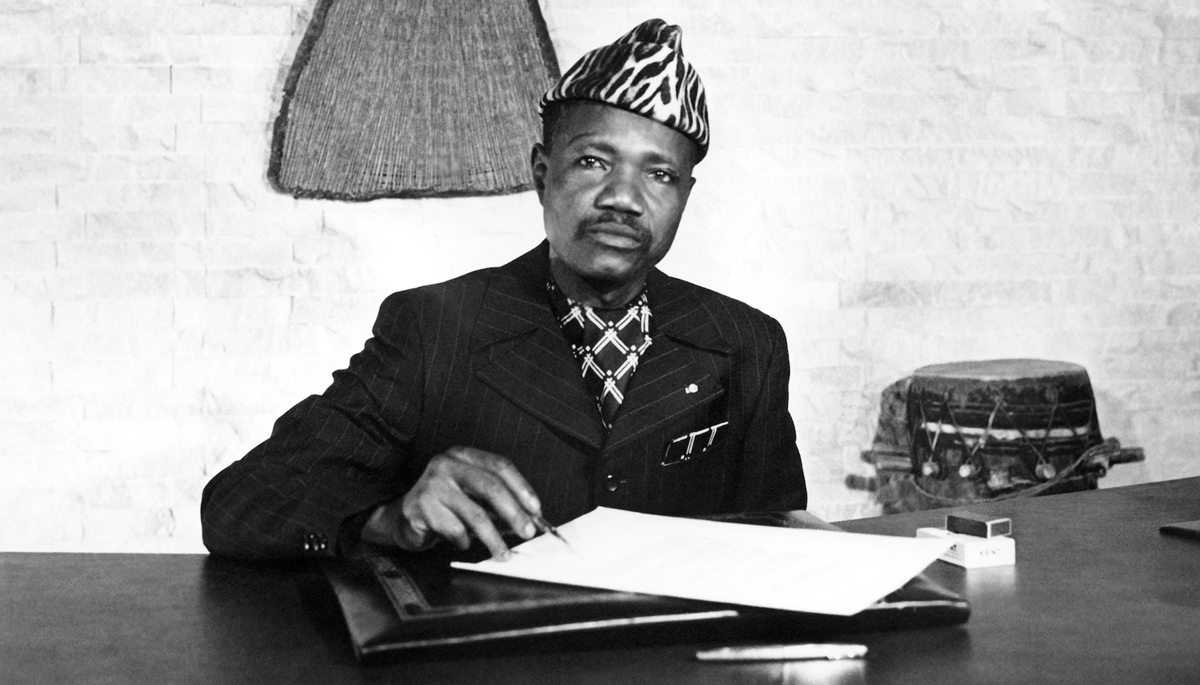
Ngarta Tombalbaye in 1974 © AFP

Share on FacebookShare on Twitter

François Tombalbaye, who later changed his name to Ngarta Tombalbaye, represents a pivotal and complex figure in Chad’s modern history. As the country’s first president after independence from France in 1960, he was tasked with building a nation from a highly diverse ethnic, religious, and geographic mosaic. However, his journey, which began with hopes of independence and unity, ended in a bloody coup after fifteen years of authoritarian rule, leaving behind a legacy of political and social divisions whose effects are still felt in Chad today.

François Tombalbaye was born in 1918 in the small village of Béssada in southern Chad, then part of French Equatorial Africa. He belonged to the Sara ethnic group, the largest ethnic group in the south, which, unlike the Muslim Saharan north, was predominantly Christian and pagan. This geographic, ethnic, and religious affiliation would later form the cornerstone of his political identity and orientation.

Tombalbaye, unlike most of his peers, had the opportunity to receive an education in French missionary schools, becoming a teacher. This profession gave him social standing and provided him with the opportunity to travel and gain insight into the conditions of the South, deepening his political and social awareness. In the 1940s, he became involved in union work, defending the rights of Chadian teachers and workers, which led him to the world of politics.

In 1947, he was among the founders of the Chadian Progressive Party (PPT), a local branch of the African Democratic Rally (RAD), the broader African political movement that called for decolonization. Tombalbaye quickly emerged as a powerful voice within the party, representing the interests of southerners who felt marginalized economically and politically by the French colonial administration, while at times favoring traditional elites in the north. His oratorical style and organizational ability saw him rise rapidly through the party ranks, becoming its leader in 1959.

Read also

DR Congo says confirmed Ebola cases rise to 1003, including 254 deaths

African, Caribbean states back slavery reparations plan at Ghana meeting

Vietnamese man deported to South Sudan by US leaves for home

When Chad gained independence on August 11, 1960, François Tombalbaye became its first president. From day one, he faced the enormous challenge of building a national identity for a country whose borders were not the product of natural historical development but rather of lines drawn on the map by the French colonialists. The nascent nation was sharply divided: the south, to which Tombalbaye belonged, was more developed in terms of education and infrastructure thanks to French investment and missionary missions, and its people dominated the administration and the army. In contrast, the north, the vast desert region with a Muslim majority, felt marginalized and isolated and viewed the new southern-dominated government with suspicion.

Tombalbaye initially attempted to adopt a unity rhetoric, but his actual policies soon revealed a clear bias toward his region. He appointed a large number of southerners to key government positions while marginalizing many northern leaders. His economic policies also focused on developing the South, particularly cotton cultivation, which was the main source of income, deepening the sense of injustice among northerners.

Tombalbaye did not tolerate any political opposition. Shortly after independence, he banned all political parties except his own, the Chadian Progressive Party (PPT), declaring a one-party system in 1962. He justified this move by citing the need to preserve national unity and prevent tribal and political divisions, but in reality, it was a means of consolidating his absolute power and eliminating any competing voices. Many political opponents, both from the north and even from the south, who criticized his style of governance were arrested and imprisoned.

By the mid-1960s, discontent in the north had escalated into armed rebellion. In 1966, the National Liberation Front of Chad (FROLINAT) was founded, an umbrella rebel movement bringing together various groups from the north and east, with the aim of overthrowing Tombalbaye’s regime. The FROLINAT accused his government of corruption, nepotism, repression of Muslims, and excessive subservience to France.

Tombalbaye found himself embroiled in a protracted civil war. He was forced to rely heavily on French military support to suppress the rebellion, with French forces repeatedly intervening to save his regime from collapse. This reliance on the former colonial power weakened his legitimacy in the eyes of many Chadians and portrayed him as a leader who could not remain in power without external protection.

In an attempt to address the cultural and political crisis and assert a Chadian identity independent of Western influence, Tombalbaye launched the “Authenticity” campaign in the early 1970s. This campaign included a series of radical measures, such as changing his name from François to “Ngarta” (the true leader) and forcing all citizens and officials with Christian or French names to replace them with traditional African names. Also, all southern men holding positions in the administration or the military were required to undergo the Yondo Ritual, a rigorous traditional initiation rite specific to the Sara ethnic group. Many, especially Christians and southern intellectuals, viewed this measure as an insult and a forced practice of rituals they did not believe in, alienating even his traditional political base. Local cultures and languages ​​were also promoted at the expense of French and Western culture.

Although the campaign’s stated goal was to strengthen national identity, it backfired. Instead of uniting the country, it deepened divisions. Muslims in the north viewed it as further evidence of the dominance of the southern Sara culture, while many southerners viewed it as tribal domination by the president.

By the early 1970s, Tombalbaye’s regime was reeling under the weight of an ongoing civil war, a stifling economic crisis exacerbated by a severe drought in the Sahel, and growing popular discontent with his repressive and unpredictable policies, and he lost the trust of even his closest allies in the army and administration.

Constantly fearful of plots, he carried out sweeping purges within the army, arresting and executing several prominent officers, creating a climate of fear and apprehension within the military establishment. This move proved to be the final straw.

On April 13, 1975, army and gendarmerie units moved into the capital, N’Djamena, and attacked the presidential palace. Ngarta Tombalbaye was killed in the attack, bringing an end to his fifteen-year rule. The army announced the formation of a Supreme Military Council led by General Félix Malloum Ngakoutou Bey-Ndi, a southern officer Tombalbaye had previously imprisoned.

Tags: ChadFélix MalloumFélix Malloum Ngakoutou Bey-NdiFrançois TombalbayeN'DjamenaNgarta

Related Posts

China’s exports to Africa surge after US trade upheaval
Central Africa

China’s African tariff removals, trade surge spur yuan adoption

June 18, 2026
UN-backed court in CAR issued arrest warrant for ex-president François Bozizé
Central Africa

Former CAR president faces crimes against humanity trial

June 16, 2026
Schooling is the most severely affected by conflict when children are the target – Study
Central Africa

Schooling is the most severely affected by conflict when children are the target – Study

June 15, 2026
Marcus Garvey (1887-1940): Activist, Black nationalist, and Pan-Africanist
Diaspora

Marcus Garvey (1887-1940): Activist, Black nationalist, and Pan-Africanist

June 14, 2026
DR Congo and Uganda report 263 confirmed Ebola cases with 43 deaths, Africa CDC says
Central Africa

Health workers struggle to contain Ebola in Congo camps as distrust grows

June 14, 2026
John B. Russwurm (1799–1851): Jamaican-born American abolitionist, publisher, and colonial governor
Diaspora

John B. Russwurm (1799–1851): Jamaican-born American abolitionist, publisher, and colonial governor

June 12, 2026

Search Qiraat Africa

No Result
View All Result

Follow on Twitter

Follow @africanqiraat

Trending

Kumbi Saleh, the capital of the ancient Ghana Empire

Kumbi Saleh, the capital of the ancient Ghana Empire

October 13, 2025
Meja Mwangi: The Literary Genius with a Mighty pen

Meja Mwangi: The Literary Genius with a Mighty pen

May 24, 2025
Tuareg: The Blue People of the Sahara

Tuareg: The Blue People of the Sahara

May 23, 2025
Zaghawa people of northeastern Chad and western Sudan

Zaghawa people of northeastern Chad and western Sudan

March 3, 2026
Mbunda people of Angola and Zambia

Mbunda people of Angola and Zambia

January 18, 2026
New date set for return of Patrice Lumumba’s tooth

Patrice Lumumba (1925-1961), Congolese politician and independence leader

March 4, 2025

Facebook

Sections

  • About Us
  • Privacy Policy
  • Opinion
  • Infographics
  • News
  • Analysis
  • Figures
  • Culture & Literature
  • Follow Ups
  • Historical Readings
  • Interview
  • Studies


© Copyright Qiraat Africa. Developed by Bunnaj Media .

No Result
View All Result
  • News
  • Analysis & Report
  • Studies
  • Opinion
  • Interview
  • Culture & Literature
  • Figures
  • Historical Readings
  • Regions

© 2021 Copyright Qiraat Africa.