



Qiraat Africa
عربي  |  Fr
Advertisement
  • News
    • All
    • Climate Change
    • Economy
    • Education
    • Energy
    • Health
    • Migration
    • Mining
    • Politics
    • Security
    • Society
    • Sport
    DR Congo President Tshisekedi seeks re-election in the forthcoming polls

    DR Congo court approves referendum law, fueling third-term debate

    Equatorial Guinea and Gabon resolve 50-year border dispute

    Equatorial Guinea and Gabon resolve 50-year border dispute

    Kenya probes potential toxin after 15 elephants die in Amboseli ecosystem

    Kenya probes potential toxin after 15 elephants die in Amboseli ecosystem

    WHO declares Ebola outbreak in Congo, Uganda an emergency of international concern

    Uganda declares end to latest Ebola outbreak

    South Africa says over 900 arrested during nationwide anti-migrant protests

    Nigeria and South Africa seek to ease tensions over xenophobic attacks

    US to block citizens in Congo from immediate travel home, citing Ebola

    A day in the life of Congo’s overstretched Ebola surveillance teams

    Senegal has sovereign right to decide how to tackle debt, IMF says

    IMF completes final review of Ghana lending program, unlocks $371 million

    South Africa promises crackdown on xenophobic attacks after Ghana protests

    Ghana repatriating another 1,000 nationals from South Africa

    Burkina Faso declares UN coordinator persona non grata

    Ugandan diplomat Otunnu joins race to become next UN head

  • Analysis
    • All
    • Climate Change
    • Digital & Tech
    • Economy
    • Energy & Power
    • Health
    • Politics
    • Security
    • Society
    What Happens After Dandora? Kenya’s Green Transition Faces Its Hardest Test

    What Happens After Dandora? Kenya’s Green Transition Faces Its Hardest Test

    African entrepreneurs work in challenging environments, and others may benefit from the skills they have developed

    African entrepreneurs work in challenging environments, and others may benefit from the skills they have developed

    Ethiopia’s 2026 General Election: Progress, Challenges, and Implications

    Ethiopia’s 2026 General Election: Progress, Challenges, and Implications

    Israeli recognition of Somaliland is a ‘calculated distraction,’ Somali diplomat says

    Sixty-Six Years On, the Promise of Somali Independence Remains Unfulfilled.

    Senegal’s top opposition leader Sonko vows to help win March 24 election

    Senegal at a Political Crossroads: The Faye–Sonko Rivalry and the Future of Democratic Governance

    Ulysses in isiZulu: Why an African translation of the classic Irish novel is important in today’s world

    Ulysses in isiZulu: Why an African translation of the classic Irish novel is important in today’s world

    The promise and risks of Kenya’s ambitious new strategy to close refugee camps

    The promise and risks of Kenya’s ambitious new strategy to close refugee camps

    Al Qaeda-linked militants curb their brutality in seized Malian territory

    Al Qaeda-linked militants curb their brutality in seized Malian territory

    Five Years After the Coup in Mali: Are Stability and Growth Within Reach?

    The Political Economy of Insecurity in Mali: Armed Groups, Resources, and State Fragility

  • Studies
    Angola’s lengthy war shaped the way farmers utilised fire—why it matters

    Angola’s lengthy war shaped the way farmers utilised fire—why it matters

    Schooling is the most severely affected by conflict when children are the target – Study

    Schooling is the most severely affected by conflict when children are the target – Study

    Pensions for Botswana’s elderly are expanding, but care services are lacking—study follows 20 years

    Pensions for Botswana’s elderly are expanding, but care services are lacking—study follows 20 years

    60 new cosmic structures have been discovered by South Africa’s MeerKAT telescope, which is mapping previously unseen gaps between galaxies

    60 new cosmic structures have been discovered by South Africa’s MeerKAT telescope, which is mapping previously unseen gaps between galaxies

    Benin government says armed forces foil coup attempt

    Coup contagion? A rash of African power grabs suggests copycats are taking note of others’ success

    One in three South Africans have never heard of AI: what this means for policy

    One in three South Africans have never heard of AI: what this means for policy

    Social Media as a Catalyst for the Spread of Dangerous Wealth Ritual Myths

    Social Media as a Catalyst for the Spread of Dangerous Wealth Ritual Myths

    Overcoming Education Barriers for Young Mothers in Sub-Saharan Africa

    Overcoming Education Barriers for Young Mothers in Sub-Saharan Africa

    Youth Empowerment Through Vocational Training in Rural Sub-Saharan Africa

    Youth Empowerment Through Vocational Training in Rural Sub-Saharan Africa

  • Infographics
  • Figures
    Al-Hajj Salim Suwari (fl. c. 13th–15th century): West African Soninke Islamic scholar

    Al-Hajj Salim Suwari (fl. c. 13th–15th century): West African Soninke Islamic scholar

    Strive Masiyiwa: Zimbabwean businessman and philanthropist

    Strive Masiyiwa: Zimbabwean businessman and philanthropist

    Diébédo Francis Kéré: Burkinabé-German architect

    Diébédo Francis Kéré: Burkinabé-German architect

    Herbert Wigwe (1966-2024): Nigerian banker and businessman

    Herbert Wigwe (1966-2024): Nigerian banker and businessman

    Senegal president names new finance, energy ministers in reshuffle

    Macky Sall: Former President of Senegal

    Marcus Garvey (1887-1940): Activist, Black nationalist, and Pan-Africanist

    Marcus Garvey (1887-1940): Activist, Black nationalist, and Pan-Africanist

    John B. Russwurm (1799–1851): Jamaican-born American abolitionist, publisher, and colonial governor

    John B. Russwurm (1799–1851): Jamaican-born American abolitionist, publisher, and colonial governor

    Winnie Mandela (1936-2018): South African politician and anti-apartheid activist

    Winnie Mandela (1936-2018): South African politician and anti-apartheid activist

    Abdias do Nascimento (1914-2011): Prominent African Brazilian scholar, artist, and politician

    Abdias do Nascimento (1914-2011): Prominent African Brazilian scholar, artist, and politician

  • History
    Aldabra Atoll, Seychelles

    Aldabra Atoll, Seychelles

    Le Morne Cultural Landscape, Mauritius

    Le Morne Cultural Landscape, Mauritius

    Mount Nimba Strict Nature Reserve, Guinea and Côte d’Ivoire

    Mount Nimba Strict Nature Reserve, Guinea and Côte d’Ivoire

    Sangha Trinational, north-western Congo Basin

    Sangha Trinational, north-western Congo Basin

    Kasubi Tombs, Kampala, Uganda

    Kasubi Tombs, Kampala, Uganda

    Dja Faunal Reserve, Cameroon

    Dja Faunal Reserve, Cameroon

    Laas Geel, Somalia

    Laas Geel, Somalia

    Lakes Of Ounianga, Chad

    Lakes Of Ounianga, Chad

    Nok Caves, Togo

    Nok Caves, Togo

  • Others
    • Culture / Literature
    • Interview
    • Opinion
  • Countries
    • Country profiles
    • Regions
      • Central Africa
      • East Africa
      • Southern Africa
      • West Africa
No Result
View All Result
  • News
    • All
    • Climate Change
    • Economy
    • Education
    • Energy
    • Health
    • Migration
    • Mining
    • Politics
    • Security
    • Society
    • Sport
    DR Congo President Tshisekedi seeks re-election in the forthcoming polls

    DR Congo court approves referendum law, fueling third-term debate

    Equatorial Guinea and Gabon resolve 50-year border dispute

    Equatorial Guinea and Gabon resolve 50-year border dispute

    Kenya probes potential toxin after 15 elephants die in Amboseli ecosystem

    Kenya probes potential toxin after 15 elephants die in Amboseli ecosystem

    WHO declares Ebola outbreak in Congo, Uganda an emergency of international concern

    Uganda declares end to latest Ebola outbreak

    South Africa says over 900 arrested during nationwide anti-migrant protests

    Nigeria and South Africa seek to ease tensions over xenophobic attacks

    US to block citizens in Congo from immediate travel home, citing Ebola

    A day in the life of Congo’s overstretched Ebola surveillance teams

    Senegal has sovereign right to decide how to tackle debt, IMF says

    IMF completes final review of Ghana lending program, unlocks $371 million

    South Africa promises crackdown on xenophobic attacks after Ghana protests

    Ghana repatriating another 1,000 nationals from South Africa

    Burkina Faso declares UN coordinator persona non grata

    Ugandan diplomat Otunnu joins race to become next UN head

  • Analysis
    • All
    • Climate Change
    • Digital & Tech
    • Economy
    • Energy & Power
    • Health
    • Politics
    • Security
    • Society
    What Happens After Dandora? Kenya’s Green Transition Faces Its Hardest Test

    What Happens After Dandora? Kenya’s Green Transition Faces Its Hardest Test

    African entrepreneurs work in challenging environments, and others may benefit from the skills they have developed

    African entrepreneurs work in challenging environments, and others may benefit from the skills they have developed

    Ethiopia’s 2026 General Election: Progress, Challenges, and Implications

    Ethiopia’s 2026 General Election: Progress, Challenges, and Implications

    Israeli recognition of Somaliland is a ‘calculated distraction,’ Somali diplomat says

    Sixty-Six Years On, the Promise of Somali Independence Remains Unfulfilled.

    Senegal’s top opposition leader Sonko vows to help win March 24 election

    Senegal at a Political Crossroads: The Faye–Sonko Rivalry and the Future of Democratic Governance

    Ulysses in isiZulu: Why an African translation of the classic Irish novel is important in today’s world

    Ulysses in isiZulu: Why an African translation of the classic Irish novel is important in today’s world

    The promise and risks of Kenya’s ambitious new strategy to close refugee camps

    The promise and risks of Kenya’s ambitious new strategy to close refugee camps

    Al Qaeda-linked militants curb their brutality in seized Malian territory

    Al Qaeda-linked militants curb their brutality in seized Malian territory

    Five Years After the Coup in Mali: Are Stability and Growth Within Reach?

    The Political Economy of Insecurity in Mali: Armed Groups, Resources, and State Fragility

  • Studies
    Angola’s lengthy war shaped the way farmers utilised fire—why it matters

    Angola’s lengthy war shaped the way farmers utilised fire—why it matters

    Schooling is the most severely affected by conflict when children are the target – Study

    Schooling is the most severely affected by conflict when children are the target – Study

    Pensions for Botswana’s elderly are expanding, but care services are lacking—study follows 20 years

    Pensions for Botswana’s elderly are expanding, but care services are lacking—study follows 20 years

    60 new cosmic structures have been discovered by South Africa’s MeerKAT telescope, which is mapping previously unseen gaps between galaxies

    60 new cosmic structures have been discovered by South Africa’s MeerKAT telescope, which is mapping previously unseen gaps between galaxies

    Benin government says armed forces foil coup attempt

    Coup contagion? A rash of African power grabs suggests copycats are taking note of others’ success

    One in three South Africans have never heard of AI: what this means for policy

    One in three South Africans have never heard of AI: what this means for policy

    Social Media as a Catalyst for the Spread of Dangerous Wealth Ritual Myths

    Social Media as a Catalyst for the Spread of Dangerous Wealth Ritual Myths

    Overcoming Education Barriers for Young Mothers in Sub-Saharan Africa

    Overcoming Education Barriers for Young Mothers in Sub-Saharan Africa

    Youth Empowerment Through Vocational Training in Rural Sub-Saharan Africa

    Youth Empowerment Through Vocational Training in Rural Sub-Saharan Africa

  • Infographics
  • Figures
    Al-Hajj Salim Suwari (fl. c. 13th–15th century): West African Soninke Islamic scholar

    Al-Hajj Salim Suwari (fl. c. 13th–15th century): West African Soninke Islamic scholar

    Strive Masiyiwa: Zimbabwean businessman and philanthropist

    Strive Masiyiwa: Zimbabwean businessman and philanthropist

    Diébédo Francis Kéré: Burkinabé-German architect

    Diébédo Francis Kéré: Burkinabé-German architect

    Herbert Wigwe (1966-2024): Nigerian banker and businessman

    Herbert Wigwe (1966-2024): Nigerian banker and businessman

    Senegal president names new finance, energy ministers in reshuffle

    Macky Sall: Former President of Senegal

    Marcus Garvey (1887-1940): Activist, Black nationalist, and Pan-Africanist

    Marcus Garvey (1887-1940): Activist, Black nationalist, and Pan-Africanist

    John B. Russwurm (1799–1851): Jamaican-born American abolitionist, publisher, and colonial governor

    John B. Russwurm (1799–1851): Jamaican-born American abolitionist, publisher, and colonial governor

    Winnie Mandela (1936-2018): South African politician and anti-apartheid activist

    Winnie Mandela (1936-2018): South African politician and anti-apartheid activist

    Abdias do Nascimento (1914-2011): Prominent African Brazilian scholar, artist, and politician

    Abdias do Nascimento (1914-2011): Prominent African Brazilian scholar, artist, and politician

  • History
    Aldabra Atoll, Seychelles

    Aldabra Atoll, Seychelles

    Le Morne Cultural Landscape, Mauritius

    Le Morne Cultural Landscape, Mauritius

    Mount Nimba Strict Nature Reserve, Guinea and Côte d’Ivoire

    Mount Nimba Strict Nature Reserve, Guinea and Côte d’Ivoire

    Sangha Trinational, north-western Congo Basin

    Sangha Trinational, north-western Congo Basin

    Kasubi Tombs, Kampala, Uganda

    Kasubi Tombs, Kampala, Uganda

    Dja Faunal Reserve, Cameroon

    Dja Faunal Reserve, Cameroon

    Laas Geel, Somalia

    Laas Geel, Somalia

    Lakes Of Ounianga, Chad

    Lakes Of Ounianga, Chad

    Nok Caves, Togo

    Nok Caves, Togo

  • Others
    • Culture / Literature
    • Interview
    • Opinion
  • Countries
    • Country profiles
    • Regions
      • Central Africa
      • East Africa
      • Southern Africa
      • West Africa
No Result
View All Result
Qiraat Africa
عربي  |  Fr
No Result
View All Result
Home Regions Central Africa

How India-Africa Partnerships Are Transforming Global Trade

Oyebamiji Usman Adesoji by Oyebamiji Usman Adesoji
September 11, 2025
India’s trade charm push targets East Africa
Share on FacebookShare on Twitter

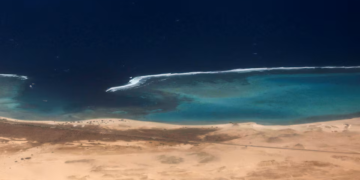
India and Africa are divided by the Indian Ocean geographically. Since ancient times, both nations have been connected by the monsoon winds, maritime links, trade relations, people-to-people contact, and struggle against colonialism. Meanwhile, trade relationships started when Indian sea merchants sailed from the Gulf of Kutch on the western coast of India to East African coastal regions in pre-colonial times using alternative winds for navigation.

They sailed to as far away as Zanzibar, formerly known as the Zenji Coast, where they bought incense, palm oil, myrrh, gold, copper, spices, ivory, rhino horn, and wild animal skins. In exchange, the Indian merchants sold to East African markets cloth, metal implements, wheat, rice, jaggery, porcelain, and glassware. The Northeast Monsoon wind currents, which India had the skill to harness, were very helpful for the navigation.

Indians of African descent certainly played a prominent role in western India especially between the 15th and 17th century but also in other parts well into the early 20th century despite the marginalised status of siddis in modern India, and Africans of Indian descent were also important in the foreign merchant communities of Africa and some craftsmen are credited with introducing Indian architectural styles in eastern Africa, although their influence has been attimes overstated in African historiography which is unmatched by their fairly small communities whose residents were itinerant in nature, and their confinement to foreign trade that made up a small proportion of the largely rural domestic economy, as the historian Randall Pouwels writes of both Arab and Indian immigrants on the swahili coast:

“Evidence overwhelmingly suggests that immigrants came to these societies almost always as minorities, and there are few indications prior to the late eighteenth century that immigrants succeeded in forcing the direction of change, which generally tended to be gradual and subtle and definitely given effect within the frameworkof existing structures, values, and institutions.”

Post the commencement of the European Imperial era, Africa became a focus of contention and battleground for colonizers like the British, French, and Portuguese. As a result, Africa witnessed the slave trade in the seventeenth century. These slaves were taken to Europe for the Industrial Revolution. The presence of these European powers in Africa led to the need for new opportunities, such as the need for skilled workers like masons, blacksmiths, and carpenters in colonies like Mauritius and Reunion, which were being established by the French.

Recognizing these opportunities, Indian traders in Africa brought skilled individuals from different regions of the west coast of India to fill these roles. Later on, Indians began to settle down in East African regions, Mauritius, and Reunion. After the abolition of slavery in 1833 in Britain, bonded laborers were brought from India to Africa as a part of the indentured labor system to work on railway construction and cotton and sugar plantations as well. Since then, the India-Africa partnership has evolved into multidimensional and comprehensive aspects. India became one of the first countries to support African liberation movements, providing diplomatic backing and sometimes material assistance to countries fighting for freedom from colonial rule.

Why India-Africa Relations Are the Key to a New World Order

In recent times, the Chinese have dominated the African economy and have become embedded in the domestic African businesses. The country engages in big projects such as oil exploration, mining, and construction, which require huge financial capital outlays. Today, Chinese business has become a major investor in African countries.

Read also

DR Congo court approves referendum law, fueling third-term debate

Equatorial Guinea and Gabon resolve 50-year border dispute

Kenya probes potential toxin after 15 elephants die in Amboseli ecosystem

The emerging China-Africa relationship has caused so much consternation as to its intent and tactics. The evolving scenario will determine if China is becoming a development partner or a hegemon whose interest is to gulp up African resources for its own needs. India is fast becoming an important economic and political player in Africa also. Its economy is about one-sixth the size of China’s, but it is growing fast and exerting considerable demand on the natural resources exploited in Africa. China is believed to be a global manufacturing hub, with India as a service hub. But the picture is more complicated than that.

To checkmate the Chinese influence, India was a founding member of the IBSA (India, Brazil, and South Africa) group in 2003 in the South-South differentiated integration. They have signed several agreements amongst themselves on health and wind resources, with a desire to move towards a free trade area; however, tariff reduction has been a sticking point. China, sponsored by South Africa, requested to be part of the IBSA forum on commercial issues but was blocked by India for fear of loss of influence on the pretense that China is not a democracy.

Abhishek Mishra notes that defense and security have emerged as a key pillar of India-Africa relations. This was underscored in March 2023, when the two sides convened the first-ever India-Africa Army Chiefs Conclave, alongside the second edition of the Africa-India Field Training Exercise (AFINDEX), held over 10 days in Pune, India. The two sides also conduct an annual India-Africa Defence Dialogue (IADD) that coincides with India’s Defence Expo.

India has signed a military pact with Mauritius and Seychelles for the Indian navy to patrol the Mauritius Exclusive Economic Zone since 2003. It has also signed defense agreements with the East African countries of Mozambique, Madagascar, and Kenya; it also has joint training exercises with other African navies. Such joint training exercises can be attributed to fears of Chinese expansionism. It is only prudent for India to protect its shipping routes, and with improved military capabilities, India wants to be seen as a great power. India does 90% of its trade by volume and three-quarters by value on the sea. It is also a member of the Indian Ocean Rim Association for Regional Cooperation, which has been prominent recently because of these high economic engagements.

Traditionally, the African continent has played a central role in India’s foreign policy. India has significantly enhanced its engagement with Africa, especially since the 1990s. One of India’s primary goals since then has been to foster deeper and closer South-South cooperation and expand economic cooperation with all nations and regions of the continent.

Launched in 1964, the Indian Technical and Economic Cooperation (ITEC) program has emerged as a powerful instrument of soft power and strategic diplomacy, enhancing India’s moral credibility, economic outreach, and global influence in Africa. To consolidate these gains, India must invest in scaling up, institutionalizing partnerships, and embedding ITEC within a comprehensive Africa policy that is responsive, accountable, and co-owned by its African stakeholders.

India’s EXIM Bank has devoted 50 percent of its international financing, technical assistance, and trade promotion schemes to Africa. Africa’s largest digital project, the Pan African e-Network, is connecting Africa’s 54 countries to India and one another to share expertise in telecoms, medicine, health, resource mapping, and e-governance.

The prioritization of Africa within India’s investments is one of the reasons why India has consistently been perceived as a trusted ally in Africa. India enjoys observer status in the Common Market for Eastern and Southern Africa (COMESA), the Southern African Development Community (SADC), and the Economic Community of West African States (ECOWAS).

Similarly, the Indian leader invited African nations to join the Coalition for Disaster Resilient Infrastructure (CDRI) and the International Solar Alliance (ISA) to boost cooperation on climate and clean energy. Securing the supply of raw materials Created at the UN Climate Action Summit in 2019 under Prime Minister Narendra Modi’s initiative, CDRI brings together governments, UN agencies, development banks, and private players to fund climate- and disaster-resilient infrastructure worldwide.

The Power Duo: India and Africa’s Impact on Global Strategy

In modern times, India and East African countries have established significant diplomatic ties characterized by enhanced political, economic, and cultural cooperation. For instance, India has engaged in various projects with nations such as Kenya, Tanzania, and Uganda, focusing on trade, investment, and development assistance.

The India-Kenya Strategic Partnership, formalized in 2018, exemplifies this relationship, aiming to strengthen collaboration in sectors like technology and infrastructure. Additionally, the African Union-India Cooperation framework, initiated in 2008, further solidifies India’s commitment to fostering relations with the African continent, promoting mutual growth and development.

India is also the second-largest lender in Africa, with strong public-private partnerships and safeguards protecting borrowers from debt distress. In fact, most Indian aid is channelled through the African Development Bank (ADB), which New Delhi joined in 1983. India’s total investments in Africa amount to $70 billion, a figure the powerful Confederation of Indian Industry aims to increase to $150 billion by 2030.

“India’s unique story in Africa gives texture to its strategic engagement,” notes Aly-Khan Satchu, a Kenyan Indian and leading entrepreneur and investor. “Indian-Africans occupy a fascinating space in Africa’s landscape,” explains Veda Vaidyanathan, an associate fellow at the Centre for Social and Economic Progress (CSEP) in New Delhi and Harvard University’s Asia Center. They are an essential part of Africa’s middle class and play a major role in education, health, industrialization, and trade, as well as participate in politics and serve in the military.

While first-generation Indians are outsiders to these African landscapes, the second- and third-generation Indian-origin Africans are either familiar foreigners or not considered foreigners at all,” Vaidyanathan adds. “When I interview Kenyan Indians who have been in the country for generations, for example, they consider me ‘the other,’ a common feature of Indo-African attitudes.

“They are insiders, woven into the tapestry of their adopted countries.” Shobana Shankar, a professor at Stony Brook University, highlights the nuanced and historically complex African-Indian relationship that is dynamic, calling this an “emotional infrastructure” with its ups and downs that help mitigate tensions and maintain ties.”

The inclusion of African and Indian private sectors and professional associations in official India-Africa platforms enhances citizen agency. These groups are not engaged on the sidelines but participate in all deliberations in mechanisms like the India-Africa Forum Summit and the India-Africa Conclave.

India also leverages its unique access to African grassroots communities. An illustration of this is the Solar Mamas Project, a people-to-people venture in Rajasthan, India, created by Barefoot College in Tiloniya, so-named to reflect its grassroots focus. Veda Vaidyanathan explains, “This college equips women from impoverished communities in India and faraway African towns as solar engineers. After training together for 6 months, they go back to electrify their villages, earning them the title of ‘Solar Mamas.’”

In the sphere of Foreign Direct Investments (FDI) in Africa, India has significantly invested in the manufacturing sector. Their investment was boosted by mineral processing activities, wholesome manufacturing, and other sectors. The Indian conglomerate Tata Group had declared Zambia as their area of major investment expansion programs in Africa. They hope to focus on agriculture and hydropower sectors. Under an agreement between former President Kenneth Kaunda and Prime Minister Indira Gandhi, the Indo-Zambia bank was set up.

Now, India has invested more than $75 billion in Africa between 1996 and 2024, placing it among the continent’s top five investors, Minister of State for External Affairs Kirti Vardhan Singh said at the 20th India-Africa Business Conclave in New Delhi. Bilateral trade surged to over $100 billion in FY 2024-25, up from $56 billion in FY 2019-20.

He added that India has extended over $12 billion in concessional credit and $700 million in grants for African development projects, alongside 50,000 scholarships, of which 42,000 have already been used. Also, Singh underlined Africa’s central role in India’s foreign policy, recalling the African Union’s admission as a permanent G20 member during India’s presidency. “We are emphasizing Africa’s rightful place at the global high table,” he continued.

Meanwhile, the India-Africa trade has crossed $100 billion, almost doubling in the last 5 years. If a free trade agreement is signed between India and all 54 nations of the African continent or the African Union as a whole, it will be a game changer. The value of bilateral trade between India and Africa in 2024-25 is marking a new record. According to Singh, “India and Africa are shaping a strong partnership to co-create a shared future.” India, among the largest investors in Africa, said it wants to boost ties with the continent in sectors including health care, renewable energy, and technology-driven farming.

In contrast, Africa exports metallurgical goods, raw cotton, fruits, crude oil, precious stones, and ferroalloys to India. For Africa, India’s contribution to its global exports and imports was 6 percent and 5.6 percent, respectively. In comparison, the contribution of Africa to India’s global exports and imports lies at 9.6 percent and 7.8 percent, respectively. Currently, India’s exports to Africa stand at USD 42.7 billion, while imports are close to USD 40 billion.

South Africa, Algeria, Nigeria, Egypt, Angola, and Morocco are the largest exporters in Africa, together accounting for as much as 63% of Africa’s total exports in 2023. Other major exporters from the region include Libya, DR Congo, Tunisia, Côte d’Ivoire, and Ghana. Also, as regards imports, South Africa, Egypt, Morocco, Nigeria, and Algeria are the leading importers in Africa, which together accounted for 56% of Africa’s total imports in 2023. Other major importers in Africa during the year include Tunisia, Kenya, Côte d’Ivoire, Ghana, Libya, and Ethiopia.

Strategic Shifts: Harnessing the India-Africa Partnership in World Dynamics

Going forward, Indo-African ties will continue to draw on the unique place of Indians and Africans in each other’s complex histories. “Consider the daily life in a country like Kenya, Nigeria, South Africa, or India and Pakistan,” says Shobana Shankar. “Their diversity comes from Afro-Asian migrations. India also has a steadily growing African population. How migrants make their voices heard and impact host societies, and how diversities and cohesions are navigated, is the story of the future.”

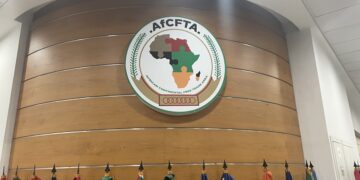
The African Continental Free Trade Area (AfCFTA) has broadened the scope for India-Africa trade. Indian industry can leverage connectivity and lower tariff barriers for setting up investments and creating regional value chains that can be a part of global value chains. For instance, the AfCFTA has identified automobiles and logistics as areas with substantial potential for collaboration between India and Africa.

Additionally, India can play a significant role by assisting Africa in attaining its vision outlined in “The Agenda 2063: The Africa We Want.” India is committed to partnering with all African nations as they embark on the AfCFTA to address the challenges impeding progress on the continent. From this perspective, India can also help Africa realize its vision of a prosperous Africa. As AfCFTA will play a key role in attaining this vision, India must incorporate the successful implementation of the AfCFTA in its Africa policy.

Looking ahead, the India-Africa relationship is poised for further expansion and deepening. Emerging areas of cooperation include renewable energy, digital transformation, space technology, and sustainable development. India’s successful space program and digital initiatives offer valuable lessons and partnership opportunities for African countries.

Following the huge financial resources at the disposal of China, which it spends on costly projects in Africa, it maintains a very prominent and powerful presence on the continent. India is indeed an emerging and important actor on the continent; their relationship, however, is characterized by competition and cooperation because their interests are not mutually exclusive, and it is about the economic well-being of their respective countries. Both countries subscribe to the concept of good governance and non-interference in the sovereign affairs of nations. This has pacified African political elites and made sure of unrestrained access to the continent’s resources.
Source: Qiraat Africa
Tags: Gulf of KutchIndiaIndia-Africa relationsIndian Ocean
Oyebamiji Usman Adesoji

Oyebamiji Usman Adesoji

Writer and researcher on business, entrepreneurship and geopolitical affairs.

Related Posts

WHO declares Ebola outbreak in Congo, Uganda an emergency of international concern
East Africa

Uganda declares end to latest Ebola outbreak

July 28, 2026
South Africa says over 900 arrested during nationwide anti-migrant protests
Featured

Nigeria and South Africa seek to ease tensions over xenophobic attacks

July 28, 2026
US to block citizens in Congo from immediate travel home, citing Ebola
Central Africa

A day in the life of Congo’s overstretched Ebola surveillance teams

July 28, 2026
Senegal has sovereign right to decide how to tackle debt, IMF says
Economy

IMF completes final review of Ghana lending program, unlocks $371 million

July 28, 2026
South Africa promises crackdown on xenophobic attacks after Ghana protests
Featured

Ghana repatriating another 1,000 nationals from South Africa

July 27, 2026
Burkina Faso declares UN coordinator persona non grata
East Africa

Ugandan diplomat Otunnu joins race to become next UN head

July 27, 2026

Search Qiraat Africa

No Result
View All Result

Follow on Twitter

Follow @africanqiraat

Trending

Brief History and Culture of the City of Lagos, Nigeria

Brief History and Culture of the City of Lagos, Nigeria

July 24, 2024
Zaghawa people of northeastern Chad and western Sudan

Zaghawa people of northeastern Chad and western Sudan

March 3, 2026
Samori Touré (1830-1900): Military leader and founder of Wassoulou Empire

Samori Touré (1830-1900): Military leader and founder of Wassoulou Empire

January 11, 2026
Al-Hajj Salim Suwari (fl. c. 13th–15th century): West African Soninke Islamic scholar

Al-Hajj Salim Suwari (fl. c. 13th–15th century): West African Soninke Islamic scholar

July 17, 2026
Bakiga / Abakiga of northern Rwanda and southern Uganda

Bakiga / Abakiga of northern Rwanda and southern Uganda

July 15, 2026
Kumbi Saleh, the capital of the ancient Ghana Empire

Kumbi Saleh, the capital of the ancient Ghana Empire

October 13, 2025

Facebook

Sections

  • About Us
  • Privacy Policy
  • Opinion
  • Infographics
  • News
  • Analysis
  • Figures
  • Culture & Literature
  • Follow Ups
  • Historical Readings
  • Interview
  • Studies


© Copyright Qiraat Africa. Developed by Bunnaj Media .

No Result
View All Result
  • News
  • Analysis & Report
  • Studies
  • Opinion
  • Interview
  • Culture & Literature
  • Figures
  • Historical Readings
  • Regions

© 2021 Copyright Qiraat Africa.