













Qiraat Africa
عربي  |  Fr
Advertisement
  • News
    • All
    • Climate Change
    • Economy
    • Education
    • Energy
    • Health
    • Migration
    • Mining
    • Politics
    • Security
    • Society
    • Sport
    Senegal’s top opposition leader Sonko vows to help win March 24 election

    Senegal president sacks PM Sonko, dissolves government after months of friction

    Morocco’s King pardons Senegal fans convicted on hooliganism charges

    Benin’s President Talon thanks army leaders for “remaining loyal” in face of attempted coup

    Benin’s Talon bids farewell ahead of Wadagni inauguration, Sunday

    Nigeria busts meth cartel in largest seizure, arrests kingpin

    Nigeria busts meth cartel in largest seizure, arrests kingpin

    Sierra Leone receives first group of West African deportees from US

    Sierra Leone receives first group of West African deportees from US

    WHO declares Ebola outbreak in Congo, Uganda an emergency of international concern

    India, Africa Union postpone New Delhi summit amid Ebola outbreak

    Rwanda says DR Congo shelling injured its citizens

    Rwanda tightens border controls over deadly Ebola outbreak in DR Congo

    Nigeria arrests ex-power minister Mamman after 75-year graft sentence

    Nigeria arrests ex-power minister Mamman after 75-year graft sentence

    Ethiopia says Ghebreyesus, WHO chief has links to rebellious Tigrayan forces

    WHO says 139 suspected Ebola deaths in Congo outbreak, numbers expected to rise

  • Analysis
    • All
    • Climate Change
    • Digital & Tech
    • Economy
    • Energy & Power
    • Health
    • Politics
    • Security
    • Society
    Five Years After the Coup in Mali: Are Stability and Growth Within Reach?

    The Political Economy of Insecurity in Mali: Armed Groups, Resources, and State Fragility

    Ghana to evacuate 300 citizens from South Africa after xenophobic attacks

    Xenophobic Violence and Human Security in South Africa: Causes and Consequences

    Inside an African lab that helped crack the hantavirus outbreak

    Inside an African lab that helped crack the hantavirus outbreak

    Nigeria’s Agricultural sector: Problems and challenges

    Agriculture in Africa: science and research cannot have an impact without investments and good policies

    Mali’s junta creates a new ministerial-level post to oversee the mining sector

    African Mineral Resources: The Controversial Link to US Health Deals

    Ghana curbs offshore investments to protect cedi, boost stability

    Ghana’s mining law attempts to eradicate speculation, but leaves communities in limbo: insights from a lithium case study

    East African Community’s expansion has triggered financial difficulties: why solutions come with risks

    East African Community’s expansion has triggered financial difficulties: why solutions come with risks

    Nigeria’s new election laws leaves gaps: Here are 5 reforms for free, fair, and credible elections

    Nigeria’s new election laws leaves gaps: Here are 5 reforms for free, fair, and credible elections

    Impact of Kenya’s long-overdue new infrastructure fund may be limited by design problems

    Impact of Kenya’s long-overdue new infrastructure fund may be limited by design problems

  • Studies
    Pensions for Botswana’s elderly are expanding, but care services are lacking—study follows 20 years

    Pensions for Botswana’s elderly are expanding, but care services are lacking—study follows 20 years

    60 new cosmic structures have been discovered by South Africa’s MeerKAT telescope, which is mapping previously unseen gaps between galaxies

    60 new cosmic structures have been discovered by South Africa’s MeerKAT telescope, which is mapping previously unseen gaps between galaxies

    Benin government says armed forces foil coup attempt

    Coup contagion? A rash of African power grabs suggests copycats are taking note of others’ success

    One in three South Africans have never heard of AI: what this means for policy

    One in three South Africans have never heard of AI: what this means for policy

    Social Media as a Catalyst for the Spread of Dangerous Wealth Ritual Myths

    Social Media as a Catalyst for the Spread of Dangerous Wealth Ritual Myths

    Overcoming Education Barriers for Young Mothers in Sub-Saharan Africa

    Overcoming Education Barriers for Young Mothers in Sub-Saharan Africa

    Youth Empowerment Through Vocational Training in Rural Sub-Saharan Africa

    Youth Empowerment Through Vocational Training in Rural Sub-Saharan Africa

    Manufacturers in Ghana and Nigeria claim that although corruption damages businesses, digital technologies provide a chance to combat it

    Manufacturers in Ghana and Nigeria claim that although corruption damages businesses, digital technologies provide a chance to combat it

    Environmental Threats and Conservation Efforts in Namibia

    Environmental Threats and Conservation Efforts in Namibia

  • Infographics
  • Figures
    Eduardo Mondlane (1920-1969): Mozambican Revolutionary and Anthropologist

    Eduardo Mondlane (1920-1969): Mozambican Revolutionary and Anthropologist

    William Tubman (1895-1971): Liberian politician and longest-serving president in the country’s history

    William Tubman (1895-1971): Liberian politician and longest-serving president in the country’s history

    Abebe Bikila (1932-1973): Ethiopian marathoner and first black African to win an Olympic medal

    Abebe Bikila (1932-1973): Ethiopian marathoner and first black African to win an Olympic medal

    W. E. B. Du Bois (1868-1963): Sociologist, historian, and Pan-Africanist civil rights activist

    W. E. B. Du Bois (1868-1963): Sociologist, historian, and Pan-Africanist civil rights activist

    Frantz Fanon (1925-1961): Psychiatrist and political philosopher

    Frantz Fanon (1925-1961): Psychiatrist and political philosopher

    Percy Lavon Julian (1899-1975): African American researcher and chemist

    Percy Lavon Julian (1899-1975): African American researcher and chemist

    Harriet Tubman (Araminta Ross, 1822-1913): American abolitionist and social activist

    Harriet Tubman (Araminta Ross, 1822-1913): American abolitionist and social activist

    Dorothy Vaughan (1910-2008): African American mathematician and human computer

    Dorothy Vaughan (1910-2008): African American mathematician and human computer

    George Washington Carver (1864-1943): African American agricultural scientist and inventor

    George Washington Carver (1864-1943): African American agricultural scientist and inventor

  • History
    Laas Geel, Somalia

    Laas Geel, Somalia

    Lakes Of Ounianga, Chad

    Lakes Of Ounianga, Chad

    Nok Caves, Togo

    Nok Caves, Togo

    The Land of Punt (modern Somalia, Eritrea, Ethiopia, or eastern Sudan)

    The Land of Punt (modern Somalia, Eritrea, Ethiopia, or eastern Sudan)

    Avenue of the Baobabs, Madagascar

    Avenue of the Baobabs, Madagascar

    Lopé-Okanda (Gabon)

    Lopé-Okanda (Gabon)

    The Sudd wetland

    The Sudd wetland

    Khami Ruins (Zimbabwe), the capital of the Torwa state

    Khami Ruins (Zimbabwe), the capital of the Torwa state

    Royal Palace, Porto-Novo, Republic of Benin

    Royal Palace, Porto-Novo, Republic of Benin

  • Others
    • Culture / Literature
    • Interview
    • Opinion
  • Countries
    • Country profiles
    • Regions
      • Central Africa
      • East Africa
      • Southern Africa
      • West Africa
No Result
View All Result
  • News
    • All
    • Climate Change
    • Economy
    • Education
    • Energy
    • Health
    • Migration
    • Mining
    • Politics
    • Security
    • Society
    • Sport
    Senegal’s top opposition leader Sonko vows to help win March 24 election

    Senegal president sacks PM Sonko, dissolves government after months of friction

    Morocco’s King pardons Senegal fans convicted on hooliganism charges

    Benin’s President Talon thanks army leaders for “remaining loyal” in face of attempted coup

    Benin’s Talon bids farewell ahead of Wadagni inauguration, Sunday

    Nigeria busts meth cartel in largest seizure, arrests kingpin

    Nigeria busts meth cartel in largest seizure, arrests kingpin

    Sierra Leone receives first group of West African deportees from US

    Sierra Leone receives first group of West African deportees from US

    WHO declares Ebola outbreak in Congo, Uganda an emergency of international concern

    India, Africa Union postpone New Delhi summit amid Ebola outbreak

    Rwanda says DR Congo shelling injured its citizens

    Rwanda tightens border controls over deadly Ebola outbreak in DR Congo

    Nigeria arrests ex-power minister Mamman after 75-year graft sentence

    Nigeria arrests ex-power minister Mamman after 75-year graft sentence

    Ethiopia says Ghebreyesus, WHO chief has links to rebellious Tigrayan forces

    WHO says 139 suspected Ebola deaths in Congo outbreak, numbers expected to rise

  • Analysis
    • All
    • Climate Change
    • Digital & Tech
    • Economy
    • Energy & Power
    • Health
    • Politics
    • Security
    • Society
    Five Years After the Coup in Mali: Are Stability and Growth Within Reach?

    The Political Economy of Insecurity in Mali: Armed Groups, Resources, and State Fragility

    Ghana to evacuate 300 citizens from South Africa after xenophobic attacks

    Xenophobic Violence and Human Security in South Africa: Causes and Consequences

    Inside an African lab that helped crack the hantavirus outbreak

    Inside an African lab that helped crack the hantavirus outbreak

    Nigeria’s Agricultural sector: Problems and challenges

    Agriculture in Africa: science and research cannot have an impact without investments and good policies

    Mali’s junta creates a new ministerial-level post to oversee the mining sector

    African Mineral Resources: The Controversial Link to US Health Deals

    Ghana curbs offshore investments to protect cedi, boost stability

    Ghana’s mining law attempts to eradicate speculation, but leaves communities in limbo: insights from a lithium case study

    East African Community’s expansion has triggered financial difficulties: why solutions come with risks

    East African Community’s expansion has triggered financial difficulties: why solutions come with risks

    Nigeria’s new election laws leaves gaps: Here are 5 reforms for free, fair, and credible elections

    Nigeria’s new election laws leaves gaps: Here are 5 reforms for free, fair, and credible elections

    Impact of Kenya’s long-overdue new infrastructure fund may be limited by design problems

    Impact of Kenya’s long-overdue new infrastructure fund may be limited by design problems

  • Studies
    Pensions for Botswana’s elderly are expanding, but care services are lacking—study follows 20 years

    Pensions for Botswana’s elderly are expanding, but care services are lacking—study follows 20 years

    60 new cosmic structures have been discovered by South Africa’s MeerKAT telescope, which is mapping previously unseen gaps between galaxies

    60 new cosmic structures have been discovered by South Africa’s MeerKAT telescope, which is mapping previously unseen gaps between galaxies

    Benin government says armed forces foil coup attempt

    Coup contagion? A rash of African power grabs suggests copycats are taking note of others’ success

    One in three South Africans have never heard of AI: what this means for policy

    One in three South Africans have never heard of AI: what this means for policy

    Social Media as a Catalyst for the Spread of Dangerous Wealth Ritual Myths

    Social Media as a Catalyst for the Spread of Dangerous Wealth Ritual Myths

    Overcoming Education Barriers for Young Mothers in Sub-Saharan Africa

    Overcoming Education Barriers for Young Mothers in Sub-Saharan Africa

    Youth Empowerment Through Vocational Training in Rural Sub-Saharan Africa

    Youth Empowerment Through Vocational Training in Rural Sub-Saharan Africa

    Manufacturers in Ghana and Nigeria claim that although corruption damages businesses, digital technologies provide a chance to combat it

    Manufacturers in Ghana and Nigeria claim that although corruption damages businesses, digital technologies provide a chance to combat it

    Environmental Threats and Conservation Efforts in Namibia

    Environmental Threats and Conservation Efforts in Namibia

  • Infographics
  • Figures
    Eduardo Mondlane (1920-1969): Mozambican Revolutionary and Anthropologist

    Eduardo Mondlane (1920-1969): Mozambican Revolutionary and Anthropologist

    William Tubman (1895-1971): Liberian politician and longest-serving president in the country’s history

    William Tubman (1895-1971): Liberian politician and longest-serving president in the country’s history

    Abebe Bikila (1932-1973): Ethiopian marathoner and first black African to win an Olympic medal

    Abebe Bikila (1932-1973): Ethiopian marathoner and first black African to win an Olympic medal

    W. E. B. Du Bois (1868-1963): Sociologist, historian, and Pan-Africanist civil rights activist

    W. E. B. Du Bois (1868-1963): Sociologist, historian, and Pan-Africanist civil rights activist

    Frantz Fanon (1925-1961): Psychiatrist and political philosopher

    Frantz Fanon (1925-1961): Psychiatrist and political philosopher

    Percy Lavon Julian (1899-1975): African American researcher and chemist

    Percy Lavon Julian (1899-1975): African American researcher and chemist

    Harriet Tubman (Araminta Ross, 1822-1913): American abolitionist and social activist

    Harriet Tubman (Araminta Ross, 1822-1913): American abolitionist and social activist

    Dorothy Vaughan (1910-2008): African American mathematician and human computer

    Dorothy Vaughan (1910-2008): African American mathematician and human computer

    George Washington Carver (1864-1943): African American agricultural scientist and inventor

    George Washington Carver (1864-1943): African American agricultural scientist and inventor

  • History
    Laas Geel, Somalia

    Laas Geel, Somalia

    Lakes Of Ounianga, Chad

    Lakes Of Ounianga, Chad

    Nok Caves, Togo

    Nok Caves, Togo

    The Land of Punt (modern Somalia, Eritrea, Ethiopia, or eastern Sudan)

    The Land of Punt (modern Somalia, Eritrea, Ethiopia, or eastern Sudan)

    Avenue of the Baobabs, Madagascar

    Avenue of the Baobabs, Madagascar

    Lopé-Okanda (Gabon)

    Lopé-Okanda (Gabon)

    The Sudd wetland

    The Sudd wetland

    Khami Ruins (Zimbabwe), the capital of the Torwa state

    Khami Ruins (Zimbabwe), the capital of the Torwa state

    Royal Palace, Porto-Novo, Republic of Benin

    Royal Palace, Porto-Novo, Republic of Benin

  • Others
    • Culture / Literature
    • Interview
    • Opinion
  • Countries
    • Country profiles
    • Regions
      • Central Africa
      • East Africa
      • Southern Africa
      • West Africa
No Result
View All Result
Qiraat Africa
عربي  |  Fr
No Result
View All Result
Home Historical Readings

Reclaiming Africa’s Early Post-Independence History

November 1, 2020
Reclaiming Africa’s Early Post-Independence History
Share on FacebookShare on Twitter

By Adebayo Olukoshi, Tetteh Hormeku-Ajei, Aishu Balaji & Anita Nayar

In 1965, Kwame Nkrumah described the paradox of neocolonialism in Africa, in which “the soil continue[s] to enrich, not Africans predominantly, but groups and individuals who operate to Africa’s impoverishment.” He captured what continues to be an essential feature of Africa’s political economy.

Enforced through neoliberalism in the contemporary period, many African states remain dependent on exporting primary commodities to enrich the global North, with their domestic policy constrained by unequal aid, trade, and investment regimes, and what is now, after almost four decades of structural adjustment, an almost permanent state of austerity.

Despite its manifest failures, neoliberalism continues to dominate policy making on the continent, bolstered by an ideological onslaught and a conditionality regime that has stifled any space to imagine and pursue alternatives. African governments in the immediate post-independence period challenged the neocolonial exploitation of the continent.

Whatever their ideological inclinations, governments saw the key task of their time as securing their political and economic agency by breaking out of their subordinate place in the global economic order and imagining a new one. In contrast with the contemporary externalization of policymaking, they responded creatively to the material interests of the majority of ordinary peoples.

The state sponsored and/or established industries; provided universal education to foster skills necessary for transforming the economy; built social infrastructure to ease reproductive labor; delinked from colonial currencies; made resources available for domestic producers and women through developmentalist central bank policies; worked to diversify revenue sources; and built regional solidarity.

The post-independence project was undermined and derailed by the active efforts of North governments including their former colonizers. They disrupted African governments through assassination attempts and coups, and opportunistically seized on the 1980s commodity crash that devastated African economies, compelling them to accept World Bank/International Monetary Fund (WB/IMF) loans conditional on liberalization, austerity, and privatization.

Four decades later, the ideological dominance of neoliberalism is profound. Spaces of progressive thought and learning have been fragmented, knowledge production has been monopolized by the free market logic, and tendentious mis-readings of the post-independence period as ideological, statist, and inefficient abound, facilitating a sense best summed up by the Thatcherite pronouncement that “there is no alternative.”

Recasting post-independence policies

Three widespread mis-readings of the post-independence period were wielded to push structural adjustment programs in the 1980s and continue to underpin the neoliberal hegemony in Africa.

Firstly, the WB/IMF and North governments cast post-independence leaders as excessively ideological in order to discredit the entire experience. In reality, however, while there was an ideological ferment, the range of policies adopted by African governments to assert economic sovereignty were similar across the ideological spectrum.

Capitalist oriented Kenya, socialist humanist Zambia, scientific socialist Ghana, Negritudist Senegal, and Houphouet-Boigny’s Côte d’Ivoire (then the Ivory Coast) constructed a central role for the state in post-colonial social and economic transformation, often driven by the collective ethos of meeting society’s needs in the absence of any significant local private capitalist class and the levels of investment necessary for transformation.

This often translated to the creation of state-owned enterprises and heavy investment in human capital; interventionist fiscal and monetary policies; and a uniform (if ultimately inconsistent) commitment to import substitution industrialization.

The false homogenization of the post-independence development project as a failure of ideology has allowed neoliberalism to be positioned as an ‘objective’ and ‘rational’ remedy to this period rather than an ideology itself, liable to contestation.

Secondly, the strong role of the state in post-independence development policy has been blamed for Africa’s development problems and used to justify the installation of the market as the solution, laying the basis for large-scale privatization and deregulation. In reality, however, all post-independence economies were largely market-oriented with key sectors dominated by foreign capital, serving as a continuation of colonial patterns.

Post-independence governments did, however, set out to regulate foreign capital through, for example, nationalizing strategic industries and capital controls. Ultimately, the failure to curtail the dominance of foreign capital, continued dependence on primary commodity export, and the vagaries of the global economic system worked to undermine the post-independence development project.

This reality has been obscured to scapegoat state intervention, justifying the further encroachment of foreign capital and continued integration into an unequal global economic order. Thandika Mkandawire and Charles Soludo outlined the hypocrisy of this narrative, noting that the post-independence project was not outside the dominant policy orientation globally.

Post-depression, Europe was being reconstructed through massive state-driven intervention, and the Marshall Plan led by the United States was far from a market driven exercise. As Ha-Joon Chang has noted, the delegitimization of the state as a development actor in Africa denied the continent the very policy instruments used by the North to develop.

Read also

The Political Economy of Insecurity in Mali: Armed Groups, Resources, and State Fragility

Senegal president sacks PM Sonko, dissolves government after months of friction

Morocco’s King pardons Senegal fans convicted on hooliganism charges

Finally, the myth of weak and inefficient institutions in the post-independence period underpinned efforts to dismantle the state and its role in the economy and social provisioning.

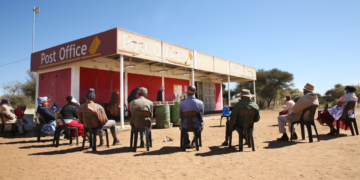
This misrepresents what was a uniquely consistent policy period on the continent, in which there was stable tariff policy and taxation, and public development plans and budgets. Mkandawire and Soludo suggest neoliberal actors like the WB/IMF simply failed to understand the multiple roles of institutions in the post-independence period: rural post offices were also savings banks and meeting places for the community, the Cocoa Marketing Board in Ghana also raised money to fund education.

As such, when they were dismantled and replaced with standardized, monotasked institutions during structural adjustment, it ripped the social fabric that was integral to the post-independence agenda. For example, after the state-run Cocoa Marketing Board was dismantled, universities were forced to raise funds privately, and those donors over time reshaped and de-politicized the curriculum.

The resulting sense of dislocation, alienation, and commodification has undermined the deep efforts of post-independence governments to foster socio-economic inclusion.

The post-independence period had a range of limitations, critically related to the failure to adequately address gender imbalances, enable independent workers and peasants movements, or build strong decentralized systems of local governance.

However, when compared to the neoliberal era, there was inspiring clarity around the goal of structural transformation and a wealth of policy efforts aimed at transforming the neocolonial patterns that still grip the continent.

The questions post-independence governments asked, to which the policies were formulated as answers, were all but ignored by neoliberalism. It is, therefore, of value for Africans to go beyond the persistent narratives that serve to bolster neoliberalism, and reassert Africa’s experiences in this period as an anchor for development alternatives.

Republished from Africa is a Country under a creative commons license. This article comes out of Post-Colonialisms Today, a research and advocacy project of activist-intellectuals on the continent recapturing progressive thought and policies from early post-independence Africa to address contemporary development challenges. Sign up for PCT updates here.
Source: IPS
Tags: Africa's Post-Independence History

Related Posts

Inside an African lab that helped crack the hantavirus outbreak
Featured

Inside an African lab that helped crack the hantavirus outbreak

May 24, 2026
Infographic: Top 10 African Nations With The Lowest Diesel Prices In March 2026
Central Africa

Infographic: Top 10 African Nations With The Lowest Diesel Prices In March 2026

May 23, 2026
Benin’s President Talon thanks army leaders for “remaining loyal” in face of attempted coup
Featured

Benin’s Talon bids farewell ahead of Wadagni inauguration, Sunday

May 21, 2026
Nigeria busts meth cartel in largest seizure, arrests kingpin
Security

Nigeria busts meth cartel in largest seizure, arrests kingpin

May 21, 2026
Sierra Leone receives first group of West African deportees from US
Featured

Sierra Leone receives first group of West African deportees from US

May 21, 2026
Nigeria arrests ex-power minister Mamman after 75-year graft sentence
Featured

Nigeria arrests ex-power minister Mamman after 75-year graft sentence

May 20, 2026

Search Qiraat Africa

No Result
View All Result

Follow on Twitter

Follow @africanqiraat

Trending

Zimbabwe’s banking sector faces 75% job decrease Since 2000

China writes off unspecified amount of Zimbabwe interest-free loan

April 18, 2024
Kumbi Saleh, the capital of the ancient Ghana Empire

Kumbi Saleh, the capital of the ancient Ghana Empire

October 13, 2025
Africa’s Richest Billionaires, Mid-2025

Africa’s Richest Billionaires, Mid-2025

July 17, 2025
Kagame and the Rwandan Economic Miracle: Autocracy at its finest?

Kagame and the Rwandan Economic Miracle: Autocracy at its finest?

May 19, 2022
The Balanta of Guinea-Bissau, Senegal and The Gambia

The Balanta of Guinea-Bissau, Senegal and The Gambia

January 20, 2026
Kalenjin people of East Africa

Kalenjin people of East Africa

August 15, 2025

Facebook

Sections

  • About Us
  • Privacy Policy
  • Opinion
  • Infographics
  • News
  • Analysis
  • Figures
  • Culture & Literature
  • Follow Ups
  • Historical Readings
  • Interview
  • Studies


© Copyright Qiraat Africa. Developed by Bunnaj Media .

No Result
View All Result
  • News
  • Analysis & Report
  • Studies
  • Opinion
  • Interview
  • Culture & Literature
  • Figures
  • Historical Readings
  • Regions

© 2021 Copyright Qiraat Africa.