


Qiraat Africa
عربي  |  Fr
Advertisement
  • News
    • All
    • Climate Change
    • Economy
    • Education
    • Energy
    • Health
    • Migration
    • Mining
    • Politics
    • Security
    • Society
    • Sport
    Former Zambian minister killed in post-election security raid

    Former Zambian minister killed in post-election security raid

    Central African Republic artisanal gold mine collapses, killing more than 100

    Central African Republic artisanal gold mine collapses, killing more than 100

    Rebels in Congo see Ebola as chance to show governing credentials

    Congo’s M23 rebels introduce new movement restrictions over Ebola concerns

    Liberia agrees to accept up to 1,200 third-country deportees from US

    Liberia agrees to accept up to 1,200 third-country deportees from US

    Kenya Airways says its fuel cost up 72% due to Middle East conflict

    Kenya Airways says its fuel cost up 72% due to Middle East conflict

    Nigeria declares state of emergency in Rivers State over pipeline vandalism

    As campaigns begin in Nigeria, Tinubu’s re-election bid puts his party on trial

    Senegal’s legislative elections: Prime minister calls for retaliation against “attacks” on supporter

    Senegal tightens asset disclosure rules amid Faye-Sonko rift

    Is Ethiopia’s Tigray barreling towards another war?

    Ethiopia: Authorities in Tigray accuse Addis Ababa of drone strike near Mekelle

    Nigeria considers crude supply reforms to aid Dangote, other refiners

    Nigeria’s Dangote Refinery secures $1 billion underwriting ahead of IPO

  • Analysis
    • All
    • Climate Change
    • Digital & Tech
    • Economy
    • Energy & Power
    • Health
    • Politics
    • Security
    • Society
    African Finance Corp says Gabon political situation a ‘good coup’

    Why African countries must rethink how they grow their economies

    DR Congo says it will receive third-country deportees under new deal with US

    Beyond the Outbreak: How Ebola Reshaped East & Central Africa’s Economies

    What Happens After Dandora? Kenya’s Green Transition Faces Its Hardest Test

    What Happens After Dandora? Kenya’s Green Transition Faces Its Hardest Test

    African entrepreneurs work in challenging environments, and others may benefit from the skills they have developed

    African entrepreneurs work in challenging environments, and others may benefit from the skills they have developed

    Ethiopia’s 2026 General Election: Progress, Challenges, and Implications

    Ethiopia’s 2026 General Election: Progress, Challenges, and Implications

    Israeli recognition of Somaliland is a ‘calculated distraction,’ Somali diplomat says

    Sixty-Six Years On, the Promise of Somali Independence Remains Unfulfilled.

    Senegal’s top opposition leader Sonko vows to help win March 24 election

    Senegal at a Political Crossroads: The Faye–Sonko Rivalry and the Future of Democratic Governance

    Ulysses in isiZulu: Why an African translation of the classic Irish novel is important in today’s world

    Ulysses in isiZulu: Why an African translation of the classic Irish novel is important in today’s world

    The promise and risks of Kenya’s ambitious new strategy to close refugee camps

    The promise and risks of Kenya’s ambitious new strategy to close refugee camps

  • Studies
    China could drive Africa’s renewable energy revolution, report says

    A study shows wind and solar projects in Kenya and South Africa don’t always benefit the communities that host them

    Angola’s lengthy war shaped the way farmers utilised fire—why it matters

    Angola’s lengthy war shaped the way farmers utilised fire—why it matters

    Schooling is the most severely affected by conflict when children are the target – Study

    Schooling is the most severely affected by conflict when children are the target – Study

    Pensions for Botswana’s elderly are expanding, but care services are lacking—study follows 20 years

    Pensions for Botswana’s elderly are expanding, but care services are lacking—study follows 20 years

    60 new cosmic structures have been discovered by South Africa’s MeerKAT telescope, which is mapping previously unseen gaps between galaxies

    60 new cosmic structures have been discovered by South Africa’s MeerKAT telescope, which is mapping previously unseen gaps between galaxies

    Benin government says armed forces foil coup attempt

    Coup contagion? A rash of African power grabs suggests copycats are taking note of others’ success

    One in three South Africans have never heard of AI: what this means for policy

    One in three South Africans have never heard of AI: what this means for policy

    Social Media as a Catalyst for the Spread of Dangerous Wealth Ritual Myths

    Social Media as a Catalyst for the Spread of Dangerous Wealth Ritual Myths

    Overcoming Education Barriers for Young Mothers in Sub-Saharan Africa

    Overcoming Education Barriers for Young Mothers in Sub-Saharan Africa

  • Infographics
  • Figures
    Al-Hajj Salim Suwari (fl. c. 13th–15th century): West African Soninke Islamic scholar

    Al-Hajj Salim Suwari (fl. c. 13th–15th century): West African Soninke Islamic scholar

    Strive Masiyiwa: Zimbabwean businessman and philanthropist

    Strive Masiyiwa: Zimbabwean businessman and philanthropist

    Diébédo Francis Kéré: Burkinabé-German architect

    Diébédo Francis Kéré: Burkinabé-German architect

    Herbert Wigwe (1966-2024): Nigerian banker and businessman

    Herbert Wigwe (1966-2024): Nigerian banker and businessman

    Senegal president names new finance, energy ministers in reshuffle

    Macky Sall: Former President of Senegal

    Marcus Garvey (1887-1940): Activist, Black nationalist, and Pan-Africanist

    Marcus Garvey (1887-1940): Activist, Black nationalist, and Pan-Africanist

    John B. Russwurm (1799–1851): Jamaican-born American abolitionist, publisher, and colonial governor

    John B. Russwurm (1799–1851): Jamaican-born American abolitionist, publisher, and colonial governor

    Winnie Mandela (1936-2018): South African politician and anti-apartheid activist

    Winnie Mandela (1936-2018): South African politician and anti-apartheid activist

    Abdias do Nascimento (1914-2011): Prominent African Brazilian scholar, artist, and politician

    Abdias do Nascimento (1914-2011): Prominent African Brazilian scholar, artist, and politician

  • History
    Aldabra Atoll, Seychelles

    Aldabra Atoll, Seychelles

    Le Morne Cultural Landscape, Mauritius

    Le Morne Cultural Landscape, Mauritius

    Mount Nimba Strict Nature Reserve, Guinea and Côte d’Ivoire

    Mount Nimba Strict Nature Reserve, Guinea and Côte d’Ivoire

    Sangha Trinational, north-western Congo Basin

    Sangha Trinational, north-western Congo Basin

    Kasubi Tombs, Kampala, Uganda

    Kasubi Tombs, Kampala, Uganda

    Dja Faunal Reserve, Cameroon

    Dja Faunal Reserve, Cameroon

    Laas Geel, Somalia

    Laas Geel, Somalia

    Lakes Of Ounianga, Chad

    Lakes Of Ounianga, Chad

    Nok Caves, Togo

    Nok Caves, Togo

  • Others
    • Culture / Literature
    • Interview
    • Opinion
  • Countries
    • Country profiles
    • Regions
      • Central Africa
      • East Africa
      • Southern Africa
      • West Africa
No Result
View All Result
  • News
    • All
    • Climate Change
    • Economy
    • Education
    • Energy
    • Health
    • Migration
    • Mining
    • Politics
    • Security
    • Society
    • Sport
    Former Zambian minister killed in post-election security raid

    Former Zambian minister killed in post-election security raid

    Central African Republic artisanal gold mine collapses, killing more than 100

    Central African Republic artisanal gold mine collapses, killing more than 100

    Rebels in Congo see Ebola as chance to show governing credentials

    Congo’s M23 rebels introduce new movement restrictions over Ebola concerns

    Liberia agrees to accept up to 1,200 third-country deportees from US

    Liberia agrees to accept up to 1,200 third-country deportees from US

    Kenya Airways says its fuel cost up 72% due to Middle East conflict

    Kenya Airways says its fuel cost up 72% due to Middle East conflict

    Nigeria declares state of emergency in Rivers State over pipeline vandalism

    As campaigns begin in Nigeria, Tinubu’s re-election bid puts his party on trial

    Senegal’s legislative elections: Prime minister calls for retaliation against “attacks” on supporter

    Senegal tightens asset disclosure rules amid Faye-Sonko rift

    Is Ethiopia’s Tigray barreling towards another war?

    Ethiopia: Authorities in Tigray accuse Addis Ababa of drone strike near Mekelle

    Nigeria considers crude supply reforms to aid Dangote, other refiners

    Nigeria’s Dangote Refinery secures $1 billion underwriting ahead of IPO

  • Analysis
    • All
    • Climate Change
    • Digital & Tech
    • Economy
    • Energy & Power
    • Health
    • Politics
    • Security
    • Society
    African Finance Corp says Gabon political situation a ‘good coup’

    Why African countries must rethink how they grow their economies

    DR Congo says it will receive third-country deportees under new deal with US

    Beyond the Outbreak: How Ebola Reshaped East & Central Africa’s Economies

    What Happens After Dandora? Kenya’s Green Transition Faces Its Hardest Test

    What Happens After Dandora? Kenya’s Green Transition Faces Its Hardest Test

    African entrepreneurs work in challenging environments, and others may benefit from the skills they have developed

    African entrepreneurs work in challenging environments, and others may benefit from the skills they have developed

    Ethiopia’s 2026 General Election: Progress, Challenges, and Implications

    Ethiopia’s 2026 General Election: Progress, Challenges, and Implications

    Israeli recognition of Somaliland is a ‘calculated distraction,’ Somali diplomat says

    Sixty-Six Years On, the Promise of Somali Independence Remains Unfulfilled.

    Senegal’s top opposition leader Sonko vows to help win March 24 election

    Senegal at a Political Crossroads: The Faye–Sonko Rivalry and the Future of Democratic Governance

    Ulysses in isiZulu: Why an African translation of the classic Irish novel is important in today’s world

    Ulysses in isiZulu: Why an African translation of the classic Irish novel is important in today’s world

    The promise and risks of Kenya’s ambitious new strategy to close refugee camps

    The promise and risks of Kenya’s ambitious new strategy to close refugee camps

  • Studies
    China could drive Africa’s renewable energy revolution, report says

    A study shows wind and solar projects in Kenya and South Africa don’t always benefit the communities that host them

    Angola’s lengthy war shaped the way farmers utilised fire—why it matters

    Angola’s lengthy war shaped the way farmers utilised fire—why it matters

    Schooling is the most severely affected by conflict when children are the target – Study

    Schooling is the most severely affected by conflict when children are the target – Study

    Pensions for Botswana’s elderly are expanding, but care services are lacking—study follows 20 years

    Pensions for Botswana’s elderly are expanding, but care services are lacking—study follows 20 years

    60 new cosmic structures have been discovered by South Africa’s MeerKAT telescope, which is mapping previously unseen gaps between galaxies

    60 new cosmic structures have been discovered by South Africa’s MeerKAT telescope, which is mapping previously unseen gaps between galaxies

    Benin government says armed forces foil coup attempt

    Coup contagion? A rash of African power grabs suggests copycats are taking note of others’ success

    One in three South Africans have never heard of AI: what this means for policy

    One in three South Africans have never heard of AI: what this means for policy

    Social Media as a Catalyst for the Spread of Dangerous Wealth Ritual Myths

    Social Media as a Catalyst for the Spread of Dangerous Wealth Ritual Myths

    Overcoming Education Barriers for Young Mothers in Sub-Saharan Africa

    Overcoming Education Barriers for Young Mothers in Sub-Saharan Africa

  • Infographics
  • Figures
    Al-Hajj Salim Suwari (fl. c. 13th–15th century): West African Soninke Islamic scholar

    Al-Hajj Salim Suwari (fl. c. 13th–15th century): West African Soninke Islamic scholar

    Strive Masiyiwa: Zimbabwean businessman and philanthropist

    Strive Masiyiwa: Zimbabwean businessman and philanthropist

    Diébédo Francis Kéré: Burkinabé-German architect

    Diébédo Francis Kéré: Burkinabé-German architect

    Herbert Wigwe (1966-2024): Nigerian banker and businessman

    Herbert Wigwe (1966-2024): Nigerian banker and businessman

    Senegal president names new finance, energy ministers in reshuffle

    Macky Sall: Former President of Senegal

    Marcus Garvey (1887-1940): Activist, Black nationalist, and Pan-Africanist

    Marcus Garvey (1887-1940): Activist, Black nationalist, and Pan-Africanist

    John B. Russwurm (1799–1851): Jamaican-born American abolitionist, publisher, and colonial governor

    John B. Russwurm (1799–1851): Jamaican-born American abolitionist, publisher, and colonial governor

    Winnie Mandela (1936-2018): South African politician and anti-apartheid activist

    Winnie Mandela (1936-2018): South African politician and anti-apartheid activist

    Abdias do Nascimento (1914-2011): Prominent African Brazilian scholar, artist, and politician

    Abdias do Nascimento (1914-2011): Prominent African Brazilian scholar, artist, and politician

  • History
    Aldabra Atoll, Seychelles

    Aldabra Atoll, Seychelles

    Le Morne Cultural Landscape, Mauritius

    Le Morne Cultural Landscape, Mauritius

    Mount Nimba Strict Nature Reserve, Guinea and Côte d’Ivoire

    Mount Nimba Strict Nature Reserve, Guinea and Côte d’Ivoire

    Sangha Trinational, north-western Congo Basin

    Sangha Trinational, north-western Congo Basin

    Kasubi Tombs, Kampala, Uganda

    Kasubi Tombs, Kampala, Uganda

    Dja Faunal Reserve, Cameroon

    Dja Faunal Reserve, Cameroon

    Laas Geel, Somalia

    Laas Geel, Somalia

    Lakes Of Ounianga, Chad

    Lakes Of Ounianga, Chad

    Nok Caves, Togo

    Nok Caves, Togo

  • Others
    • Culture / Literature
    • Interview
    • Opinion
  • Countries
    • Country profiles
    • Regions
      • Central Africa
      • East Africa
      • Southern Africa
      • West Africa
No Result
View All Result
Qiraat Africa
عربي  |  Fr
No Result
View All Result
Home Analysis & Report Economy

Nigeria’s Minimum Wage Crisis: The Macroeconomic Factors and Possible Solutions

Oyebamiji Usman Adesoji by Oyebamiji Usman Adesoji
June 9, 2024
Nigeria’s Minimum Wage Crisis: The Macroeconomic Factors and Possible Solutions

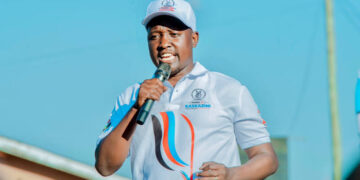
File photo: Nigeria labour congress (NLC) in a protest over minimum-wage.

Share on FacebookShare on Twitter

Nigeria is Africa’s most populous nation, with more than 200 million people. Unemployment and income inequality can be considered to be some of the key factors contributing to poverty in Nigeria. The removal of fuel subsidies and tight currency control of the naira by the government resulted in fuel prices tripled, and the cost of living spiked as Nigeria’s currency slid against the US dollar. Temporarily, rising prices have caused many working people to fall into poverty. Nigeria is an import-dependent economy, and Nigerian importers are purchasing goods at prices that are already very high abroad. The costs of these goods have also gone up because of higher tariffs caused by the depreciation of the naira. Likewise, food inflation in Nigeria also reflects low productivity in the agricultural sector. Output has failed to keep up with population growth.

Nigeria’s population has been growing by about 2.4% a year, while the growth of agricultural value added is a paltry 1.8%. The typical monthly living wage for an individual in Nigeria averaged around 43,200 Nigerian Naira, equivalent to approximately 111 U.S. dollars. In contrast, a family’s total monthly expenditures came to about 137,600 Naira, which is roughly 354 U.S. dollars. In 2022, the labor dependency ratio in Nigeria stood at 2.6 percent, showing no significant change from the preceding year. This metric represents the proportion of dependents who are either not part of the workforce or are unemployed, in relation to the total employed population. However, the government is considering raising the minimum wage.

Evidence from statistics compiled by the National Bureau of Statistics (NBS) on employment showed that the combined rate of unemployment and time-related underemployment as a share of the labor force population (LU2) increased to 17.3 percent in Q3 2023 from 15.5 percent in Q2 2023. In specific terms, the unemployment rate increased significantly in Q3 2023, at 5.0 percent. Furthermore, as of February 2024, the unemployment rate rose from 4.2% in the previous quarter, NBS data indicated. Similarly, the jobless rate among young people aged 15–24 rose to 8.6% from 7.2%. Unemployment in urban areas also rose marginally to 6% from 5.9% in the previous quarter.

Read also

Former Zambian minister killed in post-election security raid

Central African Republic artisanal gold mine collapses, killing more than 100

Liberia agrees to accept up to 1,200 third-country deportees from US

The key difference between wages and salary pay is that a salary is fixed on an annual basis, whereas a wage is paid by the hour. It is important to highlight that the average salary in Nigeria is not representative of the entire workforce, as there are considerable disparities between different sectors and regions of the country. For instance, employees in the oil and gas sector, telecommunications, and finance often command higher average salaries, whereas those in the agricultural sector, which employs a large portion of the country’s labor force, typically earn much less. Moreover, urban centers like Lagos and Abuja tend to have higher average earnings compared to rural areas.

After assuming power in 2023, Nigeria’s President Bola Tinubu has defended his two biggest reforms—the scrapping of subsidies and foreign exchange controls—saying that although this would lead to hardship in the short term, they are necessary to attract investment and boost government finances. However, one might argue that Nigeria is not the only country experiencing escalating inflation and posit that it is a global phenomenon. According to observers, inflation is cooling globally, partly because of the restrictive monetary and fiscal policies of many countries across the world. The central bank hiked interest rates aggressively, and many governments cut spending. In disparity, Nigeria’s Central Bank governor, Olayemi Cardoso, expects Nigeria’s inflation rate to decline to 21.4% in 2024, following interest rate increases and rising agricultural productivity. Analysts broadly agreed that the reforms were necessary but warned against price shocks in the short term.

Since the withdrawal of subsidies on gasoline, which directly affected production and the cost of goods and services, the rise in the exchange rate, and the recent upward review of the electricity tariff, there has been renewed agitation for an upward review of the minimum wage. Apply an exchange rate of N1,300 to $1 to all of the above, and the cost disparity becomes stark for anyone earning in Nigeria. The World Bank warned that the share of Nigerians living below the international poverty line is expected to peak in 2024 at 38.8%. In 2023, Tinubu announced a $650 million package aimed at cushioning the impact of the country’s biggest economic reforms in decades. The government approved a total of 180 billion naira ($234.55 million) for its 36 states to buy rice and maize to counter food shortages across the country. Mass transit buses and cheap loans for farmers followed. Budgets were allocated to help poor households cope with the rising costs by offsetting the consequences of the high cost of living. Still, experts say the government may have missed the window for introducing safety nets as it has squandered years of booms. The Nigeria Labour Congress, a major trade union coalition in the country, has repeatedly threatened to shut down the economy in protest against the government’s refusal to increase workers’ salaries despite the enormous spike in the cost of living.

The Macroeconomic Effect of the Minimum Wage

The first minimum wage in Nigeria was declared in 1981. At the time, the minimum wage was set at N1,500 per month for public sector employees. This was later increased to N3,000 per month in 1991. In 2000, the minimum wage in Nigeria was increased to N5,500 per month. In 2011, the Nigerian government implemented a new minimum wage of N18,000 per month. This was an increase of over 500% from the previous minimum wage of N3,000 per month. However, the 2011 minimum wage was revised to N18,500 in 2013. The minimum wage in Nigeria has been steady at NGN 30,000 since April 18, 2019. In 2023, the Government of Nigeria announced an additional NGN 35,000 wage award (wage subsidy) for six months, starting on September 1, 2023. The total amount payable to a worker would be NGN 65,000 per month. Recently, the Nigeria Labour Congress (NLC) and the Trade Union Congress (TUC) have rejected the N60,000 proposed by the federal government as the minimum wage for workers.

Indirectly, a minimum wage can have a wide variety of knock-on effects that include influencing when people choose to enter the labor market, a shift in labor demand and supply between sectors, as well as having an impact on rates of poverty and inequality in certain settings. NBS data suggest the cost of a healthy diet in Nigeria per adult is around N1,000, which is less than $1 a day using official exchange rates. As Nigeria’s economy worsens, an increase in the minimum wage has been the core demand of various workers’ unions. According to experts, salary increases cannot materialize because Africa’s biggest economy is broke and can barely fund its expenditures. Temporary remedies, they add, will barely help beneficiaries.

Nevertheless, this may result in inflation, undue pressure on the employers of labor, the discouragement of a lot of small companies from employing, an increase in corruption, and so on. In theory, businesses are forced to raise prices when there is an increase in the minimum wage, and this ultimately places cost-push inflationary pressures on the economy. Real business practices conform to this theory. A strategic attempt to absorb increasing labor costs tends to cause producers to transfer the cost of wage increases to product prices, which are eventually borne by consumers in the form of higher prices.

Similarly, evidence, such as from the World Bank, suggests that the employment effects of a rise in the minimum wage are often significant and negative, particularly in a largely informal labor market like Nigeria. By reorganizing their internal human resource structure, businesses that lack the capacity to keep up with an increase in overhead costs may take drastic measures such as retrenching workers and downsizing labor time. With a number of job losses and layoffs, unemployment and underemployment rates are forced to increase. In 2023, individuals working in executive management and change roles garnered the highest average annual salary in Nigeria at 96,000 U.S. dollars. In 2022, the employed workforce in Nigeria contributed to a collective weekly workload exceeding 2.6 billion hours. The previous year saw an estimated workload of nearly 2.5 billion hours.

In April 2024, the headline inflation rate increased to 33.69% relative to the March 2024 headline inflation rate, which was 33.20%, according to the National Bureau of Statistics (NBS) Consumer Price Index (CPI) report. The Consumer Price Index (CPI) measures the change over time in prices of 740 goods and services consumed by people for day-to-day living. The index weights are based on the expenditures of both urban and rural households in the 36 states. Experts say the April 2024 headline inflation rate showed an increase of 0.49% points when compared to the March 2024 headline inflation rate. Also, on a year-on-year basis, the headline inflation rate was 11.47% points higher compared to the rate recorded in April 2023, which was 22.22%. This marks the 16th consecutive month of acceleration in inflation, partly because of renewed weakness in the naira coupled with the removal of fuel subsidies. Food inflation, which accounts for the bulk of Nigeria’s inflation basket, soared to 40.5% in April, compared to March’s reading of 40%. Additional upward pressure came mostly from the prices of housing and utilities (28.8% vs. 27.6%) and transportation (25.4% vs. 25.5%), attributed to the recent increase in electricity tariffs and fuels. The annual core inflation rate, which excludes farm produce and energy, jumped to a fresh record high of 26.8% in April. On a monthly basis, consumer prices rose by 2.29% in April, easing from a 3.02% surge in the previous month.

In the past, experts have argued that there is a positive relationship between the minimum wage and investment in the short and long runs. An analyst says the Nigerian government must tone down the cost of governance, bring to a manageable level the cost of social infrastructure such as transportation, housing, health, electricity, and other forms of energy that power the economy, as well as reduce the overarching emphasis on taxation as the only means of internally generated revenue (IGR). For most people in the country, falling sick has become a nightmare of its own because of the outrageous cost of healthcare facilities. Today, Nigerians pay electricity bills and still live in darkness. For those who can afford generating sets, the cost of fuel discourages them from putting them on. As Africa’s largest economy, Nigeria faces unique challenges in implementing an effective minimum wage policy due to its diverse labor market. Additionally, analysts say the current minimum wage has had a negative impact on the Nigerian economy. However, in order to make ends meet, many workers are now doing “side hustles.” Some public-sector workers are hardly available at their places of work.

According to observers, the low wage has undermined morale and productivity and created a sense of deprivation among workers. There is a positive relationship between the minimum wage and investment in the short and long runs. Experts say an increase in the minimum wage will keep the economy rolling, bring about more money in circulation, motivate workers to operate at the optimum level, have a positive impact on the economy, allow workers to have more disposable income, and lead to an increase in foreign exchange earnings. While wage increases can influence inflation, they are not the sole or even primary driver. When wages rise, it generally heralds good news for workers, indicating improved living standards and increased purchasing power.

Recommendations for the Possible Shock Effect of a Minimum Wage Increase

Negotiations for a minimum wage put Nigeria’s trade unions at the forefront of poor people’s struggles, according to some analysts. Experts have indicated that Nigeria’s inflation targeting policy can only be effective if it is coupled with fiscal discipline by the executive and legislative branches of government. They say an increase in the minimum salary is popular, as it will improve the purchasing power of a large majority of Nigerians. On average, the monthly cost of living for an individual in Nigeria amounted to 43.2 thousand NGN in 2020, whereas this figure added up to over 137 thousand NGN for a family. In the interim, experts recommend that Nigeria needs a periodic and consistent review of wages that is consistent with the stipulated time frequency of 5 years, with provisions for wage indexation and complementary investment-related expenditures to cushion the negative unemployment and inflationary effects of the minimum wage policy in Nigeria.

Another option proffered by experts was that private sector operators are currently confronted with several other macroeconomic challenges that erode their revenue, saying that they can only pay the minimum wage from the revenue. They say the national minimum wage is a law that affects both the private sector and the public sector. It is a policy; it is not an economic plan or a public plan. Currently, the government’s contribution to the GDP is about 10 percent. The private sector and employers also have to pay the minimum wage. They can only pay the minimum wage from the revenue they generate, and you know the situation in this country. And they don’t want a situation that would lead to a recession. In the same way, experts maintained that for efficient price reforms to be achieved, they must be preceded by institutional reforms that would ensure that the right set of people are emplaced in positions of authority.

Subsequently, more efforts should also be concentrated on keeping more people in employment while the government continues to implement its planned interventions in transportation, food security, and general macro-economic stability. Therefore, to ensure the sustainability of the new national minimum wage without affecting the socio-economic development of the country, experts opined that the government should create an enabling environment for the people through investment in massive infrastructure and other basic amenities so as to drive down the cost of production and create wealth for the country in order for it to have more money to sustain the payment of the new national minimum wage. Nigeria’s policymaking needs to reward businesses and encourage risk-taking rather than its present focus on rent-seeking and taking cuts. These reforms must create the right incentives to attract the investments that could transform the economic landscape.

ــــــــــــــــــــــــــــــ

This article expresses the views and opinions of the author and does not necessarily reflect the views of Qiraat Africa and its editors.
Source: Qiraat Africa
Tags: Bola TinubuNigeriaNigeria minimum wageNigerian economy
Oyebamiji Usman Adesoji

Oyebamiji Usman Adesoji

Writer and researcher on business, entrepreneurship and geopolitical affairs.

Related Posts

Kenya Airways says its fuel cost up 72% due to Middle East conflict
East Africa

Kenya Airways says its fuel cost up 72% due to Middle East conflict

August 19, 2026
Nigeria declares state of emergency in Rivers State over pipeline vandalism
Featured

As campaigns begin in Nigeria, Tinubu’s re-election bid puts his party on trial

August 19, 2026
Senegal’s legislative elections: Prime minister calls for retaliation against “attacks” on supporter
Featured

Senegal tightens asset disclosure rules amid Faye-Sonko rift

August 18, 2026
Is Ethiopia’s Tigray barreling towards another war?
East Africa

Ethiopia: Authorities in Tigray accuse Addis Ababa of drone strike near Mekelle

August 18, 2026
Nigeria considers crude supply reforms to aid Dangote, other refiners
Energy

Nigeria’s Dangote Refinery secures $1 billion underwriting ahead of IPO

August 18, 2026
South Sudan steps up Ebola preparedness along porous DRC border
Central Africa

South Sudan steps up Ebola preparedness along porous DRC border

August 18, 2026

Search Qiraat Africa

No Result
View All Result

Follow on Twitter

Follow @africanqiraat

Trending

Walter Sisulu (1912 – 2003): South African activist

Walter Sisulu (1912 – 2003): South African activist

December 5, 2025
Zaghawa people of northeastern Chad and western Sudan

Zaghawa people of northeastern Chad and western Sudan

March 3, 2026
Samori Touré (1830-1900): Military leader and founder of Wassoulou Empire

Samori Touré (1830-1900): Military leader and founder of Wassoulou Empire

January 11, 2026
Equatorial Guinea

Equatorial Guinea orders crackdown on sex in government offices after videos leaked

November 6, 2024
Alemseged Tesfai – Eritrean writer and historian

Alemseged Tesfai – Eritrean writer and historian

July 17, 2025
The Zande in Central Africa

The Zande in Central Africa

August 19, 2024

Facebook

Sections

  • About Us
  • Privacy Policy
  • Opinion
  • Infographics
  • News
  • Analysis
  • Figures
  • Culture & Literature
  • Follow Ups
  • Historical Readings
  • Interview
  • Studies


© Copyright Qiraat Africa. Developed by Bunnaj Media .

No Result
View All Result
  • News
  • Analysis & Report
  • Studies
  • Opinion
  • Interview
  • Culture & Literature
  • Figures
  • Historical Readings
  • Regions

© 2021 Copyright Qiraat Africa.