





















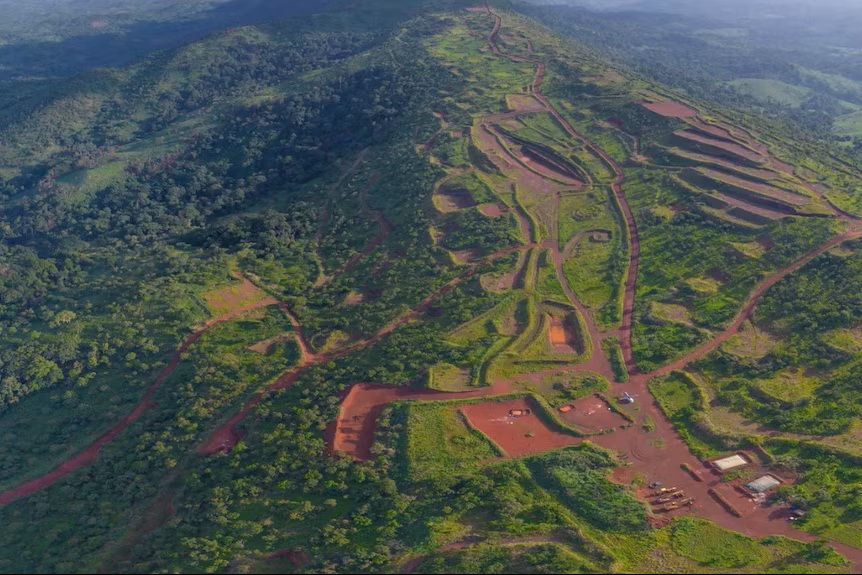
Workers striking over a pay dispute have halted mining since last week on the two blocks of Guinea’s giant Simandou iron ore project operated by a consortium led by China’s Baowu Resources, four sources told Reuters.
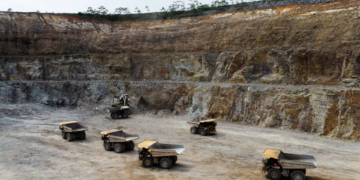
Blasting, loading, hauling and dumping have stopped, though rail and port operations continue, a consultant to the project and two union representatives said.
Management and workers were holding talks on Wednesday, the union representatives said, adding that the strike – the first at the Baowu joint venture – involved around 3,000 workers.
All of the sources asked not to be named as they were not authorised to speak.
A spokesperson for Baowu, the world’s biggest steelmaker and operator of Simandou’s blocks 1 and 2 under the Baowu Winning Consortium Simandou (WCS), declined to comment. Guinea’s mines ministry did not immediately respond to a request for comment.
DISPUTE OVER GUINEA’S NEW MINING PAY STRUCTURE
Guinea introduced a unified mining pay structure in 2025 to standardise wages and reduce disparities across the sector. And most operators are now broadly compliant, a Guinea mining executive told Reuters.
Workers at WCS, however, stopped work on April 28 claiming the company had failed to apply the new salary grid, the consultant and union representatives said.
“There is no mining activity as we speak,” the consultant said. “There is a direct impact on production and they need to find a solution very quickly.”
A source at Baowu confirmed the strike but said WCS was in compliance with a government-mandated pay structure.
The source said the workers were seeking parity with their counterparts on Simandou’s southern blocks 3 and 4, which are being mined by Simfer, a joint venture between Chinalco, Rio Tinto and the Guinean state.
“My pay is like two, three times lower than my colleagues at Simfer,” said a truck driver, who has worked with Baowu WCS since 2020.
He said the company had asked workers to accept low pay during the mine’s development, promising increases once production began, but that salary increases never materialised.
A Guinea government team met with the workers on Tuesday but failed to negotiate an end to the strike, the driver said.
Simandou, home to the world’s richest untapped deposits of iron ore, began exports in November after decades of delays. At its peak, it is expected to produce 120 million metric tons of iron ore annually.
WCS employed more than 10,000 workers during construction of the mine, rail and port infrastructure and is now scaling down as production ramps up.