





Qiraat Africa
عربي  |  Fr
Advertisement
  • News
    • All
    • Climate Change
    • Economy
    • Education
    • Energy
    • Health
    • Migration
    • Mining
    • Politics
    • Security
    • Society
    • Sport
    Is Ethiopia’s Tigray barreling towards another war?

    Ethiopian Airlines cancels flights to Tigray region after clashes

    African governments look to Islamic finance after Benin sukuk success

    African governments look to Islamic finance after Benin sukuk success

    Ukraine says Niger’s move to cut relations is ‘regrettable’

    Gunfire, blasts rock Niger airport overnight before calm restored

    DR Congo Military Court Issues Arrest Warrant for Corneille Nangaa

    Rebel leader denounces US-DRC minerals deal one year after Goma’s fall

    Zambia groups say freedom of expression under threat

    Zambia is hopeful of agreement on debt restructuring terms with Afreximbank

    Rwanda’s presidential election set for July 15, 2024

    Rwanda says UK owes $130 million over scrapped asylum scheme

    Giant Dangote oil refinery to begin production in third quarter

    Shipping data shows Indian diesel exports to West Africa at record high

    Ex-Nigerian minister, Alison-Madueke faces bribery charges in London court

    Nigeria lowers entry barriers to attract investors for latest oil round

    Uganda’s constitutional court to hear challenges against anti-homosexuality law

    Uganda court releases prominent rights activist on bail

  • Analysis
    • All
    • Climate Change
    • Digital & Tech
    • Economy
    • Energy & Power
    • Health
    • Politics
    • Security
    • Society
    BRICS Plus and the Shifting Global Power Balance: Implications of South Africa’s Role

    BRICS Plus and the Shifting Global Power Balance: Implications of South Africa’s Role

    African Union suspends Niger over coup, prepares sanctions; France denies report it asked Algeria to use airspace for a Niger operation

    Leaders in Africa’s human rights institutions are being elected. Why it matters

    Sahel Alliance leaders meet in Bamako to deepen break with ECOWAS

    The AES and the Reconfiguration of Regional Security Architecture: A Look at the 2025 Bamako Summit

    US airstrikes in northern Nigeria: potential windfalls and dangers

    US airstrikes in northern Nigeria: potential windfalls and dangers

    Why France’s Focus is Shifting to Anglophone Africa

    Why France’s Focus is Shifting to Anglophone Africa

    UN believes hundreds were killed in Tanzania election protests

    Cameroon and Tanzania’s rulers clung to power in 2025—but look more vulnerable than ever

    General sworn in as Guinea-Bissau leader in swift coup after disputed vote

    Military and Politics in Guinea-Bissau

    Global power shifts are playing out in the Red Sea region: why this is where the rules are changing

    Global power shifts are playing out in the Red Sea region: why this is where the rules are changing

    Understanding Trump’s Christian Genocide Claim and Military Threat: What It Means for Nigeria-U.S. Relations

    Understanding Trump’s Christian Genocide Claim and Military Threat: What It Means for Nigeria-U.S. Relations

  • Studies
    Benin government says armed forces foil coup attempt

    Coup contagion? A rash of African power grabs suggests copycats are taking note of others’ success

    One in three South Africans have never heard of AI: what this means for policy

    One in three South Africans have never heard of AI: what this means for policy

    Social Media as a Catalyst for the Spread of Dangerous Wealth Ritual Myths

    Social Media as a Catalyst for the Spread of Dangerous Wealth Ritual Myths

    Overcoming Education Barriers for Young Mothers in Sub-Saharan Africa

    Overcoming Education Barriers for Young Mothers in Sub-Saharan Africa

    Youth Empowerment Through Vocational Training in Rural Sub-Saharan Africa

    Youth Empowerment Through Vocational Training in Rural Sub-Saharan Africa

    Manufacturers in Ghana and Nigeria claim that although corruption damages businesses, digital technologies provide a chance to combat it

    Manufacturers in Ghana and Nigeria claim that although corruption damages businesses, digital technologies provide a chance to combat it

    Environmental Threats and Conservation Efforts in Namibia

    Environmental Threats and Conservation Efforts in Namibia

    Your teachers’ level of knowledge affects how well you perform in class: perspectives from 14 French-speaking African nations

    Your teachers’ level of knowledge affects how well you perform in class: perspectives from 14 French-speaking African nations

    Islamic Finance in Nigeria: Between Islamization and Shariah Non-Compliance Polemics

    Islamic Finance in Nigeria: Between Islamization and Shariah Non-Compliance Polemics

  • Infographics
  • Figures
    What does a diary entry reveal about the West African origins of Apongo, a rebel leader in Jamaica?

    What does a diary entry reveal about the West African origins of Apongo, a rebel leader in Jamaica?

    Obafemi Awolowo (1909 – 1987): Nigerian statesman and influential advocate of independence

    Obafemi Awolowo (1909 – 1987): Nigerian statesman and influential advocate of independence

    Tunka Manin (c. 1010–1078), the last ruler of the Ghana Empire

    Tunka Manin (c. 1010–1078), the last ruler of the Ghana Empire

    Samuel Ajayi Crowther (1809-1891): First African Anglican Bishop

    Samuel Ajayi Crowther (1809-1891): First African Anglican Bishop

    Osei Tutu (c. 1660—c. 1717) , founder of the Asante nation

    Osei Tutu (c. 1660—c. 1717) , founder of the Asante nation

    Walter Sisulu (1912 – 2003): South African activist

    Walter Sisulu (1912 – 2003): South African activist

    Modibo Keïta (1915-1977): First President of Mali

    Modibo Keïta (1915-1977): First President of Mali

    Robert Mugabe (1924 – 2019): Revolutionary and former President of Zimbabwe

    Robert Mugabe (1924 – 2019): Revolutionary and former President of Zimbabwe

    Idi Amin Dada (1928 – 2003): Military officer and former President of Uganda

    Idi Amin Dada (1928 – 2003): Military officer and former President of Uganda

  • History
    The battles of Isandlwana and Rorke’s Drift

    The battles of Isandlwana and Rorke’s Drift

    Kimberley’s Big Hole, Northern Cape, South Africa

    Kimberley’s Big Hole, Northern Cape, South Africa

    Ogbunike Caves, Southeastern Nigeria

    Ogbunike Caves, Southeastern Nigeria

    Historic Town of Grand-Bassam

    Historic Town of Grand-Bassam

    Mandara Mountains, Northern Cameroon and Nigeria

    Mandara Mountains, Northern Cameroon and Nigeria

    Zong Massacre

    Zong Massacre

    Abomey, southern Benin

    Abomey, southern Benin

    Ifẹ̀, an ancient city in south-western Nigeria

    Ifẹ̀, an ancient city in south-western Nigeria

    Robben Island, South Africa

    Robben Island, South Africa

  • Others
    • Culture / Literature
    • Follow-ups
    • Interview
    • Opinion
  • Countries
    • Country profiles
    • Regions
      • Central Africa
      • East Africa
      • Southern Africa
      • West Africa
No Result
View All Result
  • News
    • All
    • Climate Change
    • Economy
    • Education
    • Energy
    • Health
    • Migration
    • Mining
    • Politics
    • Security
    • Society
    • Sport
    Is Ethiopia’s Tigray barreling towards another war?

    Ethiopian Airlines cancels flights to Tigray region after clashes

    African governments look to Islamic finance after Benin sukuk success

    African governments look to Islamic finance after Benin sukuk success

    Ukraine says Niger’s move to cut relations is ‘regrettable’

    Gunfire, blasts rock Niger airport overnight before calm restored

    DR Congo Military Court Issues Arrest Warrant for Corneille Nangaa

    Rebel leader denounces US-DRC minerals deal one year after Goma’s fall

    Zambia groups say freedom of expression under threat

    Zambia is hopeful of agreement on debt restructuring terms with Afreximbank

    Rwanda’s presidential election set for July 15, 2024

    Rwanda says UK owes $130 million over scrapped asylum scheme

    Giant Dangote oil refinery to begin production in third quarter

    Shipping data shows Indian diesel exports to West Africa at record high

    Ex-Nigerian minister, Alison-Madueke faces bribery charges in London court

    Nigeria lowers entry barriers to attract investors for latest oil round

    Uganda’s constitutional court to hear challenges against anti-homosexuality law

    Uganda court releases prominent rights activist on bail

  • Analysis
    • All
    • Climate Change
    • Digital & Tech
    • Economy
    • Energy & Power
    • Health
    • Politics
    • Security
    • Society
    BRICS Plus and the Shifting Global Power Balance: Implications of South Africa’s Role

    BRICS Plus and the Shifting Global Power Balance: Implications of South Africa’s Role

    African Union suspends Niger over coup, prepares sanctions; France denies report it asked Algeria to use airspace for a Niger operation

    Leaders in Africa’s human rights institutions are being elected. Why it matters

    Sahel Alliance leaders meet in Bamako to deepen break with ECOWAS

    The AES and the Reconfiguration of Regional Security Architecture: A Look at the 2025 Bamako Summit

    US airstrikes in northern Nigeria: potential windfalls and dangers

    US airstrikes in northern Nigeria: potential windfalls and dangers

    Why France’s Focus is Shifting to Anglophone Africa

    Why France’s Focus is Shifting to Anglophone Africa

    UN believes hundreds were killed in Tanzania election protests

    Cameroon and Tanzania’s rulers clung to power in 2025—but look more vulnerable than ever

    General sworn in as Guinea-Bissau leader in swift coup after disputed vote

    Military and Politics in Guinea-Bissau

    Global power shifts are playing out in the Red Sea region: why this is where the rules are changing

    Global power shifts are playing out in the Red Sea region: why this is where the rules are changing

    Understanding Trump’s Christian Genocide Claim and Military Threat: What It Means for Nigeria-U.S. Relations

    Understanding Trump’s Christian Genocide Claim and Military Threat: What It Means for Nigeria-U.S. Relations

  • Studies
    Benin government says armed forces foil coup attempt

    Coup contagion? A rash of African power grabs suggests copycats are taking note of others’ success

    One in three South Africans have never heard of AI: what this means for policy

    One in three South Africans have never heard of AI: what this means for policy

    Social Media as a Catalyst for the Spread of Dangerous Wealth Ritual Myths

    Social Media as a Catalyst for the Spread of Dangerous Wealth Ritual Myths

    Overcoming Education Barriers for Young Mothers in Sub-Saharan Africa

    Overcoming Education Barriers for Young Mothers in Sub-Saharan Africa

    Youth Empowerment Through Vocational Training in Rural Sub-Saharan Africa

    Youth Empowerment Through Vocational Training in Rural Sub-Saharan Africa

    Manufacturers in Ghana and Nigeria claim that although corruption damages businesses, digital technologies provide a chance to combat it

    Manufacturers in Ghana and Nigeria claim that although corruption damages businesses, digital technologies provide a chance to combat it

    Environmental Threats and Conservation Efforts in Namibia

    Environmental Threats and Conservation Efforts in Namibia

    Your teachers’ level of knowledge affects how well you perform in class: perspectives from 14 French-speaking African nations

    Your teachers’ level of knowledge affects how well you perform in class: perspectives from 14 French-speaking African nations

    Islamic Finance in Nigeria: Between Islamization and Shariah Non-Compliance Polemics

    Islamic Finance in Nigeria: Between Islamization and Shariah Non-Compliance Polemics

  • Infographics
  • Figures
    What does a diary entry reveal about the West African origins of Apongo, a rebel leader in Jamaica?

    What does a diary entry reveal about the West African origins of Apongo, a rebel leader in Jamaica?

    Obafemi Awolowo (1909 – 1987): Nigerian statesman and influential advocate of independence

    Obafemi Awolowo (1909 – 1987): Nigerian statesman and influential advocate of independence

    Tunka Manin (c. 1010–1078), the last ruler of the Ghana Empire

    Tunka Manin (c. 1010–1078), the last ruler of the Ghana Empire

    Samuel Ajayi Crowther (1809-1891): First African Anglican Bishop

    Samuel Ajayi Crowther (1809-1891): First African Anglican Bishop

    Osei Tutu (c. 1660—c. 1717) , founder of the Asante nation

    Osei Tutu (c. 1660—c. 1717) , founder of the Asante nation

    Walter Sisulu (1912 – 2003): South African activist

    Walter Sisulu (1912 – 2003): South African activist

    Modibo Keïta (1915-1977): First President of Mali

    Modibo Keïta (1915-1977): First President of Mali

    Robert Mugabe (1924 – 2019): Revolutionary and former President of Zimbabwe

    Robert Mugabe (1924 – 2019): Revolutionary and former President of Zimbabwe

    Idi Amin Dada (1928 – 2003): Military officer and former President of Uganda

    Idi Amin Dada (1928 – 2003): Military officer and former President of Uganda

  • History
    The battles of Isandlwana and Rorke’s Drift

    The battles of Isandlwana and Rorke’s Drift

    Kimberley’s Big Hole, Northern Cape, South Africa

    Kimberley’s Big Hole, Northern Cape, South Africa

    Ogbunike Caves, Southeastern Nigeria

    Ogbunike Caves, Southeastern Nigeria

    Historic Town of Grand-Bassam

    Historic Town of Grand-Bassam

    Mandara Mountains, Northern Cameroon and Nigeria

    Mandara Mountains, Northern Cameroon and Nigeria

    Zong Massacre

    Zong Massacre

    Abomey, southern Benin

    Abomey, southern Benin

    Ifẹ̀, an ancient city in south-western Nigeria

    Ifẹ̀, an ancient city in south-western Nigeria

    Robben Island, South Africa

    Robben Island, South Africa

  • Others
    • Culture / Literature
    • Follow-ups
    • Interview
    • Opinion
  • Countries
    • Country profiles
    • Regions
      • Central Africa
      • East Africa
      • Southern Africa
      • West Africa
No Result
View All Result
Qiraat Africa
عربي  |  Fr
No Result
View All Result
Home Analysis & Report Politics

Is Mali winning the war against rebellion?

Oyebamiji Usman Adesoji by Oyebamiji Usman Adesoji
December 11, 2023
Mali: junta announces postponement of presidential election
Share on FacebookShare on Twitter

The country’s declining security has led to three coups since 2012. After French troops left, the military of Mali and the Wagner Group continued to fight the insurgency of terrorists in the country, and new events started to unfold.

Mali has serious socioeconomic difficulties, with a high rate of population growth and high rates of illiteracy and unemployment, especially among the youth. As a vast Sahelian country, Mali has a low-income economy that is undiversified and vulnerable to commodity price fluctuations. Also, Mali is a member of the Economic Community of West African States (ECOWAS) and the West African Economic and Monetary Union (WAEMU), which aim toward greater regional integration with unified external tariffs.

From the 13th to the 16th centuries, the Mali empire and trading empire flourished in western Africa. During the first three decades of its existence, Mali was ruled by a one-party organization. Mali’s first one-party regime was the USRDA, a party of socialist inspiration. Under the leadership of Modibo Keita, Mali’s first president (1960–1968), the USRDA launched an extensive program of national development that included the creation of an independent economy, the formation of African cadres, and the development of a national culture. Despite important economic and social achievements, Keita’s regime progressively managed to alienate important sectors of the population, such as the peasants, the army, and the merchants.

Security Issues and the Coups in Mali

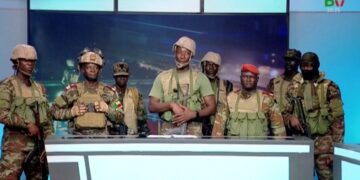
The Republic of Mali in the West African region has been exemplified as a state that transitioned successfully from autocracy to democratic governance in the early 1990s and that has progressively achieved and sustained good levels of economic growth. But, as we have already highlighted, it shockingly lost that distinction in March 2012, when middle-ranking soldiers in revolt against the resurgent Tuareg rebels stormed the presidential palace, captured the state television station, announced that the Constitution had been suspended, and banished President Amadou Toumani Touré just a few weeks before the end of his second term.

Meanwhile, terrorist organizations such as ISIS (ISIL) and al-Qaida are rapidly taking advantage of the Sahel, an area in West Africa with a multitude of interconnected difficulties, as a result of the instability that has already occurred in Mali. More than ten years ago, the Tuareg rebellion, which was first ignited by a demand for their own country, caused the central government of Mali to lose authority over most of the country’s north.

“Experts attribute the expansion of violent extremism in the Sahel to persistently weak governance, characterized by corruption, democratic backsliding, legitimacy deficits, and human rights violations. Many countries in the region share similar internal dynamics of inequality—state power tends to be concentrated in southern, urban regions, while rural, northern areas remain underdeveloped and ripe for exploitation by extremist groups. Thus, Sahel countries are consistently ranked high on the Fragile State Index, particularly Chad, Mali, and Nigeria. Frequent transfers of power are also a problem: Chad, Burkina Faso, Mali, Mauritania, and Niger experienced a combined twenty-five successful coups d’état between 1960 and 2022, most often resulting in the military overthrow of democratically elected civilian governments. Consecutive military coups in Mali in 2020 and 2021, resulting in Mali’s current interim government under a military junta, launched the region’s most recent so-called coup epidemic, which saw similar occurrences in Burkina Faso, Chad, and Niger.”

The Malian Armed Forces (FAMa) consist of the National Defense, composed of the Air Force, the Army, and the National Guard, alongside the National Gendarmerie, all of whom fall under the authority of the Ministry of Armed Forces and Former Combatants (MoAF). In 2019, military and security service personnel strengths: estimates for the size of the FAMa vary; approximately 19,000 total troops (13,000 Army; 800 Air Force; 3,000 Gendarmerie; 2,000 National Guard). Mali is no longer the weakest it has been in recent years. The country has achieved a real feat in just a few months by rising to an honorable place, which makes it a giant in West Africa.

Also, the United Nations Multidimensional Integrated Stabilization Mission there (MINUSMA) has operated in Mali since 2013, deploying a year after Islamist groups and their Tuareg rebel allies seized the north of the country. Together with French troops, they regained control of the main cities, but the terrorists have continued their insurgency from desert outposts. Meanwhile, French troops backed the Malian government in its fight against the militants. But a failure to solve the problem has led to a rejection of their help by the current military leadership, with the last French soldiers leaving in 2022.

The Wagner Group, which has operations across Africa, including lucrative mining deals, has been accused of human rights abuses in Mali’s fight against terrorists. But Wagner has been accused of executing civilians and committing other grave human rights abuses. In 2022, the Malian army and white fighters believed to be Russian were accused of executing over 300 people in the town of Moura during an operation against armed groups, which the government denied.

Furthermore, the presence of the mercenaries has drawn strong condemnation from Western countries, who have argued that the presence of the Wagner Group threatens Mali’s stability. Moscow and Bamako continue to insist that the Russian fighters are merely trainers helping local soldiers combat rebel groups.

“It’s hard to tell if the Russian security presence is military or mercenary but, regardless, would likely be supported rather than front-line fighting,” said Aly Tounkara, director of the Center for Security and Strategic Studies in the Sahel, a Bamako-based think tank. This could allow the Malian army to have victories over the enemy that will be attributed to them, says Tounkara, which was not the case with the French forces. “The second advantage is that victories over extremists could allow Mali’s military to legitimize itself. We must remember that one of the reasons for the forced departure of President Keita was that the security situation was so bad,” he told an American media outlet, VOA.

Democratic backsliding

In Africa today, inferences from present socio-economic and political realities on the continent reveal the imminence of military coups, according to experts. Every coup d’état has different origins, causes, and effects; in the case of Mali, it principally reflected soldiers’ grievances over the government’s weak handling of the Tuareg-led rebellion in the northern part of the country. A wave of coups in Africa’s Sahel region kicked off in Mali in August 2020, when soldiers led by Colonel Assimi Goita overthrew the democratically elected president, Ibrahim Boubacar Keïta. The military said it would restore civilian rule within 18 months. Yet, seven months into the transition process, however, military leaders removed the interim president and prime minister they had appointed and swore in Goita as president of the transitional government.

Accordingly, former colonial powers France and ECOWAS were incensed by a second military coup in May 2021 and the absence of a clear schedule for the restoration of civilian authority. As a result, sanctions were imposed. While a new constitution that strengthens the authority of the president and the armed forces was approved by the military administration of Mali in June 2023, it also downgrades French from an official language to a working language and establishes a senate.

“The new constitution means interim President Col. Goïta can now dictate government policy and has the power to dissolve parliament,” said the BBC in a report. While regional bodies and the UN see the referendum as a crucial test of the military’s willingness to stick to the transition and hold a nationwide democratic process, particularly when violent religious groups are stepping up attacks,.

In addition, the Africa Center for Strategic Studies said the military junta, which has repeatedly ignored timetables to transition to a legitimate civilian authority, has systematically alienated security partners from neighboring states, ECOWAS, France, the European Union, and the UN. It has effectively ceded territorial control of Mali’s northern region to the militant extremist groups, inflaming tensions with the Tuareg groups that had been cooperating with the government to combat the militants. While Mali teeters under the strain of the escalating security threat, the junta appears focused on consolidating its hold on power.

Generally, in Africa, the military institution presented itself and acted on most occasions as a false custodian of democratic principles by initiating and implementing flawed elections for transition. However, emerging facts further suggest that these democratic principles and arrangements put in place by the military have usually been faulty and inadequate for sustainable democratic governance to thrive on.

Similarly, around September 2023, the military government in Mali postponed a presidential election that was expected to return the West African nation to democracy following a 2020 coup. A government spokesperson, Abdoulaye Maiga, said: The presidential election scheduled for February 2024 is being delayed for “technical reasons” to allow the transitional government to review its election data and to address a new constitutional provision that would delay the second round of the vote.

Mission Not Accomplished

“National military power is, of course, relative. It pertains to a relationship between states, with the military power of state A being great or small in relation to the military power of state B or of several other states. The importance of military power in shaping the behavior of nation-states toward one another is also relative to the importance of other means of generating desired results. Thus, the importance of national military power will vary between state actors and, over time, within the entire international system of action. ” Since Goita assumed power in May 2021, conditions in other neighboring countries have also changed. In January of the same year, the military overthrew the government in Burkina Faso, and in July, coup leader Abdourahamane Tiani took over in Niger, a country that had been friendly with the West under President Mohamed Bazoum.

In August 2023, UN observers indicated in a report that the armed group ISIL had almost doubled its territory in Mali in less than a year. The north in particular has seen intensified military clashes following the recent withdrawal of UN forces at the demand of the ruling junta, which set off fighting between the military and Islamist and separatist forces to control the area.

“The security situation is fragile,” Lompo Alassane, civil society coordinator in the provincial capital of Fada N’Gourma in eastern Burkina Faso, told Deutsche Welle (DW), a German public, state-owned international broadcaster. Alassane added that some areas are not accessible. “We can’t move beyond a certain radius from the big cities.”

Read also

African governments look to Islamic finance after Benin sukuk success

Gunfire, blasts rock Niger airport overnight before calm restored

Shipping data shows Indian diesel exports to West Africa at record high

As fighting at the strategically significant northern crossroads may soon begin as Mali’s army continues to engage with Tuareg rebel and separatist factions, controversy has been raised by the struggle over towns like Kidal. In response, the army said on social media networks that it had “broken the defensive line” set up by the rebels near Kidal and assured that it was continuing its advance, which “will be carried out successfully.” The army, reportedly backed by Wagner mercenaries, took control of Kidal after battling for several days. This came after the town was vacated by the UN peacekeepers. The withdrawal of some 11,600 soldiers and 1,500 police officers is due to continue until December 31 and has exacerbated rivalries between armed groups present in the north.

Analysts such as Ornella Moderan, a researcher at the Clingendael Institute, argue that these military governments remain popular among certain segments of society. “But the challenges they face in the fight against terrorism are significant, as none of the three countries, which signed a mutual defense pact just last month, are under complete government control.”

Consequently, Human Rights Watch (HRW) has said that the UN peacekeepers’ impending withdrawal makes it more crucial than ever for the Malian authorities to protect civilians and prevent further abuses during military operations. “Lastly, while it is impossible to predict the onset, incidence, or success rate of a potential military coup, by addressing some core economic and sociopolitical problems, governments could mitigate the risk of such an event, said Habiba Ben Barka and Mthuli Ncube in a study of the African Development Bank (AfDB).
Source: Qiraat Africa
Tags: MaliMali coupSecurity Issues
Oyebamiji Usman Adesoji

Oyebamiji Usman Adesoji

Writer and researcher on business, entrepreneurship and geopolitical affairs.

Related Posts

Ex-Nigerian minister, Alison-Madueke faces bribery charges in London court
Economy

Nigeria lowers entry barriers to attract investors for latest oil round

January 28, 2026
Nigeria’s Niger State to work with Islamic Development Bank on $163 million solar project
Featured

Nigeria’s Niger State to work with Islamic Development Bank on $163 million solar project

January 27, 2026
Can the recent bilateral relationship between China and Angola lead to genuine economic and social progress this time?
Central Africa

African nations now send more money to China than they receive in new loans

January 27, 2026
Mali takes 51% stake in China-backed local explosives venture
Economy

Mali takes 51% stake in China-backed local explosives venture

January 26, 2026
Guinea cancels 129 exploration permits, further tightening control
Featured

Guinea’s bauxite exports jump 25% to 183 million tons in 2025 on Chinese demand

January 26, 2026
Mali’s junta creates a new ministerial-level post to oversee the mining sector
Economy

Mali’s junta creates a new ministerial-level post to oversee the mining sector

January 25, 2026

Search Qiraat Africa

No Result
View All Result

Follow on Twitter

Follow @africanqiraat

Trending

At least six killed in border clashes between South Sudan and Uganda

South Sudan government says rebel advance poses ‘serious threat to peace’

January 27, 2026
Brief History and Culture of the City of Lagos, Nigeria

Brief History and Culture of the City of Lagos, Nigeria

July 24, 2024
Republic of Congo to pass new gas code soon as it seeks to lure investment

Norway police file charges over suspected oil bribery in Congo Republic

January 26, 2026
Osei Tutu (c. 1660—c. 1717) , founder of the Asante nation

Osei Tutu (c. 1660—c. 1717) , founder of the Asante nation

December 6, 2025
More than 640,000 people affected by catastrophic Mozambique floods

More than 640,000 people affected by catastrophic Mozambique floods

January 25, 2026
Sir Abubakar Tafawa Balewa (1912 – 1966)

Sir Abubakar Tafawa Balewa (1912 – 1966)

July 16, 2024

Facebook

Sections

  • About Us
  • Privacy Policy
  • Opinion
  • Infographics
  • News
  • Analysis
  • Figures
  • Culture & Literature
  • Follow Ups
  • Historical Readings
  • Interview
  • Studies


© Copyright Qiraat Africa. Developed by Bunnaj Media .

No Result
View All Result
  • News
  • Analysis & Report
  • Studies
  • Opinion
  • Interview
  • Culture & Literature
  • Figures
  • Follow-ups
  • Historical Readings
  • Regions

© 2021 Copyright Qiraat Africa.