

Qiraat Africa
عربي  |  Fr
Advertisement
  • News
    • All
    • Climate Change
    • Economy
    • Education
    • Energy
    • Health
    • Migration
    • Mining
    • Politics
    • Security
    • Society
    • Sport
    Ugandan kingdom gripped by succession battle after monarch’s death

    Ugandan kingdom gripped by succession battle after monarch’s death

    Drought-hit Chad bans some crop exports to avert food crisis

    Drought-hit Chad bans some crop exports to avert food crisis

    Discontent runs high as Ghana readies to vote on Saturday

    Ghana’s economy expands 6% in second quarter, driven by communications sector

    Gambian soldier jailed for failed coup against President Barrow

    Gambian leader vows power boost after violent blackout protests

    Zimbabwe to introduce lithium export quotas, sets conditions for resumption of shipments

    India’s Lohum ships first lithium ore from Zimbabwe, starts overseas mining

    Kenya offers temporary amnesty to undocumented East Africans amid fears of crackdown

    Kenya offers temporary amnesty to undocumented East Africans amid fears of crackdown

    International financial crime watchdog removes Senegal from ‘grey list,’ adds some others

    Senegal will reprofile debt instead of restructuring, prime minister says

    DR Congo eyes US minerals deal by end of June, FT reports

    DRC tightens state control over mining data in bid to boost influence over its vast mineral wealth

    DRC: Displaced Pygmy community struggles far from the forest

    DRC: Displaced Pygmy community struggles far from the forest

  • Analysis
    • All
    • Climate Change
    • Digital & Tech
    • Economy
    • Energy & Power
    • Health
    • Politics
    • Security
    • Society
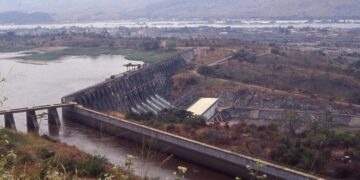
    DRC on a mission to financing the world’s largest hydropower dam

    DR Congo: The INGA Dam Paradox

    Cameroon uncovers more than 200 illegal gold mines, mostly foreign-owned

    Mineral Beneficiation: A Pipedream of Prosperity in an Unequal Financial Architecture

    Zambia signs $1.1 Billion deal to build major oil refinery in Copperbelt

    Is Zambia’s Economy Rebounding Under President Hakainde Hichilema?

    Nigeria considers crude supply reforms to aid Dangote, other refiners

    Refinery rivalry: billion‑dollar oil projects expose East Africa’s long‑running regional tensions

    Zambia’s chaotic but decisive election: government demonstrates strength, democracy shows weakness

    Zambia’s chaotic but decisive election: government demonstrates strength, democracy shows weakness

    African Finance Corp says Gabon political situation a ‘good coup’

    Why African countries must rethink how they grow their economies

    DR Congo says it will receive third-country deportees under new deal with US

    Beyond the Outbreak: How Ebola Reshaped East & Central Africa’s Economies

    What Happens After Dandora? Kenya’s Green Transition Faces Its Hardest Test

    What Happens After Dandora? Kenya’s Green Transition Faces Its Hardest Test

    African entrepreneurs work in challenging environments, and others may benefit from the skills they have developed

    African entrepreneurs work in challenging environments, and others may benefit from the skills they have developed

  • Studies
    China could drive Africa’s renewable energy revolution, report says

    A study shows wind and solar projects in Kenya and South Africa don’t always benefit the communities that host them

    Angola’s lengthy war shaped the way farmers utilised fire—why it matters

    Angola’s lengthy war shaped the way farmers utilised fire—why it matters

    Schooling is the most severely affected by conflict when children are the target – Study

    Schooling is the most severely affected by conflict when children are the target – Study

    Pensions for Botswana’s elderly are expanding, but care services are lacking—study follows 20 years

    Pensions for Botswana’s elderly are expanding, but care services are lacking—study follows 20 years

    60 new cosmic structures have been discovered by South Africa’s MeerKAT telescope, which is mapping previously unseen gaps between galaxies

    60 new cosmic structures have been discovered by South Africa’s MeerKAT telescope, which is mapping previously unseen gaps between galaxies

    Benin government says armed forces foil coup attempt

    Coup contagion? A rash of African power grabs suggests copycats are taking note of others’ success

    One in three South Africans have never heard of AI: what this means for policy

    One in three South Africans have never heard of AI: what this means for policy

    Social Media as a Catalyst for the Spread of Dangerous Wealth Ritual Myths

    Social Media as a Catalyst for the Spread of Dangerous Wealth Ritual Myths

    Overcoming Education Barriers for Young Mothers in Sub-Saharan Africa

    Overcoming Education Barriers for Young Mothers in Sub-Saharan Africa

  • Infographics
  • Figures
    Zumbi dos Palmares (1655-1695): Afro-Brazilian leader of the great Palmares Quilombo

    Zumbi dos Palmares (1655-1695): Afro-Brazilian leader of the great Palmares Quilombo

    Léon M’ba (1902-1967): First president of independent Gabon

    Léon M’ba (1902-1967): First president of independent Gabon

    Namibia to vote in toughest election yet for ruling party

    Netumbo Nandi-Ndaitwah: President of Namibia

    Ahmadu Bello (1910-1966): Nigerian statesman

    Ahmadu Bello (1910-1966): Nigerian statesman

    Cameroon President Paul Biya marks 41 years in power

    Paul Biya: President of Cameroon

    Al-Hajj Salim Suwari (fl. c. 13th–15th century): West African Soninke Islamic scholar

    Al-Hajj Salim Suwari (fl. c. 13th–15th century): West African Soninke Islamic scholar

    Strive Masiyiwa: Zimbabwean businessman and philanthropist

    Strive Masiyiwa: Zimbabwean businessman and philanthropist

    Diébédo Francis Kéré: Burkinabé-German architect

    Diébédo Francis Kéré: Burkinabé-German architect

    Herbert Wigwe (1966-2024): Nigerian banker and businessman

    Herbert Wigwe (1966-2024): Nigerian banker and businessman

  • History
    Lower Valley of the Omo, Ethiopia

    Lower Valley of the Omo, Ethiopia

    Sudano-Sahelian style mosques, northern Côte d’Ivoire

    Sudano-Sahelian style mosques, northern Côte d’Ivoire

    Taï National Park, Côte d’Ivoire

    Taï National Park, Côte d’Ivoire

    Medinas, the Historic Sultanates of the Comoros

    Medinas, the Historic Sultanates of the Comoros

    Aldabra Atoll, Seychelles

    Aldabra Atoll, Seychelles

    Le Morne Cultural Landscape, Mauritius

    Le Morne Cultural Landscape, Mauritius

    Mount Nimba Strict Nature Reserve, Guinea and Côte d’Ivoire

    Mount Nimba Strict Nature Reserve, Guinea and Côte d’Ivoire

    Sangha Trinational, north-western Congo Basin

    Sangha Trinational, north-western Congo Basin

    Kasubi Tombs, Kampala, Uganda

    Kasubi Tombs, Kampala, Uganda

  • Others
    • Culture / Literature
    • Interview
    • Opinion
  • Countries
    • Country profiles
    • Regions
      • Central Africa
      • East Africa
      • Southern Africa
      • West Africa
No Result
View All Result
  • News
    • All
    • Climate Change
    • Economy
    • Education
    • Energy
    • Health
    • Migration
    • Mining
    • Politics
    • Security
    • Society
    • Sport
    Ugandan kingdom gripped by succession battle after monarch’s death

    Ugandan kingdom gripped by succession battle after monarch’s death

    Drought-hit Chad bans some crop exports to avert food crisis

    Drought-hit Chad bans some crop exports to avert food crisis

    Discontent runs high as Ghana readies to vote on Saturday

    Ghana’s economy expands 6% in second quarter, driven by communications sector

    Gambian soldier jailed for failed coup against President Barrow

    Gambian leader vows power boost after violent blackout protests

    Zimbabwe to introduce lithium export quotas, sets conditions for resumption of shipments

    India’s Lohum ships first lithium ore from Zimbabwe, starts overseas mining

    Kenya offers temporary amnesty to undocumented East Africans amid fears of crackdown

    Kenya offers temporary amnesty to undocumented East Africans amid fears of crackdown

    International financial crime watchdog removes Senegal from ‘grey list,’ adds some others

    Senegal will reprofile debt instead of restructuring, prime minister says

    DR Congo eyes US minerals deal by end of June, FT reports

    DRC tightens state control over mining data in bid to boost influence over its vast mineral wealth

    DRC: Displaced Pygmy community struggles far from the forest

    DRC: Displaced Pygmy community struggles far from the forest

  • Analysis
    • All
    • Climate Change
    • Digital & Tech
    • Economy
    • Energy & Power
    • Health
    • Politics
    • Security
    • Society
    DRC on a mission to financing the world’s largest hydropower dam

    DR Congo: The INGA Dam Paradox

    Cameroon uncovers more than 200 illegal gold mines, mostly foreign-owned

    Mineral Beneficiation: A Pipedream of Prosperity in an Unequal Financial Architecture

    Zambia signs $1.1 Billion deal to build major oil refinery in Copperbelt

    Is Zambia’s Economy Rebounding Under President Hakainde Hichilema?

    Nigeria considers crude supply reforms to aid Dangote, other refiners

    Refinery rivalry: billion‑dollar oil projects expose East Africa’s long‑running regional tensions

    Zambia’s chaotic but decisive election: government demonstrates strength, democracy shows weakness

    Zambia’s chaotic but decisive election: government demonstrates strength, democracy shows weakness

    African Finance Corp says Gabon political situation a ‘good coup’

    Why African countries must rethink how they grow their economies

    DR Congo says it will receive third-country deportees under new deal with US

    Beyond the Outbreak: How Ebola Reshaped East & Central Africa’s Economies

    What Happens After Dandora? Kenya’s Green Transition Faces Its Hardest Test

    What Happens After Dandora? Kenya’s Green Transition Faces Its Hardest Test

    African entrepreneurs work in challenging environments, and others may benefit from the skills they have developed

    African entrepreneurs work in challenging environments, and others may benefit from the skills they have developed

  • Studies
    China could drive Africa’s renewable energy revolution, report says

    A study shows wind and solar projects in Kenya and South Africa don’t always benefit the communities that host them

    Angola’s lengthy war shaped the way farmers utilised fire—why it matters

    Angola’s lengthy war shaped the way farmers utilised fire—why it matters

    Schooling is the most severely affected by conflict when children are the target – Study

    Schooling is the most severely affected by conflict when children are the target – Study

    Pensions for Botswana’s elderly are expanding, but care services are lacking—study follows 20 years

    Pensions for Botswana’s elderly are expanding, but care services are lacking—study follows 20 years

    60 new cosmic structures have been discovered by South Africa’s MeerKAT telescope, which is mapping previously unseen gaps between galaxies

    60 new cosmic structures have been discovered by South Africa’s MeerKAT telescope, which is mapping previously unseen gaps between galaxies

    Benin government says armed forces foil coup attempt

    Coup contagion? A rash of African power grabs suggests copycats are taking note of others’ success

    One in three South Africans have never heard of AI: what this means for policy

    One in three South Africans have never heard of AI: what this means for policy

    Social Media as a Catalyst for the Spread of Dangerous Wealth Ritual Myths

    Social Media as a Catalyst for the Spread of Dangerous Wealth Ritual Myths

    Overcoming Education Barriers for Young Mothers in Sub-Saharan Africa

    Overcoming Education Barriers for Young Mothers in Sub-Saharan Africa

  • Infographics
  • Figures
    Zumbi dos Palmares (1655-1695): Afro-Brazilian leader of the great Palmares Quilombo

    Zumbi dos Palmares (1655-1695): Afro-Brazilian leader of the great Palmares Quilombo

    Léon M’ba (1902-1967): First president of independent Gabon

    Léon M’ba (1902-1967): First president of independent Gabon

    Namibia to vote in toughest election yet for ruling party

    Netumbo Nandi-Ndaitwah: President of Namibia

    Ahmadu Bello (1910-1966): Nigerian statesman

    Ahmadu Bello (1910-1966): Nigerian statesman

    Cameroon President Paul Biya marks 41 years in power

    Paul Biya: President of Cameroon

    Al-Hajj Salim Suwari (fl. c. 13th–15th century): West African Soninke Islamic scholar

    Al-Hajj Salim Suwari (fl. c. 13th–15th century): West African Soninke Islamic scholar

    Strive Masiyiwa: Zimbabwean businessman and philanthropist

    Strive Masiyiwa: Zimbabwean businessman and philanthropist

    Diébédo Francis Kéré: Burkinabé-German architect

    Diébédo Francis Kéré: Burkinabé-German architect

    Herbert Wigwe (1966-2024): Nigerian banker and businessman

    Herbert Wigwe (1966-2024): Nigerian banker and businessman

  • History
    Lower Valley of the Omo, Ethiopia

    Lower Valley of the Omo, Ethiopia

    Sudano-Sahelian style mosques, northern Côte d’Ivoire

    Sudano-Sahelian style mosques, northern Côte d’Ivoire

    Taï National Park, Côte d’Ivoire

    Taï National Park, Côte d’Ivoire

    Medinas, the Historic Sultanates of the Comoros

    Medinas, the Historic Sultanates of the Comoros

    Aldabra Atoll, Seychelles

    Aldabra Atoll, Seychelles

    Le Morne Cultural Landscape, Mauritius

    Le Morne Cultural Landscape, Mauritius

    Mount Nimba Strict Nature Reserve, Guinea and Côte d’Ivoire

    Mount Nimba Strict Nature Reserve, Guinea and Côte d’Ivoire

    Sangha Trinational, north-western Congo Basin

    Sangha Trinational, north-western Congo Basin

    Kasubi Tombs, Kampala, Uganda

    Kasubi Tombs, Kampala, Uganda

  • Others
    • Culture / Literature
    • Interview
    • Opinion
  • Countries
    • Country profiles
    • Regions
      • Central Africa
      • East Africa
      • Southern Africa
      • West Africa
No Result
View All Result
Qiraat Africa
عربي  |  Fr
No Result
View All Result
Home Historical Readings

How South Africa’s deplorable situation is undermining Nelson Mandela’s legacy

July 19, 2023
How South Africa’s deplorable situation is undermining Nelson Mandela’s legacy

Johannesburg, South Africa: Nelson Mandela visits Hlengiwe School to encourage students to learn - Former President of South Africa and longtime political prisoner, held by the Apartheid based government from 1964-1990 for sabotage. With the coming of a freer political climate, Mandela was released from his life sentence at Victor Vester Prison on February 11, of 1990. He went on to lead the African National Congress in negotiations with President F.W. de Klerk, that resulted in the end of Apartheid and full citizenship for all South Africans. He and de Klerk received a joint Nobel Peace Prize in 1993 for their efforts. Mandela was elected president in 1994. (Photo by © Louise Gubb/CORBIS SABA/Corbis via Getty Images)

Share on FacebookShare on Twitter

By Roger Southall*


The multiple concerns about the dismal state of South Africa – including a stagnant and failing economy, a seemingly incapable state, and massive corruption – have led to the questioning of the political and economic settlement made in 1994 to end apartheid. The settlement is strongly associated with Nelson Mandela, who oversaw its progress to a successful conclusion. He subsequently underpinned it by promoting reconciliation with white people, especially Afrikaners, the former rulers.

The questioning of the 1994 settlement, and therefore Mandela’s legacy, has different dimensions, running through diverse narratives. One, associated with a faction of the governing African National Congress (ANC) that claims to stand for “radical economic transformation”, is that the settlement was a “sell-out” to “white monopoly capital”. Another is the inclination to lay the blame for state failure on the constitution, thereby deflecting responsibility for massive governance failures away from the ANC.

Yet another stems from the frustrations of recent black graduates and the mass of black unemployed for whom there are no jobs. There are also huge numbers of people without either adequate shelter or enough to eat. South Africans want someone to blame. While their search regularly targets a wide range of usual suspects, it also leads to a questioning of what Mandela really left behind.

It does not help that Mandela continues to be lionised by many, if not most, white people, who despite much grumbling about the many inconveniences of life in South Africa have largely continued to prosper.
This means that those of us who are social scientists and long-term observers of South Africa’s politics and history need to think carefully about how we think critically about Mandela’s legacy.

Questioning Mandela’s legacy

From a historian’s view the questioning of Mandela’s legacy is normal. Historians are always asking new questions and reassessing the past to gain new insights about the role important political leaders play.

This has posed particular problems for Mandela’s biographers. Biography has always had a problematic relationship with history as a discipline. This partly stems from history’s reluctance to endorse “Great Men” versions of the past. Partly from the more generic problem of assessing individuals’ role in shaping wider developments. Thus it has been with Mandela. Nonetheless, the six or seven significant biographies of Mandela may be said to revolve around the following arguments.

First, Mandela played a critical role in preventing a descent into total civil war. It was brutal enough as it was. Narratives at the time often suggested that the period 1990-94 was a “miracle”, a difficult but “peaceful transition to democracy”. But this was misleading. Thousands died in political violence during this time.

Mandela’s biographers argue that his initiating negotiations with the regime from jail, independently of the ANC, was crucial. Without his actions, the apartheid state would not have come to the party. This, even though by the time FW de Klerk, its last president, came to power, it was seeking a route to a settlement.

Second, Mandela played his cards carefully in steadily asserting his authority over the ANC. Although the ANC in exile had carefully choreographed the imprisoned Mandela as an icon around which international opposition to apartheid could be mobilised, there remained much questioning within the organisation following his release about his motivations and wisdom. Also whether he should replace the ailing Oliver Tambo as its leader. That he proceeded to convince his doubters by constantly proclaiming his loyalty to the ANC, its militant “line” and his subjection to its discipline while simultaneously edging it towards negotiations is said to have been key to his establishing his claim to leadership. This was necessary to convince his doubters within the ANC that it could not defeat the regime on the field of battle. Hence there was a need for compromise with the regime.

Third, Mandela is credited with successfully steering the negotiations which led to South Africa’s democracy. That he played a limited part in negotiating much of the nitty-gritty of the new constitution is acknowledged. Yet, this is combined with recognition of his acute judgment of when to place pressure on the regime to secure concessions and when to adopt a more conciliatory line. Generally, it is agreed that the ANC outsmarted the apartheid government during the negotiations. Praise is correctly showered on Mandela for his role in bringing both the far right, under Constand Viljoen, and Mangosuthu Buthelezi’s quarrelsome Inkatha Freedom Movement into the 1994 election at the very last moment, without which it would have lacked legitimacy.

Fourth, while today it is recognised that a narrative of the time – that South Africans had negotiated the finest constitution in the world – was overcooked, the negotiations resulted in the country becoming a constitutional democracy.

Read also

Mineral Beneficiation: A Pipedream of Prosperity in an Unequal Financial Architecture

India’s Lohum ships first lithium ore from Zimbabwe, starts overseas mining

Angola approves sale of 34% stake in Standard Bank unit seized from tycoon

We now know, of course, that the ANC has subverted much of the intention of the constitution and undermined many of its safeguards. Its cadre deployment policy of appointing loyalists to key state institutions has severely diminished the independence of the state machinery. Furthermore, the ANC has merged party with state. Above all, it has severely weakened the capacity of parliament to hold the president and ministers accountable.

The State Capture Commission has laid bare the mechanics of all this in great detail. It has placed huge responsibility for this upon the ANC. Nonetheless, it is widely recognised by civil society that the constitution and the law still provide the fundamental basis for exacting political accountability. This is confirmed by the many judgments the Constitutional Court has rendered against the government.

Fifth, while his critics often argue that Mandela leant over too far to appease whites, the counter-argument is that this grounded democracy. At the beginning of his autobiography, Mandela presents the struggle in South Africa as a clash between Afrikaner and African nationalisms. His role during negotiations can be viewed through the prism of his conviction of the need to reconcile these, as one could not defeat the other. Without reconciliation, however imperfect, there could be no making of a new nation. After all, what was the alternative?

Capturing Mandela’s legacy

There is never going to be a final assessment of Mandela’s legacy. How it is regarded will continue to change, depending on the destination South Africa travels to. If it really does become a “failed state”, as the doomsters predict, there will be much need for reexamination of whether this failure has its roots in the constitutional settlement which Mandela did so much to bring about. For the moment, however, Mandela continues to inspire South Africans who place their hopes in constitutional democracy. What other hopes do they have?

ــــــــــــــ

*Professor of Sociology, University of the Witwatersrand

Source: The Conversation
Tags: Nelson Mandela's legacySouth Africa

Related Posts

Zambia’s chaotic election casts shadow over Hichilema swearing-in
Economy

Zambia’s chaotic election casts shadow over Hichilema swearing-in

September 1, 2026
Zambian opposition leader Mundubile charged with treason, lawyer says
Featured

Zambian opposition leader Mundubile charged with treason, lawyer says

August 30, 2026
Diplomatic tensions between Eswatini and US over terrorism trial for MPs
Economy

China tells citizens to leave Taiwan-allied Eswatini

August 27, 2026
Zambia signs $1.1 Billion deal to build major oil refinery in Copperbelt
Economy

Is Zambia’s Economy Rebounding Under President Hakainde Hichilema?

August 26, 2026
Zambia says it arrested opposition figures on night of elections
Featured

Zambia closes courts on last day to file election challenge

August 24, 2026
Zambia’s chaotic but decisive election: government demonstrates strength, democracy shows weakness
Featured

Zambia’s chaotic but decisive election: government demonstrates strength, democracy shows weakness

August 22, 2026

Search Qiraat Africa

No Result
View All Result

Follow on Twitter

Follow @africanqiraat

Trending

Tunka Manin (c. 1010–1078), the last ruler of the Ghana Empire

Tunka Manin (c. 1010–1078), the last ruler of the Ghana Empire

December 12, 2025
Kumbi Saleh, the capital of the ancient Ghana Empire

Kumbi Saleh, the capital of the ancient Ghana Empire

October 13, 2025
Brief History and Culture of the City of Lagos, Nigeria

Brief History and Culture of the City of Lagos, Nigeria

July 24, 2024
Africa’s 10 Strongest Currencies in June 2026

Africa’s 10 Strongest Currencies in June 2026

July 8, 2026
Samori Touré (1830-1900): Military leader and founder of Wassoulou Empire

Samori Touré (1830-1900): Military leader and founder of Wassoulou Empire

January 11, 2026
Zaghawa people of northeastern Chad and western Sudan

Zaghawa people of northeastern Chad and western Sudan

March 3, 2026

Facebook

Sections

  • About Us
  • Privacy Policy
  • Opinion
  • Infographics
  • News
  • Analysis
  • Figures
  • Culture & Literature
  • Follow Ups
  • Historical Readings
  • Interview
  • Studies


© Copyright Qiraat Africa. Developed by Bunnaj Media .

No Result
View All Result
  • News
  • Analysis & Report
  • Studies
  • Opinion
  • Interview
  • Culture & Literature
  • Figures
  • Historical Readings
  • Regions

© 2021 Copyright Qiraat Africa.