














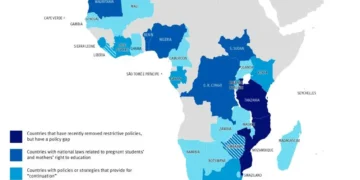







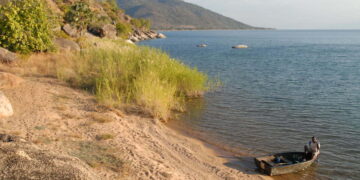

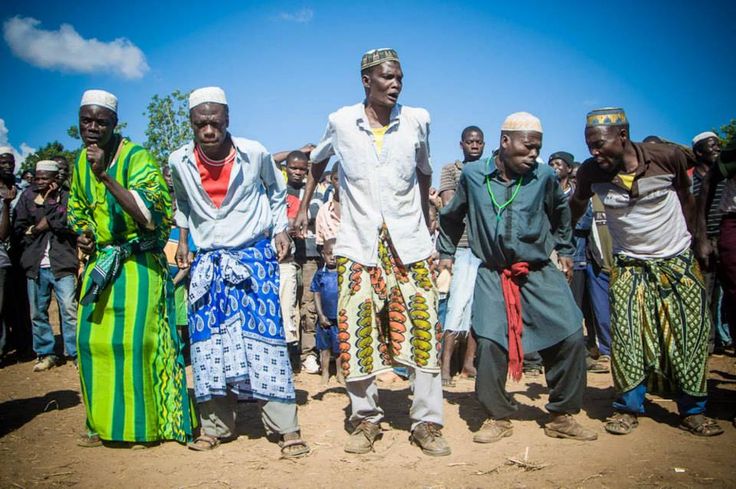
The Yao people, also known as Wayao, are one of the most influential ethnic groups in the African Great Lakes region, particularly around Lake Malawi (also known as Lake Nyasa in Tanzania and Lago Niassa in Mozambique). Their geographical presence extends across Malawi, Mozambique, and Tanzania, and throughout their history, they have forged a unique interplay between trade, politics, and religion.
In Malawi, they are concentrated mainly in the southern region (Machinga District) and the eastern region. In Mozambique, they are present in the northern Nyasa District, and in Tanzania, they live in the southern regions bordering Mozambique and Malawi.
The Yao people trace their historical origins to the Yao region in the mountainous region of Niassa Province in northeastern Mozambique. Their major migrations into the African interior began in the 18th century, driven by their desire to control the trade routes connecting the interior to the Indian Ocean coast.
Their migration was organised under the leadership of powerful tribal chiefs known as “Mwene”, enabling them to establish control over vast areas around Lake Malawi. Over time, the Yao distinguished themselves from their neighbours through their military strength and their ability to build cross-border trade networks.
The Yao society is characterised by a complex social system based on two fundamental pillars. The first is the matrilineal system, where wealth, land rights, and tribal identity are passed down through the maternal line. However, political power and leadership decisions remain in the hands of men (uncles or brothers), creating a unique social balance in the management of family affairs.
The second pillar is the leadership structure. Villages enjoy a high degree of administrative autonomy, with the “chief” responsible for resolving disputes, distributing land, and preserving traditions. This decentralised system contributed to their greater resilience against later colonial pressures.
During the 18th and 19th centuries, the Yao evolved into professional “middlemen”. They connected Arab and Persian traders on the Swahili coast with kingdoms and ethnic groups in the interior of Africa. They exported ivory, hides, and some crops in exchange for firearms, textiles, and beads. This trade led to the enrichment of a Yao elite, who wielded considerable political influence, enabling them to deal on equal footing with the European colonial powers in the early stages of their expansion.
One of the most prominent features of Yao identity is their early adoption of Islam, a result of their ongoing trade relations with Arab traders on the East African coast. Islam became a cultural element that distinguished the Yao from their neighbours (such as the Chewa people). They established religious schools (khalwas) to teach the Quran, which enhanced their educational levels and cultural awareness.
According to Africa 101 Last Tribes:
“Somewhere in what is now the Niassa Province of Mozambique, to the east of Lake Malawi in the mountainous area between the Lujenda and Luchelingo rivers, there is said to be a hill named Yao (the word is the plural form of a noun meaning “treeless hill”). It is from this region that the Yao, who took their ethnonym from this place of origin, moved in a series of migrations beginning in the eighteenth century to their areas of later settlement. They now live in a broad band stretching from the Shire Highlands in southern Malawi through the hills of Mozambique, to the east of Lake Malawi, and into the southern part of Tanzania, on the southeastern edges of the Great Rift Valley.
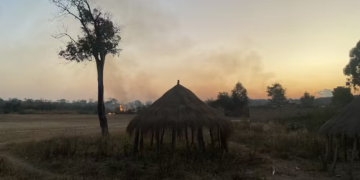
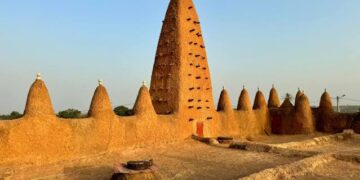
Yao villages tend to be strung out along a road or a path, and nearly all the villages have a mosque. Houses and mosques are usually built of pole and daub and are rectangular in shape. Most houses are thatched, while mosques may have an iron roof and a variety of architectural ornaments. Village mosques are often painted decoratively according to the taste of the builders. Village dwellings tend to be clustered into little groups surrounded by fruit trees—mango, papaya, and banana—with gardens of maize, cassava, rice, or sugarcane farther afield.
The Yao are famous as healers. Most villagers have a large body of knowledge of local medicinal herbs, and healers travel far and wide to gather potent plants and ingredients. There are practitioners who make use of the Islamic scriptures in various ways for divination or healing.”
The Yao people fiercely resisted British and German colonial expansion at the end of the 19th century. Leaders such as Mataka and Makanjila led military campaigns to defend their independence and trade interests against attempts to impose colonial protection.
However, the military superiority of the colonial machine ultimately led to the subjugation of their territories. But, thanks to their educational networks and organisational prowess, the Yao were able to occupy important administrative positions in the colonial apparatus and later in the post-independence governments of Malawi, Mozambique, and Tanzania.
Currently, the Yao people face common economic and developmental challenges with other inhabitants of the Lake Malawi region. Population growth has led to a shortage of fertile land, prompting many to migrate to larger cities for work. Fluctuations in rainfall and changes in the water levels of Lake Malawi are impacting traditional livelihoods based on agriculture and fishing. 3. Heritage Preservation: Yao leaders are increasingly concerned about the erosion of their oral traditions and language (Chiyao) due to globalisation and the influence of dominant cultures.