


Qiraat Africa
عربي  |  Fr
Advertisement
  • News
    • All
    • Climate Change
    • Economy
    • Education
    • Energy
    • Health
    • Migration
    • Mining
    • Politics
    • Security
    • Society
    • Sport
    Ethiopia launches Africa’s largest hydroelectric dam

    Trump says he wants leaders of Egypt, Ethiopia to resolve Nile dam dispute

    Wife of detained Uganda opposition figure says husband sick, condition worrying

    Wife of detained Uganda opposition figure says husband sick, condition worrying

    African heads of state head to Beijing for China-Africa cooperation summit

    China’s Africa lending nearly halved in 2024, shifts to yuan

    Ethiopia: at least 40 army allies killed in drone strike

    Ethiopia: at least 40 army allies killed in drone strike

    UN assembly adopts resolution backing ongoing efforts to eliminate ‘blood diamonds’ trade

    DR Congo offers manganese, copper‑cobalt, and lithium assets to US investors under minerals pact

    Burkina Faso junta dismisses army and intelligence chiefs

    Togo expels ex-Burkina Faso leader after coup plot claim, sources say

    Senegal to get bonuses, land for Africa Cup of Nations win

    Senegal to get bonuses, land for Africa Cup of Nations win

    Nigerian troops free 62 hostages, kill two militants in northwest operations

    Nigerian troops free 62 hostages, kill two militants in northwest operations

    Malawi hikes fuel prices for second time in four months

    Malawi hikes fuel prices for second time in four months

  • Analysis
    • All
    • Climate Change
    • Digital & Tech
    • Economy
    • Energy & Power
    • Health
    • Politics
    • Security
    • Society
    BRICS Plus and the Shifting Global Power Balance: Implications of South Africa’s Role

    BRICS Plus and the Shifting Global Power Balance: Implications of South Africa’s Role

    African Union suspends Niger over coup, prepares sanctions; France denies report it asked Algeria to use airspace for a Niger operation

    Leaders in Africa’s human rights institutions are being elected. Why it matters

    Sahel Alliance leaders meet in Bamako to deepen break with ECOWAS

    The AES and the Reconfiguration of Regional Security Architecture: A Look at the 2025 Bamako Summit

    US airstrikes in northern Nigeria: potential windfalls and dangers

    US airstrikes in northern Nigeria: potential windfalls and dangers

    Why France’s Focus is Shifting to Anglophone Africa

    Why France’s Focus is Shifting to Anglophone Africa

    UN believes hundreds were killed in Tanzania election protests

    Cameroon and Tanzania’s rulers clung to power in 2025—but look more vulnerable than ever

    General sworn in as Guinea-Bissau leader in swift coup after disputed vote

    Military and Politics in Guinea-Bissau

    Global power shifts are playing out in the Red Sea region: why this is where the rules are changing

    Global power shifts are playing out in the Red Sea region: why this is where the rules are changing

    Understanding Trump’s Christian Genocide Claim and Military Threat: What It Means for Nigeria-U.S. Relations

    Understanding Trump’s Christian Genocide Claim and Military Threat: What It Means for Nigeria-U.S. Relations

  • Studies
    Benin government says armed forces foil coup attempt

    Coup contagion? A rash of African power grabs suggests copycats are taking note of others’ success

    One in three South Africans have never heard of AI: what this means for policy

    One in three South Africans have never heard of AI: what this means for policy

    Social Media as a Catalyst for the Spread of Dangerous Wealth Ritual Myths

    Social Media as a Catalyst for the Spread of Dangerous Wealth Ritual Myths

    Overcoming Education Barriers for Young Mothers in Sub-Saharan Africa

    Overcoming Education Barriers for Young Mothers in Sub-Saharan Africa

    Youth Empowerment Through Vocational Training in Rural Sub-Saharan Africa

    Youth Empowerment Through Vocational Training in Rural Sub-Saharan Africa

    Manufacturers in Ghana and Nigeria claim that although corruption damages businesses, digital technologies provide a chance to combat it

    Manufacturers in Ghana and Nigeria claim that although corruption damages businesses, digital technologies provide a chance to combat it

    Environmental Threats and Conservation Efforts in Namibia

    Environmental Threats and Conservation Efforts in Namibia

    Your teachers’ level of knowledge affects how well you perform in class: perspectives from 14 French-speaking African nations

    Your teachers’ level of knowledge affects how well you perform in class: perspectives from 14 French-speaking African nations

    Islamic Finance in Nigeria: Between Islamization and Shariah Non-Compliance Polemics

    Islamic Finance in Nigeria: Between Islamization and Shariah Non-Compliance Polemics

  • Infographics
  • Figures
    What does a diary entry reveal about the West African origins of Apongo, a rebel leader in Jamaica?

    What does a diary entry reveal about the West African origins of Apongo, a rebel leader in Jamaica?

    Obafemi Awolowo (1909 – 1987): Nigerian statesman and influential advocate of independence

    Obafemi Awolowo (1909 – 1987): Nigerian statesman and influential advocate of independence

    Tunka Manin (c. 1010–1078), the last ruler of the Ghana Empire

    Tunka Manin (c. 1010–1078), the last ruler of the Ghana Empire

    Samuel Ajayi Crowther (1809-1891): First African Anglican Bishop

    Samuel Ajayi Crowther (1809-1891): First African Anglican Bishop

    Osei Tutu (c. 1660—c. 1717) , founder of the Asante nation

    Osei Tutu (c. 1660—c. 1717) , founder of the Asante nation

    Walter Sisulu (1912 – 2003): South African activist

    Walter Sisulu (1912 – 2003): South African activist

    Modibo Keïta (1915-1977): First President of Mali

    Modibo Keïta (1915-1977): First President of Mali

    Robert Mugabe (1924 – 2019): Revolutionary and former President of Zimbabwe

    Robert Mugabe (1924 – 2019): Revolutionary and former President of Zimbabwe

    Idi Amin Dada (1928 – 2003): Military officer and former President of Uganda

    Idi Amin Dada (1928 – 2003): Military officer and former President of Uganda

  • History
    The battles of Isandlwana and Rorke’s Drift

    The battles of Isandlwana and Rorke’s Drift

    Kimberley’s Big Hole, Northern Cape, South Africa

    Kimberley’s Big Hole, Northern Cape, South Africa

    Ogbunike Caves, Southeastern Nigeria

    Ogbunike Caves, Southeastern Nigeria

    Historic Town of Grand-Bassam

    Historic Town of Grand-Bassam

    Mandara Mountains, Northern Cameroon and Nigeria

    Mandara Mountains, Northern Cameroon and Nigeria

    Zong Massacre

    Zong Massacre

    Abomey, southern Benin

    Abomey, southern Benin

    Ifẹ̀, an ancient city in south-western Nigeria

    Ifẹ̀, an ancient city in south-western Nigeria

    Robben Island, South Africa

    Robben Island, South Africa

  • Others
    • Culture / Literature
    • Follow-ups
    • Interview
    • Opinion
  • Countries
    • Country profiles
    • Regions
      • Central Africa
      • East Africa
      • Southern Africa
      • West Africa
No Result
View All Result
  • News
    • All
    • Climate Change
    • Economy
    • Education
    • Energy
    • Health
    • Migration
    • Mining
    • Politics
    • Security
    • Society
    • Sport
    Ethiopia launches Africa’s largest hydroelectric dam

    Trump says he wants leaders of Egypt, Ethiopia to resolve Nile dam dispute

    Wife of detained Uganda opposition figure says husband sick, condition worrying

    Wife of detained Uganda opposition figure says husband sick, condition worrying

    African heads of state head to Beijing for China-Africa cooperation summit

    China’s Africa lending nearly halved in 2024, shifts to yuan

    Ethiopia: at least 40 army allies killed in drone strike

    Ethiopia: at least 40 army allies killed in drone strike

    UN assembly adopts resolution backing ongoing efforts to eliminate ‘blood diamonds’ trade

    DR Congo offers manganese, copper‑cobalt, and lithium assets to US investors under minerals pact

    Burkina Faso junta dismisses army and intelligence chiefs

    Togo expels ex-Burkina Faso leader after coup plot claim, sources say

    Senegal to get bonuses, land for Africa Cup of Nations win

    Senegal to get bonuses, land for Africa Cup of Nations win

    Nigerian troops free 62 hostages, kill two militants in northwest operations

    Nigerian troops free 62 hostages, kill two militants in northwest operations

    Malawi hikes fuel prices for second time in four months

    Malawi hikes fuel prices for second time in four months

  • Analysis
    • All
    • Climate Change
    • Digital & Tech
    • Economy
    • Energy & Power
    • Health
    • Politics
    • Security
    • Society
    BRICS Plus and the Shifting Global Power Balance: Implications of South Africa’s Role

    BRICS Plus and the Shifting Global Power Balance: Implications of South Africa’s Role

    African Union suspends Niger over coup, prepares sanctions; France denies report it asked Algeria to use airspace for a Niger operation

    Leaders in Africa’s human rights institutions are being elected. Why it matters

    Sahel Alliance leaders meet in Bamako to deepen break with ECOWAS

    The AES and the Reconfiguration of Regional Security Architecture: A Look at the 2025 Bamako Summit

    US airstrikes in northern Nigeria: potential windfalls and dangers

    US airstrikes in northern Nigeria: potential windfalls and dangers

    Why France’s Focus is Shifting to Anglophone Africa

    Why France’s Focus is Shifting to Anglophone Africa

    UN believes hundreds were killed in Tanzania election protests

    Cameroon and Tanzania’s rulers clung to power in 2025—but look more vulnerable than ever

    General sworn in as Guinea-Bissau leader in swift coup after disputed vote

    Military and Politics in Guinea-Bissau

    Global power shifts are playing out in the Red Sea region: why this is where the rules are changing

    Global power shifts are playing out in the Red Sea region: why this is where the rules are changing

    Understanding Trump’s Christian Genocide Claim and Military Threat: What It Means for Nigeria-U.S. Relations

    Understanding Trump’s Christian Genocide Claim and Military Threat: What It Means for Nigeria-U.S. Relations

  • Studies
    Benin government says armed forces foil coup attempt

    Coup contagion? A rash of African power grabs suggests copycats are taking note of others’ success

    One in three South Africans have never heard of AI: what this means for policy

    One in three South Africans have never heard of AI: what this means for policy

    Social Media as a Catalyst for the Spread of Dangerous Wealth Ritual Myths

    Social Media as a Catalyst for the Spread of Dangerous Wealth Ritual Myths

    Overcoming Education Barriers for Young Mothers in Sub-Saharan Africa

    Overcoming Education Barriers for Young Mothers in Sub-Saharan Africa

    Youth Empowerment Through Vocational Training in Rural Sub-Saharan Africa

    Youth Empowerment Through Vocational Training in Rural Sub-Saharan Africa

    Manufacturers in Ghana and Nigeria claim that although corruption damages businesses, digital technologies provide a chance to combat it

    Manufacturers in Ghana and Nigeria claim that although corruption damages businesses, digital technologies provide a chance to combat it

    Environmental Threats and Conservation Efforts in Namibia

    Environmental Threats and Conservation Efforts in Namibia

    Your teachers’ level of knowledge affects how well you perform in class: perspectives from 14 French-speaking African nations

    Your teachers’ level of knowledge affects how well you perform in class: perspectives from 14 French-speaking African nations

    Islamic Finance in Nigeria: Between Islamization and Shariah Non-Compliance Polemics

    Islamic Finance in Nigeria: Between Islamization and Shariah Non-Compliance Polemics

  • Infographics
  • Figures
    What does a diary entry reveal about the West African origins of Apongo, a rebel leader in Jamaica?

    What does a diary entry reveal about the West African origins of Apongo, a rebel leader in Jamaica?

    Obafemi Awolowo (1909 – 1987): Nigerian statesman and influential advocate of independence

    Obafemi Awolowo (1909 – 1987): Nigerian statesman and influential advocate of independence

    Tunka Manin (c. 1010–1078), the last ruler of the Ghana Empire

    Tunka Manin (c. 1010–1078), the last ruler of the Ghana Empire

    Samuel Ajayi Crowther (1809-1891): First African Anglican Bishop

    Samuel Ajayi Crowther (1809-1891): First African Anglican Bishop

    Osei Tutu (c. 1660—c. 1717) , founder of the Asante nation

    Osei Tutu (c. 1660—c. 1717) , founder of the Asante nation

    Walter Sisulu (1912 – 2003): South African activist

    Walter Sisulu (1912 – 2003): South African activist

    Modibo Keïta (1915-1977): First President of Mali

    Modibo Keïta (1915-1977): First President of Mali

    Robert Mugabe (1924 – 2019): Revolutionary and former President of Zimbabwe

    Robert Mugabe (1924 – 2019): Revolutionary and former President of Zimbabwe

    Idi Amin Dada (1928 – 2003): Military officer and former President of Uganda

    Idi Amin Dada (1928 – 2003): Military officer and former President of Uganda

  • History
    The battles of Isandlwana and Rorke’s Drift

    The battles of Isandlwana and Rorke’s Drift

    Kimberley’s Big Hole, Northern Cape, South Africa

    Kimberley’s Big Hole, Northern Cape, South Africa

    Ogbunike Caves, Southeastern Nigeria

    Ogbunike Caves, Southeastern Nigeria

    Historic Town of Grand-Bassam

    Historic Town of Grand-Bassam

    Mandara Mountains, Northern Cameroon and Nigeria

    Mandara Mountains, Northern Cameroon and Nigeria

    Zong Massacre

    Zong Massacre

    Abomey, southern Benin

    Abomey, southern Benin

    Ifẹ̀, an ancient city in south-western Nigeria

    Ifẹ̀, an ancient city in south-western Nigeria

    Robben Island, South Africa

    Robben Island, South Africa

  • Others
    • Culture / Literature
    • Follow-ups
    • Interview
    • Opinion
  • Countries
    • Country profiles
    • Regions
      • Central Africa
      • East Africa
      • Southern Africa
      • West Africa
No Result
View All Result
Qiraat Africa
عربي  |  Fr
No Result
View All Result
Home Figures

Albert John Luthuli (1898–1967): South African politician and first African Nobel Laureate

November 2, 2025
Albert John Luthuli (1898–1967): South African politician and first African Nobel Laureate

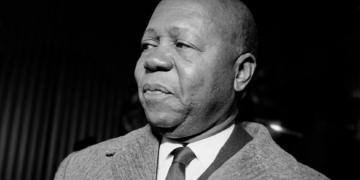
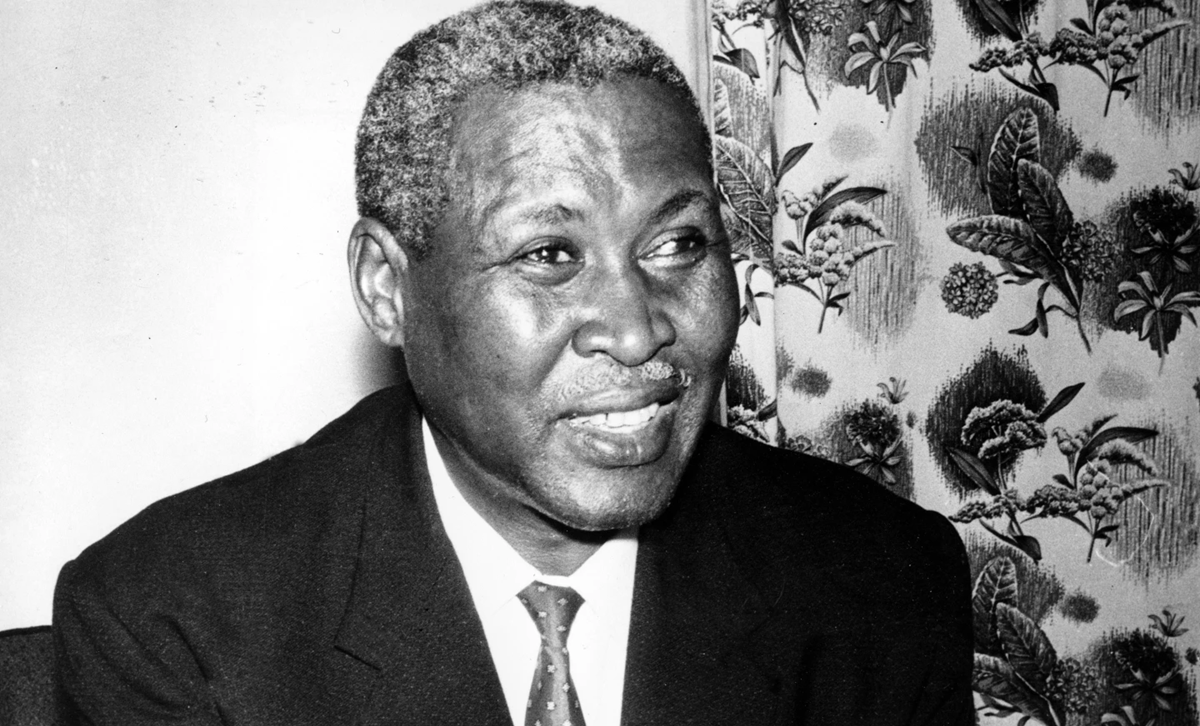
Albert Luthuli. (AP photo file)

Share on FacebookShare on Twitter

Albert John Luthuli is considered a pivotal figure in South African history as one of the architects of a crucial phase of nonviolent resistance against apartheid. Luthuli’s career spanned from teacher to tribal chief (Inkosi) to leading the African National Congress (ANC) during a period of political escalation and government repression. His leadership stemmed from a deep conviction in nonviolent strategy and the application of Christian principles to political struggle.

Luthuli was born around 1898 in Bulawayo, in what is now Zimbabwe, then known as Southern Rhodesia. He was born outside of South Africa because his father, John Bunyan Luthuli, was a translator and Seventh-day Adventist mission worker in the Bulawayo region. The family returned to their ancestral homeland in South Africa when Albert was young, settling in the coastal town of Groutville, a town in KwaZulu-Natal, South Africa.

Luthuli received a good education at missionary institutions. After graduating from Adams College in Natal, he worked for two years as a teacher in a rural area, then completed postgraduate studies in teacher training at the University of Fort Hare in Eastern Cape, the only educational institution then available to Black Africans in South Africa.

Luthuli returned to Adams College as a Zulu teacher, a position he held for fifteen years. During this time, he was deeply committed to church life and active in the Methodist Church. This theological education and educational experience later helped shape his political views, as he linked the struggle for equality with Christian justice.

In 1936, Luthuli left his teaching career and accepted a calling to become the traditional Inkosi (chief) of the Groutville community. He continued in this role for seventeen years. This position, an administrative role, was also a responsibility that required him to defend the interests of his people against the apartheid administration, and it gave him the opportunity to learn about the daily grievances faced by the Black African majority in Natal.

Luthuli’s formal involvement in African nationalist politics began gradually. In 1944, he joined the African National Congress (ANC), then a political organization striving for equal rights for Africans through constitutional means and petitions. While, initially, he was not a revolutionary figure but rather represented the relatively moderate and conservative wing of the ANC, influenced by his church and tribal background. However, the increasing severity of apartheid after the National Party’s rise to power in 1948 and the enactment of a series of discriminatory laws led Luthuli to believe that constitutional methods alone were no longer sufficient.

In 1951, Luthuli was elected president of the ANC’s Natal branch, marking his rise to national leadership. The following year, he played a crucial role in the Defiance Campaign, a joint ANC-Indian Congress initiative that aimed to challenge and peacefully disobey apartheid laws by filling the prisons.

Luthuli’s participation in the Defiance Campaign was a turning point in his life and his relationship with the government. He refused to relinquish his role in the African National Congress (ANC), believing that the struggle for civil rights did not conflict with his duty as a traditional leader. As a result, the apartheid government demanded that he choose between leading the Groutville Tribe or leading the ANC.

In October 1952, Lutuli issued his famous statement, “The Road to Freedom is via the Cross,” in which he affirmed his commitment to justice and equality and his refusal to separate his role as a leader from his duty as an African demanding the rights of his people. Following this refusal, he was stripped of his Inkosi title by the apartheid government.

In December 1952, after being stripped of his traditional position, Lutuli was elected president of the ANC. This election was the culmination of his career and a testament to the acceptance of his nonviolent strategy by the ANC’s grassroots supporters. Luthuli’s leadership (1952–1967) was characterized by a focus on nonviolent resistance and mass mobilization. He was a driving force behind the Congress of the People, where the Freedom Charter was drafted. This founding document outlined the vision of a democratic and nonracial South Africa where “the people shall rule.” He was also arrested along with 155 other activists (including Nelson Mandela) and tried for high treason for promoting the Freedom Charter, but he was ultimately acquitted.

Because of his growing political influence within South Africa and international recognition, Luthuli became a prime target of the apartheid government. In 1953, he was first restricted under the Suppression of Communism Act, which the government used to silence dissent. This ban meant he was confined to his hometown of Groutville, prohibited from traveling or meeting with more than two people at a time, and barred from having his name mentioned in any publications or media.

Despite these restrictions, Luthuli continued to lead the ANC, using written messages and leading the organization remotely from his self-imposed exile. However, the government restrictions increasingly marginalized him, opening the way for a new generation of leaders (such as Mandela and Oliver Tambo) to take a more confrontational approach.

In 1960, the Sharpeville Massacre occurred when police opened fire on a crowd of people who had assembled outside the police station in the township of Sharpeville in the then Transvaal Province of the then Union of South Africa to protest against the pass laws. While this led to the banning of the ANC, Albert Luthuli was awarded the 1960 Nobel Peace Prize. The prize recognized his role in the struggle against apartheid through nonviolent means and his advocacy for peaceful coexistence and racial equality.

Luthuli, then president of the banned ANC and living in self-imposed isolation, was the first African to receive the award. The apartheid government was not pleased with this international recognition and initially refused to allow him to travel to Oslo to accept the prize, but after intense international pressure, it finally permitted him to leave the country for only ten days.

Read also

BRICS Plus and the Shifting Global Power Balance: Implications of South Africa’s Role

China’s Africa lending nearly halved in 2024, shifts to yuan

Malawi hikes fuel prices for second time in four months

In December 1961, Luthuli traveled to Norway to accept the award, where he delivered a powerful speech that was centered around the theme of “peace is more than the absence of war.” Luthuli used this global platform to denounce the policies of apartheid. This brief trip was the last time he was allowed to leave South Africa.

Upon his return, the restrictions on Luthuli continued, and his ban was repeatedly renewed, forcing him to live the rest of his life in Groutville under police surveillance. His final years were difficult, especially after the ANC was banned in 1960 and its armed wing, Umkhonto we Sizwe (Spear of the Nation), began its armed operations. Although Luthuli did not directly support the shift to armed struggle, he did not condone it either, viewing it as a natural consequence of the apartheid regime’s provocations and its rejection of any peaceful solution.

On July 21, 1967, Albert Luthuli was murdered at the age of 69. It was reported that he was struck by a train while crossing a bridge over the Inanda River near his home in Groutville. Although the official inquiry concluded it was an accident, many believe that the apartheid regime orchestrated the incident.




Related Posts

African Development Fund donates $20 million to Mozambique
East Africa

AfDB looks to boost ties to Arab funders to plug development finance gap

January 14, 2026
South African minister and MPs cleared of corruption
Economy

South Africa welcomes U.S. House approval of Africa trade programme renewal

January 14, 2026
China, Russia, Iran start ‘BRICS Plus’ naval exercises in South African waters
Featured

China, Russia, Iran start ‘BRICS Plus’ naval exercises in South African waters

January 11, 2026
South Africa’s president says trade is being used as a ‘weapon’
Featured

South Africa president urges ANC to fix poor local government ahead of poll

January 11, 2026
Senegal has sovereign right to decide how to tackle debt, IMF says
Economy

Zambia seeks new IMF programme rather than extension

January 8, 2026
Malawi ex-president takes clear lead in vote-count, results show
Featured

Malawi’s President Mutharika withholds assent to Constitution Amendment Bill

January 7, 2026

Search Qiraat Africa

No Result
View All Result

Follow on Twitter

Follow @africanqiraat

Trending

Larabanga Mosque, an architectural and historical masterpiece in Ghana

Larabanga Mosque, an architectural and historical masterpiece in Ghana

May 15, 2025
Brief History and Culture of the City of Lagos, Nigeria

Brief History and Culture of the City of Lagos, Nigeria

July 24, 2024
Kumbi Saleh, the capital of the ancient Ghana Empire

Kumbi Saleh, the capital of the ancient Ghana Empire

October 13, 2025
Infographic: Kidnapping in Nigeria – Facts and Figures

Infographic: Kidnapping in Nigeria – Facts and Figures

May 22, 2024
Mali, a historical empire in Africa

Mali, a historical empire in Africa

September 17, 2024
Tuareg: The Blue People of the Sahara

Tuareg: The Blue People of the Sahara

May 23, 2025

Facebook

Sections

  • About Us
  • Privacy Policy
  • Opinion
  • Infographics
  • News
  • Analysis
  • Figures
  • Culture & Literature
  • Follow Ups
  • Historical Readings
  • Interview
  • Studies


© Copyright Qiraat Africa. Developed by Bunnaj Media .

No Result
View All Result
  • News
  • Analysis & Report
  • Studies
  • Opinion
  • Interview
  • Culture & Literature
  • Figures
  • Follow-ups
  • Historical Readings
  • Regions

© 2021 Copyright Qiraat Africa.