
Qiraat Africa
عربي  |  Fr
Advertisement
  • News
    • All
    • Climate Change
    • Economy
    • Education
    • Energy
    • Health
    • Migration
    • Mining
    • Politics
    • Security
    • Society
    • Sport
    WHO declares Ebola outbreak in Congo, Uganda an emergency of international concern

    Uganda declares end to latest Ebola outbreak

    South Africa says over 900 arrested during nationwide anti-migrant protests

    Nigeria and South Africa seek to ease tensions over xenophobic attacks

    US to block citizens in Congo from immediate travel home, citing Ebola

    A day in the life of Congo’s overstretched Ebola surveillance teams

    Senegal has sovereign right to decide how to tackle debt, IMF says

    IMF completes final review of Ghana lending program, unlocks $371 million

    South Africa promises crackdown on xenophobic attacks after Ghana protests

    Ghana repatriating another 1,000 nationals from South Africa

    Burkina Faso declares UN coordinator persona non grata

    Ugandan diplomat Otunnu joins race to become next UN head

    Pollution linked to French-British oil firm’s Congo operations poses health risks, report says

    Pollution linked to French-British oil firm’s Congo operations poses health risks, report says

    Gabon opposition leader jailed for political reasons, his lawyers say

    Gabon opposition leader jailed for political reasons, his lawyers say

    Senegalese leader Bassirou Diomaye Faye denies rift with PM Ousmane Sonko

    Senegal’s President Faye launches new party, cementing ruling camp split

  • Analysis
    • All
    • Climate Change
    • Digital & Tech
    • Economy
    • Energy & Power
    • Health
    • Politics
    • Security
    • Society
    What Happens After Dandora? Kenya’s Green Transition Faces Its Hardest Test

    What Happens After Dandora? Kenya’s Green Transition Faces Its Hardest Test

    African entrepreneurs work in challenging environments, and others may benefit from the skills they have developed

    African entrepreneurs work in challenging environments, and others may benefit from the skills they have developed

    Ethiopia’s 2026 General Election: Progress, Challenges, and Implications

    Ethiopia’s 2026 General Election: Progress, Challenges, and Implications

    Israeli recognition of Somaliland is a ‘calculated distraction,’ Somali diplomat says

    Sixty-Six Years On, the Promise of Somali Independence Remains Unfulfilled.

    Senegal’s top opposition leader Sonko vows to help win March 24 election

    Senegal at a Political Crossroads: The Faye–Sonko Rivalry and the Future of Democratic Governance

    Ulysses in isiZulu: Why an African translation of the classic Irish novel is important in today’s world

    Ulysses in isiZulu: Why an African translation of the classic Irish novel is important in today’s world

    The promise and risks of Kenya’s ambitious new strategy to close refugee camps

    The promise and risks of Kenya’s ambitious new strategy to close refugee camps

    Al Qaeda-linked militants curb their brutality in seized Malian territory

    Al Qaeda-linked militants curb their brutality in seized Malian territory

    Five Years After the Coup in Mali: Are Stability and Growth Within Reach?

    The Political Economy of Insecurity in Mali: Armed Groups, Resources, and State Fragility

  • Studies
    Angola’s lengthy war shaped the way farmers utilised fire—why it matters

    Angola’s lengthy war shaped the way farmers utilised fire—why it matters

    Schooling is the most severely affected by conflict when children are the target – Study

    Schooling is the most severely affected by conflict when children are the target – Study

    Pensions for Botswana’s elderly are expanding, but care services are lacking—study follows 20 years

    Pensions for Botswana’s elderly are expanding, but care services are lacking—study follows 20 years

    60 new cosmic structures have been discovered by South Africa’s MeerKAT telescope, which is mapping previously unseen gaps between galaxies

    60 new cosmic structures have been discovered by South Africa’s MeerKAT telescope, which is mapping previously unseen gaps between galaxies

    Benin government says armed forces foil coup attempt

    Coup contagion? A rash of African power grabs suggests copycats are taking note of others’ success

    One in three South Africans have never heard of AI: what this means for policy

    One in three South Africans have never heard of AI: what this means for policy

    Social Media as a Catalyst for the Spread of Dangerous Wealth Ritual Myths

    Social Media as a Catalyst for the Spread of Dangerous Wealth Ritual Myths

    Overcoming Education Barriers for Young Mothers in Sub-Saharan Africa

    Overcoming Education Barriers for Young Mothers in Sub-Saharan Africa

    Youth Empowerment Through Vocational Training in Rural Sub-Saharan Africa

    Youth Empowerment Through Vocational Training in Rural Sub-Saharan Africa

  • Infographics
  • Figures
    Al-Hajj Salim Suwari (fl. c. 13th–15th century): West African Soninke Islamic scholar

    Al-Hajj Salim Suwari (fl. c. 13th–15th century): West African Soninke Islamic scholar

    Strive Masiyiwa: Zimbabwean businessman and philanthropist

    Strive Masiyiwa: Zimbabwean businessman and philanthropist

    Diébédo Francis Kéré: Burkinabé-German architect

    Diébédo Francis Kéré: Burkinabé-German architect

    Herbert Wigwe (1966-2024): Nigerian banker and businessman

    Herbert Wigwe (1966-2024): Nigerian banker and businessman

    Senegal president names new finance, energy ministers in reshuffle

    Macky Sall: Former President of Senegal

    Marcus Garvey (1887-1940): Activist, Black nationalist, and Pan-Africanist

    Marcus Garvey (1887-1940): Activist, Black nationalist, and Pan-Africanist

    John B. Russwurm (1799–1851): Jamaican-born American abolitionist, publisher, and colonial governor

    John B. Russwurm (1799–1851): Jamaican-born American abolitionist, publisher, and colonial governor

    Winnie Mandela (1936-2018): South African politician and anti-apartheid activist

    Winnie Mandela (1936-2018): South African politician and anti-apartheid activist

    Abdias do Nascimento (1914-2011): Prominent African Brazilian scholar, artist, and politician

    Abdias do Nascimento (1914-2011): Prominent African Brazilian scholar, artist, and politician

  • History
    Aldabra Atoll, Seychelles

    Aldabra Atoll, Seychelles

    Le Morne Cultural Landscape, Mauritius

    Le Morne Cultural Landscape, Mauritius

    Mount Nimba Strict Nature Reserve, Guinea and Côte d’Ivoire

    Mount Nimba Strict Nature Reserve, Guinea and Côte d’Ivoire

    Sangha Trinational, north-western Congo Basin

    Sangha Trinational, north-western Congo Basin

    Kasubi Tombs, Kampala, Uganda

    Kasubi Tombs, Kampala, Uganda

    Dja Faunal Reserve, Cameroon

    Dja Faunal Reserve, Cameroon

    Laas Geel, Somalia

    Laas Geel, Somalia

    Lakes Of Ounianga, Chad

    Lakes Of Ounianga, Chad

    Nok Caves, Togo

    Nok Caves, Togo

  • Others
    • Culture / Literature
    • Interview
    • Opinion
  • Countries
    • Country profiles
    • Regions
      • Central Africa
      • East Africa
      • Southern Africa
      • West Africa
No Result
View All Result
  • News
    • All
    • Climate Change
    • Economy
    • Education
    • Energy
    • Health
    • Migration
    • Mining
    • Politics
    • Security
    • Society
    • Sport
    WHO declares Ebola outbreak in Congo, Uganda an emergency of international concern

    Uganda declares end to latest Ebola outbreak

    South Africa says over 900 arrested during nationwide anti-migrant protests

    Nigeria and South Africa seek to ease tensions over xenophobic attacks

    US to block citizens in Congo from immediate travel home, citing Ebola

    A day in the life of Congo’s overstretched Ebola surveillance teams

    Senegal has sovereign right to decide how to tackle debt, IMF says

    IMF completes final review of Ghana lending program, unlocks $371 million

    South Africa promises crackdown on xenophobic attacks after Ghana protests

    Ghana repatriating another 1,000 nationals from South Africa

    Burkina Faso declares UN coordinator persona non grata

    Ugandan diplomat Otunnu joins race to become next UN head

    Pollution linked to French-British oil firm’s Congo operations poses health risks, report says

    Pollution linked to French-British oil firm’s Congo operations poses health risks, report says

    Gabon opposition leader jailed for political reasons, his lawyers say

    Gabon opposition leader jailed for political reasons, his lawyers say

    Senegalese leader Bassirou Diomaye Faye denies rift with PM Ousmane Sonko

    Senegal’s President Faye launches new party, cementing ruling camp split

  • Analysis
    • All
    • Climate Change
    • Digital & Tech
    • Economy
    • Energy & Power
    • Health
    • Politics
    • Security
    • Society
    What Happens After Dandora? Kenya’s Green Transition Faces Its Hardest Test

    What Happens After Dandora? Kenya’s Green Transition Faces Its Hardest Test

    African entrepreneurs work in challenging environments, and others may benefit from the skills they have developed

    African entrepreneurs work in challenging environments, and others may benefit from the skills they have developed

    Ethiopia’s 2026 General Election: Progress, Challenges, and Implications

    Ethiopia’s 2026 General Election: Progress, Challenges, and Implications

    Israeli recognition of Somaliland is a ‘calculated distraction,’ Somali diplomat says

    Sixty-Six Years On, the Promise of Somali Independence Remains Unfulfilled.

    Senegal’s top opposition leader Sonko vows to help win March 24 election

    Senegal at a Political Crossroads: The Faye–Sonko Rivalry and the Future of Democratic Governance

    Ulysses in isiZulu: Why an African translation of the classic Irish novel is important in today’s world

    Ulysses in isiZulu: Why an African translation of the classic Irish novel is important in today’s world

    The promise and risks of Kenya’s ambitious new strategy to close refugee camps

    The promise and risks of Kenya’s ambitious new strategy to close refugee camps

    Al Qaeda-linked militants curb their brutality in seized Malian territory

    Al Qaeda-linked militants curb their brutality in seized Malian territory

    Five Years After the Coup in Mali: Are Stability and Growth Within Reach?

    The Political Economy of Insecurity in Mali: Armed Groups, Resources, and State Fragility

  • Studies
    Angola’s lengthy war shaped the way farmers utilised fire—why it matters

    Angola’s lengthy war shaped the way farmers utilised fire—why it matters

    Schooling is the most severely affected by conflict when children are the target – Study

    Schooling is the most severely affected by conflict when children are the target – Study

    Pensions for Botswana’s elderly are expanding, but care services are lacking—study follows 20 years

    Pensions for Botswana’s elderly are expanding, but care services are lacking—study follows 20 years

    60 new cosmic structures have been discovered by South Africa’s MeerKAT telescope, which is mapping previously unseen gaps between galaxies

    60 new cosmic structures have been discovered by South Africa’s MeerKAT telescope, which is mapping previously unseen gaps between galaxies

    Benin government says armed forces foil coup attempt

    Coup contagion? A rash of African power grabs suggests copycats are taking note of others’ success

    One in three South Africans have never heard of AI: what this means for policy

    One in three South Africans have never heard of AI: what this means for policy

    Social Media as a Catalyst for the Spread of Dangerous Wealth Ritual Myths

    Social Media as a Catalyst for the Spread of Dangerous Wealth Ritual Myths

    Overcoming Education Barriers for Young Mothers in Sub-Saharan Africa

    Overcoming Education Barriers for Young Mothers in Sub-Saharan Africa

    Youth Empowerment Through Vocational Training in Rural Sub-Saharan Africa

    Youth Empowerment Through Vocational Training in Rural Sub-Saharan Africa

  • Infographics
  • Figures
    Al-Hajj Salim Suwari (fl. c. 13th–15th century): West African Soninke Islamic scholar

    Al-Hajj Salim Suwari (fl. c. 13th–15th century): West African Soninke Islamic scholar

    Strive Masiyiwa: Zimbabwean businessman and philanthropist

    Strive Masiyiwa: Zimbabwean businessman and philanthropist

    Diébédo Francis Kéré: Burkinabé-German architect

    Diébédo Francis Kéré: Burkinabé-German architect

    Herbert Wigwe (1966-2024): Nigerian banker and businessman

    Herbert Wigwe (1966-2024): Nigerian banker and businessman

    Senegal president names new finance, energy ministers in reshuffle

    Macky Sall: Former President of Senegal

    Marcus Garvey (1887-1940): Activist, Black nationalist, and Pan-Africanist

    Marcus Garvey (1887-1940): Activist, Black nationalist, and Pan-Africanist

    John B. Russwurm (1799–1851): Jamaican-born American abolitionist, publisher, and colonial governor

    John B. Russwurm (1799–1851): Jamaican-born American abolitionist, publisher, and colonial governor

    Winnie Mandela (1936-2018): South African politician and anti-apartheid activist

    Winnie Mandela (1936-2018): South African politician and anti-apartheid activist

    Abdias do Nascimento (1914-2011): Prominent African Brazilian scholar, artist, and politician

    Abdias do Nascimento (1914-2011): Prominent African Brazilian scholar, artist, and politician

  • History
    Aldabra Atoll, Seychelles

    Aldabra Atoll, Seychelles

    Le Morne Cultural Landscape, Mauritius

    Le Morne Cultural Landscape, Mauritius

    Mount Nimba Strict Nature Reserve, Guinea and Côte d’Ivoire

    Mount Nimba Strict Nature Reserve, Guinea and Côte d’Ivoire

    Sangha Trinational, north-western Congo Basin

    Sangha Trinational, north-western Congo Basin

    Kasubi Tombs, Kampala, Uganda

    Kasubi Tombs, Kampala, Uganda

    Dja Faunal Reserve, Cameroon

    Dja Faunal Reserve, Cameroon

    Laas Geel, Somalia

    Laas Geel, Somalia

    Lakes Of Ounianga, Chad

    Lakes Of Ounianga, Chad

    Nok Caves, Togo

    Nok Caves, Togo

  • Others
    • Culture / Literature
    • Interview
    • Opinion
  • Countries
    • Country profiles
    • Regions
      • Central Africa
      • East Africa
      • Southern Africa
      • West Africa
No Result
View All Result
Qiraat Africa
عربي  |  Fr
No Result
View All Result
Home Historical Readings

Robben Island, South Africa

October 14, 2025
Robben Island, South Africa

Arial view of Robben Island as it is today.

Share on FacebookShare on Twitter

Robben Island, whose name means “island of sea dogs” or seals in Dutch, is located in Table Bay off the coast of Cape Town, South Africa. It is a flat, oval-shaped piece of land with an area of ​​approximately 5.07 square kilometers. Despite its natural beauty and stunning views of Table Mountain, the island’s international fame stems from its geography and historical role as a tool of isolation, oppression, and persecution.

Robben Island’s use as a prison did not begin with apartheid; rather, its use dates back to the 17th century, specifically to the Dutch (Dutch East India Company) settlement in Cape Town. The island has had various uses throughout history.

From 1658, Dutch colonists began using the island as a site of isolation. Initially, it was used to hold criminal prisoners, as well as political and religious figures from other Dutch colonies, such as the East Indies. The island’s geographical isolation served two purposes: to ensure protection against prisoner escapes and to prevent the spread of disease and epidemics to the mainland. Among the prominent religious figures exiled to the island was Imam Moturu, one of the first imams in Cape Town, who died there in 1754. His shrine today is one of the oldest Islamic monuments in South Africa.

During intermittent periods in the 18th and 19th centuries, the island was used as a hospital for infectious and chronic diseases, particularly a leper colony, and for the mentally ill. This use reinforced the island’s role as a “human waste dump,” where people deemed socially undesirable or a health threat were removed from mainland society. Isolation remained the primary goal, with inadequate healthcare often being provided.

Read also

Nigeria and South Africa seek to ease tensions over xenophobic attacks

Ghana repatriating another 1,000 nationals from South Africa

Africa facing $10-$20 billion economic hit from ‘super’ El Niño, AfDB climate chief warns

During the two world wars, Robben Island was fortified as part of Cape Town’s coastal defenses, with artillery, fortifications, and an airstrip being constructed. This military use, which ended after World War II, added another layer to the island’s infrastructure, later inherited by the apartheid regime.
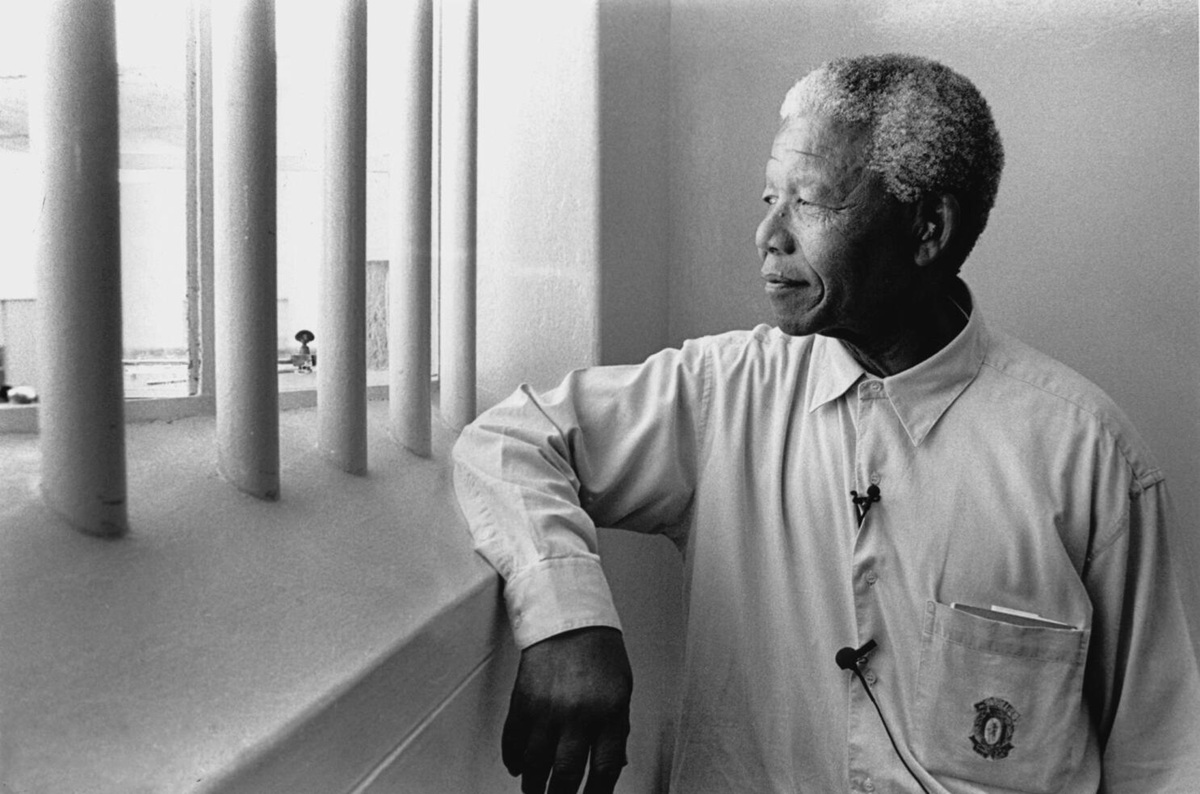
Then-President Nelson Mandela revisits his South African prison cell on Robben Island, where he spent 18 of his 27 years in prison, in 1994. (Jurgen Schadeberg / Getty Images)

With the rise of the National Party to power in 1948 and the formal implementation of apartheid, Robben Island was transformed into a maximum-security prison, primarily for African political prisoners who resisted the regime. Between 1961 and its closure as a political prison in 1991, the island held approximately 3,000 political prisoners.

Robben Island is inextricably linked to Nelson Mandela, who spent 18 of his 27 years in a small cell, Cell 5 in Section B. Prison conditions were designed to degrade, humiliate, and demoralize political prisoners.

Prisoners were forced to work hard in the island’s lime quarry, work that caused permanent health damage, especially for Mandela, who suffered from poor eyesight. Also, there was marked discrimination among prisoners based on race; Black African prisoners (particularly political prisoners) received the worst food and clothing and minimal health care, correspondence, and visitation rights, compared to colored and Indian prisoners. Furthermore, the prison system prevented prisoners from education and study as part of an attempt to strip them of their dignity and stifle their struggle.

Despite the repression, the island was not just a place of imprisonment; it became a center of intellectual and political resistance. Political prisoners, including Mandela, Walter Sisulu, Ahmed Kathrada, and Jacob Zuma, worked secretly to establish what they called the “Robben Island University.” These leaders, many of whom were lawyers and teachers, organized seminars and discussions on politics, economics, history, and philosophy. This clandestine activity represented a resistance to ignorance and oppression, maintained morale and unity among the prisoners, and enabled a new generation of political activists to develop their leadership skills.

After Nelson Mandela’s release in 1990 and the end of apartheid, the maximum security prison on Robben Island was closed in 1991, and the medium-security penitentiary section was finally closed in 1996. In 1999, UNESCO declared Robben Island a World Heritage Site, considering it a symbol of the triumph of the human spirit over oppression. This classification justifies the universal value of the site, which clearly represents the history and impact of apartheid and demonstrates the will of political prisoners to achieve democracy and freedom.

The entire island has been transformed into a living museum (Robben Island Museum), with daily guided tours. The most important and impartial aspect of these tours is that the tour guides are often former political prisoners who spent many years inside the prison. This ensures that the historical narrative presented to visitors is a direct and personal testimony to the horrors of imprisonment and the resilience of the detainees, preventing the repetition of the official narrative of oppression.

The tour includes visits to Mandela’s cell, the lime quarry, and the various guard sections, allowing visitors to understand the harsh conditions experienced by the inmates.

Robben Island today represents a stark contrast between its natural beauty and its painful past. The island remains a meaningful symbol in South Africa and beyond: a tangible reminder of the immense sacrifices made by African National Congress activists and other anti-apartheid activists. The island also works to convey a story of resistance and tolerance to new generations, emphasizing the need to protect human rights and equality. The island continues to face challenges related to preserving its historic buildings, built in a harsh marine environment, and preserving the authentic narrative of the prisoners’ stories in the face of tourist development.
Tags: Cape TownIsland of sea dogsNelson MandelaRobben IslandSouth Africa

Related Posts

Mali, Burkina Faso and Niger announce exit from International Criminal Court
Featured

Ghanaian nationals ask ICC to probe xenophobic violence in South Africa

July 23, 2026
Zimbabwe adds freight rail option to lithium export gateway
Featured

Zimbabwe adds freight rail option to lithium export gateway

July 21, 2026
Towards the revitalization of Nigeria’s power sector
Central Africa

AI could lift Sub-Saharan Africa economy 4% if power, internet improve, IMF says

July 21, 2026
African entrepreneurs work in challenging environments, and others may benefit from the skills they have developed
Central Africa

African entrepreneurs work in challenging environments, and others may benefit from the skills they have developed

July 20, 2026
Ghana tops African countries with highest debt with IMF
Economy

Zambia hopes to agree new IMF programme by year-end, finance minister says

July 16, 2026
Angolans in diaspora to vote in the coming general elections
Energy

Trafigura backs out of Angola transmission line project sources say

July 15, 2026

Search Qiraat Africa

No Result
View All Result

Follow on Twitter

Follow @africanqiraat

Trending

Brief History and Culture of the City of Lagos, Nigeria

Brief History and Culture of the City of Lagos, Nigeria

July 24, 2024
Al-Hajj Salim Suwari (fl. c. 13th–15th century): West African Soninke Islamic scholar

Al-Hajj Salim Suwari (fl. c. 13th–15th century): West African Soninke Islamic scholar

July 17, 2026
Zaghawa people of northeastern Chad and western Sudan

Zaghawa people of northeastern Chad and western Sudan

March 3, 2026
Bakiga / Abakiga of northern Rwanda and southern Uganda

Bakiga / Abakiga of northern Rwanda and southern Uganda

July 15, 2026
Samori Touré (1830-1900): Military leader and founder of Wassoulou Empire

Samori Touré (1830-1900): Military leader and founder of Wassoulou Empire

January 11, 2026
Rashaida of the coastal plain of the Red Sea

Rashaida of the coastal plain of the Red Sea

July 10, 2026

Facebook

Sections

  • About Us
  • Privacy Policy
  • Opinion
  • Infographics
  • News
  • Analysis
  • Figures
  • Culture & Literature
  • Follow Ups
  • Historical Readings
  • Interview
  • Studies


© Copyright Qiraat Africa. Developed by Bunnaj Media .

No Result
View All Result
  • News
  • Analysis & Report
  • Studies
  • Opinion
  • Interview
  • Culture & Literature
  • Figures
  • Historical Readings
  • Regions

© 2021 Copyright Qiraat Africa.