

































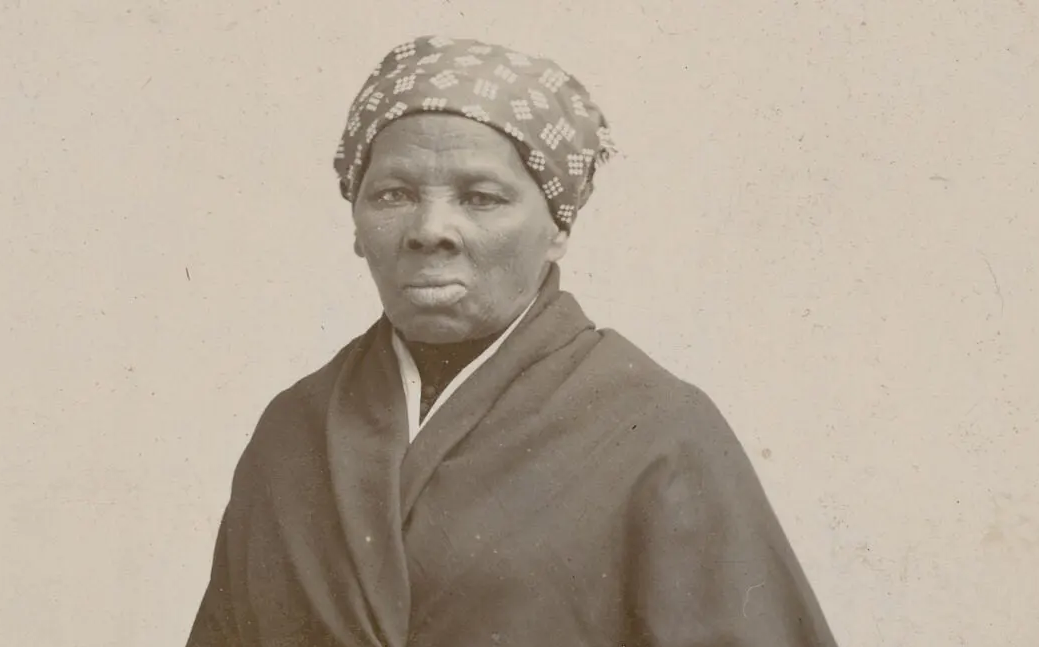
Harriet Tubman (1822–1913) is considered one of the most influential figures in 19th-century American history, her name synonymous with the abolitionist movement and social activism. Her life was marked by a transformation from an enslaved person to the leader of complex liberation operations, making her a symbol of civil resistance and clandestine fieldwork.
Tubman was born Araminta Ross in Dorchester County, Maryland, to a family of enslaved persons. As a child, she endured the harsh physical labour and abuse inherent in the system of slavery. Medically, a severe head injury she suffered as a child left lasting scars, causing epileptic seizures, sleep disturbances, and intense “religious visions”—factors that some historians believe contributed to shaping her psychological and spiritual drive for rebellion and the pursuit of freedom.
According to Angela Tate:
“Best known as the enslaved woman who brought emancipation to anyone who crossed her path, the legacy of Harriet Tubman’s lifework has inspired countless people across generations and geographic locations. Tubman was born into chattel slavery as Araminta “Minty” Ross in Dorchester County, Maryland, around 1822. Tubman was put into labor at an early age, and by the age of ten, she was hired out as a woodcutter, pest trapper and field worker. She preferred these jobs over domestic tasks in the “big house” under the scrutiny of her white mistress. Tubman’s strength of character was visible at this early stage. At age twelve, her intervention in a violent exchange between an overseer and a fugitive slave left her with substantial injuries.”
In 1849, she had the opportunity to escape to Philadelphia after her “owner”‘s death, utilising an informal network of trails and safe houses. This successful escape was the beginning of her transformation into a “conductor” in the network known as the Underground Railroad, a loose alliance of Black and white activists, including members of religious groups like the Quakers, who opposed slavery.
Tubman specialised in sneaking into Maryland to rescue her family and other enslaved people. She relied on meticulous tactics to ensure her success. She preferred to travel during the winter, when the nights were long and people were indoors, reducing the likelihood of being spotted. She used different clothes and professions to mislead observers, and she always travelled on Saturdays, as escape announcements in newspapers were not published until Mondays.
She maintained a strict policy with those who escaped with her, preventing them from backing out under any circumstances, because the return of any individual would mean revealing the network’s secrets and endangering everyone.
During approximately 13 trips, Tubman directly freed around 70 people and provided instructions that enabled dozens more to escape. She never lost a single passenger during her journey.
When the Civil War broke out in 1861, Tubman joined the Union Army. She began as a nurse and cook, but her infiltration skills and knowledge of the terrain made her an ideal candidate for intelligence work. She became the first woman to lead an armed military campaign in U.S. history during the Raid at Combahee Ferry in 1863.
“I had reasoned this out in my mind; there was one of two things I had a right to, liberty, or death; if I could not have one, I would have the other; for no man should take me alive; I should fight for my liberty as long as my strength lasted, and when the time came for me to go, the Lord would let them take me.”
– Harriet Tubman to Sarah Bradford (from “Harriet, The Moses of Her People” (1886))
Under her command, and in collaboration with Colonel James Montgomery, Confederate warehouses and plantations were destroyed, and more than 700 enslaved people were freed in a single night. Her intelligence regarding the locations of water mines and the movements of Confederate forces was crucial to the success of the operation.
After the war ended and slavery was officially abolished by the Thirteenth Amendment to the Constitution, Tubman moved to Auburn, New York. She directed her energy toward other social causes and joined the Suffrage Movement, working alongside leaders such as Susan B. Anthony.
In her speeches, she emphasised that her experiences in the war and in the field proved women’s full capacity for political participation. In her later years, she also founded the Harriet Tubman Home for the aged, an institution dedicated to caring for impoverished Black people who lacked a social safety net to protect them in their old age.
Despite her extraordinary achievements, Tubman struggled with financial hardship for much of her life. The U.S. government delayed her military pension for years, and she initially received only a meagre pension as the widow of a former soldier.
A closer look at Harriet Tubman reveals a unique intersection of individual resistance and collective organisation. She was a skilled runner and a “logistical strategist” with a deep understanding of geography, astronomy (including the use of the North Star for navigation), and the psychology of fear and persecution.
Through her actions, she demonstrated the fragility of the slavery system and its vulnerability to internal disruption. Her story was later used as a powerful tool in civil rights discourse to promote equality and social justice.
Tubman died in 1913 from pneumonia and was buried with full military honours.
According to Angela Tate:
“The legacy of Harriet Tubman holds multitudes. Myths and legends about her acts of valor on the Underground Railroad have inspired artists to retrace her courage and skill in works of art. Tubman’s name readily evokes the image of strength (as seen in the christening of a cargo ship named after her in World War II) and the complexities of being a Black woman—a pillar of courage to the public and a place of refuge for one’s family, friends and community.”