
Qiraat Africa
عربي  |  Fr
Advertisement
  • News
    • All
    • Climate Change
    • Economy
    • Education
    • Energy
    • Health
    • Migration
    • Mining
    • Politics
    • Security
    • Society
    • Sport
    Russia’s Vladimir Putin hosts Seychelles President Patrick Herminie at Kremlin

    Russia’s Vladimir Putin hosts Seychelles President Patrick Herminie at Kremlin

    Senegal president names new finance, energy ministers in reshuffle

    Senegal’s ex-president Macky Sall urges peace and diplomacy at UN audition

    First white South Africans fly to US under Trump refugee plan

    Trump poised to expand refugee program for white South Africans

    Kenya’s Ruto faces tough task taming protests and winning over Gen Z

    East African nations discussing regional refinery project, Kenya president says

    Niger, Mali military leaders meet in Bamako, pledge stronger Sahel confederation

    Mali and Niger accuse neighbours of backing terrorism in Sahel rift

    US State Dept imposes visa restrictions on multiple people in South Sudan

    US criticizes China’s pressure on African countries to block Taiwan president’s trip

    Shell announces $2bn gas project in Nigeria

    Sierra Leone signs permit with Shell allowing offshore surveys

    Nigeria seeking up to $2.25 bln in World Bank loans

    Nigeria’s President Tinubu sacks finance and housing ministers in cabinet reshuffle

    China, Angola upgrade ties to comprehensive strategic cooperative partnership

    China praises blocking of Taiwan president’s Africa trip, Taipei defiant

  • Analysis
    • All
    • Climate Change
    • Digital & Tech
    • Economy
    • Energy & Power
    • Health
    • Politics
    • Security
    • Society
    Ghana curbs offshore investments to protect cedi, boost stability

    Ghana’s mining law attempts to eradicate speculation, but leaves communities in limbo: insights from a lithium case study

    East African Community’s expansion has triggered financial difficulties: why solutions come with risks

    East African Community’s expansion has triggered financial difficulties: why solutions come with risks

    Nigeria’s new election laws leaves gaps: Here are 5 reforms for free, fair, and credible elections

    Nigeria’s new election laws leaves gaps: Here are 5 reforms for free, fair, and credible elections

    Impact of Kenya’s long-overdue new infrastructure fund may be limited by design problems

    Impact of Kenya’s long-overdue new infrastructure fund may be limited by design problems

    Why Africans Are Targeted by Recruitment Networks in the Ukraine-Russia War?

    Why Africans Are Targeted by Recruitment Networks in the Ukraine-Russia War?

    From Water Security to Geopolitical Realignment: Key Takeaways and Outcomes of the 39th African Union Summit 2026

    From Water Security to Geopolitical Realignment: Key Takeaways and Outcomes of the 39th African Union Summit 2026

    Rohingya Genocide: Why The Gambia Demands Justice at the International Court

    Rohingya Genocide: Why The Gambia Demands Justice at the International Court

    Security expert explains why the US can destroy terrorist bases in Nigeria but not terrorism

    Security expert explains why the US can destroy terrorist bases in Nigeria but not terrorism

    Africa’s informal economy taxation: the potential and drawbacks of technology

    Africa’s informal economy taxation: the potential and drawbacks of technology

  • Studies
    60 new cosmic structures have been discovered by South Africa’s MeerKAT telescope, which is mapping previously unseen gaps between galaxies

    60 new cosmic structures have been discovered by South Africa’s MeerKAT telescope, which is mapping previously unseen gaps between galaxies

    Benin government says armed forces foil coup attempt

    Coup contagion? A rash of African power grabs suggests copycats are taking note of others’ success

    One in three South Africans have never heard of AI: what this means for policy

    One in three South Africans have never heard of AI: what this means for policy

    Social Media as a Catalyst for the Spread of Dangerous Wealth Ritual Myths

    Social Media as a Catalyst for the Spread of Dangerous Wealth Ritual Myths

    Overcoming Education Barriers for Young Mothers in Sub-Saharan Africa

    Overcoming Education Barriers for Young Mothers in Sub-Saharan Africa

    Youth Empowerment Through Vocational Training in Rural Sub-Saharan Africa

    Youth Empowerment Through Vocational Training in Rural Sub-Saharan Africa

    Manufacturers in Ghana and Nigeria claim that although corruption damages businesses, digital technologies provide a chance to combat it

    Manufacturers in Ghana and Nigeria claim that although corruption damages businesses, digital technologies provide a chance to combat it

    Environmental Threats and Conservation Efforts in Namibia

    Environmental Threats and Conservation Efforts in Namibia

    Your teachers’ level of knowledge affects how well you perform in class: perspectives from 14 French-speaking African nations

    Your teachers’ level of knowledge affects how well you perform in class: perspectives from 14 French-speaking African nations

  • Infographics
  • Figures
    Samora Machel (1933–1986): Mozambican politician and revolutionary

    Samora Machel (1933–1986): Mozambican politician and revolutionary

    Murtala Ramat Mohammed (1938–1976): Military officer and former President of Nigeria

    Murtala Ramat Mohammed (1938–1976): Military officer and former President of Nigeria

    Miriam Makeba (1932-2008): South African civil rights activist, singer and actress

    Miriam Makeba (1932-2008): South African civil rights activist, singer and actress

    Ahmed Sékou Touré (1922–1984): Revolutionary and First President of Guinea

    Ahmed Sékou Touré (1922–1984): Revolutionary and First President of Guinea

    Changamire Dombo I (1684–1695): Leader who expelled Portuguese invaders

    Changamire Dombo I (1684–1695): Leader who expelled Portuguese invaders

    Sobhuza II (1899-1982): Former Ngwenyama of Eswatini who led independence transition

    Sobhuza II (1899-1982): Former Ngwenyama of Eswatini who led independence transition

    Alpha Oumar Konare: historian, archaeologist, and former President of Mali

    Alpha Oumar Konare: historian, archaeologist, and former President of Mali

    Felix Konotey-Ahulu (1930-2025): Ghanaian physician and scientist

    Felix Konotey-Ahulu (1930-2025): Ghanaian physician and scientist

    Joaquim Chissano, Former President of Mozambique

    Joaquim Chissano, Former President of Mozambique

  • History
    The Land of Punt (modern Somalia, Eritrea, Ethiopia, or eastern Sudan)

    The Land of Punt (modern Somalia, Eritrea, Ethiopia, or eastern Sudan)

    Avenue of the Baobabs, Madagascar

    Avenue of the Baobabs, Madagascar

    Lopé-Okanda (Gabon)

    Lopé-Okanda (Gabon)

    The Sudd wetland

    The Sudd wetland

    Khami Ruins (Zimbabwe), the capital of the Torwa state

    Khami Ruins (Zimbabwe), the capital of the Torwa state

    Royal Palace, Porto-Novo, Republic of Benin

    Royal Palace, Porto-Novo, Republic of Benin

    W-Arly-Pendjari Complex, the West African wildlife sanctuary

    W-Arly-Pendjari Complex, the West African wildlife sanctuary

    Royal Court of Tiébélé, Burkina Faso

    Royal Court of Tiébélé, Burkina Faso

    Lake Tanganyika, the world’s longest freshwater lake

    Lake Tanganyika, the world’s longest freshwater lake

  • Others
    • Culture / Literature
    • Interview
    • Opinion
  • Countries
    • Country profiles
    • Regions
      • Central Africa
      • East Africa
      • Southern Africa
      • West Africa
No Result
View All Result
  • News
    • All
    • Climate Change
    • Economy
    • Education
    • Energy
    • Health
    • Migration
    • Mining
    • Politics
    • Security
    • Society
    • Sport
    Russia’s Vladimir Putin hosts Seychelles President Patrick Herminie at Kremlin

    Russia’s Vladimir Putin hosts Seychelles President Patrick Herminie at Kremlin

    Senegal president names new finance, energy ministers in reshuffle

    Senegal’s ex-president Macky Sall urges peace and diplomacy at UN audition

    First white South Africans fly to US under Trump refugee plan

    Trump poised to expand refugee program for white South Africans

    Kenya’s Ruto faces tough task taming protests and winning over Gen Z

    East African nations discussing regional refinery project, Kenya president says

    Niger, Mali military leaders meet in Bamako, pledge stronger Sahel confederation

    Mali and Niger accuse neighbours of backing terrorism in Sahel rift

    US State Dept imposes visa restrictions on multiple people in South Sudan

    US criticizes China’s pressure on African countries to block Taiwan president’s trip

    Shell announces $2bn gas project in Nigeria

    Sierra Leone signs permit with Shell allowing offshore surveys

    Nigeria seeking up to $2.25 bln in World Bank loans

    Nigeria’s President Tinubu sacks finance and housing ministers in cabinet reshuffle

    China, Angola upgrade ties to comprehensive strategic cooperative partnership

    China praises blocking of Taiwan president’s Africa trip, Taipei defiant

  • Analysis
    • All
    • Climate Change
    • Digital & Tech
    • Economy
    • Energy & Power
    • Health
    • Politics
    • Security
    • Society
    Ghana curbs offshore investments to protect cedi, boost stability

    Ghana’s mining law attempts to eradicate speculation, but leaves communities in limbo: insights from a lithium case study

    East African Community’s expansion has triggered financial difficulties: why solutions come with risks

    East African Community’s expansion has triggered financial difficulties: why solutions come with risks

    Nigeria’s new election laws leaves gaps: Here are 5 reforms for free, fair, and credible elections

    Nigeria’s new election laws leaves gaps: Here are 5 reforms for free, fair, and credible elections

    Impact of Kenya’s long-overdue new infrastructure fund may be limited by design problems

    Impact of Kenya’s long-overdue new infrastructure fund may be limited by design problems

    Why Africans Are Targeted by Recruitment Networks in the Ukraine-Russia War?

    Why Africans Are Targeted by Recruitment Networks in the Ukraine-Russia War?

    From Water Security to Geopolitical Realignment: Key Takeaways and Outcomes of the 39th African Union Summit 2026

    From Water Security to Geopolitical Realignment: Key Takeaways and Outcomes of the 39th African Union Summit 2026

    Rohingya Genocide: Why The Gambia Demands Justice at the International Court

    Rohingya Genocide: Why The Gambia Demands Justice at the International Court

    Security expert explains why the US can destroy terrorist bases in Nigeria but not terrorism

    Security expert explains why the US can destroy terrorist bases in Nigeria but not terrorism

    Africa’s informal economy taxation: the potential and drawbacks of technology

    Africa’s informal economy taxation: the potential and drawbacks of technology

  • Studies
    60 new cosmic structures have been discovered by South Africa’s MeerKAT telescope, which is mapping previously unseen gaps between galaxies

    60 new cosmic structures have been discovered by South Africa’s MeerKAT telescope, which is mapping previously unseen gaps between galaxies

    Benin government says armed forces foil coup attempt

    Coup contagion? A rash of African power grabs suggests copycats are taking note of others’ success

    One in three South Africans have never heard of AI: what this means for policy

    One in three South Africans have never heard of AI: what this means for policy

    Social Media as a Catalyst for the Spread of Dangerous Wealth Ritual Myths

    Social Media as a Catalyst for the Spread of Dangerous Wealth Ritual Myths

    Overcoming Education Barriers for Young Mothers in Sub-Saharan Africa

    Overcoming Education Barriers for Young Mothers in Sub-Saharan Africa

    Youth Empowerment Through Vocational Training in Rural Sub-Saharan Africa

    Youth Empowerment Through Vocational Training in Rural Sub-Saharan Africa

    Manufacturers in Ghana and Nigeria claim that although corruption damages businesses, digital technologies provide a chance to combat it

    Manufacturers in Ghana and Nigeria claim that although corruption damages businesses, digital technologies provide a chance to combat it

    Environmental Threats and Conservation Efforts in Namibia

    Environmental Threats and Conservation Efforts in Namibia

    Your teachers’ level of knowledge affects how well you perform in class: perspectives from 14 French-speaking African nations

    Your teachers’ level of knowledge affects how well you perform in class: perspectives from 14 French-speaking African nations

  • Infographics
  • Figures
    Samora Machel (1933–1986): Mozambican politician and revolutionary

    Samora Machel (1933–1986): Mozambican politician and revolutionary

    Murtala Ramat Mohammed (1938–1976): Military officer and former President of Nigeria

    Murtala Ramat Mohammed (1938–1976): Military officer and former President of Nigeria

    Miriam Makeba (1932-2008): South African civil rights activist, singer and actress

    Miriam Makeba (1932-2008): South African civil rights activist, singer and actress

    Ahmed Sékou Touré (1922–1984): Revolutionary and First President of Guinea

    Ahmed Sékou Touré (1922–1984): Revolutionary and First President of Guinea

    Changamire Dombo I (1684–1695): Leader who expelled Portuguese invaders

    Changamire Dombo I (1684–1695): Leader who expelled Portuguese invaders

    Sobhuza II (1899-1982): Former Ngwenyama of Eswatini who led independence transition

    Sobhuza II (1899-1982): Former Ngwenyama of Eswatini who led independence transition

    Alpha Oumar Konare: historian, archaeologist, and former President of Mali

    Alpha Oumar Konare: historian, archaeologist, and former President of Mali

    Felix Konotey-Ahulu (1930-2025): Ghanaian physician and scientist

    Felix Konotey-Ahulu (1930-2025): Ghanaian physician and scientist

    Joaquim Chissano, Former President of Mozambique

    Joaquim Chissano, Former President of Mozambique

  • History
    The Land of Punt (modern Somalia, Eritrea, Ethiopia, or eastern Sudan)

    The Land of Punt (modern Somalia, Eritrea, Ethiopia, or eastern Sudan)

    Avenue of the Baobabs, Madagascar

    Avenue of the Baobabs, Madagascar

    Lopé-Okanda (Gabon)

    Lopé-Okanda (Gabon)

    The Sudd wetland

    The Sudd wetland

    Khami Ruins (Zimbabwe), the capital of the Torwa state

    Khami Ruins (Zimbabwe), the capital of the Torwa state

    Royal Palace, Porto-Novo, Republic of Benin

    Royal Palace, Porto-Novo, Republic of Benin

    W-Arly-Pendjari Complex, the West African wildlife sanctuary

    W-Arly-Pendjari Complex, the West African wildlife sanctuary

    Royal Court of Tiébélé, Burkina Faso

    Royal Court of Tiébélé, Burkina Faso

    Lake Tanganyika, the world’s longest freshwater lake

    Lake Tanganyika, the world’s longest freshwater lake

  • Others
    • Culture / Literature
    • Interview
    • Opinion
  • Countries
    • Country profiles
    • Regions
      • Central Africa
      • East Africa
      • Southern Africa
      • West Africa
No Result
View All Result
Qiraat Africa
عربي  |  Fr
No Result
View All Result
Home Analysis & Report

From Water Security to Geopolitical Realignment: Key Takeaways and Outcomes of the 39th African Union Summit 2026

Oyebamiji Usman Adesoji by Oyebamiji Usman Adesoji
March 15, 2026
From Water Security to Geopolitical Realignment: Key Takeaways and Outcomes of the 39th African Union Summit 2026
Share on FacebookShare on Twitter

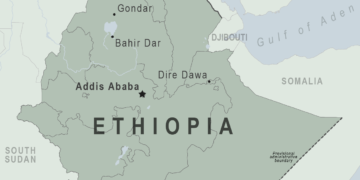
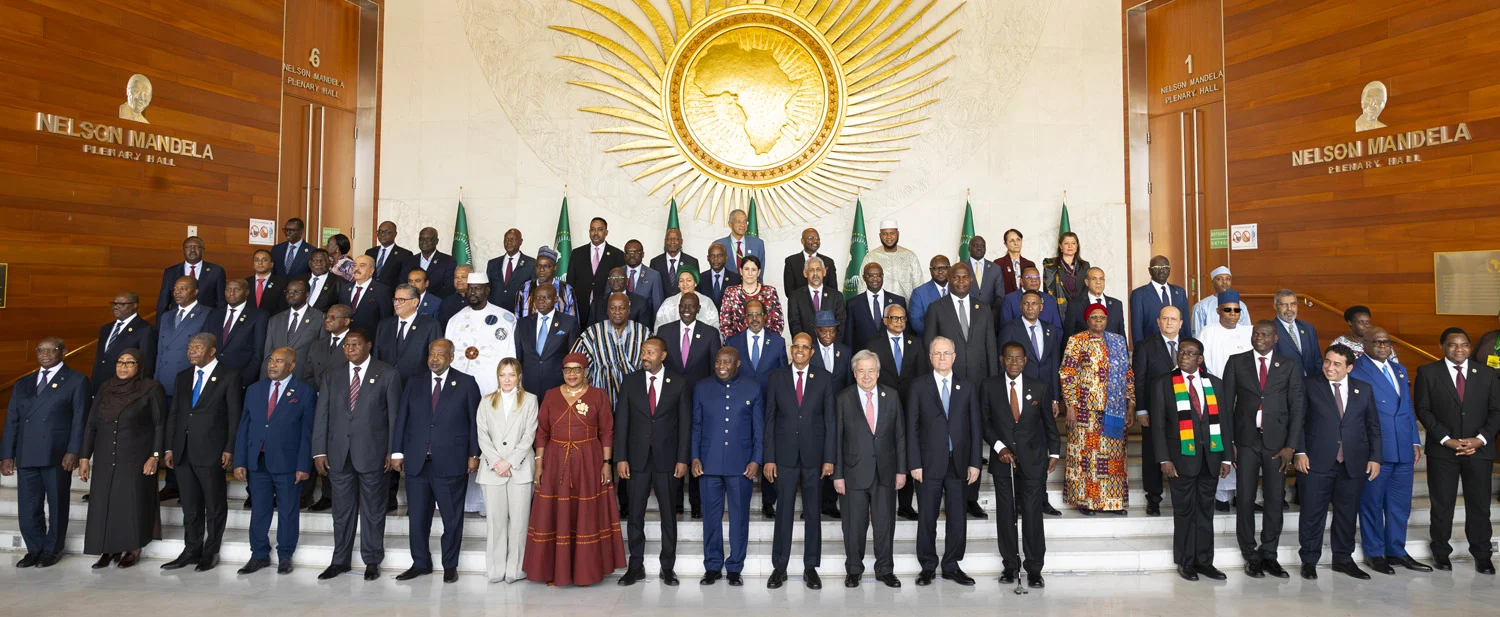
In an era where geopolitical landscape increasingly marked by climate shocks, violent conflict, shifting global alliances and rising expectations from youthful populations, Africa’s foremost continental leadership forum, the 39th Ordinary Session of the Assembly of the African Union (AU) wrapped up its two-day summit in Addis Ababa with go-getting declarations and bold prescriptions for the future.

The summit which was held on 14–15 February 2026, placed “Assuring Sustainable Water Availability and Safe Sanitation Systems to Achieve the Goals of Agenda 2063” at the core of the continent’s political agenda, showing a transformative shift in how Africa prioritises foundational human, economic and security needs.

As the summit ended, African Heads of State and Government re-emphasised fundamental objectives such as deeper continental integration, robust peace and security cooperation, renewed diplomatic agency in global governance, and institutional transformations intended to yield determinate outcomes for countries. This article explains the summit’s results, historic precedent, geopolitics, security discourse, and diplomatic resonance as Africa seeks to redefine its role in the 21st-century global order.

AU Summits: A Legacy of Continental Leadership

The African Union (AU) is a continental body consisting of the 55 member states that make up the countries of the African continent. Historically, the main objectives of the OAU were to rid the continent of the remaining vestiges of colonisation and apartheid; to promote unity and solidarity amongst African States; to coordinate and intensify cooperation for development; to safeguard the sovereignty and territorial integrity of Member States and to promote international cooperation.

In a move spearheaded by Libyan leader Muammar al-Qaddafi, it was proposed in 2000 that the OAU be replaced by a new body, the African Union. The African Union was to be more economic in nature, similar to the European Union, and would contain a central bank, a court of justice, and an all-Africa parliament. Additionally, a Constitutive Act, which provided for the establishment of the African Union, was ratified by two-thirds of the OAU’s members and came into force on May 26, 2001.

The AU, formed in 2002, has 55 member states who are often on opposing sides of conflicts. One key challenge the AU has battled over the years is weak enforcement of resolutions, according to Macharia Munene, a professor of history at the United States International University in Nairobi. And that’s because “not all members meet their dues or fully accept what is generally decided,” he said. It has missed successive deadlines to make itself self-funding in 2020 and 2025. Today, it still relies for 64 percent of its annual budget on the United States and European Union, who are cutting back support.

At the moment, the work of the AU is implemented through several principal decision-making organs: The Assembly of Heads of State and Government, the Executive Council, the Permanent Representatives Committee (PRC), Specialised Technical Committees (STCs), the Peace and Security Council and The African Union Commission. The AU structure promotes participation of African citizens and civil society through the Pan-African Parliament and the Economic, Social & Cultural Council (ECOSOCC).

While organs that handle judicial and legal matters as well as human rights issues include: African Commission on Human and Peoples’ Rights (ACHPR), African Court on Human and Peoples’ Rights (AfCHPR), AU Commission on International Law (AUCIL), AU Advisory Board on Corruption (AUABC) and the African Committee of Experts on the Rights and Welfare of the Child. The AU is also working towards the establishment of continental financial institutions (The African Central Bank, The African Investment Bank and the African Monetary Fund). Similarly, the Regional Economic Communities (RECs) and the African Peer Review Mechanism are key bodies that that constitute the structure of the African Union.

In history, AU summits have responded to modern-day crises ranging from the West African civil wars of the 1990s and early 2000s to the 2013 grouping of initiatives aimed at combating violent extremism in the Sahel. However, the shift in recent years in order to ensure the realisation of its objectives and the attainment of the Pan African Vision of an integrated, prosperous and peaceful Africa, Agenda 2063 was developed as a strategic framework for Africa’s long term socio-economic and integrative transformation. Agenda 2063 calls for greater collaboration and support for African led initiatives to ensure the achievement of the aspirations of African people.

Water Security: Africa’s Strategic Priority

The important feature of the 39th AU Summit was its unprecedented elevation of water security and sanitation from technical sector issues to continental strategic priority. More than 400 million Africans still lack access to safe water, and almost three-fourths don’t benefit from safely managed sanitation services, according to the United Nations Development Programme 2023 report.

At the Summit, African leaders endorsed and formally launched the Africa Water Vision 2063 and Policy. At the beginning of the launch of the Vision and Policy, H.E. Mahmoud Ali Youssouf, Chairperson of the African Union Commission, who was represented by H.E. Moses Vilakati, AU Commissioner for Agriculture, Rural Development, Blue Economy and Sustainable Environment (ARBE), described the moment as historic:

“The decision by the Heads of State and Government to dedicate 2026 to water and sanitation marks a historic turning point to the African Continent.” He underscored that: “Investing in water and sanitation is not a cost. It is one of the highest returns on investments Africa can make. If we secure water and sanitation, we secure Africa’s economic transformation”.

The launch of the Vision and Policy signals a strategic shift: water and sanitation are no longer treated merely as sectoral challenges, but recognised as fundamental for economic transformation, climate resilience, regional integration and long-term prosperity.

This change reflects an evolved thought within the AU: that water security is inseparable from political stability, food security, health outcomes, urban development, and climate adaptation strategies. Civil society meeting on the margins of the Summit strengthened this viewpoint. As the Pre-Summit underscored the urgency of coordinated action and reaffirmed that sustainable water and sanitation systems are central to Africa’s future.

Leadership Transition and Continental Governance

The Session was held under the outgoing Chairmanship of H.E. João Manuel Gonçalves Lourenço, President of the Republic of Angola and Chairperson of the African Union for 2025, and welcomed the assumption of office by H.E. Évariste Ndayishimiye, President of the Republic of Burundi, as Chairperson of the African Union for 2026. This leadership convention that is rotating among African regions reiterates the vow to inclusivity and collective rights of continental agendas.

Under President Ndayishimiye’s tenure, the AU faces the dual tasks of operationalising the water agenda and confronting persistent peace and security challenges.  The composition of the new Bureau of the Assembly of the Heads of State and Government of the African Union for 2026 is as follows: Chair of the African Union – The Republic of Burundi, (Central) First Vice – Ghana, (West); Second Vice – Tanzania, (East); Third Vice – To be confirmed, (North Africa Region); and Rapporteur – Angola, (South).

Peace, Security and the Challenge of Unconstitutional Change

The Organization of African Unity (OAU) and its successor, the African Union (AU), have adopted democracy and rule of law standards comparatively late in the end of the 1990s and early 2000s. The leadership of a few states and their interests and demands informed the evolution of regional institutions. In 2004 the AU’s Pan-African Parliament was inaugurated, and the organization agreed to create a peacekeeping force, the African Standby Force, of about 15,000 soldiers.

Currently, the African Union leads policy making and implementation of decisions aimed at ensuring that Africa achieves Aspiration 4 of Agenda 2063, which aspires for “ A peaceful and secure Africa” through the use of mechanisms that promote a dialogue-centred approach to conflict prevention and resolution of conflicts and the establishing of a culture of peace and tolerance nurtured in Africa’s children and youth through peace education. The Agenda 2063 flagship initiative of Silencing the Guns by 2020 is at the core of activities being put in place to ensure Africa is a more peaceful and stable continent.

Meanwhile, several African countries battle military coups, disputed elections and protests inspired by economic hardship worsened by foreign aid cuts. With 10 military coups in Africa since 2020, the AU has been forced to ignore the rule in its charter that coup-leaders must not stand for elections. Gabon and Guinea, suspended after their coups, were reinstated this past year despite breaking that rule. Set up to “promote the unity and solidarity of the African States,” analysts say the African Union faces a legitimacy crisis among youth for failing to meet their expectations.

The Assembly took note of the Report of the Peace and Security Council (PSC) on the state of peace and security in Africa and expressed deep concern over the persistence of conflicts, terrorism and violent extremism, unconstitutional changes of government, and humanitarian crises in parts of the continent.

Heads of State and Government reaffirmed the Union’s unwavering commitment to zero tolerance for unconstitutional changes of government and reiterated the determination to silence the guns in Africa. The Assembly underscored the imperative of predictable, sustainable and flexible financing for AU-led peace support operations.

The Assembly adopted the Memorandum of Understanding between the African Union, Regional Economic Communities (RECs) and Regional Mechanisms (RMs) on the utilisation of the African Standby Force, calling for strengthened coordination and operational readiness.

On peace and security, President Lourenço stressed that Africa’s development depends on “silencing the guns” and addressing ongoing conflicts, particularly in Sudan and the Democratic Republic of the Congo, as well as combating terrorism in the Sahel and Horn of Africa. He reaffirmed the AU’s rejection of unconstitutional changes of government and warned against legitimizing coups through subsequent elections.

Read also

Russia’s Vladimir Putin hosts Seychelles President Patrick Herminie at Kremlin

Senegal’s ex-president Macky Sall urges peace and diplomacy at UN audition

Trump poised to expand refugee program for white South Africans

Geopolitics and External Pressure Points

The 39th AU Summit opened in divergence to a background of growing international competitions, mirrored both in Africa’s inner dynamics and ever-changing geopolitical alignments.

For instance, the United Arab Emirates (UAE), over the years has become an influential player in the Horn – encompassing primarily Sudan, Somalia, Ethiopia, Eritrea, and Djibouti – through multi-billion-dollar investments, robust diplomacy, and discreet military support. While Saudi Arabia has been more low-profile, diplomats say Riyadh is building an alliance that includes Egypt, Turkey and Qatar.

This geopolitical spill-over climaxes a crucial predicament for AU international relations by complementary partnerships with external powers while upholding strategic sovereignty and conflict mitigation within Africa.

On his part, the UN Secretary-General António Guterres during the summit called for an immediate cessation of hostilities in Sudan, renewed dialogue in South Sudan, and respect for the territorial integrity of the Democratic Republic of the Congo. Across the Sahel, Libya and the Horn of Africa, he stressed the need for African-led political solutions backed by sustained international support.

Economic Integration, Diplomacy and Development Finance

Beyond water security and geopolitics, the Summit recognised that attaining Agenda 2063’s ambitions need not just political consensus but vigorous economic integration and innovative development financing.

The Chairperson Youssouf further emphasized that institutional reform and financial self-reliance are now imperative as external funding declines. He called for stronger domestic resource mobilization and faster implementation of continental flagship programmes, particularly industrialization, agricultural transformation, energy development and infrastructure expansion, which he described as essential conditions for sustainable growth.

“Institutional reform and financial self-reliance are now imperative as external funding declines,” he said. H.E. Mahmoud Ali Youssouf also acknowledged rising expectations from Africa’s youth, women and civil society, emphasizing that this decade of Agenda 2063 must deliver tangible performance and measurable results.

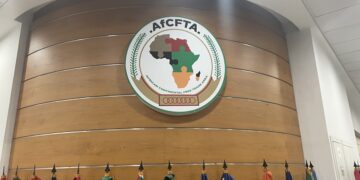
Moreover, continental initiatives like the African Continental Free Trade Area (AfCFTA) remain pillars of the international economic framework considered to eliminate trade barriers and boost intra-Africa trade. In particular, it is to advance trade in value-added production across all service sectors of the African economy.

The AfCFTA will contribute to establishing regional value chains in Africa, enabling investment and job creation. The practical implementation of the AfCFTA has the potential to foster industrialisation, job creation, and investment, thus enhancing the competitiveness of Africa in the medium to long term.

At the summit further discussions also emphasised that progress on AfCFTA implementation must be fast-tracked to open economic prospects for African producers and entrepreneurs, mostly in light of global economic headwinds that pressure domestic financial space.

Leaders also emphasised the need for financial self-reliance, robust domestic resource mobilisation, and strengthened engagement with African multilateral financial institutions. The AU Commission highlighted that decreasing reliance on external aid demands homegrown mechanisms capable of financing infrastructure, industrialisation, energy transitions and cross-border economic corridors.

On the margins of the Summit, the European Union, United Nations and AU launched Spotlight Initiative Africa Regional Programme 2.0 (SIARP 2.0), aimed to end violence against women and girls and to promote sexual and reproductive health and rights across Africa.

Youth and Institutional Legitimacy

Africa has the youngest population in the world, with more than 400 million people aged 15 to 35 years old. But it is also home to several of the oldest and longest-serving leaders — a paradox that has contributed to an upsurge in coups.

With a young population set to double by 2050, it is the only rapidly growing region where its people are getting poorer. Many African youths, on social media, express how they view the AU as ‘a bloc of old leaders’, which sees their interests as less of a priority.

Still, critics urge the African Union to look inward by paying closer attention to the continent’s most pressing challenges and doing more to hold leaders accountable when they fail to meet expectations.

Towards Measurable Delivery

The 39th AU Summit 2026 concluded with an obligation to translate high-level pronouncements into concrete effects on the ground which is a recurrent challenge that has confronted former AU leaders. The raise of water security to a strategic continental order indicates a change toward prioritising central human needs as an entry to comprehensive stability and prosperity. Similarly, the practical implementation of the AfCFTA has the potential to foster industrialisation, job creation, and investment, thus enhancing the competitiveness of Africa in the medium to long term.

The Summit’s conclusions propose a renewed urgency among African leaders to support governance frameworks, strengthen continental agency globally, and align diplomatic activities with average realities facing African citizens. Yet, the test now lies in execution by turning strategies into infrastructure, regional cooperation into peace dividends, and diplomatic rhetoric into continuous universal impact.

As Africa faces rapid climate change, ongoing conflicts, unstable global power dynamics, demographic swings, and economic headwinds, the 2026 AU Summit offers both a strategy and a test: to merge continental urgencies into an articulate, action-oriented policy affixed in Agenda 2063’s long-term vision.
Source: Qiraat Africa
Tags: Addis AbabaAfrican Union (AU)Assuring Sustainable Water Availability and Safe Sanitation Systems to Achieve the Goals of Agenda 2063
Oyebamiji Usman Adesoji

Oyebamiji Usman Adesoji

Writer and researcher on business, entrepreneurship and geopolitical affairs.

Related Posts

Kenya’s Ruto faces tough task taming protests and winning over Gen Z
East Africa

East African nations discussing regional refinery project, Kenya president says

April 23, 2026
Niger, Mali military leaders meet in Bamako, pledge stronger Sahel confederation
Featured

Mali and Niger accuse neighbours of backing terrorism in Sahel rift

April 23, 2026
US State Dept imposes visa restrictions on multiple people in South Sudan
East Africa

US criticizes China’s pressure on African countries to block Taiwan president’s trip

April 23, 2026
Ghana curbs offshore investments to protect cedi, boost stability
Economy

Ghana’s mining law attempts to eradicate speculation, but leaves communities in limbo: insights from a lithium case study

April 22, 2026
East African Community’s expansion has triggered financial difficulties: why solutions come with risks
East Africa

East African Community’s expansion has triggered financial difficulties: why solutions come with risks

April 22, 2026
Nigeria’s new election laws leaves gaps: Here are 5 reforms for free, fair, and credible elections
Featured

Nigeria’s new election laws leaves gaps: Here are 5 reforms for free, fair, and credible elections

April 22, 2026

Search Qiraat Africa

No Result
View All Result

Follow on Twitter

Follow @africanqiraat

Trending

Brief History and Culture of the City of Lagos, Nigeria

Brief History and Culture of the City of Lagos, Nigeria

July 24, 2024
Equatorial Guinea

Equatorial Guinea orders crackdown on sex in government offices after videos leaked

November 6, 2024
Kumbi Saleh, the capital of the ancient Ghana Empire

Kumbi Saleh, the capital of the ancient Ghana Empire

October 13, 2025
Tunka Manin (c. 1010–1078), the last ruler of the Ghana Empire

Tunka Manin (c. 1010–1078), the last ruler of the Ghana Empire

December 12, 2025
Ahmed Sékou Touré (1922–1984): Revolutionary and First President of Guinea

Ahmed Sékou Touré (1922–1984): Revolutionary and First President of Guinea

March 6, 2026
List of Recent Coups in West and Central Africa

List of Recent Coups in West and Central Africa

August 30, 2023

Facebook

Sections

  • About Us
  • Privacy Policy
  • Opinion
  • Infographics
  • News
  • Analysis
  • Figures
  • Culture & Literature
  • Follow Ups
  • Historical Readings
  • Interview
  • Studies


© Copyright Qiraat Africa. Developed by Bunnaj Media .

No Result
View All Result
  • News
  • Analysis & Report
  • Studies
  • Opinion
  • Interview
  • Culture & Literature
  • Figures
  • Historical Readings
  • Regions

© 2021 Copyright Qiraat Africa.