


















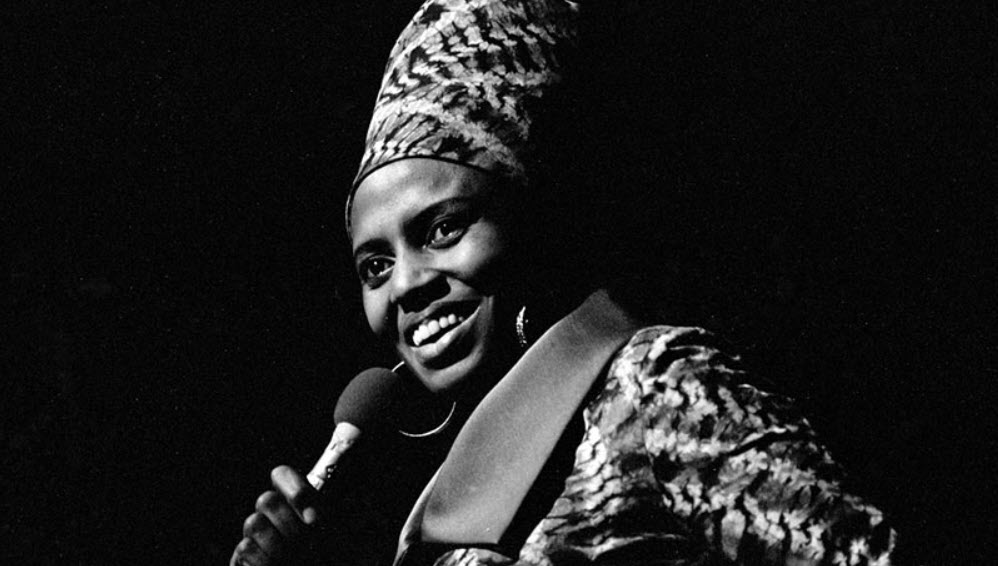
Miriam Makeba (Zenzile Miriam Makeba) is one of the most prominent cultural and political figures of the 20th century, closely associated with the fight against apartheid in South Africa. Her career spanned more than five decades, encompassing singing, acting, and international political activism, making her a global icon of African nationalism and civil rights.
Miriam Makeba was born on March 4, 1932, in Johannesburg. She was of mixed ethnicity; her father was Xhosa, and her mother was Swazi. Just eighteen days after her birth, her mother was imprisoned for six months for selling local beer (umqombothi) to supplement the family income, and Miriam spent that time with her in prison.
Makeba began singing in the choir of the Kilnerton Training Institution in Pretoria, where she remained for eight years. In her early years, she was influenced by traditional African music mixed with American jazz rhythms that were popular in the Sophiatown neighbourhoods.
In the 1950s, Makeba began her professional career in an increasingly complex political environment as apartheid laws took hold. She joined the Manhattan Brothers in 1954 as lead singer. They were a popular jazz band at the time. She later formed her own all-female band, which blended jazz with traditional Xhosa and Zulu melodies.
In 1959, she starred in King Kong, an opera about the life of a Black boxer, which was a commercial success in South Africa. She made a cameo appearance as a singer in Come Back, Africa, an anti-apartheid documentary drama. This film was the direct cause of her departure from the country to attend its screening at the Venice Film Festival, a departure that later turned into a thirty-year exile.
After travelling to Europe and the United States, Makeba attempted to return to South Africa in 1960 for her mother’s funeral but discovered that the Pretoria government had revoked her passport, making her the first prominent cultural figure barred from returning for political reasons.
With the help of American singer Harry Belafonte, Makeba moved to New York. She quickly achieved widespread fame with songs such as “Pata Pata” and “The Click Song”. In 1966, she won a Grammy Award for her album “An Evening with Belafonte/Makeba”, becoming the first African woman to achieve this feat.
Makeba used her international platform to highlight human rights abuses in her homeland. In 1963 and 1964, she testified before the United Nations Committee against Apartheid, calling for economic sanctions and a political boycott of the South African regime. This activism led to a complete ban on her recordings in South Africa and the revocation of her citizenship.
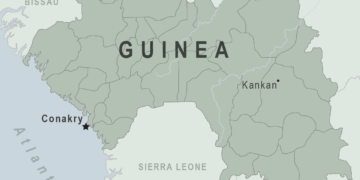
In 1968, Makeba married Stokely Carmichael, a leader of the Black Panthers movement in the United States. This marriage sparked considerable controversy in the US; her concerts and recording contracts were cancelled, and she was placed under FBI surveillance. As a result of this pressure, the couple left for Guinea at the invitation of President Ahmed Sékou Touré.
Makeba spent approximately 15 years in Guinea, where she transformed from an exiled artist into a diplomat representing African causes.
Appointed by President Sékou Touré as Guinea’s representative to the United Nations, she participated in numerous international conferences in her official capacity. She won the Dag Hammarskjöld Peace Prize in 1986 in recognition of her efforts to promote peace and civil rights. In 1987, she embarked on a world tour with singer Paul Simon to present the album “Graceland”, bringing South African music and politics back into the spotlight for a new generation of global audiences.
With the collapse of apartheid and the release of Nelson Mandela in 1990, he urged her to return to South Africa. Makeba returned to her homeland on June 10, 1990, and performed her first concert there in 1991. She founded the Miriam Makeba Rehabilitation Fund to help women and children who are victims of violence and poverty. She was also appointed a Goodwill Ambassador for the Food and Agriculture Organization (FAO).
On November 9, 2008, while performing at a concert in Castel Volturno, Italy, to support writer Roberto Saviano in his fight against the Mafia, she suffered a heart attack and died at the age of 76.
Miriam Makeba’s influence extended beyond art to become an institutional and intellectual legacy. She contributed to strengthening confidence in African identity in the 1960s and 1970s through her embrace of her natural appearance and her native language. She was among the first to successfully transform local suffering under apartheid into an international public opinion issue through soft power.
She received numerous prestigious awards, including the French Legion of Honour, the Order of Luthuli from South Africa, and the Polar Music Prize in Sweden.
Miriam Makeba Quotes
“I always wanted to leave home. I never knew they were going to stop me from coming back. Maybe, if I knew, I never would have left. It is kind of painful to be away from everything that you’ve ever know. Nobody will know the pain of exile until you are in exile. No matter where you go, there are times when people show you kindness and love, and there are times when they make you know that you are with them but not of them. That’s when it hurts.”
– As quoted in Bordowitz, Hank (2004). “Miriam Makeba”. Noise of the World: Non-western Musicians in their Own Words. Brooklyn, NY: Soft Skull. p. 247.
“My concerts were canceled left and right. Speaking about South African Apartheid was fine, but they were suddenly afraid I might speak about American Apartheid, although I never did. Bookers told me that my shows would finance radical activities and [Reprise Records] told me they were not going to honor my recording contract. I didn’t say anything, but if I was married to a troublemaker, I must be a troublemaker. I’d already lived in exile for 10 years, and the world is free, even if some of the countries in it aren’t, so I packed my bags and left.“
– As quoted in Poet, J. (11 February 2009)
“It is absurd to say that we Africans were not in Africa when white people first came. And secondly, The conqueror writes history. They came, they conquered and they wrote. Now, you don’t expect people who came to invade us to write the truth about us. They will always write negative things about us. And they have to do that because they have to justify their invasions in all the countries.”
– As quoted in Miriam Makeba’s Speech