





Qiraat Africa
عربي  |  Fr
Advertisement
  • News
    • All
    • Climate Change
    • Economy
    • Education
    • Energy
    • Health
    • Migration
    • Mining
    • Politics
    • Security
    • Society
    • Sport
    Ghana sanitation minister resigns over alleged stashed cash

    Western countries increase support for slavery reparations, Ghana says

    Nigeria, US sign agreement to boost mining investment

    Nigeria, US sign agreement to boost mining investment

    Uganda will get a $295 million loan from the IDB – Finance Minister

    Uganda’s public debt rises 15% on surge in domestic issuance

    Kenya’s Ruto calls for permanent African representation on UN Security Council

    Kenya’s Ruto calls for permanent African representation on UN Security Council

    UN experts say war crimes committed in Ethiopia despite formal end to conflict

    Tigrayan leaders say new war with Ethiopian government has begun, as fighting erupts

    ICC prosecutors say suspected Central African Republic militia leader oversaw prison abuse

    International Criminal Court convicts Central African militia leader

    Ghana curbs offshore investments to protect cedi, boost stability

    Ghana to focus on rebuilding reserves as gold exports pause

    Belgium, Rwanda resume diplomatic relations after DRC conflict dispute

    Belgium, Rwanda resume diplomatic relations after DRC conflict dispute

    South Sudan’s presidency announces postponement of long-delayed election by two years

    South Sudan’s president signs election law changes ahead of December vote

  • Analysis
    • All
    • Climate Change
    • Digital & Tech
    • Economy
    • Energy & Power
    • Health
    • Politics
    • Security
    • Society
    DRC on a mission to financing the world’s largest hydropower dam

    DR Congo: The INGA Dam Paradox

    Cameroon uncovers more than 200 illegal gold mines, mostly foreign-owned

    Mineral Beneficiation: A Pipedream of Prosperity in an Unequal Financial Architecture

    Zambia signs $1.1 Billion deal to build major oil refinery in Copperbelt

    Is Zambia’s Economy Rebounding Under President Hakainde Hichilema?

    Nigeria considers crude supply reforms to aid Dangote, other refiners

    Refinery rivalry: billion‑dollar oil projects expose East Africa’s long‑running regional tensions

    Zambia’s chaotic but decisive election: government demonstrates strength, democracy shows weakness

    Zambia’s chaotic but decisive election: government demonstrates strength, democracy shows weakness

    African Finance Corp says Gabon political situation a ‘good coup’

    Why African countries must rethink how they grow their economies

    DR Congo says it will receive third-country deportees under new deal with US

    Beyond the Outbreak: How Ebola Reshaped East & Central Africa’s Economies

    What Happens After Dandora? Kenya’s Green Transition Faces Its Hardest Test

    What Happens After Dandora? Kenya’s Green Transition Faces Its Hardest Test

    African entrepreneurs work in challenging environments, and others may benefit from the skills they have developed

    African entrepreneurs work in challenging environments, and others may benefit from the skills they have developed

  • Studies
    China could drive Africa’s renewable energy revolution, report says

    A study shows wind and solar projects in Kenya and South Africa don’t always benefit the communities that host them

    Angola’s lengthy war shaped the way farmers utilised fire—why it matters

    Angola’s lengthy war shaped the way farmers utilised fire—why it matters

    Schooling is the most severely affected by conflict when children are the target – Study

    Schooling is the most severely affected by conflict when children are the target – Study

    Pensions for Botswana’s elderly are expanding, but care services are lacking—study follows 20 years

    Pensions for Botswana’s elderly are expanding, but care services are lacking—study follows 20 years

    60 new cosmic structures have been discovered by South Africa’s MeerKAT telescope, which is mapping previously unseen gaps between galaxies

    60 new cosmic structures have been discovered by South Africa’s MeerKAT telescope, which is mapping previously unseen gaps between galaxies

    Benin government says armed forces foil coup attempt

    Coup contagion? A rash of African power grabs suggests copycats are taking note of others’ success

    One in three South Africans have never heard of AI: what this means for policy

    One in three South Africans have never heard of AI: what this means for policy

    Social Media as a Catalyst for the Spread of Dangerous Wealth Ritual Myths

    Social Media as a Catalyst for the Spread of Dangerous Wealth Ritual Myths

    Overcoming Education Barriers for Young Mothers in Sub-Saharan Africa

    Overcoming Education Barriers for Young Mothers in Sub-Saharan Africa

  • Infographics
  • Figures
    Zumbi dos Palmares (1655-1695): Afro-Brazilian leader of the great Palmares Quilombo

    Zumbi dos Palmares (1655-1695): Afro-Brazilian leader of the great Palmares Quilombo

    Léon M’ba (1902-1967): First president of independent Gabon

    Léon M’ba (1902-1967): First president of independent Gabon

    Namibia to vote in toughest election yet for ruling party

    Netumbo Nandi-Ndaitwah: President of Namibia

    Ahmadu Bello (1910-1966): Nigerian statesman

    Ahmadu Bello (1910-1966): Nigerian statesman

    Cameroon President Paul Biya marks 41 years in power

    Paul Biya: President of Cameroon

    Al-Hajj Salim Suwari (fl. c. 13th–15th century): West African Soninke Islamic scholar

    Al-Hajj Salim Suwari (fl. c. 13th–15th century): West African Soninke Islamic scholar

    Strive Masiyiwa: Zimbabwean businessman and philanthropist

    Strive Masiyiwa: Zimbabwean businessman and philanthropist

    Diébédo Francis Kéré: Burkinabé-German architect

    Diébédo Francis Kéré: Burkinabé-German architect

    Herbert Wigwe (1966-2024): Nigerian banker and businessman

    Herbert Wigwe (1966-2024): Nigerian banker and businessman

  • History
    Lower Valley of the Omo, Ethiopia

    Lower Valley of the Omo, Ethiopia

    Sudano-Sahelian style mosques, northern Côte d’Ivoire

    Sudano-Sahelian style mosques, northern Côte d’Ivoire

    Taï National Park, Côte d’Ivoire

    Taï National Park, Côte d’Ivoire

    Medinas, the Historic Sultanates of the Comoros

    Medinas, the Historic Sultanates of the Comoros

    Aldabra Atoll, Seychelles

    Aldabra Atoll, Seychelles

    Le Morne Cultural Landscape, Mauritius

    Le Morne Cultural Landscape, Mauritius

    Mount Nimba Strict Nature Reserve, Guinea and Côte d’Ivoire

    Mount Nimba Strict Nature Reserve, Guinea and Côte d’Ivoire

    Sangha Trinational, north-western Congo Basin

    Sangha Trinational, north-western Congo Basin

    Kasubi Tombs, Kampala, Uganda

    Kasubi Tombs, Kampala, Uganda

  • Others
    • Culture / Literature
    • Interview
    • Opinion
  • Countries
    • Country profiles
    • Regions
      • Central Africa
      • East Africa
      • Southern Africa
      • West Africa
No Result
View All Result
  • News
    • All
    • Climate Change
    • Economy
    • Education
    • Energy
    • Health
    • Migration
    • Mining
    • Politics
    • Security
    • Society
    • Sport
    Ghana sanitation minister resigns over alleged stashed cash

    Western countries increase support for slavery reparations, Ghana says

    Nigeria, US sign agreement to boost mining investment

    Nigeria, US sign agreement to boost mining investment

    Uganda will get a $295 million loan from the IDB – Finance Minister

    Uganda’s public debt rises 15% on surge in domestic issuance

    Kenya’s Ruto calls for permanent African representation on UN Security Council

    Kenya’s Ruto calls for permanent African representation on UN Security Council

    UN experts say war crimes committed in Ethiopia despite formal end to conflict

    Tigrayan leaders say new war with Ethiopian government has begun, as fighting erupts

    ICC prosecutors say suspected Central African Republic militia leader oversaw prison abuse

    International Criminal Court convicts Central African militia leader

    Ghana curbs offshore investments to protect cedi, boost stability

    Ghana to focus on rebuilding reserves as gold exports pause

    Belgium, Rwanda resume diplomatic relations after DRC conflict dispute

    Belgium, Rwanda resume diplomatic relations after DRC conflict dispute

    South Sudan’s presidency announces postponement of long-delayed election by two years

    South Sudan’s president signs election law changes ahead of December vote

  • Analysis
    • All
    • Climate Change
    • Digital & Tech
    • Economy
    • Energy & Power
    • Health
    • Politics
    • Security
    • Society
    DRC on a mission to financing the world’s largest hydropower dam

    DR Congo: The INGA Dam Paradox

    Cameroon uncovers more than 200 illegal gold mines, mostly foreign-owned

    Mineral Beneficiation: A Pipedream of Prosperity in an Unequal Financial Architecture

    Zambia signs $1.1 Billion deal to build major oil refinery in Copperbelt

    Is Zambia’s Economy Rebounding Under President Hakainde Hichilema?

    Nigeria considers crude supply reforms to aid Dangote, other refiners

    Refinery rivalry: billion‑dollar oil projects expose East Africa’s long‑running regional tensions

    Zambia’s chaotic but decisive election: government demonstrates strength, democracy shows weakness

    Zambia’s chaotic but decisive election: government demonstrates strength, democracy shows weakness

    African Finance Corp says Gabon political situation a ‘good coup’

    Why African countries must rethink how they grow their economies

    DR Congo says it will receive third-country deportees under new deal with US

    Beyond the Outbreak: How Ebola Reshaped East & Central Africa’s Economies

    What Happens After Dandora? Kenya’s Green Transition Faces Its Hardest Test

    What Happens After Dandora? Kenya’s Green Transition Faces Its Hardest Test

    African entrepreneurs work in challenging environments, and others may benefit from the skills they have developed

    African entrepreneurs work in challenging environments, and others may benefit from the skills they have developed

  • Studies
    China could drive Africa’s renewable energy revolution, report says

    A study shows wind and solar projects in Kenya and South Africa don’t always benefit the communities that host them

    Angola’s lengthy war shaped the way farmers utilised fire—why it matters

    Angola’s lengthy war shaped the way farmers utilised fire—why it matters

    Schooling is the most severely affected by conflict when children are the target – Study

    Schooling is the most severely affected by conflict when children are the target – Study

    Pensions for Botswana’s elderly are expanding, but care services are lacking—study follows 20 years

    Pensions for Botswana’s elderly are expanding, but care services are lacking—study follows 20 years

    60 new cosmic structures have been discovered by South Africa’s MeerKAT telescope, which is mapping previously unseen gaps between galaxies

    60 new cosmic structures have been discovered by South Africa’s MeerKAT telescope, which is mapping previously unseen gaps between galaxies

    Benin government says armed forces foil coup attempt

    Coup contagion? A rash of African power grabs suggests copycats are taking note of others’ success

    One in three South Africans have never heard of AI: what this means for policy

    One in three South Africans have never heard of AI: what this means for policy

    Social Media as a Catalyst for the Spread of Dangerous Wealth Ritual Myths

    Social Media as a Catalyst for the Spread of Dangerous Wealth Ritual Myths

    Overcoming Education Barriers for Young Mothers in Sub-Saharan Africa

    Overcoming Education Barriers for Young Mothers in Sub-Saharan Africa

  • Infographics
  • Figures
    Zumbi dos Palmares (1655-1695): Afro-Brazilian leader of the great Palmares Quilombo

    Zumbi dos Palmares (1655-1695): Afro-Brazilian leader of the great Palmares Quilombo

    Léon M’ba (1902-1967): First president of independent Gabon

    Léon M’ba (1902-1967): First president of independent Gabon

    Namibia to vote in toughest election yet for ruling party

    Netumbo Nandi-Ndaitwah: President of Namibia

    Ahmadu Bello (1910-1966): Nigerian statesman

    Ahmadu Bello (1910-1966): Nigerian statesman

    Cameroon President Paul Biya marks 41 years in power

    Paul Biya: President of Cameroon

    Al-Hajj Salim Suwari (fl. c. 13th–15th century): West African Soninke Islamic scholar

    Al-Hajj Salim Suwari (fl. c. 13th–15th century): West African Soninke Islamic scholar

    Strive Masiyiwa: Zimbabwean businessman and philanthropist

    Strive Masiyiwa: Zimbabwean businessman and philanthropist

    Diébédo Francis Kéré: Burkinabé-German architect

    Diébédo Francis Kéré: Burkinabé-German architect

    Herbert Wigwe (1966-2024): Nigerian banker and businessman

    Herbert Wigwe (1966-2024): Nigerian banker and businessman

  • History
    Lower Valley of the Omo, Ethiopia

    Lower Valley of the Omo, Ethiopia

    Sudano-Sahelian style mosques, northern Côte d’Ivoire

    Sudano-Sahelian style mosques, northern Côte d’Ivoire

    Taï National Park, Côte d’Ivoire

    Taï National Park, Côte d’Ivoire

    Medinas, the Historic Sultanates of the Comoros

    Medinas, the Historic Sultanates of the Comoros

    Aldabra Atoll, Seychelles

    Aldabra Atoll, Seychelles

    Le Morne Cultural Landscape, Mauritius

    Le Morne Cultural Landscape, Mauritius

    Mount Nimba Strict Nature Reserve, Guinea and Côte d’Ivoire

    Mount Nimba Strict Nature Reserve, Guinea and Côte d’Ivoire

    Sangha Trinational, north-western Congo Basin

    Sangha Trinational, north-western Congo Basin

    Kasubi Tombs, Kampala, Uganda

    Kasubi Tombs, Kampala, Uganda

  • Others
    • Culture / Literature
    • Interview
    • Opinion
  • Countries
    • Country profiles
    • Regions
      • Central Africa
      • East Africa
      • Southern Africa
      • West Africa
No Result
View All Result
Qiraat Africa
عربي  |  Fr
No Result
View All Result
Home Culture & Literature

The Jola/Diola people of Senegal, the Gambia, and Guinea-Bissau

January 19, 2026
The Jola/Diola people of Senegal, the Gambia, and Guinea-Bissau

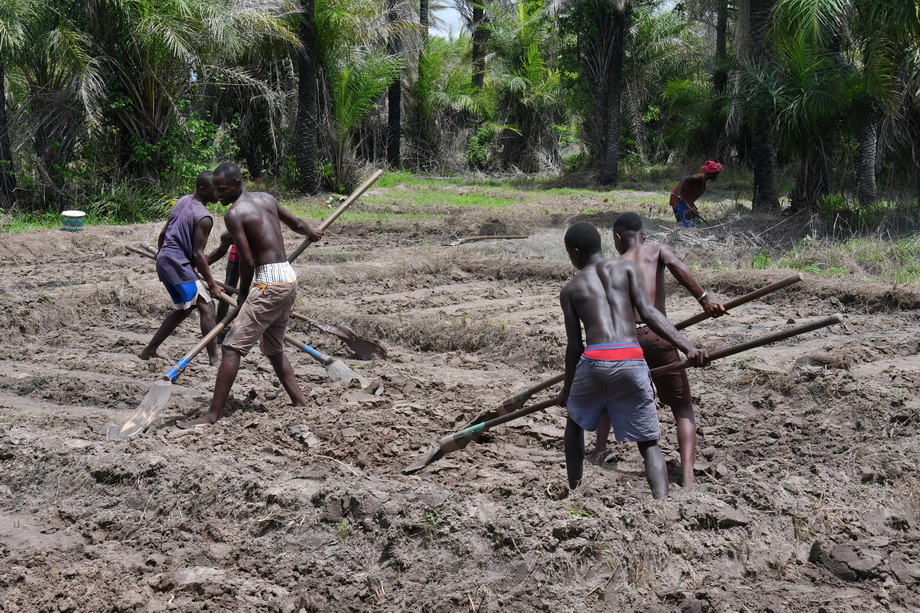
Photo: Viktor Cerny / Senegal 2021

Share on FacebookShare on Twitter

The Jola people, also known as the Diola in Francophone literature, are a prominent ethnic group in West Africa. They are primarily concentrated in the Casamance region of southern Senegal, southern Gambia, and northern Guinea-Bissau.

Linguistic and anthropological studies indicate that the Jola belong to the Bak language group, a branch of the Atlantic and Niger language family. Unlike many of West Africa’s major ethnic groups, which migrated from the interior of the continent or the Nile Basin, the Jola are believed to be indigenous to the Atlantic coastal region between the Gambia and Casamance rivers.

The Jola, historically, are believed to not have participated in building large, expansive empires like those of Mali or Songhai. Instead, they settled in independent villages protected by mangrove forests and swamps, which provided them with natural immunity against the external raids and enslavement attempts that plagued the region during the Middle Ages and the transatlantic slave trade.

They are divided into several subgroups based on dialect and geographic region, including the Fone, Kassa, Blof, and Iribe, each with slight cultural characteristics while sharing a common core identity.

One of the distinctive features of the Jola people is their social system, which sociologists describe as an “acephalous society”. While neighbouring peoples such as the Mandinka and Wolof were subject to hierarchical monarchies and rigid class divisions, the Jola adopted a village-based democratic system founded on equality.

Each village was a self-governing political unit, with no central authority uniting all Jola villages under a single king. Village affairs were managed by a council comprised of elders and heads of families, where decisions were made unanimously. Also, age played a crucial role in structuring social responsibilities. Individuals progressed through specific stages, from childhood to the age of “sage”, after completing traditional rites of passage. Women in the Jola community enjoy a strong economic and social standing. They are essential partners in agricultural work and have rights in crop management.

Rice is the backbone of Jola life, not only as a food crop but also as a central element in their beliefs and rituals. The Jola have developed sophisticated agricultural techniques that have enabled them to utilise lowland and saline marshes, distinguishing them from their neighbours who preferred upland agriculture or trade.

Jola farmers have developed a complex system of earth dams and canals to control fresh rainwater and prevent the intrusion of saltwater from the ocean into their fields. This traditional “water engineering” has allowed them to cultivate specific rice varieties in challenging environments. They use a unique hand tool called the kayendo, a long shovel with a wooden blade plated with metal, specifically designed for turning over the heavy clay soil in the swamps.

In addition to rice, the Jola subsistence economy depends on the exploitation of palm trees, which are widespread in Casamance. They produce oil for local consumption and extract palm wine, which plays an important role in social and spiritual ceremonies. They raise breeds of young cattle that are resistant to tropical diseases. These cattle are not usually slaughtered for daily consumption but are considered a store of wealth and are used as offerings in funerals and rites of passage.

The Jola were known for their staunch resistance to European colonialism, whether Portuguese in Guinea-Bissau, French in Senegal, or British in The Gambia. Due to their decentralised social structure, the colonisers found it very difficult to subdue them, as they had to negotiate or fight with each village individually.

Aline Sitoe Diatta is a national symbol for the Jola people and Senegal in general. In the 1940s, she led a civil disobedience movement against the French colonial administration, calling on people to refuse to pay taxes, to reject peanut cultivation (which the French had imposed as a cash crop), and to return to traditional rice farming. The French considered her a major threat and exiled her to Mali, where she died. Even today, she remains a symbol of resistance and dignity.

Read also

Western countries increase support for slavery reparations, Ghana says

Nigeria, US sign agreement to boost mining investment

Ghana to focus on rebuilding reserves as gold exports pause

In modern times, the Jola are associated with the Casamance Conflict in southern Senegal, one of the longest-running armed conflicts in Africa. The conflict began in the early 1980s when the Movement of Democratic Forces of Casamance (MFDC) demanded independence from Senegal. Although not purely ethnic, the Jola formed the backbone of the movement, citing economic and cultural marginalisation by the central government in Dakar and differing land laws that threatened their traditional ownership of farmland.

The arts are an expression of strength and connection to the land. Wrestling is the most popular sport, with matches held after the harvest season. It is a way to demonstrate physical strength and courage, accompanied by magical rituals and loud drumming.

The Jola are known for their “Kumpo” and “Samay” masks, which depict spiritual figures appearing at major celebrations. The Kompo mask is made of palm fibre, and the dancer under it performs rapid, circular movements that conceal the body, giving it an aura of mystery and sanctity.

The Jola people today face a number of challenges that threaten their traditional way of life. Rising sea levels are increasing soil salinity in low-lying rice paddies, damaging crops and threatening food security that has been maintained for centuries. Also, many young people are migrating to Dakar, Banjul, or Europe in search of work, leading to a generation gap and a decline in the practice of traditional rituals and the maintenance of labour-intensive agricultural dams.

Besides, years of conflict in Casamance have left thousands of landmines in forests and fields, hindering farmers’ movement and leading to the abandonment of many historic villages. With the spread of Wolof as a lingua franca in Senegal and Creole in Guinea-Bissau, Jola dialects are at risk of disappearing among the younger generations growing up in cities.

Tags: CasamanceDiolaGuinea-BissauJolaSenegalThe Gambia

Related Posts

Guinea’s draft constitution made public, limiting leaders to two terms
Featured

Guinea media regulator warns France 24 over description of president

September 17, 2026
French nuclear fuel company reports significant losses amid challenges in Niger
Featured

US seals big uranium investment in Niger, two years after troops left

September 17, 2026
Nigeria: Death toll rises to 50 in Niger state market attack
Featured

Nigeria sends state police amendment bill to state assemblies for ratification

September 17, 2026
International financial crime watchdog removes Senegal from ‘grey list,’ adds some others
Energy

Senegal and Eni sign MoU to evaluate five offshore blocks

September 15, 2026
Nigeria’s NLNG aims to start up Train 7 LNG project by end-2027
Energy

Nigeria’s NLNG aims to start up Train 7 LNG project by end-2027

September 15, 2026
Nigeria’s Dangote aims to end Africa’s fertiliser imports
Energy

Nigerian billionaire Dangote launches oil refinery IPO, Africa’s biggest share sale

September 14, 2026

Search Qiraat Africa

No Result
View All Result

Follow on Twitter

Follow @africanqiraat

Trending

Africa’s 10 Strongest Currencies in June 2026

Africa’s 10 Strongest Currencies in June 2026

July 8, 2026
Zaghawa people of northeastern Chad and western Sudan

Zaghawa people of northeastern Chad and western Sudan

March 3, 2026
Kumbi Saleh, the capital of the ancient Ghana Empire

Kumbi Saleh, the capital of the ancient Ghana Empire

October 13, 2025
Tunka Manin (c. 1010–1078), the last ruler of the Ghana Empire

Tunka Manin (c. 1010–1078), the last ruler of the Ghana Empire

December 12, 2025
Samori Touré (1830-1900): Military leader and founder of Wassoulou Empire

Samori Touré (1830-1900): Military leader and founder of Wassoulou Empire

January 11, 2026
Changamire Dombo I (1684–1695): Leader who expelled Portuguese invaders

Changamire Dombo I (1684–1695): Leader who expelled Portuguese invaders

March 6, 2026

Facebook

Sections

  • About Us
  • Privacy Policy
  • Opinion
  • Infographics
  • News
  • Analysis
  • Figures
  • Culture & Literature
  • Follow Ups
  • Historical Readings
  • Interview
  • Studies


© Copyright Qiraat Africa. Developed by Bunnaj Media .

No Result
View All Result
  • News
  • Analysis & Report
  • Studies
  • Opinion
  • Interview
  • Culture & Literature
  • Figures
  • Historical Readings
  • Regions

© 2021 Copyright Qiraat Africa.