
Qiraat Africa
عربي  |  Fr
Advertisement
  • News
    • All
    • Climate Change
    • Economy
    • Education
    • Energy
    • Health
    • Migration
    • Mining
    • Politics
    • Security
    • Society
    • Sport
    Mali’s army acts to secure strategic trade routes after attempted terrorist blockade

    Kremlin says Russian forces will stay in Mali as insurgents press attacks

    Gabon plans new housing tax to help tackle rising debt

    Gabon to audit public debt as it signs $150 million World Bank deal

    Mali

    ISIS-linked insurgents leave Mali town as army tries to reassert control

    US military says some forces have been dispatched to Nigeria

    Amnesty urges Nigeria to investigate deaths in army-run camp, military says report baseless

    Burkina Faso ups security after Mali attacks

    Burkina Faso ups security after Mali attacks

    Madagascar: Opposition candidates protest “institutional coup”

    Madagascar detains French former serviceman over alleged mutiny plot

    Nigerian troops kill 18 terrorists in northeast operations, military says

    Nigerian troops kill 18 terrorists in northeast operations, military says

    Last Kenyan officers leave Haiti as new international security initiative begins

    Last Kenyan officers leave Haiti as new international security initiative begins

    Mali leader says situation under control in first speech since attacks; France urges citizens to leave ‘as soon as possible’

    Mali leader says situation under control in first speech since attacks; France urges citizens to leave ‘as soon as possible’

  • Analysis
    • All
    • Climate Change
    • Digital & Tech
    • Economy
    • Energy & Power
    • Health
    • Politics
    • Security
    • Society
    Mali’s junta creates a new ministerial-level post to oversee the mining sector

    African Mineral Resources: The Controversial Link to US Health Deals

    Ghana curbs offshore investments to protect cedi, boost stability

    Ghana’s mining law attempts to eradicate speculation, but leaves communities in limbo: insights from a lithium case study

    East African Community’s expansion has triggered financial difficulties: why solutions come with risks

    East African Community’s expansion has triggered financial difficulties: why solutions come with risks

    Nigeria’s new election laws leaves gaps: Here are 5 reforms for free, fair, and credible elections

    Nigeria’s new election laws leaves gaps: Here are 5 reforms for free, fair, and credible elections

    Impact of Kenya’s long-overdue new infrastructure fund may be limited by design problems

    Impact of Kenya’s long-overdue new infrastructure fund may be limited by design problems

    Why Africans Are Targeted by Recruitment Networks in the Ukraine-Russia War?

    Why Africans Are Targeted by Recruitment Networks in the Ukraine-Russia War?

    From Water Security to Geopolitical Realignment: Key Takeaways and Outcomes of the 39th African Union Summit 2026

    From Water Security to Geopolitical Realignment: Key Takeaways and Outcomes of the 39th African Union Summit 2026

    Rohingya Genocide: Why The Gambia Demands Justice at the International Court

    Rohingya Genocide: Why The Gambia Demands Justice at the International Court

    Security expert explains why the US can destroy terrorist bases in Nigeria but not terrorism

    Security expert explains why the US can destroy terrorist bases in Nigeria but not terrorism

  • Studies
    60 new cosmic structures have been discovered by South Africa’s MeerKAT telescope, which is mapping previously unseen gaps between galaxies

    60 new cosmic structures have been discovered by South Africa’s MeerKAT telescope, which is mapping previously unseen gaps between galaxies

    Benin government says armed forces foil coup attempt

    Coup contagion? A rash of African power grabs suggests copycats are taking note of others’ success

    One in three South Africans have never heard of AI: what this means for policy

    One in three South Africans have never heard of AI: what this means for policy

    Social Media as a Catalyst for the Spread of Dangerous Wealth Ritual Myths

    Social Media as a Catalyst for the Spread of Dangerous Wealth Ritual Myths

    Overcoming Education Barriers for Young Mothers in Sub-Saharan Africa

    Overcoming Education Barriers for Young Mothers in Sub-Saharan Africa

    Youth Empowerment Through Vocational Training in Rural Sub-Saharan Africa

    Youth Empowerment Through Vocational Training in Rural Sub-Saharan Africa

    Manufacturers in Ghana and Nigeria claim that although corruption damages businesses, digital technologies provide a chance to combat it

    Manufacturers in Ghana and Nigeria claim that although corruption damages businesses, digital technologies provide a chance to combat it

    Environmental Threats and Conservation Efforts in Namibia

    Environmental Threats and Conservation Efforts in Namibia

    Your teachers’ level of knowledge affects how well you perform in class: perspectives from 14 French-speaking African nations

    Your teachers’ level of knowledge affects how well you perform in class: perspectives from 14 French-speaking African nations

  • Infographics
  • Figures
    W. E. B. Du Bois (1868-1963): Sociologist, historian, and Pan-Africanist civil rights activist

    W. E. B. Du Bois (1868-1963): Sociologist, historian, and Pan-Africanist civil rights activist

    Samora Machel (1933–1986): Mozambican politician and revolutionary

    Samora Machel (1933–1986): Mozambican politician and revolutionary

    Murtala Ramat Mohammed (1938–1976): Military officer and former President of Nigeria

    Murtala Ramat Mohammed (1938–1976): Military officer and former President of Nigeria

    Miriam Makeba (1932-2008): South African civil rights activist, singer and actress

    Miriam Makeba (1932-2008): South African civil rights activist, singer and actress

    Ahmed Sékou Touré (1922–1984): Revolutionary and First President of Guinea

    Ahmed Sékou Touré (1922–1984): Revolutionary and First President of Guinea

    Changamire Dombo I (1684–1695): Leader who expelled Portuguese invaders

    Changamire Dombo I (1684–1695): Leader who expelled Portuguese invaders

    Sobhuza II (1899-1982): Former Ngwenyama of Eswatini who led independence transition

    Sobhuza II (1899-1982): Former Ngwenyama of Eswatini who led independence transition

    Alpha Oumar Konare: historian, archaeologist, and former President of Mali

    Alpha Oumar Konare: historian, archaeologist, and former President of Mali

    Felix Konotey-Ahulu (1930-2025): Ghanaian physician and scientist

    Felix Konotey-Ahulu (1930-2025): Ghanaian physician and scientist

  • History
    The Land of Punt (modern Somalia, Eritrea, Ethiopia, or eastern Sudan)

    The Land of Punt (modern Somalia, Eritrea, Ethiopia, or eastern Sudan)

    Avenue of the Baobabs, Madagascar

    Avenue of the Baobabs, Madagascar

    Lopé-Okanda (Gabon)

    Lopé-Okanda (Gabon)

    The Sudd wetland

    The Sudd wetland

    Khami Ruins (Zimbabwe), the capital of the Torwa state

    Khami Ruins (Zimbabwe), the capital of the Torwa state

    Royal Palace, Porto-Novo, Republic of Benin

    Royal Palace, Porto-Novo, Republic of Benin

    W-Arly-Pendjari Complex, the West African wildlife sanctuary

    W-Arly-Pendjari Complex, the West African wildlife sanctuary

    Royal Court of Tiébélé, Burkina Faso

    Royal Court of Tiébélé, Burkina Faso

    Lake Tanganyika, the world’s longest freshwater lake

    Lake Tanganyika, the world’s longest freshwater lake

  • Others
    • Culture / Literature
    • Interview
    • Opinion
  • Countries
    • Country profiles
    • Regions
      • Central Africa
      • East Africa
      • Southern Africa
      • West Africa
No Result
View All Result
  • News
    • All
    • Climate Change
    • Economy
    • Education
    • Energy
    • Health
    • Migration
    • Mining
    • Politics
    • Security
    • Society
    • Sport
    Mali’s army acts to secure strategic trade routes after attempted terrorist blockade

    Kremlin says Russian forces will stay in Mali as insurgents press attacks

    Gabon plans new housing tax to help tackle rising debt

    Gabon to audit public debt as it signs $150 million World Bank deal

    Mali

    ISIS-linked insurgents leave Mali town as army tries to reassert control

    US military says some forces have been dispatched to Nigeria

    Amnesty urges Nigeria to investigate deaths in army-run camp, military says report baseless

    Burkina Faso ups security after Mali attacks

    Burkina Faso ups security after Mali attacks

    Madagascar: Opposition candidates protest “institutional coup”

    Madagascar detains French former serviceman over alleged mutiny plot

    Nigerian troops kill 18 terrorists in northeast operations, military says

    Nigerian troops kill 18 terrorists in northeast operations, military says

    Last Kenyan officers leave Haiti as new international security initiative begins

    Last Kenyan officers leave Haiti as new international security initiative begins

    Mali leader says situation under control in first speech since attacks; France urges citizens to leave ‘as soon as possible’

    Mali leader says situation under control in first speech since attacks; France urges citizens to leave ‘as soon as possible’

  • Analysis
    • All
    • Climate Change
    • Digital & Tech
    • Economy
    • Energy & Power
    • Health
    • Politics
    • Security
    • Society
    Mali’s junta creates a new ministerial-level post to oversee the mining sector

    African Mineral Resources: The Controversial Link to US Health Deals

    Ghana curbs offshore investments to protect cedi, boost stability

    Ghana’s mining law attempts to eradicate speculation, but leaves communities in limbo: insights from a lithium case study

    East African Community’s expansion has triggered financial difficulties: why solutions come with risks

    East African Community’s expansion has triggered financial difficulties: why solutions come with risks

    Nigeria’s new election laws leaves gaps: Here are 5 reforms for free, fair, and credible elections

    Nigeria’s new election laws leaves gaps: Here are 5 reforms for free, fair, and credible elections

    Impact of Kenya’s long-overdue new infrastructure fund may be limited by design problems

    Impact of Kenya’s long-overdue new infrastructure fund may be limited by design problems

    Why Africans Are Targeted by Recruitment Networks in the Ukraine-Russia War?

    Why Africans Are Targeted by Recruitment Networks in the Ukraine-Russia War?

    From Water Security to Geopolitical Realignment: Key Takeaways and Outcomes of the 39th African Union Summit 2026

    From Water Security to Geopolitical Realignment: Key Takeaways and Outcomes of the 39th African Union Summit 2026

    Rohingya Genocide: Why The Gambia Demands Justice at the International Court

    Rohingya Genocide: Why The Gambia Demands Justice at the International Court

    Security expert explains why the US can destroy terrorist bases in Nigeria but not terrorism

    Security expert explains why the US can destroy terrorist bases in Nigeria but not terrorism

  • Studies
    60 new cosmic structures have been discovered by South Africa’s MeerKAT telescope, which is mapping previously unseen gaps between galaxies

    60 new cosmic structures have been discovered by South Africa’s MeerKAT telescope, which is mapping previously unseen gaps between galaxies

    Benin government says armed forces foil coup attempt

    Coup contagion? A rash of African power grabs suggests copycats are taking note of others’ success

    One in three South Africans have never heard of AI: what this means for policy

    One in three South Africans have never heard of AI: what this means for policy

    Social Media as a Catalyst for the Spread of Dangerous Wealth Ritual Myths

    Social Media as a Catalyst for the Spread of Dangerous Wealth Ritual Myths

    Overcoming Education Barriers for Young Mothers in Sub-Saharan Africa

    Overcoming Education Barriers for Young Mothers in Sub-Saharan Africa

    Youth Empowerment Through Vocational Training in Rural Sub-Saharan Africa

    Youth Empowerment Through Vocational Training in Rural Sub-Saharan Africa

    Manufacturers in Ghana and Nigeria claim that although corruption damages businesses, digital technologies provide a chance to combat it

    Manufacturers in Ghana and Nigeria claim that although corruption damages businesses, digital technologies provide a chance to combat it

    Environmental Threats and Conservation Efforts in Namibia

    Environmental Threats and Conservation Efforts in Namibia

    Your teachers’ level of knowledge affects how well you perform in class: perspectives from 14 French-speaking African nations

    Your teachers’ level of knowledge affects how well you perform in class: perspectives from 14 French-speaking African nations

  • Infographics
  • Figures
    W. E. B. Du Bois (1868-1963): Sociologist, historian, and Pan-Africanist civil rights activist

    W. E. B. Du Bois (1868-1963): Sociologist, historian, and Pan-Africanist civil rights activist

    Samora Machel (1933–1986): Mozambican politician and revolutionary

    Samora Machel (1933–1986): Mozambican politician and revolutionary

    Murtala Ramat Mohammed (1938–1976): Military officer and former President of Nigeria

    Murtala Ramat Mohammed (1938–1976): Military officer and former President of Nigeria

    Miriam Makeba (1932-2008): South African civil rights activist, singer and actress

    Miriam Makeba (1932-2008): South African civil rights activist, singer and actress

    Ahmed Sékou Touré (1922–1984): Revolutionary and First President of Guinea

    Ahmed Sékou Touré (1922–1984): Revolutionary and First President of Guinea

    Changamire Dombo I (1684–1695): Leader who expelled Portuguese invaders

    Changamire Dombo I (1684–1695): Leader who expelled Portuguese invaders

    Sobhuza II (1899-1982): Former Ngwenyama of Eswatini who led independence transition

    Sobhuza II (1899-1982): Former Ngwenyama of Eswatini who led independence transition

    Alpha Oumar Konare: historian, archaeologist, and former President of Mali

    Alpha Oumar Konare: historian, archaeologist, and former President of Mali

    Felix Konotey-Ahulu (1930-2025): Ghanaian physician and scientist

    Felix Konotey-Ahulu (1930-2025): Ghanaian physician and scientist

  • History
    The Land of Punt (modern Somalia, Eritrea, Ethiopia, or eastern Sudan)

    The Land of Punt (modern Somalia, Eritrea, Ethiopia, or eastern Sudan)

    Avenue of the Baobabs, Madagascar

    Avenue of the Baobabs, Madagascar

    Lopé-Okanda (Gabon)

    Lopé-Okanda (Gabon)

    The Sudd wetland

    The Sudd wetland

    Khami Ruins (Zimbabwe), the capital of the Torwa state

    Khami Ruins (Zimbabwe), the capital of the Torwa state

    Royal Palace, Porto-Novo, Republic of Benin

    Royal Palace, Porto-Novo, Republic of Benin

    W-Arly-Pendjari Complex, the West African wildlife sanctuary

    W-Arly-Pendjari Complex, the West African wildlife sanctuary

    Royal Court of Tiébélé, Burkina Faso

    Royal Court of Tiébélé, Burkina Faso

    Lake Tanganyika, the world’s longest freshwater lake

    Lake Tanganyika, the world’s longest freshwater lake

  • Others
    • Culture / Literature
    • Interview
    • Opinion
  • Countries
    • Country profiles
    • Regions
      • Central Africa
      • East Africa
      • Southern Africa
      • West Africa
No Result
View All Result
Qiraat Africa
عربي  |  Fr
No Result
View All Result
Home Regions East Africa

Global power shifts are playing out in the Red Sea region: why this is where the rules are changing

November 26, 2025
Global power shifts are playing out in the Red Sea region: why this is where the rules are changing

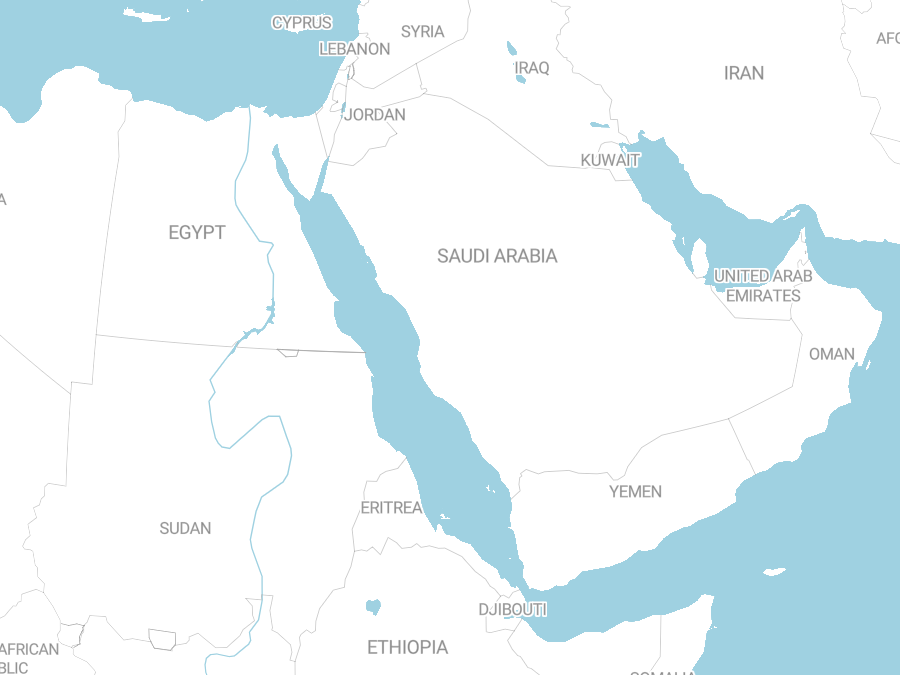
Map: Usifo Omozokpea. Source: Author. Created with Datawrapper

Share on FacebookShare on Twitter

By Federico Donelli*

The competition for global influence and control is shifting. One of the places where this dynamic is playing out is the Red Sea region, which encompasses Egypt, Eritrea, Djibouti, Sudan, Saudi Arabia and Yemen. Here, international rivalries, regional ambitions and local politics collide. Federico Donelli, who has studied these political dynamics and recently published Power Competition in the Red Sea, explains what’s driving the region’s geopolitical significance.

What defines the Red Sea as a region?

The region stretches from the Suez Canal to the Bab el-Mandeb Strait, covering approximately 438,000km². The Red Sea borders some of the world’s most volatile regions: the Horn of Africa, the Arabian Peninsula and the western shore of the Indo-Pacific area.

The Red Sea region

The Red Sea is rapidly becoming a highly contested zone, where traditional and emerging global powers are vying for influence and control. The decline of western geopolitical centrality, the rise of alternative powers and the increasing assertiveness of regional actors converge in the Red Sea.

This has created a complex and dynamic arena in which to test future global power hierarchies. The Red Sea region is challenging the liberal international order that emerged at the end of the cold war in 1989. That order is based on:

  • multilateralism – cooperation among multiple states
  • a free market – limited state intervention in the economy
  • liberal democracy – political pluralism and individual rights.

These tenets have been eroded by a combination of internal weaknesses and external challenges over the past 20 years.

While competition for global power between the United States and China tends to dominate the headlines, the true laboratories of the post-liberal world order are found in regions where international, regional and local dynamics collide.

The broader Red Sea region is one of them. Others are the Arctic, the South Indo-Pacific and the Balkans.

Why is the Red Sea region a stage for global power competition?

The region lacks a clear dominant power that is capable of imposing order. This makes it an open arena of competition among states with overlapping interests.

The Red Sea has great strategic value. It connects the Mediterranean and the Indo-Pacific, and is a maritime route for global trade and energy. It also borders several fragile states like Sudan, Eritrea and Yemen.

This combination – on the one hand, limited or contested authority that leaves the area exposed to external penetration, and on the other, its significant strategic value – has turned the region into a magnet for external involvement.

The United States and China both have military facilities in Djibouti. Russia has sought access to Port Sudan. Gulf powers, notably Saudi Arabia, the United Arab Emirates and Qatar, have expanded their presence across the Horn of Africa. They’ve done this by investing in ports, infrastructure and military cooperation especially in Sudan, Somalia and Ethiopia.

Turkey, Iran and Israel have also established political, economic and security ties. This links the Red Sea to the eastern Mediterranean and the Persian Gulf.

However, external powers are not the only drivers of change in the region.

Local actors, from Ethiopia to Sudan, Eritrea, Egypt and Somalia, are exploiting global rivalries to advance their strategic objectives. They are courting competing external powers by trading military access for security guarantees, or seeking investment in strategic infrastructure. They are also using diplomatic alignment with the US, China, Gulf states or Turkey to strengthen domestic and regional positions.

Read also

African Mineral Resources: The Controversial Link to US Health Deals

Madagascar detains French former serviceman over alleged mutiny plot

Last Kenyan officers leave Haiti as new international security initiative begins

These actions create a complex web of overlapping interests. These blur the line between regional and global politics. Governments and non-state actors now have multiple external patrons to choose from. They can play one power against another.

This “multi-alignment” gives regional players leverage. It also increases volatility and uncertainty. For example, rival factions in the ongoing Sudanese civil war have sought support from external players, ranging from Saudi Arabia to the UAE. This has transformed an internal conflict into a proxy battlefield.

In Somalia, local and clan authorities negotiate security and economic deals directly with foreign powers like Turkey and Gulf states, often bypassing weak local institutions.

Meanwhile, landlocked Ethiopia’s search for sea access has drawn it into new diplomatic and security entanglements with Somaliland, Somalia, Eritrea, Egypt and Gulf countries.

These examples reveal how the Red Sea arena has become a microcosm of the post-liberal order: fragmented, transactional and deeply interconnected.

What are the main outcomes and lessons from this alignment?

The Red Sea region reflects the broader transformation of global politics.

Rather than producing a new balance, the decline of western influence has created a decentralised and competitive system.

In this environment, regional areas serve as testing grounds for new patterns of interaction between global and local powers, state and non-state actors, and formal alliances and informal partnerships.

While western-centric “universal” rules and institutions defined the liberal international order, the post-liberal order is characterised by selective engagement, bilateral bargains and flexible alignments.

The result is a world where order emerges from competition rather than consensus.

Competition among great powers now occurs less through international institutions and more through regional arenas. Military presence, infrastructure investment and political alliances now serve as instruments of influence.

What conclusions do you draw?

The Red Sea region is a reminder to scholars and policymakers that the future of international politics will not be defined solely in Washington, Beijing, Brussels or Moscow. It will also be defined in places like Port Sudan, Aden and Djibouti, where the new global order is being shaped.

Regions have become true laboratories of international change. They are places where global competition interacts with local conflicts, and new models of governance and influence emerge.

Local actors, state and non-state, are no longer passive recipients of external interference. They are active participants in shaping their own security environments.

ــــــــــــــــــــــــ

*Associate Professor of International Relations, University of Trieste
Source: The Conversation Africa
Tags: Red Sea region

Related Posts

Uganda to offer new oil exploration licensing round in 2026/27 financial year
East Africa

Uganda to offer new oil exploration licensing round in 2026/27 financial year

April 28, 2026
DR Congo’s President Tshisekedi calls for sanctions against Rwanda
East Africa

DR Congo president orders probe into copper and cobalt export revenues, document shows

April 28, 2026
Burundi launches women only bank, plans ‘double-digit’ economic growth by 2024
East Africa

Burundi President Ndayishmiye named ruling party candidate for 2027 election

April 27, 2026
Suspected pirates steer cargo vessel towards Somalia, security groups say
East Africa

Suspected pirates steer cargo vessel towards Somalia, security groups say

April 27, 2026
DR Congo rebels say they seized a key mining town
Central Africa

DR Congo launches $100 million US-backed mining guard to secure sites

April 27, 2026
Tanzania’s president dismisses foreign, information ministers
East Africa

Tanzania opposition reject commission report into election violence

April 26, 2026

Search Qiraat Africa

No Result
View All Result

Follow on Twitter

Follow @africanqiraat

Trending

Tuareg: The Blue People of the Sahara

Tuareg: The Blue People of the Sahara

May 23, 2025
Equatorial Guinea

Equatorial Guinea orders crackdown on sex in government offices after videos leaked

November 6, 2024
Ahmed Sékou Touré (1922–1984): Revolutionary and First President of Guinea

Ahmed Sékou Touré (1922–1984): Revolutionary and First President of Guinea

March 6, 2026
Kumbi Saleh, the capital of the ancient Ghana Empire

Kumbi Saleh, the capital of the ancient Ghana Empire

October 13, 2025
Steve Biko (1946-1977): South Africa’s anti-apartheid activist and voice of Black liberation

Steve Biko (1946-1977): South Africa’s anti-apartheid activist and voice of Black liberation

August 15, 2025
Brief History and Culture of the City of Lagos, Nigeria

Brief History and Culture of the City of Lagos, Nigeria

July 24, 2024

Facebook

Sections

  • About Us
  • Privacy Policy
  • Opinion
  • Infographics
  • News
  • Analysis
  • Figures
  • Culture & Literature
  • Follow Ups
  • Historical Readings
  • Interview
  • Studies


© Copyright Qiraat Africa. Developed by Bunnaj Media .

No Result
View All Result
  • News
  • Analysis & Report
  • Studies
  • Opinion
  • Interview
  • Culture & Literature
  • Figures
  • Historical Readings
  • Regions

© 2021 Copyright Qiraat Africa.