
Qiraat Africa
عربي  |  Fr
Advertisement
  • News
    • All
    • Climate Change
    • Economy
    • Education
    • Energy
    • Health
    • Migration
    • Mining
    • Politics
    • Security
    • Society
    • Sport
    Mali’s army acts to secure strategic trade routes after attempted terrorist blockade

    Kremlin says Russian forces will stay in Mali as insurgents press attacks

    Gabon plans new housing tax to help tackle rising debt

    Gabon to audit public debt as it signs $150 million World Bank deal

    Mali

    ISIS-linked insurgents leave Mali town as army tries to reassert control

    US military says some forces have been dispatched to Nigeria

    Amnesty urges Nigeria to investigate deaths in army-run camp, military says report baseless

    Burkina Faso ups security after Mali attacks

    Burkina Faso ups security after Mali attacks

    Madagascar: Opposition candidates protest “institutional coup”

    Madagascar detains French former serviceman over alleged mutiny plot

    Nigerian troops kill 18 terrorists in northeast operations, military says

    Nigerian troops kill 18 terrorists in northeast operations, military says

    Last Kenyan officers leave Haiti as new international security initiative begins

    Last Kenyan officers leave Haiti as new international security initiative begins

    Mali leader says situation under control in first speech since attacks; France urges citizens to leave ‘as soon as possible’

    Mali leader says situation under control in first speech since attacks; France urges citizens to leave ‘as soon as possible’

  • Analysis
    • All
    • Climate Change
    • Digital & Tech
    • Economy
    • Energy & Power
    • Health
    • Politics
    • Security
    • Society
    Mali’s junta creates a new ministerial-level post to oversee the mining sector

    African Mineral Resources: The Controversial Link to US Health Deals

    Ghana curbs offshore investments to protect cedi, boost stability

    Ghana’s mining law attempts to eradicate speculation, but leaves communities in limbo: insights from a lithium case study

    East African Community’s expansion has triggered financial difficulties: why solutions come with risks

    East African Community’s expansion has triggered financial difficulties: why solutions come with risks

    Nigeria’s new election laws leaves gaps: Here are 5 reforms for free, fair, and credible elections

    Nigeria’s new election laws leaves gaps: Here are 5 reforms for free, fair, and credible elections

    Impact of Kenya’s long-overdue new infrastructure fund may be limited by design problems

    Impact of Kenya’s long-overdue new infrastructure fund may be limited by design problems

    Why Africans Are Targeted by Recruitment Networks in the Ukraine-Russia War?

    Why Africans Are Targeted by Recruitment Networks in the Ukraine-Russia War?

    From Water Security to Geopolitical Realignment: Key Takeaways and Outcomes of the 39th African Union Summit 2026

    From Water Security to Geopolitical Realignment: Key Takeaways and Outcomes of the 39th African Union Summit 2026

    Rohingya Genocide: Why The Gambia Demands Justice at the International Court

    Rohingya Genocide: Why The Gambia Demands Justice at the International Court

    Security expert explains why the US can destroy terrorist bases in Nigeria but not terrorism

    Security expert explains why the US can destroy terrorist bases in Nigeria but not terrorism

  • Studies
    60 new cosmic structures have been discovered by South Africa’s MeerKAT telescope, which is mapping previously unseen gaps between galaxies

    60 new cosmic structures have been discovered by South Africa’s MeerKAT telescope, which is mapping previously unseen gaps between galaxies

    Benin government says armed forces foil coup attempt

    Coup contagion? A rash of African power grabs suggests copycats are taking note of others’ success

    One in three South Africans have never heard of AI: what this means for policy

    One in three South Africans have never heard of AI: what this means for policy

    Social Media as a Catalyst for the Spread of Dangerous Wealth Ritual Myths

    Social Media as a Catalyst for the Spread of Dangerous Wealth Ritual Myths

    Overcoming Education Barriers for Young Mothers in Sub-Saharan Africa

    Overcoming Education Barriers for Young Mothers in Sub-Saharan Africa

    Youth Empowerment Through Vocational Training in Rural Sub-Saharan Africa

    Youth Empowerment Through Vocational Training in Rural Sub-Saharan Africa

    Manufacturers in Ghana and Nigeria claim that although corruption damages businesses, digital technologies provide a chance to combat it

    Manufacturers in Ghana and Nigeria claim that although corruption damages businesses, digital technologies provide a chance to combat it

    Environmental Threats and Conservation Efforts in Namibia

    Environmental Threats and Conservation Efforts in Namibia

    Your teachers’ level of knowledge affects how well you perform in class: perspectives from 14 French-speaking African nations

    Your teachers’ level of knowledge affects how well you perform in class: perspectives from 14 French-speaking African nations

  • Infographics
  • Figures
    W. E. B. Du Bois (1868-1963): Sociologist, historian, and Pan-Africanist civil rights activist

    W. E. B. Du Bois (1868-1963): Sociologist, historian, and Pan-Africanist civil rights activist

    Samora Machel (1933–1986): Mozambican politician and revolutionary

    Samora Machel (1933–1986): Mozambican politician and revolutionary

    Murtala Ramat Mohammed (1938–1976): Military officer and former President of Nigeria

    Murtala Ramat Mohammed (1938–1976): Military officer and former President of Nigeria

    Miriam Makeba (1932-2008): South African civil rights activist, singer and actress

    Miriam Makeba (1932-2008): South African civil rights activist, singer and actress

    Ahmed Sékou Touré (1922–1984): Revolutionary and First President of Guinea

    Ahmed Sékou Touré (1922–1984): Revolutionary and First President of Guinea

    Changamire Dombo I (1684–1695): Leader who expelled Portuguese invaders

    Changamire Dombo I (1684–1695): Leader who expelled Portuguese invaders

    Sobhuza II (1899-1982): Former Ngwenyama of Eswatini who led independence transition

    Sobhuza II (1899-1982): Former Ngwenyama of Eswatini who led independence transition

    Alpha Oumar Konare: historian, archaeologist, and former President of Mali

    Alpha Oumar Konare: historian, archaeologist, and former President of Mali

    Felix Konotey-Ahulu (1930-2025): Ghanaian physician and scientist

    Felix Konotey-Ahulu (1930-2025): Ghanaian physician and scientist

  • History
    The Land of Punt (modern Somalia, Eritrea, Ethiopia, or eastern Sudan)

    The Land of Punt (modern Somalia, Eritrea, Ethiopia, or eastern Sudan)

    Avenue of the Baobabs, Madagascar

    Avenue of the Baobabs, Madagascar

    Lopé-Okanda (Gabon)

    Lopé-Okanda (Gabon)

    The Sudd wetland

    The Sudd wetland

    Khami Ruins (Zimbabwe), the capital of the Torwa state

    Khami Ruins (Zimbabwe), the capital of the Torwa state

    Royal Palace, Porto-Novo, Republic of Benin

    Royal Palace, Porto-Novo, Republic of Benin

    W-Arly-Pendjari Complex, the West African wildlife sanctuary

    W-Arly-Pendjari Complex, the West African wildlife sanctuary

    Royal Court of Tiébélé, Burkina Faso

    Royal Court of Tiébélé, Burkina Faso

    Lake Tanganyika, the world’s longest freshwater lake

    Lake Tanganyika, the world’s longest freshwater lake

  • Others
    • Culture / Literature
    • Interview
    • Opinion
  • Countries
    • Country profiles
    • Regions
      • Central Africa
      • East Africa
      • Southern Africa
      • West Africa
No Result
View All Result
  • News
    • All
    • Climate Change
    • Economy
    • Education
    • Energy
    • Health
    • Migration
    • Mining
    • Politics
    • Security
    • Society
    • Sport
    Mali’s army acts to secure strategic trade routes after attempted terrorist blockade

    Kremlin says Russian forces will stay in Mali as insurgents press attacks

    Gabon plans new housing tax to help tackle rising debt

    Gabon to audit public debt as it signs $150 million World Bank deal

    Mali

    ISIS-linked insurgents leave Mali town as army tries to reassert control

    US military says some forces have been dispatched to Nigeria

    Amnesty urges Nigeria to investigate deaths in army-run camp, military says report baseless

    Burkina Faso ups security after Mali attacks

    Burkina Faso ups security after Mali attacks

    Madagascar: Opposition candidates protest “institutional coup”

    Madagascar detains French former serviceman over alleged mutiny plot

    Nigerian troops kill 18 terrorists in northeast operations, military says

    Nigerian troops kill 18 terrorists in northeast operations, military says

    Last Kenyan officers leave Haiti as new international security initiative begins

    Last Kenyan officers leave Haiti as new international security initiative begins

    Mali leader says situation under control in first speech since attacks; France urges citizens to leave ‘as soon as possible’

    Mali leader says situation under control in first speech since attacks; France urges citizens to leave ‘as soon as possible’

  • Analysis
    • All
    • Climate Change
    • Digital & Tech
    • Economy
    • Energy & Power
    • Health
    • Politics
    • Security
    • Society
    Mali’s junta creates a new ministerial-level post to oversee the mining sector

    African Mineral Resources: The Controversial Link to US Health Deals

    Ghana curbs offshore investments to protect cedi, boost stability

    Ghana’s mining law attempts to eradicate speculation, but leaves communities in limbo: insights from a lithium case study

    East African Community’s expansion has triggered financial difficulties: why solutions come with risks

    East African Community’s expansion has triggered financial difficulties: why solutions come with risks

    Nigeria’s new election laws leaves gaps: Here are 5 reforms for free, fair, and credible elections

    Nigeria’s new election laws leaves gaps: Here are 5 reforms for free, fair, and credible elections

    Impact of Kenya’s long-overdue new infrastructure fund may be limited by design problems

    Impact of Kenya’s long-overdue new infrastructure fund may be limited by design problems

    Why Africans Are Targeted by Recruitment Networks in the Ukraine-Russia War?

    Why Africans Are Targeted by Recruitment Networks in the Ukraine-Russia War?

    From Water Security to Geopolitical Realignment: Key Takeaways and Outcomes of the 39th African Union Summit 2026

    From Water Security to Geopolitical Realignment: Key Takeaways and Outcomes of the 39th African Union Summit 2026

    Rohingya Genocide: Why The Gambia Demands Justice at the International Court

    Rohingya Genocide: Why The Gambia Demands Justice at the International Court

    Security expert explains why the US can destroy terrorist bases in Nigeria but not terrorism

    Security expert explains why the US can destroy terrorist bases in Nigeria but not terrorism

  • Studies
    60 new cosmic structures have been discovered by South Africa’s MeerKAT telescope, which is mapping previously unseen gaps between galaxies

    60 new cosmic structures have been discovered by South Africa’s MeerKAT telescope, which is mapping previously unseen gaps between galaxies

    Benin government says armed forces foil coup attempt

    Coup contagion? A rash of African power grabs suggests copycats are taking note of others’ success

    One in three South Africans have never heard of AI: what this means for policy

    One in three South Africans have never heard of AI: what this means for policy

    Social Media as a Catalyst for the Spread of Dangerous Wealth Ritual Myths

    Social Media as a Catalyst for the Spread of Dangerous Wealth Ritual Myths

    Overcoming Education Barriers for Young Mothers in Sub-Saharan Africa

    Overcoming Education Barriers for Young Mothers in Sub-Saharan Africa

    Youth Empowerment Through Vocational Training in Rural Sub-Saharan Africa

    Youth Empowerment Through Vocational Training in Rural Sub-Saharan Africa

    Manufacturers in Ghana and Nigeria claim that although corruption damages businesses, digital technologies provide a chance to combat it

    Manufacturers in Ghana and Nigeria claim that although corruption damages businesses, digital technologies provide a chance to combat it

    Environmental Threats and Conservation Efforts in Namibia

    Environmental Threats and Conservation Efforts in Namibia

    Your teachers’ level of knowledge affects how well you perform in class: perspectives from 14 French-speaking African nations

    Your teachers’ level of knowledge affects how well you perform in class: perspectives from 14 French-speaking African nations

  • Infographics
  • Figures
    W. E. B. Du Bois (1868-1963): Sociologist, historian, and Pan-Africanist civil rights activist

    W. E. B. Du Bois (1868-1963): Sociologist, historian, and Pan-Africanist civil rights activist

    Samora Machel (1933–1986): Mozambican politician and revolutionary

    Samora Machel (1933–1986): Mozambican politician and revolutionary

    Murtala Ramat Mohammed (1938–1976): Military officer and former President of Nigeria

    Murtala Ramat Mohammed (1938–1976): Military officer and former President of Nigeria

    Miriam Makeba (1932-2008): South African civil rights activist, singer and actress

    Miriam Makeba (1932-2008): South African civil rights activist, singer and actress

    Ahmed Sékou Touré (1922–1984): Revolutionary and First President of Guinea

    Ahmed Sékou Touré (1922–1984): Revolutionary and First President of Guinea

    Changamire Dombo I (1684–1695): Leader who expelled Portuguese invaders

    Changamire Dombo I (1684–1695): Leader who expelled Portuguese invaders

    Sobhuza II (1899-1982): Former Ngwenyama of Eswatini who led independence transition

    Sobhuza II (1899-1982): Former Ngwenyama of Eswatini who led independence transition

    Alpha Oumar Konare: historian, archaeologist, and former President of Mali

    Alpha Oumar Konare: historian, archaeologist, and former President of Mali

    Felix Konotey-Ahulu (1930-2025): Ghanaian physician and scientist

    Felix Konotey-Ahulu (1930-2025): Ghanaian physician and scientist

  • History
    The Land of Punt (modern Somalia, Eritrea, Ethiopia, or eastern Sudan)

    The Land of Punt (modern Somalia, Eritrea, Ethiopia, or eastern Sudan)

    Avenue of the Baobabs, Madagascar

    Avenue of the Baobabs, Madagascar

    Lopé-Okanda (Gabon)

    Lopé-Okanda (Gabon)

    The Sudd wetland

    The Sudd wetland

    Khami Ruins (Zimbabwe), the capital of the Torwa state

    Khami Ruins (Zimbabwe), the capital of the Torwa state

    Royal Palace, Porto-Novo, Republic of Benin

    Royal Palace, Porto-Novo, Republic of Benin

    W-Arly-Pendjari Complex, the West African wildlife sanctuary

    W-Arly-Pendjari Complex, the West African wildlife sanctuary

    Royal Court of Tiébélé, Burkina Faso

    Royal Court of Tiébélé, Burkina Faso

    Lake Tanganyika, the world’s longest freshwater lake

    Lake Tanganyika, the world’s longest freshwater lake

  • Others
    • Culture / Literature
    • Interview
    • Opinion
  • Countries
    • Country profiles
    • Regions
      • Central Africa
      • East Africa
      • Southern Africa
      • West Africa
No Result
View All Result
Qiraat Africa
عربي  |  Fr
No Result
View All Result
Home Regions Central Africa

Cameroon’s conflict is part of a bigger trend: negotiations are losing ground to military solutions

August 18, 2025
Cameroon’s conflict is part of a bigger trend: negotiations are losing ground to military solutions

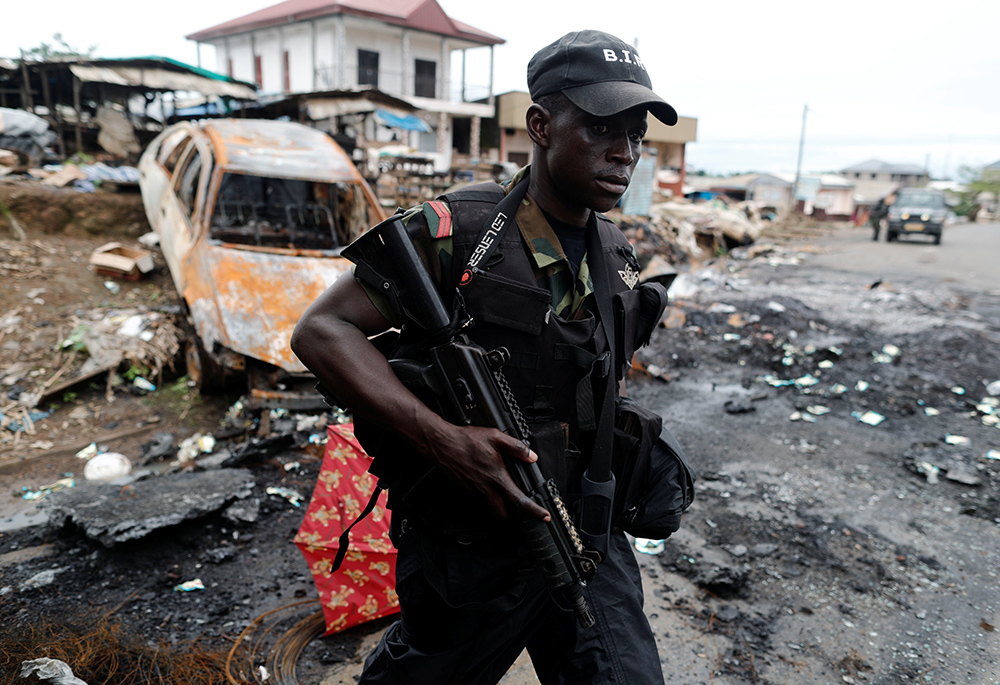
A Cameroonian elite Rapid Intervention Battalion member patrols the abandoned village of Ekona in the Anglophone region Oct. 4, 2018. Three years later, Catholic bishops in Cameroon warned of spiraling violence in their country's troubled Anglophone regions and urged law enforcers and local residents to show "greater responsibility." (CNS photo/Zohra Bensemra, Reuters)

Share on FacebookShare on Twitter

By Jacqui Cho*

In central Africa, a violent conflict has been unfolding for nearly eight years. What began in 2016 as peaceful protests by lawyers and teachers against the increasing “francophonisation” of the legal and education systems in Cameroon’s anglophone regions quickly escalated into an armed conflict between separatist groups and government forces.

It has come at a devastating human cost. With both sides of the civil war using education as a weapon, over 700,000 children have been forced out of school since 2017. By October 2024, the conflict had resulted in more than 6,500 deaths and displaced over 584,000 people internally. More than 73,000 have been forced to seek refuge in neighbouring Nigeria.

Yet Cameroon’s government has refused meaningful negotiations. Though a key party to a conflict that remains unquestionably unresolved, Yaoundé insists that the situation is under control. In practice, it has pursued a dual strategy of military repression paired with a façade of dialogue. Behind the scenes, it has quietly stalled and derailed authentic efforts for peace.

Why has Yaoundé been able to avoid a peace settlement with so little international backlash? I sought answers as part of my PhD research in mediation, focused on the conflict in Cameroon.

In an era of revived rivalry between great powers, Cameroon has learned to navigate and exploit the interests of competing global actors. Western governments, eager to keep Cameroon within their sphere of influence and fearful of growing Russian and Chinese engagement, have not applied pressure for peace. Pushing hard for negotiations would risk jeopardising relations with Yaoundé – an outcome western capitals are keen to avoid.

Cameroon’s case reveals a broader trend. Across Africa and beyond, the post-cold war norm of resolving political conflicts through negotiation is losing ground. In its place, a militarised approach is becoming increasingly common. Global powers are tolerating, even encouraging, forceful approaches. This is particularly true when the regimes in question serve, or help protect, their respective strategic interests. This shift is quietly reshaping the rules of conflict resolution, with serious implications for peace and democracy.

Calculated defiance of dialogue

Between 2019 and 2022, Switzerland attempted to facilitate peace talks between the Cameroonian state and various separatist groups. The process failed, largely due to the Cameroonian government’s aloofness and lack of commitment. When the Swiss initiative was quietly shelved, there was little international backlash.

Read also

Kremlin says Russian forces will stay in Mali as insurgents press attacks

Gabon to audit public debt as it signs $150 million World Bank deal

African Mineral Resources: The Controversial Link to US Health Deals

Cameroon’s ability to walk away from the facilitation effort, while escalating military operations, was a result of its diplomatic manoeuvring within the Franco-Russian rivalry. By signing a military deal with Russia in April 2022, Cameroon signalled to France and others that it had diplomatic options. This move reportedly shifted France’s stance to one of allowing Yaoundé to do as it pleased, as long as it remained within the French sphere of influence. The French president’s visit to Cameroon just months afterwards reinforced the idea that strategic relationships would take precedence over conflict resolution or democratic norms.

Cameroon has also cultivated a circle of “quiet enablers” over decades. Its strong relations with states as diverse as the US, China, Israel and Japan have similarly provided tacit support as Yaoundé took a more militarised approach and have shielded it diplomatically.

Global drift towards force

The anglophone crisis in Cameroon illustrates a troubling global development. While negotiated settlements were the dominant, or preferred, model for resolving conflicts in the post-cold war era, today that model is under threat.

This challenge to the norm of negotiated settlements stems from various sources. On the one hand, changes within so-called liberal western states, particularly since the “global war on terror”, have led to a renewed emphasis on security, sometimes at the expense of liberal democratic principles. This has generated greater tolerance for authoritarian regimes and tacit acceptance of the use of force.

On the other hand, rising powers like Russia and China are promoting alternative models of conflict management. They favour approaches that empower strong states to maintain peace, even through the use of force. Russia, for example, views its military engagements in Syria as a form of “peacemaking”. It prioritises order over justice. China’s model for peace similarly focuses on building a strong central state.

African states are far from passive observers in this evolving landscape. Drawing on experiences from the eras of empire and the cold war, African states are looking to further their own interests both domestically and internationally.

It’s not just global powers objectifying Africa. It is also about African actors strategically playing the game because they benefit.

Elections and the stakes for democracy and governance

With a presidential election looming in October 2025, the stakes for Cameroon’s democracy, governance and peace could not be clearer. At the age of 92, President Paul Biya has formally announced his candidacy for an eighth term.

Opposition parties describe a system already rigged against them, with reported incidents of harassment and intimidation. The ongoing conflict in the anglophone areas is expected to make voting harder, if not impossible. This is a situation that will likely favour Biya.

The regime’s ability to defy calls for dialogue is emboldened by geopolitical cover and a fragmented opposition. It raises the risk of a militarised status quo being mistaken for stability. Everyday violence, kidnappings, and killings – especially in rural areas – have become normalised, with little international outcry. The regime continues to pursue its strong-arm tactics without concerns about international repercussions.

Dangerous precedent

The case of Cameroon’s anglophone crisis is emblematic of a broader, worldwide struggle between a negotiations-oriented model and a militarised approach to ending violent political conflicts. The erosion of the norm of negotiated settlement, coupled with the increased agency of African states to withstand external pressure, brings an additional challenge to an already difficult process of encouraging conflict parties to come to the table.

Cameroon shows how global silence and strategic use of the geopolitical environment can give rise to and legitimise conflict resolution through brute force. Without a renewed commitment to inclusive dialogue and political settlements, the precedent being set today may shape the conflict management of tomorrow across Africa and beyond.

ـــــــــــــــــــــــــ

* PhD Fellow, swisspeace Mediation Program, University of Basel
Source: The Conversation Africa
Tags: CameroonYaoundé

Related Posts

Madagascar: Opposition candidates protest “institutional coup”
East Africa

Madagascar detains French former serviceman over alleged mutiny plot

April 29, 2026
Mali leader says situation under control in first speech since attacks; France urges citizens to leave ‘as soon as possible’
Featured

Mali leader says situation under control in first speech since attacks; France urges citizens to leave ‘as soon as possible’

April 29, 2026
Ghana agrees to accept West Africans deported from US, president says
Featured

Ghana rejects proposed US health aid deal, citing data concerns, source says

April 28, 2026
Russia calls for rapid restoration of peace in Mali after sustaining casualties
Featured

Russia calls for rapid restoration of peace in Mali after sustaining casualties

April 28, 2026
Uganda to offer new oil exploration licensing round in 2026/27 financial year
East Africa

Uganda to offer new oil exploration licensing round in 2026/27 financial year

April 28, 2026
Nigeria caps jet fuel prices to avert airline disruptions
Energy

Nigeria caps jet fuel prices to avert airline disruptions

April 28, 2026

Search Qiraat Africa

No Result
View All Result

Follow on Twitter

Follow @africanqiraat

Trending

Tuareg: The Blue People of the Sahara

Tuareg: The Blue People of the Sahara

May 23, 2025
Equatorial Guinea

Equatorial Guinea orders crackdown on sex in government offices after videos leaked

November 6, 2024
Ahmed Sékou Touré (1922–1984): Revolutionary and First President of Guinea

Ahmed Sékou Touré (1922–1984): Revolutionary and First President of Guinea

March 6, 2026
Kumbi Saleh, the capital of the ancient Ghana Empire

Kumbi Saleh, the capital of the ancient Ghana Empire

October 13, 2025
Steve Biko (1946-1977): South Africa’s anti-apartheid activist and voice of Black liberation

Steve Biko (1946-1977): South Africa’s anti-apartheid activist and voice of Black liberation

August 15, 2025
Brief History and Culture of the City of Lagos, Nigeria

Brief History and Culture of the City of Lagos, Nigeria

July 24, 2024

Facebook

Sections

  • About Us
  • Privacy Policy
  • Opinion
  • Infographics
  • News
  • Analysis
  • Figures
  • Culture & Literature
  • Follow Ups
  • Historical Readings
  • Interview
  • Studies


© Copyright Qiraat Africa. Developed by Bunnaj Media .

No Result
View All Result
  • News
  • Analysis & Report
  • Studies
  • Opinion
  • Interview
  • Culture & Literature
  • Figures
  • Historical Readings
  • Regions

© 2021 Copyright Qiraat Africa.