



































A series of unique bilateral health agreements negotiated between the United States and numerous African states in late 2025 and early 2026 flickered debate all over Africa, global policy circles, and global media.
These negotiations, outlined by Washington as “mutually beneficial” partnerships to advance health systems, became seriously disapproved for including provisions that seemed to centre health aid on broader strategic and economic interests, especially access to African mineral resources and sensitive health data.
Zambia’s and Zimbabwe’s governments openly rejected or pulled out from these deals, quoting sovereignty risks, unequal terms, and demands connected to minerals and data access. At the heart of the argument is a broader geopolitical competition mainly among the United States and China over control of Africa’s critical minerals, which are essential for global economic and technological revolution.
This analysis sees the sights of this debatable relationship via multiple lenses such as historical context, diplomacy, geopolitical competition, economic interests, national sovereignty, public health consequences, and implications for global governance and development.
Africa’s Mineral Wealth: Strategic Importance
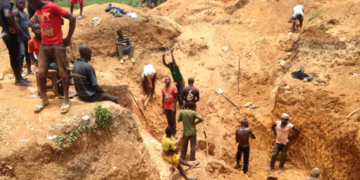
Africa’s exclusion is a key shortcoming in global critical minerals efforts. According to internal calculations, the continent has roughly 85 percent of the world’s manganese, 80 percent of the world’s platinum and chromium, 47 percent of cobalt, 21 percent of graphite, and 6 percent of copper. Despite such reserves, the mining exploration budget in Sub-Saharan Africa was the second lowest in the world—roughly half that of Latin America, Australia, and Canada.
In history, the United States has not maintained strong commercial diplomacy ties with the continent, with Kenya and South Africa being the exceptions—this stands out in contrast to Chinese efforts that began decades ago. The drivers behind the adoption of state-to-state agreements inherently vary among participating actors. Buying countries typically seek diversified and long-term access to critical minerals at competitive market prices.
On the contrary, supplier countries seek to capture a greater share of the proceeds from mineral extraction, for example, by including local content provisions or requiring investments in future processing facilities (World Economic Forum, 2024). The latter approach was once emphasised by Nigeria’s Minister of Solid Minerals Development, Henry Dele Alake, who has stated his aim to “transform Nigeria’s wealth into industrial and economic power… in ways that ripple through our economy” (quoted in Lawal, 2024; Anyanwu, 2024).
Other countries may position themselves as key intermediaries between supplier and buyer countries, taking advantage of their geographical position (World Economic Forum, 2024). Saudi Arabia, for instance, aspires to become a “hub of innovation and responsible production” (Future Minerals Forum, 2024b) within the minerals “super-region” of Africa, the Middle East and Central and South Asia (Varriale, 2024).
One common feature of these state-to-state mineral agreements is their limited transparency and public accessibility. The publicly available agreements, for example those made by the EU, India, Indonesia and the United States (US) are often encompass ambiguous and cryptic provisions. Typically signed during state official visit or international forums, understanding their import often necessitates piecing together information from news articles, ministry reports and interviews. Additionally, several agreements are not legally binding and have a fixed validity period, after which they either expire or require revision.
The Emergence of Controversial US Health Deals
After dismantling USAID, the world’s largest foreign aid agency, last year, the Trump administration has sought to replace decades of aid with new bilateral deals, called Memorandums of Understanding (MOUs), as part of the America First Global Health Strategy.
The Trump administration says the new “America First” global health funding agreements are meant to increase self-sufficiency and eliminate what it says is ideology and waste from international assistance. The deals replace a patchwork of previous health agreements under the now-dismantled United States Agency for International Development.
U.S. aid cuts have crippled health systems across the developing world, including in Africa, where many countries relied on the funding for crucial programmes, including those responding to outbreaks of disease.
The new approach to global health aligns with President Donald Trump’s pattern of dealing with other nations transactionally, using direct talks with foreign governments to promote his agenda abroad. It builds on his sharp turn from traditional U.S. foreign assistance, which supporters say furthered American interests by stabilising other countries and economies and building alliances.
Sources indicate around 16 such agreements were signed with African countries, including Nigeria, Kenya, Uganda, Rwanda, Senegal, Botswana, Ethiopia, and others. However, details of the agreements were often withheld from public scrutiny, leading to widespread concern.
i. A New Framework of Health Agreements
Not less than 17 African countries have signed deals with the US, collectively securing $11.3bn in health aid but raising concerns over concessions made in return. Critics say there has been a lack of consultation with the community groups that provide a lot of the healthcare in African countries and have raised concerns over data privacy – the US requests patient record data as part of the deals – and the prioritisation of faith-based healthcare providers.
The five-year deals commit African countries to gradually provide a greater amount of domestic funding, including for health worker salaries and equipment, while replacing US investment, which will decrease each year. If countries fail to meet those commitments, US funding may be withdrawn. Also, the report indicates that the US draughts also include requests for access to health data and information on new or emerging pathogens for up to 25 years, although many countries appear to have negotiated shorter commitments.
ii. What are the Conditions and Contested Provisions?
However, it’s the clauses that Washington is demanding to leverage its aid for data, rare earth elements and other minerals that have caused widespread outrage in some countries.
In the case of Zambia, the US reportedly asked the major copper, cobalt and lithium producer for access to its critical minerals in return for $1bn over five years on the condition that Zambia would cofinance the aid with $340m in new health funding. The US also asked for a one-way data-sharing agreement for 10 years.
When Zambian officials did not immediately sign, leaked internal memos prepared for US Secretary of State Marco Rubio said Washington would only “secure our priorities by demonstrating willingness to publicly take support away from Zambia on a massive scale”, according to reporting by The New York Times.
Data or mineral demands in return for health aid are unprecedented in the history of the US, which is Africa’s largest health assistance provider. Policy experts said tying crucial funding to sensitive national assets could have negative consequences for African nations and also for the US itself.
Sarang Shidore, director of the Global South programme at the US think tank Quincy Institute for Responsible Statecraft, told Al Jazeera that: “Supporting global health has clear benefits to the United States in terms of prevention of pandemics that can affect Americans too. Linking such aid to payoffs in the extraction of critical minerals smacks of exploitative practices. Reform in the foreign aid sector is badly needed, but this is not the way to do it.”
These requirements were unprecedented in the history of US health assistance, encouraging strong criticism from African governments, civil society, and health advocacy groups.
iii. The Effect of National Sovereignty and Pushback
More than a few African countries voiced clear resistance to the fundamentals of the health agreements. For instance, it emerged recently that Zimbabwe had halted negotiations with the US for $350m (£258m) of health funding, saying the proposals risked undermining its sovereignty and independence. While legal actions were filed in Kenya over the health deal and its data privacy implications.
Meanwhile, a deal with Zambia – which has been linked to a separate agreement with the US on “collaboration in the mining sector” – has yet to be finalised, with Asia Russell, director of the HIV advocacy organisation Health Gap, accusing the US of “conditioning life-saving health services on plundering the mineral wealth of the country”. It’s shameless exploitation, which is immoral.”
Over a million people in Zambia are living with HIV, one of several African countries where the United States’ President’s Emergency Plan for AIDS Relief (PEPFAR) programme has been a cornerstone for the financing of life-saving medical treatment for more than two decades.
These responses stemmed from deep-seated worries about sovereignty, data privacy, resource control, and long-term reliance on external aid conditions. African leaders and civil society actors outlined the agreements as neo-colonial or exploitative in nature.
In Kenya, the first country to sign a deal, a court case brought by campaigners over data sharing terms has put the agreement on hold. The Consumer Federation of Kenya (Cofek), one of the groups bringing the case, said Kenya risked “ceding strategic control of its health systems if pharmaceuticals for emerging diseases and digital infrastructure (including cloud-storage of raw data) are externally controlled”.
Kiryowa Kiwanuka, Uganda’s attorney general, sought to downplay similar fears about his country’s deal in an interview hosted on X, saying it was “not true” that citizens’ health data and privacy were at risk. “We have our data protection and privacy law, and the agreement is riddled with that,” he said.
One reproductive and gender justice campaigner in Uganda questioned whether the increased domestic funding targets were realistic, given African governments’ failure to meet the 2001 Abuja declaration’s 15% minimum national budget allocation to health.
She said there had been “no public participation” in the negotiation process, and non-governmental organisations were expected to be further sidelined. Specialist clinics offering care to marginalised groups such as the LGBTQ+ community were unlikely to see funding “trickle down” to them, she thought.
iv. What are the Domestic Political Repercussions?
The debate also had national political effects within African states; for instance, the Zambian rejection of the health-mineral link turned out to be a national political crossroads, with public health activists worried at the outlook of critical HIV and tuberculosis funding being used as leverage. For 1.3 million Zambians that could mean losing daily life-saving HIV treatment, which had helped cut AIDS-related deaths in the country by over 70% in the last 15 years.
A letter sent by Albert Chimbindi, Zimbabwe’s secretary for foreign affairs and international trade, in December that was made public said the president, Emmerson Mnangagwa, “directed that Zimbabwe must discontinue any negotiation with the USA on the clearly lop-sided MoU [memorandum of understanding] that blatantly compromises and undermines the sovereignty and independence of Zimbabwe as a country”.
While Zimbabwe’s government appropriated a strong posture in quest of substitute financing mechanisms, indicating a desire to decrease reliance on restrictive foreign aid. These changes show how foreign policy negotiations, even when framed around humanitarian assistance, can have important domestic political implications.
A New strategic Rivalry between the US and China
The US mineral policies date back to the Second World War. More recently, its activities are based on two key pieces of legislation: the 2020 Energy Act and the 2022 Inflation Reduction Act (IEA 2022, 2024c). Both are driven by the US’s economic security and national defence concerns and its climate commitments to reach net zero by 2050 (U.S. Department of Commerce, 2024).
Experts indicate that the issue is compounded by the country’s reliance on critical mineral imports and the fact that many minerals are sourced from countries that the US deems a “foreign entity of concern”, such as China, Iran, North Korea and Russia. Critical minerals are rare earth minerals vital to the manufacturing of modern and next-gen technologies, such as advanced semiconductor chips and batteries for electric vehicles and solar panels.
The African continent is home to 30% of the world’s critical minerals and higher percentages of some individual minerals – the Democratic Republic of the Congo, for example, houses 70% of the world’s cobalt. Gabon has the second-largest deposit of manganese in the world and is currently the world’s third-largest producer. According to research by the Congressional Research Service, the U.S. is 100% import-reliant on 14 minerals on the critical minerals list and more than 75% import-reliant on 10 others.
At the moment, China is the largest player by far in the African mining sector, having invested billions over the last several years as part of its global Belt and Road Initiative (BRI). In 2022 alone, China imported $10 billion in rare-earth minerals from the continent. In addition to dominating the African mining sector, China is the world’s largest refiner of many strategic minerals; Chinese refiners supply 68% of the world’s nickel, 40% of copper, 59% of lithium, and 73% of cobalt.
Many countries in Africa see China as a desirable partner for mining operations not only due to their deep pockets but also for Beijing’s laissez-faire strategy: Chinese investments come with none of the strings, like human rights scrutiny or sustainability, that Western projects can. The U.S. has a weaker foothold in Africa due to years of perceived neglect and a more hands-off strategy to foreign investment and partnership.
i. US Strategic Goals and Mineral Diplomacy
The mining and processing of minerals like copper, cobalt, and rare earth elements have turned out to be important for electric vehicles, renewable energy technologies, and defence applications, while all are considered of national security significance by officials in Washington.
Therefore, conditioning health pacts on mineral access could be understood as an effort by the United States to mix economic and strategic aims into humanitarian support, which is a combination of soft power and realpolitik. It as well echoes a shift from traditional aid paradigms in the direction of more reciprocity-orientated diplomacy.
This policy shift transpires in contrast to the backdrop of a larger US–China competition for influence in Africa. China’s investments in infrastructure and mineral extraction have been extensive and constant over the past two decades, making dependency dynamics but also concrete development outcomes such as road, railway, and port construction.
In contrast, US engagement has been more mutable and traditionally humanitarian-focused. Nevertheless, the advent of health-mineral linkages indicates Washington’s attempt to emphasise further strategic presence, particularly in countries where China’s impact is robust. Africa’s role as a strategic theatre in global power competition consequently spreads beyond classical security spheres, hooked on economic and developmental domains.
ii. Future Trajectories and Policy Implications
In Nigeria, according to a US embassy statement, the agreement for $2.1bn of US funding “places a strong emphasis on Christian faith-based healthcare providers”. Fadekemi Akinfaderin of Fòs Feminista wrote on Substack that “singling out one religious group in a deeply plural country risks inflaming existing tensions and politicising health”. She also warned that “faith-based facilities are less likely to provide family planning services, STI prevention and some vaccinations due to ideological beliefs”, urging Nigeria’s health ministry to ensure coverage gaps did not result from the agreement.
Rachel Bonnifield, director of global health policy and senior fellow at the Center for Global Development think tank, said that despite the criticisms there were good reasons for countries to sign deals, including “very substantial amounts of funding – in some cases equivalent to 50% or more of governments’ total domestic spending on health – to support very basic and much-needed health services”.
A shift to government control of health funds, rather than distribution through US NGOs, was also likely to be attractive, she said, with the deals seen as a chance to establish new, broader relationships with the US. “Even transactional negotiations can be seen as treating African governments like peers and partners versus the recipients of American charity,” said Bonnifield.
A fellow of the Nigerian Academy of Science, Oyewale Tomori, noted that there are also many positives about this development, as each country will receive US funding support to “expand essential preventative and curative services for HIV, TB, malaria, maternal and child health, polio and disease surveillance”. The fund will certainly help countries improve services for the prevention and control of certain diseases.
But there are caveats, he said: Firstly, the clause could force governments to reallocate funds from other essential services. Secondly, failure to provide adequate local co-financing might hamper the successful implementation of the agreement. Thirdly, the expectation that countries will progressively increase domestic funding for health appears unrealistic and not sustainable. In 2001 African countries agreed to the Abuja Declaration. This committed them to allocating at least 15% of their national annual budget to health. No country, over these past 25 years, has consistently met this target.
Oyewale added that, but if the clause gets African governments to finally implement the 15% minimum national budget allocation to health, it would obviously be a good outcome of the agreements.
Conclusion
The evolving debate over African mineral resources and their suspected linkage to US health agreements sums up into a complex relationship of geopolitics, economics, and development policy. While the United States frames its new health agreements as partnerships intended at refining health outcomes, the inclusion of provisions apparent to profit strategic economic interests, mainly mineral access, has triggered scepticism and resistance across African states and civil society.
This argument illuminates shifting patterns in international aid, where health assistance is gradually intertwined with geopolitical rivalry and economic diplomacy. It similarly crystallises old structural problems together with Africa’s marginal place in global mineral value chains and recurrent reliance on external financing for crucial services.
In the evolving landscape of geopolitics, Africa’s mineral resources still exist as both a strategic asset and a source of contention with consequences that ripple far beyond the continent’s boundaries. What remains unambiguous is that any future cooperation agenda must poise immediate development needs with long-term rights to self-determination, economic self-reliance, and just involvement in the global economy.