




Qiraat Africa
عربي  |  Fr
Advertisement
  • News
    • All
    • Climate Change
    • Economy
    • Education
    • Energy
    • Health
    • Migration
    • Mining
    • Politics
    • Security
    • Society
    • Sport
    Nigeria champions African-Arab Trade to boost agribusiness, industrial growth

    Nigeria champions African-Arab Trade to boost agribusiness, industrial growth

    South Africa, Mozambique sign energy cooperation deal

    South Africa, Mozambique sign energy cooperation deal

    Ghana sanitation minister resigns over alleged stashed cash

    Ghana’s inflation slows for 11th straight month in November

    Security chief detained in South Sudan

    Security chief detained in South Sudan

    Nigeria’s overnight lending rate falls 100 bps on excess liquidity, policy shift

    Nigeria tightens cash withdrawal limits to curb money-laundering risk

    Kenyan lawmakers identify ‘disturbing trend’ of misconduct by British troops

    Kenyan lawmakers identify ‘disturbing trend’ of misconduct by British troops

    Mali adopts new mining code to boost sector’s contribution to GDP

    Mali recovers $1.2 billion in arrears from miners, eyes annual windfall under new code

    Nigeria’s defence minister quits as government faces rising violence

    Nigeria’s defence minister quits as government faces rising violence

    Guinea-Bissau: Nigeria offers protection to opposition candidate Dias; Election commission says cannot conclude presidential election process

    Guinea-Bissau: Nigeria offers protection to opposition candidate Dias; Election commission says cannot conclude presidential election process

  • Analysis
    • All
    • Climate Change
    • Digital & Tech
    • Economy
    • Energy & Power
    • Health
    • Politics
    • Security
    • Society
    Global power shifts are playing out in the Red Sea region: why this is where the rules are changing

    Global power shifts are playing out in the Red Sea region: why this is where the rules are changing

    Understanding Trump’s Christian Genocide Claim and Military Threat: What It Means for Nigeria-U.S. Relations

    Understanding Trump’s Christian Genocide Claim and Military Threat: What It Means for Nigeria-U.S. Relations

    South Africa needs to rethink its community media policy – 4 ways to close the gaps

    South Africa needs to rethink its community media policy – 4 ways to close the gaps

    Cameroon’s Biya declared vote winner, opposition reports gunfire

    What do the recent 2025 elections in Cameroon and Ivory Coast reveal about their state of democracy?

    Ivory Coast president Ouattara’s party pushes him to run again

    Ivory Coast elections: Ouattara’s final rule or forever rule?

    Charting New Waters: Maritime Advancements and West Africa’s Development

    Charting New Waters: Maritime Advancements and West Africa’s Development

    The Critical Role of Gold in Tanzania’s Economic Growth

    The Critical Role of Gold in Tanzania’s Economic Growth

    Five Years After the Coup in Mali: Are Stability and Growth Within Reach?

    Five Years After the Coup in Mali: Are Stability and Growth Within Reach?

    Cameroon President Paul Biya marks 41 years in power

    Paul Biya at 92: will defections weaken his grip on absolute power in Cameroon?

  • Studies
    One in three South Africans have never heard of AI: what this means for policy

    One in three South Africans have never heard of AI: what this means for policy

    Social Media as a Catalyst for the Spread of Dangerous Wealth Ritual Myths

    Social Media as a Catalyst for the Spread of Dangerous Wealth Ritual Myths

    Overcoming Education Barriers for Young Mothers in Sub-Saharan Africa

    Overcoming Education Barriers for Young Mothers in Sub-Saharan Africa

    Youth Empowerment Through Vocational Training in Rural Sub-Saharan Africa

    Youth Empowerment Through Vocational Training in Rural Sub-Saharan Africa

    Manufacturers in Ghana and Nigeria claim that although corruption damages businesses, digital technologies provide a chance to combat it

    Manufacturers in Ghana and Nigeria claim that although corruption damages businesses, digital technologies provide a chance to combat it

    Environmental Threats and Conservation Efforts in Namibia

    Environmental Threats and Conservation Efforts in Namibia

    Your teachers’ level of knowledge affects how well you perform in class: perspectives from 14 French-speaking African nations

    Your teachers’ level of knowledge affects how well you perform in class: perspectives from 14 French-speaking African nations

    Islamic Finance in Nigeria: Between Islamization and Shariah Non-Compliance Polemics

    Islamic Finance in Nigeria: Between Islamization and Shariah Non-Compliance Polemics

    What determines a return to civilian rule after military coups in Africa?

    What determines a return to civilian rule after military coups in Africa?

  • Infographics
  • Figures
    Robert Mugabe (1924 – 2019): Revolutionary and former President of Zimbabwe

    Robert Mugabe (1924 – 2019): Revolutionary and former President of Zimbabwe

    Idi Amin Dada (1928 – 2003): Military officer and former President of Uganda

    Idi Amin Dada (1928 – 2003): Military officer and former President of Uganda

    Albert John Luthuli (1898–1967): South African politician and first African Nobel Laureate

    Albert John Luthuli (1898–1967): South African politician and first African Nobel Laureate

    Shaka Zulu (1787-1828), founder of the Zulu empire in Southern Africa

    Shaka Zulu (1787-1828), founder of the Zulu empire in Southern Africa

    Chimamanda Ngozi Adichie, Nigerian writer

    Chimamanda Ngozi Adichie, Nigerian writer

    Olaudah Equiano (1745-1797), writer and abolitionist

    Olaudah Equiano (1745-1797), writer and abolitionist

    Ex-Credit Suisse chief executive Tidjane Thiam eyeing Ivory Coast 2025 presidential contest

    Tidjane Thiam, Ivorian businessman and politician

    François (Ngarta) Tombalbaye (1918-1975): First President of Chad

    François (Ngarta) Tombalbaye (1918-1975): First President of Chad

    Apollo Milton Obote (1925-2005): Former President of Uganda

    Apollo Milton Obote (1925-2005): Former President of Uganda

  • History
    Zong Massacre

    Zong Massacre

    Abomey, southern Benin

    Abomey, southern Benin

    Ifẹ̀, an ancient city in south-western Nigeria

    Ifẹ̀, an ancient city in south-western Nigeria

    Robben Island, South Africa

    Robben Island, South Africa

    Mount Kilimanjaro, Tanzania

    Mount Kilimanjaro, Tanzania

    Kumbi Saleh, the capital of the ancient Ghana Empire

    Kumbi Saleh, the capital of the ancient Ghana Empire

    Kano, an ancient city in northern Nigeria

    Kano, an ancient city in northern Nigeria

    Agadez, historic city in Niger

    Agadez, historic city in Niger

    Olduvai Gorge, a significant paleoanthropological site in Tanzania

    Olduvai Gorge, a significant paleoanthropological site in Tanzania

  • Others
    • Culture / Literature
    • Follow-ups
    • Interview
    • Opinion
  • Countries
    • Country profiles
    • Regions
      • Central Africa
      • East Africa
      • Southern Africa
      • West Africa
No Result
View All Result
  • News
    • All
    • Climate Change
    • Economy
    • Education
    • Energy
    • Health
    • Migration
    • Mining
    • Politics
    • Security
    • Society
    • Sport
    Nigeria champions African-Arab Trade to boost agribusiness, industrial growth

    Nigeria champions African-Arab Trade to boost agribusiness, industrial growth

    South Africa, Mozambique sign energy cooperation deal

    South Africa, Mozambique sign energy cooperation deal

    Ghana sanitation minister resigns over alleged stashed cash

    Ghana’s inflation slows for 11th straight month in November

    Security chief detained in South Sudan

    Security chief detained in South Sudan

    Nigeria’s overnight lending rate falls 100 bps on excess liquidity, policy shift

    Nigeria tightens cash withdrawal limits to curb money-laundering risk

    Kenyan lawmakers identify ‘disturbing trend’ of misconduct by British troops

    Kenyan lawmakers identify ‘disturbing trend’ of misconduct by British troops

    Mali adopts new mining code to boost sector’s contribution to GDP

    Mali recovers $1.2 billion in arrears from miners, eyes annual windfall under new code

    Nigeria’s defence minister quits as government faces rising violence

    Nigeria’s defence minister quits as government faces rising violence

    Guinea-Bissau: Nigeria offers protection to opposition candidate Dias; Election commission says cannot conclude presidential election process

    Guinea-Bissau: Nigeria offers protection to opposition candidate Dias; Election commission says cannot conclude presidential election process

  • Analysis
    • All
    • Climate Change
    • Digital & Tech
    • Economy
    • Energy & Power
    • Health
    • Politics
    • Security
    • Society
    Global power shifts are playing out in the Red Sea region: why this is where the rules are changing

    Global power shifts are playing out in the Red Sea region: why this is where the rules are changing

    Understanding Trump’s Christian Genocide Claim and Military Threat: What It Means for Nigeria-U.S. Relations

    Understanding Trump’s Christian Genocide Claim and Military Threat: What It Means for Nigeria-U.S. Relations

    South Africa needs to rethink its community media policy – 4 ways to close the gaps

    South Africa needs to rethink its community media policy – 4 ways to close the gaps

    Cameroon’s Biya declared vote winner, opposition reports gunfire

    What do the recent 2025 elections in Cameroon and Ivory Coast reveal about their state of democracy?

    Ivory Coast president Ouattara’s party pushes him to run again

    Ivory Coast elections: Ouattara’s final rule or forever rule?

    Charting New Waters: Maritime Advancements and West Africa’s Development

    Charting New Waters: Maritime Advancements and West Africa’s Development

    The Critical Role of Gold in Tanzania’s Economic Growth

    The Critical Role of Gold in Tanzania’s Economic Growth

    Five Years After the Coup in Mali: Are Stability and Growth Within Reach?

    Five Years After the Coup in Mali: Are Stability and Growth Within Reach?

    Cameroon President Paul Biya marks 41 years in power

    Paul Biya at 92: will defections weaken his grip on absolute power in Cameroon?

  • Studies
    One in three South Africans have never heard of AI: what this means for policy

    One in three South Africans have never heard of AI: what this means for policy

    Social Media as a Catalyst for the Spread of Dangerous Wealth Ritual Myths

    Social Media as a Catalyst for the Spread of Dangerous Wealth Ritual Myths

    Overcoming Education Barriers for Young Mothers in Sub-Saharan Africa

    Overcoming Education Barriers for Young Mothers in Sub-Saharan Africa

    Youth Empowerment Through Vocational Training in Rural Sub-Saharan Africa

    Youth Empowerment Through Vocational Training in Rural Sub-Saharan Africa

    Manufacturers in Ghana and Nigeria claim that although corruption damages businesses, digital technologies provide a chance to combat it

    Manufacturers in Ghana and Nigeria claim that although corruption damages businesses, digital technologies provide a chance to combat it

    Environmental Threats and Conservation Efforts in Namibia

    Environmental Threats and Conservation Efforts in Namibia

    Your teachers’ level of knowledge affects how well you perform in class: perspectives from 14 French-speaking African nations

    Your teachers’ level of knowledge affects how well you perform in class: perspectives from 14 French-speaking African nations

    Islamic Finance in Nigeria: Between Islamization and Shariah Non-Compliance Polemics

    Islamic Finance in Nigeria: Between Islamization and Shariah Non-Compliance Polemics

    What determines a return to civilian rule after military coups in Africa?

    What determines a return to civilian rule after military coups in Africa?

  • Infographics
  • Figures
    Robert Mugabe (1924 – 2019): Revolutionary and former President of Zimbabwe

    Robert Mugabe (1924 – 2019): Revolutionary and former President of Zimbabwe

    Idi Amin Dada (1928 – 2003): Military officer and former President of Uganda

    Idi Amin Dada (1928 – 2003): Military officer and former President of Uganda

    Albert John Luthuli (1898–1967): South African politician and first African Nobel Laureate

    Albert John Luthuli (1898–1967): South African politician and first African Nobel Laureate

    Shaka Zulu (1787-1828), founder of the Zulu empire in Southern Africa

    Shaka Zulu (1787-1828), founder of the Zulu empire in Southern Africa

    Chimamanda Ngozi Adichie, Nigerian writer

    Chimamanda Ngozi Adichie, Nigerian writer

    Olaudah Equiano (1745-1797), writer and abolitionist

    Olaudah Equiano (1745-1797), writer and abolitionist

    Ex-Credit Suisse chief executive Tidjane Thiam eyeing Ivory Coast 2025 presidential contest

    Tidjane Thiam, Ivorian businessman and politician

    François (Ngarta) Tombalbaye (1918-1975): First President of Chad

    François (Ngarta) Tombalbaye (1918-1975): First President of Chad

    Apollo Milton Obote (1925-2005): Former President of Uganda

    Apollo Milton Obote (1925-2005): Former President of Uganda

  • History
    Zong Massacre

    Zong Massacre

    Abomey, southern Benin

    Abomey, southern Benin

    Ifẹ̀, an ancient city in south-western Nigeria

    Ifẹ̀, an ancient city in south-western Nigeria

    Robben Island, South Africa

    Robben Island, South Africa

    Mount Kilimanjaro, Tanzania

    Mount Kilimanjaro, Tanzania

    Kumbi Saleh, the capital of the ancient Ghana Empire

    Kumbi Saleh, the capital of the ancient Ghana Empire

    Kano, an ancient city in northern Nigeria

    Kano, an ancient city in northern Nigeria

    Agadez, historic city in Niger

    Agadez, historic city in Niger

    Olduvai Gorge, a significant paleoanthropological site in Tanzania

    Olduvai Gorge, a significant paleoanthropological site in Tanzania

  • Others
    • Culture / Literature
    • Follow-ups
    • Interview
    • Opinion
  • Countries
    • Country profiles
    • Regions
      • Central Africa
      • East Africa
      • Southern Africa
      • West Africa
No Result
View All Result
Qiraat Africa
عربي  |  Fr
No Result
View All Result
Home Regions Central Africa

The Tutsi people of the African Great Lakes

November 10, 2025
The Tutsi people of the African Great Lakes
Share on FacebookShare on Twitter

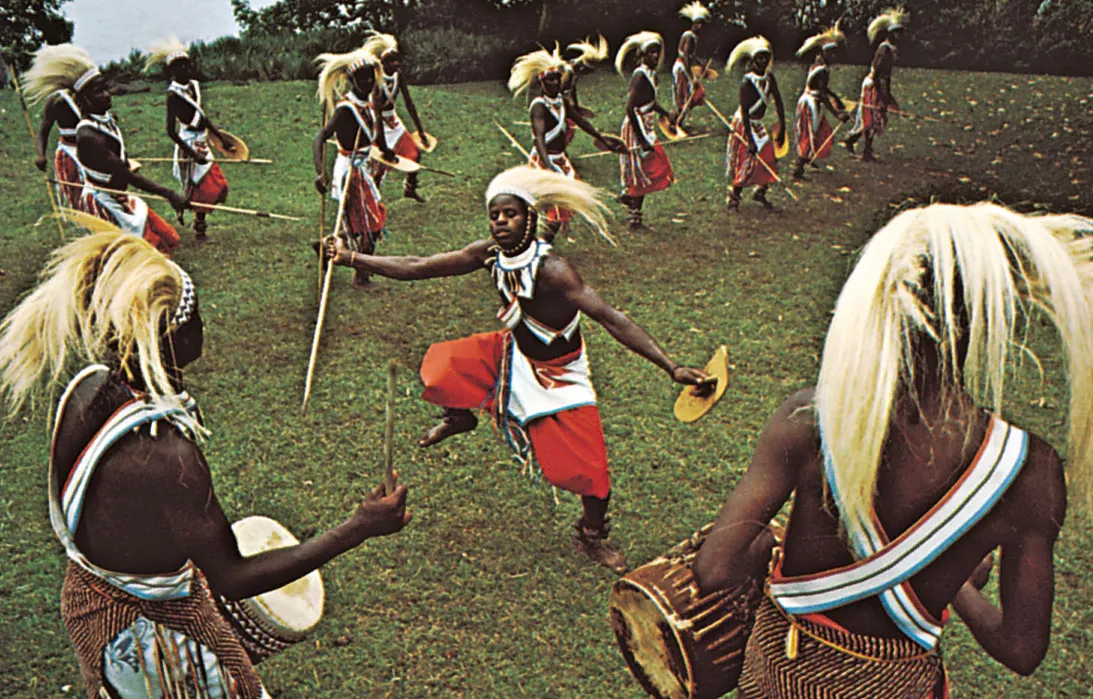
The Tutsi are one of the major ethnic groups in the African Great Lakes region, concentrated primarily in Rwanda and Burundi, with smaller communities in Uganda and the Democratic Republic of Congo. The Tutsi and Hutu belong to the same broader linguistic and cultural group, speaking Kinyarwanda in Rwanda and Kirundi in Burundi. This means that the division between them is not primarily linguistic or religious.

Some anthropologists suggest that the Tutsi are descendants of pastoral groups who migrated to the region from the northeast (possibly from the Horn of Africa or the Nile Valley) centuries ago. This hypothesis posits that they brought cattle with them, a defining characteristic of their traditional culture and economy.

According to 101 last tribes:

“Tutsis are considered to be of Cushitic origin by some researchers, although they do not speak a Cushitic language and have lived in the areas where they are for at least 400 years, leading to considerable intermarriage with the Hutu in the area. Due to the history of intermingling and intermarrying of Hutus and Tutsis, ethnographers and historians have lately come to agree that Hutu and Tutsis cannot be properly called distinct ethnic groups.”

Historically, the classification between Tutsi and Hutu was based more on occupation and economics than on strict biological ethnicity. The Tutsi are traditionally pastoralists with large herds of cattle. This cattle ownership was the foundation of their wealth and social status, while the Hutu are traditionally farmers.

The division between the two ethnic groups has been somewhat fluid throughout history. Sometimes, wealthy Hutus with enough cattle could rise socially to be considered “Tutsi,” or conversely, poor Tutsis who lost their cattle could be “descended” to become “Hutus.”

Before the arrival of European colonial powers, societies in Rwanda and Burundi were organized into complex, centralized kingdoms, with the Tutsi at the top of the social and political hierarchy.

The Kingdom of Rwanda was a relatively unified kingdom ruled by a Tutsi king, known as a Mwami, whose authority was considered divine. The kingdom relied on a network of Tutsi nobles who administered the provinces, collected tribute, and oversaw the army. The Kingdom of Burundi, also a centralized kingdom, was ruled by a king, but its political system was slightly less centralized than Rwanda’s.

Read also

Security chief detained in South Sudan

Kenyan lawmakers identify ‘disturbing trend’ of misconduct by British troops

Cameroonian opposition figure Ekane dies in detention, lawyer says

The relationship between the Tutsi and Hutu was partly regulated by the Ubuhake system, a system of cattle-based patronage contracts: Tutsi cattle owners provided cattle (or the right to use them) to Hutu in exchange for labor, loyalty, and service.  This system reinforced Tutsi social and political dominance, as Hutu depended on the herders for cattle, which were a symbol of wealth and power. This traditional system was complex, as Tutsi social dominance was based on economic and political foundations and was not necessarily a rigid system of racial segregation as it later emerged.

The arrival of European powers, specifically the Germans and then the Belgians (who colonized the region after World War I), marked a disastrous turning point in the relationship between the Tutsi and the Hutu. The Belgian colonial administration excessively exploited and reinforced the division between the two groups. The Belgians relied on the “Hamitic” hypothesis, which posited that the Tutsi (taller and lighter-skinned) were a superior race that had migrated from the north and were therefore closer to the white race and more qualified to rule.

The Belgians also defined “Tutsi” as anyone owning more than ten cows (a sign of wealth) or with the physical feature of a longer nose or longer neck, commonly associated with the Tutsi. They opted for indirect rule, relying on the ruling Tutsi elite to implement their administration. They granted them broad powers and integrated them into the educational and administrative systems, deliberately marginalizing the Hutu.

In the 1930s, the Belgians issued official identity cards that recorded the ethnic affiliation of each citizen (Tutsi, Hutu, or Twa). This measure transformed the flexible social and economic divisions into a fixed and insurmountable ethnic classification, thus permanently entrenching the division.

This long-standing colonial support for the Tutsi elite fueled resentment among the Hutu majority and paved the way for post-independence conflict. As colonialism drew to a close in the late 1950s, the colonial powers began to shift their support abruptly. Belgium, for example, turned to the Hutu nationalist movement, believing that the democratic majority should govern.

Rwanda experienced a violent revolution in 1959, which overthrew the Tutsi monarchy and triggered widespread violence against the Tutsi. Hundreds of thousands of Tutsi fled to neighboring countries (Uganda, Burundi, Congo, and Tanzania). Rwanda became a republic under Hutu rule (led by Grégoire Kayibanda) after independence in 1962.

In Burundi, things initially unfolded differently. The Tutsi monarchy remained in place until it was overthrown in a military coup in 1966. However, the Tutsi elite maintained control of the army, leading to decades of bloody conflict. For example, following a Hutu coup attempt, the Tutsi-dominated army launched a widespread genocide (Burundian Genocide of 1972) against the Hutu elite and intellectuals, resulting in the deaths of an estimated 100,000 to 300,000 people and consolidating Tutsi control over the military and political establishment until the 1990s.

Another conflict was the 1994 genocide against the Tutsi in Rwanda, which represents the tragic culmination of a history of tensions exacerbated by colonial and social policies. In April 1994, after the downing of the plane carrying Hutu President Juvenal Habyarimana, Hutu extremist groups (the Interahamwe militia and the Rwandan Armed Forces) began implementing a systematic plan to exterminate the Tutsi. Over the course of approximately 100 days, nearly 800,000 people (according to many reports) were killed, the vast majority of them Tutsis, as well as moderate Hutus who refused to participate.

The Rwandan genocide ended with the intervention of the Rwandan Patriotic Front (RPF), a rebel force composed mostly of former Tutsi refugees, led by Paul Kagame. The RPF seized control of the country and established a new government.

After 1994, Rwanda and Burundi experienced different attempts to address these divisions. The Rwandan government, now led by Tutsis, focused on building a unified national identity. References to ethnic affiliations (Hutu/Tutsi/Twa) were banned in official documents and public institutions, and it was emphasized that all citizens were “Rwandans.” The traditional justice system, Gacaca, was established to address genocide cases. Despite success in achieving economic and security stability, issues of political freedoms and the integration of former Hutus into the system remain a source of ongoing debate.

Also, Burundi remained plagued by conflict. Following the Arusha Peace and Reconciliation Agreement of August 2000, power was formally shared between the Tutsi and Hutu elites (specifically within the military and government) to prevent either side from dominating, but tensions resurface periodically.
Tags: BurundiCongoHutuRwandaTutsiUganda

Related Posts

The UN worries about a risk of “direct confrontation” between DRC and Rwanda
Central Africa

Congo, Rwanda presidents to sign peace deal in Washington, sources say

November 30, 2025
Guinea-Bissau president to run for second term, backtracking on vow to step down
Central Africa

Ousted Guinea-Bissau President Embalo arrives in Brazzaville

November 30, 2025
Kenyan officials banned from non-essential travel
East Africa

Kenya scrambles to save key trade pact with EU suspended by court

November 27, 2025
Global power shifts are playing out in the Red Sea region: why this is where the rules are changing
East Africa

Global power shifts are playing out in the Red Sea region: why this is where the rules are changing

November 26, 2025
South Sudan’s presidency announces postponement of long-delayed election by two years
Central Africa

South Sudan again shakes up petroleum ministry, adding to constant government churn

November 26, 2025
Ethiopia says three dead in Marburg virus outbreak
East Africa

Ethiopia says death toll from Marburg virus outbreak rises to 6

November 26, 2025

Search Qiraat Africa

No Result
View All Result

Follow on Twitter

Follow @africanqiraat

Trending

Idi Amin Dada (1928 – 2003): Military officer and former President of Uganda

Idi Amin Dada (1928 – 2003): Military officer and former President of Uganda

November 8, 2025
Infographic: Kidnapping in Nigeria – Facts and Figures

Infographic: Kidnapping in Nigeria – Facts and Figures

May 22, 2024
Larabanga Mosque, an architectural and historical masterpiece in Ghana

Larabanga Mosque, an architectural and historical masterpiece in Ghana

May 15, 2025
The Great Mosque of Djenne, Mali

The Great Mosque of Djenne, Mali

March 25, 2025
General sworn in as Guinea-Bissau leader in swift coup after disputed vote

Guinea-Bissau military rulers ban protests ahead of ECOWAS visit

December 1, 2025
List of Recent Coups in West and Central Africa

List of Recent Coups in West and Central Africa

August 30, 2023

Facebook

Sections

  • About Us
  • Privacy Policy
  • Opinion
  • Infographics
  • News
  • Analysis
  • Figures
  • Culture & Literature
  • Follow Ups
  • Historical Readings
  • Interview
  • Studies


© Copyright Qiraat Africa. Developed by Bunnaj Media .

No Result
View All Result
  • News
  • Analysis & Report
  • Studies
  • Opinion
  • Interview
  • Culture & Literature
  • Figures
  • Follow-ups
  • Historical Readings
  • Regions

© 2021 Copyright Qiraat Africa.