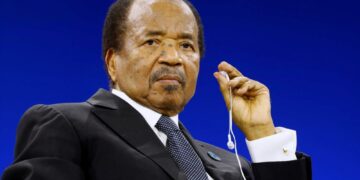







































Nigeria’s Minister of Finance and Coordinating Minister of the Economy, Mr Wale Edun, says that a forensic audit of the Nigerian National Petroleum Company Limited (NNPCL) is ongoing, as part of efforts to scrutinise oil revenue deductions and boost remittances into the Federation Account.
“It is an ongoing forensic audit of NNPC as mandated by the Federation Account Allocation Committee meeting. That is ongoing,” Edun told a news conference on Friday in Abuja.
Speaking on recent developments in the Nigerian economy, Edun explained that the audit is running alongside the implementation of a new presidential executive order directing that certain oil and gas revenues be paid directly into the Federation Account.
According to him, the review is examining deductions and charges that reduce what eventually accrues to the Nigerian federal government, states and local governments.
He said that the Federal Executive Council had earlier mandated a subcommittee to scrutinise “the deductions from the Federation Account, and in particular, the costs of collection of some of the deductions that were going on and the amounts that were being charged for actually doing that task.”
“It’s within that context of looking at what should come into the Federation Account and what was going elsewhere that we have now been directed by Mr President, as owner of the executive order, to immediately flow these three elements – management fee, frontier fund, and the gas flare penalty – directly to the Federation Account,” Edun added.
He stressed that the directive does not override any ongoing legislative or institutional processes.
“It does not prejudice anything else that is ongoing, whether at the National Assembly or the legislature or any other action that is looking at this all-important area of the Federation Account, the accuracy, the transparency, and the accountability of the funds that are going to flow into it,” he said.
According to the minister, a committee comprising federal and state representatives has been constituted to ensure efficient implementation of the directive and is scheduled to meet next week.
Edun indicated that the combined effect of the executive order and the forensic audit would clarify the long-debated issue of alleged remittance backlogs.
Linking the development to broader fiscal reforms, the minister said Nigeria must intensify domestic resource mobilisation in the face of elevated global interest rates and limited fiscal space.
“Within that context, there is a need to focus on domestic resource mobilisation, rather than debt financing that is not self-paid,” he said, warning that heavy debt service obligations crowd out spending on health, education and infrastructure.
He disclosed that revenue-earning agencies have been directed to migrate to a unified digital platform.
“All revenue-earning agencies should be on the same technical platform. An investment has been made in technology. We have advisors. We have a consortium. And the revenue agencies are given that platform on which to collect funds. Everybody will see how much somebody is meant to pay, how much he has paid, and how much he owes,” local media reports quoted Edun as saying.