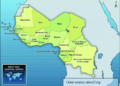























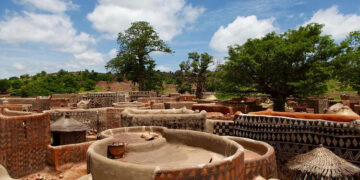
The Serer people are one of the oldest and largest ethnic groups in Senegambia, with their population concentrated primarily in Senegal, though they also have historical and social ties to The Gambia and parts of southern Mauritania. The Serer represent a significant force in the anthropological landscape of West Africa, given their long-standing adherence to their traditional beliefs and social systems in the face of external changes, both religious and colonial.
Historical and linguistic studies indicate that the Serer belong to the Niger-Congo language family, specifically the Atlantic branch. There are varying theories regarding their origins; while some oral traditions link their roots to the Senegal River Valley and the Futa Toro region in the north, other research points to earlier migrations from the Sahara Desert driven by climatic changes. The Serer settled in the Sine-Saloum region of central and western Senegal around the 11th century CE. Their early history is linked to resistance against expansionist movements, as they refused to submit to the Almoravid state in the north, prompting them to migrate south to preserve their religious and political independence. This historical trajectory instilled in them a strong tendency towards local autonomy and an organic connection to the land.
The Serer established sophisticated political structures in the form of the kingdoms of Sine and Saloum. Their systems of government were complex and hierarchical, with the king being known as “Maad a Sinig” in the kingdom of Sine and “Maad Saloum” in the kingdom of Saloum.
Rule in these kingdoms was not absolute but rather governed by a council of notables and nobles who oversaw the king’s actions and ensured adherence to customary laws. One of the unique features of this system is the later overlap with the Guelowar dynasty from the Casamance (Jula people) regions, where this elite merged with the Serer society and formed the ruling class for centuries, reflecting the flexibility of the Serer political system and its ability to absorb external elements without losing its essential identity.
Although Serer society is sometimes described as less hierarchical than their Wolof neighbours, it does have clear class divisions, including nobles and freemen, who are landowners and warriors. There are also professionals and craftsmen, who include blacksmiths, tanners, and itinerant singers (Griots), each with a specific social role.
There are slaves (historically), a class that existed before the colonial era and gradually disappeared, though some traces of it remain in the symbolic hierarchy. In terms of family structure, the Serers followed a matrilineal system, where wealth and titles were passed down through the maternal line. This system was maintained for a long period before gradually declining in favour of a patrilineal system under the influence of modern legislation and monotheistic religions.
The vast majority of Serer today adhere to Islam (especially the Muridiyya and Tijaniyya orders) or Christianity (Catholicism). Although the Xooy ritual, a major predictive ceremony, is performed annually and has been recognised by UNESCO as part of the Intangible Cultural Heritage of Humanity.
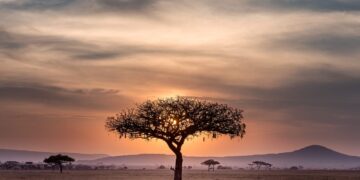
The Serer are known as farmers associated with millet and peanut cultivation. Their farming system is based on a complex cycle combining agriculture and livestock herding, known as the agro-pastoral system. They have been distinguished by their protection of the Acacia albida tree, having discovered early on its ability to fix nitrogen in the soil and provide fodder for livestock during the dry season. Cutting down these trees was considered a crime punishable under customary law by the Lamane. This early environmental awareness allowed the Serer to maintain the fertility of their lands in a semi-arid environment, making them the main grain supplier in the Senegambia region for centuries.
Besides agriculture, Serer living in coastal areas (such as the Joal-Fadiouth region) practise fishing and shellfish harvesting, demonstrating their skills in traditional navigation and the construction of large wooden boats.
Wrestling (Lutte) is the national sport of Senegal, and its origins and the development of its rituals are attributed to the Serer people. For them, wrestling was more than just a physical activity; it was a rite of passage and an occasion to demonstrate courage and strength before the community.
Wrestling matches are accompanied by chants and poems in which the wrestler praises himself and his tribe, using traditional drums to stir enthusiasm. This sport has transformed from its traditional rural character into a major entertainment industry in Senegalese cities, but it still retains its spiritual roots, based on the amulets and rituals performed by the wrestlers before entering the “sand”.
The Serer speak Serer-Sine, a language characterised by its complex morphology and extensive use of suffixes. Other dialects and subgroups, such as Ndut (N’doute) and Noon, are found in the Thiès region.
The Serer have made significant contributions to African literature, cinema, and music. Léopold Sédar Senghor, Senegal’s first president, stands out as a key theorist of Serer culture, whose poetry draws on the spirit of the “childhood kingdom” and the values of “Negroism”. Traditional Serer music also played a role in the development of the popular Mbalax rhythms, and Serer drums are a fundamental element of contemporary Senegalese music.
The Serer practice a social tradition called Kal, or “joking relationship”, with other ethnic groups such as the Jola and Toucouleur. This tradition allows members of these groups to exchange playful banter and friendly insults without offence, and its roots trace back to ancient peace treaties between these tribes. This system plays a vital role in mitigating ethnic and political tensions in Senegal and The Gambia and serves as a safeguard for promoting social peace and national integration.