







Qiraat Africa
عربي  |  Fr
Advertisement
  • News
    • All
    • Climate Change
    • Economy
    • Education
    • Energy
    • Health
    • Migration
    • Mining
    • Politics
    • Security
    • Society
    • Sport
    Is Ethiopia’s Tigray barreling towards another war?

    Ethiopian Airlines cancels flights to Tigray region after clashes

    African governments look to Islamic finance after Benin sukuk success

    African governments look to Islamic finance after Benin sukuk success

    Ukraine says Niger’s move to cut relations is ‘regrettable’

    Gunfire, blasts rock Niger airport overnight before calm restored

    DR Congo Military Court Issues Arrest Warrant for Corneille Nangaa

    Rebel leader denounces US-DRC minerals deal one year after Goma’s fall

    Zambia groups say freedom of expression under threat

    Zambia is hopeful of agreement on debt restructuring terms with Afreximbank

    Rwanda’s presidential election set for July 15, 2024

    Rwanda says UK owes $130 million over scrapped asylum scheme

    Giant Dangote oil refinery to begin production in third quarter

    Shipping data shows Indian diesel exports to West Africa at record high

    Ex-Nigerian minister, Alison-Madueke faces bribery charges in London court

    Nigeria lowers entry barriers to attract investors for latest oil round

    Uganda’s constitutional court to hear challenges against anti-homosexuality law

    Uganda court releases prominent rights activist on bail

  • Analysis
    • All
    • Climate Change
    • Digital & Tech
    • Economy
    • Energy & Power
    • Health
    • Politics
    • Security
    • Society
    BRICS Plus and the Shifting Global Power Balance: Implications of South Africa’s Role

    BRICS Plus and the Shifting Global Power Balance: Implications of South Africa’s Role

    African Union suspends Niger over coup, prepares sanctions; France denies report it asked Algeria to use airspace for a Niger operation

    Leaders in Africa’s human rights institutions are being elected. Why it matters

    Sahel Alliance leaders meet in Bamako to deepen break with ECOWAS

    The AES and the Reconfiguration of Regional Security Architecture: A Look at the 2025 Bamako Summit

    US airstrikes in northern Nigeria: potential windfalls and dangers

    US airstrikes in northern Nigeria: potential windfalls and dangers

    Why France’s Focus is Shifting to Anglophone Africa

    Why France’s Focus is Shifting to Anglophone Africa

    UN believes hundreds were killed in Tanzania election protests

    Cameroon and Tanzania’s rulers clung to power in 2025—but look more vulnerable than ever

    General sworn in as Guinea-Bissau leader in swift coup after disputed vote

    Military and Politics in Guinea-Bissau

    Global power shifts are playing out in the Red Sea region: why this is where the rules are changing

    Global power shifts are playing out in the Red Sea region: why this is where the rules are changing

    Understanding Trump’s Christian Genocide Claim and Military Threat: What It Means for Nigeria-U.S. Relations

    Understanding Trump’s Christian Genocide Claim and Military Threat: What It Means for Nigeria-U.S. Relations

  • Studies
    Benin government says armed forces foil coup attempt

    Coup contagion? A rash of African power grabs suggests copycats are taking note of others’ success

    One in three South Africans have never heard of AI: what this means for policy

    One in three South Africans have never heard of AI: what this means for policy

    Social Media as a Catalyst for the Spread of Dangerous Wealth Ritual Myths

    Social Media as a Catalyst for the Spread of Dangerous Wealth Ritual Myths

    Overcoming Education Barriers for Young Mothers in Sub-Saharan Africa

    Overcoming Education Barriers for Young Mothers in Sub-Saharan Africa

    Youth Empowerment Through Vocational Training in Rural Sub-Saharan Africa

    Youth Empowerment Through Vocational Training in Rural Sub-Saharan Africa

    Manufacturers in Ghana and Nigeria claim that although corruption damages businesses, digital technologies provide a chance to combat it

    Manufacturers in Ghana and Nigeria claim that although corruption damages businesses, digital technologies provide a chance to combat it

    Environmental Threats and Conservation Efforts in Namibia

    Environmental Threats and Conservation Efforts in Namibia

    Your teachers’ level of knowledge affects how well you perform in class: perspectives from 14 French-speaking African nations

    Your teachers’ level of knowledge affects how well you perform in class: perspectives from 14 French-speaking African nations

    Islamic Finance in Nigeria: Between Islamization and Shariah Non-Compliance Polemics

    Islamic Finance in Nigeria: Between Islamization and Shariah Non-Compliance Polemics

  • Infographics
  • Figures
    What does a diary entry reveal about the West African origins of Apongo, a rebel leader in Jamaica?

    What does a diary entry reveal about the West African origins of Apongo, a rebel leader in Jamaica?

    Obafemi Awolowo (1909 – 1987): Nigerian statesman and influential advocate of independence

    Obafemi Awolowo (1909 – 1987): Nigerian statesman and influential advocate of independence

    Tunka Manin (c. 1010–1078), the last ruler of the Ghana Empire

    Tunka Manin (c. 1010–1078), the last ruler of the Ghana Empire

    Samuel Ajayi Crowther (1809-1891): First African Anglican Bishop

    Samuel Ajayi Crowther (1809-1891): First African Anglican Bishop

    Osei Tutu (c. 1660—c. 1717) , founder of the Asante nation

    Osei Tutu (c. 1660—c. 1717) , founder of the Asante nation

    Walter Sisulu (1912 – 2003): South African activist

    Walter Sisulu (1912 – 2003): South African activist

    Modibo Keïta (1915-1977): First President of Mali

    Modibo Keïta (1915-1977): First President of Mali

    Robert Mugabe (1924 – 2019): Revolutionary and former President of Zimbabwe

    Robert Mugabe (1924 – 2019): Revolutionary and former President of Zimbabwe

    Idi Amin Dada (1928 – 2003): Military officer and former President of Uganda

    Idi Amin Dada (1928 – 2003): Military officer and former President of Uganda

  • History
    The battles of Isandlwana and Rorke’s Drift

    The battles of Isandlwana and Rorke’s Drift

    Kimberley’s Big Hole, Northern Cape, South Africa

    Kimberley’s Big Hole, Northern Cape, South Africa

    Ogbunike Caves, Southeastern Nigeria

    Ogbunike Caves, Southeastern Nigeria

    Historic Town of Grand-Bassam

    Historic Town of Grand-Bassam

    Mandara Mountains, Northern Cameroon and Nigeria

    Mandara Mountains, Northern Cameroon and Nigeria

    Zong Massacre

    Zong Massacre

    Abomey, southern Benin

    Abomey, southern Benin

    Ifẹ̀, an ancient city in south-western Nigeria

    Ifẹ̀, an ancient city in south-western Nigeria

    Robben Island, South Africa

    Robben Island, South Africa

  • Others
    • Culture / Literature
    • Follow-ups
    • Interview
    • Opinion
  • Countries
    • Country profiles
    • Regions
      • Central Africa
      • East Africa
      • Southern Africa
      • West Africa
No Result
View All Result
  • News
    • All
    • Climate Change
    • Economy
    • Education
    • Energy
    • Health
    • Migration
    • Mining
    • Politics
    • Security
    • Society
    • Sport
    Is Ethiopia’s Tigray barreling towards another war?

    Ethiopian Airlines cancels flights to Tigray region after clashes

    African governments look to Islamic finance after Benin sukuk success

    African governments look to Islamic finance after Benin sukuk success

    Ukraine says Niger’s move to cut relations is ‘regrettable’

    Gunfire, blasts rock Niger airport overnight before calm restored

    DR Congo Military Court Issues Arrest Warrant for Corneille Nangaa

    Rebel leader denounces US-DRC minerals deal one year after Goma’s fall

    Zambia groups say freedom of expression under threat

    Zambia is hopeful of agreement on debt restructuring terms with Afreximbank

    Rwanda’s presidential election set for July 15, 2024

    Rwanda says UK owes $130 million over scrapped asylum scheme

    Giant Dangote oil refinery to begin production in third quarter

    Shipping data shows Indian diesel exports to West Africa at record high

    Ex-Nigerian minister, Alison-Madueke faces bribery charges in London court

    Nigeria lowers entry barriers to attract investors for latest oil round

    Uganda’s constitutional court to hear challenges against anti-homosexuality law

    Uganda court releases prominent rights activist on bail

  • Analysis
    • All
    • Climate Change
    • Digital & Tech
    • Economy
    • Energy & Power
    • Health
    • Politics
    • Security
    • Society
    BRICS Plus and the Shifting Global Power Balance: Implications of South Africa’s Role

    BRICS Plus and the Shifting Global Power Balance: Implications of South Africa’s Role

    African Union suspends Niger over coup, prepares sanctions; France denies report it asked Algeria to use airspace for a Niger operation

    Leaders in Africa’s human rights institutions are being elected. Why it matters

    Sahel Alliance leaders meet in Bamako to deepen break with ECOWAS

    The AES and the Reconfiguration of Regional Security Architecture: A Look at the 2025 Bamako Summit

    US airstrikes in northern Nigeria: potential windfalls and dangers

    US airstrikes in northern Nigeria: potential windfalls and dangers

    Why France’s Focus is Shifting to Anglophone Africa

    Why France’s Focus is Shifting to Anglophone Africa

    UN believes hundreds were killed in Tanzania election protests

    Cameroon and Tanzania’s rulers clung to power in 2025—but look more vulnerable than ever

    General sworn in as Guinea-Bissau leader in swift coup after disputed vote

    Military and Politics in Guinea-Bissau

    Global power shifts are playing out in the Red Sea region: why this is where the rules are changing

    Global power shifts are playing out in the Red Sea region: why this is where the rules are changing

    Understanding Trump’s Christian Genocide Claim and Military Threat: What It Means for Nigeria-U.S. Relations

    Understanding Trump’s Christian Genocide Claim and Military Threat: What It Means for Nigeria-U.S. Relations

  • Studies
    Benin government says armed forces foil coup attempt

    Coup contagion? A rash of African power grabs suggests copycats are taking note of others’ success

    One in three South Africans have never heard of AI: what this means for policy

    One in three South Africans have never heard of AI: what this means for policy

    Social Media as a Catalyst for the Spread of Dangerous Wealth Ritual Myths

    Social Media as a Catalyst for the Spread of Dangerous Wealth Ritual Myths

    Overcoming Education Barriers for Young Mothers in Sub-Saharan Africa

    Overcoming Education Barriers for Young Mothers in Sub-Saharan Africa

    Youth Empowerment Through Vocational Training in Rural Sub-Saharan Africa

    Youth Empowerment Through Vocational Training in Rural Sub-Saharan Africa

    Manufacturers in Ghana and Nigeria claim that although corruption damages businesses, digital technologies provide a chance to combat it

    Manufacturers in Ghana and Nigeria claim that although corruption damages businesses, digital technologies provide a chance to combat it

    Environmental Threats and Conservation Efforts in Namibia

    Environmental Threats and Conservation Efforts in Namibia

    Your teachers’ level of knowledge affects how well you perform in class: perspectives from 14 French-speaking African nations

    Your teachers’ level of knowledge affects how well you perform in class: perspectives from 14 French-speaking African nations

    Islamic Finance in Nigeria: Between Islamization and Shariah Non-Compliance Polemics

    Islamic Finance in Nigeria: Between Islamization and Shariah Non-Compliance Polemics

  • Infographics
  • Figures
    What does a diary entry reveal about the West African origins of Apongo, a rebel leader in Jamaica?

    What does a diary entry reveal about the West African origins of Apongo, a rebel leader in Jamaica?

    Obafemi Awolowo (1909 – 1987): Nigerian statesman and influential advocate of independence

    Obafemi Awolowo (1909 – 1987): Nigerian statesman and influential advocate of independence

    Tunka Manin (c. 1010–1078), the last ruler of the Ghana Empire

    Tunka Manin (c. 1010–1078), the last ruler of the Ghana Empire

    Samuel Ajayi Crowther (1809-1891): First African Anglican Bishop

    Samuel Ajayi Crowther (1809-1891): First African Anglican Bishop

    Osei Tutu (c. 1660—c. 1717) , founder of the Asante nation

    Osei Tutu (c. 1660—c. 1717) , founder of the Asante nation

    Walter Sisulu (1912 – 2003): South African activist

    Walter Sisulu (1912 – 2003): South African activist

    Modibo Keïta (1915-1977): First President of Mali

    Modibo Keïta (1915-1977): First President of Mali

    Robert Mugabe (1924 – 2019): Revolutionary and former President of Zimbabwe

    Robert Mugabe (1924 – 2019): Revolutionary and former President of Zimbabwe

    Idi Amin Dada (1928 – 2003): Military officer and former President of Uganda

    Idi Amin Dada (1928 – 2003): Military officer and former President of Uganda

  • History
    The battles of Isandlwana and Rorke’s Drift

    The battles of Isandlwana and Rorke’s Drift

    Kimberley’s Big Hole, Northern Cape, South Africa

    Kimberley’s Big Hole, Northern Cape, South Africa

    Ogbunike Caves, Southeastern Nigeria

    Ogbunike Caves, Southeastern Nigeria

    Historic Town of Grand-Bassam

    Historic Town of Grand-Bassam

    Mandara Mountains, Northern Cameroon and Nigeria

    Mandara Mountains, Northern Cameroon and Nigeria

    Zong Massacre

    Zong Massacre

    Abomey, southern Benin

    Abomey, southern Benin

    Ifẹ̀, an ancient city in south-western Nigeria

    Ifẹ̀, an ancient city in south-western Nigeria

    Robben Island, South Africa

    Robben Island, South Africa

  • Others
    • Culture / Literature
    • Follow-ups
    • Interview
    • Opinion
  • Countries
    • Country profiles
    • Regions
      • Central Africa
      • East Africa
      • Southern Africa
      • West Africa
No Result
View All Result
Qiraat Africa
عربي  |  Fr
No Result
View All Result
Home Regions Central Africa

François (Ngarta) Tombalbaye (1918-1975): First President of Chad

September 13, 2025
François (Ngarta) Tombalbaye (1918-1975): First President of Chad

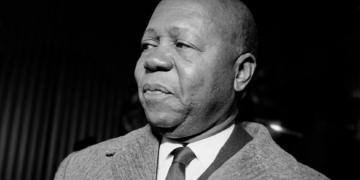
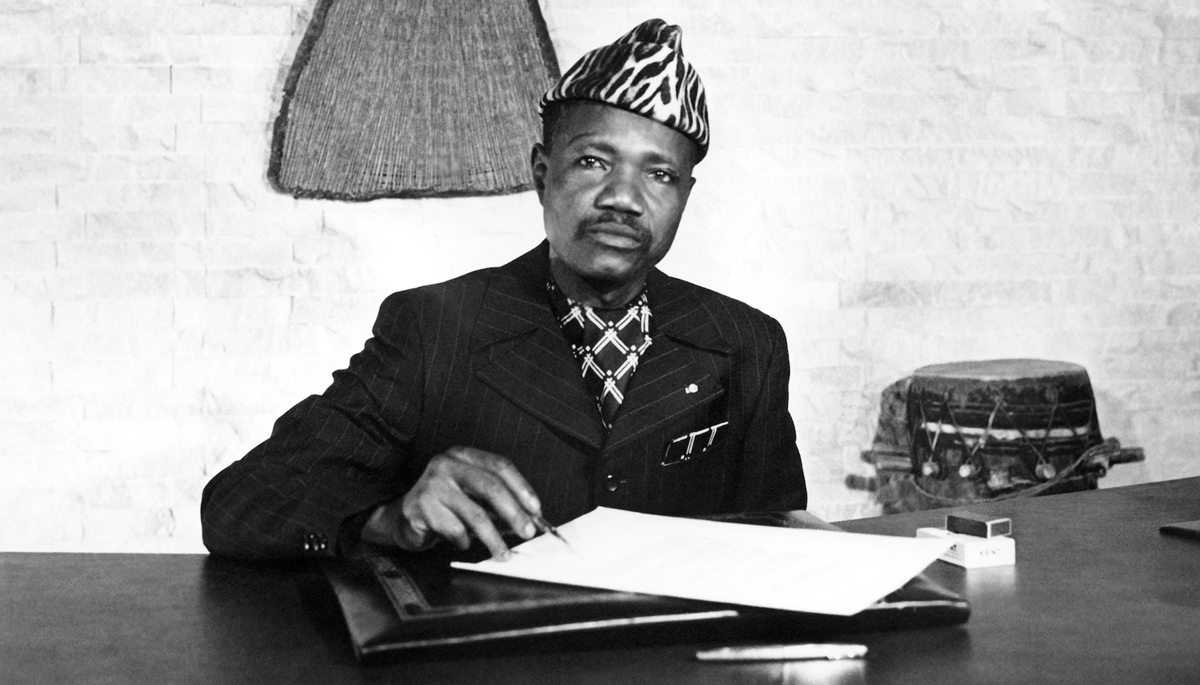
Ngarta Tombalbaye in 1974 © AFP

Share on FacebookShare on Twitter

François Tombalbaye, who later changed his name to Ngarta Tombalbaye, represents a pivotal and complex figure in Chad’s modern history. As the country’s first president after independence from France in 1960, he was tasked with building a nation from a highly diverse ethnic, religious, and geographic mosaic. However, his journey, which began with hopes of independence and unity, ended in a bloody coup after fifteen years of authoritarian rule, leaving behind a legacy of political and social divisions whose effects are still felt in Chad today.

François Tombalbaye was born in 1918 in the small village of Béssada in southern Chad, then part of French Equatorial Africa. He belonged to the Sara ethnic group, the largest ethnic group in the south, which, unlike the Muslim Saharan north, was predominantly Christian and pagan. This geographic, ethnic, and religious affiliation would later form the cornerstone of his political identity and orientation.

Tombalbaye, unlike most of his peers, had the opportunity to receive an education in French missionary schools, becoming a teacher. This profession gave him social standing and provided him with the opportunity to travel and gain insight into the conditions of the South, deepening his political and social awareness. In the 1940s, he became involved in union work, defending the rights of Chadian teachers and workers, which led him to the world of politics.

In 1947, he was among the founders of the Chadian Progressive Party (PPT), a local branch of the African Democratic Rally (RAD), the broader African political movement that called for decolonization. Tombalbaye quickly emerged as a powerful voice within the party, representing the interests of southerners who felt marginalized economically and politically by the French colonial administration, while at times favoring traditional elites in the north. His oratorical style and organizational ability saw him rise rapidly through the party ranks, becoming its leader in 1959.

When Chad gained independence on August 11, 1960, François Tombalbaye became its first president. From day one, he faced the enormous challenge of building a national identity for a country whose borders were not the product of natural historical development but rather of lines drawn on the map by the French colonialists. The nascent nation was sharply divided: the south, to which Tombalbaye belonged, was more developed in terms of education and infrastructure thanks to French investment and missionary missions, and its people dominated the administration and the army. In contrast, the north, the vast desert region with a Muslim majority, felt marginalized and isolated and viewed the new southern-dominated government with suspicion.

Tombalbaye initially attempted to adopt a unity rhetoric, but his actual policies soon revealed a clear bias toward his region. He appointed a large number of southerners to key government positions while marginalizing many northern leaders. His economic policies also focused on developing the South, particularly cotton cultivation, which was the main source of income, deepening the sense of injustice among northerners.

Tombalbaye did not tolerate any political opposition. Shortly after independence, he banned all political parties except his own, the Chadian Progressive Party (PPT), declaring a one-party system in 1962. He justified this move by citing the need to preserve national unity and prevent tribal and political divisions, but in reality, it was a means of consolidating his absolute power and eliminating any competing voices. Many political opponents, both from the north and even from the south, who criticized his style of governance were arrested and imprisoned.

By the mid-1960s, discontent in the north had escalated into armed rebellion. In 1966, the National Liberation Front of Chad (FROLINAT) was founded, an umbrella rebel movement bringing together various groups from the north and east, with the aim of overthrowing Tombalbaye’s regime. The FROLINAT accused his government of corruption, nepotism, repression of Muslims, and excessive subservience to France.

Read also

Rebel leader denounces US-DRC minerals deal one year after Goma’s fall

South Sudan government says rebel advance poses ‘serious threat to peace’

African nations now send more money to China than they receive in new loans

Tombalbaye found himself embroiled in a protracted civil war. He was forced to rely heavily on French military support to suppress the rebellion, with French forces repeatedly intervening to save his regime from collapse. This reliance on the former colonial power weakened his legitimacy in the eyes of many Chadians and portrayed him as a leader who could not remain in power without external protection.

In an attempt to address the cultural and political crisis and assert a Chadian identity independent of Western influence, Tombalbaye launched the “Authenticity” campaign in the early 1970s. This campaign included a series of radical measures, such as changing his name from François to “Ngarta” (the true leader) and forcing all citizens and officials with Christian or French names to replace them with traditional African names. Also, all southern men holding positions in the administration or the military were required to undergo the Yondo Ritual, a rigorous traditional initiation rite specific to the Sara ethnic group. Many, especially Christians and southern intellectuals, viewed this measure as an insult and a forced practice of rituals they did not believe in, alienating even his traditional political base. Local cultures and languages ​​were also promoted at the expense of French and Western culture.

Although the campaign’s stated goal was to strengthen national identity, it backfired. Instead of uniting the country, it deepened divisions. Muslims in the north viewed it as further evidence of the dominance of the southern Sara culture, while many southerners viewed it as tribal domination by the president.

By the early 1970s, Tombalbaye’s regime was reeling under the weight of an ongoing civil war, a stifling economic crisis exacerbated by a severe drought in the Sahel, and growing popular discontent with his repressive and unpredictable policies, and he lost the trust of even his closest allies in the army and administration.

Constantly fearful of plots, he carried out sweeping purges within the army, arresting and executing several prominent officers, creating a climate of fear and apprehension within the military establishment. This move proved to be the final straw.

On April 13, 1975, army and gendarmerie units moved into the capital, N’Djamena, and attacked the presidential palace. Ngarta Tombalbaye was killed in the attack, bringing an end to his fifteen-year rule. The army announced the formation of a Supreme Military Council led by General Félix Malloum Ngakoutou Bey-Ndi, a southern officer Tombalbaye had previously imprisoned.

Tags: ChadFélix MalloumFélix Malloum Ngakoutou Bey-NdiFrançois TombalbayeN'DjamenaNgarta

Related Posts

South Sudan orders UN personnel, civilians to leave parts of Jonglei State
Central Africa

South Sudan orders UN personnel, civilians to leave parts of Jonglei State

January 26, 2026
Republic of Congo to pass new gas code soon as it seeks to lure investment
Central Africa

Norway police file charges over suspected oil bribery in Congo Republic

January 26, 2026
African heads of state head to Beijing for China-Africa cooperation summit
Central Africa

China’s Africa lending nearly halved in 2024, shifts to yuan

January 22, 2026
UN assembly adopts resolution backing ongoing efforts to eliminate ‘blood diamonds’ trade
Central Africa

DR Congo offers manganese, copper‑cobalt, and lithium assets to US investors under minerals pact

January 21, 2026
South Sudan
Central Africa

South Sudan opposition forces call for march on Juba after battlefield gains

January 19, 2026
Central African Republic President Touadera wins re-election, results show
Central Africa

Central African Republic court validates Touadera’s re-election

January 19, 2026

Search Qiraat Africa

No Result
View All Result

Follow on Twitter

Follow @africanqiraat

Trending

Brief History and Culture of the City of Lagos, Nigeria

Brief History and Culture of the City of Lagos, Nigeria

July 24, 2024
Osei Tutu (c. 1660—c. 1717) , founder of the Asante nation

Osei Tutu (c. 1660—c. 1717) , founder of the Asante nation

December 6, 2025
More than 640,000 people affected by catastrophic Mozambique floods

More than 640,000 people affected by catastrophic Mozambique floods

January 25, 2026
The NYSC SCHEME in Nigeria: Impacts, Challenges, and the Path Forward

The NYSC SCHEME in Nigeria: Impacts, Challenges, and the Path Forward

June 19, 2025
Sir Abubakar Tafawa Balewa (1912 – 1966)

Sir Abubakar Tafawa Balewa (1912 – 1966)

July 16, 2024
Kumbi Saleh, the capital of the ancient Ghana Empire

Kumbi Saleh, the capital of the ancient Ghana Empire

October 13, 2025

Facebook

Sections

  • About Us
  • Privacy Policy
  • Opinion
  • Infographics
  • News
  • Analysis
  • Figures
  • Culture & Literature
  • Follow Ups
  • Historical Readings
  • Interview
  • Studies


© Copyright Qiraat Africa. Developed by Bunnaj Media .

No Result
View All Result
  • News
  • Analysis & Report
  • Studies
  • Opinion
  • Interview
  • Culture & Literature
  • Figures
  • Follow-ups
  • Historical Readings
  • Regions

© 2021 Copyright Qiraat Africa.