


Qiraat Africa
عربي  |  Fr
Advertisement
  • News
    • All
    • Climate Change
    • Economy
    • Education
    • Energy
    • Health
    • Migration
    • Mining
    • Politics
    • Security
    • Society
    • Sport
    Senegal president names new finance, energy ministers in reshuffle

    Senegal’s ex-president Macky Sall auditions this week for UN top job

    Somalia warns against Israeli military base plans in Somaliland

    Israel under fire over appointment of ambassador to Somaliland

    Ghana cocoa farmers struggle amid cash shortage

    Ivory Coast farmers hope for more rain to boost cocoa harvest

    DR Congo: at least 20 dead in an attack attributed to the ADF

    Ugandan and Congolese troops free 200 captives from IS-affiliated militants

    Nigeria tightens broadcast rules to curb divisive content ahead of 2027 elections

    Nigeria tightens broadcast rules to curb divisive content ahead of 2027 elections

    “Sub-Saharan Africa resilient, despite mounting global shocks” – Abebe Selassie

    “Sub-Saharan Africa resilient, despite mounting global shocks” – Abebe Selassie

    Mugabe’s son pleads guilty to lesser charges in Johannesburg shooting case

    Mugabe’s son pleads guilty to lesser charges in Johannesburg shooting case

    Pope Leo challenges Angola’s leaders to break ‘extractivism’

    Pope Leo challenges Angola’s leaders to break ‘extractivism’

    DR Congo says it will receive third-country deportees under new deal with US

    First deportees from US arrive in Congo capital, sources say

  • Analysis
    • All
    • Climate Change
    • Digital & Tech
    • Economy
    • Energy & Power
    • Health
    • Politics
    • Security
    • Society
    Impact of Kenya’s long-overdue new infrastructure fund may be limited by design problems

    Impact of Kenya’s long-overdue new infrastructure fund may be limited by design problems

    Why Africans Are Targeted by Recruitment Networks in the Ukraine-Russia War?

    Why Africans Are Targeted by Recruitment Networks in the Ukraine-Russia War?

    From Water Security to Geopolitical Realignment: Key Takeaways and Outcomes of the 39th African Union Summit 2026

    From Water Security to Geopolitical Realignment: Key Takeaways and Outcomes of the 39th African Union Summit 2026

    Rohingya Genocide: Why The Gambia Demands Justice at the International Court

    Rohingya Genocide: Why The Gambia Demands Justice at the International Court

    Security expert explains why the US can destroy terrorist bases in Nigeria but not terrorism

    Security expert explains why the US can destroy terrorist bases in Nigeria but not terrorism

    Africa’s informal economy taxation: the potential and drawbacks of technology

    Africa’s informal economy taxation: the potential and drawbacks of technology

    Ethiopia expects preliminary deal on IMF review within days, finance minister says

    Key events in Ethiopia’s journey towards debt restructuring

    BRICS Plus and the Shifting Global Power Balance: Implications of South Africa’s Role

    BRICS Plus and the Shifting Global Power Balance: Implications of South Africa’s Role

    African Union suspends Niger over coup, prepares sanctions; France denies report it asked Algeria to use airspace for a Niger operation

    Leaders in Africa’s human rights institutions are being elected. Why it matters

  • Studies
    60 new cosmic structures have been discovered by South Africa’s MeerKAT telescope, which is mapping previously unseen gaps between galaxies

    60 new cosmic structures have been discovered by South Africa’s MeerKAT telescope, which is mapping previously unseen gaps between galaxies

    Benin government says armed forces foil coup attempt

    Coup contagion? A rash of African power grabs suggests copycats are taking note of others’ success

    One in three South Africans have never heard of AI: what this means for policy

    One in three South Africans have never heard of AI: what this means for policy

    Social Media as a Catalyst for the Spread of Dangerous Wealth Ritual Myths

    Social Media as a Catalyst for the Spread of Dangerous Wealth Ritual Myths

    Overcoming Education Barriers for Young Mothers in Sub-Saharan Africa

    Overcoming Education Barriers for Young Mothers in Sub-Saharan Africa

    Youth Empowerment Through Vocational Training in Rural Sub-Saharan Africa

    Youth Empowerment Through Vocational Training in Rural Sub-Saharan Africa

    Manufacturers in Ghana and Nigeria claim that although corruption damages businesses, digital technologies provide a chance to combat it

    Manufacturers in Ghana and Nigeria claim that although corruption damages businesses, digital technologies provide a chance to combat it

    Environmental Threats and Conservation Efforts in Namibia

    Environmental Threats and Conservation Efforts in Namibia

    Your teachers’ level of knowledge affects how well you perform in class: perspectives from 14 French-speaking African nations

    Your teachers’ level of knowledge affects how well you perform in class: perspectives from 14 French-speaking African nations

  • Infographics
  • Figures
    Samora Machel (1933–1986): Mozambican politician and revolutionary

    Samora Machel (1933–1986): Mozambican politician and revolutionary

    Murtala Ramat Mohammed (1938–1976): Military officer and former President of Nigeria

    Murtala Ramat Mohammed (1938–1976): Military officer and former President of Nigeria

    Miriam Makeba (1932-2008): South African civil rights activist, singer and actress

    Miriam Makeba (1932-2008): South African civil rights activist, singer and actress

    Ahmed Sékou Touré (1922–1984): Revolutionary and First President of Guinea

    Ahmed Sékou Touré (1922–1984): Revolutionary and First President of Guinea

    Changamire Dombo I (1684–1695): Leader who expelled Portuguese invaders

    Changamire Dombo I (1684–1695): Leader who expelled Portuguese invaders

    Sobhuza II (1899-1982): Former Ngwenyama of Eswatini who led independence transition

    Sobhuza II (1899-1982): Former Ngwenyama of Eswatini who led independence transition

    Alpha Oumar Konare: historian, archaeologist, and former President of Mali

    Alpha Oumar Konare: historian, archaeologist, and former President of Mali

    Felix Konotey-Ahulu (1930-2025): Ghanaian physician and scientist

    Felix Konotey-Ahulu (1930-2025): Ghanaian physician and scientist

    Joaquim Chissano, Former President of Mozambique

    Joaquim Chissano, Former President of Mozambique

  • History
    The Land of Punt (modern Somalia, Eritrea, Ethiopia, or eastern Sudan)

    The Land of Punt (modern Somalia, Eritrea, Ethiopia, or eastern Sudan)

    Avenue of the Baobabs, Madagascar

    Avenue of the Baobabs, Madagascar

    Lopé-Okanda (Gabon)

    Lopé-Okanda (Gabon)

    The Sudd wetland

    The Sudd wetland

    Khami Ruins (Zimbabwe), the capital of the Torwa state

    Khami Ruins (Zimbabwe), the capital of the Torwa state

    Royal Palace, Porto-Novo, Republic of Benin

    Royal Palace, Porto-Novo, Republic of Benin

    W-Arly-Pendjari Complex, the West African wildlife sanctuary

    W-Arly-Pendjari Complex, the West African wildlife sanctuary

    Royal Court of Tiébélé, Burkina Faso

    Royal Court of Tiébélé, Burkina Faso

    Lake Tanganyika, the world’s longest freshwater lake

    Lake Tanganyika, the world’s longest freshwater lake

  • Others
    • Culture / Literature
    • Interview
    • Opinion
  • Countries
    • Country profiles
    • Regions
      • Central Africa
      • East Africa
      • Southern Africa
      • West Africa
No Result
View All Result
  • News
    • All
    • Climate Change
    • Economy
    • Education
    • Energy
    • Health
    • Migration
    • Mining
    • Politics
    • Security
    • Society
    • Sport
    Senegal president names new finance, energy ministers in reshuffle

    Senegal’s ex-president Macky Sall auditions this week for UN top job

    Somalia warns against Israeli military base plans in Somaliland

    Israel under fire over appointment of ambassador to Somaliland

    Ghana cocoa farmers struggle amid cash shortage

    Ivory Coast farmers hope for more rain to boost cocoa harvest

    DR Congo: at least 20 dead in an attack attributed to the ADF

    Ugandan and Congolese troops free 200 captives from IS-affiliated militants

    Nigeria tightens broadcast rules to curb divisive content ahead of 2027 elections

    Nigeria tightens broadcast rules to curb divisive content ahead of 2027 elections

    “Sub-Saharan Africa resilient, despite mounting global shocks” – Abebe Selassie

    “Sub-Saharan Africa resilient, despite mounting global shocks” – Abebe Selassie

    Mugabe’s son pleads guilty to lesser charges in Johannesburg shooting case

    Mugabe’s son pleads guilty to lesser charges in Johannesburg shooting case

    Pope Leo challenges Angola’s leaders to break ‘extractivism’

    Pope Leo challenges Angola’s leaders to break ‘extractivism’

    DR Congo says it will receive third-country deportees under new deal with US

    First deportees from US arrive in Congo capital, sources say

  • Analysis
    • All
    • Climate Change
    • Digital & Tech
    • Economy
    • Energy & Power
    • Health
    • Politics
    • Security
    • Society
    Impact of Kenya’s long-overdue new infrastructure fund may be limited by design problems

    Impact of Kenya’s long-overdue new infrastructure fund may be limited by design problems

    Why Africans Are Targeted by Recruitment Networks in the Ukraine-Russia War?

    Why Africans Are Targeted by Recruitment Networks in the Ukraine-Russia War?

    From Water Security to Geopolitical Realignment: Key Takeaways and Outcomes of the 39th African Union Summit 2026

    From Water Security to Geopolitical Realignment: Key Takeaways and Outcomes of the 39th African Union Summit 2026

    Rohingya Genocide: Why The Gambia Demands Justice at the International Court

    Rohingya Genocide: Why The Gambia Demands Justice at the International Court

    Security expert explains why the US can destroy terrorist bases in Nigeria but not terrorism

    Security expert explains why the US can destroy terrorist bases in Nigeria but not terrorism

    Africa’s informal economy taxation: the potential and drawbacks of technology

    Africa’s informal economy taxation: the potential and drawbacks of technology

    Ethiopia expects preliminary deal on IMF review within days, finance minister says

    Key events in Ethiopia’s journey towards debt restructuring

    BRICS Plus and the Shifting Global Power Balance: Implications of South Africa’s Role

    BRICS Plus and the Shifting Global Power Balance: Implications of South Africa’s Role

    African Union suspends Niger over coup, prepares sanctions; France denies report it asked Algeria to use airspace for a Niger operation

    Leaders in Africa’s human rights institutions are being elected. Why it matters

  • Studies
    60 new cosmic structures have been discovered by South Africa’s MeerKAT telescope, which is mapping previously unseen gaps between galaxies

    60 new cosmic structures have been discovered by South Africa’s MeerKAT telescope, which is mapping previously unseen gaps between galaxies

    Benin government says armed forces foil coup attempt

    Coup contagion? A rash of African power grabs suggests copycats are taking note of others’ success

    One in three South Africans have never heard of AI: what this means for policy

    One in three South Africans have never heard of AI: what this means for policy

    Social Media as a Catalyst for the Spread of Dangerous Wealth Ritual Myths

    Social Media as a Catalyst for the Spread of Dangerous Wealth Ritual Myths

    Overcoming Education Barriers for Young Mothers in Sub-Saharan Africa

    Overcoming Education Barriers for Young Mothers in Sub-Saharan Africa

    Youth Empowerment Through Vocational Training in Rural Sub-Saharan Africa

    Youth Empowerment Through Vocational Training in Rural Sub-Saharan Africa

    Manufacturers in Ghana and Nigeria claim that although corruption damages businesses, digital technologies provide a chance to combat it

    Manufacturers in Ghana and Nigeria claim that although corruption damages businesses, digital technologies provide a chance to combat it

    Environmental Threats and Conservation Efforts in Namibia

    Environmental Threats and Conservation Efforts in Namibia

    Your teachers’ level of knowledge affects how well you perform in class: perspectives from 14 French-speaking African nations

    Your teachers’ level of knowledge affects how well you perform in class: perspectives from 14 French-speaking African nations

  • Infographics
  • Figures
    Samora Machel (1933–1986): Mozambican politician and revolutionary

    Samora Machel (1933–1986): Mozambican politician and revolutionary

    Murtala Ramat Mohammed (1938–1976): Military officer and former President of Nigeria

    Murtala Ramat Mohammed (1938–1976): Military officer and former President of Nigeria

    Miriam Makeba (1932-2008): South African civil rights activist, singer and actress

    Miriam Makeba (1932-2008): South African civil rights activist, singer and actress

    Ahmed Sékou Touré (1922–1984): Revolutionary and First President of Guinea

    Ahmed Sékou Touré (1922–1984): Revolutionary and First President of Guinea

    Changamire Dombo I (1684–1695): Leader who expelled Portuguese invaders

    Changamire Dombo I (1684–1695): Leader who expelled Portuguese invaders

    Sobhuza II (1899-1982): Former Ngwenyama of Eswatini who led independence transition

    Sobhuza II (1899-1982): Former Ngwenyama of Eswatini who led independence transition

    Alpha Oumar Konare: historian, archaeologist, and former President of Mali

    Alpha Oumar Konare: historian, archaeologist, and former President of Mali

    Felix Konotey-Ahulu (1930-2025): Ghanaian physician and scientist

    Felix Konotey-Ahulu (1930-2025): Ghanaian physician and scientist

    Joaquim Chissano, Former President of Mozambique

    Joaquim Chissano, Former President of Mozambique

  • History
    The Land of Punt (modern Somalia, Eritrea, Ethiopia, or eastern Sudan)

    The Land of Punt (modern Somalia, Eritrea, Ethiopia, or eastern Sudan)

    Avenue of the Baobabs, Madagascar

    Avenue of the Baobabs, Madagascar

    Lopé-Okanda (Gabon)

    Lopé-Okanda (Gabon)

    The Sudd wetland

    The Sudd wetland

    Khami Ruins (Zimbabwe), the capital of the Torwa state

    Khami Ruins (Zimbabwe), the capital of the Torwa state

    Royal Palace, Porto-Novo, Republic of Benin

    Royal Palace, Porto-Novo, Republic of Benin

    W-Arly-Pendjari Complex, the West African wildlife sanctuary

    W-Arly-Pendjari Complex, the West African wildlife sanctuary

    Royal Court of Tiébélé, Burkina Faso

    Royal Court of Tiébélé, Burkina Faso

    Lake Tanganyika, the world’s longest freshwater lake

    Lake Tanganyika, the world’s longest freshwater lake

  • Others
    • Culture / Literature
    • Interview
    • Opinion
  • Countries
    • Country profiles
    • Regions
      • Central Africa
      • East Africa
      • Southern Africa
      • West Africa
No Result
View All Result
Qiraat Africa
عربي  |  Fr
No Result
View All Result
Home Figures

South Africa’s Goodwill Zwelithini: King of the Zulu Nation

March 14, 2021
South Africa’s Goodwill Zwelithini: King of the Zulu Nation
Share on FacebookShare on Twitter

By Gerhard Maré*

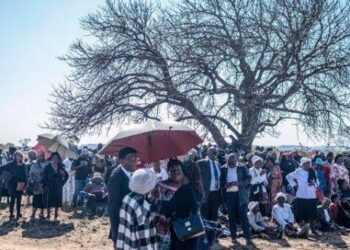
Goodwill Zwelithini kaBhekuzulu, who has passed away at the age of 72, was the longest reigning of all Zulu kings on record. This was the 50th year of his incumbency.

His reign spanned turbulent decades in South Africa. He assumed the throne at the height of apartheid, and went on to rule through the country’s violent and turbulent decades, a period which included contestation of the role of the Zulu monarchy. This spilled over into post-apartheid South Africa when the country’s new constitution recognised traditional leaders along with its democratically elected representatives.

Chapter 12 – a single page – of the 1996 constitution of the democratic Republic of South Africa recognises traditional leaders, laws and customs in general terms. Subsequently, through specific and continually contested legislation, attempts were made to concretise such authority, despite discriminatory consequences for millions of South African citizens who were made subjects of this parallel system.

Kings and other traditional leaders have continued to demand lucrative recognition under this chapter.

Goodwill bore ideological power of value to himself and to others. Core was the repeated reminder that without a “predestined” king there would be no Zulu nation.

But kingship is an historical creation, wherever it is found.

So whom did his rule benefit? And at whose expense? Why, during apartheid and beyond, did politicians and economic interests rush to show support for this “king of goodwill”, as his authorised biographers punned? Why was his actual, and not just symbolic, landlordship ensured, at the last minute, under apartheid by the Ingonyama Trust, which placed all kwaZulu land under Zwelithini as the only trustee? And why was this confirmed in the democratic period?

It is because such undemocratic centralised power is too big a temptation for those who seek to benefit. Access to – and manipulation of – such power explains the cynically justified acceptance over half a century of his political influence and ideological authority by politicians and capitalists. It enabled human and material exploitation through association, control over people as workers, justification for exclusion, votes from a specific group, and, more recently, access to what lies beneath the land on which the subjects live.

The history

Kingship and nation are inextricably linked. In this case it most commonly starts with Shaka, the warlord who defeated other clans, and became the original father of a Zulu nation, people of legendary courage and prowess in war.

The Zulus themselves had to be made subservient. In the 19th century this was initially through military defeat of Zulu armies and the kings who held them together. Defeats were inflicted by the trekboere – settlers who left the Cape to escape British rule, reaching KwaZulu Natal (Natal and Zululand) in the late 1830s – and then British colonial authority.

In the newly formed state, the Union of South Africa, from 1910, policy was less clear: white rule, yes, but what of the black majority?

Under the 1913 Land Act the country was divided into African residential occupancy areas and white controlled areas which housed big industry, including mines, and farming. Initially 87% of the land was designated to white control and the remainder was set aside as reserves for African people.

The idea was to ensure spatial separation in reserves, but economic integration through migrant labour. Migrant labour provided individual workers without their families the right to periodic employment in white controlled areas and farmlands.

Read also

“Sub-Saharan Africa resilient, despite mounting global shocks” – Abebe Selassie

Mugabe’s son pleads guilty to lesser charges in Johannesburg shooting case

Pope Leo challenges Angola’s leaders to break ‘extractivism’

But it was apartheid, and its policy of “separate development” from 1951, that step by step defined an essentially different approach to the inhabitants of these erstwhile reserves (“bantustans”). Determining who was going to be in charge became important. Ethnic nations would govern themselves, but under whom?

Enter a 23-year-old Goodwill Zwelithini. Through bizarre processes – described with naïve directness by his elder sister in the authorised biography – he was installed on December 1 1971 into a Zulu Territorial Authority. This had been newly created in terms of the 1959 Promotion of Bantu (later Black) Self-Government Act. His relative, Prince Mangosuthu Buthelezi, was already the chief executive officer.

Power battles

Over the next few years, there were struggles for control. These involved, on the one hand, the apartheid state and some of the Zulu middle class, on the other, the KwaZulu Legislative Assembly under Buthelezi.

Buthelezi increasingly had backers, and “sides” were taken by national and international supporters. One example was the sugar industry and Progressive Party sponsoring a major event in the 1980s to explore an integrated KwaZulu as an example of what South Africa could be.

Pretoria, and those who saw benefits in bantustan independence such as businesses wanting to operate outside the control of the apartheid government, desired an executive king as existed in Swaziland (now eSwatini). They found this in the person of the immature and malleable Goodwill. Buthelezi and most of the KwaZulu Legislative Assembly needed, for their purposes, kingship as a binding factor of the people over whom they governed, but certainly could not afford a contesting seat of authority.

They were helped by the fact that Goodwill, under the bantustan constitution, had limited powers, and was simply assigned the role of a cultural figurehead.

“Independence” would have boosted apartheid policy nationally and internationally. KwaZulu, most prominent of the bantustans, would then have been a state equivalent to Swaziland and Lesotho.

But Buthelezi had national political ambitions, which demanded resistance against such fragmentation. To safeguard himself against the apartheid state removing him, he established a political base by launching Inkatha in 1975. This provided him with a base from which to consolidate his popular power among Zulus. Goodwill’s kingship provided important leverage for the organisation.

After Inkatha’s break with the African National Congress (ANC) from 1979, Goodwill served in an alignment against the largest trade union federation, the Congress of South African Trade Unions, as well as the United Democratic Front, a loose alliance mobilising against apartheid. The result was that the politics of Zulu kingship became deeply mired in a civil war over battles for popular support – for the time, as well as for the anticipated changes that were to come. These contestation grew during the transition from apartheid. Both positions – the ANC camp and the Inkatha camp – needed the support of Zulus through the king.

Power dynamics

Zwelithini could define kingship during his reign, but only while he had the support of whoever wielded wider power. From apartheid’s bantustan schemes, to support for the politics of Inkatha and Buthelezi, and then to the new ruling party, he claimed to be a bearer of traditional authority.

For example, association with the Zulu kingship was important for the authority of South Africa’s former president Jacob Zuma. His claim to be “100% Zulu” brought him votes and legitimised his behaviour as he pillaged the republic. King Goodwill costs millions of rands per year, but provided value through votes, through the “brand” he provided the tourist industry, and access to the mineral wealth under the Ingonyama Trust land. Battles continue over the trust.

But for Inkatha’s push-back against homelands (bantustans), the apartheid state might have succeeded in installing Goodwill into a Sobhuza II equivalent (in other words an executive king) in kwaZulu. After all, the Swazi model of supreme monarchy was in the making by the end of 1971, following its constitutional independence from Britain in 1968.

By the time of his death King Goodwill was firmly established not as executive king, but certainly as powerful Ingonyama Trust landholder.

ــــــــــــ

* Emeritus Professor of Political Sociology, University of KwaZulu-Natal
Tags: Goodwill ZwelithiniKing of ZuluSouth Africa

Related Posts

South Africa’s Malema faces political crisis after jail sentence in firearm case
Featured

South Africa’s Malema faces political crisis after jail sentence in firearm case

April 16, 2026
Why Julius Malema from South Africa touched a nerve in Kenya
Featured

South African politician Malema back in court as prosecutors seek 15-year prison sentence

April 15, 2026
South Africa’s new DA leader committed to coalition, will meet Ramaphosa
Featured

South Africa’s new DA leader committed to coalition, will meet Ramaphosa

April 13, 2026
Taiwan president to visit Eswatini, last diplomatic ally in Africa
Featured

Taiwan president to visit Eswatini, last diplomatic ally in Africa

April 13, 2026
Cape Town mayor considers running for leader of key South African coalition partner
Featured

South Africa coalition party elects Cape Town mayor as leader

April 12, 2026
South Africa unveils draft AI policy, proposes new institutions and incentives
Featured

South Africa unveils draft AI policy, proposes new institutions and incentives

April 12, 2026

Search Qiraat Africa

No Result
View All Result

Follow on Twitter

Follow @africanqiraat

Trending

Burkina Faso junta dismisses army and intelligence chiefs

Togo expels ex-Burkina Faso leader after coup plot claim, sources say

January 21, 2026
Tunka Manin (c. 1010–1078), the last ruler of the Ghana Empire

Tunka Manin (c. 1010–1078), the last ruler of the Ghana Empire

December 12, 2025
Kumbi Saleh, the capital of the ancient Ghana Empire

Kumbi Saleh, the capital of the ancient Ghana Empire

October 13, 2025
The Great Mosque of Djenne, Mali

The Great Mosque of Djenne, Mali

March 25, 2025
Brief History and Culture of the City of Lagos, Nigeria

Brief History and Culture of the City of Lagos, Nigeria

July 24, 2024
Equatorial Guinea

Equatorial Guinea orders crackdown on sex in government offices after videos leaked

November 6, 2024

Facebook

Sections

  • About Us
  • Privacy Policy
  • Opinion
  • Infographics
  • News
  • Analysis
  • Figures
  • Culture & Literature
  • Follow Ups
  • Historical Readings
  • Interview
  • Studies


© Copyright Qiraat Africa. Developed by Bunnaj Media .

No Result
View All Result
  • News
  • Analysis & Report
  • Studies
  • Opinion
  • Interview
  • Culture & Literature
  • Figures
  • Historical Readings
  • Regions

© 2021 Copyright Qiraat Africa.