







Qiraat Africa
عربي  |  Fr
Advertisement
  • News
    • All
    • Climate Change
    • Economy
    • Education
    • Energy
    • Health
    • Migration
    • Mining
    • Politics
    • Security
    • Society
    • Sport
    SA President Ramaphosa launches Nelson Mandela Rules Academy at prison

    SA President Ramaphosa launches Nelson Mandela Rules Academy at prison

    Students turn on Senegalese government over Dakar university violence

    Students turn on Senegalese government over Dakar university violence

    Zimbabwe’s President Mnangagwa sworn in after a contested election

    Uproar in Zimbabwe over cabinet plan to extend president’s rule to 2030

    Ethiopia says Ghebreyesus, WHO chief has links to rebellious Tigrayan forces

    WHO urges US to share Covid origins findings

    Madagascan President Randrianirina visits city devastated by Cyclone Gezani

    Madagascan President Randrianirina visits city devastated by Cyclone Gezani

    India pulls out of Russian-backed Mali lithium project over security risks, sources say

    India pulls out of Russian-backed Mali lithium project over security risks, sources say

    Nigeria’s state-owned NNPC records $4.2 billion after-tax profit in 2025

    Nigeria’s state-owned NNPC records $4.2 billion after-tax profit in 2025

    DR Congo president calls for swift withdrawal of UN peacekeepers

    UN to launch reconnaissance flights to support eastern Congo ceasefire

    Cameroon President Paul Biya marks 41 years in power

    Cameroon President Biya delays elections once again

  • Analysis
    • All
    • Climate Change
    • Digital & Tech
    • Economy
    • Energy & Power
    • Health
    • Politics
    • Security
    • Society
    Security expert explains why the US can destroy terrorist bases in Nigeria but not terrorism

    Security expert explains why the US can destroy terrorist bases in Nigeria but not terrorism

    Africa’s informal economy taxation: the potential and drawbacks of technology

    Africa’s informal economy taxation: the potential and drawbacks of technology

    Ethiopia expects preliminary deal on IMF review within days, finance minister says

    Key events in Ethiopia’s journey towards debt restructuring

    BRICS Plus and the Shifting Global Power Balance: Implications of South Africa’s Role

    BRICS Plus and the Shifting Global Power Balance: Implications of South Africa’s Role

    African Union suspends Niger over coup, prepares sanctions; France denies report it asked Algeria to use airspace for a Niger operation

    Leaders in Africa’s human rights institutions are being elected. Why it matters

    Sahel Alliance leaders meet in Bamako to deepen break with ECOWAS

    The AES and the Reconfiguration of Regional Security Architecture: A Look at the 2025 Bamako Summit

    Somaliland rejects visas issued by Somalia and tightens control over its airpsace

    Why is Somaliland strategically important?

    US airstrikes in northern Nigeria: potential windfalls and dangers

    US airstrikes in northern Nigeria: potential windfalls and dangers

    Why France’s Focus is Shifting to Anglophone Africa

    Why France’s Focus is Shifting to Anglophone Africa

  • Studies
    Benin government says armed forces foil coup attempt

    Coup contagion? A rash of African power grabs suggests copycats are taking note of others’ success

    One in three South Africans have never heard of AI: what this means for policy

    One in three South Africans have never heard of AI: what this means for policy

    Social Media as a Catalyst for the Spread of Dangerous Wealth Ritual Myths

    Social Media as a Catalyst for the Spread of Dangerous Wealth Ritual Myths

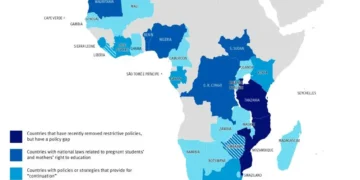
    Overcoming Education Barriers for Young Mothers in Sub-Saharan Africa

    Overcoming Education Barriers for Young Mothers in Sub-Saharan Africa

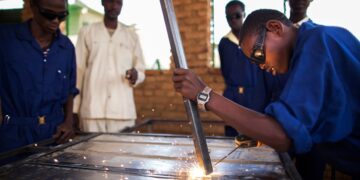
    Youth Empowerment Through Vocational Training in Rural Sub-Saharan Africa

    Youth Empowerment Through Vocational Training in Rural Sub-Saharan Africa

    Manufacturers in Ghana and Nigeria claim that although corruption damages businesses, digital technologies provide a chance to combat it

    Manufacturers in Ghana and Nigeria claim that although corruption damages businesses, digital technologies provide a chance to combat it

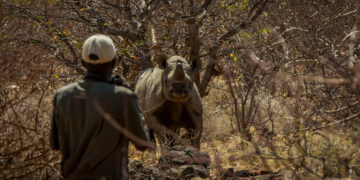
    Environmental Threats and Conservation Efforts in Namibia

    Environmental Threats and Conservation Efforts in Namibia

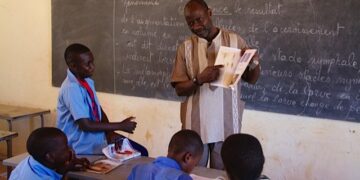
    Your teachers’ level of knowledge affects how well you perform in class: perspectives from 14 French-speaking African nations

    Your teachers’ level of knowledge affects how well you perform in class: perspectives from 14 French-speaking African nations

    Islamic Finance in Nigeria: Between Islamization and Shariah Non-Compliance Polemics

    Islamic Finance in Nigeria: Between Islamization and Shariah Non-Compliance Polemics

  • Infographics
  • Figures
    Abubakar Gumi (1924–1992): Nigerian Islamic scholar and Grand Khadi of the Northern Region of Nigeria

    Abubakar Gumi (1924–1992): Nigerian Islamic scholar and Grand Khadi of the Northern Region of Nigeria

    Haile Selassie (1892-1975): Former Emperor of Ethiopia

    Haile Selassie (1892-1975): Former Emperor of Ethiopia

    Bennet Omalu: Nigerian-American physician and forensic pathologist

    Bennet Omalu: Nigerian-American physician and forensic pathologist

    Samori Touré (1830-1900): Military leader and founder of Wassoulou Empire

    Samori Touré (1830-1900): Military leader and founder of Wassoulou Empire

    Mohammed Abdulle Hassan (1856-1920): Somali religious and nationalist leader

    Mohammed Abdulle Hassan (1856-1920): Somali religious and nationalist leader

    Imam Abdullah Haron (1924-1969): South African Muslim cleric and anti-apartheid activist

    Imam Abdullah Haron (1924-1969): South African Muslim cleric and anti-apartheid activist

    Joyce Banda, educator and former president of Malawi

    Joyce Banda, educator and former president of Malawi

    Jomo Kenyatta (1894-1978): First prime minister and first president of Kenya

    Jomo Kenyatta (1894-1978): First prime minister and first president of Kenya

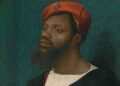
    What does a diary entry reveal about the West African origins of Apongo, a rebel leader in Jamaica?

    What does a diary entry reveal about the West African origins of Apongo, a rebel leader in Jamaica?

  • History
    Royal Palace, Porto-Novo, Republic of Benin

    Royal Palace, Porto-Novo, Republic of Benin

    W-Arly-Pendjari Complex, the West African wildlife sanctuary

    W-Arly-Pendjari Complex, the West African wildlife sanctuary

    Royal Court of Tiébélé, Burkina Faso

    Royal Court of Tiébélé, Burkina Faso

    Lake Tanganyika, the world’s longest freshwater lake

    Lake Tanganyika, the world’s longest freshwater lake

    The Bafut Chiefdom, Cameroon

    The Bafut Chiefdom, Cameroon

    The battles of Isandlwana and Rorke’s Drift

    The battles of Isandlwana and Rorke’s Drift

    Kimberley’s Big Hole, Northern Cape, South Africa

    Kimberley’s Big Hole, Northern Cape, South Africa

    Ogbunike Caves, Southeastern Nigeria

    Ogbunike Caves, Southeastern Nigeria

    Historic Town of Grand-Bassam

    Historic Town of Grand-Bassam

  • Others
    • Culture / Literature
    • Interview
    • Opinion
  • Countries
    • Country profiles
    • Regions
      • Central Africa
      • East Africa
      • Southern Africa
      • West Africa
No Result
View All Result
  • News
    • All
    • Climate Change
    • Economy
    • Education
    • Energy
    • Health
    • Migration
    • Mining
    • Politics
    • Security
    • Society
    • Sport
    SA President Ramaphosa launches Nelson Mandela Rules Academy at prison

    SA President Ramaphosa launches Nelson Mandela Rules Academy at prison

    Students turn on Senegalese government over Dakar university violence

    Students turn on Senegalese government over Dakar university violence

    Zimbabwe’s President Mnangagwa sworn in after a contested election

    Uproar in Zimbabwe over cabinet plan to extend president’s rule to 2030

    Ethiopia says Ghebreyesus, WHO chief has links to rebellious Tigrayan forces

    WHO urges US to share Covid origins findings

    Madagascan President Randrianirina visits city devastated by Cyclone Gezani

    Madagascan President Randrianirina visits city devastated by Cyclone Gezani

    India pulls out of Russian-backed Mali lithium project over security risks, sources say

    India pulls out of Russian-backed Mali lithium project over security risks, sources say

    Nigeria’s state-owned NNPC records $4.2 billion after-tax profit in 2025

    Nigeria’s state-owned NNPC records $4.2 billion after-tax profit in 2025

    DR Congo president calls for swift withdrawal of UN peacekeepers

    UN to launch reconnaissance flights to support eastern Congo ceasefire

    Cameroon President Paul Biya marks 41 years in power

    Cameroon President Biya delays elections once again

  • Analysis
    • All
    • Climate Change
    • Digital & Tech
    • Economy
    • Energy & Power
    • Health
    • Politics
    • Security
    • Society
    Security expert explains why the US can destroy terrorist bases in Nigeria but not terrorism

    Security expert explains why the US can destroy terrorist bases in Nigeria but not terrorism

    Africa’s informal economy taxation: the potential and drawbacks of technology

    Africa’s informal economy taxation: the potential and drawbacks of technology

    Ethiopia expects preliminary deal on IMF review within days, finance minister says

    Key events in Ethiopia’s journey towards debt restructuring

    BRICS Plus and the Shifting Global Power Balance: Implications of South Africa’s Role

    BRICS Plus and the Shifting Global Power Balance: Implications of South Africa’s Role

    African Union suspends Niger over coup, prepares sanctions; France denies report it asked Algeria to use airspace for a Niger operation

    Leaders in Africa’s human rights institutions are being elected. Why it matters

    Sahel Alliance leaders meet in Bamako to deepen break with ECOWAS

    The AES and the Reconfiguration of Regional Security Architecture: A Look at the 2025 Bamako Summit

    Somaliland rejects visas issued by Somalia and tightens control over its airpsace

    Why is Somaliland strategically important?

    US airstrikes in northern Nigeria: potential windfalls and dangers

    US airstrikes in northern Nigeria: potential windfalls and dangers

    Why France’s Focus is Shifting to Anglophone Africa

    Why France’s Focus is Shifting to Anglophone Africa

  • Studies
    Benin government says armed forces foil coup attempt

    Coup contagion? A rash of African power grabs suggests copycats are taking note of others’ success

    One in three South Africans have never heard of AI: what this means for policy

    One in three South Africans have never heard of AI: what this means for policy

    Social Media as a Catalyst for the Spread of Dangerous Wealth Ritual Myths

    Social Media as a Catalyst for the Spread of Dangerous Wealth Ritual Myths

    Overcoming Education Barriers for Young Mothers in Sub-Saharan Africa

    Overcoming Education Barriers for Young Mothers in Sub-Saharan Africa

    Youth Empowerment Through Vocational Training in Rural Sub-Saharan Africa

    Youth Empowerment Through Vocational Training in Rural Sub-Saharan Africa

    Manufacturers in Ghana and Nigeria claim that although corruption damages businesses, digital technologies provide a chance to combat it

    Manufacturers in Ghana and Nigeria claim that although corruption damages businesses, digital technologies provide a chance to combat it

    Environmental Threats and Conservation Efforts in Namibia

    Environmental Threats and Conservation Efforts in Namibia

    Your teachers’ level of knowledge affects how well you perform in class: perspectives from 14 French-speaking African nations

    Your teachers’ level of knowledge affects how well you perform in class: perspectives from 14 French-speaking African nations

    Islamic Finance in Nigeria: Between Islamization and Shariah Non-Compliance Polemics

    Islamic Finance in Nigeria: Between Islamization and Shariah Non-Compliance Polemics

  • Infographics
  • Figures
    Abubakar Gumi (1924–1992): Nigerian Islamic scholar and Grand Khadi of the Northern Region of Nigeria

    Abubakar Gumi (1924–1992): Nigerian Islamic scholar and Grand Khadi of the Northern Region of Nigeria

    Haile Selassie (1892-1975): Former Emperor of Ethiopia

    Haile Selassie (1892-1975): Former Emperor of Ethiopia

    Bennet Omalu: Nigerian-American physician and forensic pathologist

    Bennet Omalu: Nigerian-American physician and forensic pathologist

    Samori Touré (1830-1900): Military leader and founder of Wassoulou Empire

    Samori Touré (1830-1900): Military leader and founder of Wassoulou Empire

    Mohammed Abdulle Hassan (1856-1920): Somali religious and nationalist leader

    Mohammed Abdulle Hassan (1856-1920): Somali religious and nationalist leader

    Imam Abdullah Haron (1924-1969): South African Muslim cleric and anti-apartheid activist

    Imam Abdullah Haron (1924-1969): South African Muslim cleric and anti-apartheid activist

    Joyce Banda, educator and former president of Malawi

    Joyce Banda, educator and former president of Malawi

    Jomo Kenyatta (1894-1978): First prime minister and first president of Kenya

    Jomo Kenyatta (1894-1978): First prime minister and first president of Kenya

    What does a diary entry reveal about the West African origins of Apongo, a rebel leader in Jamaica?

    What does a diary entry reveal about the West African origins of Apongo, a rebel leader in Jamaica?

  • History
    Royal Palace, Porto-Novo, Republic of Benin

    Royal Palace, Porto-Novo, Republic of Benin

    W-Arly-Pendjari Complex, the West African wildlife sanctuary

    W-Arly-Pendjari Complex, the West African wildlife sanctuary

    Royal Court of Tiébélé, Burkina Faso

    Royal Court of Tiébélé, Burkina Faso

    Lake Tanganyika, the world’s longest freshwater lake

    Lake Tanganyika, the world’s longest freshwater lake

    The Bafut Chiefdom, Cameroon

    The Bafut Chiefdom, Cameroon

    The battles of Isandlwana and Rorke’s Drift

    The battles of Isandlwana and Rorke’s Drift

    Kimberley’s Big Hole, Northern Cape, South Africa

    Kimberley’s Big Hole, Northern Cape, South Africa

    Ogbunike Caves, Southeastern Nigeria

    Ogbunike Caves, Southeastern Nigeria

    Historic Town of Grand-Bassam

    Historic Town of Grand-Bassam

  • Others
    • Culture / Literature
    • Interview
    • Opinion
  • Countries
    • Country profiles
    • Regions
      • Central Africa
      • East Africa
      • Southern Africa
      • West Africa
No Result
View All Result
Qiraat Africa
عربي  |  Fr
No Result
View All Result
Home Regions East Africa

Mahmood Mamdani, Ugandan academic and author

June 18, 2025
Mahmood Mamdani, Ugandan academic and author
Share on FacebookShare on Twitter

Mahmood Mamdani is one of Africa’s most prominent contemporary thinkers and a leading critical voice in postcolonial studies, African politics, and human rights. As a scholar, historian, and public intellectual, Mamdani has dedicated his life to examining the complexities of power, violence, and governance in Africa and challenging dominant narratives that often simplify or distort the continent’s history. His work focuses on deconstructing the legacy of colonialism in institutions and mindsets, analysing the nature of conflicts in Africa, and offering insights on building more just societies.

Mahmood Mamdani was born in 1946 in Kampala, Uganda, to a family of Indian descent. His childhood and youth witnessed a turbulent period in Uganda’s history, as the country navigated pre-independence and post-independence challenges. Mamdani left Uganda to study in the United States, where he earned a BA from the University of Pittsburgh, an MA from Tufts University, and a PhD from Harvard University. This period of study in the West was crucial in shaping his analytical tools, but he never separated himself from his African affiliation and commitment to the continent’s issues.

Mamdani returned to Uganda in the 1970s to work as a lecturer at Makerere University, one of East Africa’s most prestigious universities. However, his stay was short-lived due to political unrest and the repression of Idi Amin’s regime, forcing him to leave the country once again. This personal experience profoundly influenced his research interests, leading him to analyse the nature of power and political violence in post-colonial contexts.

Mahmood Mamdani views colonialism as an ongoing structure of power, laws, institutions, and even ways of thinking that continue to shape African societies today. His most notable contributions in this regard include “Citizen and Subject: Contemporary Africa and the Legacy of Late Colonialism” (1996): This book is a foundational work in postcolonial studies. In it, Mamdani presents the theory of the “indirect colonial state” applied by Britain in most of its African colonies. Mamdani argues that this state did not create a uniform system of citizenship but rather a dual system. The first system is the urban citizen who enjoys certain civil and political rights in cities subject to European civil law.

The second system is the rural subjects, who are subject to the authority of colonially appointed “chiefs,” who govern according to “customary law,” often adapted or fabricated to serve colonial interests. This division leads to a profound problem in post-independence Africa: how can a unified democratic state be built when a large portion of the population has become accustomed to an unelected, authoritarian system of government in rural areas? Mamdani makes a compelling argument that this divide between “citizen” and “subject” is at the heart of many conflicts and political tensions in contemporary Africa.

Another of Mamdani’s works is “When Victims Become Killers: Colonialism, Nativism, and the Genocide in Rwanda” (2001). In this book, he offers a groundbreaking analysis of the causes of the 1994 Rwandan genocide. Mamdani rejects simplistic explanations that focus on historically rooted “tribal hatred.” Instead, he argues that the conflict between Hutu and Tutsi was not an inherently ethnic conflict in the Western sense but rather a product of Belgian colonialism, which artificially defined, categorised, and solidified these identities and created a system of governance based on these divisions. Mamdani explains how colonialism transformed “ethnic groups” into “races” with different privileges and how policies of “indirect rule” entrenched the power of the Tutsi minority over the Hutu majority. After independence, the competition for power within these artificial identities led to an escalation of violence, as the “victims” (Hutus subjected to colonial oppression) became “killers” in the context of political violence.

In addition to his historical and political analyses, Mamdani has been deeply engaged in debates on human rights and transitional justice in Africa. He offers a critical perspective on transitional justice, which is often imposed from the outside (particularly by the West), and argues that it may not always be appropriate for African contexts.

Mamdani argues that Western models of transitional justice (such as war crimes trials) often focus on holding individuals accountable, neglecting the structural and historical causes of conflict. He advocates for justice models that emphasise reconciliation, institutional reform, and addressing historical injustices, rather than simply searching for individual scapegoats.

Read also

Africa’s informal economy taxation: the potential and drawbacks of technology

WHO urges US to share Covid origins findings

Madagascan President Randrianirina visits city devastated by Cyclone Gezani

In his analysis of the South African experience, Mamdani praised the Truth and Reconciliation Commission but also criticised some aspects of it, suggesting that it may have focused on personal forgiveness at the expense of structural justice.

In works such as “Good Muslim, Bad Muslim: America, the Cold War, and the Roots of Terror” (2004), Mamdani expands his analysis of power and violence to include a global context. He argues that “terrorism” is not an inherently Islamic phenomenon but rather a product of Western policies, particularly their support for dictatorships in the Muslim world, their military interventions, and the nurturing of jihadist movements for Cold War purposes.

In addition to his writing, Mahmood Mamdani has played a pivotal role in academic institutions. He founded and directed the Makerere Institute of Social Research (MISR) in Uganda, transforming it into a leading research centre in Africa. He has also held senior academic positions at prestigious universities such as Columbia University in New York, where he currently holds the Herbert Lehman Chair in Government Studies.

Mamdani’s research methodology is rigorous and in-depth, and he is known for his extensive use of archives, field interviews, and critical historical analysis. He encourages his students and colleagues to move beyond Western conceptual frameworks and develop theories based on the African experience.
Tags: Bad MuslimGood MuslimMahmood MamdaniUganda

Related Posts

DR Congo president calls for swift withdrawal of UN peacekeepers
East Africa

UN to launch reconnaissance flights to support eastern Congo ceasefire

February 12, 2026
Cyclone Gezani tears through Madagascar, killing at least 20
Climate Change

Cyclone Gezani tears through Madagascar, killing at least 20

February 11, 2026
The Southwestern Amotekun Outfit and the Arising Issue
East Africa

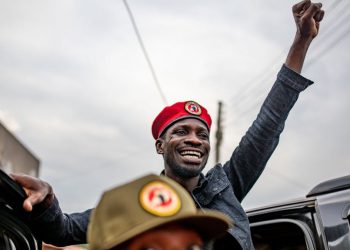
Uganda minister condemns military raid on opposition leader’s home

February 9, 2026
Eritrea wary of ‘war-mongering’ Ethiopia
East Africa

Eritrea rejects Ethiopian claims of troops operating inside its borders

February 9, 2026
El-Sissi reaffirms Egypt’s support for Somalia’s territorial integrity at Cairo meeting
East Africa

El-Sissi reaffirms Egypt’s support for Somalia’s territorial integrity at Cairo meeting

February 9, 2026
Uganda and Tanzanian leaders hold bilateral talks
East Africa

Uganda and Tanzanian leaders hold bilateral talks

February 8, 2026

Search Qiraat Africa

No Result
View All Result

Follow on Twitter

Follow @africanqiraat

Trending

Tunka Manin (c. 1010–1078), the last ruler of the Ghana Empire

Tunka Manin (c. 1010–1078), the last ruler of the Ghana Empire

December 12, 2025
Kumbi Saleh, the capital of the ancient Ghana Empire

Kumbi Saleh, the capital of the ancient Ghana Empire

October 13, 2025
Brief History and Culture of the City of Lagos, Nigeria

Brief History and Culture of the City of Lagos, Nigeria

July 24, 2024
The Bamiléké of western Cameroon

The Bamiléké of western Cameroon

September 18, 2024
Trump ally and Blackwater founder sent men, drones to help Congo’s army secure strategic town

Trump ally and Blackwater founder sent men, drones to help Congo’s army secure strategic town

February 10, 2026
The Great Mosque of Djenne, Mali

The Great Mosque of Djenne, Mali

March 25, 2025

Facebook

Sections

  • About Us
  • Privacy Policy
  • Opinion
  • Infographics
  • News
  • Analysis
  • Figures
  • Culture & Literature
  • Follow Ups
  • Historical Readings
  • Interview
  • Studies


© Copyright Qiraat Africa. Developed by Bunnaj Media .

No Result
View All Result
  • News
  • Analysis & Report
  • Studies
  • Opinion
  • Interview
  • Culture & Literature
  • Figures
  • Historical Readings
  • Regions

© 2021 Copyright Qiraat Africa.