






















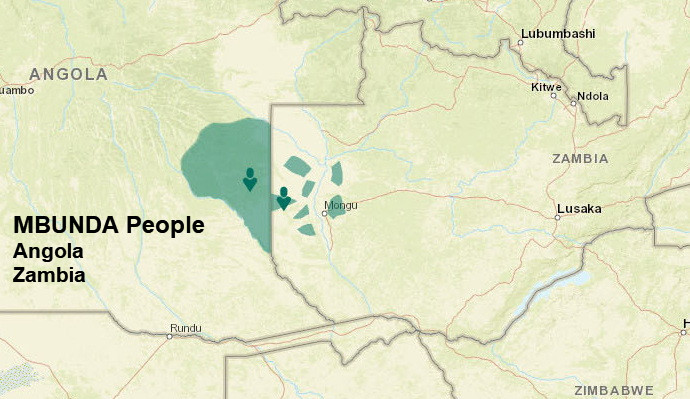
The Mbunda ethnic group is one of the oldest human groups in the Zambezi Basin, primarily distributed between southeastern Angola and the Western Province of Zambia. This group represents a model of African societies that maintained their cultural and political independence for long periods before colonial conflicts and subsequent civil wars led to the fragmentation of their political territory.
The Mbunda belong to the Bantu-speaking peoples. Oral traditions and historical studies indicate that their origins trace back to the Kola region of North Central Africa, from where they migrated south to settle in an area called Mbundaland in present-day southeastern Angola, specifically around the Kwando and Luyungwe rivers.
The Mbunda established a strong, centralised political system known as the Mbunda Kingdom. This kingdom was characterised by a clear hierarchy of leadership headed by the king, who held the title “Mwene”. Historically, the Mounda are known to have had ten successive kings who ruled the kingdom before the Portuguese intervention. The kingdom enjoyed autonomy and economic self-sufficiency thanks to its strict administrative system and its military capabilities in protecting its borders from neighbouring groups such as the Chokwe and Luvale.
The migration of the Mbunda from Angola to Zambia (then known as Northern Rhodesia) is one of the most significant events in their modern history. Major waves of migration began in the late 18th and early 19th centuries for several reasons. The Mbunda resisted Portuguese colonial expansion, which attempted to impose taxes and forcibly conscript the population. Also, tribal wars and tensions with neighbouring groups led to a large-scale migration eastward.
Upon arriving in western Zambia, they were welcomed by the Lozi king, the powerful ruler of the Kingdom of Barotseland. Recognising their exceptional fighting skills and courage, the Mbunda were integrated into the Lozi military structure, playing a crucial role in protecting the kingdom from the Makololo raiders. As a result of their loyalty and prowess, Mbunda leaders were granted extensive lands to settle on, and they continue to hold a prominent position within the traditional council of the Kingdom of Barotseland.
The Mbunda society is characterised by a social organisation based on kinship and loyalty to the traditional throne. The position of “Mwene” still exists in Zambia and Angola. This hereditary position holds moral and legal authority in resolving local disputes and managing traditional lands.
Historically, the Mbunda follow a patrilineal system, where identity and status are passed down through the male line, although there has been some overlap with matrilineal systems due to contact with neighbouring groups. The basic unit of settlement consists of several extended families connected by blood ties and is led by a village chief who is accountable to the supreme leader.
The Mbunda people possess a rich visual and kinetic cultural identity, which is a hallmark of cultural diversity in Southern Africa. The Mukanda is the most important rite of passage in the lives of Mbunda males. It is a traditional circumcision and initiation school where boys are isolated in camps far from their villages for several months. During this time, they learn the community’s laws, hunting skills, manhood, and endurance. The Mukanda concludes with a grand ceremony representing the boys’ rebirth as mature men within the community.
Makishi dances are closely linked to the Mukanda rituals. The makishi are masked figures representing ancestral spirits, and each mask has a specific name, function, and character. These masks are meticulously crafted from plant fibres, leather, and natural dyes. The makishi dances of the Mbunda, Luvale, and Chokwe are a UNESCO-protected World Heritage Site.
The Mbunda people speak Chimbunda (also called Ki-mbunda or Gimbunda), a Bantu language with a complex phonetic system. In Zambia, Chimbunda is one of the recognised local languages and is used in local radio broadcasts and, in some areas, in basic education. Linguists from the group have made significant efforts to document and codify the language, which has helped protect it from assimilation into dominant languages such as Siluli.
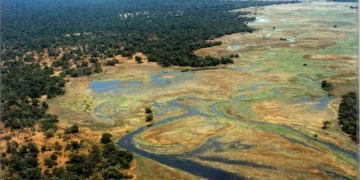
Historically, the Mbunda economy has relied on adaptation to the arid tropical environment and forests. The main crop is cassava (manioc), which forms the basis of their daily diet. They also cultivate maize, sorghum, and groundnuts.
Due to their location near the Zambezi and Kwando rivers, the Mbunda practise fishing using traditional techniques (nets and baskets). They have also historically been known as skilled forest hunters. They are known for their decorative basket weaving, musical instruments (such as drums and marimbas), and blacksmithing.
The Mbunda have faced significant challenges in the 20th and 21st centuries as a result of international borders drawn by colonialism.
In Angola, Mbunda areas suffered greatly during the long Angolan Civil War (1975–2002), which destroyed much of their traditional infrastructure and displaced hundreds of thousands of them as refugees to Zambia and Namibia.
In Zambia, the Mbunda are an integral part of the Zambian national fabric. Despite their integration, they still seek greater recognition for some of their traditional leaders in the areas they inhabit, particularly given the administrative overlap with the traditional Luzi authority.
The Mbunda community face several obstacles that hinder their development and the preservation of their identity. Most of their areas are located in remote regions lacking paved roads and modern health and educational facilities.
With increasing migration to cities (such as Lusaka and Luanda), the younger generation is losing touch with traditional language and rituals like the Mukanda. On the Angolan side, landmines, remnants of war, continue to hinder the return of displaced people to their ancestral farmlands.