













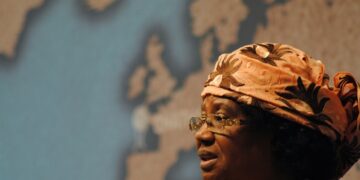



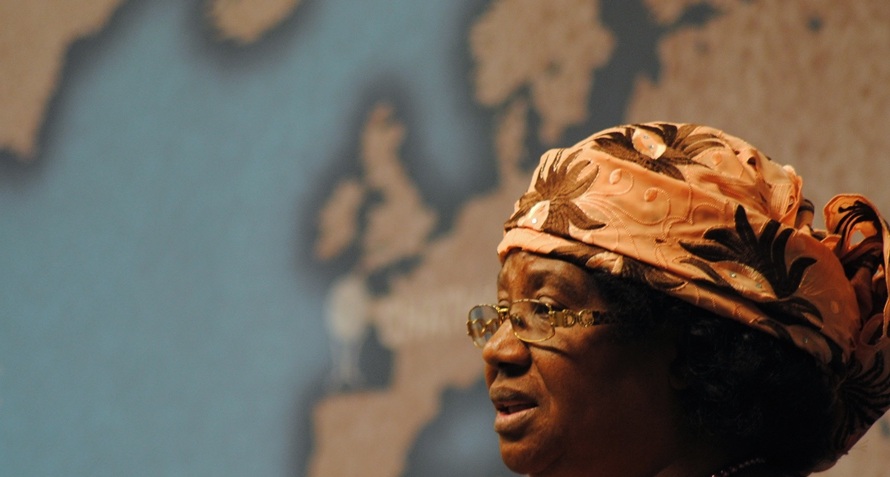
Joyce Banda is one of the most prominent political and social figures in the history of Malawi. Her unconventional ascent to the presidency of Malawi was a culmination of decades of work in politics, education, women’s rights, and development activism. As Malawi’s first female president and the country’s fourth (2012-2014), Banda exemplified leadership in times of crisis, leaving behind a legacy that blends bold reforms with profound political challenges.
Joyce Hilda Ntila was born on April 12, 1950, in the village of Malemia, Malawi. She grew up in an environment that valued education despite economic hardship. She began her career as a teacher and secretary and experienced a difficult first marriage, an experience that solidified her awareness of the need for women’s economic and social empowerment.
In the late 1980s, Banda founded the Joyce Banda Foundation for Education, which aimed to provide education for orphaned children and those affected by HIV/AIDS, as well as to empower rural women. Through this foundation, Banda realized that real change begins at the grassroots level and that poverty is the greatest obstacle to political rights.
Joyce Banda entered politics in the late 1990s, quickly gaining attention for her ability to connect with the masses. She held several important ministerial positions, including Minister of Gender, Social Welfare, and Services, and Minister of Foreign Affairs (2006–2009).
In 2009, President Bingu wa Mutharika selected her as his running mate for re-election, making her the first woman to hold the office of vice president in Malawi. However, the alliance was short-lived; a deep rift developed between her and President Mutharika over governance issues and the potential transfer of power to his brother, Peter Mutharika. This disagreement led to her expulsion from the ruling party, but she clung to her constitutional position as vice president and founded the People’s Party in 2011 as an opposition platform.
In April 2012, Malawi faced a critical moment with the sudden death of President Bingu wa Mutharika from a heart attack. The elite close to the late president attempted to prevent Banda from assuming power, but the Malawian constitution was clear, and with the support of civil society and the military, Joyce Banda was sworn in on April 7, 2012. Banda inherited a country grappling with a severe economic crisis.
Banda’s presidency was marked by economic and diplomatic decisions described as “shock therapy.” Her first decision was to devalue the local currency (the kwacha) by 33%, a move that had been completely unacceptable under her predecessor but was a prerequisite for the International Monetary Fund to resume aid. This decision led to the availability of basic goods and fuel in the markets, but it also caused a sharp rise in prices, burdening the average citizen.
Banda worked to repair Malawi’s relations with Western powers, especially Britain. In a symbolic move to reinforce austerity measures, she announced the sale of the luxurious presidential plane and a fleet of Mercedes cars allocated to the government and stated that she would donate 30% of her salary to charity. These steps were widely praised internationally and portrayed her as a leader who was not attached to power and was dedicated to her people.
Despite a promising start, Joyce Banda’s administration faced the biggest corruption scandal in the country’s history in 2013, known as “Cashgate.” Investigations revealed the embezzlement of massive sums of state funds through the government’s electronic payment system, where payments were made to shell companies for services that were never rendered.
The scandal led to donors suspending $150 million in aid, dealing a severe blow to the economy and Banda’s political reputation. Although she ordered a thorough investigation and the arrest of officials, the opposition accused her administration of negligence or complicity, significantly weakening her electoral position.
Joyce Banda contested the 2014 elections in a highly charged atmosphere. As signs of defeat emerged and technical problems with the voting system surfaced, Banda attempted to annul the election results, alleging fraud, but the courts rejected her request. Ultimately, she demonstrated a democratic spirit by accepting the results and congratulating her rival, Peter Mutharika, thus facilitating a peaceful transfer of power.
Today, Banda remains an icon for African women; she proved that women can lead a nation through the darkest of times and challenge traditional patriarchal structures in politics. She is credited with preventing Malawi from descending into chaos or military rule after Mutharika’s death by adhering to the peaceful constitutional path.
However, the “Cashgate” scandal and the social consequences of currency devaluation remain controversial points in her career. Some see her as a victim of an inherited system of institutional corruption, while others believe her administration lacked the necessary firmness to eradicate it.
Joyce Banda Quotes
“The seeds of success in every nation on Earth are best planted in women and children.”
“I learned that leadership is about falling in love with the people and the people falling in love with you. It is about serving the people with selflessness, with sacrifice, and with the need to put the common good ahead of personal interests.”
“Fighting corruption is dangerous because it involves powerful people with a lot of money… To address corruption, one should be prepared to exit, because those involved will attack.”
“If we provide the young with a strong foundation, we can leave behind a legacy substantially greater than most are able to bequeath.”
“I will not promise to throw money around, but I am committed to implementing policies that shall benefit the country in both short & long term”.